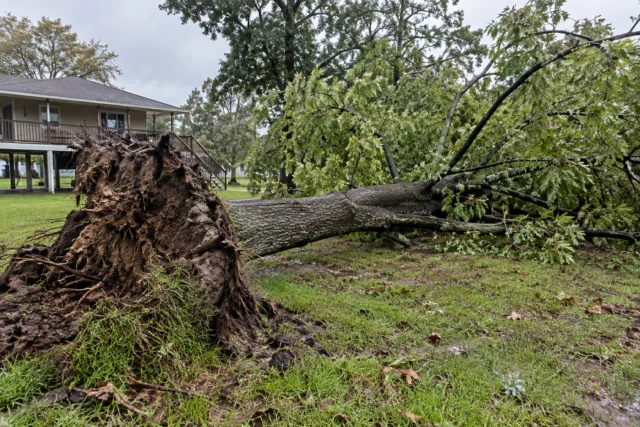
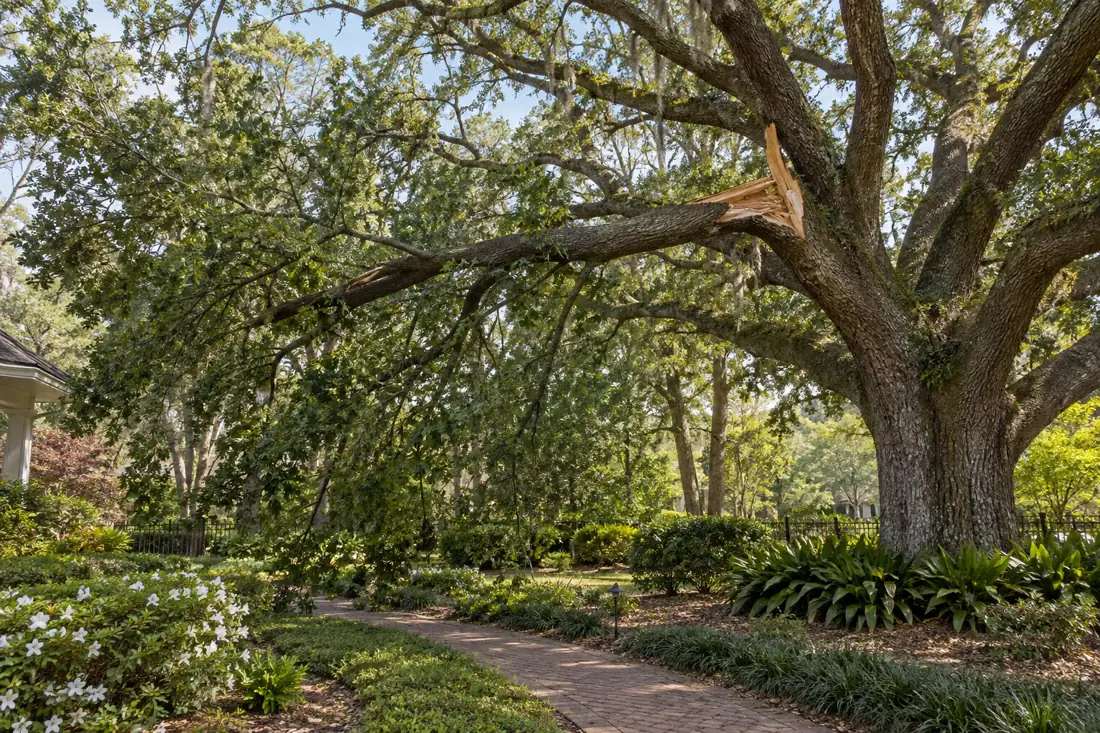
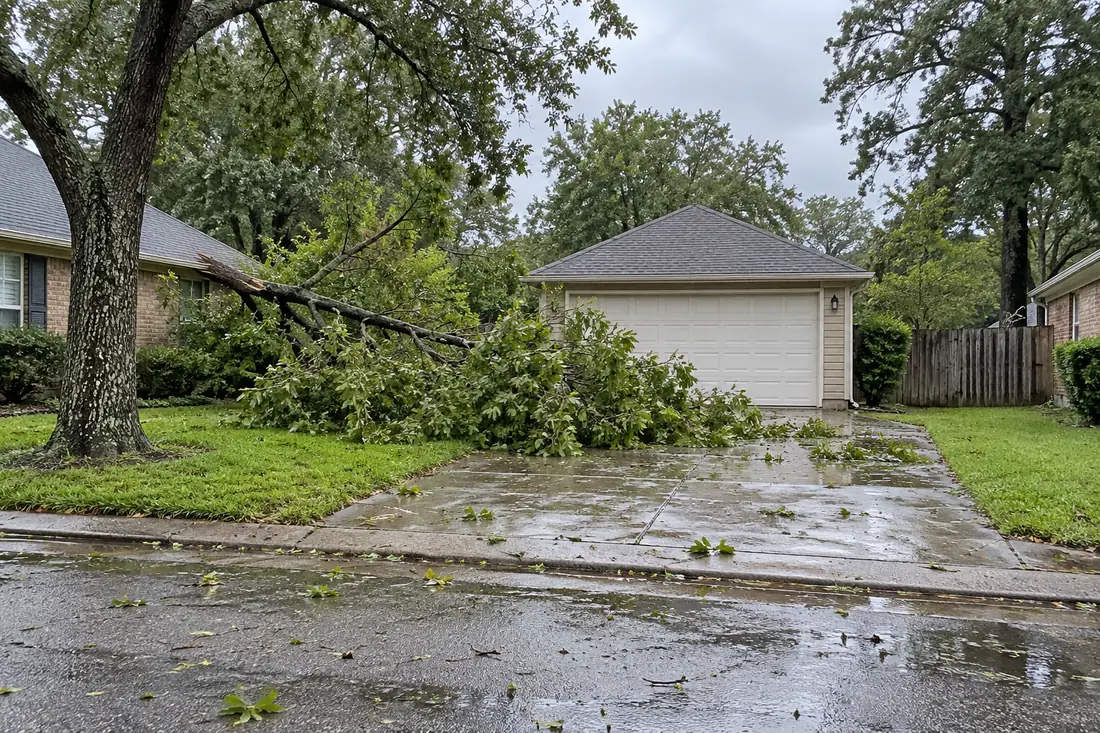
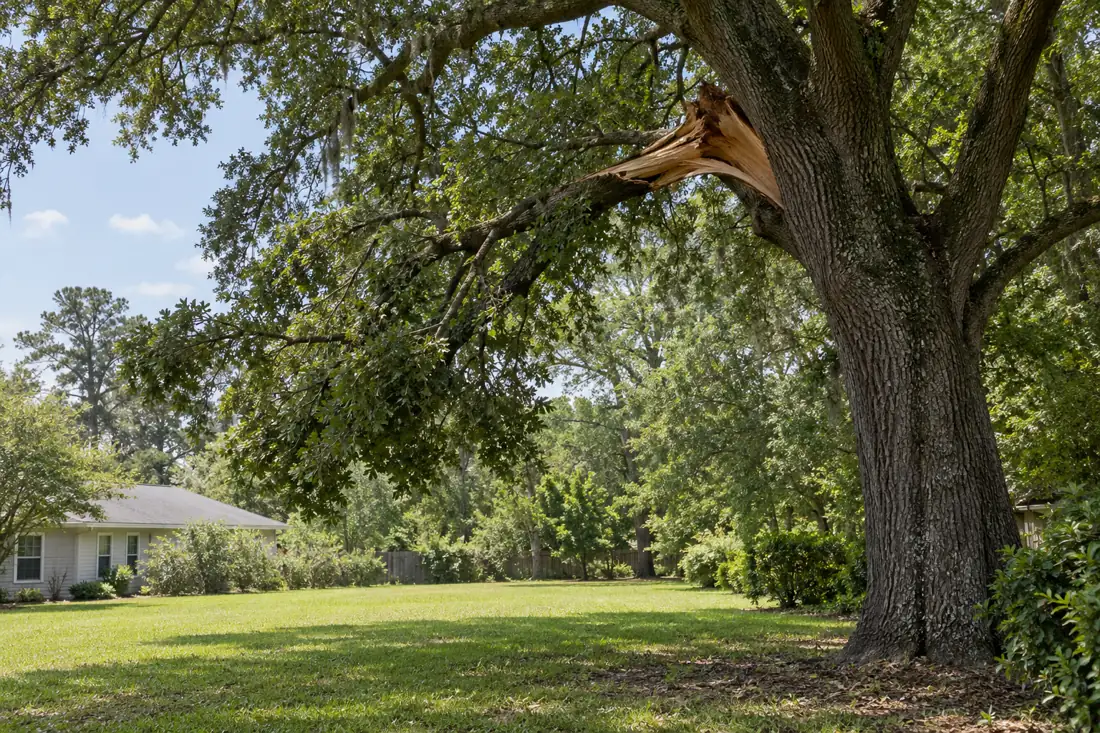
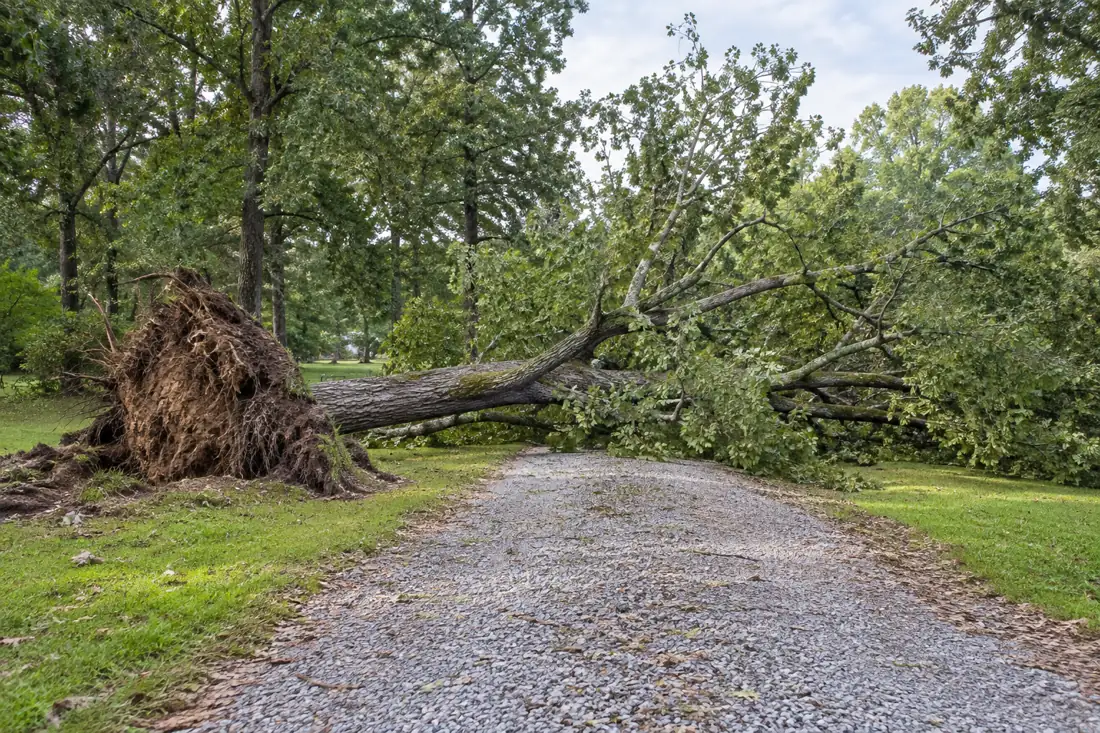
A lodged tree can remain suspended and transfer load into the tree supporting it. Do not walk beneath it or attempt to pull it loose. Tell the contractor where the support points appear to be and what lies below. The retained tree, surrounding targets and equipment route all belong in the response plan.
Confirm the supporting tree’s condition after the lodged load is removed
A tree holding a fallen trunk can sustain damage even if the suspended piece is ultimately removed without a new fall. The project decision should identify both trees and which one carries the lodged load. A contractor may need to inspect attachments, torn wood, crown distortion and the root area before determining whether additional work is appropriate; a ground photograph alone does not establish stability.
Ask that the written endpoint include removal of the suspended material, handling of dangerous fragments and a separate recommendation for any remaining concerns with the supporting tree. If immediate work is limited to access restoration, record that limitation clearly. Property occupants should not treat the absence of a visibly hanging trunk as evidence that the supporting tree has no unresolved defects.
A downed tree leaning into another trunk may look settled, but its weight can remain supported by branches, fractured wood or a changing contact point. It may roll, pivot or drop when one section is cut. Mark a broad exclusion area and keep children, pets and visitors out of the landing zone. Do not pull it with a vehicle, climb on the trunk or cut the supporting branches to make it fall. Nearby power lines require utility involvement before any private cleanup.
A useful estimate should describe the suspended condition, which tree is supporting the load, and what nearby structures or access restrictions affect controlled removal. Ask whether the contractor plans to stabilize or lift sections and where equipment can operate without damaging remaining trees. Clarify if the supporting tree also needs inspection and whether debris, stump grinding and surface restoration are separate items.
Photograph visible changes from a safe distance and report them before the scheduled work; an old estimate may no longer reflect the current loading.
Why a tree resting on another tree is a suspended-load hazard
When a fallen tree comes to rest on a standing tree, the apparent support can conceal an unstable, suspended load. The fallen trunk and branches may be held above the ground by a few contact points, while gravity continues to pull them downward. The load can shift if a limb breaks, the supporting tree bends, or wind moves the canopy. From the ground, it is difficult to judge how much weight is carried or where it will move if support fails.
The hazard is not limited to the fallen trunk. Branches can be bent, compressed, or caught among other limbs, storing energy that may release suddenly when a connection changes. A suspended section may drop, swing, or roll in a direction that is not obvious from its visible position. People should not walk beneath it, climb either tree, pull on branches, or make cuts to test stability. A qualified tree professional should assess the full arrangement before work is considered.

How the supporting tree may be damaged
The standing tree may have split limbs, a cracked trunk, torn bark, or damaged roots even when it remains upright. Concentrated pressure from the fallen tree can crush bark and underlying tissues, while leverage may bend the stem or open a crack that is hard to see from one side. Roots can also be disturbed if the supporting tree has been pushed or twisted. These injuries can affect stability immediately or leave defects that require later monitoring or removal.
A tree that appears to be holding the load is not necessarily a safe anchor for rigging or a reliable support. Its strength depends on species, size, soundness, root condition, soil, and the direction and height of force. Storm-damaged branches may hide decay or fresh fractures, and wet bark can make visual inspection less revealing. Professionals should evaluate the supporting tree independently from the fallen tree and explain whether it can remain, needs pruning, or presents a continuing hazard.
Assess both the fallen tree and the supporting tree
A trunk or large limb lodged in another tree may be held by friction, branching angles or tension that changes unexpectedly. Keep people out of the full potential fall and swing area, including underneath the standing tree, and do not try to pull the wood free with a vehicle or rope.
Photograph the arrangement from outside the hazard zone and identify nearby roofs, fences, wires and access routes. The crew should evaluate the load path and condition of the supporting tree as well as the fallen material, then explain the planned lowering or lifting method. Cutting one support can transfer force to another.
After the lodged wood is removed, a separate inspection of the remaining tree may still be needed.
Setting an exclusion area before assessment
Until a professional has evaluated the incident, people should keep clear of both trees and the space around and beneath the suspended material. A safe boundary must account for possible movement, falling limbs, and the reach of the canopy, not just the fallen trunk’s current footprint. Residents should keep children, visitors, and pets away and should not enter the area to retrieve belongings. If the trees affect a public path or neighboring property, the responsible party should arrange appropriate access restrictions.
There is no universal distance that suits every incident. The possible fall path depends on tree height, lean, attachment points, slope, nearby structures, and whether the support tree could fail. A professional can establish and communicate a site-specific exclusion zone, then revise it as the condition or work plan changes. Barriers and signs can help maintain that boundary, but they do not make the interior safe. Nobody should cross a marked zone without explicit direction from the crew lead.

What homeowners and property managers should do first
People should avoid touching, cutting, towing, or shaking any part of the trees. Even a small movement can change the load, release trapped limbs, or weaken a contact point that currently prevents a larger shift. Do not use a vehicle, ladder, rope, or equipment to pull the fallen tree away. From a safe location, note visible hazards and keep others out. If a person is injured or an immediate threat exists, call emergency services rather than approaching to investigate.
If the incident involves a power line, electrical equipment, or a line that may be energized, keep well away and contact the utility or emergency services as appropriate. Do not assume a line is safe because it appears low, broken, or inactive. Property managers should notify occupants and coordinate access restrictions without sending staff into the hazard area. Once immediate risks are addressed, a qualified arborist can determine whether specialized tree work is needed and whether another authority must be involved.
Lodged trees: identify the supporting load before requesting removal
When a fallen tree rests in another canopy, its weight may be held by branch forks, a leaning trunk, partially detached roots or a mix of supports. That makes the visible grounded end a poor guide to how the remaining wood will move. Do not shake, pull, saw or stand beneath suspended timber.
Keep driveways and yards closed under the possible movement area. Tell the contractor what is supporting the tree and what lies below, and provide photographs only from a safe vantage point. Specialized equipment or a modified rigging sequence may be needed.
The tree left standing after the lodged piece is removed may have damaged limbs, stripped bark or altered structural loading. Include inspection of the supporting tree in the work discussion rather than assuming it is undamaged because it remained upright. Clarify whether the scope includes the suspended trunk, adjacent hazards, all connected pieces, wood hauling and protection of nearby fences or roof features.
Ask how the exclusion boundary will change as the load comes down and who will verify the final work zone. A completed removal should not automatically be described as a comprehensive health assessment of the retained tree.
What a professional assessment should establish
A useful assessment identifies which parts are on the ground, which remain suspended, and what is carrying their weight. The arborist should inspect likely failure points, including the supporting tree’s trunk, branch unions, visible roots, and the fallen tree’s fractures and hang-ups. Site slope, soil condition, wind exposure, and nearby structures can affect the likely movement. The inspection should also consider whether hidden limbs or broken tops could fall independently of the main trunk during access or work.
Homeowners can ask the professional to explain the principal hazards, the planned work sequence, and the conditions that would require stopping or changing the plan. They should clarify whether the supporting tree can remain and what evidence would inform that judgment. The scope may include removing only the fallen tree, reducing the suspended load in controlled stages, or addressing damage to the support tree afterward. No assessment should promise that a tree is safe based solely on its appearance from one viewpoint.

Why professional rigging must match the load
Professional rigging is a controlled method for supporting, lowering, or redirecting sections while limiting sudden movement. The choice of rigging points and equipment depends on the tree’s condition, the weight and shape of each section, available anchor locations, and the path to a safe landing area. A damaged supporting tree may not be suitable as an anchor. Arborists must account for forces placed on ropes, hardware, anchors, and stems, rather than treating equipment as a simple means of pulling the tree free.
A sound plan divides the work into manageable actions and anticipates how each cut or release may alter the remaining load. Crew members need defined roles, reliable communication, and a clear method to pause work if movement differs from expectations. Homeowners should not attempt to direct cuts or operate ropes or machinery; those tasks require training and coordination. They may ask how the crew will control suspended sections, protect people and property, and avoid transferring dangerous forces to the support tree.
Choosing a safe removal sequence
The removal sequence matters because each section taken away can change the balance of the material still caught in the canopy. A professional may need to reduce or secure parts in a particular order so that the load does not roll, spring, or drop unexpectedly. The safest sequence cannot be inferred from which piece looks easiest to reach. Cutting a visible branch first, for example, could remove a restraint or shift weight onto a weaker union elsewhere in the supporting tree.
The crew should consider whether the fallen tree can be lowered in controlled sections or whether the arrangement calls for a different method, such as specialized lifting or access equipment. The sequence may also change if inspection reveals hidden fractures, an unstable anchor, or an obstructed landing zone. Property representatives should understand that pauses and reassessment are part of safe work, not evidence of a failed plan. The crew lead should communicate changes before work resumes and maintain the exclusion area.

Planning access without entering the hazard
Access planning identifies where trained workers and equipment can approach, set up, and leave without passing beneath the suspended load or crossing likely failure paths. The route may be affected by fences, buildings, parked vehicles, narrow gates, landscaping, overhead obstacles, or neighboring property boundaries. A route that looks convenient to a resident may put a worker beneath unstable limbs or place heavy equipment on unsuitable ground. The professional should inspect access from safe positions and account for escape routes and emergency response.
Equipment choice depends on available space and ground conditions as well as tree height and load position. A lift, crane, or ground-based system may require a stable setup area, clear reach, and sufficient overhead clearance; none is appropriate automatically. In humid, storm-prone southeast Louisiana, saturated or soft soil after rain can limit bearing capacity and increase rutting or tipping concerns. Property managers should identify known access limits and obtain permission for any necessary entry, while leaving equipment selection to qualified professionals.
Evaluate both trees when a fallen trunk is suspended in another
When one tree comes to rest in another, the leaning trunk, supporting branches and root systems form a connected hazard. A branch fork may appear solid yet have cracking or hidden damage. Keep people, animals and vehicles away from the space beneath and around both trees. Do not shake, push, saw or pull the lodged wood, and do not enter the hazard area for a dramatic photograph. The weight can redistribute unexpectedly as either tree moves.
Identify the moving tree, the apparent support tree and any home, fence, road or utility below them. Send a wide image only from a safe location. Note visible changes in lean after rain or wind without standing beneath either crown to measure an angle. Contact the utility if any wire is involved, and treat lines as energized until the utility directs otherwise. Choose an unaffected access route rather than walking into the probable fall zone.

Treat interlocked crowns as one connected hazard
The qualified crew should evaluate whether the supporting tree can remain, where loads may transfer, what equipment is feasible and how the exclusion zone will be established. A distant photograph cannot validate a proposed rigging arrangement or cutting sequence. Ask how neighboring trees, buildings and the ground crew will be protected, and how the supporting tree will be reassessed once the lodged material is removed.
Request a scope that names both trees, describes removal and hauling separately, and identifies any later inspection or pruning. The apparent supporting tree should not automatically be considered undamaged because it is still standing. Document the work actually performed and the condition of the retained tree before reopening the property. This gives the customer a realistic plan without turning an educational planning image into a fictional job record.
Accounting for weather, utilities, and surroundings
Wind can move crowns and suspended limbs, while rain can make bark, surfaces, and access routes slippery and soils less stable. Storm conditions may also bring additional falling branches or changing forecasts. Work timing should reflect current conditions and the crew’s safe operating limits, rather than a household’s preferred schedule. Nearby roofs, fences, vehicles, drainage features, and neighboring trees can constrain lowering paths. The professional should identify what could be struck or disturbed and how the work area will be managed.
Overhead and buried utilities require particular attention. A tree or rigging line near electrical conductors presents risks that ordinary tree-work precautions cannot resolve; the utility may need to assess or control the hazard before work proceeds. Property owners should not move lines, assume a cable is non-electrical, or authorize work that ignores utility clearance. Drainage and underground services can also affect equipment placement. Where their location is uncertain, the property representative should disclose available records and ask what coordination or locating steps are required.

Documenting decisions and confirming the work area
Property owners and managers can document the incident from a safe location by recording the date, visible tree positions, affected areas, and any reported changes, without approaching the load. Photographs should never require entry into an exclusion zone or a position beneath unstable limbs. They may help communicate conditions to an arborist, insurer, utility, or property stakeholder, but they cannot replace an on-site professional assessment. Keep notes of who was notified, what restrictions were set, and any access or utility coordination discussed.
Before work begins, confirm the agreed scope, who is responsible for maintaining the exclusion area, how occupants will be informed, and how access to affected spaces will be controlled. After removal, ask the arborist to explain any remaining damage to the supporting tree and whether follow-up inspection or care is warranted. The area should not be treated as cleared until the crew confirms work is complete and identifies any remaining hazards. Good records distinguish completed removal from unresolved tree-health or site-safety concerns.
Questions about this project
Should I wait for a form reply about a dangerous tree?
For an urgent condition, call to discuss availability and the next step. A form does not confirm dispatch. Keep clear, and contact emergency services or the utility when there is immediate danger or an electrical hazard.
Does emergency work always include full cleanup?
The initial authorized work may focus on stabilization or restoring access. Ask what is included and what follow-up removal, hauling or repairs need a separate scope. Confirm the plan directly with the contractor.
Should I tell the contractor where to attach ropes?
No. Those decisions belong with qualified people assessing and performing the operation. Identify the targets, restrictions and desired outcome so they can develop an appropriate method for the tree and site.
What should I ask about controlled handling?
Ask how the work area will be managed, what property needs protection, where material will be handled and how it leaves the site. Confirm those practical expectations along with access and cleanup.
Does healthy-looking foliage mean a tree is structurally safe?
No. Leaves do not establish the condition of roots, trunk or branch connections. Explain visible defects and recent changes, and ask for an assessment appropriate to the tree and nearby targets.
Should I test a cracked branch or trunk?
Do not pull, shake, climb or cut damaged material to test it. Keep clear of the affected area and describe the condition from a safe location. Qualified assessment and an appropriate work plan are needed.
Which property features should I point out?
Identify buildings, vehicles, fences, fixed fixtures, landscape features, utilities and occupied routes. Explain what can move and what must remain. Include existing damage and any buried features you know about along the access route.
Should people remain inside the work area?
The contractor and site contact should establish an exclusion area and access arrangements appropriate to the work. Keep children, pets, visitors and other workers outside the active zone until the responsible parties say it can reopen.
How should several storm-damaged trees be described?
Use marked photos or a simple tree list showing locations, affected targets and access problems. Identify urgent routes or buildings separately from later cleanup. The contractor can then discuss assessment and a practical work sequence.
Can restoration be handled in phases?
Yes, when the parties agree on clear scopes. Initial hazard or access work, planned removal, hauling and building or landscape repairs may involve different stages and providers. Record the responsibilities and completion requirements for each.
What should I tell Tree Huggers about fallen tree resting on another tree?
Explain the property address, the work you want and the specific concerns: suspended load, supporting tree, exclusion area. Send safe photos of the tree, surroundings and access route. The contractor can then discuss the assessment and scope needed for this situation.
How do I request an estimate for this work?
Call 504-458-8336, text photos or use the estimate form on this page. Include the address, desired outcome and any timing constraints. The company will need to review scope and availability; an online request does not confirm a price, appointment or emergency dispatch.
Get a scope for your property
A fallen tree leaning into another tree can contain suspended weight and shifting loads. Keep people and vehicles out of the area and never cut the supporting limbs or tug on the lodged trunk yourself. From outside the danger zone, provide wide views that show both trees, the direction of the fallen stem, nearby targets and feasible crew access.
Ask the estimator to explain the controlled dismantling or lowering approach appropriate to the site, the treatment of the supporting tree after unloading and the debris-hauling finish. Any remaining damage to the support tree should be assessed rather than assumed safe.