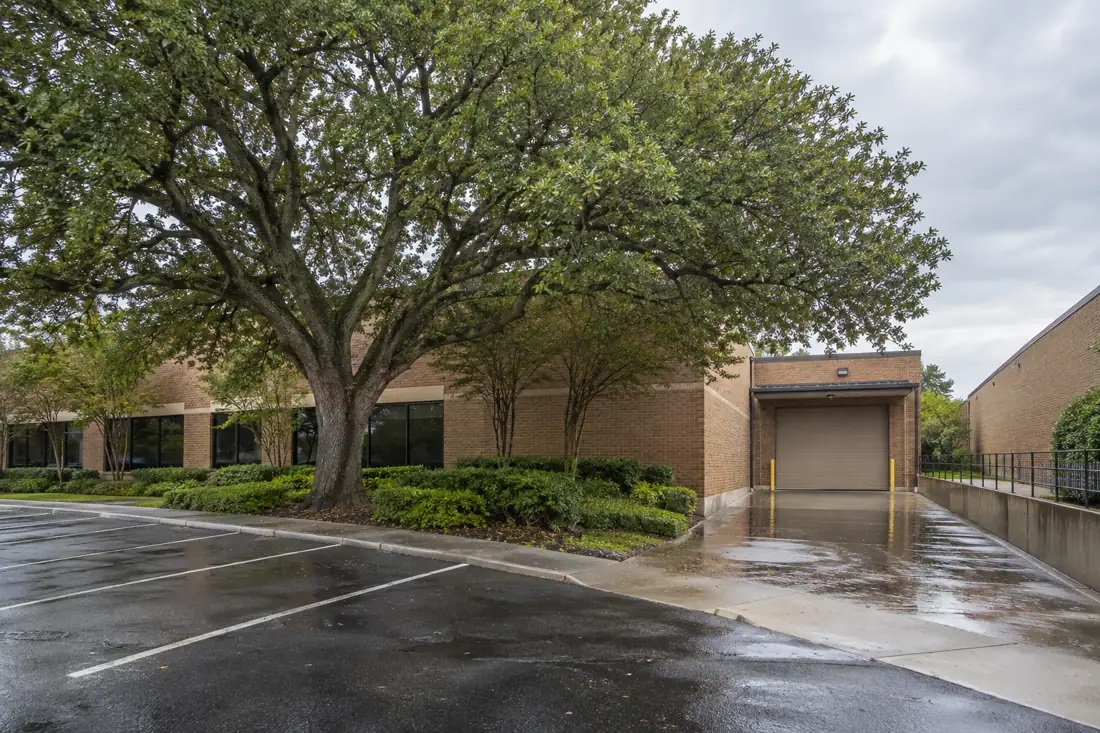
Planning this property scope
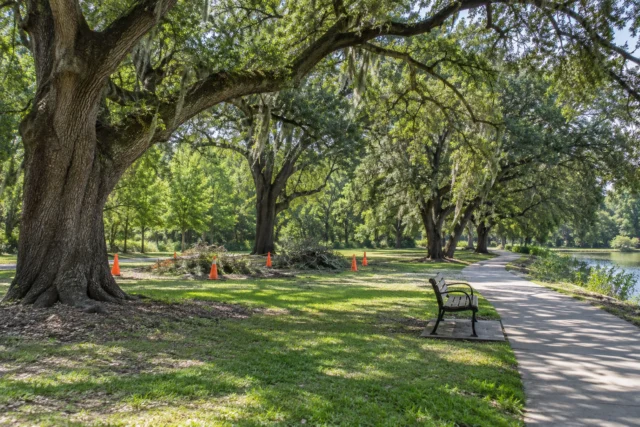
Association common areas may have shared paths, playgrounds, ponds and adjacent private yards. Identify who can approve work and how residents will be notified. The scope should distinguish common-property trees from owner-maintained trees and account for access permissions. A marked inventory helps keep the job within the approved boundary.
Practical scope and safety guidance: For an HOA inquiry, the critical first step is determining whether the association or an individual owner controls the tree and the ground needed for access. Gather the community’s applicable approval process, site map, relevant covenants if available and a clear contact for the authorized decision-maker. Mark common walking paths, mail areas, pools, parking and landscaping features that must remain usable. When work affects private lots, avoid assuming the association can authorize entry across them.
A useful estimate distinguishes shared-area maintenance, selective removal, stump grinding, hauling and any restoration or irrigation repair. Agree in advance on resident notices, work-zone boundaries and how questions will be handled. A recurring tree-care plan can prioritize documented concerns while allowing for site-specific inspections; it should not be represented as a guarantee that all storm hazards have been eliminated.
Prioritize safety before cosmetic work
Associations often have more tree needs than can be handled at once. We can help separate urgent hazards from routine pruning and longer-term projects so boards and managers can schedule work logically instead of reacting to every complaint as an emergency.
Dangerous limbs, leaning trees, blocked sightlines, clearance issues and storm damage.
Immediate hazards first, followed by scheduled removals and pruning.
Plan around residents, parked vehicles, gates, sidewalks and common-area use.
Large trees in common areas
Mature trees near pools, playgrounds, clubhouses, streets and homes can create complicated target zones. High-risk removals and large-limb work may require crane or mechanized support depending on access and tree condition.
Related services
Make the board’s decision visible on a map
An association tree project begins with identifying the area the board is considering. Mark each tree or group on a simple plan and connect it to photographs. Include nearby homes, shared paths, fences and community facilities. A board packet should let someone who missed the site walk understand which tree is being discussed and what result is proposed without relying on a description such as the big one by the pond.
Tree Huggers can discuss removals, pruning, difficult trees and storm-related work in common areas. The proposal should still be specific to the association’s property and authority. Give the contractor one coordination contact and explain who can approve the work. A committee recommendation, manager conversation and final board authorization may represent different stages; keeping them distinct prevents a useful walkthrough from being mistaken for permission to begin every suggested task.
Distinguish common property from private yards
A canopy can cross several spaces even when the trunk appears easy to locate. Identify which trees are in the requested association scope and which belong to areas maintained by individual owners or another party. Use the appropriate property records and association process when a boundary or responsibility is uncertain. A tree contractor’s visual visit does not settle a disputed property line or rewrite the community’s maintenance responsibilities.
Explain any separate access needed through a private yard or gate. A common-area work approval should not silently assume that a homeowner’s patio can become an equipment route. Record authorized approaches and the contact for each affected space. This is particularly useful where a shared path is narrow and the apparently easiest handling route crosses land the association does not control. Resolve the practical permission before pricing is treated as a final mobilization plan.

Separate urgent concerns from landscape preferences
Boards often hear several requests at once: a newly damaged limb, a view blocked by foliage, roots beside a path and a resident unhappy with shade. List the observed concern and desired outcome for each tree rather than assigning every complaint the same urgency. Ask what assessment is needed where the tree’s condition or potential consequence is uncertain. A resident’s strong preference should not be presented as a verified risk finding.
A phased proposal can help the board decide what to address now and what to review later. Keep the accepted tasks, deferred options and monitoring recommendations clearly labeled. If budget limits require choices, ask for information that supports those choices without implying all unselected work is safe to ignore indefinitely. The tree assessment page offers context for a condition review when a routine maintenance description is not enough.
Define pruning by the shared-space objective
A common-area pruning request may concern clearance over a path, a sign obscured by branches or deadwood above a gathering area. Describe the actual target and desired result. General instructions to make all trees match or cut them back hard leave too much room for interpretation. The contractor should be able to explain the proposed pruning objective and the canopy intended to remain.

Confirm HOA authority before treating a tree as a common-area project
A mature tree beside a residence may shade a shared lane or sidewalk without belonging to the association. A photograph cannot establish that ownership. Begin with the recorded boundaries, applicable association documents and the contact authorized to approve work. Identify whether the concern is on a common parcel, private lot, utility right-of-way or a boundary where permission may be required from more than one party. A clear site plan prevents a board discussion about the wrong tree.
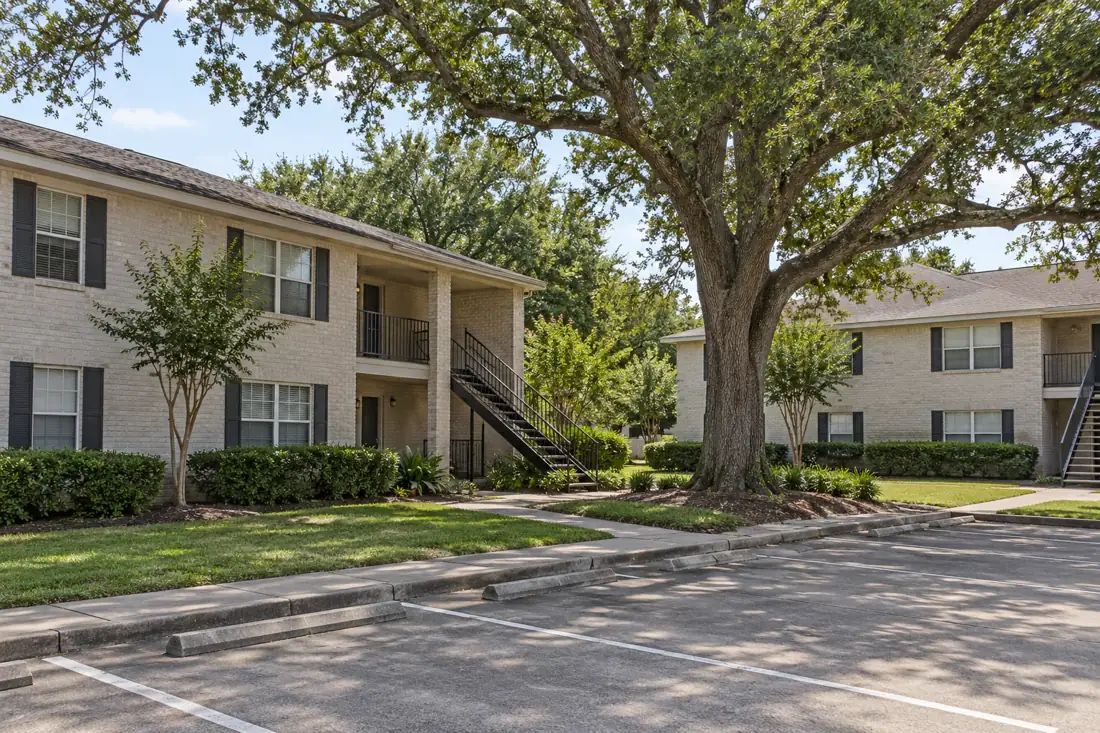
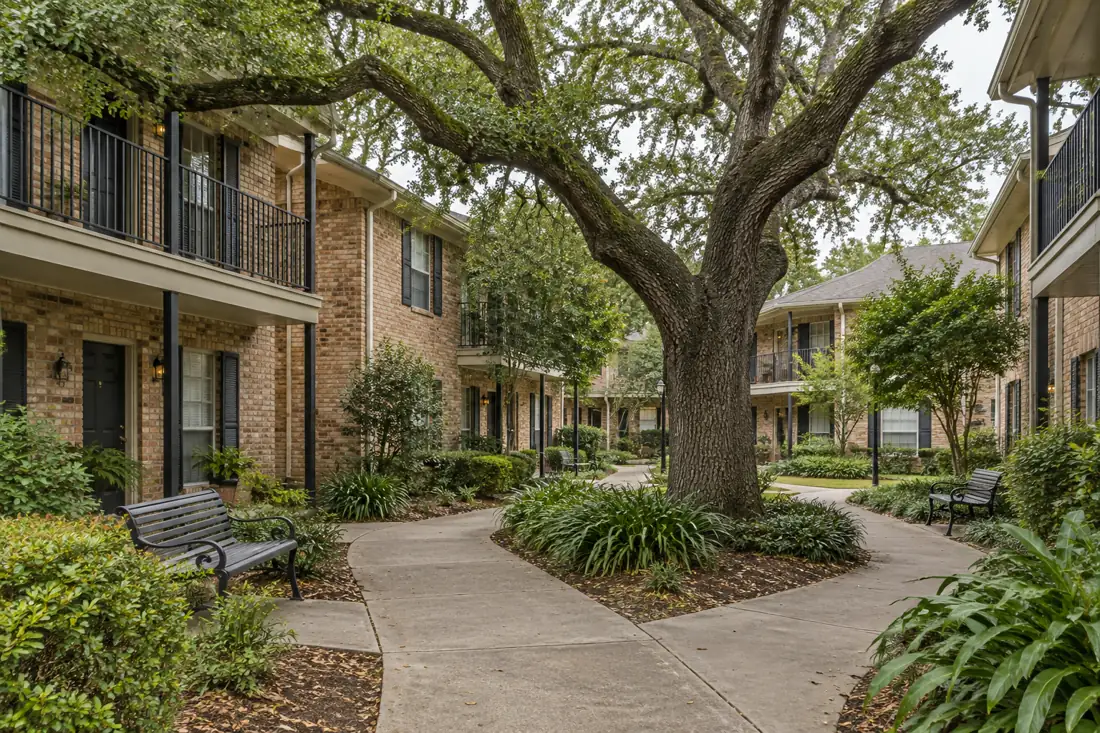
Once authority is settled, separate the requested tree assessment from work already approved. Note which residents use the nearby walk, which parking or gates could be affected and how the association intends to communicate a confirmed work window. The quote should identify each tree, the intended work, disposal and restoration limits and what happens if conditions found on site require a change. The synthetic residential scene offers landscape context but does not document HOA ownership or a Tree Huggers job.
Prepare a board decision that separates risk and preference
An HOA board may receive competing requests to preserve a prominent tree, increase clearance, remove debris, or change the appearance of a shared green. Put each request on a map and identify whether the tree is on common property, a private lot, or a boundary requiring confirmation. The board should be able to vote on the work objective and location without accidentally approving an unrelated change to the landscape.
Separate condition concerns from appearance requests. A tree reported to have a cracked limb merits a qualified condition review; a request for more sunlight is primarily a design preference. The estimate can then identify the proposed cut scope, exclusions, access route and restoration assumptions. Where residents disagree, photos from consistent angles and a concise explanation of alternatives help make the approval traceable.
A post-work record should identify the approved item, actual change and any follow-up observation rather than declaring every tree safe. If a committee requests additional work later, carry forward the original ID and obtain fresh authorization. This helps protect board records and makes it easier to explain why one area received pruning while another remains in a monitoring or planning stage.

Use marked photos for prominent entry trees and trees beside homes so the board can review the same plan residents are being told about. Pruning should not be sold as a guarantee against hurricane damage or future failure. If a structural issue needs closer evaluation, separate that question from cosmetic work. The finished scope should support a reasoned care decision rather than an appearance standard that overlooks the condition and structure of individual trees.
Plan around people who use the amenities
A tree beside a pool, playground or walking path affects more than the footprint beneath its trunk. Identify how people arrive, which gates control access and which alternate routes are practical. Share scheduled activities and maintenance visits before choosing a work window. A common area that looks empty during a morning inspection may be busy later the same day, especially if residents have not received a specific closure notice.
The association should coordinate its resident communication with the contractor’s work-zone plan. Notices need the affected area, timing, vehicle changes and contact for questions. Keep access controlled during material handling and cleanup as well as cutting. Reopening should follow confirmation from the responsible parties, not an assumption by a passerby who sees equipment paused. Tell the contractor if the path is part of a critical route so that issue can be resolved before work is scheduled.
Assess access without sacrificing the rest of the landscape
Common greens may contain irrigation, lighting, drainage features, turf areas and root zones of trees the board wants to retain. Identify known components and places that remain soft after rain. A large open lawn is not automatically a suitable equipment route. The route, setup and loading plan need to consider ground conditions, proposed loads and retained landscape before a machine is selected.
For trees near a clubhouse or neighboring roofs, difficult removal planning may involve controlled handling or equipment assistance where suitable. Ask how the material reaches the truck and which surfaces need protection. Keep any temporary fence opening or shared-drive use explicit. If access changes between the walkthrough and workday, review the effect before mobilization rather than assuming the original price and method apply to a different route.
Give the stump area a planned next use
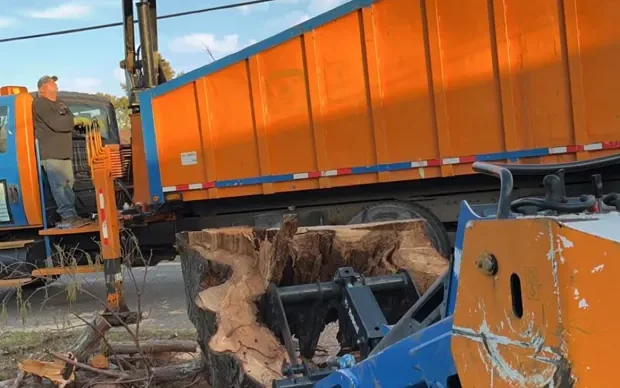
Removing a common-area tree creates a landscape decision. Will the space become lawn, a new planting bed or part of a path project? Tell the estimator and any landscape contractor before agreeing on the finish. Stump grinding, removal of grindings, backfill and replanting should be listed separately where relevant. Grinding a visible stump does not automatically prepare the area for structural construction or remove every root extending beyond it.
A clear handoff helps the board avoid two contractors assuming the other will finish the same item. State who handles remaining material and surface work. Identify whether any retained wood is acceptable in a common area and where it can be placed without blocking a path or creating a maintenance problem. The final price comparison should use the same end condition, not merely the same number of trees removed.
Make changes and completion board-ready
Name the person who can approve a change while the crew is on site. If a new condition or additional request comes up, describe the change and any effect on price or timing through the agreed process. A nearby resident’s request should not become part of the association invoice without authorization. The board’s accepted scope and later approvals should stay connected to the same tree identifiers.
Agree on photographs or other completion records before work. A short labeled record is often more useful than many images with no location context. Reconcile completed tasks, approved changes and deferred items so the board can explain the result at its next review. Photos document visible work; they do not certify that every retained tree has no future risk. Keep the record accurate and tied to what the contractor was actually asked to perform.
Build a useful storm request for the community
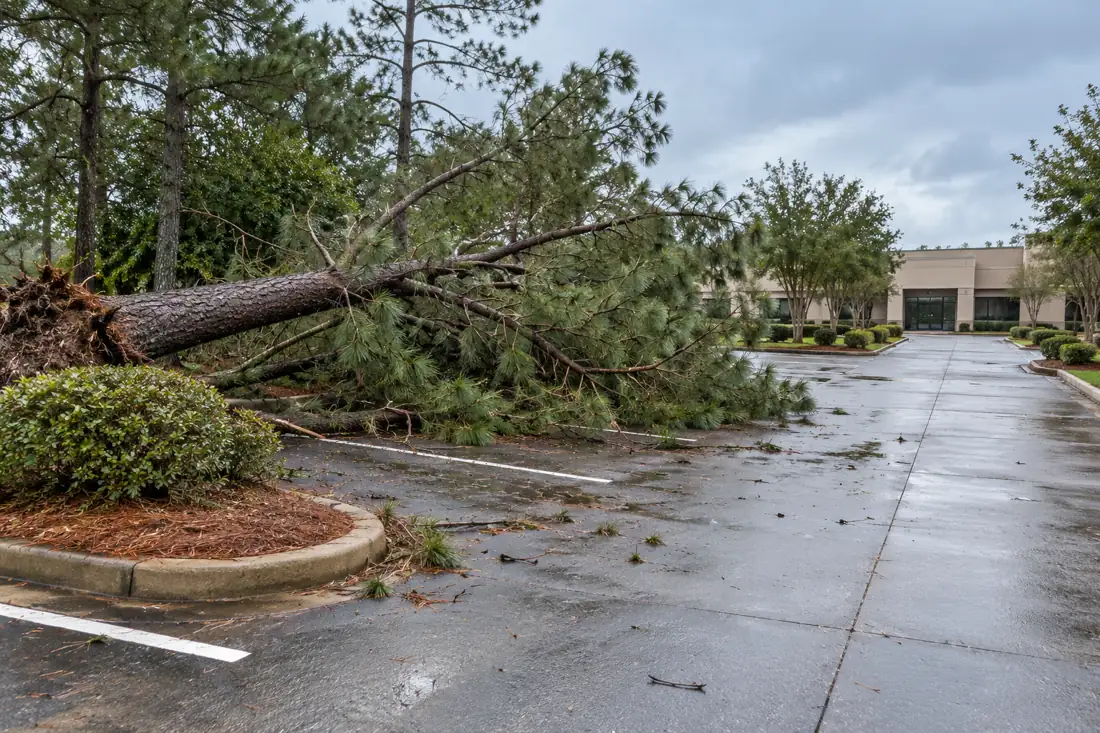
After severe weather, gather reports by location and practical effect: a blocked entrance, a tree on a structure or a hanging branch above a used path. Do not send residents or maintenance staff into unstable areas to collect close photos. Keep clear of wires and use the appropriate emergency or utility services for immediate threats. Call Tree Huggers to discuss response availability and the current conditions.
For several locations, use one association coordination contact and a clear priority list. Urgent access work, complete removals, stump tasks and later landscape repairs may be separate stages. Commercial storm response provides related context. To begin routine HOA planning, send the community location, marked map, safe photos and approval arrangements. That gives the board an estimate it can review against a real property plan instead of a generic promise to take care of the trees.
HOA Tree Service questions
What should the board send for an HOA estimate?
Provide a marked map, tree photos, requested outcomes, known site constraints and the authorized contact. Identify which decisions are still proposals and which are approved.
Can the contractor determine our property boundaries?
A tree-work visit is not a boundary survey. Resolve uncertain ownership or maintenance responsibility through appropriate property information before authorizing disputed work.
Does common-area approval allow entry into private yards?
Not automatically. Identify each proposed access route and obtain the needed authorization from the people who control the affected property.
How should the board prioritize resident requests?
Record observed conditions and objectives separately. Ask what evaluation is needed rather than treating every complaint, preference or budget category as a verified risk assessment.
Can we phase work across the community?
Yes, discuss clearly separated phases. Label accepted tasks, deferred options and later review items so the crew and residents understand what is actually scheduled.
What makes a pruning request specific?
Identify the target and objective, such as path clearance or deadwood above a gathering area. Use marked photos and clarify the canopy expected to remain.
Who should notify residents of closures?
The association should use its established communication process, coordinated with the contractor’s actual work boundary and confirmed timing. Agree on the responsibility before notices go out.
Can a playground reopen as soon as cutting stops?
Reopening needs confirmation from the responsible parties. Handling and cleanup can keep the area active even during a pause in cutting.
Does removal include a new common-area lawn?
Only if those finish tasks are expressly included. Distinguish stump grinding, chips, backfill, grading and planting or turf installation.
Can residents request extra work from the crew?
Route requests through the authorized association contact. Extra tasks should not become part of the invoice without the agreed approval.
What completion record helps the next board?
Keep tree identifiers, completed tasks, approved changes, labeled photos and deferred items together. The record should describe actual work rather than guarantee future tree performance.
How do we report community storm damage?
Call with locations, obstructions and visible hazards from safe positions. Keep people away from unstable trees or wires and use emergency or utility services where needed.
Let’s plan your tree work.
Send the property address, safe tree photos and the result you need. Include access restrictions and the person who can approve the work.