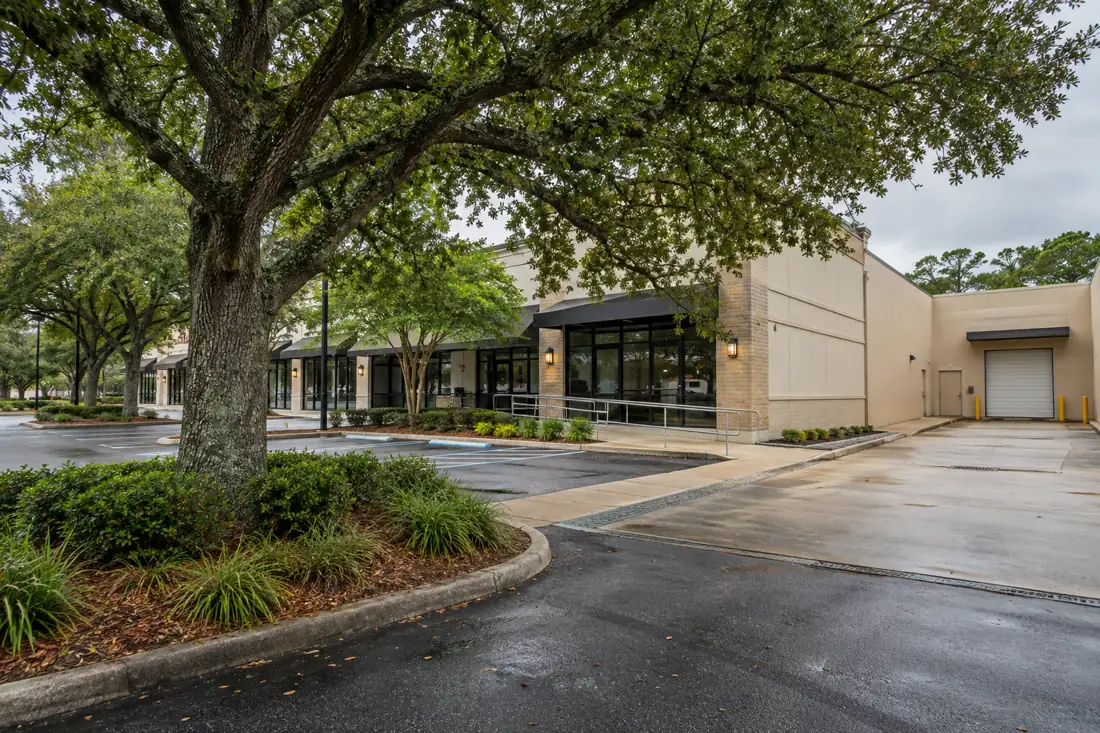
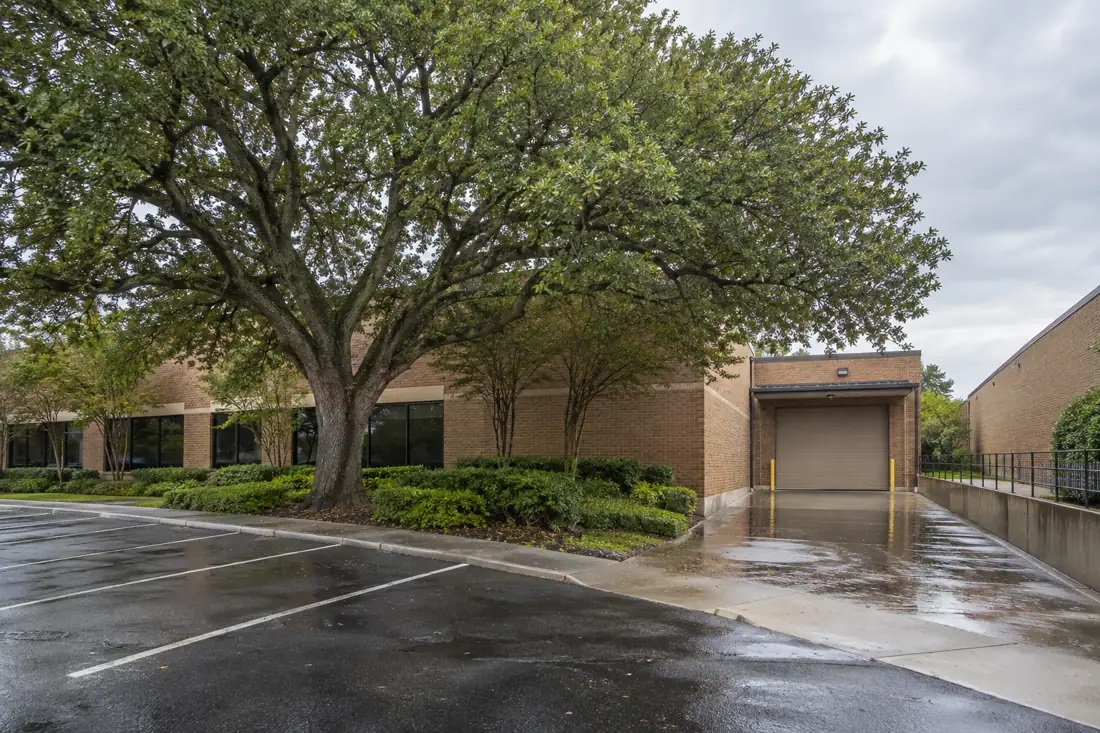
Coordinate the guest-facing and service areas
Hotel projects need guest routes, parking, service access and noise-sensitive periods considered in the work plan. Identify the property contact and the trees that affect occupied areas. A written scope should cover timing, barriers, loading and cleanup. Tree work should be coordinated with the hotel’s operations rather than an assumed empty work site.
Plan hospitality tree work around people, entrances and operations
For hotels and hospitality properties, access is often the primary operational constraint. Identify guest drop-off zones, loading docks, accessible routes, outdoor seating, employee entrances and paths used by delivery vehicles. A tree may be well outside a building footprint while its work zone blocks a critical entrance. Discuss quiet hours or business events, but do not assume that every hazardous operation can be scheduled safely during guest activity. The property’s designated representative should approve the closure and communications plan.
Ask the estimator to distinguish routine pruning, emergency stabilization, disposal, stump work and restoration, with specific locations for each. If contractors need to use cones, barricades or temporary pedestrian diversions, determine responsibility in advance. Keep dated photos and completion notes so later facilities staff understand which trees were addressed. Avoid using vague promises of zero disruption; a realistic plan identifies the temporary impacts and how the property will communicate them.
Plan work around the guest experience
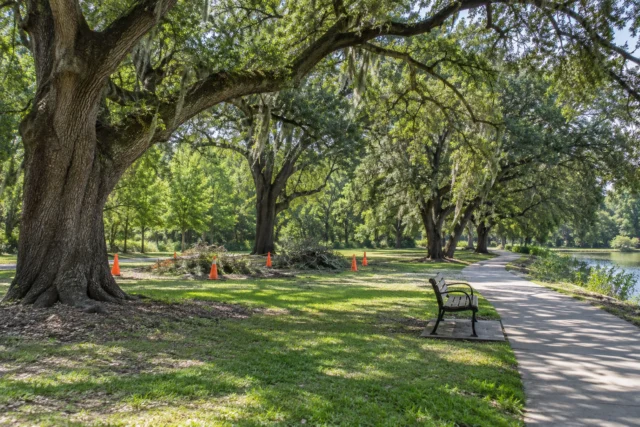
Arrival areas, parking, courtyards, pools and landscaped grounds can all sit beneath mature trees. We plan work zones, staging and cleanup so tree operations remain controlled and affected areas can reopen promptly.
Deadwood, clearance issues, storm damage and large trees near occupied areas.
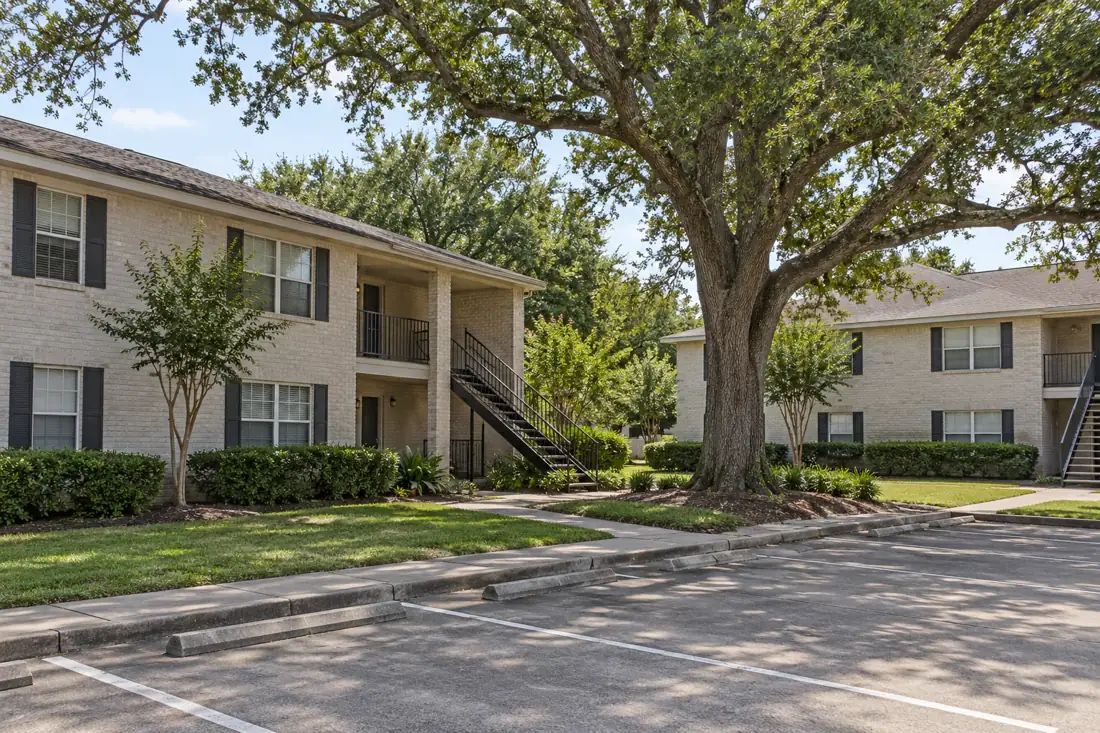
Plan around parking, deliveries, events and property access.
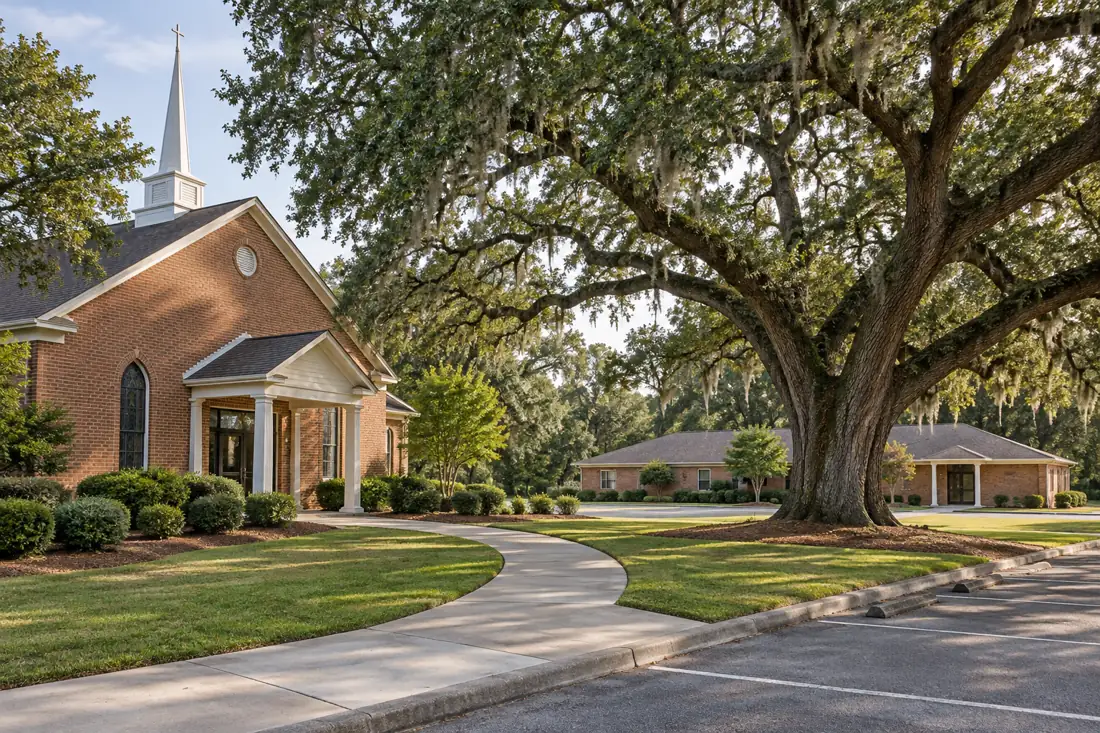
Finish the agreed debris handling and reopen affected spaces.
Storm response for hospitality properties
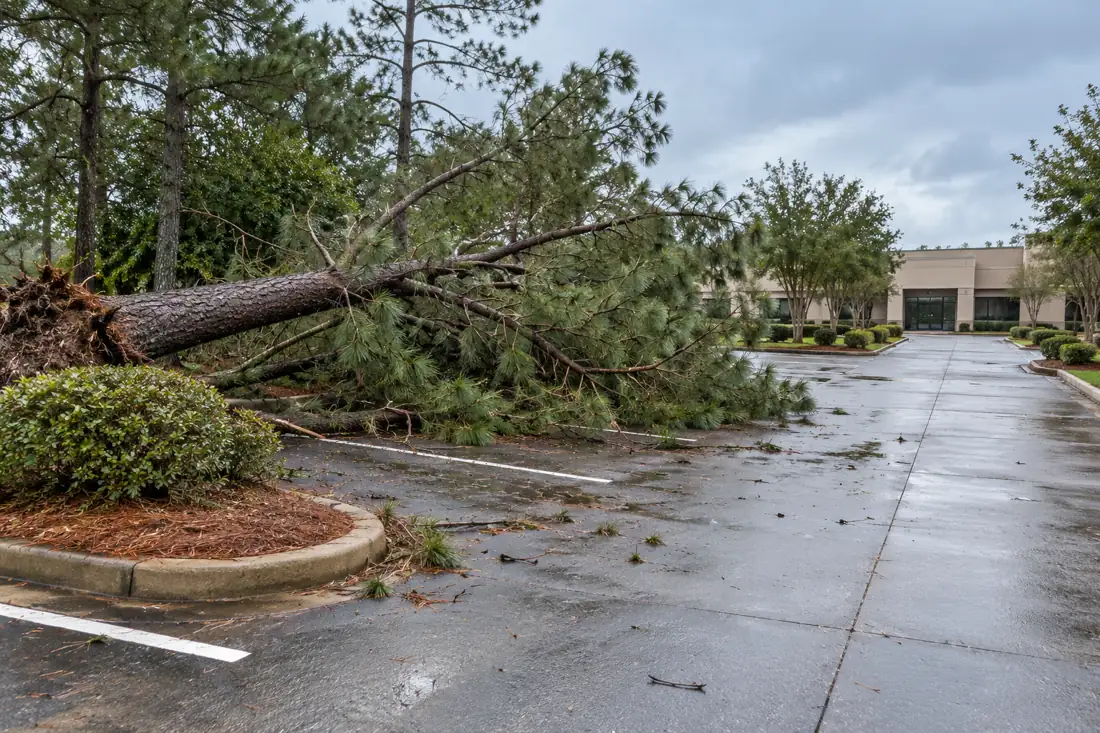
After severe weather, tree hazards can block entrances, damage buildings or create unsafe conditions near parking and walkways. Emergency response focuses on restoring safe access and removing immediate hazards first.
Begin with the places guests use
Identify the arrival area, walkways, outdoor seating, courtyard and parking spaces connected to the tree request. Explain the concern at each location instead of sending an unexplained photo of the property’s largest tree. A branch over an entrance, dead material beside a seldom-used garden edge and a possible removal in a rear area create different coordination questions. The request should show those relationships clearly enough for an operations contact and purchaser to discuss the same task.
Provide the address and a current property contact who knows access and occupancy. Keep planned pruning, condition review, removal and storm work distinct. The commercial service page offers a broader starting point. If a specific guest-use area needs a practical result, describe it in ordinary terms so the proposed work can be reviewed against that objective rather than a generic instruction to improve the grounds.
Discuss a real operating window
Share the hotel’s relevant arrival, service, event and maintenance constraints. Explain what space can actually be made available, who coordinates it and what remains uncertain. A quiet-looking courtyard in a morning photo does not establish a work window. The company needs a current discussion of property use before scope and timing are accepted, particularly when setup, tree handling and loading may depend on the same limited approach.
Tree work should not be represented as silent or invisible to guests. Ask how the proposed activities and property arrangements fit together, and identify the contact who can resolve a changed event or access condition. Do not promise a particular production pace based on an assumed empty site. The planning hub helps organize the operating brief so the accepted scope reflects the actual hotel rather than an idealized schedule that staff cannot maintain.

Trace the service route behind the courtyard
Show the entire approach from the road or loading area to the tree. Include gates, turns, overhead features, steps and surface changes. A courtyard may offer open space around the trunk while having a restrictive entrance. Photographs should connect those areas instead of showing only the best-looking view. Mention fixed features and known buried items that might be hidden by paving, beds or decorative landscape elements.
The equipment guide explains why route and setup influence handling options. Machine selection follows the actual property and task review. Do not remove a gate or rely on shared access before an approach and appropriate permission are agreed. If linen service, deliveries or maintenance use the same route, identify their practical requirements. The plan needs room for the work and the wood’s movement, with property staff coordinating the surrounding operation.
Keep tree care connected to landscape intent
Explain valued shade, screening and the specific conflict that needs attention. A pruning brief should identify the roof edge, path or area involved and what canopy the property wants retained. The trimming service provides related scope information. Avoid using a broad instruction to make every tree smaller as a substitute for the actual objective, especially when guest-use spaces depend on the trees’ shade and character.
Keep the arrival route separate from the work zone
Hospitality tree work affects more than the landscaping crew. A branch above an arrival lane, garden patio, luggage route, or event lawn can create a conflict between the work area and guest movement. Identify which facilities remain in use and which department has authority to adjust routes. The plan should be framed around actual reservations and staffing, not an unverified promise of zero disruption.
Before accepting an estimate, discuss the difference between a service lane, guest drop-off, emergency route and protected landscape area. If the contractor needs to stage equipment where deliveries occur, document an agreed alternative window. The route also needs to account for debris removal and final sweep, not only the time when cutting occurs. Staff can then communicate location-specific changes without giving guests an invented completion deadline.
For handoff, describe what is reopened, which areas still require inspection, and whether another contractor is expected to address irrigation, paving or planting repairs. A completion record organized by guest-facing zone is more useful than a generic before-and-after collage, especially when the property wants to preserve the appearance of landmark trees.

If a tree has new cracks, failures or a changed lean, describe the observations and timing rather than treating the concern as ordinary appearance work. The assessment page addresses a separate review request. Ask what is proposed, what remains outside the visit and whether follow-up is recommended. A one-time pruning or removal task should not be confused with a permanent condition guarantee or an inspection of every unlisted tree on the property.
Review removals without losing the property context
Provide safe whole-tree views that include galleries, roofs, outdoor furnishings, walls and adjacent areas relevant to the work. Tell the company which items can be moved and who controls them. The handling plan needs that context before a particular approach can be discussed. A tree’s apparent size alone does not describe the work involved in a confined courtyard or near a building that remains occupied.
The removal service offers related guidance. Identify the accepted tree, logs and brush disposition, stump decision and practical final condition. Ask which separate provider handles landscape replacement, building repair or later surface work. If another hotel project follows, explain that handoff early. A clear removal scope leaves staff with a recognizable result rather than an assumption that removing the tree also completes every repair or renovation the property has planned.
Make presentation part of the agreed finish
Discuss the material the quote accepts and the specific areas to be cleared. Chips, large wood, small fragments and an old separate pile should not silently share one vague cleanup description. If some wood stays, identify it and its placement before processing. Mixed building or fence materials need separate disclosure. The debris page helps frame the boundary without turning tree work into an undefined general waste service.
Describe the use the area needs to support afterward. Reopening a guest route, leaving a garden ready for another landscaper and preparing a surface project are different handoffs. Ask about remaining ground impressions, grindings or later soil work. Tree-material removal does not automatically include restoring all landscaping or paved surfaces. Clear finish notes help the hotel’s operations team understand what they can review at completion and which tasks remain with another provider.
Separate storm response from the broader recovery
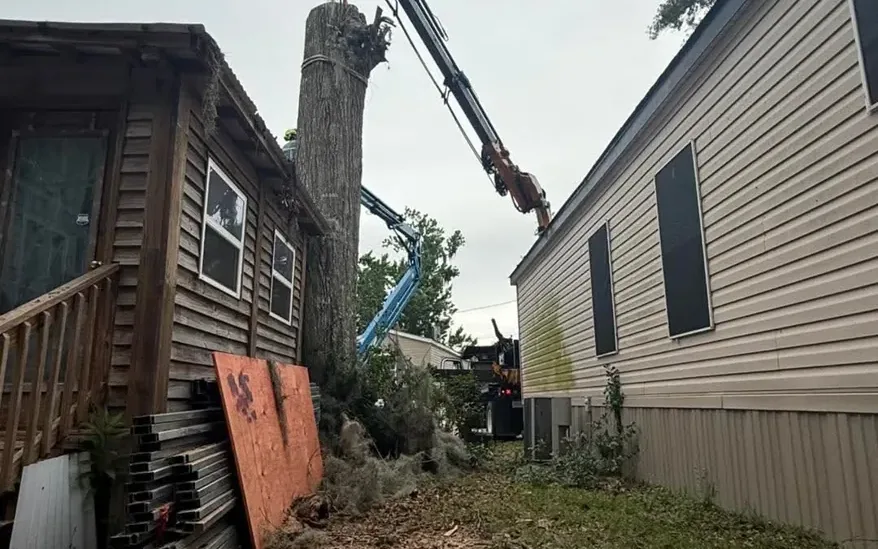
For current tree hazards, keep guests and staff away and call 504-458-8336 about response availability. Use the appropriate emergency or utility service for immediate threats to people or electrical involvement. Do not send staff beneath suspended material or onto a roof for closer photos. A message through the website introduces the request; it does not confirm dispatch or establish that an affected entrance can be used safely.
The commercial response page explains how to introduce access priorities and multiple work areas. Name the current operations contact and report changes since the photos were taken. Tree handling, debris hauling, utility coordination and building repairs can require separate providers. Keep those responsibilities visible so an initial access task does not become confused with complete hotel recovery or an assumed commitment to finish every area on the same visit.
Give staff an understandable completion record
Use the same location names from inquiry through approval and closeout. Identify who accepts the work and who can authorize additions when the purchaser is elsewhere. If photos are requested, agree on useful tree and work-area views without unnecessary guest details or room-interior information. The record should describe the actual task and remaining items, not make unsupported statements about conditions outside the reviewed scope.
A planning example is targeted entrance pruning, a separate courtyard removal and later landscape replacement by another provider. Those stages can support one property objective while having different finish requirements. Send Tree Huggers the address, area list, safe photos, operating constraints and contact. Review the tree scope alongside the hotel’s actual arrangements so staff know what has been accepted and what still needs coordination.
Guest-facing operations and tree-work handoff
An occupied hotel should identify which guest-facing areas must stay accessible and which can be closed under the property’s own operational plan. Distinguish the public arrival drive from the loading route, garden path, pool circulation, courtyard seating and emergency access. A tree overlooking two of those areas may require more than one controlled work zone or a different sequence from a tree beside an unused service yard.
Before asking for a firm scope, have the operations contact mark affected areas on a simple property plan and list scheduled arrivals, deliveries, events and approved restrictions. The tree contractor can discuss the task, machine access and expected debris handling; hotel staff remain responsible for the guest communication and property operations they control. At handoff, confirm which areas are included in cleanup and who decides when each space may be reopened.
Hotel & Hospitality Tree Service questions
What should a hotel tree-work brief include?
Provide the address, affected guest and service areas, tree objectives, safe photos, operating constraints and a current contact.
Can work be planned around arrivals or events?
Share actual operating windows and space arrangements so timing can be reviewed; do not assume a particular window is already confirmed.
Does a quiet courtyard photo establish access?
No. Show the complete route, gates, turns, surfaces and ordinary service activity behind the courtyard.
Is tree work silent around occupied rooms?
Do not assume that. Discuss the proposed activities and the hotel’s actual guest and operating arrangements.
Can pruning retain valuable shade?
Explain the specific conflict and canopy the property values so the objective is clear before work is proposed.
When should a condition review be requested?
Report new cracks, failures, movement or changed lean directly and ask what review fits the observation.
Does removal include courtyard restoration?
Confirm the accepted finish. Tree handling, stump work, surface repair and planting are different tasks unless expressly included.
What should be stated about debris?
Identify accepted wood, chips, retained material, older piles and mixed non-tree contents before hauling is arranged.
Who coordinates deliveries using the work route?
Name the property’s operations contact and actual service constraints so the route is not assumed unrestricted.
What happens when storm damage affects an entrance?
Keep people away, discuss current response availability directly and involve emergency or utility services where appropriate.
What completion photos are useful?
Agree on views of identified trees, work areas and remaining items while avoiding unnecessary guest or private room details.
Does a form confirm an appointment or dispatch?
No. Confirm the next step and availability directly with the company.
Let’s plan your tree work.
Send the property address, safe tree photos and the result you need. Include access restrictions and the person who can approve the work.