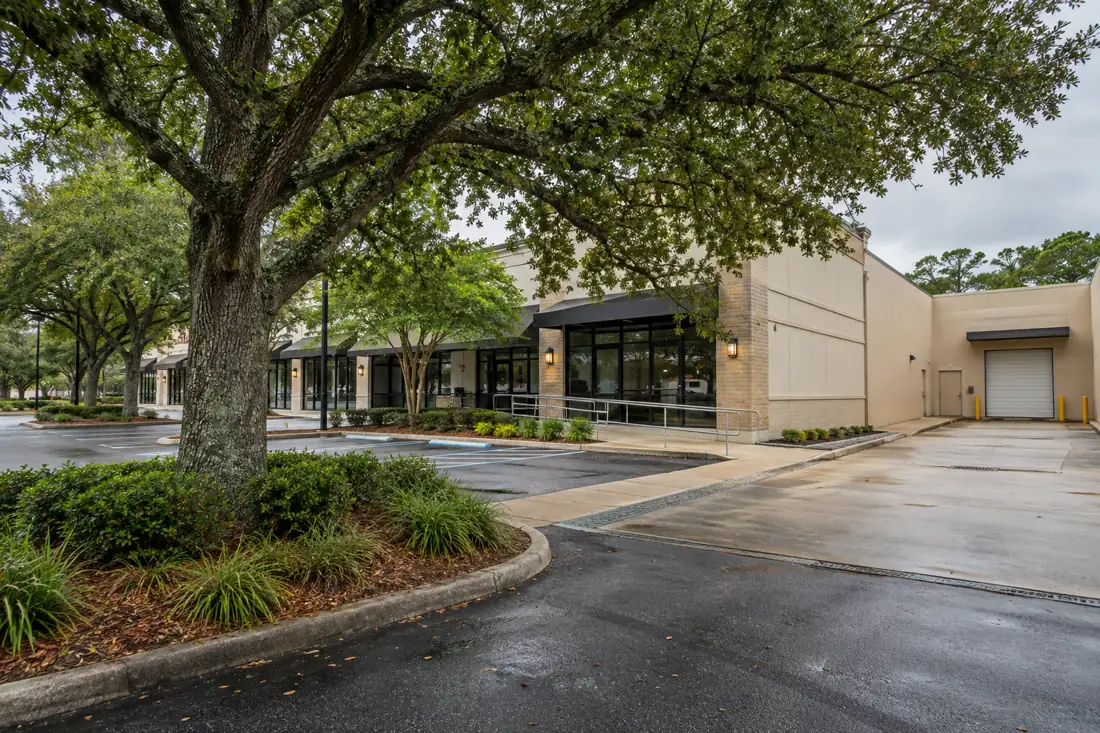
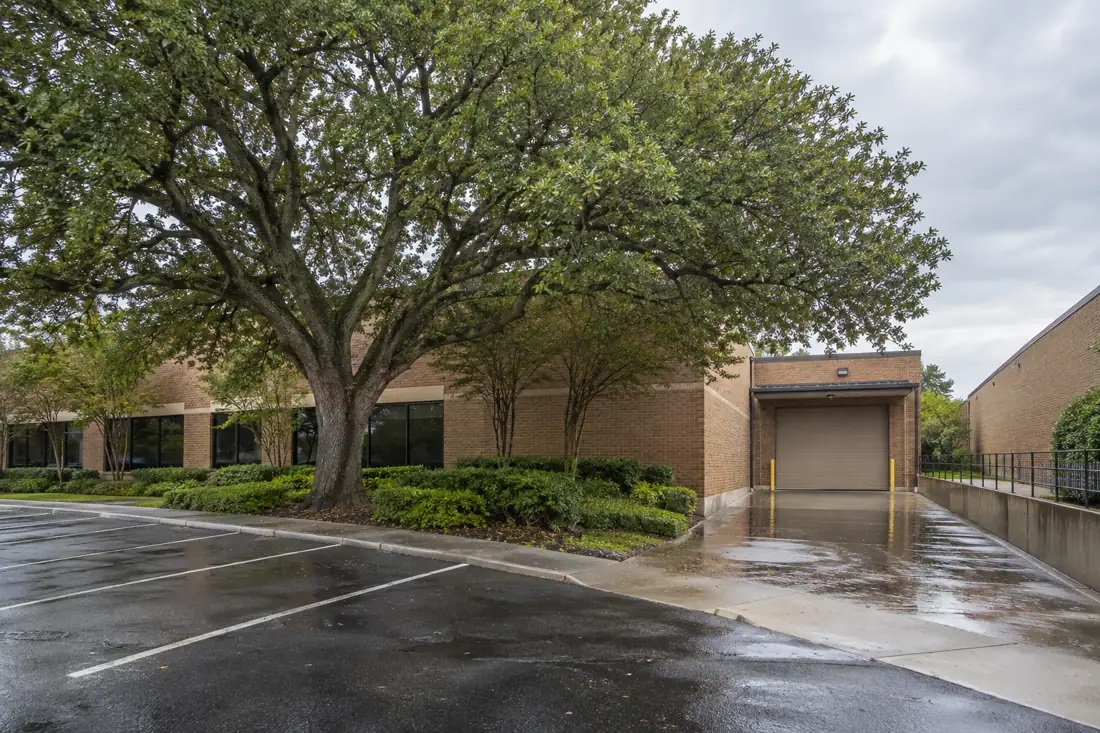
Warehouse tree work can affect loading docks, truck turning areas, gates and perimeter fencing. Identify operational routes and any site induction requirements during the estimate. The work scope should include material handling and staging without blocking essential logistics. One authorized site contact helps resolve conflicts during production.
Practical scope and safety guidance: For warehouse properties, define the project against active logistics rather than a static site photo. Mark dock doors, trailer parking, gate clearance, forklift areas, employee parking and tractor-trailer turning radii. A vacant dock approach during the estimate may be fully occupied during a production shift. The warehouse operator should approve any temporary route or loading change. Note trees close to security fencing, roof edges, lighting, service lines and drainage ditches.
Soft shoulders or filled areas beside a paved truck lane may not support equipment even when they appear flat. The estimator should describe where lowered sections and chips will be handled without blocking the remaining truck route. If a removal requires several operations, distinguish crane setup, pruning, grinding and haul-off phases in the scope. Confirm how the yard surface, fence line and emergency access are checked before the facility resumes its normal operating pattern.
Mark truck-turn radii, dock doors, guard shacks, trailer staging, forklift crossings and shift-change foot traffic on the same map as the affected trees. Provide photos of both the approach road and the rear service yard; a tree beside a warehouse wall may require reach across a route needed for deliveries.
Identify overhead lighting, security cameras, fire access, aerial lines and stormwater structures that the estimator might miss in a close tree photograph. If a dock cannot close, say so before methods and machinery are selected. Include the facility's authority for lockouts or temporary traffic diversions where relevant.
The written plan should name the person who can authorize a dock closure, how truck drivers will be directed, and what separation exists between loading operations and controlled lowering or equipment movement. Ask whether a phased work window is feasible and what must be cleared before a machine arrives.
Pricing should distinguish tree work, security or traffic personnel, facility-provided vehicle relocations, surface protection and hauling. At closeout, inspect docks, gate hardware, loading pavement, lighting and drains, and verify that no branches or material obstruct a fire lane or trailer approach. Record any rescheduled follow-up rather than counting the site as completely finished.
Identify the warehouse's operational zones
A warehouse property often has several very different operating areas: public or employee entrances, trailer staging, dock doors, truck circulation, fenced yards and utility corridors. Mark the target tree in relation to those zones before choosing a work date. Ask facility staff which movements are routine and which routes must stay available for emergencies or time-sensitive deliveries. A quiet-looking lot may be an active turning area later in the shift.
Use a simple annotated property map and photographs from safe positions to show the tree, equipment approach and possible loading areas. Avoid assuming that the address's street frontage identifies the correct gate for a contractor. Identify the person who controls access to each zone and any security requirements for visitors or vendors. These details belong in the estimate because they influence both feasibility and schedule.

Respect truck turns and dock-door access
Semi-trucks need turning and backing space that may extend well beyond the visible lane. A tree crew's truck, chipper or stabilizers could block part of the maneuver even if they occupy only one parking stall. Ask warehouse operations to identify trailer sweep areas, dock assignments, dropped trailers and routes used by yard tractors. Convey those constraints to the tree contractor before equipment is selected.
Do not rely on a driver improvising around an active tree-work area. If the required setup location conflicts with truck movement, the site may need a different work window or method. Confirm who can take a dock or staging row out of service and how drivers will receive the revised instruction. The plan must account for loading and cleanup movements as well as tree cutting.
Plan around shift changes and time-critical freight
Warehouse operations may extend beyond ordinary business hours, with overlapping shifts, carrier appointment windows and late arrivals. Identify which periods can accommodate a work zone without interrupting essential functions. The preferred time should reflect arrival, site setup, active tree operations, hauling and final inspection. A short cutting task may still require a substantial overall closure for equipment and debris movements.
Discuss how staff, temporary workers and contractors will learn about restricted areas. A single email to a daytime manager may not reach the evening shift or outside drivers. Use the facility's established communication channels, and identify the authorized person who can explain changes. Do not promise zero disruption or a fixed completion time until the contractor has assessed the physical site and the planned sequence.

Check gate geometry and equipment access
Security gates, bollards, docks, ramps, loading canopies and overhead branches can constrain the path from the street to a tree. Walk the complete proposed route rather than judging whether the machine fits through the gate. Include any tight turns, slopes, pavement changes and overhead services. The contractor must verify its own equipment dimensions, ground support needs and safe maneuvering envelope.
If the property uses access cards, timed gate controls or escort requirements, arrange them before arrival. A planned temporary fence opening or neighboring route requires proper permission. Discuss surface protection near curbs, drainage and buried services, without promising that mats eliminate every impact. The scope should name who restores gates, barriers or landscape elements if a temporary access modification is actually authorized.
Locate utilities and sensitive infrastructure
Warehouses can have large electrical services, lighting poles, communications cables, drainage structures, fire-suppression infrastructure and underground utilities near the grounds. Identify known features around the target tree and equipment approach. Do not guess at electrical clearances or instruct crew members to work near energized lines. Qualified parties should coordinate utility conflicts under the applicable arrangements before an operational method is finalized.
Mark outdoor generators, transformers, storage tanks and security equipment that must remain accessible. Some facilities have restricted areas or operational hazards unrelated to trees; tell the contractor what can be shared and what site-specific orientation is required. The estimator needs enough context to choose a suitable approach while the facility retains responsibility for managing its own infrastructure and access policies.

Protect employees, drivers and contractors
Warehouse personnel may walk across yards to retrieve trailers, inspect shipments or reach break areas, even where no painted footpath is visible. Document these habitual movements and communicate them to the property representative and tree contractor. The active work area should be controlled by the qualified crew, with site management handling traffic and employee notices through its procedures. A temporary cone line is not a substitute for the agreed plan.
Include outside drivers and visiting vendors in the communication strategy. They may enter through a different gate, lack local knowledge or arrive after the work began. Keep an authorized contact available for route questions and changes. Never direct untrained site staff to enter a tree-work zone to redirect vehicles or remove debris. The two operations need a coordinated boundary that both teams understand.
Confirm the tree-work method and material flow
The tree's condition, proximity to structures and available space should drive professional method selection. A crane, grapple-saw system or conventional approach may be considered depending on the actual site, but none can be selected responsibly from a machine's advertised reach alone. The contractor should explain setup assumptions, accessible work zones and how the proposed approach respects truck routes and facility restrictions.
Trace where branches, logs and chips will travel after removal. Material may need to be processed at a location different from the tree, and repeated trips can cross active warehouse routes. Agree on staging positions and the sequence for clearing them. The owner should not prescribe cutting or rigging methods; its role is to describe operational constraints and decide which authorized disruptions are acceptable.

Make weather and ground changes part of the decision
Paved yards can disguise weak edges, drainage problems or buried services, while landscaped areas may soften after rain. Share any history of settlement, flooding or patched surfaces. If weather or ground conditions change, the contractor must decide whether the equipment plan remains suitable. A scheduled freight window should not override a safety-related postponement or a necessary reassessment.
Check the approach shortly before work begins for newly parked trailers, temporary storage or construction equipment. Photograph relevant changes from outside the active area and relay them to the contractor. Where a site modification is necessary, identify who has authority to approve it and any impact on the schedule. The goal is a documented adjustment, not last-minute improvisation around a loaded dock.
Plan Warehouse Tree Work Around the Dock and Truck Route
At a warehouse, a tree near a gate may obstruct the only usable truck approach even when it does not touch the building. Walk the path from the public entrance to the dock with operations staff. Note where trailers swing, where forklifts or pedestrians cross, and whether the site has a secondary entrance. A plan that blocks a fire lane or scheduled outbound load is not workable simply because the tree itself is accessible.
Ground conditions matter as much as aerial reach. Heavy machines cannot be assumed safe on a narrow concrete edge, a buried utility corridor or soft fill near a drainage ditch. Mark likely equipment locations and ask the contractor to confirm support requirements and any mats or surface protections. Overhead lines, sprinkler piping and stormwater structures may require separate coordination. Keep hazardous-material or restricted dock areas off the public site map and share access details privately with the selected contractor.

Identify clearance envelopes before equipment arrives
Sequence noisy cutting, vehicle movement and material hauling so loading teams can maintain a clearly designated route. If a boundary tree can be accessed from outside the fenced yard, verify ownership, access permission and lawful staging rather than assuming the road shoulder is available. Arrange a pause point if truck traffic unexpectedly increases; ground crews should not improvise a new debris corridor through working dock lanes.
A complete request for estimate states the trees and desired outcomes, exact allowable access zone, anticipated truck conflicts, haul-off expectations and whether stump work follows. Ask for exclusions involving paving, fencing or gate adjustments. The closeout check should include gate operation, drainage openings and removal of wood fragments from active vehicle routes. Any remaining tree concern belongs in a dated follow-up recommendation, not a vague promise of permanent clearance.
Define cleanup, security and reopening checks
A warehouse may require more than general brush pickup before an area can reopen. Agree on removal of logs, chips and small debris from truck lanes, employee paths, dock approaches, drains and security gates used by the crew. Specify whether stump work, grindings, disturbed soil and surface restoration are included. If the crew uses a fenced compound, confirm how the area will be secured when the operation ends.
Have the authorized facility representative review the agreed work zones from safe locations after the crew reports completion. Check that access-control equipment and barriers are returned to their intended positions and that no material obstructs vehicle movement. Document unresolved concerns and any approved follow-up tasks separately. Do not treat a clean-looking yard as proof that every tree or utility condition was assessed.

Build an estimate package facility staff can approve
Provide the tree location on a facility map, photographs of the access route, known utility constraints, truck movement restrictions, preferred work periods and an authorized point of contact. Ask the contractor to list included trees and tasks, staging assumptions, debris treatment, possible public-space permissions, cleanup and the change-approval process. A strong proposal should fit the real warehouse operation rather than describe tree removal in generic terms.
Compare alternative quotes against the same desired end result, not merely a headline price or equipment name. Have facilities, operations and security review the parts that affect them before confirming a date. Keep the approved scope, any gate instructions and revised traffic notices together for work day. This helps the contractor focus on qualified tree operations while the property maintains control of its freight, people and infrastructure.
Questions about this project
Can a business stay open during tree work?
That depends on the site and scope. Discuss occupied routes, exclusion areas, loading and work windows with the contractor and property representative. Do not assume normal access can continue through the active work zone.
Who should communicate with tenants or visitors?
Agree on that responsibility with the property representative. The contractor needs a clear site contact, while the owner or manager should use the property's established process to communicate access changes and work windows.
Can the crew block a public sidewalk or road?
Required arrangements must be coordinated with the appropriate authority. Identify public routes and restrictions before scheduling. A private work agreement should not be treated as automatic permission to occupy or close public space.
When should parked vehicles be moved?
Set the timing and responsible contact before the work window. Vehicles may need to leave the tree zone, equipment route and loading area. Confirm where access must remain available during each phase.
Does a machine's maximum reach prove it can do my job?
No. Loaded reach, configuration, section handling, obstacles and setup conditions all affect suitability. A contractor needs to evaluate the particular tree and property before confirming an equipment plan.
Can specialized equipment replace a site assessment?
It does not remove the need to assess tree condition, targets, access and support conditions. Ask how the contractor will confirm that the proposed machine and method fit the actual scope.
How should extra work be approved?
Use the agreed approval process and identify the change, reason, scope, price or schedule effect as applicable. Confirm who has authority before treating an additional tree or task as part of the original job.
What completion records are useful?
Keep the agreed scope, tree or area identification, authorized changes, invoice and labeled photos where appropriate. Include unresolved items and a contact. Contract-specific records should follow the buyer's stated requirements.
What should I compare besides the price?
Compare tree identification, work objectives, access assumptions, hauling, stump treatment, site finish and exclusions. Ask whether permits or other coordination are part of the scope and who can approve changes if conditions differ.
Does an online request book the crew?
No. A request starts the estimate conversation. The company still needs to discuss scope, availability and any site assessment. For a dangerous or urgent condition, call 504-458-8336 rather than relying on a form response.
What should I tell Tree Huggers about planning tree work for a warehouse property?
Explain the property address, the work you want and the specific concerns: loading docks, truck routes, site requirements. Send safe photos of the tree, surroundings and access route. The contractor can then discuss the assessment and scope needed for this situation.
How do I request an estimate for this work?
Call 504-458-8336, text photos or use the estimate form on this page. Include the address, desired outcome and any timing constraints. The company will need to review scope and availability; an online request does not confirm a price, appointment or emergency dispatch.
Get a scope for your property
A warehouse may have truck aprons, loading-dock doors, trailer sweep paths and restricted site access that dictate when tree work is possible. Provide the facilities contact with a tree-location map, shipping schedule, secure gate rules and photographs from approved areas. Ask the contractor to show whether equipment, drop zones or debris staging would interfere with truck movements or safety routes.
The written scope should distinguish canopy clearance, structural concern assessment and full removal, identify necessary escorts and approvals and state who clears wood and branches before docks resume normal service. Never treat a live dock lane as unused staging space.