A managed property benefits from identifying priority trees and access problems before weather creates a rush. Start with known defects, occupied areas and maintenance history. Ask for a practical scope rather than indiscriminate canopy thinning. Records and photographs help the manager track what was inspected, recommended and completed.
A managed-property storm plan needs clear responsibility at each handoff
Create a location-specific tree and access list for tenant entrances, parking lots, service drives, shared lawns, loading areas and neighboring boundaries. Flag suspected defects and note which areas carry frequent pedestrian traffic. The property manager should identify who can approve an emergency isolation, authorize work, notify occupants and arrange utility access. A single vague instruction to handle all trees does not define a safe or auditable scope.
Before a forecast event, identify which work is preventive and which is an emergency response that may not be possible during hazardous conditions. Where appropriate, compare planned pruning, removal, bracing inspections and debris staging without promising that a site will be damage-free. Note gate keys, access hours, equipment weight limits and any restrictions on blocking fire lanes. Tenant communications should describe the planned activity, not promise an unconfirmed response time.
Use before-work observations and a simple closeout record: tree or area identifier, action performed, material hauled or staged, any damaged surface and any deferred condition. This supports follow-up without collecting private occupant information in public analytics. Confirm whether the contractor handles notification, traffic control and restoration, or whether those remain with property management.
For this project, separate priority trees, maintenance records and occupied targets. These details help the contractor understand what must be protected, what information needs confirmation and what result you want from the work. A clear request is more useful than an assumed method or a price based only on tree size.

Build a managed-property storm list that residents and contractors can both use
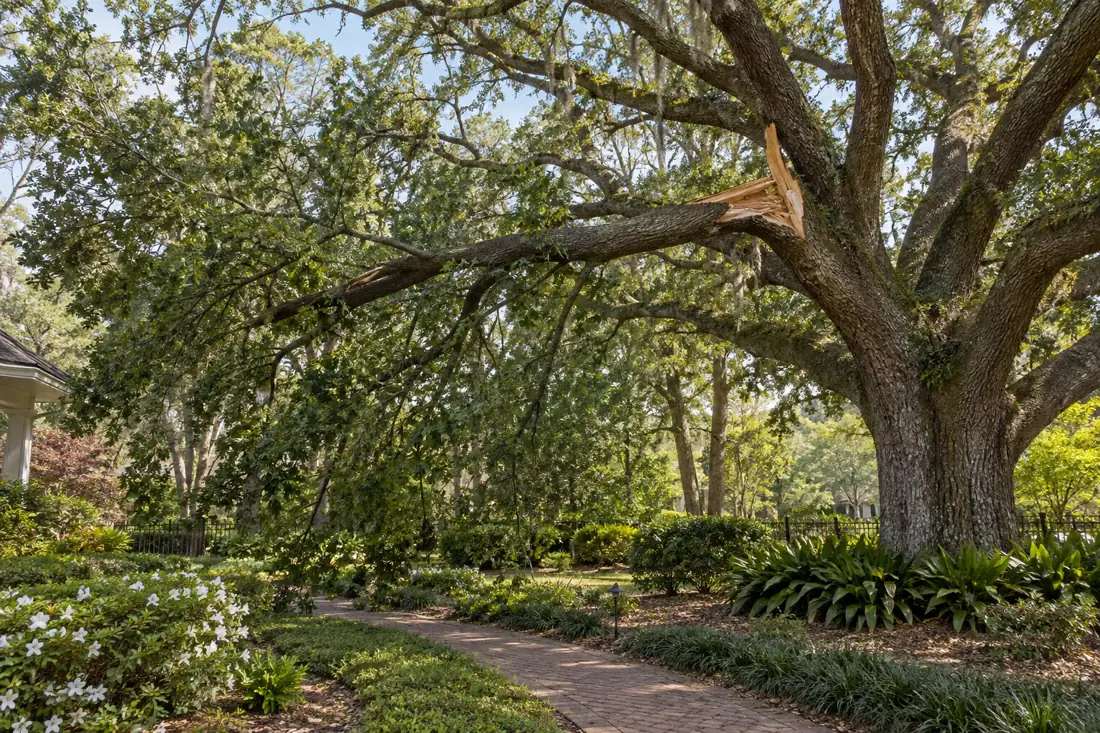
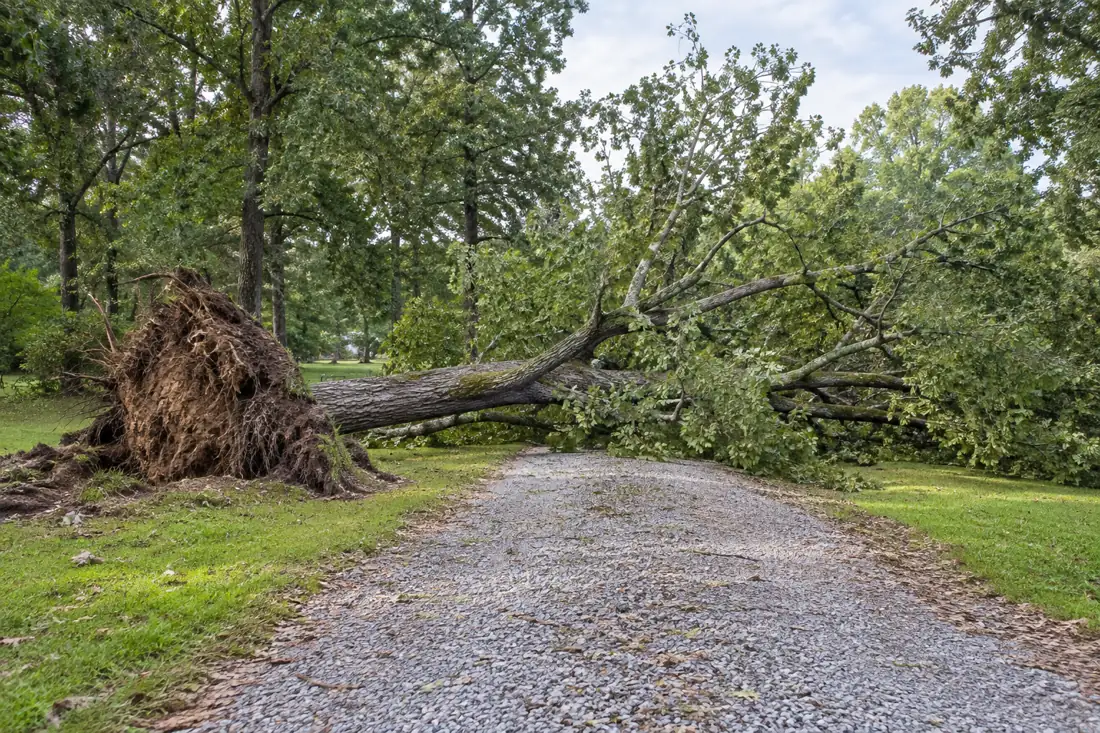
Pre-storm planning becomes clearer when the property manager numbers trees by building, court or entrance rather than describing every concern as the large tree by the parking lot. Pair each location with a safe wide photograph, known history and the routes beneath its canopy. The tree-lined driveway pictured here is illustrative; it does not document storm damage, structural weakness or an actual apartment community. A visually healthy tree may still warrant an assessment when a reported condition has changed.
Give residents a straightforward way to report a hanging branch, fresh soil lifting or a changed lean from a safe location without approaching the hazard. The management team should identify the decision-maker, any affected access route and an alternative route when one is available. Keep immediate stabilization, later debris removal and routine maintenance as distinct requests so a storm response does not silently become authorization for additional work.
For a managed site, prioritize trees by exposure rather than simply pruning every canopy on the calendar. Walk the property with maps showing buildings, entrances, parking, drainage, pedestrian areas and vulnerable equipment. Note dead or broken limbs, root-zone changes and branches crowding structures, but distinguish observable conditions from an arborist's professional risk judgment. Ask who has authority to approve urgent work and how tenants will receive closure information. Do not promise that routine pruning will prevent all storm damage.
A good written scope identifies each tree or area, proposed treatment, access needs, cleanup expectations and the conditions that would trigger reassessment. Schedule around occupancy and protect turf, irrigation, curbs and landscape features. Keep before-and-after observations, contractor contact details and decisions in a central maintenance record, while avoiding fabricated ratings or job-history claims. Pair seasonal observation with post-event inspections after significant weather, and make responsibility for temporary barricades and emergency contacts explicit.
Build a tree inventory before storm season
A managed property may include parking islands, interior courtyards, occupied buildings, pools, walkways and service roads. Storm preparation is easier when the manager knows which trees are present and where people and structures would be exposed to failure. Start with a labeled site plan and photographs from safe ground locations. Record each tree's approximate location, species if known, surrounding use and recent professional assessments. An undated list of 'large trees' provides much less direction.
Assign a consistent identifier that appears in work orders, photographs and inspection reports. A manager can note previous broken branches or complaints as observations without converting them into a diagnosis. Include public access points and occupied areas in the map, not merely decorative landscaping. The inventory allows qualified professionals to prioritize evaluation and makes it easier to distinguish proactive maintenance from urgent work after a storm. No inventory alone determines whether a tree is safe.

Prioritize exposure rather than trimming everything
Not every tree requires the same attention before hurricane season. A large healthy tree over a low-use lawn and a structurally compromised tree beside a busy entrance present different circumstances. A qualified professional considers observed tree condition, targets and the consequences of potential failure. Prioritization should not be based only on height, leaf density or a generic belief that every broad crown needs thinning. Some trees may need no pruning after assessment.
Review recurrent occupied zones such as entrances, loading docks, playgrounds, accessible paths and tenant parking. Ask the professional to explain which defects warrant remedial work, closer inspection, temporary access control or monitoring. The manager should record any decision to defer work and what conditions would trigger reassessment. Heavy pruning of every tree can create unnecessary wounds and expense without eliminating storm risk. The useful goal is a documented response to real site concerns.
Make the managed-property tree list actionable
A property manager can reduce ambiguity before hurricane season by mapping priority trees to the buildings, parking areas and walkways that could be affected. An inventory need not diagnose every tree. It should distinguish a tree needing professional assessment, an access obstruction and a routine landscape request. Include an identifiable location, the concern visible from a safe position, the date it was reported and the person authorized to approve an assessment.
Check lease arrangements and management contracts for who authorizes spending, who coordinates restricted areas and who communicates with tenants. If the owner, management company and maintenance contractor have different roles, put those roles in the work-order notes. A standing phone number is useful only when someone is responsible for answering it and communicating revised access instructions.
Inspect structure, roots and prior pruning
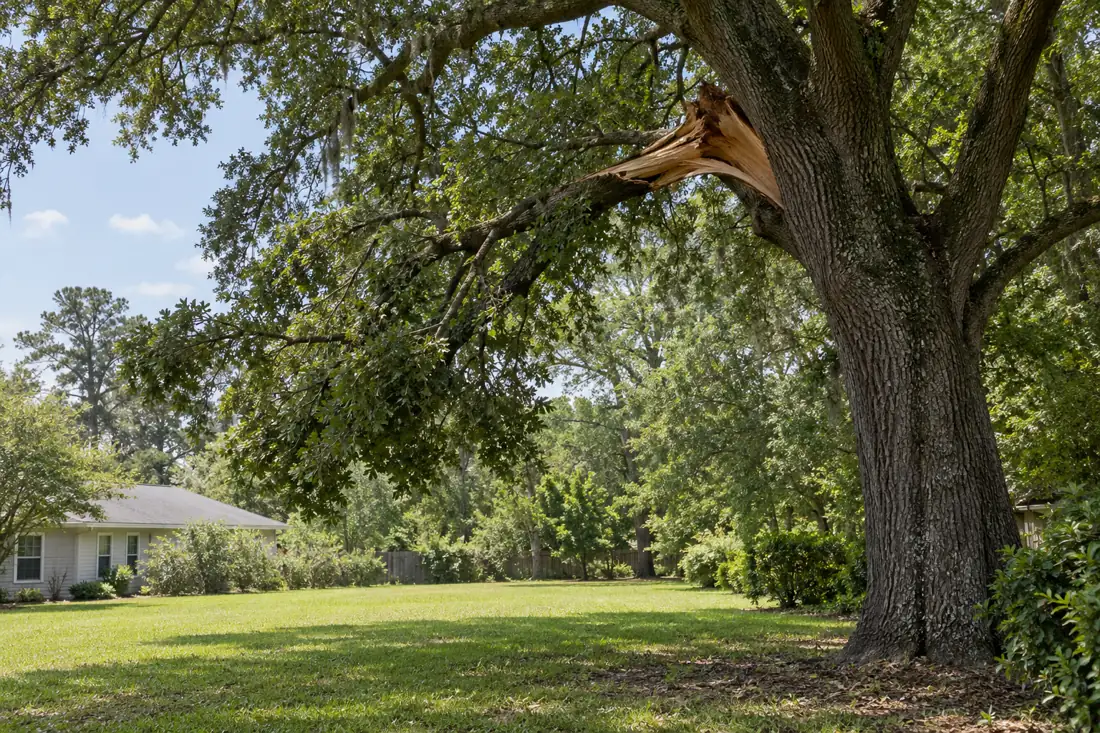
Storm exposure involves more than the visible outer canopy. A professional may evaluate branch attachments, deadwood, splits, decay indicators, root-zone conditions and past severe cuts. Soil saturation, recent excavation and altered drainage can affect a tree's response to strong weather. A tree that appears leafy from a distance can still have structural concerns, while a naturally open crown is not automatically safer or less healthy. Specific findings matter.
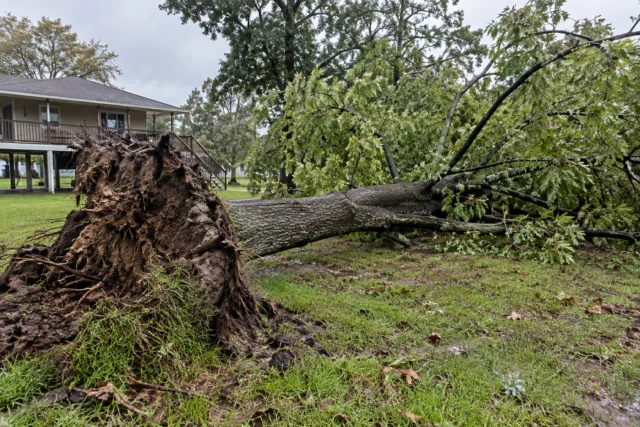
Ask what evidence supports each recommendation and whether further assessment is appropriate for a suspected defect. A fresh lean, newly lifted root plate or hanging broken limb requires particular caution and access restrictions. Managers should not pull on branches, excavate around roots or use a lift without qualified personnel to investigate. Where risk cannot be reduced to an acceptable level through reasonable care, discuss other options, including removal where justified, rather than promising that pruning alone will make the property stormproof.

Avoid topping and indiscriminate thinning
A common request before a storm is to 'cut the top down' or 'let the wind blow through.' Those phrases are not a sound work specification. Topping creates large wounds and can promote weakly attached regrowth. Excessive inner thinning may leave long limbs with concentrated foliage at their ends, changing loading without resolving underlying defects. A professional should select appropriate cuts based on structure, species and actual conditions rather than imposing a uniform percentage reduction on every tree.
Where selective pruning is warranted, ask which dead, damaged or competing branches are involved and what remains afterward. A mature tree may benefit more from addressing a specific weak attachment than from opening its entire crown. A young tree may need long-term structural training, not an emergency haircut. Be wary of promises that any pruning method guarantees a tree will withstand a hurricane. Storm severity, soils, previous damage and many other factors cannot be controlled by branch cutting alone.
Managed-property storm preparation is an ongoing inspection system
Begin a season by listing trees near occupied entrances, parking, utilities, roofs, drainage paths and planned construction, not by ordering broad canopy cutting. Record each tree's location with a stable identifier, the concerns actually observed and any assessment or work history that can be substantiated.
A qualified tree professional may recommend targeted pruning, monitoring or removal depending on site conditions; an online checklist does not replace an inspection. Keep approval paths clear for owners, managers and tenant-facing staff. Avoid topping or over-thinning on the assumption that less foliage automatically means less risk.
Build a workflow linking inspection findings to approved work orders, dated condition photographs and closeout notes. Prioritize essential access and identifiable defects, then schedule routine care without creating an invented promise about storm resistance. Track whether crews can enter all parts of the site, whether residents must be notified, and whether irrigation or underground services restrict equipment.
After any event, the same tree identifiers support a useful comparison between past and current conditions. Budgeting and response contracting should also distinguish tree work from roofs, fences, emergency electrical service and general debris disposal.
Schedule maintenance before an active weather threat
Routine tree assessments and planned pruning are best organized before a storm is imminent. As severe weather approaches, access, equipment availability and safe working conditions can change rapidly. Managers should use forecast and emergency information from appropriate authorities and avoid sending workers into unsafe wind or lightning conditions. A last-minute rushed cut may create more hazards than it resolves, especially if loose material cannot be removed or a protected work zone cannot be established.
Build a practical lead-time process for bids, approvals, tenant notice and scheduling. Identify who can approve an urgent change if the usual owner is unavailable. Some tree problems may require immediate area closure and professional advice, but that does not make all outdoor cutting safe in an approaching storm. Keep separate procedures for routine maintenance, qualified emergency response and post-storm assessment. The website should not promise rapid dispatch or weather safety that has not been verified.

Plan closures for occupied properties
A managed property seldom becomes completely empty when tree work begins. Tenants, delivery drivers, maintenance teams and visitors may cross a proposed work zone unexpectedly. Coordinate affected parking, walking routes and access doors with the contractor before cutting. Notify occupants using the property's established communication channels and provide genuine alternate access where possible. The crew should establish an exclusion area suited to its equipment and lowering plan, not just place a cone next to the trunk.
Check whether closing a lane would block emergency vehicles or accessible routes. Shared spaces may have rules for notice or permitted work hours that the manager must observe. Do not move other people's vehicles without appropriate authority. Weather delays may change the safe sequence; keep the notice process flexible rather than guaranteeing a specific reopening time. Only restore access when the crew has completed the work, removed debris and confirmed that the agreed route is ready.
Build a weather-triggered communication path
Specify which entrances, dumpsters, loading docks and evacuation routes must remain available during routine pruning. A storm plan should also say who may close an area and how users will receive that information. Do not promise that all trees can be made storm-proof, or treat photographs alone as a substitute for an on-site inspection when a defect needs assessment.
For the estimate request, send the tree locations, routine service windows and any recorded access constraints without placing people under suspicious limbs for a better photograph. Ask for separate recommendations for urgent risk evaluation, planned pruning and work that should be deferred. Keep the final scope and any declined recommendations in the property record so the next decision maker has context.
See the related Tree Huggers service and request an appropriate assessment
Protect utilities, roofs and stormwater features
A storm-readiness project may occur near service drops, streetlights, drainage ditches, roofs or retaining walls. Note visible utilities and buried features so the contractor can choose a safe equipment position. Unqualified workers must not cut or rig near energized conductors; appropriate utility coordination may be required. Likewise, a branch hanging over a roof may need controlled lowering, not a simple drop into a yard. Ask how the work plan addresses neighboring structures and public areas.
Stormwater systems must remain functional after tree work. Do not allow mulch, logs or chip piles to obstruct catch basins, culverts or emergency access. Ground conditions may be soft from prior rain, limiting machine access and increasing potential root-zone damage. Identify these constraints before agreeing to a method. Pruning is not a replacement for correcting drainage problems or repairing a defective roof; those systems need their own qualified attention.

Prepare honest photographs and work records
For every priority tree, collect a wide photograph with its location context, safe views of any observed defect and a short description of the nearby target. Date records accurately if known, and distinguish staff reports from direct observation. Avoid fabricating a photographed job or attaching stock educational scenes as evidence of prior Tree Huggers service. When a claim or insurance process is involved, preserve original images and ask what documentation that process actually requires.
Keep the approved scope tied to the tree identifier, including selected cuts, retained branches, disposal arrangements and any finding that requires a further inspection. A manager should know who authorized work and when an area restriction can be lifted. Remove unnecessary identifying details from shared images; tenant faces, license plates and personal messages typically do not improve a tree assessment. The ordinary estimate form can carry useful property observations, not guarantee a risk conclusion or immediate emergency response.
Define post-storm access and assessment
A pre-storm plan should also identify what happens after severe weather. Occupants should avoid fallen wires, suspended limbs, unstable leaning trunks and debris that may shift unexpectedly. The property manager can close affected routes from a safe position and request qualified evaluation before reopening. Do not send untrained employees under hanging branches to clear a path or ask a driver to push timber out of the way. Some damage is not visible until the site can be inspected safely.
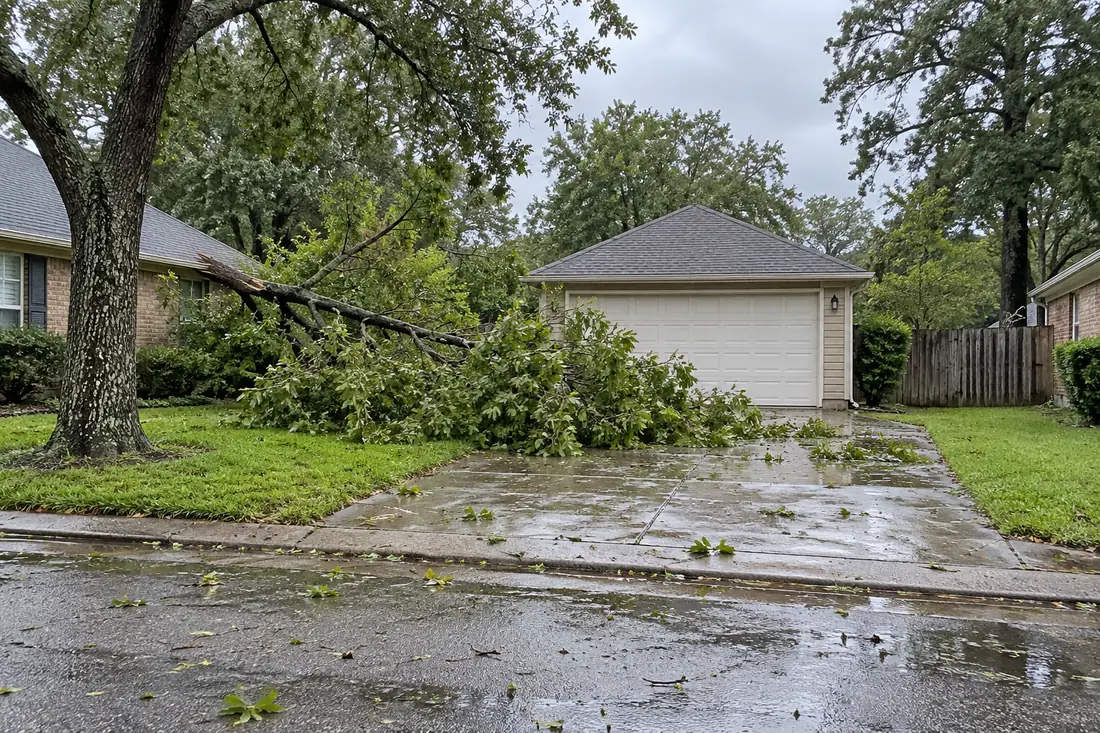
Separate urgent access restoration from full cleanup and longer-term tree health decisions. Keep emergency vehicle access and tenant safety central, but do not promise that every blocked road can be cleared immediately. Photograph actual conditions only when safe, label affected trees and note which areas remain restricted. A qualified crew may recommend a staged response when several trees are down or utilities are involved. Clear records support a rational sequence instead of improvisation during the aftermath.

Review lessons and budget for the next cycle
After maintenance and after significant weather, review what happened to the inventory. Which trees were treated, which concerns were monitored, and which areas required unexpected closures? Record actual work and the reasons for it, including any limitations. Update tree locations when removals or new plantings change the landscape. A good maintenance budget includes professional evaluation, necessary pruning, site protection and contingencies, not just a standing order for annual crown thinning.
For managed properties, the process should survive staff changes. Store the site map and approved scope where authorized managers can find them, keeping private tenant information out of general circulation. Review newly planned construction and drainage projects for effects on retained roots. Tree Huggers can evaluate a clearly documented tree-care need, while the property operator remains responsible for its own emergency plan. The outcome is better preparedness, not a claim that every hurricane loss can be prevented.
Questions about this project
Is a total tree count enough for a large quote?
Usually the parties also need locations and tasks. Use consistent tree numbers, marked photos or a site plan so the estimate and crew instructions refer to the same trees and retained areas.
Does a work inventory include a condition assessment?
Only if that service is expressly part of the scope. A list used to identify and price tasks should not be mistaken for a documented assessment of every tree's condition or risk.
Is a free work estimate the same as a written risk assessment?
Not necessarily. Explain whether you need pricing, condition advice, a documented assessment or a combination. Ask what the visit includes, who provides it and what limitations apply to any findings or recommendations.
What history should I share?
Share known storm damage, prior failures, construction, root disturbance, flooding, pruning and recent changes. Include the timing and nearby property use. Useful history supports the evaluation without replacing inspection of the current tree and site.
How should I describe the pruning I want?
Explain the objective: clearance for a route or building, deadwood, a damaged branch or structural development. Ask for suitable tree-specific work rather than requiring an arbitrary shape or amount of canopy to be removed.
Will pruning resolve every tree concern?
No. Root, trunk and major structural problems may need a different assessment or response. State the full concern so pruning is not used as a substitute for evaluating the condition that prompted the call.
How should extra work be approved?
Use the agreed approval process and identify the change, reason, scope, price or schedule effect as applicable. Confirm who has authority before treating an additional tree or task as part of the original job.
What completion records are useful?
Keep the agreed scope, tree or area identification, authorized changes, invoice and labeled photos where appropriate. Include unresolved items and a contact. Contract-specific records should follow the buyer's stated requirements.
Can a business stay open during tree work?
That depends on the site and scope. Discuss occupied routes, exclusion areas, loading and work windows with the contractor and property representative. Do not assume normal access can continue through the active work zone.
Who should communicate with tenants or visitors?
Agree on that responsibility with the property representative. The contractor needs a clear site contact, while the owner or manager should use the property's established process to communicate access changes and work windows.
What should I tell Tree Huggers about pre-storm tree work for a managed property?
Explain the property address, the work you want and the specific concerns: priority trees, maintenance records, occupied targets. Send safe photos of the tree, surroundings and access route. The contractor can then discuss the assessment and scope needed for this situation.
How do I request an estimate for this work?
Call 504-458-8336, text photos or use the estimate form on this page. Include the address, desired outcome and any timing constraints. The company will need to review scope and availability; an online request does not confirm a price, appointment or emergency dispatch.
Get a scope for your property
For a managed property, prepare a simple tree priority map before a storm: mature trees near occupied buildings, entrances, playgrounds, overhead lines and known low-access zones. Provide past reports only if they actually exist, and distinguish observed defects from guesses about risk. Ask for a site walk that considers maintenance, pruning and access planning rather than promising that work can make every storm harmless.
Establish a realistic written scope, approval contact and photo baseline for future changes. A property manager can then separate immediate safety needs from optional work, communicate with occupants and keep contractor recommendations consistent across visits.