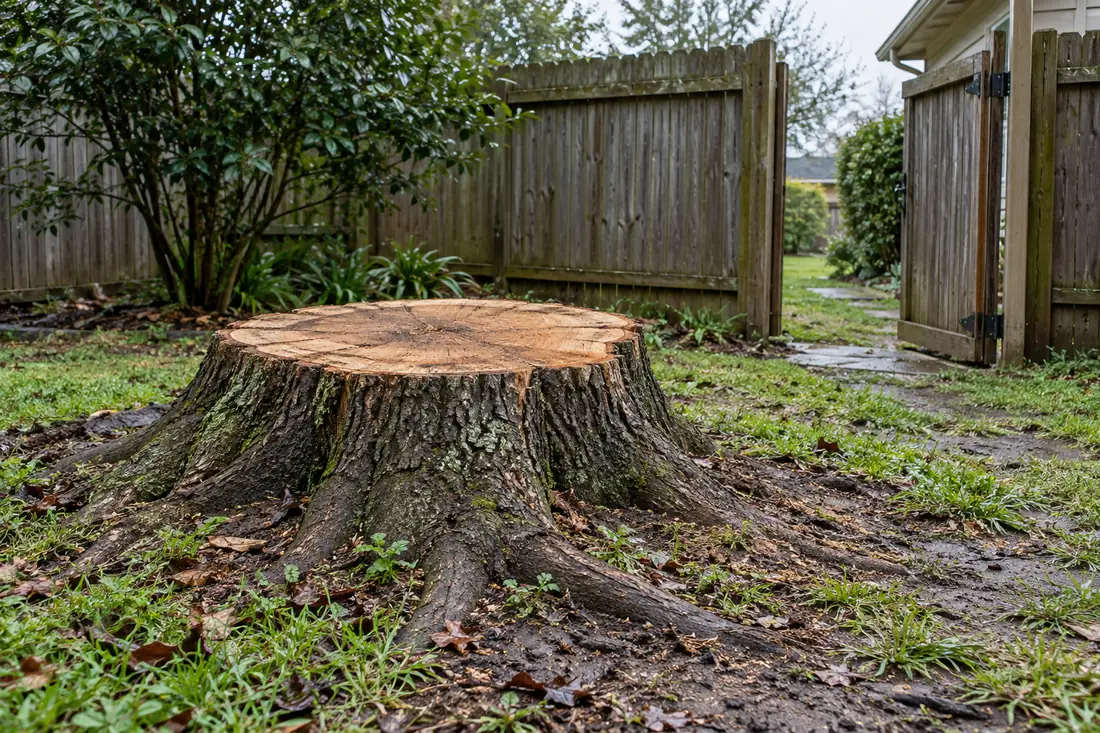
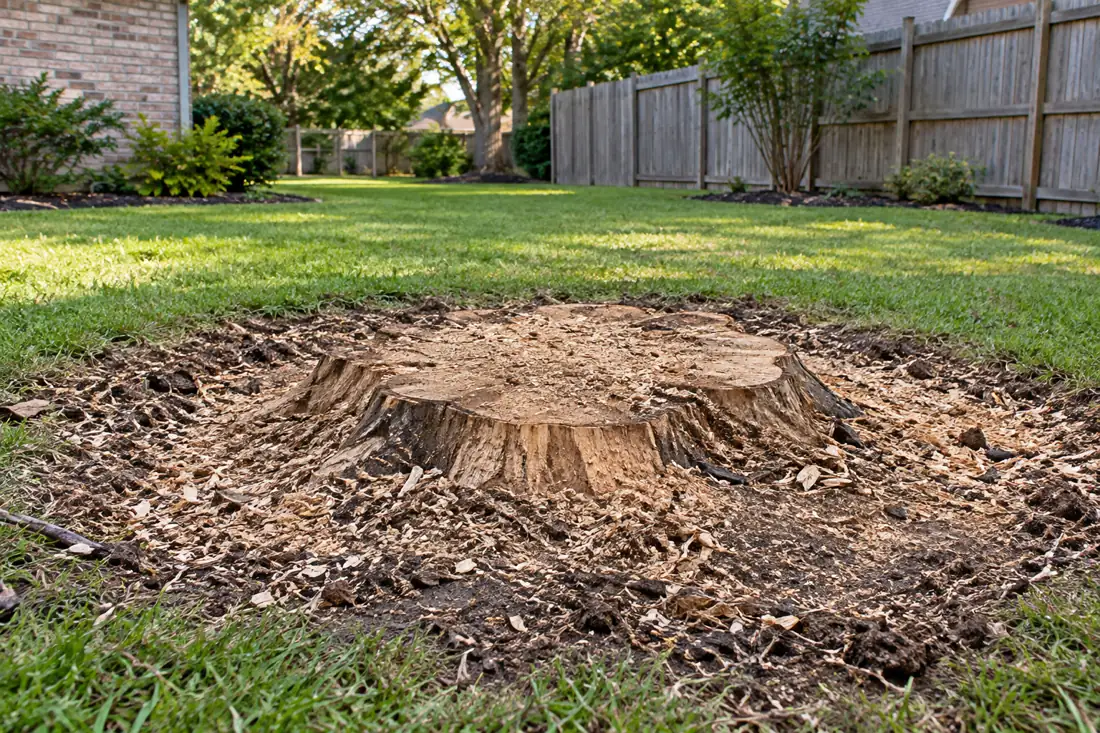
Fence posts and panels can restrict grinder access and lie close to roots or buried concrete. Identify the stump and the fence line before pricing. Discuss whether panels may be moved and what will be left afterward. Grinding the stump and repairing or replacing the fence are different work items.
A fence-line stump can involve two different property rights
First mark the visible fence line and the believed legal boundary separately. A fence’s location does not prove ownership, and a shared-root stump may straddle the boundary even when the trunk appears on one side. If access or grinding extends onto neighboring property, obtain the necessary permission rather than assuming the fence provides it.
Photograph posts, footings, gate swing, buried edging and any wire or irrigation controls along the fence. Ask which machine can reach the stump without using a fence post as a pivot point. Grinding against concrete footings may have to stop short, and the estimate should describe that limitation before the crew arrives.
If fence panels must be temporarily removed, document who removes and reinstalls them and what condition counts as complete. Keep chip disposal, soil replacement and future planting as explicit choices. A promise to grind the stump should not be mistaken for a promise to eliminate every buried root or restore a finished landscape.
A fence-line stump needs more planning than a grinding depth alone. Identify which side of the fence belongs to whom, the width available for the equipment, and whether a gate or panel would need temporary removal. Photograph posts, edging, masonry and irrigation near the base before work is priced. The grinder cannot safely reach every root beneath a footing, and cutting roots beside a neighboring living tree raises a separate concern.
Ask the contractor to describe the accessible grinding area and where wood chips will be placed. Fence repairs, reinstallation and landscape restoration should be listed as included or excluded, not assumed. If access across a neighbor’s property is proposed, obtain permission before scheduling rather than putting a crew in the middle of a boundary disagreement.
Fence-line permission and grind limits
A stump straddling a fence line is not simply an access problem. The actual property boundary, fence ownership, panel condition and post footing locations can determine what work a contractor may undertake without another owner's permission. Identify which side of the fence will carry the equipment and whether the stump wood runs beneath the post base. A plan to temporarily remove a panel should name who removes and reinstalls it, rather than assuming that dismantling is included in grinding.
Show the estimator the fence from both permitted sides, the nearest post, the gate route and any visible irrigation fittings or lighting. If access would require entering the neighboring property, obtain permission before scheduling equipment; a photo or informal verbal description is not proof of access rights. A stump elsewhere in a fenced backyard can present a different issue: the entire machine route may be the limiting dimension, even when the fence-line work itself has sufficient clearance. For the related but distinct decision, see Stump Grinding in a Fenced Backyard.
A fence-line scope that avoids surprise dismantling
Photograph the stump with the nearest posts and fence corners visible, then record the opening through which equipment would actually enter. Check hinges, latches, gravel borders and any grade change behind the gate. A dimension measured at the top of a gate can differ from the usable clear width near the ground; include the narrowest point without trying to force equipment through.
Confirm the property line and permission to access adjoining land
A fence often marks an approximate boundary but is not itself a legal survey. If the stump, exposed roots or machine path reaches another owner's property, identify that concern before work is authorized. Obtain the necessary permission for entry or temporary fence access; a stump-grinding estimate does not give a crew the right to use a neighbor's yard. If the boundary is uncertain, seek an appropriate property determination instead of asking the operator to decide ownership in the field.
Tell the contractor which side of the fence can be used and whether there is a gate or alley with practical access. A neighbor may agree to an entry route but not to storing equipment, moving plantings or disturbing a fence post. Keep any conditions in writing so the scope does not change on arrival. If the stump cannot be approached adequately from the permitted area, ask for a revised plan rather than expecting the crew to grind blindly beneath the fence.
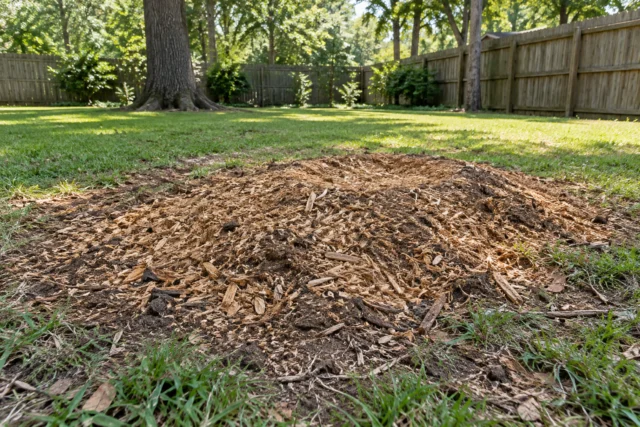
Set the grinding boundary beside a fence. Roots may run beneath fence posts or a shared footing. Mark the proposed grinding footprint and identify what can be reached without disturbing the fence. Equipment width, underground utilities, buried edging and finish depth all matter. Clarify chip removal and how the surface will be prepared afterward.
Ask the estimator to distinguish grinding against the visible fence line from removing a panel or working beside buried post footings. Confirm who owns the fence and who would authorize and restore any opening before it is made. The written scope should describe surface protection, chip handling and what happens if buried concrete limits the agreed grinding area.
For a route with several turns or gates, compare the fenced-backyard access guide.
Measure the working clearance on both sides of the stump
A stump beside a fence can be difficult to grind even when its visible diameter is small. The grinder needs a safe position, adequate swing room and a way to move material without striking fence panels or posts. Measure the gap from the stump edge to the fence at ground level, not only the distance from the center of the trunk.
Note whether the stump has a wide root flare that reaches beneath a rail or footing. A close photograph can hide the actual machine clearance.

The fence and the property line can impose different limits
A stump directly beside a fence may be reachable from one yard but not from the other. Measure the machine clearance, record the distance from the stump to posts or concrete footings, and confirm who owns the fence before proposing panel removal. Neighbor access should be documented separately; a shared boundary does not automatically allow a contractor to cross it.
Discuss what happens if the safe grinding limit leaves a small portion of the flare near a post. Forcing a cutter against a footing is not a reasonable substitute for a revised scope. Ask whether chip removal, fence reassembly and ground-level restoration are included, and photograph the condition of the fence before work starts.
Take wide photos showing the fence type, gate, approach route, ground slope and any nearby walk or planting bed. Tell the estimator whether the stump is against a wood privacy fence, masonry wall, chain-link line or a shared property boundary. These conditions may require different methods and work limits. Do not remove panels or loosen posts just to make access look easier before the contractor has explained the plan. The first step is defining the result and measuring the physical constraints honestly.
Protect posts, footings and the base of the fence
Fence posts may be embedded in concrete or surrounded by hidden bracing. A stump that grew close to a post can have roots wrapped around or beneath that support. Grinding wood too close to an unidentified footing risks damaging the structure or undermining its support. Mark known post locations and explain whether the fence is already leaning, loose or newly built. Photograph its condition before work, especially if more than one contractor is using the same access.
The estimator should define a lateral stop line and identify what woody material may remain near the fence. A neat grind line cannot guarantee that every root has been removed beyond that boundary. If removal requires temporarily dismantling part of a fence, name the responsible provider and restoration obligations. Tree work and fence rebuilding are separate services unless a written quote includes both. A shared decision about acceptable remaining material is better than accidental damage from trying to reach an impossible point.

Define a fence-safe grinding boundary before accepting the work scope
Sketch the stump, fence posts and intended machine approach on one simple site plan. A fence panel may be removable while its post footing stays fixed, so measure the narrowest gap at soil level and again at the proposed transport height. Ask the grinder operator whether the planned machine actually fits the gate and can swing its cutting wheel without contacting boards or fasteners. A photograph taken straight along the fence can make a tight gap look generous; include an angled photograph with a tape measure visible and identify any exposed concrete.
Treat the stump flare and the fence footing as separate obstacles. Where woody material extends beneath a footing, ask the contractor to describe the practical grinding stop line and how that limitation changes the final appearance. Digging beside a post to chase a root may weaken the fence even if no boards are struck.
If a replacement fence is planned, coordinate its post positions with the stump work rather than assuming the grinder will eliminate all buried wood. The proposal should distinguish wood reduction from footing removal, earthwork and fencing repairs.
If access requires a neighboring yard, verify permission before the scheduled date and document exactly what entry is allowed. Record whether gate hardware, panels or landscaping must be temporarily moved and who restores them. Check whether pets can be kept securely separated from the work zone and where chips may be collected without crossing the property line. Keep the project grounded in the contractor's approved access, not an assumption that an old fence defines a surveyed boundary or grants permission for equipment passage.
At handoff, inspect the fence before the machine leaves. Compare the initial photographs for loose posts, disturbed soil, damaged rails and chips caught against the bottom boards. Confirm how much woody material remains by design and where the stump footprint should be backfilled or left for another trade.
If the estimate included chip removal, ask where the material will be transported; if it excluded removal, agree on the pile location. A clear boundary and finish description prevents a small stump project from becoming an unexpected fence-repair dispute.

Identify buried irrigation, wiring and drainage
Fence lines are common places for irrigation pipes, landscape lighting, electric dog fences, drainage runs and other shallow systems. Some are private installations that ordinary public utility marks may not cover. Share any site diagrams, known valve locations and repair history. Arrange appropriate public utility location procedures where required, then locate private lines separately. Never assume an old stump is free of utilities merely because it lies in a narrow planting strip.
If a wire, pipe or conduit is exposed, the operator may need to stop and adjust the plan. Ask who will handle the specialized repair or relocation and whether the stump work will resume after that is complete. Do not invite a crew to disconnect electrical or irrigation systems outside its agreed scope. A clear distinction between known constraints and items still needing verification keeps the price and schedule more realistic than promising unlimited grinding regardless of obstacles.
Decide how deep and wide the grind must be
For lawn restoration, the desired outcome may be a surface below the surrounding grade with enough room for suitable soil and sod. For a future fence post, walkway or concrete foundation, the responsible installer may require more specific excavation. Ask that trade for the necessary depth and footprint instead of guessing. Grinding the visible stump is not equivalent to removing every buried root, and an ordinary grinder may leave material near a fence footing that cannot be safely reached.
The proposal should say how the grinding depth is measured, the approximate lateral extent and whether any hard stops apply. The root flare may extend beyond what the owner initially calls the stump. If the area is too tight, a contractor may suggest an alternate approach or a change in the future landscape plan. The best estimate describes what can actually be accomplished without misrepresenting the underground result.
Plan an equipment route without damaging the yard
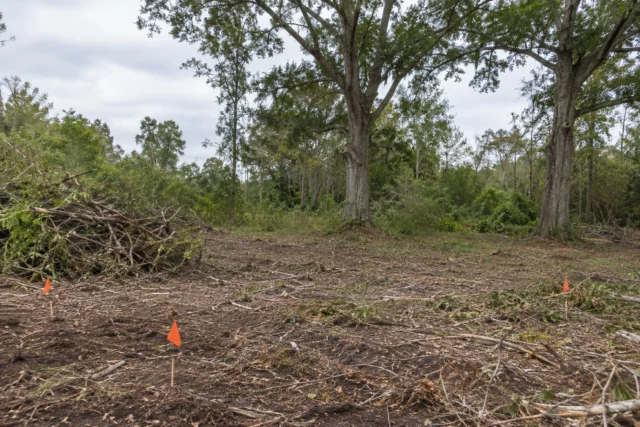
A small grinder still needs space to enter, turn and leave. Measure gates and narrow pinch points along the route, including steps, drainage crossings and corners. Tell the contractor about soft ground after rain, newly installed sod, pavers and known septic components. Do not rely on a gate's advertised width if its hinges or latch reduce usable clearance. Provide photos from the street or driveway to the stump so the estimator sees the complete route.
If the only path crosses a neighbor's area, confirm permission before scheduling. A surface that supports people may not suit the equipment's weight. Protective mats can be discussed, but they are not a guarantee against rutting, cracking or buried utility damage. A revised method might be more appropriate than forcing standard machinery into a narrow space. Keep any proposed fence removal, landscape protection and restoration as explicit scope items with clear responsibility.
Clarify what will happen to chips and remaining soil
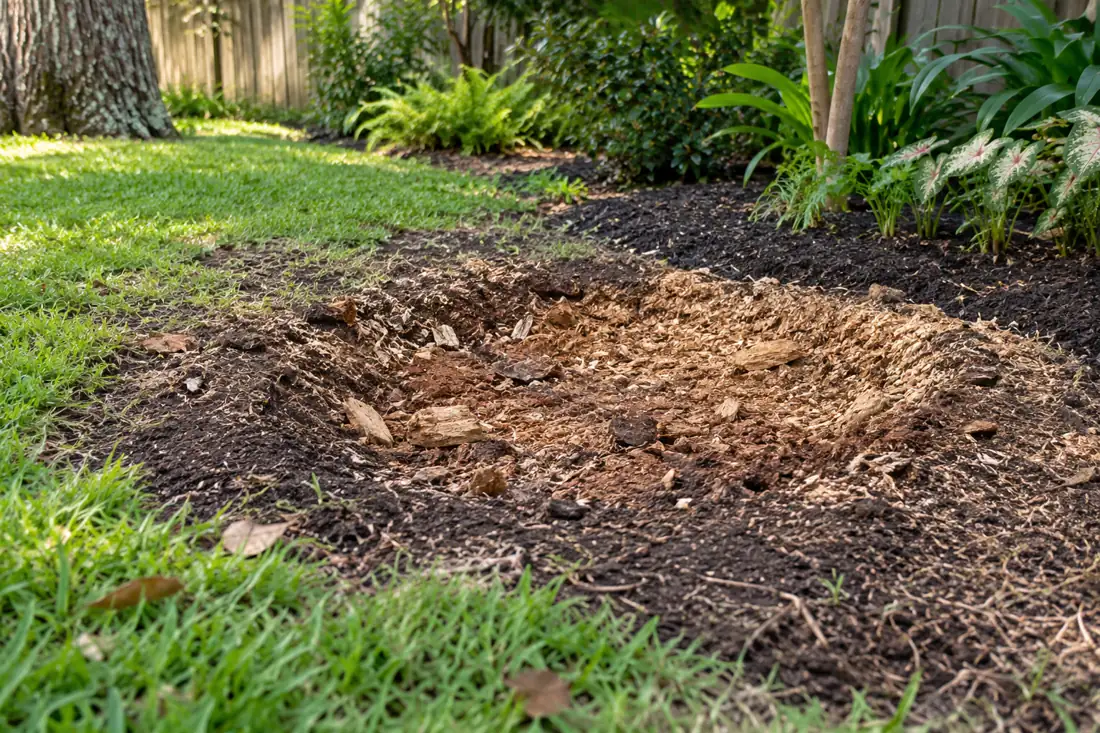
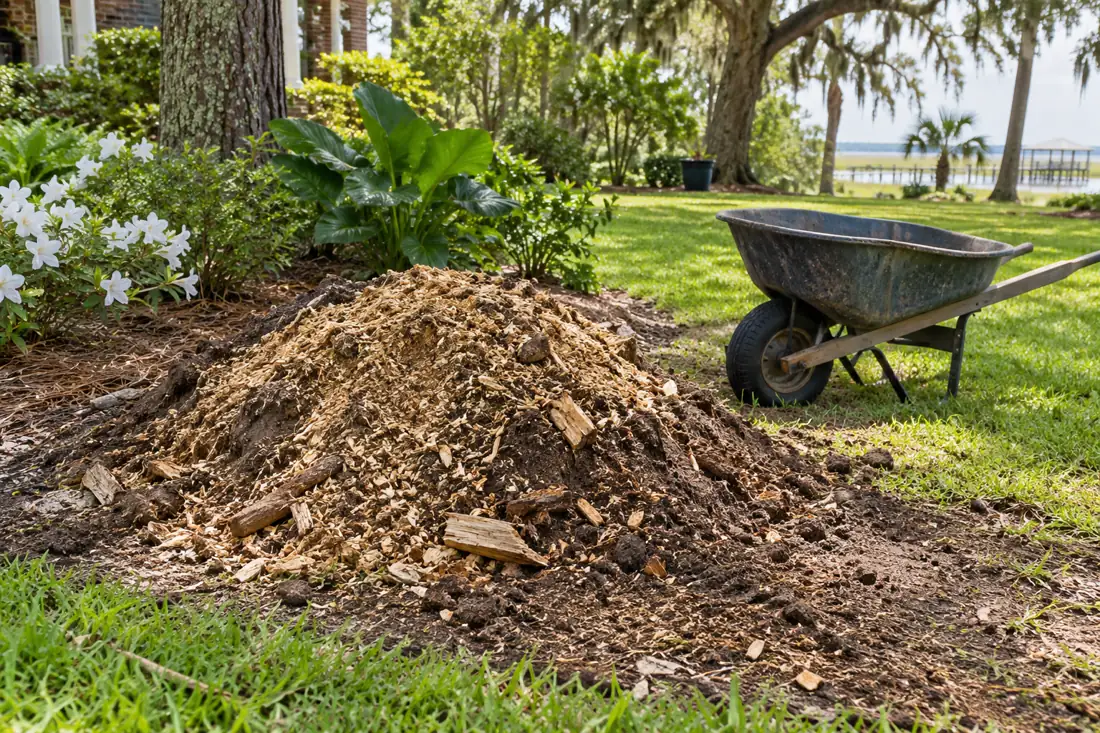
Grinding can create a mound of chips mixed with soil beside the fence. Leaving it in place may be acceptable for some landscape projects but not for a new fence post or hardscape footing. Ask whether the contractor will rake the material, haul chips away, place them in an agreed pile or leave the depression for another trade. If clean soil, compaction or sod is desired, state who supplies and installs those materials.
A narrow fence strip can be hard to backfill evenly, especially around posts. Do not assume that a photograph of a level surface shows that deeper material has been removed or compacted. If the stump will be replaced with paving or another structure, the responsible builder should inspect and prepare the actual ground before proceeding. A measurable finished condition helps prevent the tree-service visit from being mistaken for the complete landscape or construction project.
Consider the effect on nearby retained trees and shrubs
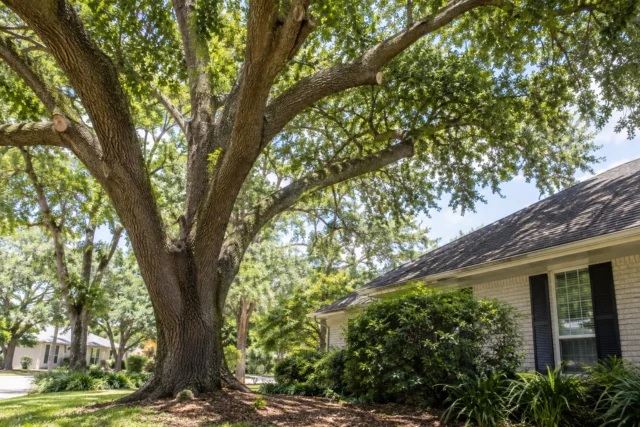
A fence-line stump may sit among hedges or beneath the roots of a nearby living tree. Grinding too far into a shared planting bed can damage roots that support vegetation the owner wants to keep. Identify retained plants and areas where soil should not be disturbed. If significant roots of a mature tree intersect the work area, ask a qualified professional whether the proposed excavation is appropriate. Do not assume that every root visible near the removed stump belongs to it.
Landscape protection can be included in the access and cleanup plan. Move removable containers or light furnishings only with permission and appropriate handling, and define any trimming needed to reach the stump. Avoid stripping away healthy vegetation simply to create an unrestricted machine path. The best final result removes the agreed stump material while preserving the fence and surrounding plants as far as practical.
Make the estimate and completion boundary explicit
Send Tree Huggers photos of the stump, fence line, gate and route, plus approximate measurements and the intended finish. Mention property-line uncertainty, underground systems and whether the adjacent owner has been contacted. The nonemergency estimate form begins a review, not a guaranteed crew arrival. If the stump is associated with a standing unstable tree, request an appropriate tree assessment rather than assuming the remaining trunk is safe to approach.
Before work, confirm which stump is included, any fence removal or neighbor entry arrangements, measured grind limits, chip handling and cleanup. Keep real before-and-after photographs of the site if documentation is needed, without presenting illustrative images as customer evidence. If the operator finds a footing or utility that prevents the full planned depth, record the change and get approval before altering the scope. Honest limits protect the fence and avoid a dispute over material that was never safely accessible.
Questions about this project
Does grinding beside a fence require moving panels?
Not automatically. First measure the usable gate clearance and show post footings, corners and changes in grade. A contractor should assess machine access and the planned work. If a panel must be moved, identify permission, removal, reinstatement and any separate charge in the scope.
What can remain beside a fence after stump grinding?
The agreed stump area may be ground while roots extending under the fence, post concrete or neighboring property remain. Discuss finish level, chips, fence stability and whether another trade must prepare or repair the adjacent ground. Do not assume the entire root network is extracted.
What access information helps an estimator?
Send the narrowest opening, overhead obstacles, turns and the distance between the tree and the loading area. Include photos of the entire route and identify steps, soft ground or features that must remain protected.
Should I remove a fence before the visit?
First ask the contractor to assess access and agree on any temporary opening. Identify who owns the fence, who can authorize the change and who will reinstall it. Do not assume the opening is necessary or included.
Will a utility locate show every private line?
Do not assume it will identify all irrigation, pet-fence, drainage or other customer-owned systems. Provide available plans and ask what additional locating or coordination is needed for the actual work and access area.
Who should arrange utility-related preparation?
Set that responsibility before scheduling. The property contact, contractor and relevant providers need to identify who handles locating, disconnection, relocation or separate repair work. Uncertain utility information should be resolved rather than guessed.
Can the contractor use my neighbor's yard?
Only after the required permission and suitable access arrangements are in place. Identify the proposed route and who can authorize it. A quote accepted by one owner does not automatically grant access to someone else's land.
Does a tree estimate determine the property boundary?
No. Resolve an uncertain boundary or ownership question using appropriate property information and professionals. The tree contractor needs an authorized scope and access plan, but a visual work estimate is not a survey or legal determination.
Does cleanup include every root and wood chip?
That depends on the written scope. Tree removal, stump grinding, chip hauling and root excavation are different tasks. Ask what material is removed, what remains and whether soil or landscape restoration is separately included.
What should a final walk-through check?
Compare the identified trees and tasks with the agreement. Check agreed debris handling, stump treatment, access openings and any listed restoration. Record unresolved items clearly instead of relying on a general impression that the property looks finished.
What should I tell Tree Huggers about stump grinding near a fence?
Explain the property address, the work you want and the specific concerns: fence access, buried footings, cleanup finish. Send safe photos of the tree, surroundings and access route. The contractor can then discuss the assessment and scope needed for this situation.
How do I request an estimate for this work?
Call 504-458-8336, text photos or use the estimate form on this page. Include the address, desired outcome and any timing constraints. The company will need to review scope and availability; an online request does not confirm a price, appointment or emergency dispatch.
Get a scope for your property
A stump close to a fence needs more information than its visible diameter. Photograph the stump and fence together from several safe positions, showing posts, panels, hinges and any retaining edge. Include the narrowest gate or equipment approach and estimate the distance to the nearest fence footing.
Explain whether the fence belongs to you or a neighbor and whether any section may be opened only with permission. Do not assume that small surface roots are the full obstacle: roots and concrete supports can extend below the grade shown in photographs.
Request a grinding scope that identifies working clearance, depth or area limits, the protection or authorized removal of fence components, and whether grinding chips will be hauled away or left for reuse. Clarify who handles hidden obstacles and whether the resulting area must be level for sod, gravel or another finish.
If the access route crosses another property, obtain permission before work is arranged. A written site visit may be needed when posts or hardscape limit machine placement, since photos alone cannot settle every clearance issue.