A sidewalk can restrict the grinder’s approach and may sit over roots or buried infrastructure. Identify whether the pavement is public or private and what future work is planned. Grinding, concrete repair and root management should be coordinated without assuming one contractor is responsible for every part.
Site planning detail: Before bringing a grinder beside a sidewalk, identify exactly where the public or private pavement begins and whether any permit, pedestrian protection or utility notice is required. A grinder needs more than room for the wheel: it must approach, turn, and leave without undermining the slab edge or trapping pedestrians. Measure the stump, roots, pavement clearance and access width; photograph cracks or uneven surfaces before work.
Underground irrigation, lighting, communications and other buried lines may not be obvious from the surface. Agree on the grinding boundary and whether grinding exposed lateral roots near the walkway is included. State separately who is responsible for removing grindings, replacing soil or sod, correcting settlement and arranging any pavement repairs. The tree service proposal should not quietly promise sidewalk reconstruction outside its scope.
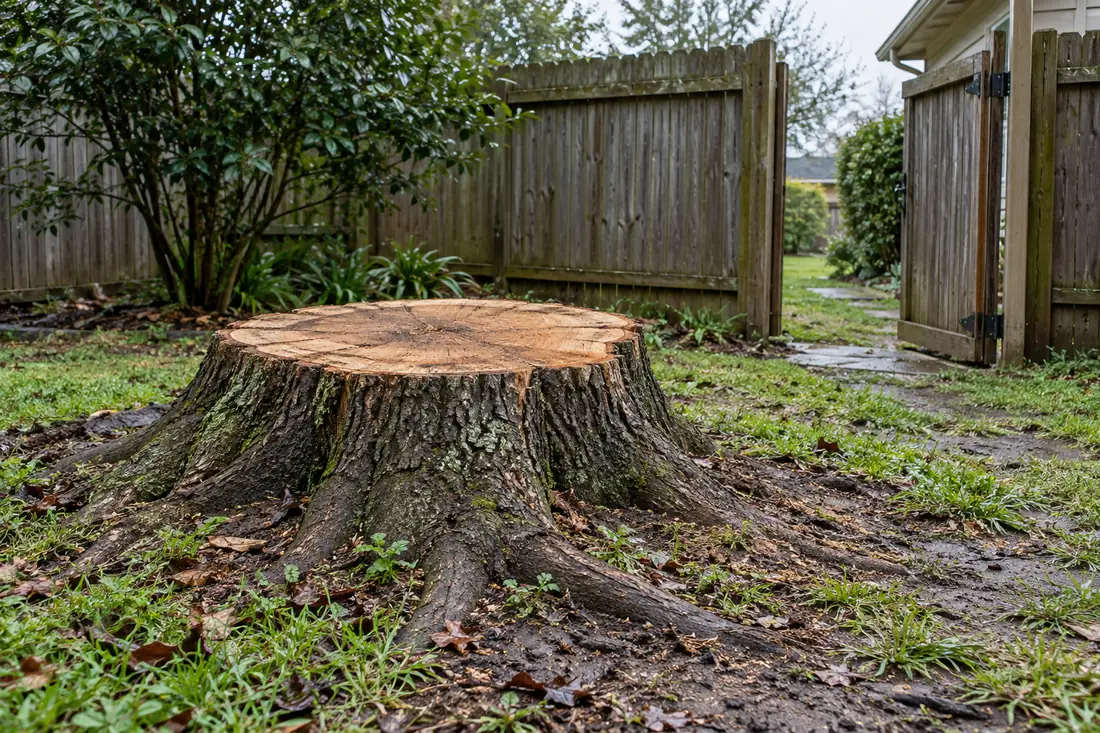
A stump beside a sidewalk may affect a private walkway, a public right-of-way or both; identify who controls the pavement before work starts. Photograph raised edges, utility covers, curb transitions and pedestrian access. Grinding reachable wood does not replace damaged concrete, excavate every buried root or rebuild a compliant walkway. Ask who will provide pedestrian protection and whether public approvals are needed.
If concrete repair follows, coordinate the grinding footprint and finish elevation with the paving contractor beforehand. Specify whether chips, exposed roots, temporary barriers and pavement repairs are included. Do not describe the sidewalk as repaired merely because the visible stump is gone.
Separate pedestrian access from pavement readiness
At a sidewalk, the immediate work-zone question is how pedestrians can pass without encountering debris, an open stump cavity or moving equipment. A private path may be managed by the property owner while public sidewalk use can involve local requirements and a different approving authority. Note the walking surface, curb, curb ramps, adjacent entrances and available alternate path. A stump adjacent to a sidewalk is not automatically proof that the tree caused an existing slab defect.
After grinding, avoid promising that a patch of soil or chips is a finished safe walkway. Ask who supplies temporary protection and who designs or performs pavement repairs if the walking surface is disturbed. Sidewalk slabs may need independent assessment of subgrade, roots and accessibility; grinding depth alone does not specify that work. For a proposed new concrete pour, the concrete-preparation guide addresses removal limits, excavation, base preparation and trade signoff rather than pedestrian traffic management. For the related but distinct decision, see Stump Grinding Before Concrete Work.
Confirm who controls the walking surface
Record whether the stump borders a private walkway, driveway apron or public sidewalk and identify the nearest curb, service box, utility marker and damaged panel. Take photographs showing the full walking route, not only the stump. Where ownership or right-of-way responsibility is unclear, obtain the relevant property or local-agency information before authorizing pavement disturbance.

Separate stump work from pavement repair
Grinding the visible stump does not lift, level or replace concrete. It also does not remove every root beneath a sidewalk. Keep the quote for stump reduction separate from any concrete repair plan, with each contractor responsible for assessing the work they can safely perform. Ask which side of the walk the grinder can approach from and whether the slab edge restricts the cutting wheel. The geometry may determine how much wood remains.
If a sidewalk repair is planned, share the repairer's required excavation depth and alignment before scheduling grinding. A concrete contractor may need access to soil beneath the slab that the stump grinder cannot reach safely. Conversely, aggressive cutting toward the slab can strike concrete, damage equipment or create new edge damage. The safest plan defines a boundary between wood removal and pavement work rather than treating them as one operation.
Separate stump removal goals from sidewalk stability. The root flare beside a sidewalk may be intertwined with shallow soil and the walkway base. Grinding only the exposed wood does not establish that nearby concrete will remain stable or that all roots beneath it can be removed safely. Document cracks, raised panels and current trip points before work. Discuss how close equipment may operate, what finish grade is realistic and whether a separate concrete or accessibility repair professional should review the site.
Ask the contractor to describe how the machine would approach and where the grinding limit stops relative to concrete. A tree-work proposal should not silently assume authority to remove pavement, excavate beneath it or approve pedestrian closures. Coordinate separate repair specifications and a safe access plan with the responsible concrete contractor or public authority.
The concrete-work guide covers later slab and base preparation.
Identify which walking surface is affected
A stump beside a sidewalk may touch a public sidewalk, a private front walk or a path within a managed property. Those are not interchangeable surfaces for access, permissions or repair responsibility. Before requesting grinding, identify the exact edge involved and whether the apparent damage is a lifted slab, a cracked corner, exposed roots or a trip hazard beside the pavement. Photos from both ends of the walk show the route people actually use.
Record the condition of neighboring slabs and joints before equipment arrives. An uneven concrete panel can have several causes, and the presence of a root does not automatically prove it caused the movement. If the walk is public or managed by an association, confirm who can authorize work and who should receive notice. A tree contractor should not silently assume permission to alter a shared pedestrian route.
Look at the tree's previous root footprint
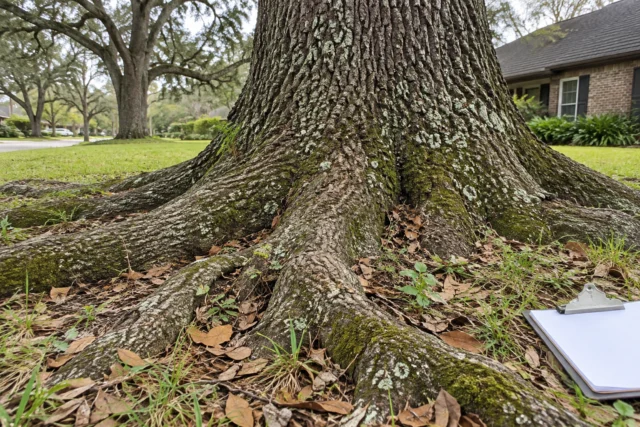
The central stump can be small while major surface roots extend along the sidewalk edge for many feet. Identify which roots are visible, which are beneath pavement and which are simply suspected. Grinding a raised surface root may not have the same scope or implications as reducing the stump core. The assessment should consider adjacent living trees too, because some exposed roots may belong to a different tree.
Do not cut or grind roots of a retained tree merely to flatten a walkway without a qualified tree assessment. Significant root damage can affect stability or health even if the surface looks improved immediately afterward. If the tree was recently removed, note when and why, along with any remaining trunk sections. This gives the contractor context without turning an online guide into a substitute for an on-site evaluation.

Coordinate stump removal with a walkable, lawful sidewalk repair plan
Identify whether the stump sits on private land, a municipal planting strip or another right-of-way before arranging work. Sidewalks that appear residential may still involve public controls over access, closure or restoration. Photograph the nearest curb, accessibility transition and driveway and ask the responsible agency what permissions are required. A tree-work contractor can estimate a stump but cannot approve an obstruction of a public pedestrian route simply by accepting the job. Establish the sidewalk's ownership and permit requirements before bringing machinery to the location.
Measure clearance from the stump's outer flare to the pavement edge and note the grade difference between soil and concrete. A root extending beneath a slab may not be accessible with a grinding wheel without breaking pavement. Ask the operator to identify the achievable grind depth at that edge, whether protective barriers are needed and how pedestrians will be routed around the work.
Avoid assuming that a visually flat stump means the entire buried root structure has disappeared. State any untouched area near the concrete in the estimate.
Keep pedestrian hazards separate from the grinding itself. If slabs are already lifted or cracked, document those conditions before work begins and identify the pavement-repair provider. Grinding does not restore an accessible walking surface or necessarily solve ongoing slab movement. If the route serves people using wheelchairs, strollers or walking aids, discuss maintaining a continuous safe alternative while equipment is present. The owner should know whether temporary signage, fencing or traffic controls fall under the tree contractor's scope or a separate authorized party.
After the work, inspect the slab edge, curb, drainage route and soil backfill together. Chips should not be left where they block curb openings, wash into a drain or create a loose surface on the sidewalk. Preserve before and after photos from the same angle and retain a record of any restricted grind depth.
If repaving is planned, share the stump scope with the paving contractor so it does not assume clean compacted soil exists beneath every point. Do not promise permanent pavement stability when root and ground conditions remain unknown.

Plan safe pedestrian passage
A grinder's operating area includes room for the machine, the operator, moving parts and ejected debris. A sidewalk cannot remain a normal pedestrian path through that work zone. Discuss where people can walk during the job and whether temporary restrictions, property-manager communication or additional traffic control are needed. The contractor and relevant authority should determine permissible controls rather than a homeowner improvising cones beside an active machine.
Consider school routes, wheelchair access, strollers, bus stops and a neighboring driveway when planning work. A detour that is obvious to an able-bodied adult may not be usable by every pedestrian. If an accessible route cannot be preserved with appropriate approval, an alternate sequence or timing may be needed. Never advertise a path as open while grinding is underway near its edge.
Confirm utilities before cutting
Sidewalk corridors can contain water, gas, electrical, communications, drainage and irrigation infrastructure. Visible meter locations and painted surface markings are helpful context but are not complete underground maps. Request appropriate utility locating for the jurisdiction and account for private lines or sprinkler piping that may require a separate service. The proposed grinding depth and wheel approach should respect the resulting information.
If an underground line cannot be confidently cleared, exclude that cutting zone until the issue is resolved. Do not treat a shallow stump or long-standing sidewalk as evidence that no buried service exists. A documented stop-work boundary helps both the homeowner and contractor understand why some wood may remain. It is better to discuss the limit before pricing than to discover it after equipment is positioned.

Assess equipment access and pavement loading
A machine may need to travel over the sidewalk even if the stump is on the lawn side. Ask how the grinder will unload, turn and reach the stump without stressing unsupported edges, damaged slabs or covers. The width between a fence and the street may look generous until parked vehicles, tree branches and yard slopes are considered. The operator should choose equipment based on real site constraints.
Keep landscaping, parked cars, fragile pavers and accessible walkways in the access discussion. A wheel or track passing close to a broken corner can worsen the damage, even before grinding begins. A protective route or a different machine may be appropriate, but no generic matting arrangement guarantees every slab can bear the load. Record existing cracks and settlement so the agreed work does not obscure pre-existing conditions.
Control chips without blocking drainage
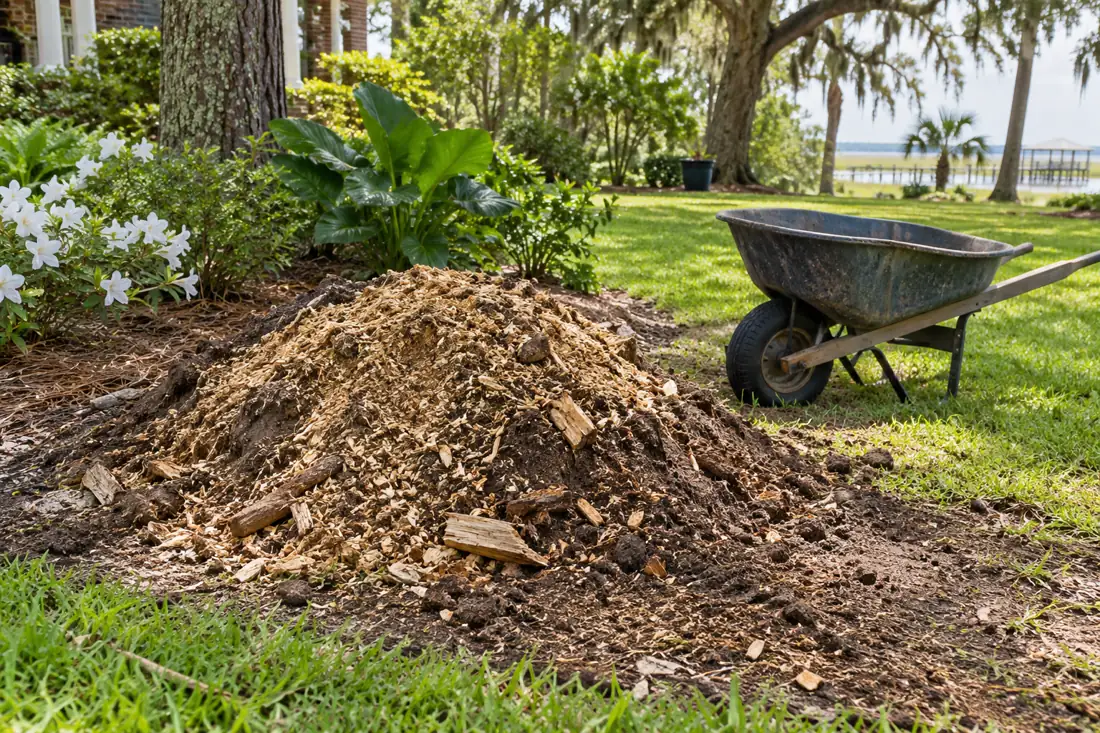
Stump grinding produces loose wood, soil and possibly gravel embedded around the old roots. Sidewalk joints, curb inlets and street drains should not be used as disposal points. Ask how the crew will contain and gather material from the pavement and restore a usable walking surface. Cleanup is particularly important where chips could conceal an uneven edge or create a slippery route when wet.
If the quote includes hauling material away, identify where it will be loaded without blocking traffic or neighboring access. If chips remain on site, agree on a pile or landscaped area that does not obstruct pedestrian routes, curb ramps or drainage. The surface should be inspected after the grinder is removed, not just while the work area is occupied by equipment.

Coordinate restoration and inspection
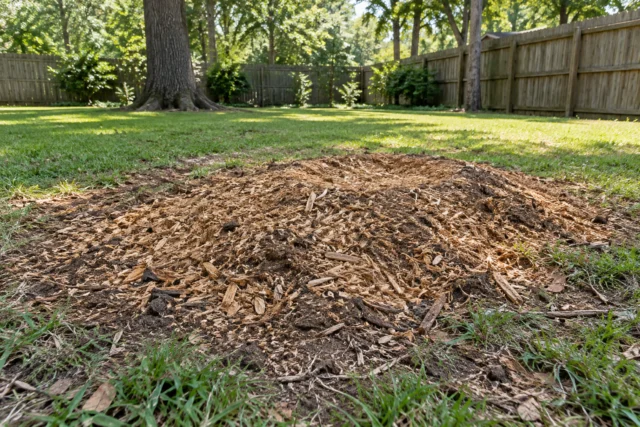
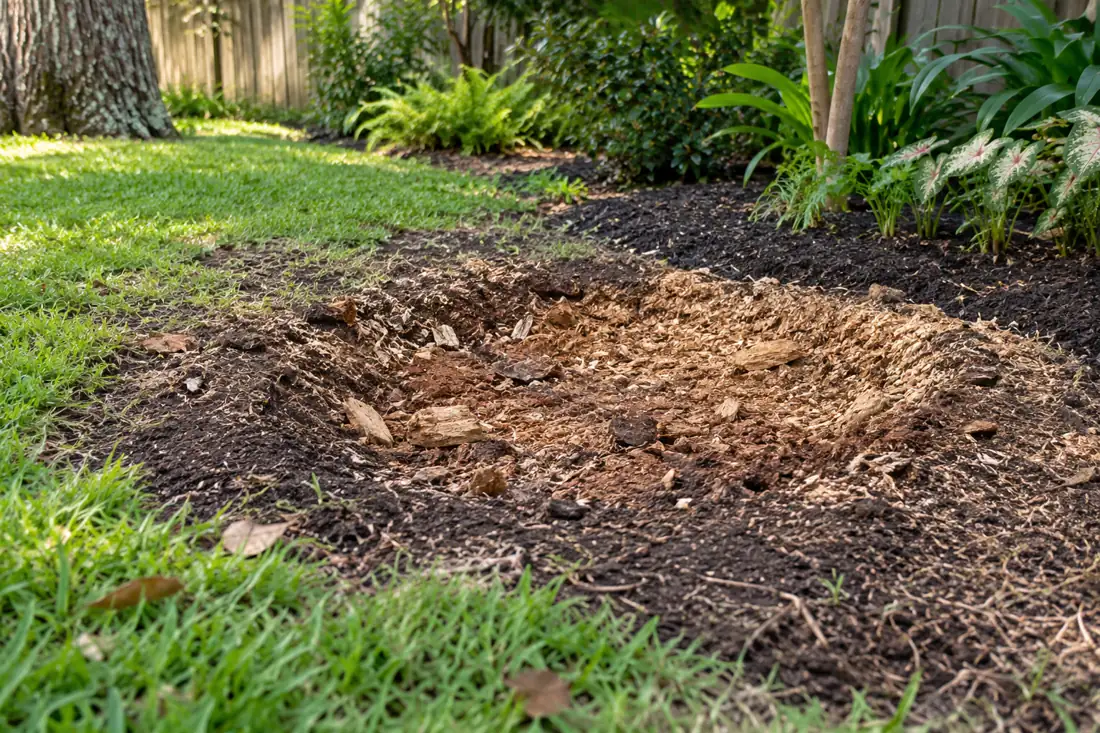
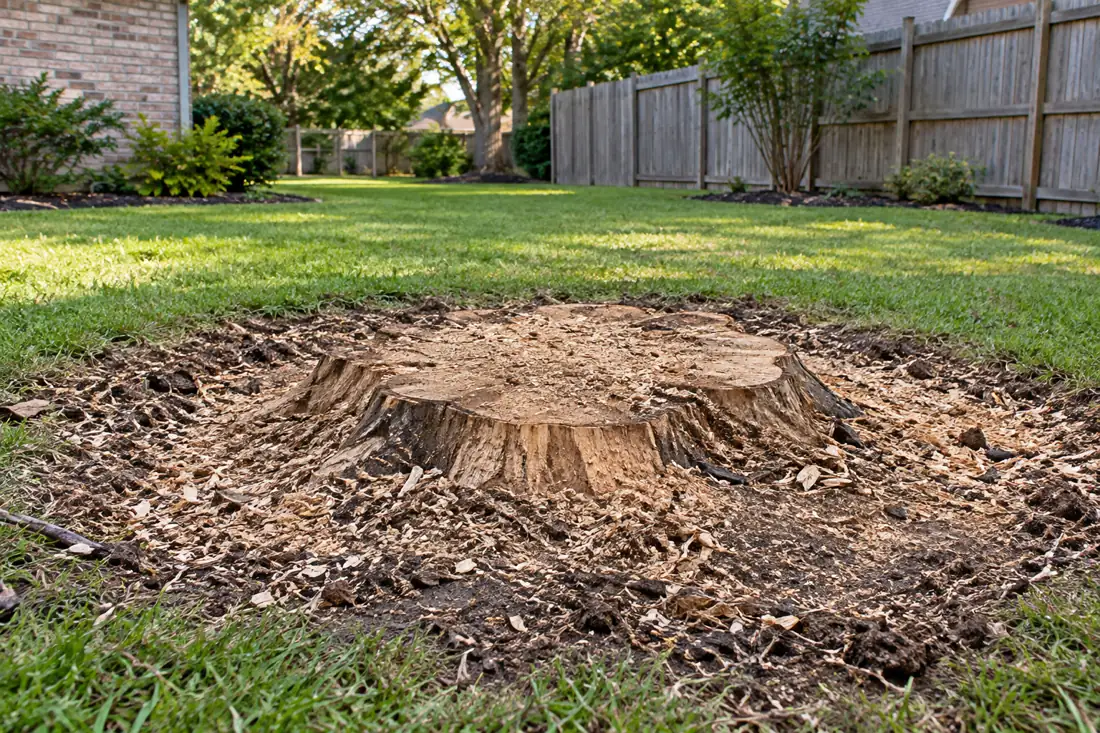
After grinding, the ground may be lower than the sidewalk and may contain loose organic material. Decide whether the immediate goal is a stable temporary edge, a lawn restoration or preparation for a concrete contractor. Those outcomes require different backfill and compaction decisions. When new paving is planned, ask the paving professional to specify the subgrade condition rather than assuming a chip-filled pit will be adequate.
Photograph the remaining stump area and the pavement edge after cleanup. If the repair scope involves a public right-of-way, the relevant jurisdiction may have requirements for permits, inspections or work methods. Confirm them locally instead of assuming every sidewalk is managed alike. A concise written handoff helps prevent a stump grinder's limited scope from being mistaken for completed walkway remediation.
Separate a grindable stump from a walkable sidewalk
Grinding next to a sidewalk can remove accessible wood while leaving a distinct pavement and pedestrian-safety problem. Identify whether the path is public or private and who is responsible for any concrete cutting, root assessment, leveling or reinstatement. Mark the stump position relative to raised or cracked pavement and nearby visible utility features before requesting a quote.
The tree contractor should define the grinding depth and equipment access it can safely provide; a paving contractor or responsible authority may need a separate repair plan. Keep pedestrians away from damaged pavement during the work, and ask for an explicit final-condition handoff rather than assuming that removing the stump automatically restores a compliant walkway.
Send the details that make an estimate useful
Supply the stump's ground-level diameter, its distance to the concrete edge, visible root spread, access width and two or three photos showing the pedestrian route. Describe whether concrete has already moved and whether a separate repair is planned. Say if the walk belongs to a private property, association or public area, and identify the person authorized to approve work where known.
Ask for the included grinding depth, treatment of exposed roots, pavement protection, chip cleanup and any limits near utilities. If access restrictions or right-of-way questions remain unresolved, request a site review rather than an unsupported instant price. A sensible estimate makes boundaries and approvals clear; it does not promise that stump removal alone will correct a hazardous sidewalk.

Make the pedestrian surface usable after cleanup
Even a well-controlled grinding job can leave loose chips along a slab edge or a depression beside the walking line. Inspect the route before pedestrians return and distinguish the tree crew's cleanup from any unrepaired concrete trip hazard. If the original sidewalk was already displaced, grinding is only one step toward a usable walkway. Flag remaining defects so the responsible property owner or authority can address them.
Where a temporary edge treatment is needed, obtain appropriate guidance rather than spreading loose organic debris across the path. Keep curb ramps, drainage and accessible travel routes clear of stored equipment or piles. A final photograph taken from a pedestrian's perspective can expose problems a close-up stump photo misses. This is especially important on commercial or shared property where other people may not know that stump work occurred.
Questions about this project
Who authorizes stump work next to a public sidewalk?
The owner or responsible agency depends on the exact location and local rules. Identify the right-of-way and any required approval before arranging work that could disturb pavement or restrict passage. A tree estimate is not itself a public-works permit.
Does grinding repair lifted sidewalk concrete?
No. Grinding may address an agreed stump portion, but it does not level or replace cracked panels, design an accessible route, or remove all roots under pavement. Ask the responsible concrete professional about a separate repair and protection plan.
Can I cut a surface root to flatten the lawn?
Do not assume that is harmless. The root may matter to tree condition or stability. Describe the conflict and ask for an assessment and appropriate options before cutting or excavating near the tree.
Does a nearby tree prove it caused a plumbing problem?
No. Use the plumbing provider's findings and identify the affected system. Coordinate any tree or root work with that information rather than assuming location alone establishes the cause or the right remedy.
Can the crew block a public sidewalk or road?
Required arrangements must be coordinated with the appropriate authority. Identify public routes and restrictions before scheduling. A private work agreement should not be treated as automatic permission to occupy or close public space.
When should parked vehicles be moved?
Set the timing and responsible contact before the work window. Vehicles may need to leave the tree zone, equipment route and loading area. Confirm where access must remain available during each phase.
How should extra work be approved?
Use the agreed approval process and identify the change, reason, scope, price or schedule effect as applicable. Confirm who has authority before treating an additional tree or task as part of the original job.
What completion records are useful?
Keep the agreed scope, tree or area identification, authorized changes, invoice and labeled photos where appropriate. Include unresolved items and a contact. Contract-specific records should follow the buyer's stated requirements.
What should I compare besides the price?
Compare tree identification, work objectives, access assumptions, hauling, stump treatment, site finish and exclusions. Ask whether permits or other coordination are part of the scope and who can approve changes if conditions differ.
Does an online request book the crew?
No. A request starts the estimate conversation. The company still needs to discuss scope, availability and any site assessment. For a dangerous or urgent condition, call 504-458-8336 rather than relying on a form response.
What should I tell Tree Huggers about stump grinding near a sidewalk?
Explain the property address, the work you want and the specific concerns: pavement ownership, roots below concrete, future repair. Send safe photos of the tree, surroundings and access route. The contractor can then discuss the assessment and scope needed for this situation.
How do I request an estimate for this work?
Call 504-458-8336, text photos or use the estimate form on this page. Include the address, desired outcome and any timing constraints. The company will need to review scope and availability; an online request does not confirm a price, appointment or emergency dispatch.
Get a scope for your property
For a stump beside a sidewalk, the essential starting point is knowing who controls the pavement and where its edge actually lies. Show the stump, walkable route, curb if present, raised panels, and any nearby storm inlet in one set of photographs. Note whether pedestrians, wheelchairs or children must keep using the path during the proposed work.
Record visible heaving without declaring a particular root responsible. Some sidewalks are publicly controlled or governed by a property association, and permission may be needed before touching the adjoining ground or slabs.
Ask for a scope that keeps stump reduction separate from sidewalk removal, repair and subgrade preparation. Clarify how pedestrians will be kept away from the work zone, the extent of material removal, and what happens if major roots continue beneath intact concrete. Specify whether chips, void backfill, a temporary pedestrian route and finished grading are included. Avoid assuming that grinding alongside a slab will restore an uneven walking surface; the surface and its support may need a separately planned repair by the responsible party.