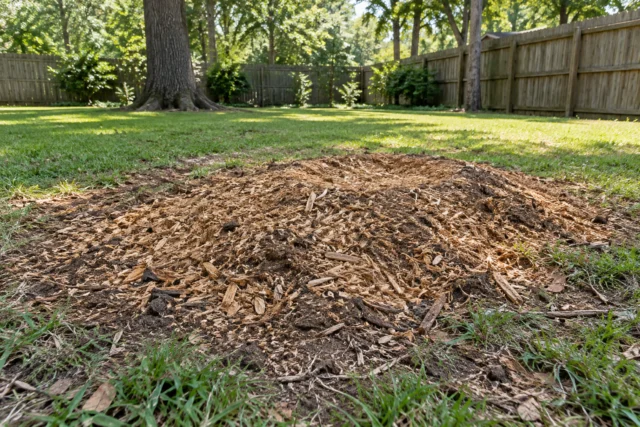
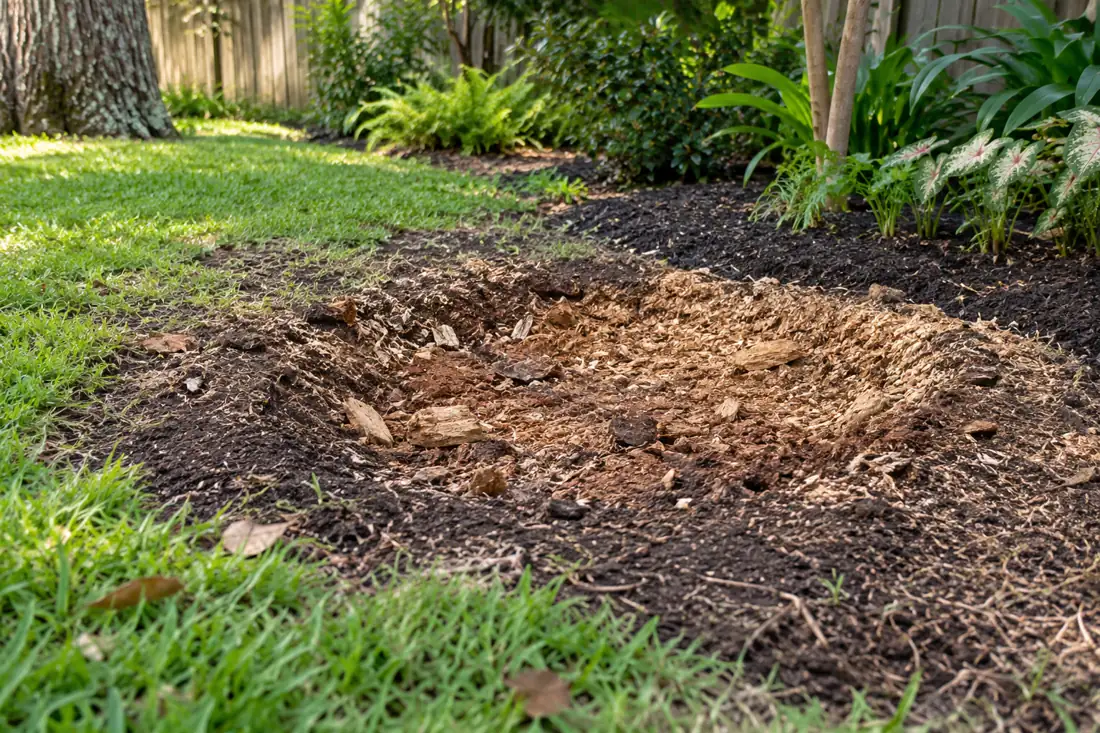
Soft ground can affect how a grinder reaches and leaves the work area. Explain drainage and recent weather conditions, especially where the route crosses a lawn or pavement edge. Ask whether the appointment or approach needs adjustment. Ground protection and repair expectations should be discussed before equipment enters.
Site planning detail: Soft ground requires planning for both machine support and protection of the finished landscape. Describe whether the route stays wet after rain, crosses an irrigation zone, sits on recently filled soil or has hidden low areas. Ground mats can distribute some loading but do not make a saturated slope automatically safe or eliminate all turf damage. A professional should choose equipment, timing and travel path after assessing actual bearing conditions and access.
Take pre-work photographs of ruts, buried landscape edges and drainage routes so the cleanup discussion is clear. If work must wait for conditions to improve, distinguish rescheduling from a promise of immediate service. The proposal should identify how chips are handled and whether rut repair, topsoil or sod restoration are included after the heavy equipment leaves.
A saturated lawn can be damaged before equipment reaches the stump. Show the crew recent puddling, low spots, drainage ditches, irrigation leaks and routes likely to rut or settle. Discuss safe travel, possible ground protection and which soil or weather conditions justify postponing. Protective mats can help in some settings but do not guarantee support for every machine.
Identify septic components, buried utilities and fragile pavement along the route. Keep access-route repairs, chip handling and final grading separate in the quote. Avoid promising rut-free results on soil that has not been assessed for the equipment proposed.
Soft-ground evidence changes the equipment decision
Provide recent photographs showing puddling, wheel ruts, slope changes and the intended approach route, not just the stump. Soil that appears dry on top may still be unstable at the equipment travel line, and a machine that can reach an open front yard may not be suitable for a damp narrow backyard. The operator must evaluate actual support conditions, site traffic and whether ground protection or rescheduling is appropriate. Neither a photograph nor an online checklist can establish a safe bearing capacity.
Plan stump grinding around soft soil and weather-sensitive access
A green lawn can look firm in a photograph while the upper soil layer is saturated enough to rut under equipment. Look for standing moisture, footprints that hold water, irrigation overspray and areas recently filled with loose soil. Mark the nearest stable driveway or hard-surface approach and note the length of turf that must be crossed.
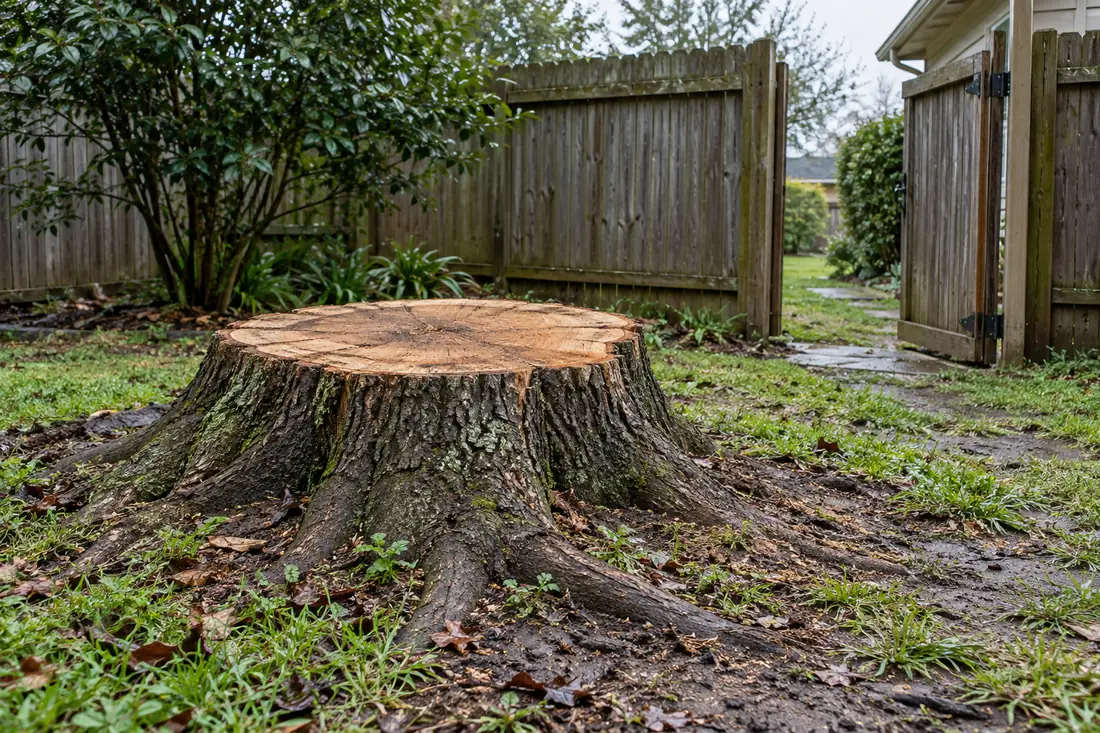
Take a wide photo and one close photo of the stump and soil. Local weather and drainage conditions are more useful to an operator than a broad statement that the ground is always dry or always muddy.
Ask how the selected machine distributes its weight and whether the approach route needs approved ground protection. Mats and lighter equipment can reduce some risks, but they do not guarantee an undamaged lawn or eliminate underground utility concerns. Do not place boards over an unmarked sprinkler head or assume a grass strip has the same bearing strength as a driveway.
If the operator cannot safely turn, stabilize or reach the cutting position, a shorter access route or postponement may be the better choice than forcing equipment through a narrow wet area.
Discuss scheduling flexibility without promising a response time or dry-ground date. Rain the night before, a leaking irrigation zone or poor drainage may change the conditions after the estimate. Photograph any especially soft sections before work and identify who can shut off irrigation if needed.
Where a stump sits on a slope, ask how chips and loose soil will be contained so they do not wash into a catch basin or neighbor's yard. The plan should distinguish grinding the wood from correcting drainage, restoring grade or replacing damaged turf.
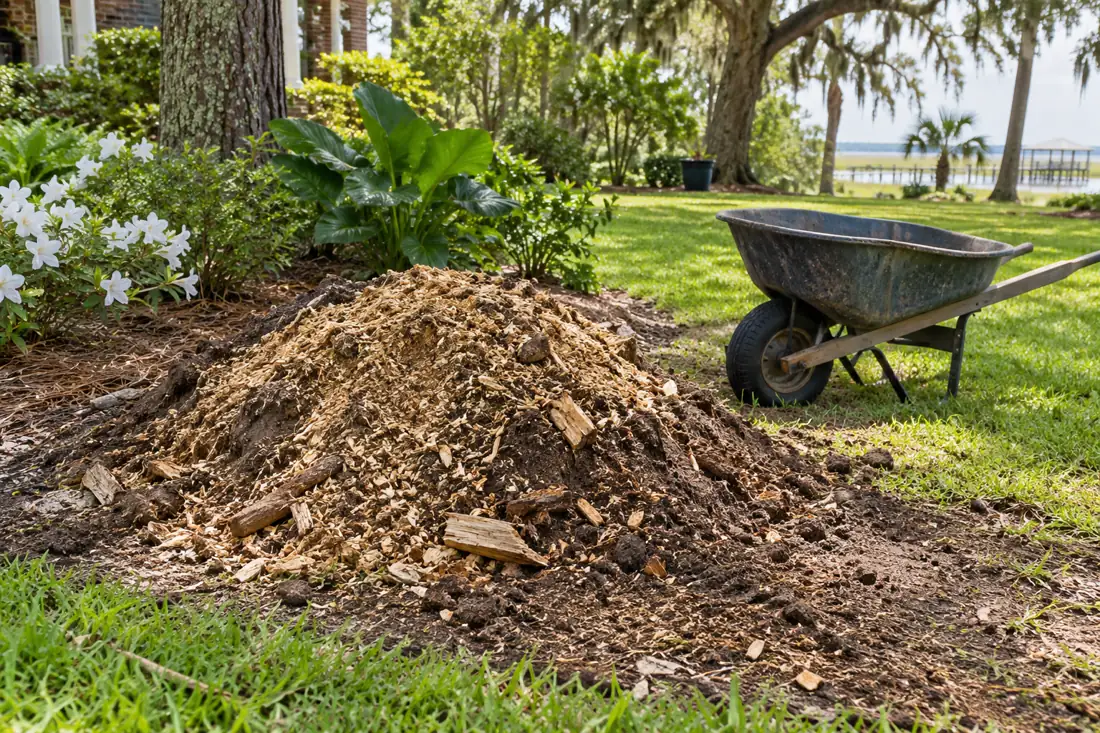
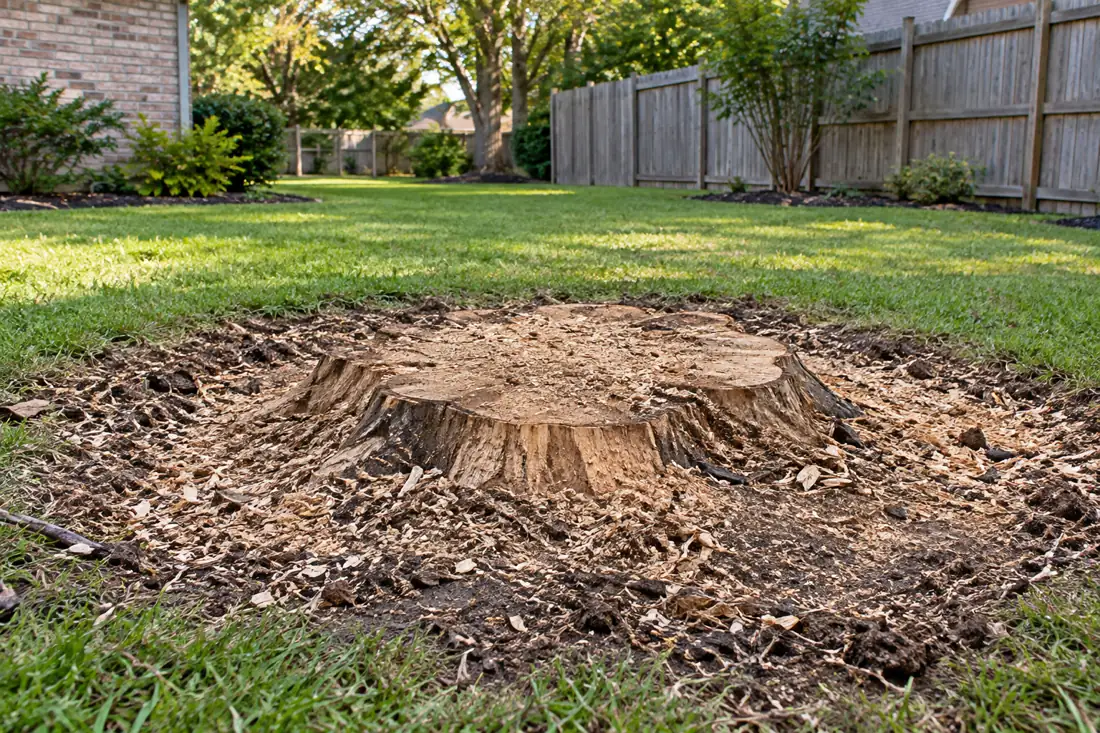
After grinding, inspect the approach as well as the stump footprint. Check for deep tracks, compacted soil at turns, exposed irrigation fittings and chips pushed into wet garden beds. Agree on whether chip removal, backfill or sod preparation was included, and keep photos of any location that was left intentionally unfinished for access reasons.
A realistic finish note might say the stump was ground but landscaping will be restored under a separate scope. That is more useful than an unsupported assurance that a heavy machine can leave every soft lawn unchanged.

Plan a soft-ground access exit before bringing in a grinder. Wet turf and saturated soil may support foot traffic while still rutting under a machine, especially near drainage edges, soft shoulders and buried pipes. Have the operator evaluate ground bearing, turns, equipment weight and safe access from the gate to the stump and back, not just the cutting position. Ask whether mats, a smaller grinder or delayed scheduling would reduce damage; none guarantees the lawn will remain untouched. Mark irrigation and lighting routes before equipment is positioned. Clarify how chips are collected without mixing them into wet topsoil and who is responsible for later leveling, sod or drainage repair. An estimate should make weather-related access limitations plain.
The written scope should distinguish the grinding result from lawn or surface repair if equipment leaves marks. Record drain inlets, low areas and nearby root zones before work so that access planning does not create another problem to be corrected afterward. The fenced-backyard guide addresses gate clearance and turning room; soft-ground planning concerns support, weather, and reasonable protection of the route itself. For the related but distinct decision, see Stump Grinding in a Fenced Backyard.
Decide whether the ground can support the planned equipment
A stump in a low or recently saturated part of a yard presents two separate problems: reaching it and working around it without excessive soil disturbance. The grass may look firm while the upper soil layer is soft, especially near drainage swales or fill. Walk the access route from firm ground and identify standing water, recent ruts, seepage, and areas that compress under ordinary foot traffic.
A contractor must assess the machine's actual weight, contact pressure, and safe operating requirements rather than assuming a compact machine can travel everywhere.
Ground conditions often vary over a few yards. The driveway may be stable while the approach beside a shed is saturated, and a shaded corner may remain wet after the rest of the lawn dries. Tell the estimator about recurring soggy spots and recent drainage work. Do not conceal soft areas beneath leaves or mats just to make the route look manageable. A realistic assessment may lead to postponement or a different equipment approach instead of unnecessary turf repair.

Distinguish ordinary dampness from a drainage problem
A brief shower does not always make stump work impossible, but persistent pooling, runoff toward foundations, and water entering a stump cavity can change the scope. Observe where water naturally travels across the lot and whether it collects behind retaining edges or around utility boxes. Where drainage is already problematic, grinding should not be presented as a drainage correction. The task removes accessible wood; it does not establish grades, install drains, or solve an underlying high water table.
Ask how the proposed work will avoid blocking existing surface flow with chips or loose soil. If the stump lies in a swale, a temporary grindings pile may act like a small dam during a storm. Identify a safe staging area on higher ground and agree where excess material will be placed. A homeowner planning later drainage improvements should tell the contractor so the grinding scope does not interfere with a separately designed drainage project.
Evaluate the entire access path before setting a date
A machine may reach the stump only by crossing turf that is wetter than the work location. The route may include a low gate threshold, a garden path, or an unreinforced drain cover that cannot support the load. Measure clearances, note slopes, and look for turning points where tires or tracks would repeatedly churn the surface. A photograph taken when the yard is dry does not prove the same route is acceptable after several days of rain.
Discuss whether temporary mats or a different machine could reduce surface damage, recognizing that protection cannot guarantee zero rutting on weak soil. The contractor should decide what is safe for the actual conditions on arrival. If the route is not suitable, a reschedule or revised scope is more responsible than forcing equipment through. Keep access alternatives on the estimate so weather-related decisions can be made without improvising near fences, patios, or buried lines.


Locate utilities and private systems before disturbing soil
Soft ground may contain irrigation tubing, French drains, shallow lighting wires, and service lines that are difficult to recognize from the surface. Soggy soil may also obscure old trench lines or recently repaired sections. Provide any drainage and irrigation drawings and arrange appropriate public and private locating where required. A sprinkler head, valve box, or visible downspout outlet should prompt questions, but it does not establish the route of every underground component.
Do not use a grinder to investigate a hidden pipe or chase a root into an unknown trench. If a critical clearance cannot be established, the contractor may need to limit depth or postpone the affected portion until locating is complete. This should appear plainly in the work record. The moisture level makes it even more important not to mistake a muddy depression for a reliable indication of what lies beneath it.
Protect soft soil before moving a heavy grinder
A yard can appear dry on the surface while soil below remains soft after rain, irrigation leaks or a high water table. Equipment weight is concentrated at tracks or wheels, so the issue is not only whether the grinder can enter the gate but whether it can turn and exit without rutting turf or compressing exposed roots. Mark saturated pockets, drainage inlets and low spots; do not test unstable ground by walking into a water-filled depression.
Discuss weather timing and access mats with the contractor rather than treating temporary boards as a guaranteed solution. Mats distribute loads but do not make an unstable subsurface safe. If machinery cannot safely reach a location, the correct answer may be rescheduling or revising the scope rather than forcing access. Confirm who will remove displaced chips, restore the grade and address ruts; a grinding price does not automatically include sod or drainage restoration.
Protect nearby trees and fragile root zones
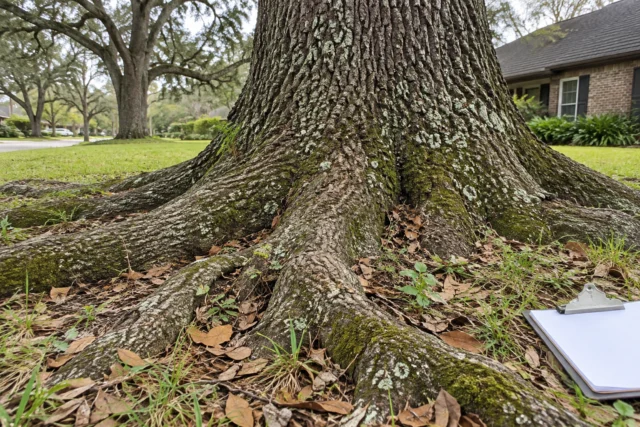
The stump being removed may sit close to a living tree whose roots share the same ground. Machine traffic on wet soil can compact or shear roots of the tree that is meant to remain, even when the grinding head never touches it. Identify trunk protection zones, visible roots, and areas that the crew should avoid crossing. The best direct line to an old stump may be unacceptable if it passes too close to a valuable healthy tree.
Ask the contractor to explain where protective equipment will be placed and whether the work can proceed from a different side. Avoid piling saturated chips against living trunks or burying exposed root flares. If an unusually large amount of digging appears necessary near retained trees, a qualified arborist's assessment may be more appropriate than widening the grinding scope in the field. Soft ground makes careful limits particularly valuable.

Control splatter and loose material around the work area
Wet soil mixed with wood fragments can move differently from dry grindings, and debris can adhere to nearby paving or vegetation. The crew should use appropriate guards and exclusion zones; no one should stand in a potential discharge direction to obtain photographs. Move movable items out of the work area in advance, and identify windows, vehicles, fences, and delicate plants that may require additional protection. Safety barriers are a jobsite control, not a guarantee that every surface will remain spotless.
Discuss cleanup of mud tracked onto walkways or drives. Sweeping, rinsing, soil removal, and reseeding are different tasks, and aggressive washing could send sediment into a drain. A written estimate should distinguish routine worksite tidying from full landscape restoration. Where the lot drains to a street inlet, avoid allowing loose chips or muddy wash water to enter the system.
Choose a grinding depth that matches known conditions
Stumps can contain buried flares and roots below the visible surface, but soft soil is not permission to grind to an arbitrary depth. The desired finish should reflect the next use of the area, equipment limitations, known buried systems, and the behavior of water in the cavity. Ask whether the target is to reduce a trip hazard, prepare for turf, or support a separate future project. Each outcome has different practical expectations.
A grinder does not compact backfill, restore drainage, or guarantee that a future structure can be supported. Wet cavities may collapse at the edges or fill with water before restoration is complete. Do not step into them to test depth. If a patio or footing will follow, tell the contractor and arrange appropriate separate ground preparation. The estimate should clearly state what will be left when the grinding crew finishes.

Plan for weather changes without an unsafe rush
A scheduled date may coincide with another storm or unusually wet ground. Define an understandable go/no-go process: who inspects conditions, how access will be evaluated, and how postponement is communicated. Do not assume a forecast alone settles the decision. The contractor should assess real site conditions and operational safety when work is due, while the homeowner can provide current photos of standing water or new ruts to support the discussion.
When timing matters because another contractor is coming, leave enough contingency rather than pressuring equipment onto unsafe soil. A reliable sequence might delay grinding until access recovers, then allow time for chips and disturbed ground to be handled before planting. No fixed number of dry days guarantees a particular lawn will be ready. Soil type, shade, slope, and rainfall history all affect the decision.
Agree on material handling and final ground condition
Grindings left on saturated ground can mix with clay or organic muck, making later leveling harder. Decide before work whether the chips remain in a contained pile, are distributed in a designated area, or are hauled away. Avoid storing them where runoff can carry material into catch basins. If the homeowner expects new soil and seed, make sure the estimate expressly includes or excludes that stage; grinding alone does not create a finished lawn.
Any ruts from access equipment should be documented and discussed in the context of agreed protection measures. Full regrading, irrigation repair, and turf replacement may need separate work. Take before photos of the access lane, then compare them with the finished condition. Clear expectations reduce the temptation to smooth over a serious depression with loose chips that will settle again.

Monitor the area before replanting or building
After the crew leaves, keep people away from deep or unstable depressions until they are safely addressed. Rain can change the cavity and redistribute loose chips, and organic material left below grade may settle over time. Inspect after a normal weather event for ponding, runoff blockage, or exposed obstacles. These observations help decide when a landscaping professional should backfill, compact, or plant, rather than guessing from how flat the surface looked on workday.
Retain photos, the documented grinding depth or limitation, and notes about buried private systems for future projects. If water continues to collect where the stump stood, do not assume the grinding caused every drainage issue or that simply adding more chips is an adequate fix. Compare conditions with the pre-work record and seek proper drainage assessment where warranted. A successful job on soft ground includes honest documentation of what was removed and what remains to restore.
Questions about this project
Can tree equipment use any driveway?
No general assumption should be made. Pavement condition, edges, support, buried infrastructure and the proposed equipment all matter. Ask the contractor to assess the intended setup and route for the particular property.
Do mats guarantee there will be no ground damage?
Ground protection is one part of a site-specific plan. It does not remove every load, soil or access limitation. Discuss the proposed measures and any restoration responsibilities in the written scope.
Does stump grinding remove the entire root system?
Grinding normally addresses an agreed stump area and depth. It should not be assumed to extract every underground root. Describe your future use of the site and ask what additional work or coordination is needed.
Can the area be paved or planted immediately afterward?
That depends on the intended project and the agreed finish. Chips, remaining roots, excavation and soil preparation may need separate attention. Coordinate the grinding scope with the installer who is responsible for the next phase.
What access information helps an estimator?
Send the narrowest opening, overhead obstacles, turns and the distance between the tree and the loading area. Include photos of the entire route and identify steps, soft ground or features that must remain protected.
Should I remove a fence before the visit?
First ask the contractor to assess access and agree on any temporary opening. Identify who owns the fence, who can authorize the change and who will reinstall it. Do not assume the opening is necessary or included.
Can weather change the scheduled method or date?
It can affect equipment support, visibility and the suitability of the work conditions. Tell the contractor about site changes and confirm the work window. The plan should be reviewed when the assumptions used for the estimate no longer apply.
Should I clear storm material before the crew arrives?
Do not enter a hazard area or move loaded wood to prepare for the crew. Describe the conditions from a safe location and follow the preparation arrangements confirmed with the contractor.
What should I compare besides the price?
Compare tree identification, work objectives, access assumptions, hauling, stump treatment, site finish and exclusions. Ask whether permits or other coordination are part of the scope and who can approve changes if conditions differ.
Does an online request book the crew?
No. A request starts the estimate conversation. The company still needs to discuss scope, availability and any site assessment. For a dangerous or urgent condition, call 504-458-8336 rather than relying on a form response.
What should I tell Tree Huggers about stump grinding on soft ground?
Explain the property address, the work you want and the specific concerns: soil bearing, drainage, route protection. Send safe photos of the tree, surroundings and access route. The contractor can then discuss the assessment and scope needed for this situation.
How do I request an estimate for this work?
Call 504-458-8336, text photos or use the estimate form on this page. Include the address, desired outcome and any timing constraints. The company will need to review scope and availability; an online request does not confirm a price, appointment or emergency dispatch.
Get a scope for your property
Soft ground creates an equipment-access problem as much as a stump problem. Show standing water, tire ruts, drainage direction and the route a machine would take from a firm surface. Note how recently it rained and whether the yard remains saturated after normal weather. Photograph the stump from safe, stable ground instead of crossing a muddy area for a closer image.
Mark any septic components, shallow drains, irrigation lines and buried utilities you know about. A lawn that looks dry at the edge may still be unable to support equipment near the stump.
Ask how the contractor will determine whether access is suitable, whether ground-protection mats or an alternate route are proposed, and what conditions would cause a postponement or method change. Spell out the handling of chips, rut repair, cleanup and final grading rather than assuming a machine can cross soft soil without impact. The appropriate work window depends on site conditions, not just the calendar. A written scope should keep stump grinding separate from drainage correction or restoration of pre-existing yard damage.