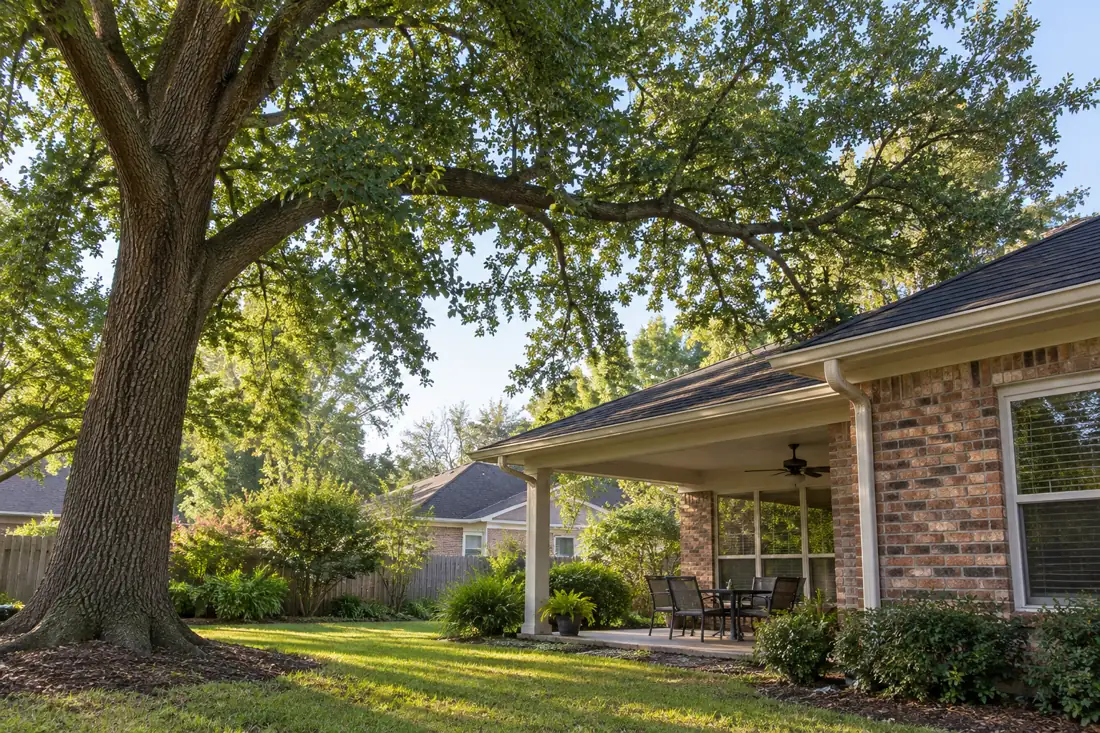
Parking-lot pruning can involve vehicle clearance, signs, lighting and branch concerns over pedestrian routes. Identify each objective and plan how vehicles will be moved. The estimate should account for equipment staging and a work window that avoids conflicts with public use. Tree-by-tree identification helps prevent missed areas.
Define the parking-lot closure before the pruning crew arrives
On a marked parking plan, identify trees, drive lanes, loading zones, accessible spaces and pedestrian paths. A trimming estimate that omits vehicle relocation can create a workday conflict even if the cutting itself is straightforward. Ask which stalls must be empty, what time they can reopen and who notifies drivers.
Pruning objectives may differ from one tree to the next: clearance over traffic, visibility at a corner, removal of a defective limb or protection for lighting. Avoid a blanket request to lift every canopy to one height. Local traffic geometry and tree condition should determine individual cuts while preserving a reasonable crown structure.
Put sweeping, chip collection and storm-drain protection in the finish scope. Photograph existing pavement or curb damage before equipment staging. Where a parking lot must stay partially operational, separate active exclusion zones from open paths with barriers that people can understand rather than relying on cones placed only around the trunk.

Plan parking-lot pruning around occupied stalls and protected fixtures
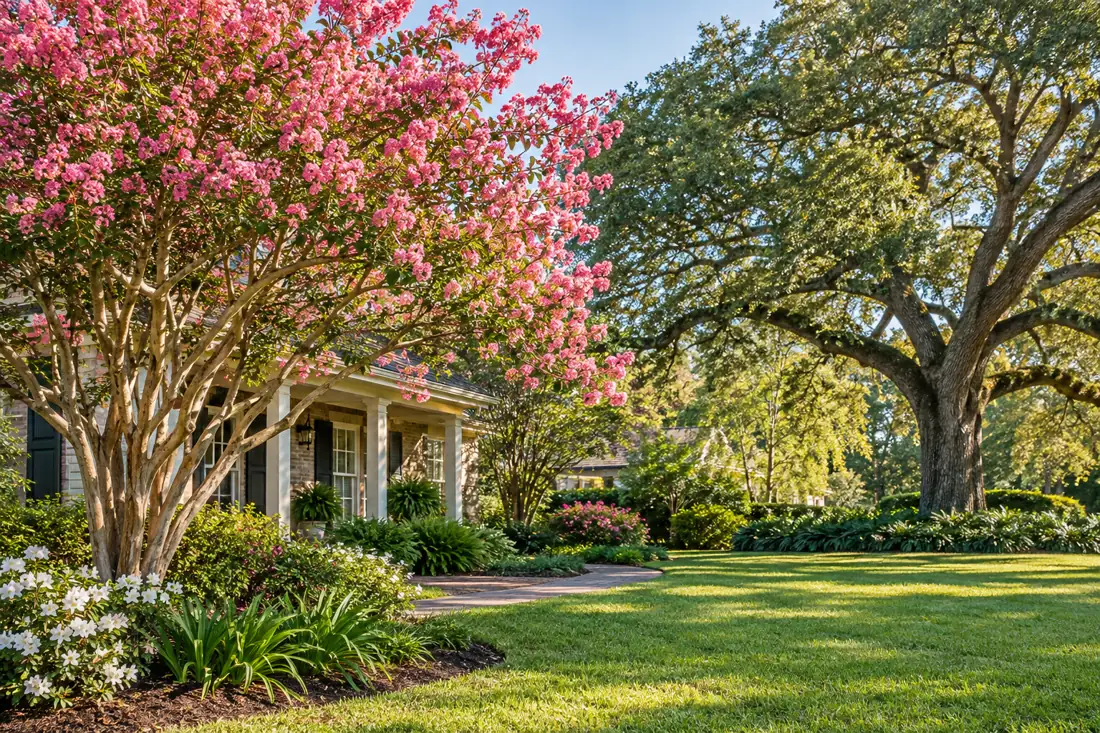
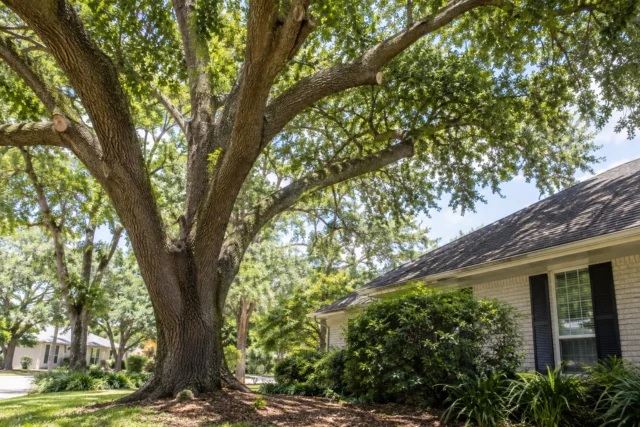
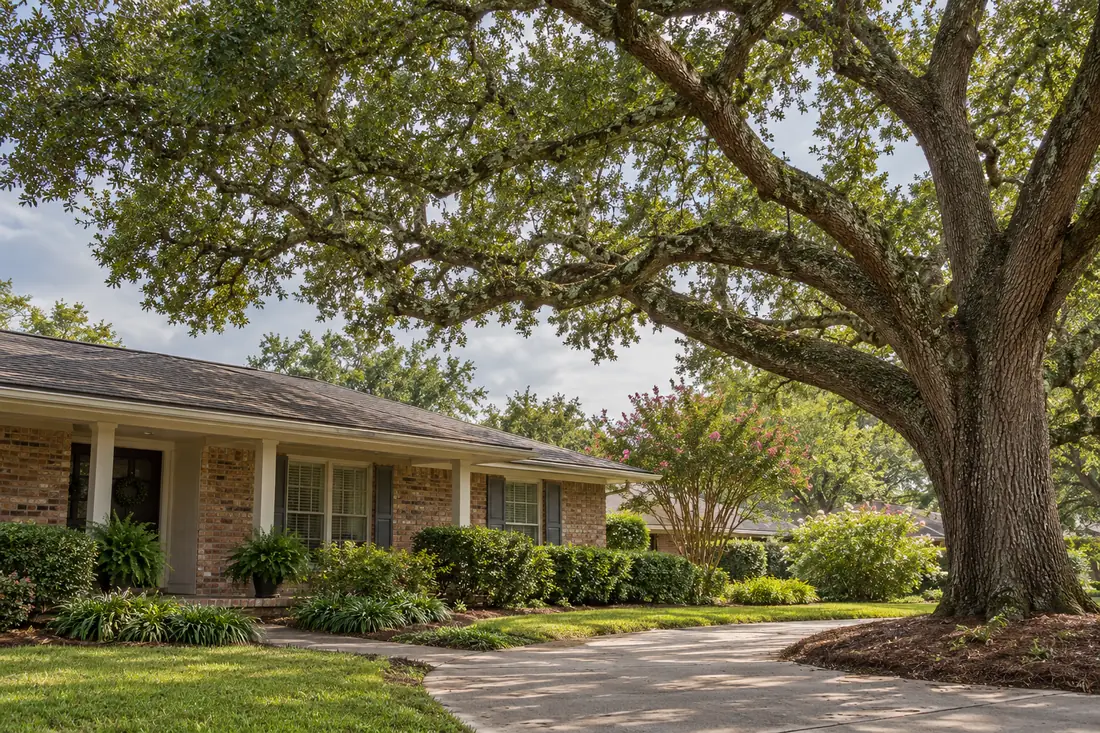
Tree limbs extending above a parking island can need different treatment depending on whether they obstruct signs, lights, service vehicles or a normal walking route. Describe the precise concern instead of requesting a uniform trim across the canopy. Show the trunk and crown in a wide photograph, then mark the stalls, curbs and light poles that matter. A picture of a tree beside parked cars is planning context; it is not evidence of a dangerous branch or a completed Tree Huggers project.
Before work is scheduled, have the property contact identify how vehicles and pedestrians would be managed, where material could be lowered, and whether irrigation, buried utilities or decorative planting could be affected. Confirm who approves any temporary stall closures, how users will be told and what cleanup or surface protection is included in the scope. Make pruning objectives and parking coordination separate line items in the conversation so neither gets lost.
Decide where parked cars and people will go
Pruning over a parking lot creates predictable conflicts between falling material, moving equipment and ordinary vehicle turnover. Mark the trees by row or space number and identify which stalls must be cleared, how drivers will be informed and whether accessible parking or an entrance will be affected.
Discuss temporary pedestrian routes and protected loading areas rather than assuming cones are enough in every situation. The scope should specify debris cleanup from stalls and drains, protection of curbs, signs and light fixtures, and a condition check before parking spaces are returned to use.
Survey the parking lot by walking the accessible perimeter and noting where branches contact trucks, obscure signs, interfere with lighting or hang over accessible routes. Photograph the full tree and the affected stall or lane together. Do not prescribe a uniform branch height across all parking islands: each tree’s form and the adjacent vehicle type affect what clearance is practical. Note overhead utilities, curbs, irrigation and pavement conditions that might affect equipment positioning.
Ask the property manager to define exactly which stalls or lanes can be taken out of service and when deliveries or customer traffic can be redirected. The written pruning scope should identify particular branches and clearance goals rather than simply promising a high canopy. Include debris removal, access restoration and responsibility for cones or closures. If the desired height would require extensive live-branch removal, ask for a candid explanation and a revised circulation plan rather than an excessive cutback.

Coordinate parking changes, sightlines and pruning standards
A canopy above parking stalls provides shade while affecting lighting, loading clearance and pedestrian sightlines. Map which stalls will close, how accessible parking will remain usable, and where cars can be directed while work is performed. Do not turn every clearance complaint into a recommendation to reduce a mature crown. Identify the actual clearance target and inspect tree condition before deciding whether pruning is necessary and what form it should take.
A written plan should distinguish branch selection, debris containment, lane management and post-work sweeping. Vehicle movements must be coordinated with whoever operates the property, especially with shared entrances or loading areas. Ask whether work can proceed in separate zones without promising every space stays open. Photos of the relevant branch, lane, pedestrian route and existing signage are more useful for planning than a close-up of leaves.
Map the parking lot as an operating site
A parking-lot pruning project begins with how the property works, not with a guess about how high the lowest limbs ought to be. Mark the entrances, one-way aisles, turning bays, loading areas, accessible spaces, pedestrian crossings, curb ramps and places where drivers reverse. Walk the property at a representative busy period from a safe location. Trees over empty stalls may affect larger vehicles when those stalls are occupied, and branch tips near an exit can obscure the view of a person approaching on foot.
Prepare a simple annotated aerial plan that assigns each tree a consistent number and highlights the specific clearance concern. Photographs from inside a parked vehicle can show a sight-line problem, but no one should use a phone while driving to collect evidence. Record whether a nearby sign, light pole, drainage inlet or previous pavement repair complicates access. The plan lets the estimator separate actual work objectives from a blanket request to lift every canopy, which would sacrifice shade without necessarily improving circulation.

Distinguish vehicle clearance from pedestrian safety
A delivery truck, passenger vehicle and person walking between parked cars interact with a tree in different ways. The assessment should consider the vehicles ordinarily permitted on the property, their approach angles and whether a branch dips into the route under its own weight. A high branch might still obstruct a truck turning through an aisle, while a low branch above planted islands may never meet a vehicle. Ask the property manager for typical deliveries and existing vehicle restrictions rather than inventing a universal clearance number.
Pedestrians need attention to visibility, accessible pathways and protruding limbs at head height. Low branches near a crosswalk or exit may hide someone from a driver even when no vehicle touches the foliage. Prioritize pruning that improves the relevant sight line and keeps the walking path usable. Evaluate changes from multiple viewpoints in daylight; a dramatic canopy opening is not proof that circulation is safer. Any traffic-control arrangement should be matched to the property and accepted by its responsible operator.
Treat parking access and pruning as one coordinated site plan
Pruning around a parking lot can involve vehicle clearance, lighting visibility, deadwood over occupied spaces and branches that interfere with signs. Those are separate objectives and should be listed separately. A map showing the affected stalls and drive lanes helps the estimator understand whether a partial closure will work or whether a larger area must be kept empty.
Consider pedestrian travel between vehicles and building doors, especially accessible routes. A branch that does not obstruct driving may still hang over a busy walkway. Workers should not stage a limb-lowering zone across an active entrance, and vehicle owners should be informed about the closure instead of being expected to move cars during cutting.
Inspect each tree before specifying cuts
The useful sequence is assessment, objective, then prescription. Identify dead or damaged branches, rubbing limbs, past topping, weak unions and obvious changes around the root area. A tree may need a structural assessment that is unrelated to vehicle clearance. Conversely, a healthy branch extending across a stall is not automatically defective. A professional should explain whether selective reduction, removal of a smaller subordinate limb or another approach would solve the specific conflict without leaving an oversized wound.
Review prior pruning and site modifications with the manager when records exist. Trees in narrow islands may have compacted soil, buried irrigation, paving over roots or repeated impacts from vehicles. Those conditions influence overall tree health and future maintenance even when the visible complaint is low clearance.
Do not interpret a particular leaf color or one surface root as a diagnosis by itself. If there is reason to suspect a serious stability issue, ask for a documented professional evaluation before treating routine pruning as a complete remedy.

Use a parking and pedestrian circulation map to control the job
A commercial lot contains several overlapping routes: vehicles arriving, cars reversing, delivery drivers turning, and pedestrians moving between entrances and accessible parking. Tree work that looks simple from one stall may affect all of them. Label the trees on a basic lot plan and mark exactly which limbs interfere with sightlines, lighting, pavement or normal vehicle clearance. A tree above a walkway may have a different pruning objective than one beside the delivery lane. Ask whether tenants, patients, customers or shift workers use the lot at irregular hours so the property manager can choose a meaningful work window rather than relying on the quietest visible moment.
Before agreeing on cuts, consider the tree's structure and the value of shade in paved areas. Mature canopies can make pedestrian routes more comfortable, and indiscriminate crown lifting may remove that benefit without solving an actual obstruction. Check for visible damage at branch unions, prior cuts, and issues at tree islands such as tight pavement, exposed roots or buried utilities.
Those observations may affect access and care but do not prove an individual tree is hazardous. If lighting, security cameras or traffic signs are involved, coordinate with the relevant equipment owner; pruning is only one possible part of the remedy.
The quote should distinguish the trees and branches addressed, temporary stall closures, vehicle relocation responsibilities, protection of accessible routes, equipment staging and cleanup. Property managers should notify tenants or operations staff before any agreed closure, and the crew should not be asked to move customers' vehicles.
Consider where chippers or trucks can stand without obstructing fire lanes and where logs can be collected without dragging material across active pedestrian routes. At completion, review the lot from both driver and walking viewpoints, check tree islands for leftover debris and update the map for the next maintenance review.
This site-specific record helps compare future bids without claiming the entire lot is permanently free of branch risk.
A site with trees at multiple entrances should distinguish immediate obstructions from planned canopy management. One parking island may need a dead branch assessed while another simply shades cars without blocking access. Recording both on the same map allows quotes to target actual work. For recurring programs, include who reports new defects, who authorizes closures and how the contractor identifies previously pruned trees.
This supports continuity when facility managers change. Do not substitute a checklist for a new inspection after substantial weather, construction or changes in tree condition.

Parking-lot pruning: match each tree to a vehicle or pedestrian conflict
Parking lots combine vehicle traffic, accessible stalls, loading spaces, lighting and areas of repeated foot traffic. Identify the trees by numbered bays or a sketch and record which exact limb creates a problem. A branch interfering with tall trucks is a different issue from foliage obscuring a sign or a suspected dead limb above a pedestrian route.
Determine when parked vehicles can be moved, who will notify drivers and how an accessible alternative route will remain available. Taking photographs from safe occupied areas is more useful than trying to demonstrate contact by driving a vehicle under a risky limb.
Ask for a sequence that keeps cutting and falling material away from parked cars and open entrances. Avoid blanket directions to raise every tree to a single height; select branches based on structure and the actual use envelope. Signs, service wires, lighting and underground irrigation can restrict equipment staging.
A property owner should authorize any temporary closures and coordinate neighbors or tenants, rather than relying on the pruning crew to manage unrelated traffic. At completion, walk the identified stalls, turns and entrances and record any residual restrictions or surface damage. A completed tree trim does not certify a parking lot's overall accessibility.

Coordinate closures before crews and customers arrive
A working exclusion zone can occupy more than the space directly beneath the cut. Falling material, lowering ropes, chipper access and vehicle maneuvering may require several adjoining stalls or an entire lane. Define the closure area with the contractor and property operator before posting instructions. Mark where employees, customers, vendors and accessible parking users will go instead. A plan that closes the only accessible entrance or emergency route without an approved alternative is not ready for implementation.
Choose a schedule around peak customer and tenant activity, but verify that after-hours work is permitted and practical. Lighting, noise restrictions and deliveries can alter the safest sequence. Establish who may close gates, relocate vehicles and authorize a change when an unexpected condition appears. Do not tow or move someone else's vehicle merely because the tree crew arrived.
Work should pause if unauthorized vehicles or pedestrians enter the protected area, and the site should not reopen until the crew has completed cleanup and the operator checks circulation.
Make scope and closure decisions traceable
Ask who can authorize parking restrictions and how the property will handle tenants or visitors who arrive after barriers are placed. Identify fire lanes, loading entrances and delivery schedules in advance. If equipment needs outriggers or heavy truck access, note pavement edges, islands and underground services in the planning discussion.
At completion, compare the specific limbs and clearance goals with the written estimate. Inspect the agreed work areas for debris and any apparent surface impacts, recording issues while crews are still available for a site discussion. Do not mistake reopening by a manager for a tree contractor’s guarantee of zero future limb failures.
See the related Tree Huggers service and request an appropriate assessment
Protect pavement islands and hidden utilities
Tree roots often extend well beyond the planted island, including under pavement where they cannot be seen. Ask about irrigation lines, lighting conductors, drains and recently repaired surfaces before locating outriggers or storing logs. An access route that looks strong enough for a pickup may not be suited to a heavy machine. The contractor should explain whether ground protection or a different piece of equipment is needed. Avoid assuming an asphalt lot can carry any load merely because ordinary cars park there.
Small landscape islands can be vulnerable to branch piles, dragged wood, compacted mulch and mower damage after the job. Note curbs, bollards, wheel stops and trees that need to be protected from staging. Keep equipment off exposed root zones where practical, and preserve drainage openings rather than sweeping chips into them. If an island already contains heaved pavement, document the condition separately so a pruning proposal does not imply the tree company will repair pavement or guarantee that roots will stop growing.
Choose targeted cuts that preserve parking shade
Shade is often a major reason a commercial property retains trees at all. Thoughtful pruning seeks the smallest collection of appropriate cuts that accomplishes clearance and safety objectives. It may involve removing deadwood, reducing selected branch ends or improving visibility near a turn. It should not mean stripping every lower branch to one arbitrary height or cutting branches back to stubs. Large removal wounds can raise decay concerns, and indiscriminate canopy raising may move wind loads to fewer remaining limbs.
Ask the estimator to label the proposed work by tree and explain what foliage and structural branches will remain. A multi-year approach may be preferable where major clearance changes would remove too much living crown at once. Replacement plantings, alternate delivery routes or better signage can sometimes address a recurring conflict more effectively than repeated severe cuts. Make the estimate distinguish pruning, risk assessment, stump or root work, traffic control and cleanup so the owner can compare the actual service scope.
Plan safe movement of people and equipment
Where a lane must stay open, separating passing vehicles from tree work is more demanding than placing two cones below a branch. A crew may need a complete temporary closure, trained control personnel or another work position; the appropriate method depends on the property layout and local requirements. Drivers must not be directed beneath suspended material. Keep pedestrians out of chipper zones, rope paths and the reach of equipment. The contractor should decide how to control its operational hazards.
A manager can support the boundary by notifying tenants and vendors of temporary restrictions without directing the technical rigging operation. Provide written instructions that are short enough to be understood at an entrance. Identify a safe meeting location for the crew and a contact for the property operator. If the site has overnight security, coordinate the closure and reopening with them. The work should be capable of stopping safely if the property suddenly needs emergency vehicle access.

Gather photos and records without overstating damage
For a useful estimate, include wide photographs showing the entire tree and surrounding parking pattern, then narrower views of branch locations, pavement islands and any known damage. Label each photo with the tree number from the site map. An image of a scrape on a truck should not be presented as proof a particular branch caused it unless the cause is actually known. Record dates of reported contact or falling branches as reports, distinguishing firsthand observation from tenant statements.
Keep customer faces, license plates and security-camera details out of publicly shared photographs when they are not needed. The inquiry should explain which spaces or routes are affected and whether there is an immediate visible danger. If a limb is hung up or a trunk shows sudden major movement, restrict the area from a safe distance and seek prompt qualified help. A website form can communicate the concern, but it cannot certify a tree as safe or promise a particular dispatch time.
Check the result at real driving and walking viewpoints
After pruning, the property operator and tree professional should verify the agreed objectives at the relevant entrance, turn, delivery route or pedestrian path. A useful completion review checks for unremoved hanging branches, twigs in wheel paths, blocked drain covers, damage to signs and debris in planting areas. Confirm that accessibility and emergency circulation are restored before taking down closures. An attractive cut from the sidewalk is not enough if the original truck-turn conflict remains.
Where appropriate, compare labeled before-and-after photos from the same safe viewpoint. These records should describe the actual work performed, not a fabricated project history. Ask what future growth may require reinspection, and whether any tree condition needs a separate report. The operator can then put the next review into routine property maintenance instead of waiting for another customer complaint. The goal is durable clearance planning with an honest understanding that trees continue to grow.

Set up a repeatable annual property review
Parking-lot conditions change as tenants, delivery fleets and landscape plantings change. Give the manager a list of assessed trees, the reason for each cut and any areas that were deliberately left alone. Include notes about root-zone compaction, canopy health and conflicts that pruning cannot fix. A tree-management record is more helpful than an undated invoice that says only 'trim lot trees.' It also makes future contractors less likely to repeat a cut without knowing why it was previously made.
Revisit problem aisles during normal operating seasons and after significant storms, looking from safe ground locations for new deadwood or contact points. Escalate concerning changes for professional assessment rather than relying on a fixed calendar to judge risk. For new landscaping, consider mature spread and vehicle routes before planting. Tree Huggers can receive a request with a site map and optional photos for a scope discussion; no public estimate should imply a price or guaranteed result before the conditions are evaluated.
Questions about this project
Can the crew block a public sidewalk or road?
Required arrangements must be coordinated with the appropriate authority. Identify public routes and restrictions before scheduling. A private work agreement should not be treated as automatic permission to occupy or close public space.
When should parked vehicles be moved?
Set the timing and responsible contact before the work window. Vehicles may need to leave the tree zone, equipment route and loading area. Confirm where access must remain available during each phase.
How should I describe the pruning I want?
Explain the objective: clearance for a route or building, deadwood, a damaged branch or structural development. Ask for suitable tree-specific work rather than requiring an arbitrary shape or amount of canopy to be removed.
Will pruning resolve every tree concern?
No. Root, trunk and major structural problems may need a different assessment or response. State the full concern so pruning is not used as a substitute for evaluating the condition that prompted the call.
Can a business stay open during tree work?
That depends on the site and scope. Discuss occupied routes, exclusion areas, loading and work windows with the contractor and property representative. Do not assume normal access can continue through the active work zone.
Who should communicate with tenants or visitors?
Agree on that responsibility with the property representative. The contractor needs a clear site contact, while the owner or manager should use the property's established process to communicate access changes and work windows.
Is a total tree count enough for a large quote?
Usually the parties also need locations and tasks. Use consistent tree numbers, marked photos or a site plan so the estimate and crew instructions refer to the same trees and retained areas.
Does a work inventory include a condition assessment?
Only if that service is expressly part of the scope. A list used to identify and price tasks should not be mistaken for a documented assessment of every tree's condition or risk.
Does cleanup include every root and wood chip?
That depends on the written scope. Tree removal, stump grinding, chip hauling and root excavation are different tasks. Ask what material is removed, what remains and whether soil or landscape restoration is separately included.
What should a final walk-through check?
Compare the identified trees and tasks with the agreement. Check agreed debris handling, stump treatment, access openings and any listed restoration. Record unresolved items clearly instead of relying on a general impression that the property looks finished.
What should I tell Tree Huggers about tree pruning around a parking lot?
Explain the property address, the work you want and the specific concerns: vehicle movement, pedestrian routes, tree identification. Send safe photos of the tree, surroundings and access route. The contractor can then discuss the assessment and scope needed for this situation.
How do I request an estimate for this work?
Call 504-458-8336, text photos or use the estimate form on this page. Include the address, desired outcome and any timing constraints. The company will need to review scope and availability; an online request does not confirm a price, appointment or emergency dispatch.
Get a scope for your property
Parking-lot tree pruning requires a map of actual vehicle and pedestrian conflicts, not simply a request to trim everything over the pavement. Mark the affected rows, entrances, cart returns, delivery lanes, lighting poles and accessible routes. Photographs showing canopy clearance above parking stalls, directional signs and sidewalks help separate recurring clearance problems from isolated deadwood.
Let us know whether the property can reserve parking spaces during work and who controls signs or temporary closures. Do not take photographs from an active traffic lane or stand beneath damaged limbs.
A clear written estimate should list each tree or work area, the intended clearance or safety objective, how limbs and equipment can be handled without exposing parked vehicles, and what traffic management the owner must arrange. Ask whether debris loading and final sweeping of pedestrian areas are included.
Avoid requesting indiscriminate topping to create uniform height: useful shade and tree structure should be weighed against genuine operational conflicts. If a branch is cracked or a tree has shifted after a storm, treat that as a separate assessment and access-control issue.