A pool owner may want less debris, more clearance or a safer-looking canopy. Those objectives require different discussions. Identify the concern and the branches involved, then ask what pruning is appropriate for the tree. A promise to stop every leaf from reaching the pool is not a practical pruning specification.
Over-pool pruning: specify branches, not an arbitrary silhouette
For a retained tree over a swimming pool, point to the specific branches causing a clearance, screening or maintenance issue. Identify the roof line, enclosure, overhead services and the branches that may need a qualified arboricultural review. Excessive one-sided cutting to eliminate every falling leaf can destabilize form or harm the tree; the goal should be discussed rather than inferred.
This pruning guide addresses selective canopy work and the effects of cuts on the remaining tree. If the entire tree has been selected for removal, a separate plan is needed for trunk sections, rigging loads, protected decking and full site cleanup. The linked removal-over-pool service guide covers that larger physical operation. Neither guide is a warranty against future leaf fall, storm damage or water maintenance. Tree Removal Over a Swimming Pool.
For this project, separate clearance objective, canopy health and pool protection. These details help the contractor understand what must be protected, what information needs confirmation and what result you want from the work. A clear request is more useful than an assumed method or a price based only on tree size.
Tree limbs over a pool can drop debris, affect sunlight and interfere with cleaning, yet removing every overhanging branch may stress the tree or create poor structure. Start with the actual problem: damaged limbs, access for pool maintenance, pool cover clearance or excessive seasonal debris. Observe the deck, enclosure, pumps and overhead utility lines before deciding where a crew can work. Do not drain a pool, move electrical equipment or cut a limb yourself based on an estimate photo.

Compare estimates by tree care and property protection
One bid may cover selective deadwood removal above the pool, another may include substantial crown reduction, and a third may propose removing the tree entirely. Those are different objectives with different long-term effects. Compare the affected tree, proposed branches or limits, access plan, material-handling method, cleanup, exclusions and any necessary pool or screen coordination. A low quote based on open-ground dropping is not comparable to controlled work over a delicate structure.
Ask what will happen if hidden decay, unsuitable ground or unexpected equipment restrictions are found. Changes should be discussed and approved by the person responsible for the property. Do not treat a broad promise of “no mess” as sufficient explanation of protection measures. Clear scope descriptions and appropriate qualifications provide a stronger basis for selection than equipment branding or a fixed price stated without seeing the site.
Choose pool-side pruning objectives before a saw is raised. First decide whether the actual problem is a limb touching an enclosure, low clearance above a deck, an obstructed maintenance path or ordinary seasonal litter. Each requires a different scope, and routine pruning cannot make a living tree stop shedding leaves. Give the estimator photographs showing the pool edge, screened enclosure, nearby service equipment and the target limbs from safe ground-level positions. Ask how branches will be controlled and removed without loading a screen, coping or pool cover. Agree separately on collecting sawdust and leaves from hardscape, protecting exposed filters and whether pool-water cleaning is excluded. Do not over-prune solely to achieve a temporary debris-free appearance.
Separate a limited canopy trim from overhead removal risk
For pruning near a swimming pool, describe the specific branch interference rather than assuming the whole tree must be cut back. Identify the coping, enclosure, filtration equipment, buried pipes and any deck surfaces that may be crossed. A pool cover is not a rated falling-limb barrier.
Ask how individual cuts will be controlled and how sawdust, leaves and twigs will be kept from the water as reasonably practicable, without promising a perfectly debris-free pool. If the scope expands to large suspended sections or whole-tree removal, obtain a new access and protection plan rather than treating it as a minor addition.
Protect occupied outdoor areas without over-pruning
Poolside tree work involves the canopy and the finished surfaces below it. Mark the waterline, pumps, filter equipment, deck, drains, lighting, nearby wiring and the route branches would take out of the yard. A simple overview photograph from the safe perimeter should make these constraints clear while swimmers and visitors remain away from the work area.
A quote should explain how sawdust, leaves and cut limbs will be contained without using a pool cover as a landing platform. Ask whether deck cleanup and skimmer checks are included. The pruning decision still depends on healthy structure and appropriate cuts, not an arbitrary open circle over the water.

Ask the arborist to identify selective cuts that preserve a stable canopy and to explain what leaf litter or shade will remain afterward. Pool contractors should advise on deck loading and surface protection; tree crews should explain their method for keeping wood and chips out of water and filters. Arrange safe pedestrian closure, protect coping and nearby planting, and confirm responsibility for pool cleanup if it is included at all. A trimming quote is not a guarantee of a debris-free pool or improved water quality.
Define the pool-related pruning objective precisely
Branches above a swimming pool can create several separate concerns: contact with a screened roof, frequent leaf and twig deposits, shade over the water, clearance from a deck, or an observed damaged limb. Each calls for a different discussion. An owner who wants fewer leaves may not need the same work as an owner with a visibly broken branch above the shallow end. Start with the outcome sought and ask whether suitable pruning can accomplish it while retaining a healthy tree.
Show the whole tree, pool footprint and nearby structures from safe ground. A picture of floating leaves alone does not identify which branch is responsible or whether a cut is appropriate. If there is a cracked or hanging limb above an occupied area, keep people out of the affected zone and seek professional advice. Do not use the pool, deck or a ladder to get closer to a suspect branch for photographs.
Identify the canopy and the tree's condition before selecting cuts
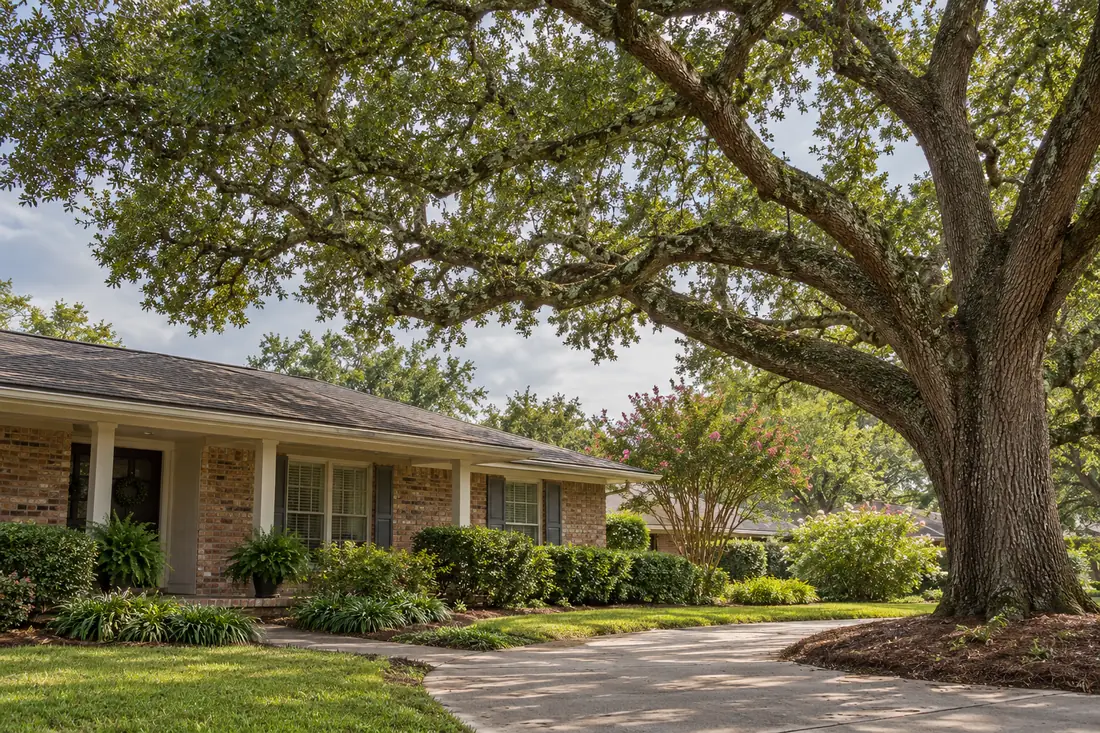
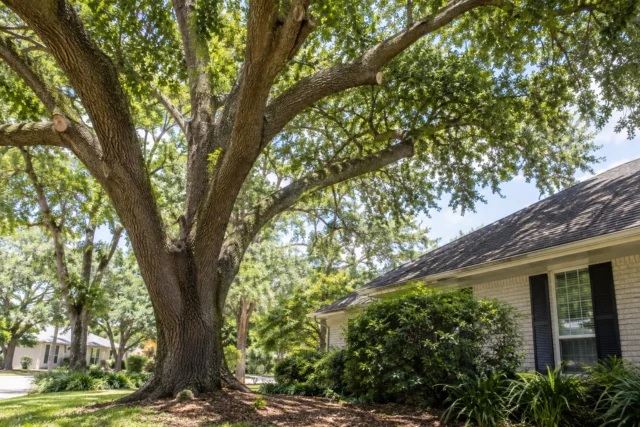
A large live oak may provide valuable shade and a mature canopy that cannot be reshaped arbitrarily without consequences. Ask the estimator to identify which limbs are causing the actual interference, their attachment points, and the proportion of live crown that a proposed reduction would affect. Deadwood removal, limited clearance and structural pruning are not interchangeable services. A green canopy does not prove that there are no structural defects, while heavy leaf drop does not by itself mean the tree is unhealthy.
Avoid insisting that every branch above the water be cut back to a vertical line at the pool edge. Such a request might remove excessive foliage or create large wounds without stopping ordinary leaves from blowing into the pool. Ask whether the goal is realistically achievable and what limitations remain. If the concern is tree condition rather than water maintenance, discuss an appropriate assessment separately.
Map fragile pool equipment and buried infrastructure
The work area includes more than the water surface. Pool pumps, heaters, electrical controls, lighting, drains, buried pipes, deck joints, coping stones and screening frames can complicate access and material handling. Identify known components and recent repairs for the estimator. A truck or lift that appears able to reach the tree may not be suitable for driving across the deck or soft ground near hidden lines. Photograph the route from the street, including gate sizes and turning spaces.
Do not drain the pool, operate pool electrical equipment or remove panels merely because a generic tree-removal guide suggests making space. Those decisions require the appropriate specialists and an agreed plan. Discuss which furniture can be moved, where people must stay away and who is responsible for protecting or restoring delicate finishes. Ground protection reduces some risks but does not guarantee that a fragile pool deck can support heavy equipment.
Pruning over water is a retained-tree decision, not a removal plan
A homeowner seeking less canopy over a swimming pool may need selective branch clearance while keeping the tree healthy and structurally balanced. That is different from dismantling an entire tree above the pool. Identify which branches contact a screen, hang above a walkway, shade the water or shed debris, and explain the desired clearance without dictating a severe haircut.
Avoid promising that trimming will eliminate leaves, pollen or future limb failures. The appropriate cuts depend on species, condition, branch attachments and the remaining canopy, not a uniform number of feet removed.
A useful pruning estimate should mark the branches in question, show the pool edge and deck, and state how material will be controlled. Ask whether screen protection, debris recovery and access restrictions are included. Do not attempt to reach over the water or climb an enclosure to photograph a branch. If a whole tree is dead, damaged or being intentionally removed, request the separate removal scope rather than using a canopy-pruning quote for dismantling. The two options have different equipment, debris, safety and restoration boundaries.
Separate pool debris concerns from structural pruning
A pool owner may complain about leaves, seed litter or branches touching a screen, but those are not all the same pruning problem. Identify whether the concern is seasonal material entering the water, clearance for a pool cage, shade over a deck or a limb with a visible defect. Normal leaf fall cannot be eliminated by a promise of a permanently clean canopy.
Before removing a major limb, ask whether a small selective cut or a non-pruning maintenance choice could address the concern. A tree leaning toward a pool does not, by itself, establish failure risk. Significant cavities, cracks, dead branches or recent movement need assessment by a qualified professional rather than an automatic topping prescription.
Plan controlled handling above water and adjacent structures
Branches over a pool may be difficult to reach or lower because there is no clear landing space. The contractor should evaluate the tree structure, available setup area and feasible way to control material. Whole limbs should not be dropped into the pool on the assumption that water makes a safe cushion.
Falling wood can damage coping, equipment, plumbing or the pool shell, and a controlled work zone must prevent entry by swimmers or visitors. The choice of machinery and handling technique belongs to qualified personnel.
Tell the estimator about nearby roofs, power lines, enclosures and neighboring property. A limb might need to travel laterally before it can be processed, and a tight gate may restrict cleanup equipment. Ask how material will be staged and removed without blocking the only exit or placing loads on unsuitable surfaces. A bid should explain major access assumptions rather than promise that no debris can ever reach the water.

Specify the pruning objective using measurable references
“Raise the canopy” and “trim off the pool” are vague instructions that can produce unnecessary cutting. If the concern is clearance above an enclosed screen roof or a walkway, identify the particular structure and desired working space for professional evaluation. If branches are rubbing on gutters or a patio cover, describe the contact and affected location. An experienced estimator can then discuss cuts that preserve reasonable branch structure while addressing the practical problem.
Measurements should reference a real feature such as the deck surface, enclosure top or roof edge, not an imagined line across the crown. A target clearance may not be practical without cuts that damage the tree. In that case, consider other maintenance approaches or a separate removal discussion. Do not use topping or indiscriminate crown thinning as a substitute for understanding the tree's response to pruning.
Tree Pruning Over a Swimming Pool
Pruning near a swimming pool is not the same as removing a tree over one. The goal may be to address a defective limb, provide practical clearance, reduce rubbing, or manage limited branches without removing too much living canopy. Begin with the specific problem and the location of the affected growth rather than asking for every limb over the water to be cut back.
Large indiscriminate cuts can expose a mature oak to poor wound closure, sprouting and changes in weight distribution. A qualified provider should assess branch attachment, tree health and the amount of live crown that can reasonably be removed. Do not assume that aggressive thinning prevents hurricane damage; it can create new structural concerns when applied without a defensible plan.

Agree on the canopy goal instead of an arbitrary cut line
Pool-side access requires more than clearance from the water. Identify skimmers, deck edges, pump equipment and any overhead wiring before deciding where debris can be lowered or moved. Discuss whether the pool should be covered or shut down during operations and who will manage water filtration or cleaning afterward. Owner-supplied photographs should be taken from the ground without entering an exclusion area.
Ask the proposal to identify the specific branches or objectives, expected debris handling, property protection and what is explicitly excluded. If deadwood is found during work, establish how scope changes are approved rather than relying on an open-ended authorization. A clear pruning specification helps compare estimates and preserves the distinction between tree-care recommendations and cosmetic preferences.
Coordinate pool closure, cleanup and maintenance
Close the pool and surrounding deck to occupants during overhead operations and until the crew has released the area. Establish who tells guests, children or tenants that the pool is unavailable. Work may create sawdust, fine twigs and leaves even when branches are controlled carefully. The estimate should specify which visible debris will be gathered, whether material is hauled and whether a separate pool-service visit is expected. Tree cleanup and pool-water chemistry are not automatically the same contract.
If the property includes a screen enclosure, coordinate any necessary panel opening or repairs with the appropriate specialist. Do not assume that pool filters can handle all sawdust or that chips can be washed down drains. Ask the provider where debris will be processed and whether landscape surfaces will be protected. A written finish standard avoids disagreements about what remains for the pool-maintenance company after the tree crew leaves.
Protect pool equipment and control the work zone
Describe the screen enclosure, fragile tile, pump equipment, fencing and available access gate before anyone proposes using a lift or dragging limbs across the deck. Some work sites need a different rigging direction or a temporary closure of the pool area. Equipment weight, not just the saw operator, can be the main concern around buried pool plumbing.
Agree how leaves, sawdust and small branches will be controlled and whether a pool service provider should handle water treatment afterward. Keep children and guests out of the pool and deck during overhead work. The written estimate should identify the tree, branch objective, access method and any exclusions relating to the enclosure or equipment.
See the related Tree Huggers service and request an appropriate assessment

Protect the pool, deck and tree during clearance work
A poolside tree may provide welcome shade while placing branches above water, coping, lights, a screened enclosure or an outdoor kitchen. Start with the specific reason for the work: broken wood, routine clearance, visibility or a documented risk. Blanket crown thinning is not a substitute for identifying which branch actually needs attention and why.
Before crews arrive, identify pool equipment, chemical storage, underground pipes, drain lines and narrow approaches. Coordinate safe access, barriers and protection for the deck and water. Do not ask workers to stand in or over a filled pool to reach a limb; the tree contractor determines a safe work method, which may require specialized rigging or postponement if conditions are unsuitable.
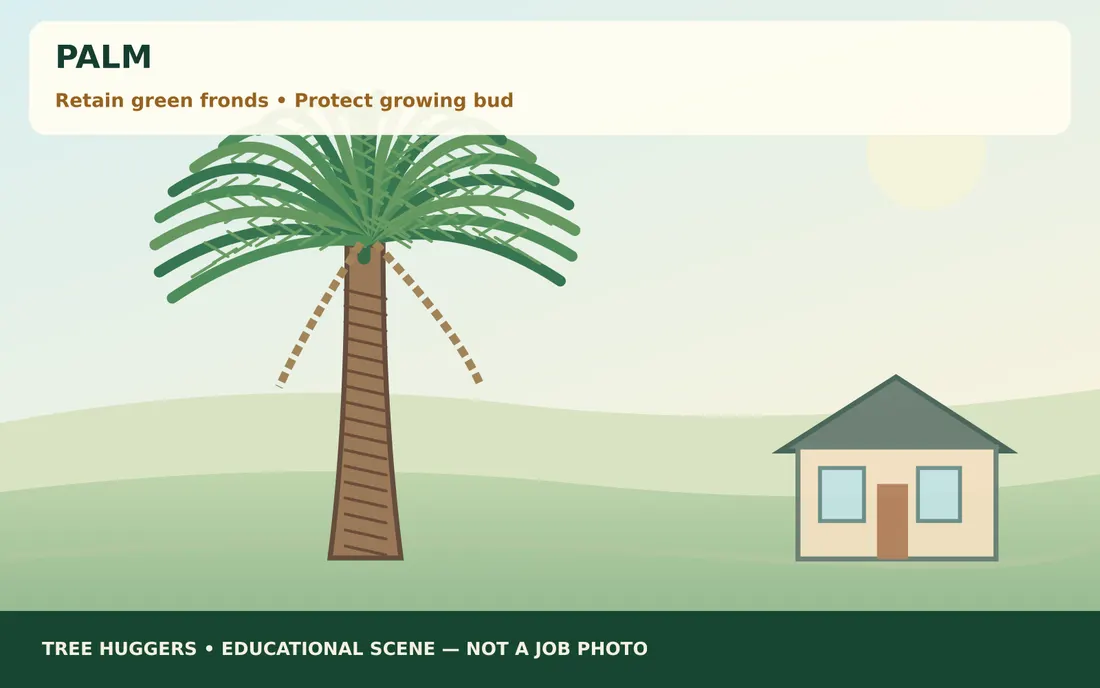
Clarify where cut material, fine sawdust and lowered limbs will go and who handles pool cleanup after the tree work is finished. Record whether the scope includes anything beyond pruning, such as a separate screen repair or irrigation repair. The supporting scene is educational poolside planning imagery, not evidence of a completed Tree Huggers job.
Protect the retained tree and the surrounding landscape
Trees near pools may experience altered drainage, paving and soil conditions over time. If a tree will remain, discuss how equipment and debris handling can avoid unnecessary compaction or damage to its root zone. Do not pile logs against the trunk or cut exposed roots to make room for a temporary machine path. Pruning can address some canopy conflicts, but it does not undo problems caused by paving, excavation or chronic soil disturbance.
After the work, record which limbs were treated and what clearance remains. Future growth may change the relationship between the canopy and the pool, so maintenance decisions should be based on observation rather than a promise that one pruning job is permanent. Keeping a simple record helps future contractors avoid repeating cuts and allows the owner to balance shade, tree health and pool use deliberately.
Document a practical completion and future care plan
Before the appointment, send wide photographs of the tree, pool and access route, along with a description of the actual concern. After the crew releases the area, confirm from safe ground that the agreed branches were handled, contracted wood was removed and any separately arranged pool or screen work is identified. Do not enter an unreleased work zone or climb onto the enclosure to inspect cuts. Retain the written scope and any changes.
A photograph of a clean pool is helpful but does not establish that every future limb or storm risk has been removed. If an assessment recommended monitoring a particular feature, keep that recommendation in the property file. When requesting work from Tree Huggers, distinguish tree care from pool maintenance and explain the surfaces and equipment that need protection. This gives the estimator a clear outcome to discuss without prescribing harmful pruning.

Protect the pool environment during overhead pruning
A branch above a swimming pool creates several work zones at once: the crown itself, the deck and water beneath it, and the narrow route used to carry material out. Begin by identifying which limbs actually interfere with pool use, roof clearance, or circulation. Removing too much foliage simply to make the waterline look open can create undesirable cuts and stress a retained tree. Photos from two corners of the deck help an assessor judge branch origin and clearance better than a close-up from directly underneath.
Discuss barriers that will prevent sawdust, twigs, and dropped leaves from entering the filtration system, and consider how unstable deck edges or hardscape joints affect foot traffic. A surface cover is not a substitute for a proper control plan, particularly beneath heavy suspended sections. Anyone inspecting the job should stay clear of overhanging material and let trained professionals choose methods appropriate to the structure and access constraints. Pool components and planted borders may be more fragile than the surrounding yard.
The estimate should explain the chosen canopy objective, which branches are proposed for treatment, whether temporary furniture movement is requested, and how debris will be carried out without scraping coping, fences, or gates. Ask how the pool area will be checked at completion and who will handle routine water chemistry and filtration maintenance afterward. Avoid promising zero debris or a specific pool-use reopening time until the site and work conditions have been evaluated.
Pruning over a pool should not become an unplanned removal
Pruning begins with a defined objective: clearance from a screen, reduction of a particular branch conflict, or removal of deadwood. Its scope should describe which parts of the canopy will be addressed and how those cuts preserve the tree’s long-term structure. A pool beneath the work requires controlled debris handling and a plan for protecting water, liners, coping, equipment and people.
A tree with serious structural defects may need an assessment of whether selective pruning is enough. The separate removal-over-a-pool guide covers the broader consequences of removing the entire tree, including sectional handling and a separate stump decision. A trimming quote should not quietly include—or omit—removal without explaining why.
Questions about this project
Is a pool cover enough protection during tree work?
Do not assume a cover can support falling wood or equipment. Show the contractor the pool and surrounding features so the work method, protection and cleanup requirements can be evaluated for the actual site.
Does tree cleanup include cleaning the pool?
Only if that service is specifically included and appropriately arranged. Clarify debris control, pool cleaning, equipment responsibility and enclosure work separately. A tree-removal quote should not leave those expectations implicit.
How should I describe the pruning I want?
Explain the objective: clearance for a route or building, deadwood, a damaged branch or structural development. Ask for suitable tree-specific work rather than requiring an arbitrary shape or amount of canopy to be removed.
Will pruning resolve every tree concern?
No. Root, trunk and major structural problems may need a different assessment or response. State the full concern so pruning is not used as a substitute for evaluating the condition that prompted the call.
Is leaving the trunk untouched enough to protect a tree?
No. Roots, soil conditions and nearby work can matter even when the trunk is not cut. Identify retained trees before planning access, excavation and storage, and ask what site-specific protection is appropriate.
Can pruning undo construction-related root damage?
Do not assume it can. Share the work history and ask for an assessment of the current tree and site. Pruning, monitoring or other recommendations should address an identified need rather than substitute for protection planning.
Does cleanup include every root and wood chip?
That depends on the written scope. Tree removal, stump grinding, chip hauling and root excavation are different tasks. Ask what material is removed, what remains and whether soil or landscape restoration is separately included.
What should a final walk-through check?
Compare the identified trees and tasks with the agreement. Check agreed debris handling, stump treatment, access openings and any listed restoration. Record unresolved items clearly instead of relying on a general impression that the property looks finished.
What should I compare besides the price?
Compare tree identification, work objectives, access assumptions, hauling, stump treatment, site finish and exclusions. Ask whether permits or other coordination are part of the scope and who can approve changes if conditions differ.
Does an online request book the crew?
No. A request starts the estimate conversation. The company still needs to discuss scope, availability and any site assessment. For a dangerous or urgent condition, call 504-458-8336 rather than relying on a form response.
What should I tell Tree Huggers about tree pruning over a swimming pool?
Explain the property address, the work you want and the specific concerns: clearance objective, canopy health, pool protection. Send safe photos of the tree, surroundings and access route. The contractor can then discuss the assessment and scope needed for this situation.
How do I request an estimate for this work?
Call 504-458-8336, text photos or use the estimate form on this page. Include the address, desired outcome and any timing constraints. The company will need to review scope and availability; an online request does not confirm a price, appointment or emergency dispatch.
Get a scope for your property
For pruning over a pool, send a full-tree photograph and a wide view of the pool, circulation equipment and access. Describe the actual concern—clearance, deadwood, storm-damaged limb or persistent debris—and ask how the proposed pruning protects tree structure while addressing it.