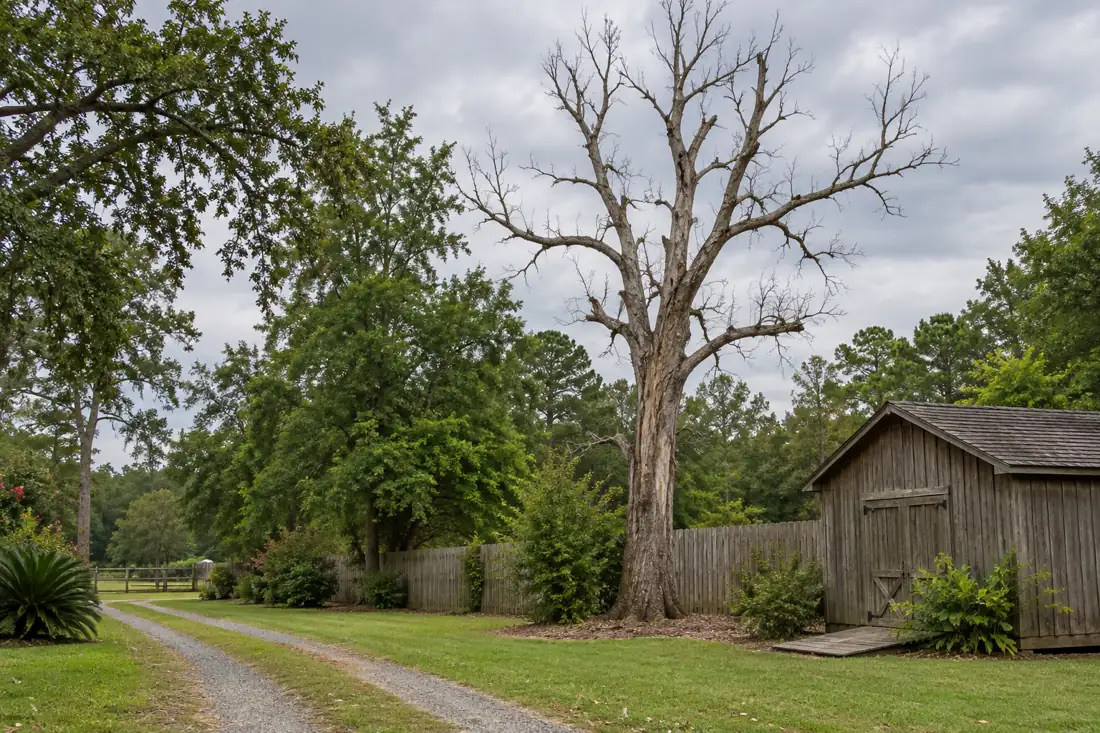
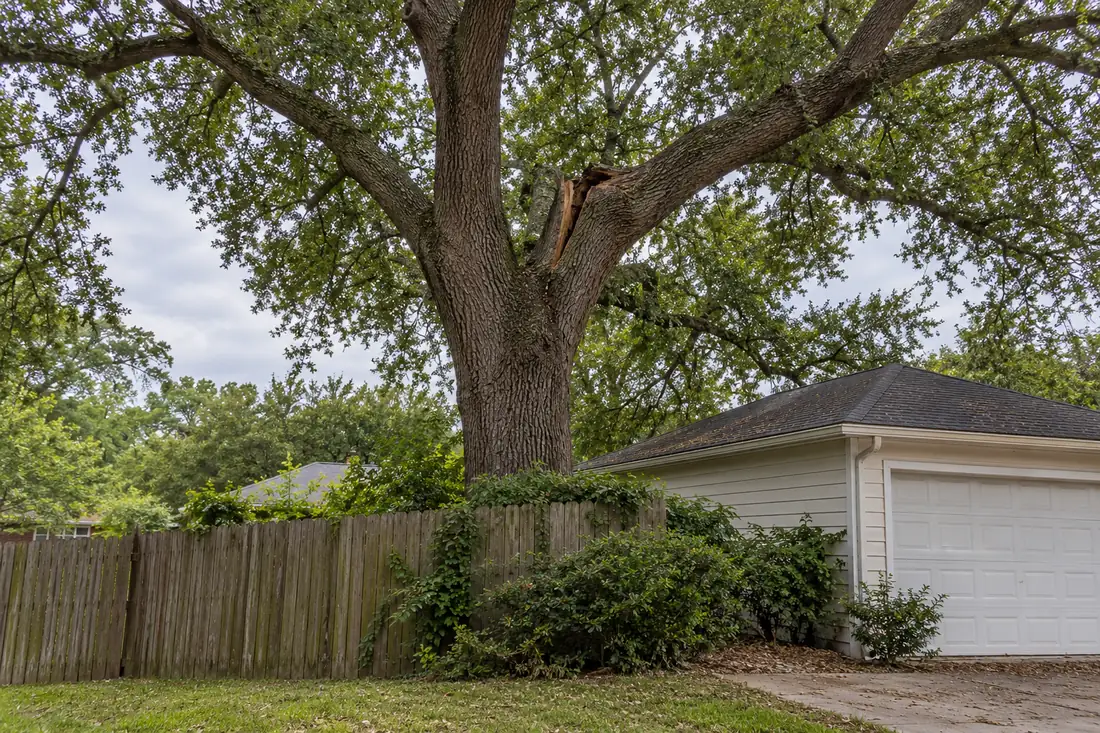
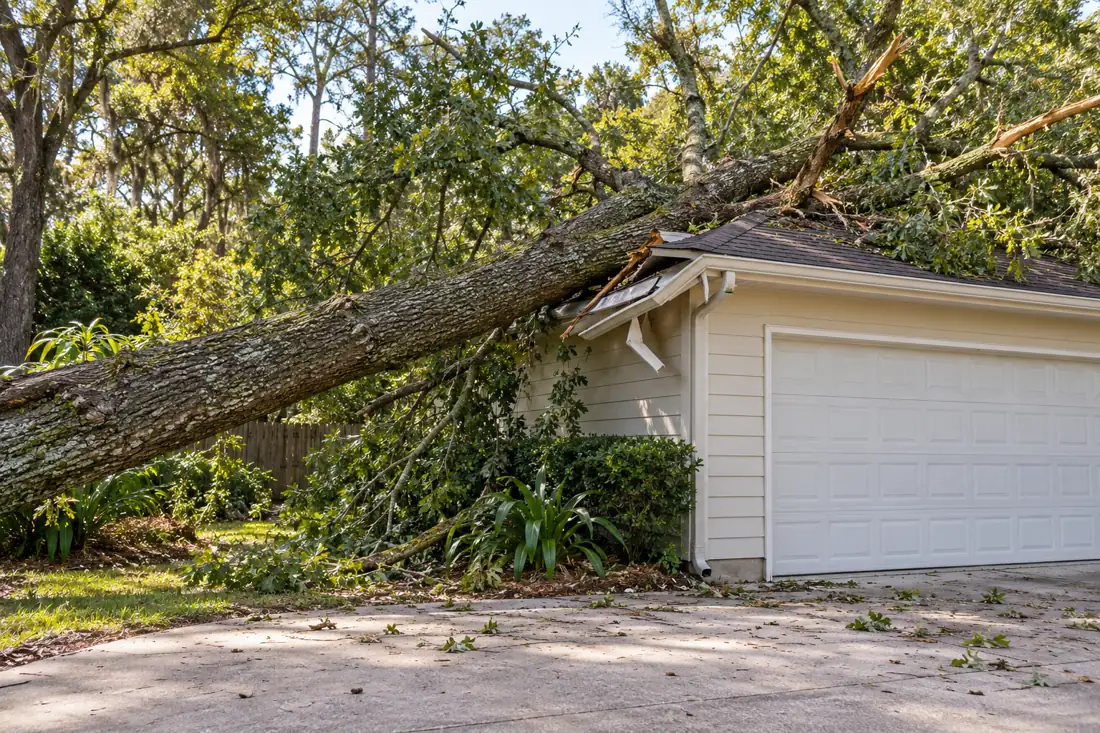
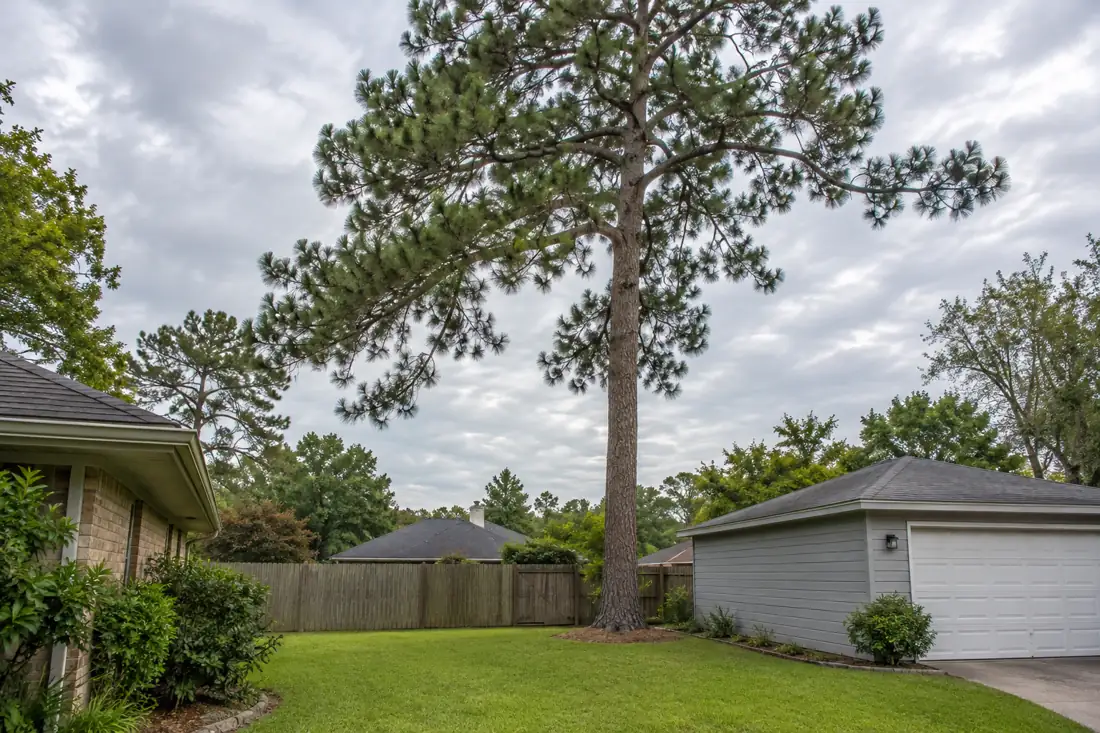
A pool changes the cleanup and protection plan. Branches, sawdust and equipment traffic can affect the water, coping, enclosure and buried pool lines. A pool cover should never be assumed to support falling wood. Show the contractor the pool equipment and explain which surfaces or utilities lie between the work area and the truck.
Over-pool removal: control the drop zone and pool systems
Removing a tree over a pool has a different risk profile from pruning one or two overhanging branches. The planning conversation should include the full tree, rigging options, access for equipment, coping and deck surfaces, screens, buried pool plumbing and where debris can be staged. A pool cover cannot be assumed to carry a suspended limb or protect all equipment from damage.
This service page is about whether whole-tree removal is feasible and how the contractor proposes to isolate the work. The linked pruning guide instead helps specify a limited canopy-clearance objective while retaining the tree. Do not describe removal as an ordinary trim or promise debris-free pool water. Written exclusions and a post-work inspection of visible surfaces help avoid ambiguity about the agreed finish. Tree Pruning Over a Swimming Pool.
For this project, separate pool enclosure, buried lines and debris exclusion. These details help the contractor understand what must be protected, what information needs confirmation and what result you want from the work. A clear request is more useful than an assumed method or a price based only on tree size.

Protect the water and coping
Mark the pool water, deck edge, enclosure and equipment pad on a simple site plan. Discuss how the contractor would control all wood and tool movement so none of those surfaces becomes an assumed drop area. Covers and temporary sheeting can help manage small debris, but must not be treated as structural impact protection. The contractor must choose an appropriate lifting or lowering method based on site conditions, rather than following a generic diagram.
Before removal, document the tree's position relative to the water, coping, screens, pool lights, skimmers, plumbing runs and pumps. A tarp or floating cover is not a rated barrier against falling wood, and a pool should not be treated as a convenient drop area. Discuss how sections will be restrained and moved away from the basin, and whether the deck can support proposed equipment or outriggers. Identify loose furniture, glass railings and delicate finishes that can be moved by the owner before work begins.
Agree on debris containment and post-work cleanup. Sawdust, bark and small twigs can enter filters, and heavy chips may damage coping or clog drains. Define whether the contractor removes floating debris and protects pool circulation during operations; do not assume repair of pool equipment is included in a tree quote. Photograph the pool and deck beforehand and confirm safe work-zone separation from household occupants or guests. If the crown contacts electrical equipment, coordinate with qualified specialists rather than improvising around energized components.
Understand the pool as a set of targets, not a drop zone
A swimming pool occupies more than the visible water. Coping, deck surfaces, filter equipment, lighting, underground plumbing, skimmers, drains, enclosures, furniture, and landscaping can all be affected by tree work. Even a branch that appears to hang only above the center of the water may need to be handled from a location with limited equipment access. Show the contractor the entire relationship between canopy, trunk, pool, house, and side gates before anyone proposes a removal method.

Show pool plumbing and electrical routes before equipment planning
Pool systems can involve buried suction and return lines, wiring, bonding conductors, drains, and plumbing that extend farther from the basin than owners expect. A truck, lift, grinder, or repeated log loads could cross these features. Provide any available installation plan and point out visible equipment pads, conduit and trench history. Do not authorize a route merely because pavement or turf covers the utilities.
A tree-service provider may need coordination with the responsible utility, pool contractor, or other qualified trade before confirming setup. Electrical concerns around water deserve particularly careful boundaries. Do not touch damaged wiring or attempt ordinary branch removal near energized lines. If service routes are unknown, note that uncertainty in the estimate request; it can influence whether the job requires investigation, different equipment, or a revised access plan.
Treat the pool deck as an access route rather than an empty work zone. A clear deck in a photograph can still conceal fragile coping, buried return lines, bonding conductors or service fittings. Before selecting equipment, walk the proposed route with the property owner and mark known utilities, gates, drainage outlets and surfaces that cannot carry wheel or outrigger loads. Ask the estimator to distinguish controlled branch handling from open dropping, and to state where wood will be lowered and staged. Keep water treatment, screen repairs and any post-work pool servicing separate from the tree-removal scope unless specifically included. Use photographs of the proposed access and protected surfaces as planning references, not evidence that any particular method is already approved.
Photographs taken from safe, ordinary standing locations should show the tree and its support structure as well as the approach route. Do not step under a damaged branch or onto a pool enclosure to get a better view. Indicate any buried service routes you know and distinguish documented locations from guesses. A pool's open surface is not permission to let heavy tree material fall into it.
Separate the tree's condition from the owner's pool preferences
A homeowner may request removal because of leaves in the skimmer, shade on the water, root concerns, a damaged branch, or a visible crack. Those are different decisions. Leaf litter alone does not establish that a mature tree is structurally dangerous, and a specific defect should not be ignored simply because the pool needs regular cleaning anyway. Ask what problem is being addressed and whether a tree assessment, selective pruning, or complete removal is under consideration.
When a limb appears damaged, record the observation and keep the affected space unoccupied until appropriate advice is available. Do not test the branch by pulling, shaking, or cutting it from a ladder. A professional may need to consider the whole canopy and targets; the presence of water below can change the consequence and handling plan but not automatically the diagnosis of the tree.

Trace the debris route before equipment arrives
Walk from the tree to the gate and loading vehicle. Identify narrow corners, overhead clearances, soft ground and vulnerable irrigation or pool-plumbing lines. Confirm with the property owner which paved areas and openings are available, and whether furniture or removable fencing will be moved by the owner or contractor. A protected route should also keep guests and pets away from an active work zone.
When the tree is being removed, plan for every section above the pool
Tree removal above a swimming pool is not an ordinary poolside canopy trim. The final sequence must account for the weight and direction of each removed section, how crews reach the trunk, where wood can be controlled, and which areas must remain protected. Water, tile, coping, screen enclosures, pumps and buried plumbing create separate exposure points.
A pool cover alone should not be presented as a protective method for falling timber, and a photograph does not establish what support or rigging system will be appropriate. The tree contractor must choose its actual work method on site.
Before requesting a removal price, identify whether the entire tree is to be taken down or only a damaged portion; then ask how the trunk, limbs, brush and stump are treated separately. Provide safe views of the canopy, the full pool deck, narrow gates, equipment routes and utility features.
Confirm who empties debris from water, who protects pool equipment, and whether repairs or pool-system checks are outside the tree-work scope. If the goal is maintaining a healthy tree while achieving clearance, a targeted pruning scope may be more appropriate than removal.
Make enclosure and decking constraints explicit
Screen enclosures, aluminum frames, decorative fences, pool covers, and glass barriers may leave little space for the movement of heavy wood. A contractor cannot assume that a branch can pass through an enclosure opening without damage or that a cover is designed to carry fallen material. Record the opening dimensions and describe which components are movable, but leave any required temporary disassembly to the appropriate qualified provider and the agreed work scope.
Deck surfaces can be vulnerable to impact, concentrated equipment loads, and staining from tree material. Protective boards or mats may be useful in a particular plan but do not eliminate every risk. Identify tile, stone, coping, expansion joints, and decorative finishes so the contractor understands what must be protected. If access is impossible without changing a fence or enclosure, agree on that separate task before scheduling.
Tree Removal Over a Swimming Pool
A limb crossing the water is only one part of the exposure when a tree stands over a pool. The perimeter may contain brittle coping, narrow deck sections, a screened area, plumbing, a filtration system or concealed electrical connections. The estimate should identify these items and the proposed work boundary, not simply describe the project as removing a tree beside a pool.
A contractor may need to assess options for supporting and lowering material instead of assuming branches can be dropped toward the water or deck. The method depends on the tree's structural condition, available attachment points and safe work area. Owners should not attempt to prepare a damaged limb, move ropes, or remove overhead growth themselves. Ask who will determine exclusion areas and when pool use must stop.

Document the equipment as carefully as the water
Clarify whether surface coverings, temporary screening, debris retrieval from the water and equipment protection are included. Fine sawdust and leaves may require a separate cleaning approach from large branch removal; a cover may help in some situations but must be suitable for the pool and work plan. The contractor and pool professional should coordinate where the tree work could affect circulation or electrical equipment.
Photograph the tree from the opposite side of the pool so the full relationship of canopy, trunk and deck is visible. Include any narrow passages to the yard and a separate photo of vulnerable fixtures taken from a safe distance. For the finish, distinguish removal of the tree from stump treatment, deck restoration, water chemistry or filtration service. Do not assume all of these belong in the same estimate.
Control swimmers, occupants, and pool-service access
During active work, the pool deck and any affected adjoining paths must be excluded from normal use. Children, pets, guests, and pool-service technicians should not cross the work zone to retrieve items or access equipment. Arrange an alternate route to the house or garden as necessary. If the property is a rental or shared facility, communicate the closure through the person who controls occupancy. A planned end time does not make the area safe to reenter before the crew releases it.
Pool pumps, timers, automatic cleaners, and irrigation may also need attention from their responsible operators before or after the work. Ask the contractor which equipment needs to be moved or protected, and do not perform unauthorized electrical or mechanical work as a shortcut. A tree company can coordinate site access without implying certification of the pool's mechanical system.
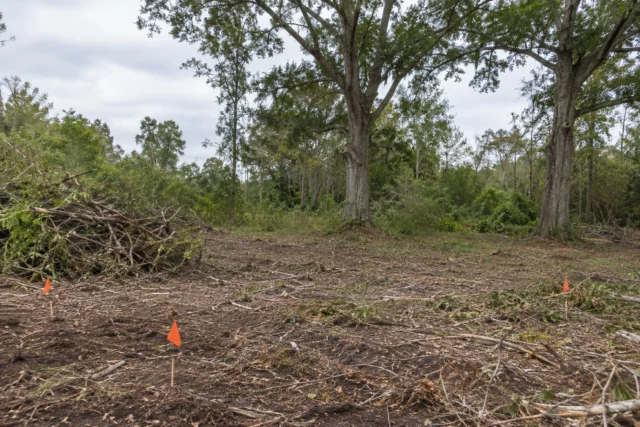
Separate tree debris cleanup from pool restoration
A proposal should distinguish hauling branches and logs from removing leaves or sawdust that enter the water. A tree contractor may handle the defined site cleanup, while water treatment, filter service, rebalancing, enclosure repair, and deck restoration belong to other scopes unless expressly included. Clarify whether existing debris is part of the job and where chips or logs may be staged. Do not assume the yard and pool will be ready for swimming the instant the truck departs.
If the stump is near pool plumbing or a hardscape edge, grinding deserves its own assessment. The owner should ask about access, intended depth, remaining wood and grindings, and limitations imposed by unknown utilities. Repairing a pool deck or reinstalling a removed fence panel must be addressed in writing. These distinctions prevent a vague promise of cleanup from hiding several separate trades.
Separate pool protection from tree-removal mechanics
Tree removal adjacent to a swimming pool cannot be scoped from a single street-side image. The important details include how the trunk stands relative to the deck, whether the far canopy extends beyond the fence, the gate width, underground plumbing routes, and the distance to overhead structures. Photograph the tree base and both ends of the pool from a safe location. If a limb appears unstable, do not stand beneath it for a better photograph.
The proposed removal method must account for controlled material handling, deck loading, water protection, and an exit route that does not damage pool plumbing or surrounding hardscape. Covering the water is not permission to drop heavy sections onto a cover or deck. A contractor should assess whether sections can be lowered or handled through a constrained opening, and whether off-property access requires documented approval. Conditions under the slab and within planted beds may not be visible.
Request separate line items for removing the standing tree, hauling material, grinding the stump, protecting equipment or surfaces, and returning the area to an agreed condition. If the stump is close to buried pool lines, ask how work depth and any exclusions will be established. The final scope should explain what would trigger a revised approach if hidden obstructions appear. These questions help owners compare actual deliverables without inventing a blanket price or safety guarantee.

Inspect the final condition with realistic limits
When work is finished and the crew has released the area, compare the visible tree condition, debris handling, access route, and any protections with the signed scope. Document outstanding chips, surface concerns, or pool-service tasks using factual photographs. Those photographs can show actual work but cannot prove that buried plumbing is intact or that the tree's former root system cannot affect nearby structures. If a follow-up assessment is recommended, record who is responsible for arranging it.

Discuss controlled handling instead of assuming a crane
An over-pool removal may require small sections, controlled rigging, equipment access from another part of the yard, or a different strategy depending on the tree and site. A crane can be considered in some situations but cannot be prescribed from the word pool alone. Reach, setup position, ground conditions, overhead conflicts, and legal access all affect feasibility. Ask the estimator to describe how the material would be supported, moved, processed, and loaded.
The owner should not dictate a cutting sequence based on a video of another job. A tree can have internal defects, unbalanced sections, or attachments that are not visible in the inquiry photos. If the feasible plan would require draining, covering, or protecting the pool through another contractor, identify that dependency and who is responsible for it. Good planning is explicit about assumptions rather than implying zero risk.
For a homeowner who kept another portion of the tree, document what remains and what pruning or support was performed. A large tree next to water should not be described as permanently safe merely because one heavy limb has been removed. Continue ordinary property monitoring and seek professional review after new damage or substantial changes.
Request a pool-area estimate with the information that matters
Send Tree Huggers wide photographs of the trunk, entire pool, enclosure, utility equipment and access route, plus safe details of the specific tree concern. State whether the desired outcome is trimming, whole-tree removal, or a professional review before choosing. Describe known pipes, wires, hardscape, narrow gates, and whether pool-service or enclosure contractors will need to participate. The more complete the physical layout, the more useful the first conversation can be.
Do not request a universal price, guaranteed completion date, or claim that every over-pool tree requires a crane. Ask what needs an on-site visit and which tasks are included or excluded. A site-specific written plan protects the pool and clarifies the removal objective without inventing past customer results or certainty that the site does not support.
Poolside removal and pruning are different decisions
A full removal plan answers how the entire tree will be taken down without using the swimming pool as a drop zone. It needs to account for branches and wood above the water, coping and decking, buried pool lines, pumps, fencing and any screen enclosure. The written scope should explain the handling and disposal of material and distinguish tree removal from pool-system repairs or pool-water treatment.

Review pool systems and surfaces at closeout
Check visible coping, deck edges, screens, pool equipment and the agreed debris-exit route against the documented pre-work condition. Remove loose chips and twigs from accessible surrounding surfaces and discuss any material that entered the water or filters. Confirm whether separate water cleaning, filtration service or repair assessment is outside the tree scope. Record unresolved issues before accepting the work as complete.
Protecting pool surfaces and water during tree work
Work above a swimming pool calls for a deliberate debris-control plan, not just a promise to clean up afterward. Identify the waterline, coping, cover, tile, pumps, filters, and any screen structure before discussing how limbs might be lowered. A protective cover is not automatically a load-rated landing surface, and loose sawdust or small chips may still reach the water.
Ask who will move furniture, who will protect equipment, and how debris will be removed without dragging it across vulnerable edges. Pool decks can also conceal plumbing or drains, so staging and outrigger locations need review. For an initial inquiry, send a view of the entire tree and separate wide views from the yard and pool-deck entrances. Avoid standing beneath damaged limbs to obtain close-up pictures.
If the tree is healthy and the real objective is clearance or less debris, removal may be unnecessary. The poolside pruning guide addresses selective cuts, canopy health and protection of the same delicate surfaces. Ask the estimator to compare the risk and result of each option instead of choosing based only on equipment availability.
Pool Handover: Tree Work Versus Pool-Service Work
A tree-removal plan can protect known pool features without turning the arborist into a pool technician. Clarify who is responsible for securing skimmer baskets, removing outdoor furniture, identifying electrical or plumbing connections, and dealing with water quality after sawdust or leaves enter the pool. A pool cover is a dust-control aid only if its maker and condition support the proposed use; it is never a landing surface for logs or cut limbs.
The written plan should describe a wood-handling route that avoids loading coping, glass, tile and water.
At completion, photograph the visible coping, deck, enclosure and equipment from safe ground locations. Confirm whether debris pickup includes the pool deck and surrounding landscaping, and whether any equipment inspection or cleaning belongs to a separate pool professional. If there was contact with a panel, pump, cable or buried pipe, do not assume a visual tree-service walkthrough rules out hidden damage. Keep the handover note and the pool specialist's findings as distinct records.
- Mark pump, filter, electrical equipment and possible buried pipe corridors before access planning.
- Agree on swimmer exclusion and whether a pool-service appointment is needed.
- State what surface cleanup means and who addresses water treatment or equipment repairs.
Questions about this project
Is a pool cover enough protection during tree work?
Do not assume a cover can support falling wood or equipment. Show the contractor the pool and surrounding features so the work method, protection and cleanup requirements can be evaluated for the actual site.
Does tree cleanup include cleaning the pool?
Only if that service is specifically included and appropriately arranged. Clarify debris control, pool cleaning, equipment responsibility and enclosure work separately. A tree-removal quote should not leave those expectations implicit.
Which property features should I point out?
Identify buildings, vehicles, fences, fixed fixtures, landscape features, utilities and occupied routes. Explain what can move and what must remain. Include existing damage and any buried features you know about along the access route.
Should people remain inside the work area?
The contractor and site contact should establish an exclusion area and access arrangements appropriate to the work. Keep children, pets, visitors and other workers outside the active zone until the responsible parties say it can reopen.
What access information helps an estimator?
Send the narrowest opening, overhead obstacles, turns and the distance between the tree and the loading area. Include photos of the entire route and identify steps, soft ground or features that must remain protected.
Should I remove a fence before the visit?
First ask the contractor to assess access and agree on any temporary opening. Identify who owns the fence, who can authorize the change and who will reinstall it. Do not assume the opening is necessary or included.
Does cleanup include every root and wood chip?
That depends on the written scope. Tree removal, stump grinding, chip hauling and root excavation are different tasks. Ask what material is removed, what remains and whether soil or landscape restoration is separately included.
What should a final walk-through check?
Compare the identified trees and tasks with the agreement. Check agreed debris handling, stump treatment, access openings and any listed restoration. Record unresolved items clearly instead of relying on a general impression that the property looks finished.
What should I compare besides the price?
Compare tree identification, work objectives, access assumptions, hauling, stump treatment, site finish and exclusions. Ask whether permits or other coordination are part of the scope and who can approve changes if conditions differ.
Does an online request book the crew?
No. A request starts the estimate conversation. The company still needs to discuss scope, availability and any site assessment. For a dangerous or urgent condition, call 504-458-8336 rather than relying on a form response.
What should I tell Tree Huggers about tree removal over a swimming pool?
Explain the property address, the work you want and the specific concerns: pool enclosure, buried lines, debris exclusion. Send safe photos of the tree, surroundings and access route. The contractor can then discuss the assessment and scope needed for this situation.
How do I request an estimate for this work?
Call 504-458-8336, text photos or use the estimate form on this page. Include the address, desired outcome and any timing constraints. The company will need to review scope and availability; an online request does not confirm a price, appointment or emergency dispatch.
Get a scope for your property
For removal over a swimming pool, send a wide view of the canopy, deck and access route along with safe ground-level photos of the pump, filter, skimmer and nearby fixtures. Ask what water and equipment protection, branch handling and final cleanup the proposed scope includes.