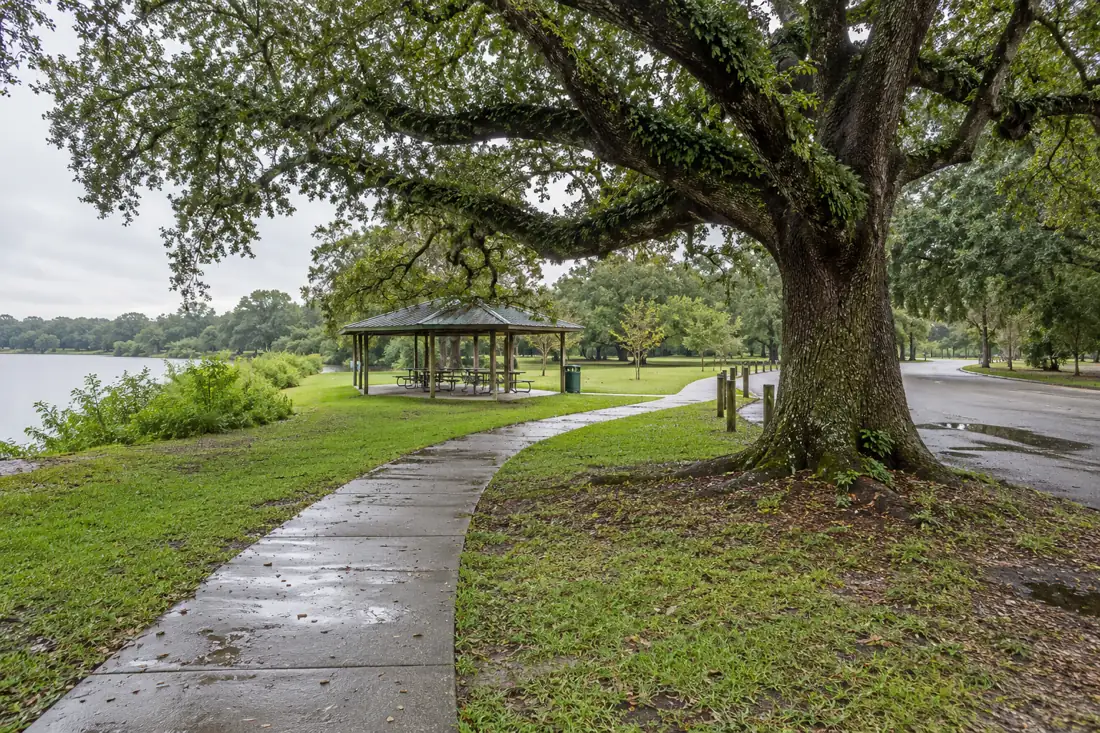
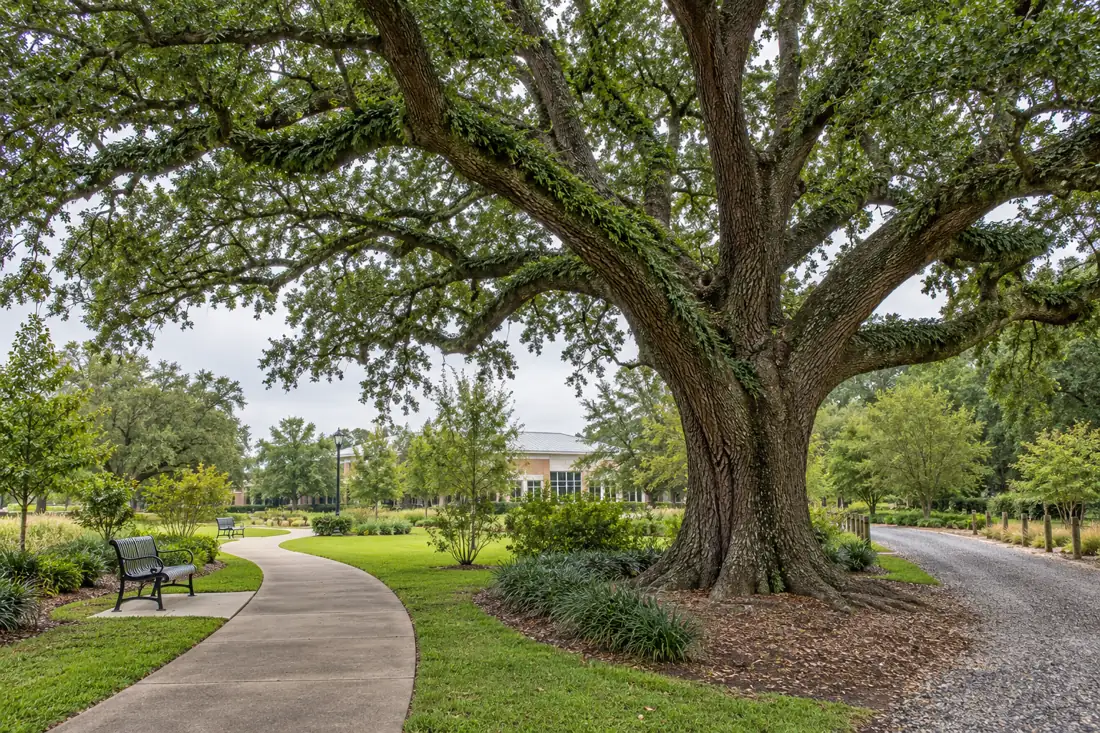
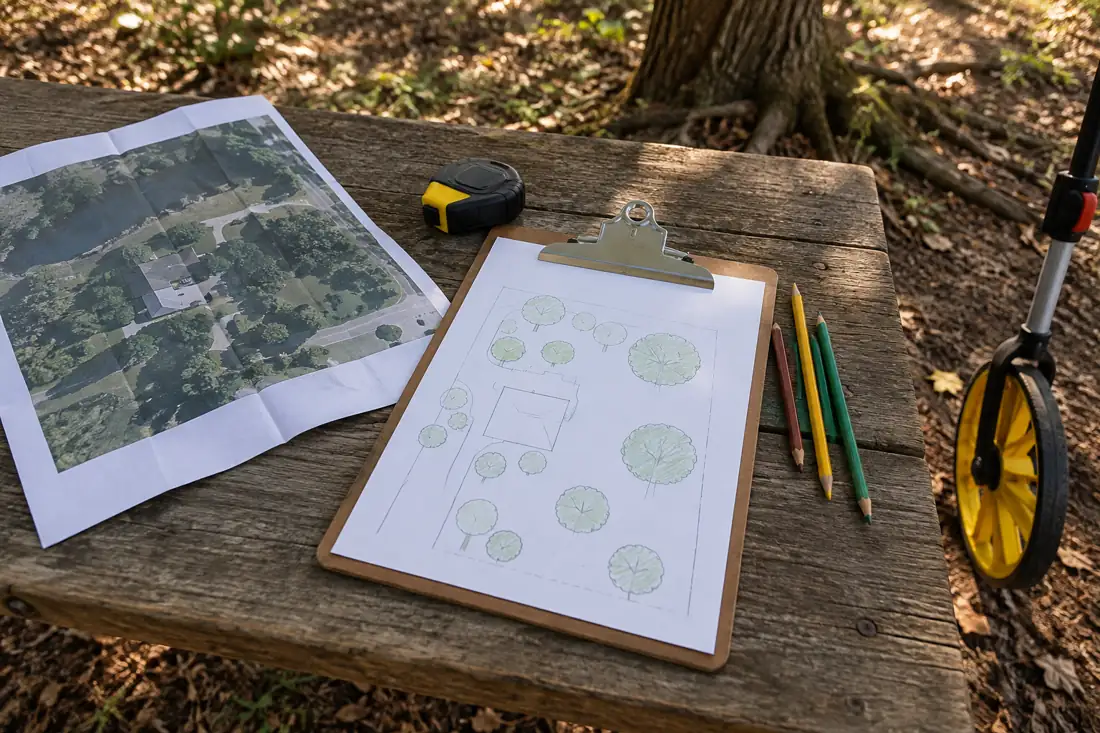
A public park is simultaneously a landscape, a pedestrian network, and a gathering space. A useful tree-work scope connects all three instead of treating the canopy as an isolated maintenance item.
Site-specific planning checkpoint: At a public park, map high-use areas such as playgrounds, paths, picnic shelters and parking before selecting a staging location. Public access can change quickly with events, school visits and weather, so a closure plan needs an owner and a method for communicating updates. Look at root zones, drainage swales and turf that machinery could damage even when the tree itself is the focus. If work is close to a playground or structure, set a protected exclusion area based on an actual site plan, not an illustrative picture. Plan an inspection for chips, loose branches, surface ruts and access barriers before reopening affected areas. Separate ongoing maintenance needs from the authorized job.
Map visitor movement before drawing a work boundary
On a park site plan, mark the real paths between parking, play areas, restrooms, accessible routes, fields and scheduled events. Note when people gather at each location, including evenings or weekends, before choosing a work window. Identify which trees overhang a required route and which areas can be temporarily closed by authorized park staff; a convenient equipment route is not necessarily a lawful or usable public detour.
The pre-work meeting should distinguish tree condition assessment, approved pruning or removal, protection of retained trees and grounds restoration. Root-zone protection matters around mature shade trees; do not solve access to one tree by unnecessarily compacting the soil around another. The work plan should show where limbs will land, where material can be loaded and who approves temporary closures.
Ask the park representative to record the actual reopening standard—free paths, removed debris, repaired disturbed areas and any remaining restriction. A generic promise to leave the park clean is less useful than a checked map and an accepted scope.
Read the related public tree work: site walk checklist guide · Review public-sector tree-work services
Keep park visitors away from tree operations: Public parks combine living trees, changing visitor patterns and ground that may be unsuitable for heavy equipment after rain. Define tree work by mapped location while distinguishing playground routes, trails, dog areas, fields, benches, pavilion reservations and service gates. A pruning plan around a busy path should discuss falling-material separation and detours rather than relying on a single caution sign beside the trunk. Confirm where trucks can load without crossing a sensitive play surface or causing rutting near drainage paths.
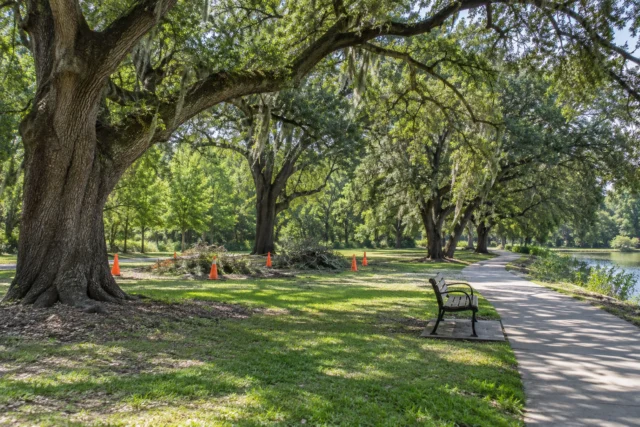
Distinguish visitor safety concerns from appearance work
The maintenance request should state whether the concern is an obstructed walkway, low branch over a playing field, deadwood above a seating area, clearance for a facility, or canopy appearance. These are different reasons for tree work and may call for different evaluation and pruning approaches. Falling leaves, moss, or a broad natural branch are not by themselves evidence that a tree is dangerous. If a tree has a split union, new lean, or recently lifted soil, describe the observation for professional assessment.
Ask for a site-specific recommendation, especially where a mature live oak has historic form or shade value. Indiscriminate topping can create long-term structural and aesthetic problems rather than solve a visitor complaint. Where preservation is reasonable, the scope may include selective work and monitoring rather than removal. Where removal is being considered, identify the concern, surrounding targets, and any separate approvals the park owner requires. A routine trimming quote is not a substitute for a documented tree-risk evaluation when one is needed.
Map the places visitors actually use
A park's busiest areas are not necessarily the locations closest to the entrance. Identify play surfaces, picnic shelters, benches, sports edges, restrooms, parking connections, accessible routes, and informal footpaths beneath significant canopies. Tree work planned around an empty weekday inspection can disrupt a weekend event or school group. Mark the dates and hours when each area sees concentrated use, then identify which tree locations require an exclusion zone and which activities can reasonably move to another part of the park.
Create a simple location schedule using existing park tree numbers, map pins, or recognizable landmarks such as a named pavilion. Do not substitute invented coordinates for confirmed tree positions. A label like “oak behind the south restroom” is more reliable than “the large tree by the path” when several workers are reviewing the scope. Add the requested outcome and person who can answer questions at each location. This reduces duplicate site walks and helps estimate quantities without assuming the same task applies to every tree.
Protect the routes that must remain accessible
A work zone can separate a parking lot from the only accessible restroom even when the equipment occupies a small patch of grass. Map the continuous travel routes before setting the work window: entrances, ramps, curb transitions, accessible parking, and paths to essential facilities. Identify a suitable alternate route if one is available, and have the park manager decide how visitors will be informed. The contractor should be told which route cannot be used for equipment staging or temporary brush storage.

Preserve historic trees and the ground beneath them
A park may have an impressive oak that serves as a visual landmark, even if the planned work concerns a smaller adjacent tree. Protecting the landmark means considering roots and soil beyond the visible trunk. Heavy equipment, repeated truck movement, trenching, and compacted storage areas can stress retained trees. Include a map of the protection area and ask what access alternatives are practical. Do not assume that avoiding direct contact with bark prevents damage to roots or surface drainage.
Different trees tolerate disturbance differently, and visible foliage is not a complete measure of condition. If a park plans utilities, hardscape repairs, or a new pavilion alongside tree work, coordinate the sequence before crews arrive. Seek input from an appropriate tree-care professional when construction would occur near significant roots. The contractor should know which trees are scheduled for removal, which are to be pruned, and which must remain untouched. Marking all three categories avoids expensive misunderstandings during mobilization.
Volunteer cleanup crews and ordinary pedestrians must not pass through active overhead tree operations. Barriers, spotters, public signs, and schedule changes must be planned for the actual park layout and the owner's rules. If a park trail intersects the work area, determine whether a temporary closure needs department approval, not just contractor agreement. Document who places and removes barriers, and do not promise the path will reopen merely because cutting has stopped. The site representative must first confirm the agreed completion conditions.
Choose work hours that fit the park calendar
Park work may need to avoid youth sports, scheduled public events, maintenance deliveries, or peak morning trail traffic. Give the estimator the calendar, quiet-hour restrictions, lock-up procedure, and groundskeeper contact rather than simply requesting “early morning.” Some sites permit trucks only through a service entrance that is unavailable during a large event. The practical work window includes equipment arrival, protective setup, cutting, loading, cleanup, inspection, and demobilization—not only the period when saws run.
If seasonal conditions change, revisit the schedule. Saturated turf after a Gulf Coast storm may be vulnerable to rutting even when the weather clears. Moving the date or selecting different equipment may protect the grounds. The manager should indicate which fields or paths cannot carry equipment and whether temporary ground protection is desired. Avoid assigning an exact job duration before access, tree size, material handling, weather, and the number of controlled visitor crossings have been evaluated.
Preserve high-value trees and root zones where the approved work calls for retention, and consider whether nesting or other environmental restrictions require review. The park operator should identify acceptable closure windows, who communicates a detour and what surface condition is expected before reopening. For selective work, photograph the retained canopy and attachment points at a safe distance before and after the visit.
For removals, distinguish debris hauling, stump treatment, soil grading and reseeding if these are separate tasks. A job is not ready for public use merely because cut wood has left the property; clear travel routes and final safety checks matter too.

Planning tree work in an active public park
A park tree-work plan starts by identifying the activities that need to continue around the project. A single canopy may overlap a picnic area, walking loop, ballfield or maintenance entrance. The work zone should therefore be mapped against actual visitor routes rather than a generic circle around a trunk. The buyer can then decide what can close temporarily and what must remain accessible.
Review turf stability, buried irrigation, benches, lighting, shelters and drainage before choosing a debris or equipment path. Park lawns may look open from a distance but contain soft spots and invisible service lines. A proposal should distinguish work that can be completed from established paths from work that requires extra protection or a revised method to avoid rutting public ground.

Balance tree work with visitor access
The scope should define what is being retained as carefully as what is being removed. A shaded play area may depend on surrounding trees, and over-pruning can change the park experience without addressing the original concern. Where tree health or structural risk is uncertain, a qualified assessment should guide the choice among pruning, monitoring and removal rather than substituting a blanket clearance approach.
Give the public operator a practical restoration checklist: loose limbs removed, paths inspected, seating reopened when safe, turf condition recorded and any unresolved stump or root hazard specifically identified. The final photos should show the actual site, not generic before-and-after imagery. Park schedules may also require coordination around permitted events, seasonal access and other contractors.
Make the debris destination part of the scope
A public park may prefer branches chipped and removed, logs hauled away, or selected material retained for an authorized landscape use. These choices affect equipment, crew movement, unloading, and the final condition of the park. Specify who owns resulting wood, whether chippings may remain, and where loads may be staged without blocking a path or drainage inlet. Do not assume every park has a suitable on-site dumping area or that storm debris is eligible for the same disposal arrangement as ordinary maintenance.
For large material, ask how the crew expects to move it from the tree to the loading point. A route across turf, under another canopy, or beside playground equipment can be the decisive access constraint. Distinguish cutting a fallen limb into manageable pieces from removing those pieces from the property. Include the finish expected around seating areas and paths. A public site needs cleanup standards that a facilities representative can actually verify, not a vague promise to leave it “neat.”
Organize a tree-by-tree work schedule
A practical schedule contains a tree identifier, approximate location, requested operation, reason for work, adjacent visitor use, material handling, and any special protection notes. For trees requiring further assessment, mark the decision as pending rather than writing removal into the final scope prematurely. This helps a buyer compare bids without rewarding a contractor who interpreted a broad instruction more aggressively. A photograph with the tree number visible can supplement a map, provided the image was made from a safe location.

Confirm park-specific permits and approvals
Public ownership does not mean a contractor can automatically close a trail, use adjacent property, work near utilities, or remove a protected tree. Identify the department controlling the land and ask it to provide applicable approvals or decision contacts. Parks sometimes share boundaries with school districts, flood-control agencies, utility easements, or neighborhood associations. The work order should clarify the owner's role in obtaining access, permissions, and any required tree disposition decision.
If the project involves procurement rules, accessibility obligations, or grant funding, the agency should attach the requirements applicable to the specific opportunity. Tree Huggers should respond with an operational scope it can substantiate rather than claiming every public purchasing qualification in advance. Confirm what documentation the buyer actually needs at bid, mobilization, and closeout. A clear requirements list avoids collecting irrelevant paperwork while overlooking something essential to the project.
Keep alternate tasks separate. For example, removing a fully failed tree and trimming two nearby trees should not be hidden inside one ambiguous line item. Ask which quantities, equipment approaches, and site conditions the price assumes. When a crew discovers another issue, the park owner can decide whether to authorize a change or place it on a future maintenance list. This also gives grounds staff a record of completed work for future inspections.
Inspect the finished space from the visitor's viewpoint
At closeout, walk or photograph the named work locations from ordinary visitor routes, provided the area has been cleared for access. Check for remaining overhead concerns identified in the scope, loose brush near paths, stump or root remnants where work included them, damaged surface features, and blocked drains. A crew's completion statement should identify what was done and what was not part of the contract. The park manager decides when public access can resume under the agency's normal procedure.
Keep before-and-after documentation tied to each tree number, and distinguish a contractor-generated planning image from an actual project record. Record any remaining pruning, assessment, restoration, or irrigation work assigned to someone else. To request an estimate, supply Tree Huggers with the park address, location map, visitor-use calendar, safe photos, and decisions the park owner wants documented. An inquiry starts a discussion; it does not confirm a price, availability, or public contract award.
Park work follows visitor routes and retained-tree priorities
A public park may have trails, picnic grounds, open lawns, historic trees, waterways and multiple informal entrances. A tree crew needs a boundary plan that considers where people actually walk, including temporary routes outside formal paths. Protect retained trees and root zones even when equipment could otherwise save travel distance by crossing open grass.
Do not infer that a daytime park closure is acceptable to every user group. Verify access, events and any separate environmental or public-space requirements with the responsible owner. If the setting is primarily a programmed building, field or court complex, the recreation-center guide focuses more directly on scheduled activities, facility gates and program interruptions.
- Map primary and informal paths before setting exclusion zones.
- Keep retained-tree roots out of equipment staging decisions.
- Obtain the owner's decision on events, accessible detours and reopening.
Questions about this project
What should a government buyer send first?
Send the agency or prime contact, project reference, site, scope, deadline, access conditions and required documents or submission format. Identify the authorized contact for questions and the buyer's process for clarifications.
Does a capability page prove contract eligibility?
No. Request and verify current documentation relevant to the particular opportunity. Registration status, certifications, licensing, insurance and availability should not be inferred from a broad marketing statement.
Can a business stay open during tree work?
That depends on the site and scope. Discuss occupied routes, exclusion areas, loading and work windows with the contractor and property representative. Do not assume normal access can continue through the active work zone.
Who should communicate with tenants or visitors?
Agree on that responsibility with the property representative. The contractor needs a clear site contact, while the owner or manager should use the property's established process to communicate access changes and work windows.
Can the crew block a public sidewalk or road?
Required arrangements must be coordinated with the appropriate authority. Identify public routes and restrictions before scheduling. A private work agreement should not be treated as automatic permission to occupy or close public space.
When should parked vehicles be moved?
Set the timing and responsible contact before the work window. Vehicles may need to leave the tree zone, equipment route and loading area. Confirm where access must remain available during each phase.
Is leaving the trunk untouched enough to protect a tree?
No. Roots, soil conditions and nearby work can matter even when the trunk is not cut. Identify retained trees before planning access, excavation and storage, and ask what site-specific protection is appropriate.
Can pruning undo construction-related root damage?
Do not assume it can. Share the work history and ask for an assessment of the current tree and site. Pruning, monitoring or other recommendations should address an identified need rather than substitute for protection planning.
How should extra work be approved?
Use the agreed approval process and identify the change, reason, scope, price or schedule effect as applicable. Confirm who has authority before treating an additional tree or task as part of the original job.
What completion records are useful?
Keep the agreed scope, tree or area identification, authorized changes, invoice and labeled photos where appropriate. Include unresolved items and a contact. Contract-specific records should follow the buyer's stated requirements.
What should I tell Tree Huggers about tree work for a public park?
Explain the property address, the work you want and the specific concerns: visitor areas, park authority, retained landscape. Send safe photos of the tree, surroundings and access route. The contractor can then discuss the assessment and scope needed for this situation.
How do I request an estimate for this work?
Call 504-458-8336, text photos or use the estimate form on this page. Include the address, desired outcome and any timing constraints. The company will need to review scope and availability; an online request does not confirm a price, appointment or emergency dispatch.
Get a scope for your property
Provide the park map, intended work trees and public access periods so the review accounts for actual visitor routes.