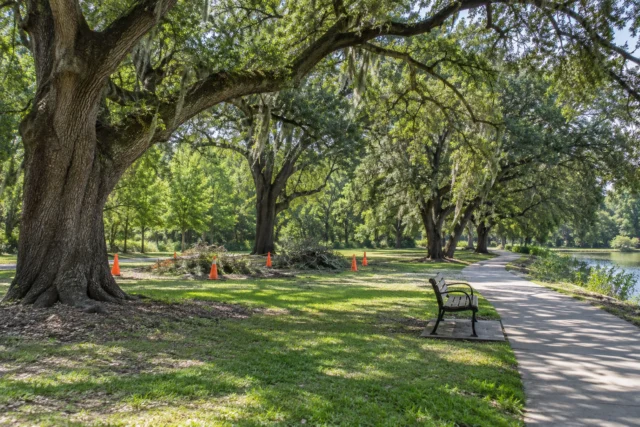
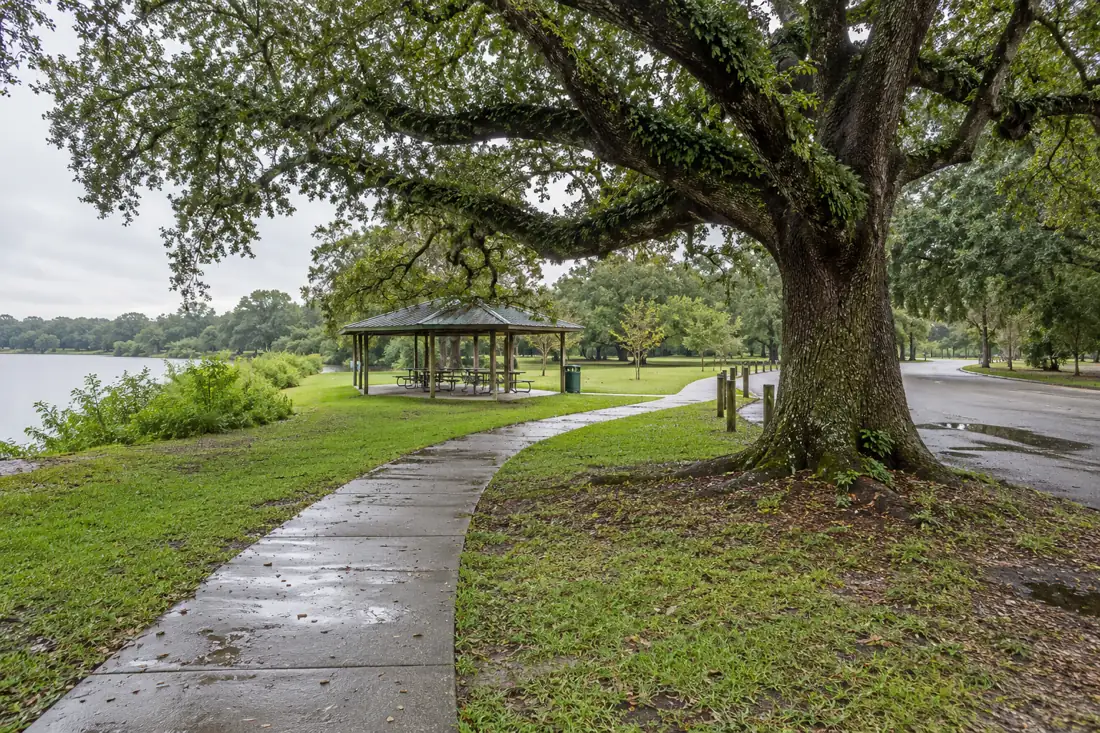
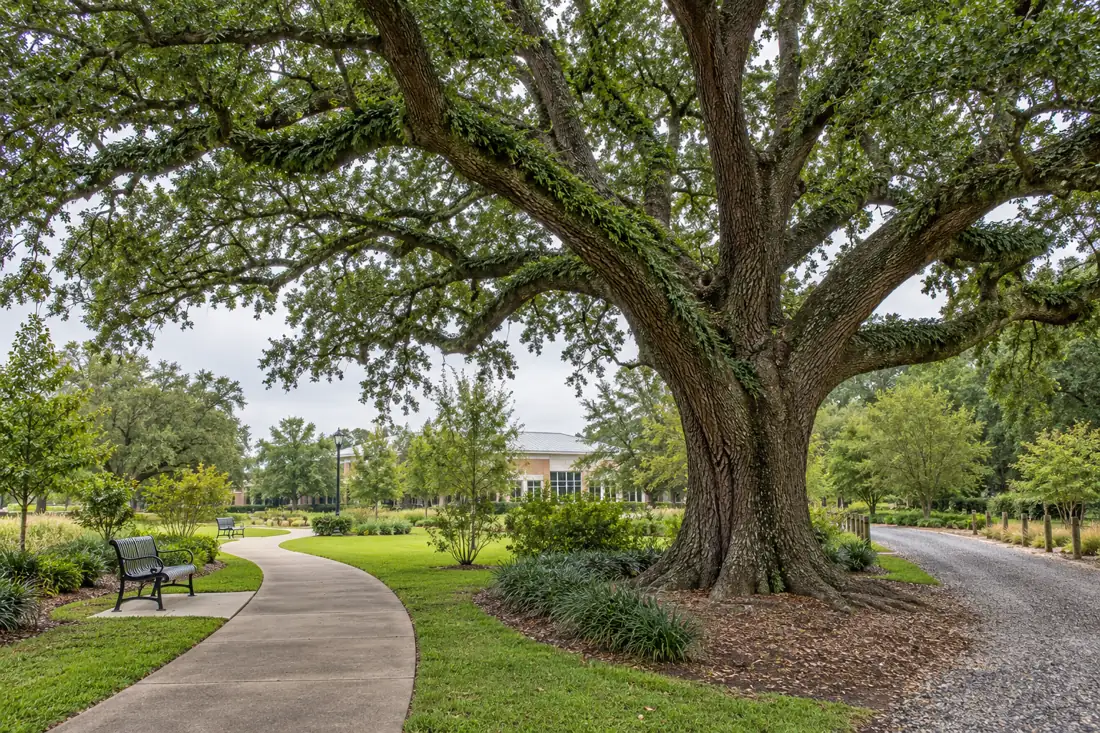
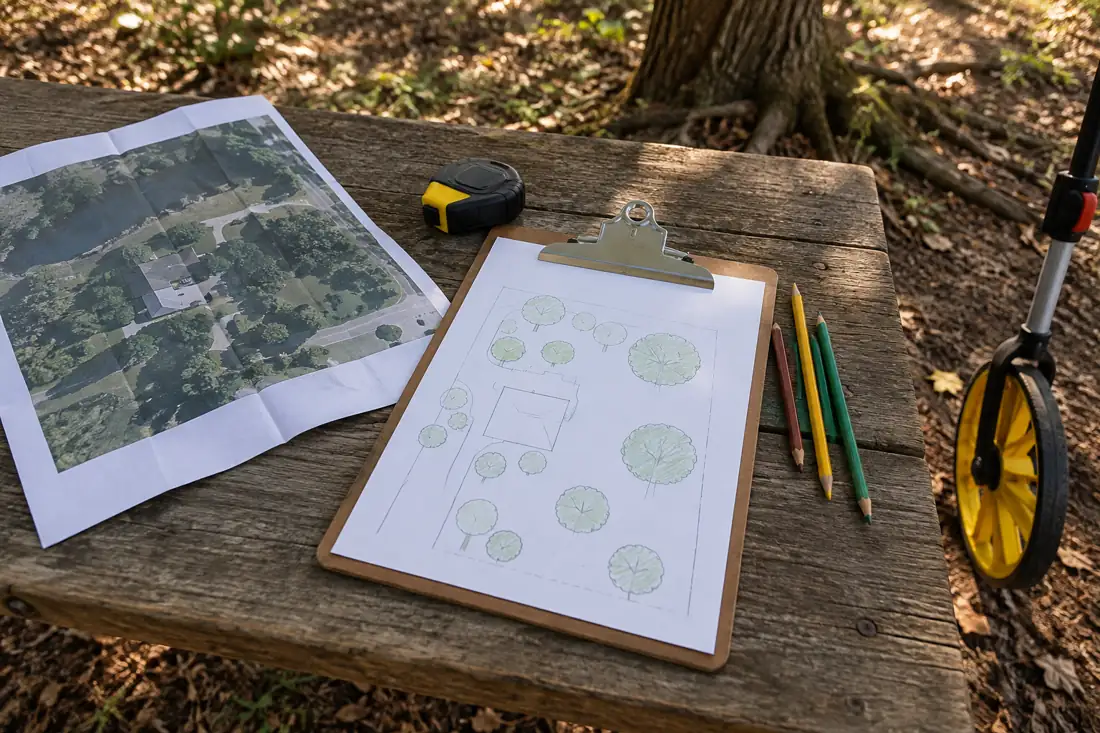
A useful site walk gives bidders the same view of access, targets, quantities and restrictions. Mark trees and clarify how questions or revisions will be shared through the buyer’s process. Document assumptions that may affect pricing. The walk should support a clear scope without implying that every visible condition has been professionally assessed.
Site-specific planning checkpoint: During a public-site walk, photograph each tree from more than one safe angle and record the nearest path, street, structure or water feature. Mark candidate equipment routes, likely loading points and possible conflicts with traffic or pedestrians. Ask the site representative which areas may close and which must remain open for accessibility or emergencies. Distinguish observations that the crew can verify visually from underground conditions that may require plans or investigation. A shared walk-through checklist should note ownership, utilities, drainage, disposal restrictions and nearby improvements. Afterward, circulate an agreed list of unanswered questions rather than letting verbal assumptions silently become part of a bid.
Use a shared site-walk issue log instead of memory
Give each public-site question a tree or location reference, the party who raised it, and the factual observation that prompted it. Distinguish an exposed obstacle from an assumption about buried utilities, a visible defect from an arborist's diagnosis, and a proposed work method from a buyer-approved method. Photographs should show the real site from an authorized location and be labeled so all interested bidders receive equivalent information.
At the exit meeting, divide findings into three categories: resolved on site, requiring an official clarification, and requiring later inspection or permission. Do not allow an informal conversation with one contractor to silently amend the procurement. Where tree heights, equipment access or hauling routes remain uncertain, document the question rather than creating a number that looks precise.

Walk the tree list using stable identifiers
Bring a location map with every proposed work area and a tree number that remains consistent across estimate requests, change records and completion photographs. Match each tree to the work presently contemplated: inspection, pruning, removal, stump treatment or retention with protection. A species label and rough size can help, but do not present an unverified assessment as established condition. Note if trunk diameter or tree ownership remains uncertain.
At each stop, confirm that everyone is discussing the same tree and the same outcome. Where several trunks touch or crowns overlap, use a wider site image and nearby landmarks. Mark retained trees and areas where roots or limbs must remain undisturbed. If field observations reveal a new concern, record it as a question or potential revision rather than casually adding work to the visit. A stable inventory reduces conflicting interpretations later.
The finished site-walk deliverable is a dated issue log and a route or marked map the buyer can circulate under its rules. That is more useful for a comparable quotation than unstructured photos or conflicting personal notes.
Read the related tree work documentation for a public buyer guide · Review public-sector tree-work services
Check the site before assumptions become scope: A productive public tree-work site walk should begin with the asset list and a route that crosses every affected access point. Photograph the entire tree from at least one safe public vantage before closing in on defects. Verify trunk tags, street-side landmarks, neighboring fences and drainage edges against the printed inventory. Confirm which routes must remain available for deliveries, emergency vehicles, pedestrians and mobility devices.
Confirm the meeting's authority and participants
Before anyone arrives, identify which public employee is authorized to lead the site walk, answer scope questions and document clarifications. Name the purchasing contact separately if contract changes must go through another office. Ask contractors to identify their attendees and relevant specialties without implying they are approved bidders. A site visit is an information-gathering step, not permission to start cutting, test equipment or move obstacles on occupied public property.
Set a clear meeting point, sign-in procedure, visitor rules and approximate route. Confirm whether photography is allowed and whether the buyer intends to circulate notes afterward. Give participants any required safety briefing and explain restricted areas. The buyer should make the same material site information available under its purchasing rules; personal hallway conversations should not quietly rewrite the scope for only one participant.

Check overhead and underground limitations
From safe positions, look for power lines, service drops, communication cables, lighting, awnings, signs and roof edges near the trees or planned equipment path. Do not ask participants to approach or measure from an energized line. Identify the utility owner and the agency responsible for any required coordination. A potential outage or authorized line protection is a scheduling and authority matter, not a step the visiting contractor may assume.
Review available information about underground irrigation, sewer connections, drainage pipes, electrical conduits, fiber and easements. A utility plan may be incomplete or outdated; label it accordingly. Ask what locating and protection responsibilities will be specified before ground contact. Where roots of protected trees occupy a setup area, include the tree-preservation concern in the notes. The best access route is not always the shortest route.
Measure access before choosing equipment
Walk the entire route from the public street or service gate to each potential setup area. Note gate widths, interior corners, curb transitions, slopes, narrow bridges, bollards and branches over the route. A tree may be easy to reach on a map yet inaccessible to the assumed lift or truck. Take measurements only where doing so is safe and permitted; uncertain dimensions should be verified instead of guessed from photographs.
Identify possible loading and turnaround areas without treating them as approved staging locations. Mark ordinary vehicle and pedestrian movements that need to continue during the work. Ask whether deliveries, sanitation vehicles, emergency access or scheduled events use those same routes. Field notes should say which surfaces are paved and which are lawn, gravel or recently disturbed soil. Equipment selection must follow qualified review of actual site bearing and clearance.
Record people and public activity patterns
A site walk should reveal how the property is used throughout the day, not just how it looks during the appointment. Identify school arrivals, library patrons, recreational classes, maintenance shifts, emergency routes or weekend gatherings. Explain which entrances must remain open and who can authorize temporary restrictions. Crowd separation and wayfinding may affect the work window more than the physical dimensions of a tree.
Ask the facility representative to identify site-specific operating rules, including accessibility routes, posted areas and required notice to visitors. A contractor cannot promise a safe exclusion zone if the buyer has not established how the public will be redirected. Record whether security personnel, cones, fencing or agency staff coordination may be needed. Avoid implying a guaranteed reopening time before the scope, hazards, resources and weather conditions are known.

Making a public tree-work site walk productive
A site walk should begin with a route and a list of decisions, not a collection of random photographs. Mark each work item on the buyer's map, then walk the likely equipment and debris paths before focusing on individual branches. This order reveals narrow gates, unsuitable ground, overhead obstructions and pedestrian conflicts that may control the method more than the tree's height.
Take wide photographs that connect the tree to the surrounding public asset, then close views showing the specific limb, trunk or root concern. Do not use a close photograph alone as a substitute for professional diagnosis or a safe inspection. Record which observations were made from the ground and which conditions could not be safely examined without further equipment or permissions.

Build the inspection route around decision points
At each stop, ask what public access must remain open, which hours are restricted and whether another agency controls a lane, drainage structure or power line. Make a separate note of landscape features that should be protected, including irrigation, turf, site lighting, benches and newly installed paving. The route should distinguish ordinary construction inconvenience from actual safety and emergency access restrictions.
Finish by reconciling item numbers, approximate quantities, owner-provided maps and every unanswered question. A dated list of clarification requests can prevent a scope error from becoming an uncontrolled field change later. A clear site-walk record is also useful if a later storm changes tree condition before the work begins; the original observations can then be compared with new evidence instead of rewritten from memory.
Assess nearby structures and retained landscapes
At each location, look at the relationship between trunks, crowns and roots and nearby windows, roofs, fences, signs, benches, monuments or mature plantings. Document what must be preserved, not merely what may be removed. A branch over a building may change removal sequencing, but only an on-site professional evaluation can determine the actual method. Site-walk participants should not make physical tests that could damage public assets.
Note low beds, fragile paving, garden irrigation, historic features and landscaped areas that cannot serve as equipment pads. Ask the buyer which repairs or surface restoration are anticipated and what condition should exist at completion. Photograph existing surface damage, when permitted, so it is not later confused with new work. The visit should produce a practical protection list rather than a generic promise to leave everything exactly as found.

Log tree condition concerns without overdiagnosing
A ground-level walk can document visible cracks, fungal bodies, large dead limbs, root disturbance, leaning or storm damage, but such observations do not replace a complete professional assessment. Record what is seen, the viewing location and whether a qualified review is required. If an unstable limb threatens a normally occupied route, notify the responsible property official promptly and isolate the area through authorized safety procedures.
Do not encourage attendees to stand beneath hanging branches, enter storm-damaged crowns or probe roots near utilities. A normal-looking crown does not prove a tree safe, and a leafless limb alone may not establish a removal decision. The purpose of this checklist is to identify information needed for scope, protection and further evaluation. Uncertainty belongs in the report rather than being hidden under confident labels.
If a location appears to require traffic control, restricted work hours or a lift that cannot enter through a gate, record that observation for the buyer instead of quietly guessing how a crew will solve it. Do not walk beneath unstable limbs to obtain a closer photo.
After the walk, turn observations into traceable clarifications: tree number, question, plan reference, person responsible and date answered. Do not mark a tree for removal merely because a respondent suggested it. If a root flare, buried line, saturated shoulder or overhead service was not visible, note the uncertainty and request appropriate information.
A shared response log helps participants bid the same scope and prevents informal comments from replacing authorized written instructions.
Separate wood handling from the cutting scope
Ask where brush, logs and chips may be temporarily staged, whether material must leave daily and which gates can support hauling vehicles. Identify any restrictions on blocking parking, walkways or shared loading docks. A site can support removal operations but lack the space for processing a large log safely. Discuss handling requirements as constraints; do not prescribe machinery solely from an aerial photograph or assume debris has an approved disposal destination.
Confirm whether stumps, grindings, exposed roots, backfill and surface repair are included in the proposed procurement. A request for tree removal alone may leave these tasks open. If the buyer wants wood retained, specify the expected section size and location only after feasibility is reviewed. Note environmental and waste requirements without inventing a disposal facility. Clear output definitions enable offers that can be compared honestly.

Close with an actionable and fair follow-up
At the end, confirm which items remain unresolved, who will verify them and whether an additional visit, arborist assessment or utility consultation is necessary. Provide a deadline and channel for written questions. Reconcile any difference between the original tree inventory and what participants saw. Do not silently add trees to the scope or imply that a walkthrough creates an award or reservation on the contractor's schedule.
Prepare the final site-walk summary with a dated map, restrictions, clarified work objectives, pending approvals and a list of formal updates, if any. Check that the scope addresses site finish, hauling and acceptance evidence as well as the visible cutting work. This turns a walk into comparable information for the next purchasing step while preserving the authority and procedures of the public buyer.
Document questions in a common field record
Use a standard sheet for each stop: tree number, observed condition, requested task, access constraints, protection needs, debris destination question, open approvals and photographic references. Record who supplied a material answer and when. If the buyer's purchasing procedure calls for formal addenda, route findings through that process instead of treating spoken answers as final scope amendments. Participants should be able to reconstruct what was shown later.
Keep separate columns for confirmed facts, tentative assumptions and questions requiring further inspection. For example, a gate width measured at the walk is different from a verbal assumption about a buried pipe. Flag photos that include restricted facility details or people and store them only in an approved system. Publish clarification consistently under the agency's rules and avoid revealing one respondent's proprietary method or pricing in shared notes.
Record what the site walk proves—and what it does not
A public site walk can verify gate widths, overhead conflicts, visitor patterns, soil conditions and the location of tagged trees. It should produce an issue log with photographs and named follow-up owners. It cannot automatically certify that the bid schedule's tree counts or measured areas are correct. Treat observations as inputs to a later quantity reconciliation rather than silently changing the estimate in the field.
If a drainage crossing, overhead service or restricted entrance changes the possible equipment route, record the exact work-zone identifier and request written clarification. The quantity-verification guide provides a separate method for comparing the supplied tree inventory, quantities and proposed unit measures before bids are finalized.
- Keep participant notes and photographs tied to the same numbered location.
- Label inaccessible or unobserved portions of the site explicitly.
- Issue owner-approved clarification to all affected bidders when the procurement rules require it.
Leave the site walk with named unresolved items
Use a stable tree or location number for each question. Mark whether a fact was observed, measured, supplied by the owner or remains unknown. A gate photograph without usable width or a location identifier cannot settle equipment access.
Assign who will confirm utility control, traffic restrictions, public access and material staging. The owner should communicate relevant clarifications consistently to participants. A walkthrough is not a substitute for the written scope or later authorization.
Questions about this project
What should a government buyer send first?
Send the agency or prime contact, project reference, site, scope, deadline, access conditions and required documents or submission format. Identify the authorized contact for questions and the buyer's process for clarifications.
Does a capability page prove contract eligibility?
No. Request and verify current documentation relevant to the particular opportunity. Registration status, certifications, licensing, insurance and availability should not be inferred from a broad marketing statement.
Is a total tree count enough for a large quote?
Usually the parties also need locations and tasks. Use consistent tree numbers, marked photos or a site plan so the estimate and crew instructions refer to the same trees and retained areas.
Does a work inventory include a condition assessment?
Only if that service is expressly part of the scope. A list used to identify and price tasks should not be mistaken for a documented assessment of every tree's condition or risk.
What access information helps an estimator?
Send the narrowest opening, overhead obstacles, turns and the distance between the tree and the loading area. Include photos of the entire route and identify steps, soft ground or features that must remain protected.
Should I remove a fence before the visit?
First ask the contractor to assess access and agree on any temporary opening. Identify who owns the fence, who can authorize the change and who will reinstall it. Do not assume the opening is necessary or included.
How should extra work be approved?
Use the agreed approval process and identify the change, reason, scope, price or schedule effect as applicable. Confirm who has authority before treating an additional tree or task as part of the original job.
What completion records are useful?
Keep the agreed scope, tree or area identification, authorized changes, invoice and labeled photos where appropriate. Include unresolved items and a contact. Contract-specific records should follow the buyer's stated requirements.
What should I compare besides the price?
Compare tree identification, work objectives, access assumptions, hauling, stump treatment, site finish and exclusions. Ask whether permits or other coordination are part of the scope and who can approve changes if conditions differ.
Does an online request book the crew?
No. A request starts the estimate conversation. The company still needs to discuss scope, availability and any site assessment. For a dangerous or urgent condition, call 504-458-8336 rather than relying on a form response.
What should I tell Tree Huggers about public tree work: site walk checklist?
Explain the property address, the work you want and the specific concerns: consistent information, access conditions, scope questions. Send safe photos of the tree, surroundings and access route. The contractor can then discuss the assessment and scope needed for this situation.
How do I request an estimate for this work?
Call 504-458-8336, text photos or use the estimate form on this page. Include the address, desired outcome and any timing constraints. The company will need to review scope and availability; an online request does not confirm a price, appointment or emergency dispatch.
Get a scope for your property
Provide the public site map and work-item list so access constraints can be reviewed alongside the tree conditions.