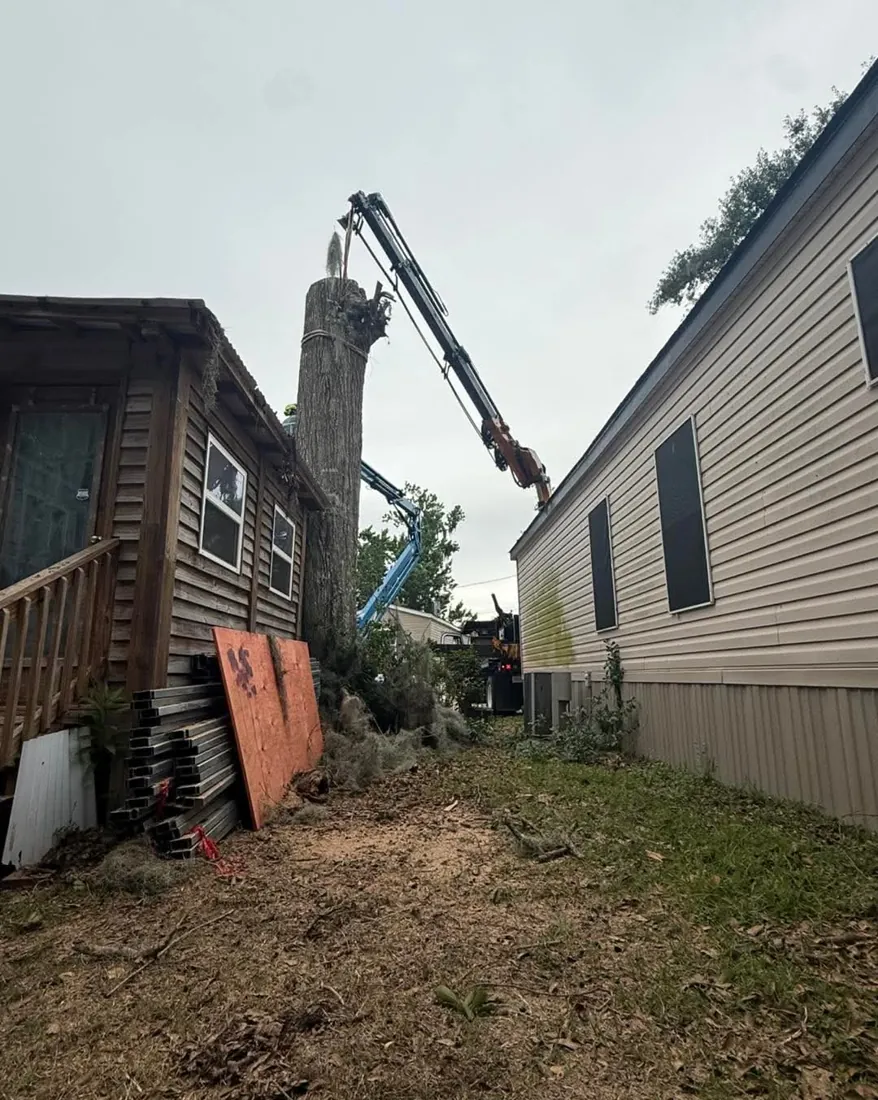
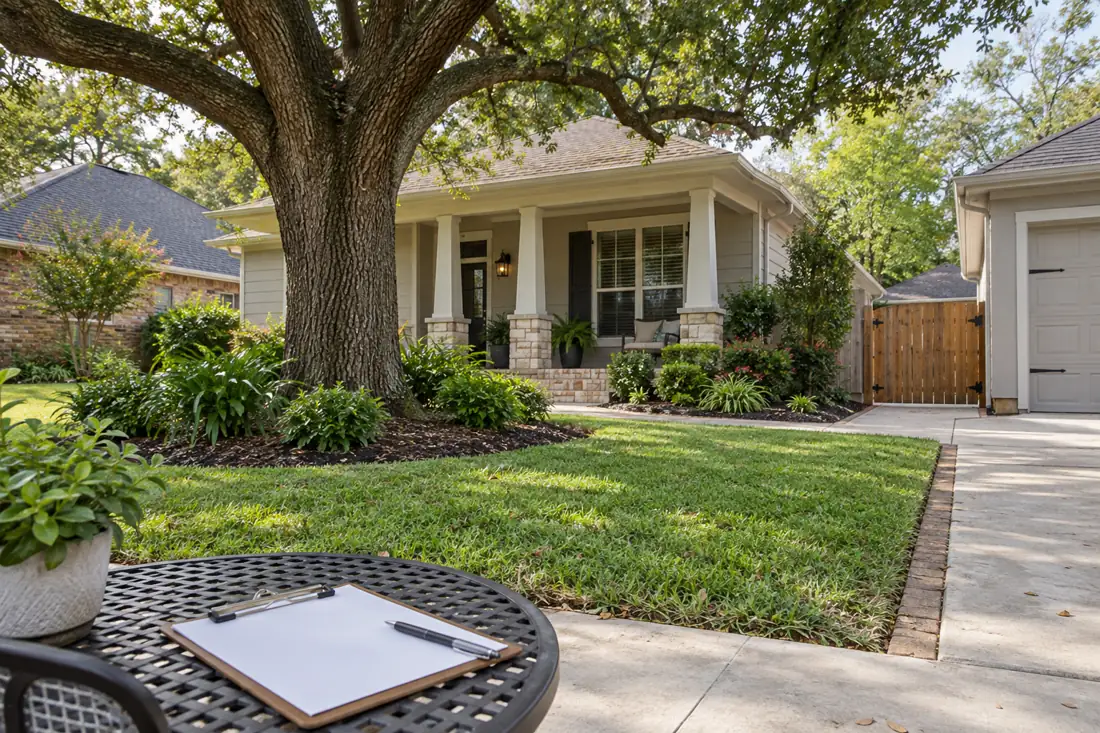
A branch over a neighboring building creates a property-protection and access discussion. Confirm tree ownership and obtain required permissions through the appropriate parties. Identify the roof and any other targets in the estimate photos. The contractor needs a feasible handling plan without assuming the customer controls all affected property.
Site planning detail: When a tree extends over a neighbor’s roof, the work plan must account for property boundaries, not just the branch’s reach. Document where the trunk stands and identify the roof, fences, utilities and accessible work zones. Discuss the desired clearance with the neighbor before scheduling, but do not assume that a verbal conversation authorizes equipment or personnel to enter another property. Requirements about overhanging vegetation and permits vary; confirm applicable rules rather than relying on a broad statement of who owns the limb.
Ask the contractor how branch sections will be controlled, whether a lift or rigging system needs a shared access route, and who coordinates temporary vehicle or patio clearance. Avoid removing excessive live canopy simply to achieve a neat-looking border. Record the written scope and permissions, then confirm cleanup responsibilities on both sides at completion.
Site-specific planning checkpoint: A neighboring roof beneath an overhanging limb creates questions of permission as well as cutting method. Confirm reliable property boundaries and written access approval instead of treating a fence as proof of ownership. Clarify whether the requested service is clearance pruning, deadwood removal or complete tree removal. Roof condition, branch weight, support points and available equipment affect the plan; none can be resolved from a single image. Agree on protective access, barriers, gutters, debris handling and any separate roof inspection. Do not assume a crew can drop an overhead branch into a narrow yard. Keep before-and-after images from permitted viewpoints and a written scope identifying who authorized the work and the cleanup expectations.
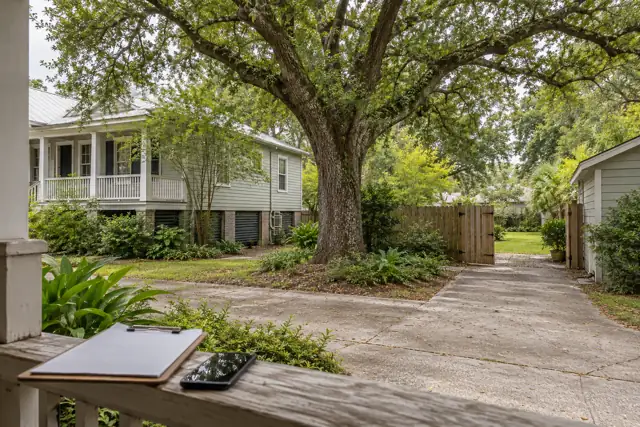
Begin with a wide photograph taken from your own safe location showing the trunk, the branch crossing the property line, the neighboring roof and the likely path for material to leave the site. Note whether the concern is routine clearance, a broken limb, roof contact or suspected structural weakness. These are different scopes. Do not climb the roof, touch a loaded limb or assume that the branch can be lowered onto an adjacent property.
Identify who can authorize access to the adjoining yard, driveway or roof area before scheduling any operation that might require it. A contractor can explain a proposed rigging or handling approach, but permission and property boundaries are not established by a tree estimate. Keep a record of the neighbor's agreed access arrangements and share restrictions such as fragile roofing, solar panels or overhead wires.
Ask the estimator to distinguish the tree work, property protection, cleanup and any specialty access from roofing repairs or legal decisions. Request that assumptions and exclusions appear in the written scope so both property owners understand what will and will not happen.

Agree the neighbor-facing handoff before the first cut
Document which property contains the trunk and which roof may be exposed to falling debris. For the neighboring roof, note existing gutter condition, skylights, fragile coverings or overhead wires visible from safe ground positions. Do not climb or enter the adjacent property merely to obtain a better picture. If access, rigging, equipment placement or roof protection requires crossing the boundary, secure the appropriate owner's permission before scheduling that method.
The scope should say how the crew will keep people away from the drop zone, who can temporarily close a driveway, and who handles roofing or electrical repairs if separate contractors are needed. A pruning request does not authorize cutting on another owner's land. After work, record any agreed ground-level condition checks without implying a roof inspection took place if nobody actually inspected it.
Agree on neighbor contact and roof protection before rigging. Branches above another building introduce two decisions: the arboricultural work that is appropriate and the lawful, practical access needed to perform it. Identify the affected roof sections, gutters, antennae, service drops and available lowering lanes. Ask the neighbor or property manager to approve necessary access through the appropriate process rather than assuming tree ownership grants entry. State whether temporary protection, ground cleanup and postwork visual observations are included, and whether actual roof repairs are handled by another trade. Never suggest that branches can safely be dropped onto shingles or that a canopy photograph proves zero risk. Capture safe context photographs without disclosing private details publicly.
Identify the work and the roof it may affect
A branch that extends over an adjoining roof raises several different questions: whether it is dead or damaged, whether clearance is needed, whether the tree itself should be assessed, and what access might be required. Avoid turning a branch-clearance request into a demand for full removal without understanding the tree and the properties involved. The location of the trunk, branch attachment, roof slope and other targets matters to the proposed scope. A photograph showing only leaves over shingles cannot establish the work method.
Begin with a wide view of the tree and both structures from a place you may safely stand. Describe the observed concern, any storm-related changes and the desired result. Ask the estimator whether a qualified assessment is needed, and do not enter another person's property to inspect the roof without permission. Your estimate should identify which tree and which portion of the canopy are involved.
A two-property roof protection handoff
A practical roof-adjacent tree plan needs two separate approvals: the tree-work decision from the person authorized to engage the contractor, and any access permission from the person controlling the neighboring roof, yard or driveway. Before requesting a final schedule, draw an ordinary sketch showing the tree trunk, roof overhang, fence, crew entry and any space proposed for lowering material. Label every location where access remains unconfirmed. A photograph of the branch is useful evidence of location, but it is not consent to enter.

Separate roof clearance from permission to enter
A branch extending across a property line does not establish permission to stage workers, move a ladder or lower wood onto the neighboring lot. Show the canopy and both rooflines from a lawful safe location, then note which owner can authorize access and where crews may safely handle debris.
Ask the written scope to distinguish ordinary clearance pruning from work on a split or structurally compromised limb. Confirm who will protect gutters, solar panels and fragile roof edges, and whether a roofing professional must inspect any existing damage. Reused planning imagery on this page is not evidence that a particular neighbor approved work.
Ask the contractor to identify a no-contact approach for shingles, gutters, roof vents and electrical attachments, then identify the point at which the work must stop if the proposed route cannot be used. If roof protection or separate trade work is needed, put those tasks in the written scope with the responsible party. Do not ask the neighboring property owner to stand near active cutting to supervise the work.
At handoff, compare the approved branch description with the final estimate and take safe overview photographs from the same authorized viewing points. A final walkthrough may confirm that debris was removed and agreed protection was addressed; it cannot by itself establish whether hidden roof damage exists. When the boundary itself is uncertain, resolve that separately before proceeding.
Separate property boundaries from practical work access
A fence does not always mark the legal boundary, and an overhanging branch does not automatically establish permission to use a neighboring yard. Before scheduling a tree crew, identify who owns the property where the trunk stands and who can authorize entry to the adjacent roof, driveway or garden. If ownership is unclear, the parties may need suitable documentation or independent advice. A tree contractor should not be asked to settle a boundary dispute as part of an ordinary quote.
For planning purposes, note any gate, shared driveway, narrow side passage or space that might be needed for equipment or controlled material handling. It may be possible to work from the tree owner's property, but that determination requires a site-specific method. Keep written communications factual and civil. A practical agreement on access and property protection is more useful than assuming that another owner will accept a crew arriving unannounced.

Describe the roof and its vulnerable components
Roof surfaces are not uniform. Shingles, metal panels, skylights, gutters, solar equipment, vents and fragile eaves have different exposure to contact or falling debris. Show the estimator where branches pass over the roofline and where equipment could safely operate without touching the structure. Recent roof repairs or an active leak should be documented separately before tree work. Do not climb a roof or lean out a high window to photograph the branch; wide ground-level pictures and a description are sufficient for initial planning.
If a branch actually bears against the roof, say so rather than describing it merely as nearby. If visible cracking or hanging material is involved, keep the affected area clear. A contractor needs to assess how loads can be controlled without using the roof as a support surface. Any temporary roof protection or follow-up roofing repair should be assigned explicitly rather than silently assumed to be part of tree trimming.
Discuss pruning limits and tree health before approving cuts
A neighbor may understandably want every branch removed from above a building, yet aggressive one-sided cutting can damage a retained tree or create poor structure. The right conversation begins with the tree's species, condition and the actual clearance objective. Ask which limbs can be pruned appropriately, what the resulting crown balance could be, and whether removal is an alternative that deserves separate evaluation. An arbitrary line at the property boundary is not a pruning specification.
Where significant branches connect near the main trunk, a small desired clearance can require a much larger cut than expected. A qualified provider should explain feasible cuts and their limitations. If the tree has a crack or major decay, a condition review may be more relevant than cosmetic clearance. Do not treat a cleared roofline as a guarantee that storms can never affect the home. The agreement should distinguish maintenance goals from structural conclusions.
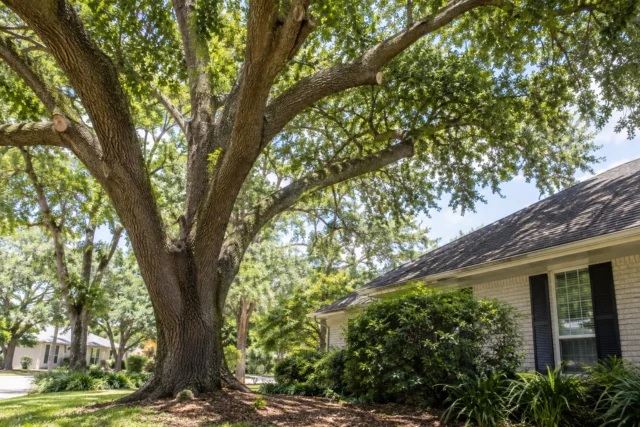
Design the controlled work zone around both properties
Tree work near a neighbor's roof may affect parking spaces, side walkways, outdoor air conditioning equipment, landscaping, and access to either home. The controlled zone can be larger than the limb footprint, especially when branches must be handled in sections. Ask where people, pets and vehicles need to stay away and who communicates those restrictions. Permission to enter a yard is not permission to block every entrance or move someone else's property without discussion.
If the plan includes using a neighbor's driveway for equipment or removing a fence panel, obtain clear prior authorization and define restoration responsibility. Workers must also consider electrical service drops and other utility equipment. Do not invite the crew to work near energized lines without the appropriate coordination and qualifications. A written access plan protects the owners as well as the crew by identifying assumptions before the appointment.

Protecting the neighboring roof and access route
A limb above a neighboring roof raises separate questions about tree ownership, roof protection, crew access, and who may authorize work on either property. Begin with wide photographs from safe positions on the owner's own property showing the trunk, branch spread, roof edge, gutters, fence, and potential debris path. Note nearby gates, landscaping, overhead utilities, and patios that might affect rigging. These observations help a contractor plan a scope, but a photograph does not prove a roof is structurally sound or that an arborist has diagnosed the tree.
Before setting a work date, confirm who will contact the adjacent owner, whether entry permission is required, and how the cut material will be controlled near the building. Keep any agreed access arrangements and protection tasks in the written scope. Separate selective branch clearance from whole-tree removal, and specify cleanup and any excluded repairs.
Do not climb a roof or enter the neighbor's yard just to collect better images. If a branch is unstable or touching a wire, describe it from a safe distance and request qualified attention before routine scheduling.
Separate the tree-work scope from neighboring roof access
A branch extending over a neighbor's roof creates more than a pruning-height question. The team needs to understand where the trunk stands, who controls each property, whether people can safely reach the work area, and whether a protected roof or temporary ground setup may be needed.
A photograph from your own accessible ground showing the branch, roof edge and fence line is a useful first reference. Do not climb a roof or enter another property to obtain a better view. The size and condition of the branch, its direction of growth and surrounding obstacles matter more than a simple measurement of how far it crosses a line.
Before scheduling, describe any shared fence, narrow alley, gate restriction, overhead wires or parked vehicles below. Confirm which owner has authorized access and which surfaces must be protected, without assuming that a branch's location determines legal responsibility. If the goal is routine clearance rather than removal of a failing limb, write down the specific problem the work should solve and which branches are to remain.
A good scope makes the cleanup area and disposal expectations clear as well. If the site includes active roof damage or a suspected unstable tree, keep people away from the area and request a situation-specific review rather than arranging a routine trimming visit.
Plan Tree Work Near a Neighbor's Roof
Branches extending toward a neighbor's roof create two separate questions: what treatment is appropriate for the tree and who must approve access to complete it. Start with safe photos from your own property that show the branch's direction, distance to roofing and any windows, gutters or vents beneath it. Do not step onto either roof or enter the adjoining yard merely to get a better angle. A contractor can identify what additional views are needed during a site review.
Distinguish a low branch that brushes a roof in wind from a structurally compromised limb that requires a professional risk evaluation. Roof clearance may be possible with selective pruning, while a large limb crossing a boundary can demand a different rigging and debris plan. Avoid requesting an arbitrary severe cut simply to stop leaves from reaching gutters; excessive canopy loss can create other tree-health concerns. Describe the problem you want solved rather than prescribing the final cut.

Separate tree clearance from permission to enter
Discuss how material would be lowered and collected before giving any permission for work. A neighboring garage, fence, air-conditioning unit or narrow side passage can restrict where branches can travel. The contractor should identify what remains on your property, whether consent for the adjoining area is necessary and whether temporary movement of vehicles or furniture would help. Put any authorized access arrangements in writing through the people who control those areas.
If the neighbor is unavailable or disputes access, do not imply that a tree estimate resolves property rights. Keep the proposed work limited to areas that are clearly authorized while boundaries, approvals and any applicable local rules are clarified. A written estimate should distinguish pruning objectives, equipment route, debris handling, excluded roof repairs and other assumptions. That record is much more useful than an agreement to 'trim whatever hangs over' without defining which limbs can be safely reached.
Specify a comparable written scope
The scope should identify the affected tree, desired pruning or removal outcome, nearest roof surfaces, access arrangements, cleanup standard and exclusions. If multiple estimates are requested, ask each provider to price the same objective rather than accepting inconsistent descriptions such as “trim branches” and “clean up roof.” One bid may exclude hauling; another may include it. One may assume neighbor access; another may plan entirely from the owner's yard. Those are not equivalent proposals.
Clarify whether roof cleaning, gutter repair, branch disposal, stump grinding or other trade work is included. If the project involves assessing a damaged tree, identify who will provide any written findings and what that assessment covers. Avoid promising a precise work date or total price before the access and condition questions have been resolved. The contract should state how unanticipated constraints are reported and authorized.

Preserve useful records without turning the dispute public
Keep dated photographs of the relevant branch, written permission for necessary access, and the agreed scope. Do not publish a neighbor's address, private messages or identifiable household information in a review or social post. If a concern is serious, record observations and the steps taken to seek professional advice, but do not state that the other party is legally responsible unless that has been established independently. A contractor's estimate is not a ruling on ownership or liability.
If work is completed, photographs taken after the site is released can show the observed clearance, debris removal and visible property condition. Any roofing damage or preexisting defects should be documented and addressed by the responsible parties under the actual agreement. The point is to reduce misunderstandings and leave a traceable project record, not to create a claim that every branch or future storm exposure has been eliminated.
Recognize when the plan must change
A newly revealed decay pocket, hanging limb, unsafe roof access, weather change or unavailable neighbor permission can alter the safe method. Ask the contractor to pause and seek authorization before expanding the work into another scope. The owner should identify who can approve changes if they will not be present. A call to “just take everything on that side” is not a substitute for evaluating the consequence to the tree and surrounding homes.
If the branch appears unstable or contacts electrical equipment, keep people out of the area and obtain appropriate professional or utility help. Do not ask anyone to pull a limb off a roof with a vehicle or rope. A careful provider should explain when the original plan remains appropriate and when additional assessment or coordination is required. This is especially important where a proposed shortcut could move wood onto neighboring property.
Start a specific, considerate tree-work inquiry
When contacting Tree Huggers, explain whether the request is selective pruning, removal, or an assessment of a visible concern. Identify the tree and its position relative to the neighboring roof, and include a safe wide photograph. State whether the neighboring owner has agreed to entry or whether all work must remain on the requesting property's side. Mention active roof repairs or access restrictions that could affect scheduling. Keep the inquiry factual, not accusatory.
Ask for a written description of the feasible approach, material handling and cleanup. If permission or ownership is unresolved, treat it as an open issue rather than forcing a site visit into a conflict. A practical tree-service conversation can solve the physical planning problem while leaving property-rights questions to the appropriate parties. The best outcome is a documented, agreed scope that protects people and avoids unnecessary damage to the retained tree.

Two properties mean two different kinds of permission
Work near a neighbor’s roof combines a tree-care decision with ownership and access questions. Separate the agreements before scheduling work.
- Locate the tree: Identify the trunk, crown and roof that may be affected. Do not infer ownership from overhanging branches, a fence or where leaves fall. Where the legal boundary matters, seek the appropriate property information instead of inventing a survey line.
- Approve the work: The person authorized to commission pruning or removal should agree to the written operation and practical limits. A neighbor's willingness to discuss access is not automatically consent to remove or alter a tree. Flag ownership or permission uncertainty as a stop condition.
- Approve entry: If ladders, workers, debris or protective coverings must enter another parcel, make separate arrangements for that access, closure, protection and cleanup. Agree who will communicate a changed schedule and who checks the neighboring roof afterward.
An estimate request can attach a simple non-survey sketch showing the tree, roof and likely access route. Avoid promises that cross a property line before permissions are actually confirmed.
Coordinate a Neighbor's Roof Exposure Without Crossing the Property Line
Branches above a neighboring roof raise two distinct questions: what tree work is appropriate, and who controls access to protect the roof, gutter, fence and surrounding property. Begin with a photograph from your own ground-level location and identify the tree, branch and building involved. A branch overhanging a roof is not by itself proof of failure or permission to enter someone else's yard.
Ask the estimator to describe the specific pruning objective and the access, rigging or lowering method it proposes. Seek appropriate written permission for any neighboring entry or staging before work is scheduled.
Discuss fragile roofing, solar equipment, overhead wiring and surface protection with the crew lead. Roof access may require a separate specialist, and a tree-service quote should not imply it includes roof inspection or repair unless expressly agreed. If the branch has fractured or shifted, keep people away from the exposure and seek a qualified assessment rather than attempting a ground pull or ladder cut. At completion, document work boundaries and any visible property condition from authorized locations, while noting matters that were not inspected.
- Use separate identifiers for the tree, exposed branch and neighboring structure.
- Confirm written permission before using another property for access, rigging or cleanup.
- List roof, gutter, fence, landscaping and utility exclusions in the proposal.
- Keep a copy of the agreed scope and completion photographs without claiming an unseen roof inspection.
Review property boundaries before authorizing adjacent tree removal
Questions about this project
Can the contractor use my neighbor's yard?
Only after the required permission and suitable access arrangements are in place. Identify the proposed route and who can authorize it. A quote accepted by one owner does not automatically grant access to someone else's land.
Does a tree estimate determine the property boundary?
No. Resolve an uncertain boundary or ownership question using appropriate property information and professionals. The tree contractor needs an authorized scope and access plan, but a visual work estimate is not a survey or legal determination.
Which property features should I point out?
Identify buildings, vehicles, fences, fixed fixtures, landscape features, utilities and occupied routes. Explain what can move and what must remain. Include existing damage and any buried features you know about along the access route.
Should people remain inside the work area?
The contractor and site contact should establish an exclusion area and access arrangements appropriate to the work. Keep children, pets, visitors and other workers outside the active zone until the responsible parties say it can reopen.
Can the removal method be selected from a photo?
Photos help prepare the discussion but may not show defects, ground conditions or usable access. The contractor may need an on-site assessment before confirming the method, equipment and final scope for the property.
What if the tree changes before the appointment?
Tell the contractor about a new split, failed branch, changed lean or other visible change. Keep clear of the affected area. Changed conditions may require a different assessment, priority or work plan before the crew proceeds.
How should extra work be approved?
Use the agreed approval process and identify the change, reason, scope, price or schedule effect as applicable. Confirm who has authority before treating an additional tree or task as part of the original job.
What completion records are useful?
Keep the agreed scope, tree or area identification, authorized changes, invoice and labeled photos where appropriate. Include unresolved items and a contact. Contract-specific records should follow the buyer's stated requirements.
What should I compare besides the price?
Compare tree identification, work objectives, access assumptions, hauling, stump treatment, site finish and exclusions. Ask whether permits or other coordination are part of the scope and who can approve changes if conditions differ.
Does an online request book the crew?
No. A request starts the estimate conversation. The company still needs to discuss scope, availability and any site assessment. For a dangerous or urgent condition, call 504-458-8336 rather than relying on a form response.
What should I tell Tree Huggers about tree work near a neighbor's roof?
Explain the property address, the work you want and the specific concerns: neighboring structure, ownership, permissions. Send safe photos of the tree, surroundings and access route. The contractor can then discuss the assessment and scope needed for this situation.
How do I request an estimate for this work?
Call 504-458-8336, text photos or use the estimate form on this page. Include the address, desired outcome and any timing constraints. The company will need to review scope and availability; an online request does not confirm a price, appointment or emergency dispatch.
Get a scope for your property
For branches near another roof, send safe ground-level photos of both rooflines and describe whether access to the neighboring property is authorized.