A tree count is useful only when each tree and required task can be identified. Mark locations and note uncertainties that need a buyer response. Size, access and work objectives may vary across the list. Clarifying quantities before award helps avoid treating a simple total as a complete production scope.
Site planning detail: Quantity verification for a tree-work bid starts with common definitions. Match each tree identifier in the schedule to a plan location and identify whether diameter means trunk diameter at breast height, stump diameter or a different contract-specific measurement. Record which trees are to be pruned, fully removed, left standing or protected from disturbance. Separate stump grinding depth, debris hauling distance and access obstacles instead of silently bundling them into a count of trees.
If the drawings and field inventory disagree, submit a written clarification before pricing assumptions harden. Photographs should show the tree identifier and enough surrounding context to confirm the location, without implying that the photograph was taken at a completed job. Maintain a revision log so bidders can see changes in quantities and treatment methods. At closeout, compare actual authorized work against the same identifiers; a signed tally is more dependable than a generic statement that all trees were handled.
Site-specific planning checkpoint: Before accepting tree-work quantities for a public bid, define each measurement unit. Counts of trees, diameter classes, acres of clearing, linear feet of trimming and cubic yards of hauling describe different work. Assign identifiers on a map, record who verified each observation and photograph enough context to reconnect the quantity to its location later. Multi-stem trunks, inaccessible trees and ambiguous boundary specimens need explicit treatment. Separate owner-directed additions, allowances and unforeseen conditions from the base bid so later changes do not erase the original baseline. A photographed trunk is not a calibrated measurement or proof that a rigging method is safe. Reconcile field evidence against pay applications and retain both the starting schedule and dated revisions. Clear scope descriptions reduce disputes over whether stump grinding, disposal, traffic control and surface restoration were included.
Do not let a count replace a field inventory
The quantity schedule should identify tree location, proposed treatment and access assumptions. A count alone does not reveal an obstruction, retained specimen or site-specific lifting requirement. Verify scope against owner-approved plans and document discrepancies before changing prices or authorizing extra work.
Reconcile quantities before treating the schedule as a price
Start with a numbered tree inventory rather than a lump-sum count copied from an older spreadsheet. Each row should link a location marker, observed species when reliably known, the requested operation, the ownership or access question, and a dated photo identifier. A bid based on fourteen marked trees should not silently become a different job when two trees were actually across a fence or the same trunk appeared twice in photos. Flag disputed items for the buyer to verify.
Separate the unit of measurement from the condition being measured. Removal by tree, pruning by clearly described scope, grinding by stump or dimension, debris by a contract-defined quantity, and restoration by affected area are not interchangeable. A contractor can explain what it can measure, but only the buyer's procurement documents and written clarifications should decide the bidding basis. Where access, buried assets, or overhead clearances change the methods, put those uncertainties in a separate assumptions column.
Before soliciting final pricing, walk the schedule against the map and the permitted observation route. Record who checked each entry and the version/date used; retain corrections without overwriting the earlier record. If authorization for a neighboring parcel, protected tree, or utility clearance is missing, describe the dependency instead of making the tree disappear from the schedule. This turns the quantity review into a usable handoff between field notes, procurement, and eventual acceptance.
Read the related writing a municipal tree removal scope guide · Review public-sector tree-work services
Build a tree-by-tree quantity register
Start with a numbered list that can be reconciled to the map, photographs and field marks. One address may contain several trees, and a tree may require more than one operation, such as pruning followed by debris removal. Record each task against its own identifier so a bidder does not mistake a total of fifteen trees for fifteen identical removals. The register should state what was observed and which measurements still require confirmation.
Numbering also matters when sites share similar entrances or tree species. A photograph labeled only oak near driveway is easy to confuse with another property. Include a location sketch, nearest permanent landmark, property or facility reference and the proposed task. If field labels wash off or are changed during the project, document the crosswalk rather than quietly reusing numbers. The objective is a verifiable unit of work, not a decorative inventory.

Separate counted work from measured work
A contract might pay per tree, per diameter range, per equipment hour, per cubic yard or by a single agreed lump sum. These methods are not interchangeable. Ask the buyer to define the measurement point for diameter, the unit for debris and whether logs, brush and stump grindings belong in the same category. If a stump is included, confirm whether the grinding depth and restoration are described in the solicitation.
Quantities that depend on field conditions should be marked provisional rather than presented as exact. For example, a hidden root flare can change a stump measurement, and inaccessible debris may require another handling method. Explain who measures the completed work and when. A simple worksheet with baseline quantity, authorized adjustment, verified quantity and supporting evidence prevents different teams from using incompatible totals.
Use maps that identify work and exclusions
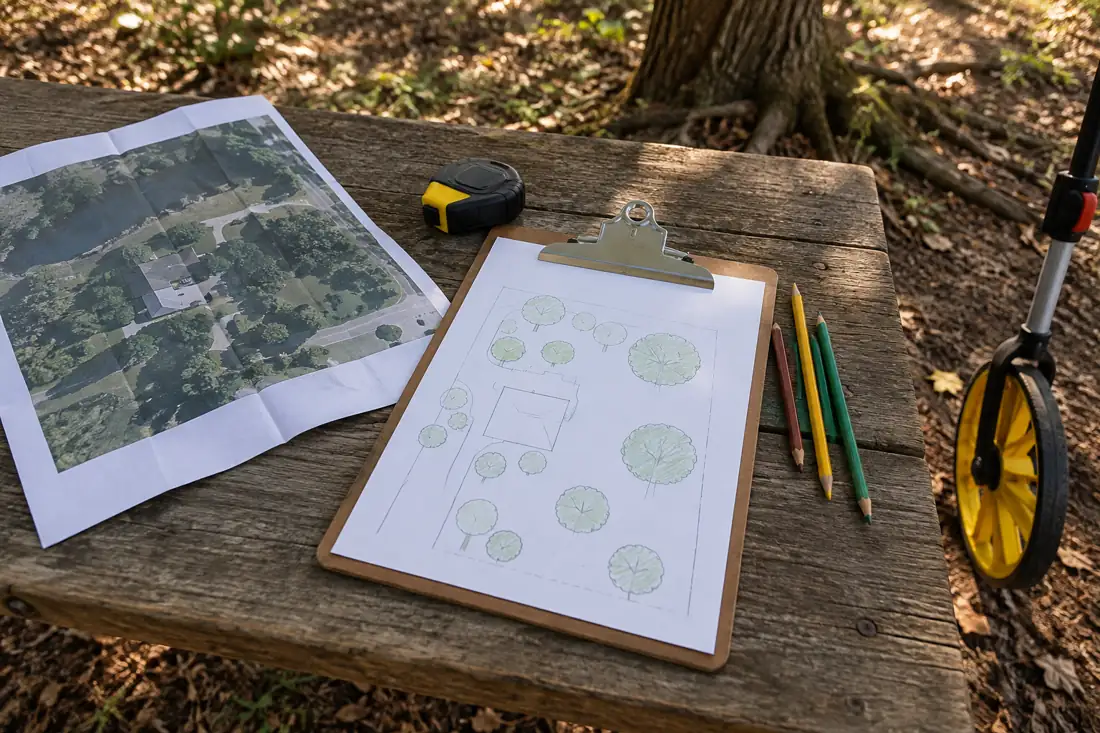
An aerial screenshot is a useful starting point, but canopy overlap can make individual stems difficult to locate. Pair the plan with ground-level views and a marked access direction. Highlight trees to retain in a different visual language from trees proposed for work. Clearly mark drains, utility corridors, fences, occupied entrances and any places where work is prohibited or awaiting a separate approval.
Do not assume imagery proves property boundaries, underground conditions or permission to enter adjacent land. Where the drawing is approximate, say so. The buyer can then arrange a supervised site walk or issue a clarification before bids close. A shared marked plan is especially important when several contractors must interpret the same scope and the final award will be evaluated against the submitted quantities.

Capture dimensions without unsafe measuring
Potential bidders need useful dimensions, but collecting them must not expose a property employee to damaged limbs, unstable trees or energized conductors. Measure accessible features from a safe location and provide existing tree-survey information when available. Photograph the full tree, trunk and nearby constraints with a scale reference only when doing so is safe. Do not climb, cut or move suspended wood to improve a bid record.
Flag uncertainty directly. A trunk hidden behind vegetation, a split high in the crown or an inaccessible rear yard deserves a field-verification note. If an arborist assessment or specialized measurement is required, it should be requested through the proper scope. Reliable procurement records distinguish observed facts, estimates, and matters requiring a qualified site review instead of treating every photograph as a definitive measurement.
Check access before applying a unit rate
Two similarly sized trees may involve completely different operations. One could stand beside a wide paved service lane; another may be behind an occupied building and narrow gate. List gate widths, turn restrictions, ground conditions, overhead lines, slopes and potential loading areas. Identify restricted hours, noise considerations and routes that need to remain open for tenants, emergency vehicles or deliveries.
If the contractor has not examined the access route, the price needs a stated assumption rather than an invented equipment solution. Ask how the chosen method affects pavement, lawns and buried infrastructure, and what ground protection might be appropriate. Do not promise a crane, lift or robotic system without a professional assessment. A meaningful quantity schedule provides both the amount of work and the constraints that make production possible.

Reconciling Tree Quantities Before a Public Bid
Before a quantity schedule becomes a bid total, connect each line to something a second person can locate on the ground. The same tree may appear on a pruning plan and a debris list, while another tree sits behind a building that the map obscures. Assign a stable identifier, note the side of the property, and compare the line number with a wide contextual photograph. A responsible bid can then distinguish one tree with several operations from multiple trees requiring the same operation.
Do not treat approximate trunk size as an automatically verified measured quantity. Specify whether the buyer measured diameter at breast height, estimated height, or simply assigned a size class from a survey. If roots, leaning trunks, adjacent fences or restricted access alter how work will be performed, record that condition beside the number rather than burying it in a general note. Mark which measurements remain provisional and who will answer a clarification before bid closing.

Make quantity differences visible before pricing
The field review should reconcile what the tree schedule omits as carefully as what it includes. Are dead branches on retained trees priced separately? Are stumps and woody debris within the work boundary? Does the site require a pedestrian route during the work? These questions change labor, equipment positioning and completion criteria without changing the number of trunks. Keep exclusions legible so competing quotations do not silently represent different jobs.
At turnover, use the same identifiers to document what was actually addressed and what remained outside the approved purchase. A final tally is useful only when the buyer can trace each completed item to a location and an accepted scope. If a counted tree was unavailable, mislabeled or changed after a storm, identify the exception in the written record. Do not silently substitute a nearby tree or claim a completed quantity based only on the total invoice.
Clarify what debris quantities represent
Branch piles, logs, root material and mixed storm debris should not be silently combined. Debris generated by pruning is different from material already on site, and woody vegetation is different from construction waste. Describe whether the contractor must chip, load, haul, stockpile or leave specified material in a designated area. Note any buyer-approved disposal or documentation requirements before assuming a destination.
Collection volume can vary with how material is cut and stacked, so quantity descriptions need the right unit and a consistent measurement rule. A photo of a pile is useful context, but not an exact volume certificate. If disposal tickets, load records or weight slips are required, specify their format. The closeout review should be able to connect material handling to the original tree identifiers and work authorization.
Create a clear clarification and addendum process
During a walkthrough, a contractor may find an unlisted tree, conflicting identifier or uncertain boundary. Those discoveries should be submitted through the buyer's designated question process, not settled by a private verbal agreement that other bidders cannot see. Record the question, affected line item, proposed correction and deadline for response. Share official changes in the approved solicitation format.
An addendum should identify what changed rather than forcing every bidder to compare two long documents by eye. Revised tree counts, maps, bid units and work windows need version dates. Acknowledgment requirements belong to the buyer. Contractors should keep a copy of the final version they priced, because a simple count discrepancy can later look like a disputed change order if the baseline was never frozen.

Reconcile actual work at closeout
Closeout begins with the approved quantity register and finishes with a verified record of what was performed. Mark each item complete, deferred, canceled or changed, and attach the authorized explanation where applicable. Photos should show the identifiable location and visible result, not just an impressive pile of logs. If inspection, testing or restoration was specified, record that separately from removal.
Do not treat a signed delivery ticket as proof that every tree task passed acceptance. The buyer should apply the contract's own review procedure, check unresolved punch items and ensure that billed units match verified records. This makes payment review easier and reduces disputes when personnel change. The best quantity system is one a new reviewer can understand without reconstructing several weeks of phone calls.
Use a pre-bid walk to test the register
A site walk is most useful when it resolves named discrepancies, not when it merely lets bidders see the same trees from a distance. Bring the current quantity worksheet and ask participants to identify which items are uncertain, missing or duplicated. If a tree is behind a locked gate or a canopy obscures its trunk, note the limitation and direct the question to the buyer's formal clarification channel.
The walk record should distinguish observations from binding changes. A field employee may point out a possible tree but not have authority to add it to the bid. Publish approved corrections through the governing process with the tree number, revised quantity and date. That lets all bidders price the same work rather than relying on private verbal guidance.

Audit duplicates and shared limits before award
Duplicate counting can arise when a tree stands on a boundary between two lots, appears in overlapping aerial sheets or is assigned both to a removal list and a selective pruning list. Compare identifiers across drawings and make a clear decision about what is included. Where uncertainty remains, preserve it as a specific question rather than burying it in a generic contingency.
The final estimate should connect every proposed unit to an understandable location and description. A reviewer should be able to trace a charged stump, hauled log or finished prune back to an authorized line. This protects against overstated totals without encouraging crews to skip work whose quantity has not yet been clarified.
Make each quantity auditable before the bid is submitted
A bid quantity can describe a tree, a stump, a linear clearing limit, a load of vegetative material or an area of access work. Each unit needs its own definition. Record the tree or work-zone identifier, the measurement method, the location reference and exclusions that a reviewer can check. Where tree diameter, stump diameter or debris volume matters, specify the measurement point and who confirms the number. A photograph provides context but cannot replace the agreed quantity method or a documented field measurement.
Review the preliminary list with the field conditions before using it as a final price schedule. A tree shown on a map may be inaccessible, already removed, owned by another party or outside the approved limits. Distinguish an estimate for planning from a verified payable quantity. If the procurement requires unit-price extensions, alternate quantities or a separate mobilization line, show them distinctly. That makes a later reconciliation possible without pretending that an early inventory was perfectly accurate.

A small bid register can reveal a large quantity mistake
A bid can look consistent on paper while counting the same tree twice or combining incompatible units. A short reconciliation sequence reduces that risk.
- Assign an identity: Use a stable tree or work-zone number tied to a map, not a loose photograph or changing paint mark. A tree listed twice in two site sections should not automatically become two removals. Identify work limits, condition and any exclusion.
- Separate units: One tree removal, one stump grind, a square area of clearing and one haul load are not interchangeable quantities. Define how each item is counted or measured. An allowance should say what it covers and how a change will be approved.
- Recheck conditions: Reconcile the bidder's walk-through with the latest location list, utility constraints, private property limits and access route. Put discovered differences into the approved clarification process so all bidders price the same assumptions.
A useful pre-bid request gives each line item a location, defined unit, allowed operation and known limitation. Quantities remain estimates until their actual verification method is applied.
Separate bid quantities from field-access assumptions
Counting stems on a map is only one part of verifying a tree-work quantity schedule. A row of trees might involve different pruning objectives, stump diameters, debris volumes or retained-tree protections. Do not turn an estimated wood volume or unverified trunk diameter into a certified measurement. Show which items were physically counted, which were taken from drawings and which remain provisional.
Where a tree is behind a locked gate or near a utility, note that the quantity is unresolved and request the owner's decision rather than guessing access or removing a bid item. A coordinated site walk can answer many access questions, but the companion checklist covers observations, participation and field conditions; this page remains the quantity-control record.
- Publish a revision log when a count or unit changes.
- Keep removal trees and retained trees on distinct schedules.
- Flag assumptions likely to affect both price and work duration.
Questions about this project
Is a total tree count enough for a large quote?
Usually the parties also need locations and tasks. Use consistent tree numbers, marked photos or a site plan so the estimate and crew instructions refer to the same trees and retained areas.
Does a work inventory include a condition assessment?
Only if that service is expressly part of the scope. A list used to identify and price tasks should not be mistaken for a documented assessment of every tree's condition or risk.
What should a government buyer send first?
Send the agency or prime contact, project reference, site, scope, deadline, access conditions and required documents or submission format. Identify the authorized contact for questions and the buyer's process for clarifications.
Does a capability page prove contract eligibility?
No. Request and verify current documentation relevant to the particular opportunity. Registration status, certifications, licensing, insurance and availability should not be inferred from a broad marketing statement.
What should I compare besides the price?
Compare tree identification, work objectives, access assumptions, hauling, stump treatment, site finish and exclusions. Ask whether permits or other coordination are part of the scope and who can approve changes if conditions differ.
Does an online request book the crew?
No. A request starts the estimate conversation. The company still needs to discuss scope, availability and any site assessment. For a dangerous or urgent condition, call 504-458-8336 rather than relying on a form response.
How should extra work be approved?
Use the agreed approval process and identify the change, reason, scope, price or schedule effect as applicable. Confirm who has authority before treating an additional tree or task as part of the original job.
What completion records are useful?
Keep the agreed scope, tree or area identification, authorized changes, invoice and labeled photos where appropriate. Include unresolved items and a contact. Contract-specific records should follow the buyer's stated requirements.
Is a free work estimate the same as a written risk assessment?
Not necessarily. Explain whether you need pricing, condition advice, a documented assessment or a combination. Ask what the visit includes, who provides it and what limitations apply to any findings or recommendations.
What history should I share?
Share known storm damage, prior failures, construction, root disturbance, flooding, pruning and recent changes. Include the timing and nearby property use. Useful history supports the evaluation without replacing inspection of the current tree and site.
What should I tell Tree Huggers about tree work quantity verification before a bid?
Explain the property address, the work you want and the specific concerns: tree identity, quantity assumptions, differing conditions. Send safe photos of the tree, surroundings and access route. The contractor can then discuss the assessment and scope needed for this situation.
How do I request an estimate for this work?
Call 504-458-8336, text photos or use the estimate form on this page. Include the address, desired outcome and any timing constraints. The company will need to review scope and availability; an online request does not confirm a price, appointment or emergency dispatch.
Get a scope for your property
For a quantity-based request, share the tree schedule, safe map photographs and the contract contact who can clarify the list.