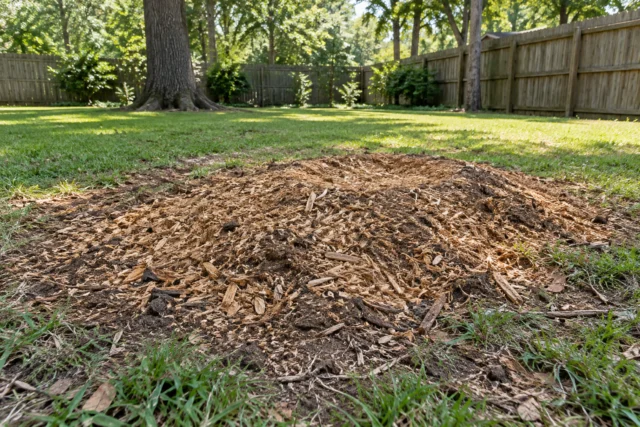
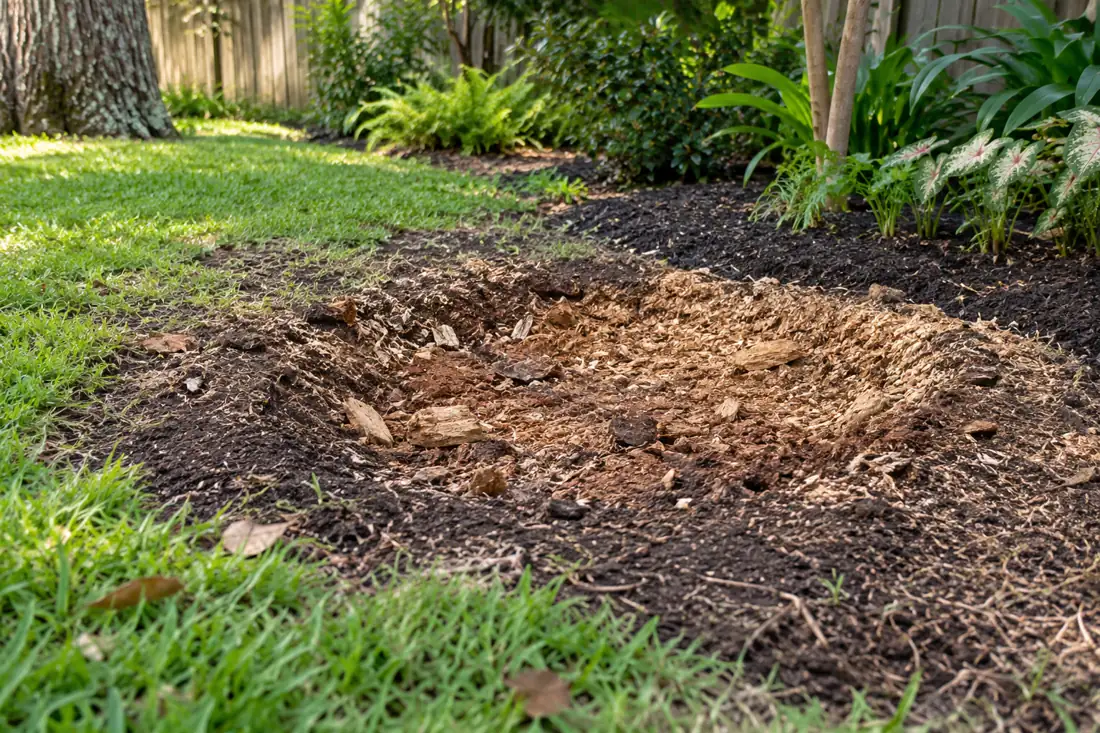
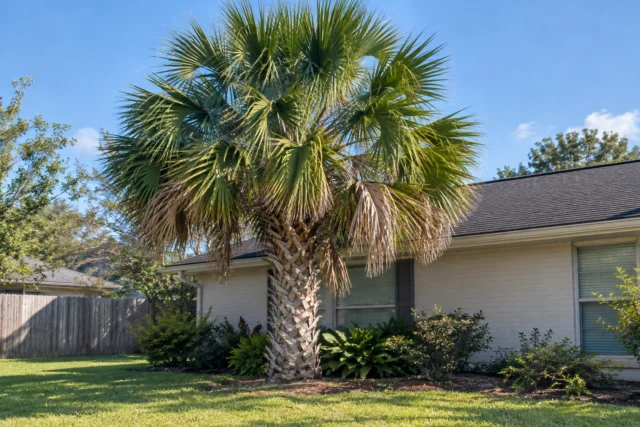
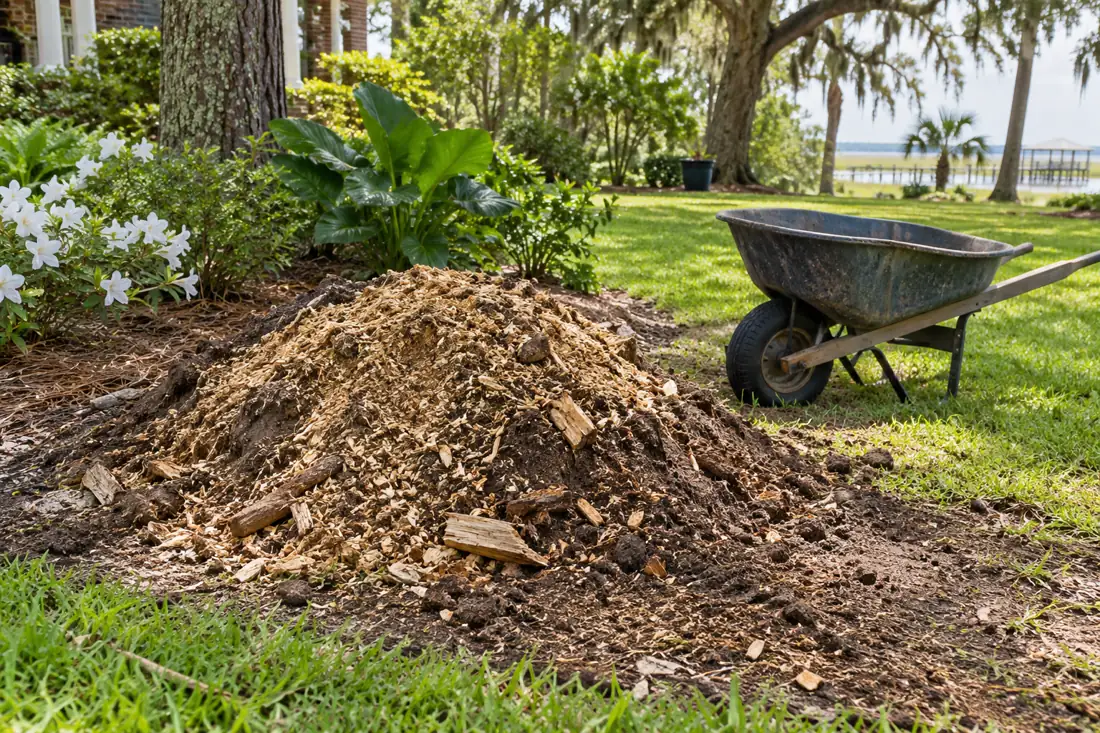
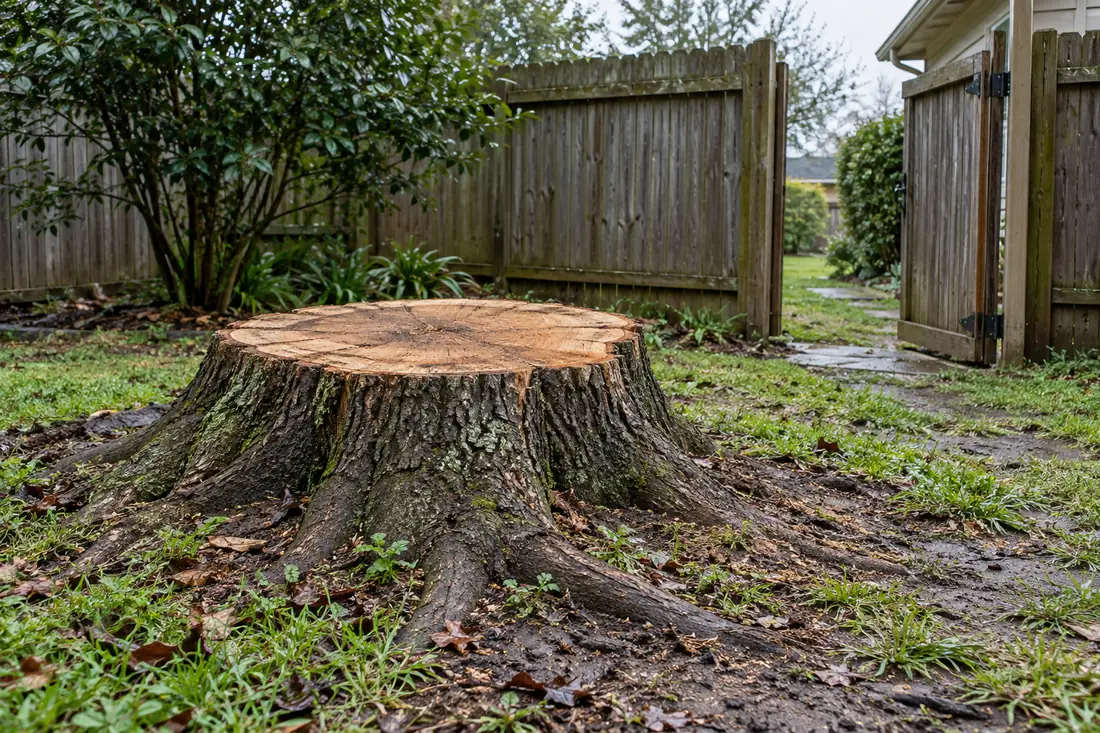
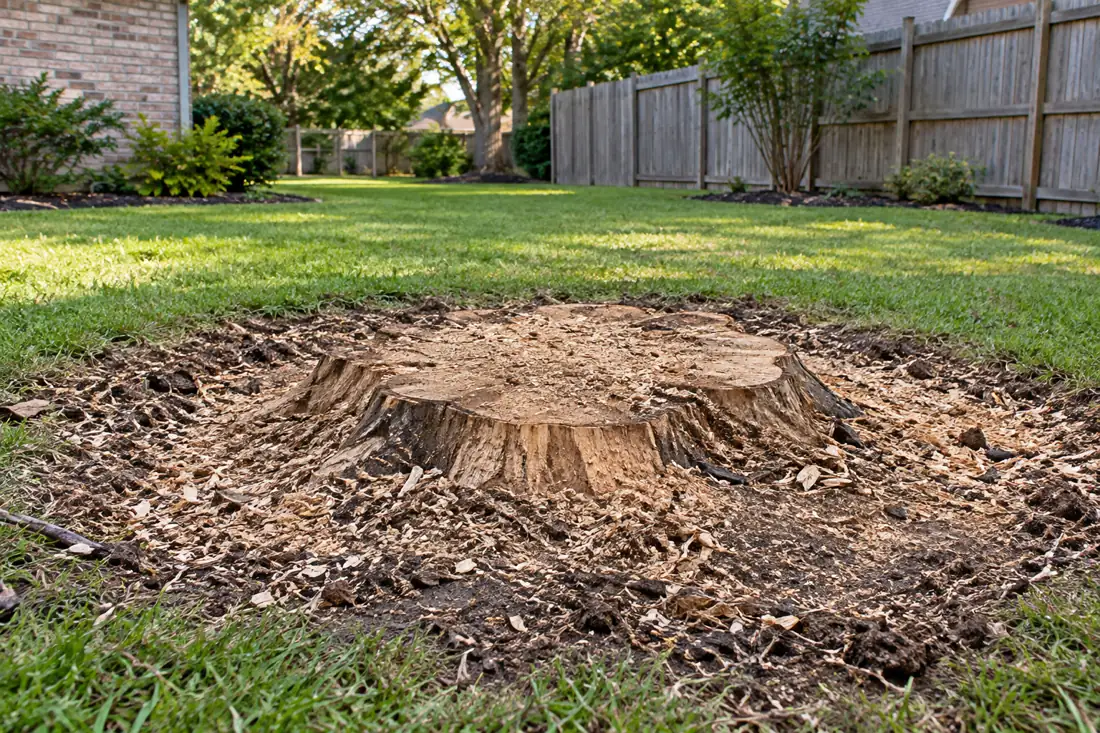
Grinding generally addresses a defined stump area rather than extracting the entire underground root system. Remaining roots can affect future excavation and landscaping plans. Explain what you intend to build or plant and ask for clear limits. Any additional root removal should be assessed for utilities, neighboring trees and nearby structures.
Replanting questions go beyond when old roots decay
Roots left after stump grinding do not disappear on the same timetable. Their size, moisture, soil conditions and species all influence decay, and remaining wood may interfere with excavation even when the former stump looks level. Digging to inspect roots can also encounter utilities, soil voids or structural conflicts, so do not treat a simple root-decay estimate as permission to excavate.
For a new tree, the more useful decision is where healthy rooting volume is available and what soil work is required. The stump grinding before replanting guide separates the grinding finish from planting-site evaluation. If the goal is paving or a foundation rather than planting, have the relevant installer specify removal and compaction requirements.
Site planning detail: The grinding wheel normally reduces a selected stump area and some accessible root flare, not every root that once supplied the tree. Lateral roots may remain beneath nearby lawn, pavement or planting beds and can decay over time. That does not mean the ground settles uniformly or that it is safe to dig a foundation immediately over the area. Show the future use—new tree, grass, fence footing, patio or utility trench—before agreeing on a grinding depth and backfill plan.
Separate removal of coarse chips from soil replacement, and expect additional preparation for a sensitive new planting. Never assume a replacement tree can thrive in the exact same location without considering remaining wood, available rooting volume, species needs and future mature size. Record what was actually removed for later contractors.
Stump grinding normally targets visible stump wood and reachable material just below the surface; it is not whole-root-system removal. Pieces can remain beneath lawns, driveways, beds and neighboring plants, decomposing over time. Ask for the intended depth and radius at the stump plus any named surface roots included.
If a foundation, fence footing or planting pit follows, provide those dimensions so the excavation contractor can identify extra work. Root cutting near a living tree can affect its health and should not be treated as routine clearing. Final photographs should show the agreed visible condition while the written scope describes what was not excavated underground.
Distinguish decaying roots from an excavation plan
A grinder works within a defined machine-accessible area; it does not trace every lateral root into the yard. Remaining roots may gradually break down, but timing and effects depend on species, moisture, soil and site conditions. Photograph nearby paving, pipes, retained trees and the intended construction or planting area before choosing a follow-up action.
If a project requires a clear excavation zone, ask a qualified contractor to define what can be removed without damaging utilities, foundations or adjacent living trees. Do not pull or cut unknown underground material. The useful outcome is an agreed stump boundary and a separate plan for anything outside it, rather than a promise that all roots disappear.
Large oak buttresses illustrate why the visible stump can have a much wider footprint.
Distinguish stump grinding from whole-root removal
Grinding reduces the visible stump and a defined amount of surrounding wood, usually without excavating the entire underground root system. A tree can have substantial roots spreading far beyond the original trunk. Those roots may remain after the surface looks level. Ask the contractor about agreed depth and reach, and do not interpret an ordinary stump quote as a commitment to remove all underground material.
The important planning question is what happens next. For lawn use, some remaining roots may not interfere with the final surface after appropriate preparation; for a footing, utility trench or new tree planting, the project may require a different investigation or excavation plan. Share the actual future use with both the tree and landscape or construction provider. The method should follow the site requirement rather than a vague desire to make roots disappear.

Understand why roots do not vanish immediately
After the tree is removed, the remaining woody roots typically break down gradually through biological and environmental processes. The pace varies with species, size, moisture, soil conditions and whether the wood was already decaying. There is no universal timetable that promises a large root will be gone by a specific season. Different portions of the same root system may remain recognizable for very different lengths of time.
Decomposition also does not mean that every root becomes an empty tunnel or that a lawn will necessarily collapse. The practical effects depend on how much wood is left, its depth and the material used to finish the site. If future excavation is planned, expect the possibility of encountering roots even years after grinding. Treat estimates of decay as broad context, not a substitute for assessing a particular subsurface project.
Expect possible surface movement in the former stump area
Wood fragments and remaining roots can change volume as they settle and decompose. A mound of fresh grindings also behaves differently from properly placed soil. These differences can produce localized low spots or uneven turf after the work. If a smooth finish matters, ask the landscape provider how it will remove unsuitable organic material, place soil and manage settlement without damaging adjacent structures or retained vegetation.
Do not assume the grinder is responsible for sod, final grading or imported soil unless the agreement expressly includes them. Photograph the area at handover and keep the written description of the final condition. If a depression later appears, evaluate whether it reflects loose backfill, soil washout, buried wood or a separate drainage issue. The cause should be investigated rather than guessed from the location alone.
Explain the long-term fate of buried roots without promising instant disappearance
Separate what grinding accomplishes now from what the underground root network does later. Grinding normally reduces accessible stump wood to an agreed depth and footprint; it does not excavate the full root system radiating through the soil. Roots that are no longer connected to a living tree generally break down through biological processes, but the pace depends on species, moisture, soil conditions and root size.
Explain these limits in the quote so the owner does not expect a root-free garden or excavation zone the day after the machine leaves.

Explain What Remains Underground After a Stump Is Ground
Stump grinding usually reduces a defined area of wood; it does not remove an entire root system across a property. Remaining roots can persist, decay over time and affect future digging or planting. The depth and spread of that material are not reliably inferred from the diameter of the stump alone.
Before planning a replacement tree, fence post, footing or pavement, ask what below-ground clearance the next project requires. The answer may call for a separate excavation or engineering scope rather than simply requesting deeper grinding everywhere. Utilities and nearby retained trees need consideration before disturbance.
For a clear handoff, retain the estimate's grind dimensions and a photograph of the finished surface before backfill. Distinguish the completed service from future root decay, soil settlement and landscaping decisions. This avoids promising that the ground is free of roots or immediately ready for any new structure.
Inspect the future use of the ground. A lawn may tolerate some buried decaying wood, while a planned fence footing, foundation or concrete slab may need a separately designed excavation and soil-replacement plan. Large roots under a path cannot simply be presumed harmless or structurally suitable. If a hollow or settling patch appears over time, document its shape and seek a qualified assessment when drainage or structural support is relevant. A visible depression alone does not prove that the grinding contractor worked incorrectly.
Distinguish dead residual roots from regrowth when follow-up shoots appear. Some species can produce sprouts from living stumps or root systems after cutting, especially if the original tree was not fully killed. A stump grinder removes wood in a zone but is not necessarily a biological treatment for every surviving root. Identify the tree species where possible and discuss management options with a qualified tree professional. Avoid applying unapproved chemicals or digging aggressively around nearby valuable trees in an attempt to force decay.
For owners preparing a new garden, retain a simple site record that marks where the stump was and what depth was contracted. Ask what chips were removed, what was backfilled and whether the ground needs time or additional preparation before planting. A later contractor can then recognize an old root area rather than assuming it is undisturbed soil. This practical record makes expectations more accurate, without claiming that all roots disappear on a fixed schedule or that no future maintenance will ever be needed.
[/fusion_text][/fusion_builder_column_inner]

Consider what remains near utilities and paving
Roots may pass beneath walks, driveways, fences, drainage structures and buried irrigation. Grinding a stump inside an accessible patch does not expose or remove the full extent of those roots. If the next project involves trenching, concrete replacement or fence-post installation, tell the appropriate provider that a tree once occupied the area. Their excavation plan should account for possible woody obstructions and known buried services.
Avoid cutting or pulling roots near unknown lines simply to make an area appear clear. A plumbing or foundation issue needs evidence from the relevant trade; a nearby root does not establish the cause. Coordinate utility marking and permissions before invasive work. The stump contractor's role may be limited to what equipment can safely reach without disturbing pavement or underground infrastructure, and that limitation should be explicit.
Choose the finish for what comes next
After a stump is ground, a shallow surface of mixed chips and soil does not mean every buried root has been extracted. Roots extending beyond the ground stump can remain underground and break down over time. That process depends on species, moisture, soil and root size; there is no reliable single timetable for an entire yard.
For future paving, a new foundation, drainage trench or replanting, tell the next contractor where the stump and major roots stood. Distinguish ordinary lawn restoration from engineered excavation. If nearby living trees share or cross the area, avoid casual root cutting and obtain a suitable assessment. Some later settlement may require additional grading rather than more grinding.
For an estimate: Give only safe, owner-authorized photos and describe the finished condition you want. A request is not a confirmed visit or price.
Root decay and future digging are different time horizons
Grinding the visible stump does not immediately remove all major lateral roots. Their condition and decay vary with species, root size, soil moisture and whether live neighboring trees share the same area. When the next project is a lawn, a shallow disturbed patch can be handled differently from the engineered excavation needed beneath a slab, trench or retaining wall.
The next-use plan, not a blanket claim that roots disappear, should determine any additional authorized work.

Distinguish future root decay from immediate excavation needs
Stump grinding reduces the accessible stump but typically leaves lateral roots extending beyond the cutter's working area. Those roots may persist, soften and change volume over time, depending on species, soil moisture and size. That process is not equivalent to wholesale excavation, nor does a low finished patch demonstrate that everything beneath it is mineral soil. If the area will become lawn, the important scope may be grading and later settlement correction. If it will support paving or a structure, a different excavation and engineering plan may be required.
Tell the next contractor the former trunk location, the approximate treatment footprint, visible remaining roots and the purpose of the upcoming work. Separate old roots from living roots belonging to adjacent trees; cutting the latter without review can create another problem. Discuss utilities and drainage before disturbing the area. An educational image of chips and roots should be labeled as context, not proof of what remains underground at any specific customer site.
Protect roots belonging to trees that are still alive
An old stump can be near another mature tree, and overlapping root systems are common in crowded landscapes. A root encountered during later excavation may not belong solely to the removed tree. Cutting it could injure a retained tree or affect its stability. Mark the living trees and discuss the intended disturbance before enlarging the original grind zone. Do not rely on the direction of a single visible root to determine ownership.
Where a new path, building feature or landscape plan intersects the root zone, a qualified arborist may need to review the design. The goal is to separate dead roots that are obstacles from living roots that still provide essential function. If identifying them is uncertain, document that uncertainty rather than promising a simple removal. Careful project sequencing can protect trees that remain while still resolving the owner's underlying land-use need.

Know what the grinder actually leaves behind
Many grinding operations leave a mixture of fine wood, coarse chips and soil in or near the treated area. Some jobs include chip removal and some do not. Ask how deep the machine will work, whether exposed lateral roots are included and whether the grindings will be hauled or left in a specified pile. A surface that looks level may still contain a substantial amount of wood below the visible layer.
Request a final scope that explains what material remains and what preparation is expected from the next contractor. If the area will receive sod or planting, that provider may require soil replacement, amendment or additional excavation. Do not assume that wood chips are equivalent to screened topsoil. The owner should understand which firm is responsible for each phase instead of discovering the distinction when the finished landscape begins to settle.
Plan replanting around the old root network
A new tree should not simply be placed into a shallow pocket of grindings because a stump was removed. The replacement species, mature size, access to suitable soil and proximity to structures all matter. Ask a qualified planting provider to assess whether the old location is appropriate or whether shifting the new tree is better. Existing roots can affect digging and soil conditions, but they do not automatically make an entire yard unsuitable for replanting.
Where soil preparation is required, coordinate it with the grinding contractor before work begins. Avoid promising a particular planting-hole size or amendment recipe without knowing the site and species. Good planning separates removal of unwanted wood from establishment of a healthy new tree. The owner should know which provider will handle soil, planting, staking if appropriate and follow-up care, rather than assuming those tasks are part of stump reduction.

Assess excavation demands for future construction
If the site will support a patio, foundation, wall or utility trench, the construction professional should define the material and compaction requirements. A stump-grinding machine does not provide structural geotechnical certification. Remaining roots and organic pockets may need to be addressed under the applicable design and inspection process. Share the future plan early so the tree contractor does not perform a limited lawn finish that later needs to be reopened.
Avoid relying on an online rule for a guaranteed depth or decay timetable. Different soils and root arrangements create different conditions. If additional digging is proposed, check buried services and the effect on neighboring trees first. The construction provider should determine whether excavation, engineered fill or other measures are appropriate. Keeping these roles distinct prevents a simple grinding estimate from becoming an unsupported promise about long-term structural performance.
Document the treated footprint and limitations
Before work, take an overview image identifying the stump, adjacent hardscape and any visible roots that the owner specifically wants addressed. During the estimate, agree on a perimeter and depth reference that can be understood without excavating. If certain roots under a sidewalk or neighbor's fence are excluded, note that explicitly. These details help the contractor quote the work and the owner recognize completion.
At handover, record which areas were ground, what chips were removed and what remains outside the defined scope. Keep any notes about underground obstacles or inaccessible roots. This record is useful for a future landscaper or builder, even if that work happens later. The aim is not to claim certainty about hidden wood, but to transfer accurate information about what the equipment actually reached and what may still be present.

Use the right follow-up when the ground changes
If a depression, new surface root or drainage issue appears later, start by documenting the location, timing and visible condition. Avoid cutting or excavating in response to a guess. A landscape provider may assess grade and soil, a utility provider may assess piping, and a tree professional may advise when living roots or retained trees are involved. Choose the trade based on the observed problem.
Tree Huggers can discuss the original stump scope and whether additional accessible grinding would address a defined new objective. That is separate from guaranteeing root disappearance or permanent ground elevation. Send safe photographs and the intended next use, and ask whether a site visit is needed. An online inquiry starts the estimate process; it does not book equipment, certify underground conditions or establish emergency response.
Questions about this project
How quickly do leftover tree roots disappear?
There is no reliable universal timetable. Decomposition varies with wood type, root size, moisture and soil conditions. Grinding the stump does not instantly eliminate roots that extend beyond the agreed area. Plan future digging around what may remain.
Should I dig out all roots after grinding?
Not by default. Excavation can affect services, adjacent trees and structures. Explain what you plan to build or plant and obtain a site-specific assessment of any additional roots that must be addressed. Unnecessary digging can create a separate hazard.
Can I cut a surface root to flatten the lawn?
Do not assume that is harmless. The root may matter to tree condition or stability. Describe the conflict and ask for an assessment and appropriate options before cutting or excavating near the tree.
Does a nearby tree prove it caused a plumbing problem?
No. Use the plumbing provider's findings and identify the affected system. Coordinate any tree or root work with that information rather than assuming location alone establishes the cause or the right remedy.
Will a utility locate show every private line?
Do not assume it will identify all irrigation, pet-fence, drainage or other customer-owned systems. Provide available plans and ask what additional locating or coordination is needed for the actual work and access area.
Who should arrange utility-related preparation?
Set that responsibility before scheduling. The property contact, contractor and relevant providers need to identify who handles locating, disconnection, relocation or separate repair work. Uncertain utility information should be resolved rather than guessed.
When should tree work be discussed on a building project?
As early as practical, while the footprint, access, excavation and staging can still be coordinated. Identify retained trees and share drawings before clearing or other site activity creates avoidable conflicts.
Does stump grinding complete construction site preparation?
Not necessarily. Excavation, root removal, base preparation, compaction and grading may require separate work and acceptance criteria. Coordinate the tree scope with the contractor responsible for the next construction phase.
What should I compare besides the price?
Compare tree identification, work objectives, access assumptions, hauling, stump treatment, site finish and exclusions. Ask whether permits or other coordination are part of the scope and who can approve changes if conditions differ.
Does an online request book the crew?
No. A request starts the estimate conversation. The company still needs to discuss scope, availability and any site assessment. For a dangerous or urgent condition, call 504-458-8336 rather than relying on a form response.
What should I tell Tree Huggers about what happens to roots after stump grinding?
Explain the property address, the work you want and the specific concerns: remaining roots, future excavation, defined limits. Send safe photos of the tree, surroundings and access route. The contractor can then discuss the assessment and scope needed for this situation.
How do I request an estimate for this work?
Call 504-458-8336, text photos or use the estimate form on this page. Include the address, desired outcome and any timing constraints. The company will need to review scope and availability; an online request does not confirm a price, appointment or emergency dispatch.
Get a scope for your property
After a stump is ground, many roots remain below the surrounding soil because the work targets the defined stump area rather than excavating the entire root system. In your inquiry, describe whether the goal is mowing safely, installing new plants, trenching utilities or preparing hardscape. A photograph can show surface roots and nearby structures, but it cannot reveal every buried root. Note any known irrigation, drainage or electrical lines, as well as whether the old tree failed or was removed while otherwise healthy.
Ask for a written explanation of the planned grinding limits and what remains outside them. If future trenching or concrete is contemplated, identify who will handle deeper root removal and verify utility locations. Larger old roots may decay over time, but the rate and resulting settlement cannot be guaranteed from a simple site photo. Specify whether chips, backfill and final grading are included. Avoid treating stump grinding as complete underground clearance; matching the scope to the next project avoids misleading expectations.