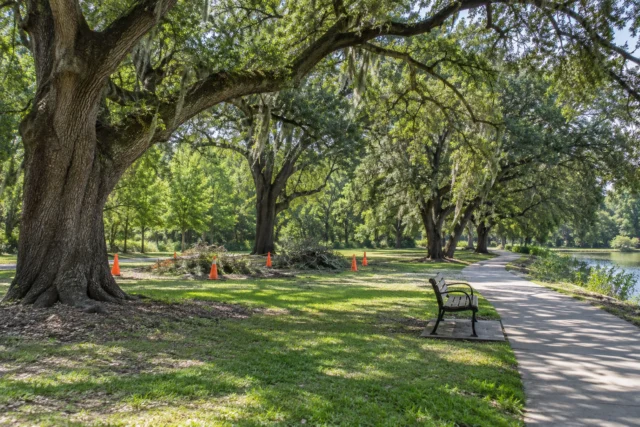
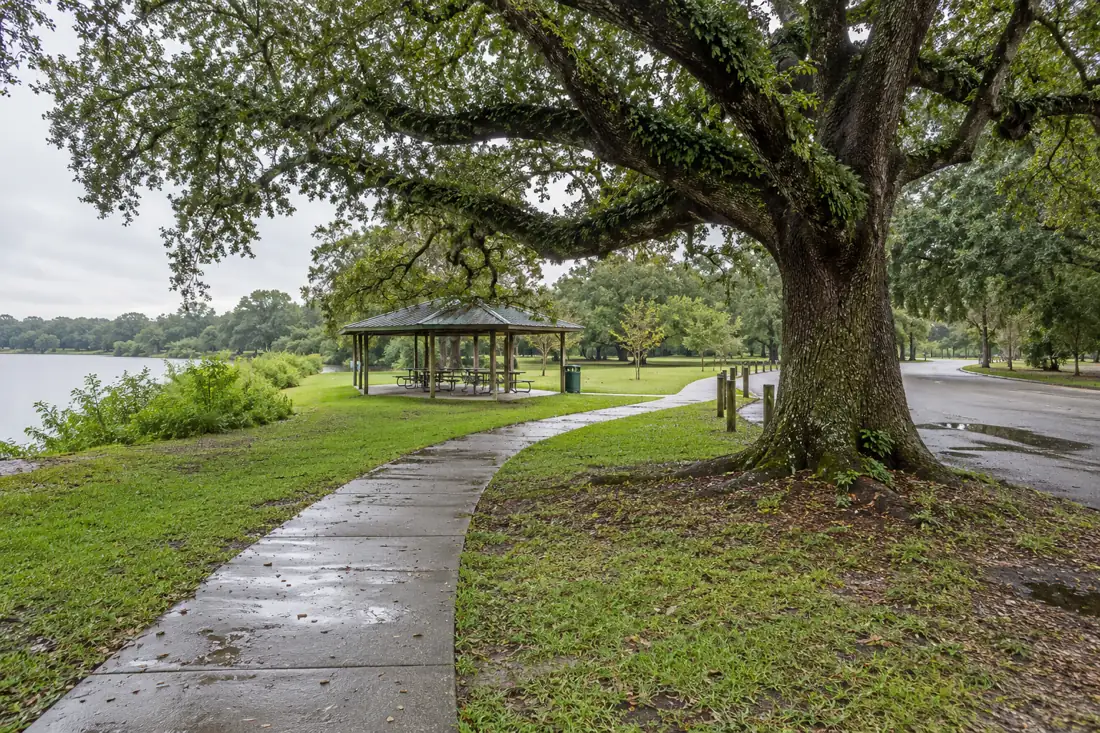
Keep access corridors usable and safe
Right-of-way work often requires tree removal, dangerous-limb removal and vegetation reduction around traffic, utilities, drainage or project access. The scope should identify limits, priority hazards, equipment access and how debris will be handled.
Confirm clearing boundaries, priority trees and sensitive areas.
Address trees or limbs that threaten access and operations first.
Move, stage or haul vegetative material according to the project scope.
Storm and emergency applications
Severe weather can put trees across access routes or leave hanging limbs over roads and work areas. Mechanized equipment and larger-tree capability can be useful where production and rapid access restoration matter.
Related services
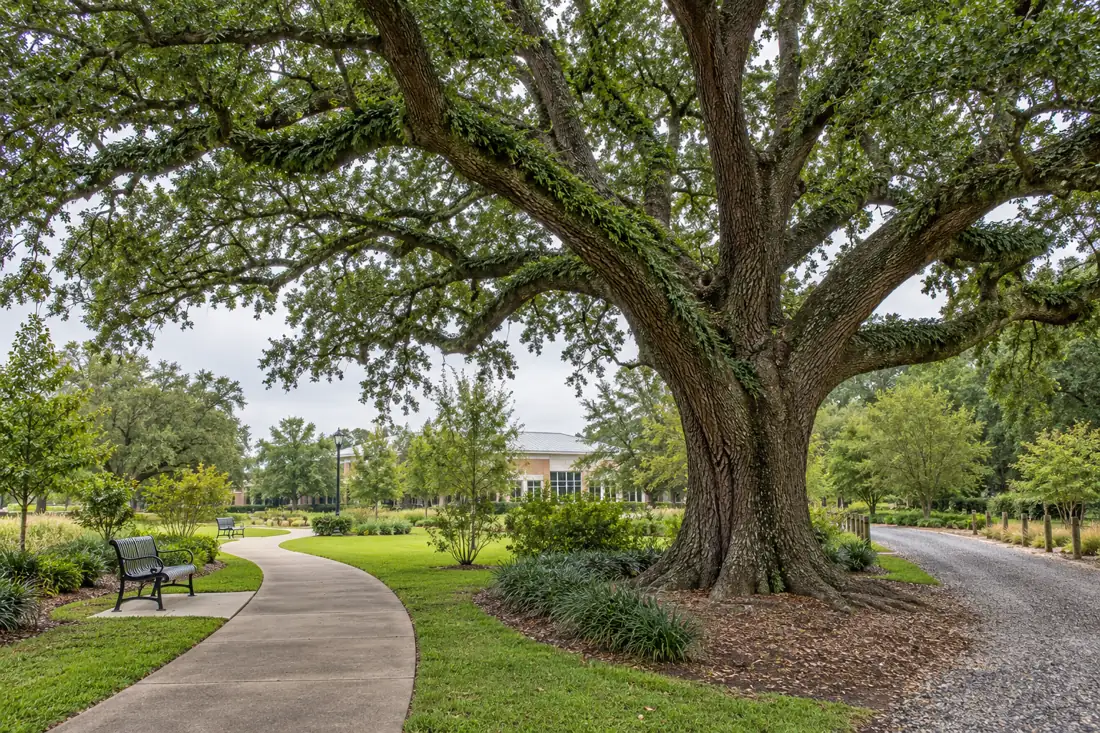
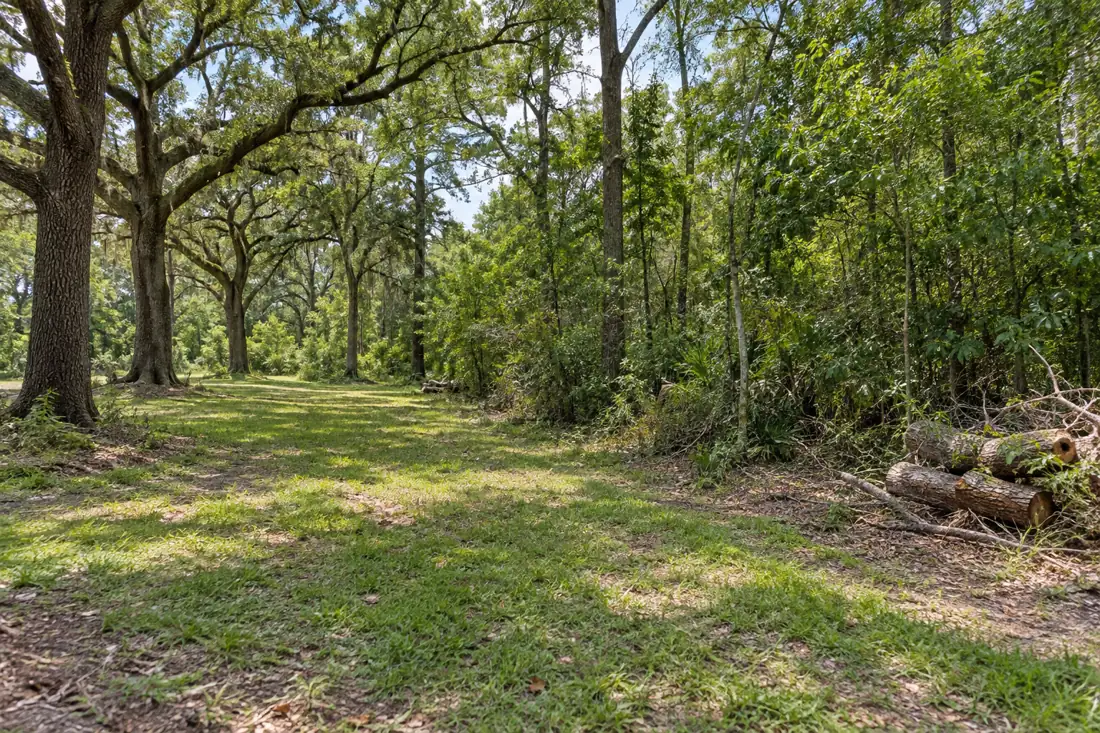
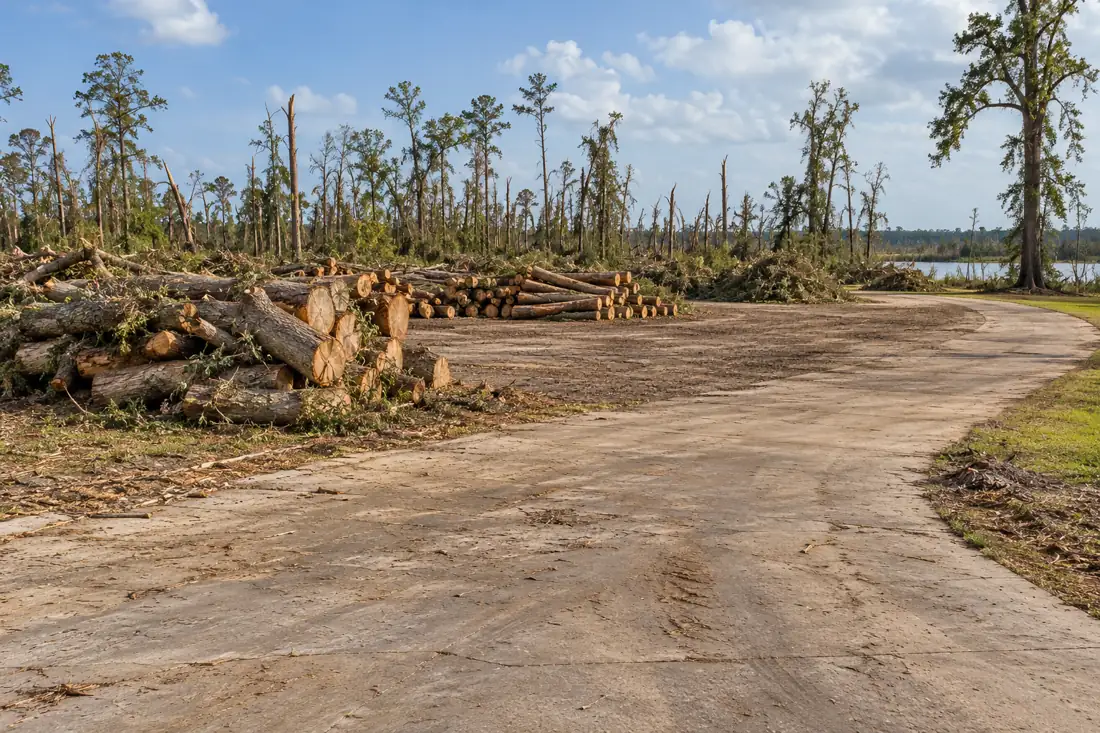

Start with an actual corridor boundary, not a rough line on a map
Right-of-way tree clearing begins by finding the limits of the work and the authority behind them. A road edge, fence, drainage ditch, utility pole line, and mapped parcel boundary may occupy different places. Before a crew cuts, the owner or agency should identify the controlling plans, any easement, the applicable road authority, and vegetation explicitly marked to remain. For privately commissioned work, the requester must establish permission; a public-looking strip is not automatically available for cutting. This prevents a well-intentioned access project from becoming a property dispute or an avoidable tree loss.
Map the drainage and access interfaces before clearing
A right-of-way boundary is not automatically the same as the area that equipment can safely use. Include the known property limits, drainage ditch, culverts, buried systems, and any adjacent gate or driveway in the site walk. If boundaries or permissions remain uncertain, identify the person responsible for confirming them before clearing instructions are finalized.
Ask the requester to separate vegetation that obstructs a defined clearance envelope from trees retained for shade, screening, or erosion control. Mark trees requiring assessment rather than assuming that every visible limb has the same priority. Site photographs should show the relationship between tree, road, ditch and entrance, not only the branch being discussed.
Traffic control, utility coordination and vegetative material handling must be in the authorized scope where applicable. A public owner can make evaluation easier by providing location references, accessible work windows, approval contacts and the expected finish condition for the shoulder and ditch.

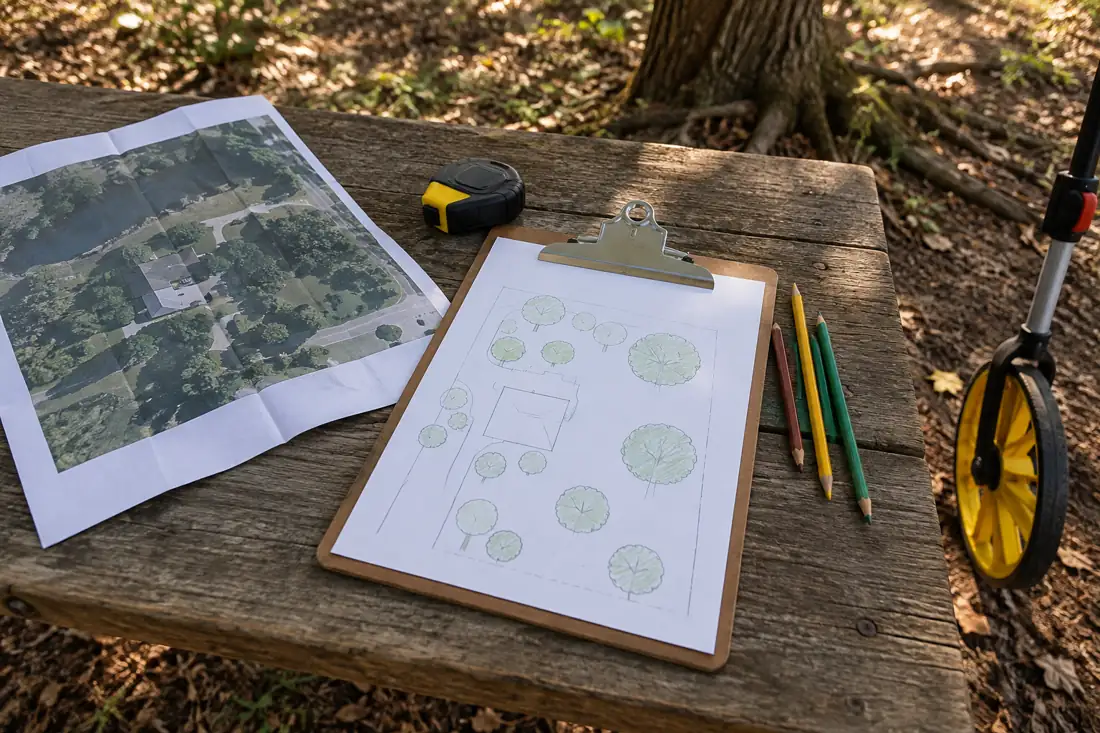
A useful initial field walk records stations or recognizable landmarks, crossing streets, the limits on both sides of the route, drainage structures, overhead conductors, driveway entrances, and sensitive vegetation. Aerial maps help a coordinator identify sections but cannot reveal every fence, low branch, utility drop, or wet shoulder. Photograph the corridor from safe accessible viewpoints and label the locations rather than relying on a long, unlabeled camera roll. Tree Huggers can discuss access and equipment requirements once the authorized boundaries and desired clearing result are described.
[/fusion_text][/fusion_builder_column_inner][/fusion_builder_row_inner]Separate hazard work from discretionary vegetation reduction
There is a major difference between removing a hanging limb above travel lanes and cutting healthy roadside trees simply to create an open view. A hazard requires prompt evaluation of its failure potential, exposure, and whether the work can be isolated without adding danger. Routine encroachment can be scheduled around traffic, weather, nesting or environmental restrictions, and equipment availability.
A request for sightline improvement may also be subject to special permits; it is not interchangeable with emergency clearance. Define which category applies before selecting the extent and speed of work.
The Louisiana Department of Transportation and Development recognizes the benefits of existing highway vegetation while allowing justified maintenance and safety removal. Its vegetation visibility permit rule illustrates why approval, access, drainage, cleanup, and traffic controls matter for a specific permit class. That rule does not grant blanket permission for every clearing project. Where a municipality, parish, DOTD district, utility owner, or private property owner controls the site, confirm that party’s written instructions and applicable permits rather than borrowing an unrelated project’s requirements.

Build the work zone around road users and workers
A roadside crew does not work in an isolated backyard. Drivers may approach at highway speed, pedestrians can appear near schools or bus stops, and delivery vehicles may need access to adjoining properties. Staging a truck or lowering a branch can affect travel lanes even when every cut is technically outside the paved surface. Plan how workers enter and leave the corridor, where equipment can park, where branches will land, and what must be temporarily separated from public movement. Work-zone control is a project requirement, not a few cones added after arrival.
The applicable traffic-control plan should be developed or approved by the responsible road authority and qualified people. The Federal Highway Administration’s current MUTCD, 11th Edition with Revision 1, provides the national traffic-control framework; local adoption and project requirements still need confirmation. Never tell a private customer that a roadside tree crew may close a lane without authorization. If the intended work area cannot provide a safe landing, loading, and traffic separation arrangement, revise the methods or schedule before the saw starts.
Locate utility exposure before a boom moves
Power lines, communication wires, service drops, streetlights, buried utilities, and guy wires complicate even modest clearing. A limb might not touch a conductor now but could swing into it when cut or lowered. Cranes and bucket trucks add their own reach and minimum-clearance concerns. Treat utility lines as potentially energized; do not infer a circuit is dead because a neighborhood has lost power after a storm.
A contractor should establish the utility owner, hazards, limits of ordinary tree-work qualifications, and who is authorized to perform line-clearance work.
OSHA’s tree-care inspection guidance explains that electrical-safety rules depend on the task and worker qualifications. That is not a substitute for a site-specific safety plan. If a tree is contacting a conductor or a limb is suspended over live wires, keep the public and unqualified workers away and involve the utility or qualified responder. The same principle applies to uncertain underground utilities when anchoring equipment, digging, grinding stumps, or changing drainage contours.

Preserve the corridor elements that should stay
Good clearing plans identify what must not be damaged: retained trees, fencing, culverts, survey markers, signs, utility hardware, wetland edges, slopes, private landscaping, and stormwater infrastructure. Selective trimming may meet a driver’s visibility need without removing the entire canopy. Root systems help stabilize soil in some locations, and indiscriminate clearing can expose slopes to erosion or block a drainage ditch with loose debris. Ask whether an agency’s drawings specify clearing limits, grubbing, stump treatment, restoration, or vegetation-protection measures.
Where roots cross the proposed access route, heavy truck traffic and repeated turning can compact the soil. A tree that will remain after the project needs protection during the operation, not just a note on a final inspection. Flag or fence sensitive trunks and roots where practical; agree which surfaces can support trucks or tracked equipment. Any promised grading, sod, erosion control, or damaged-fence repair should be described in the quote, because tree removal and full civil-site restoration are different scopes with different equipment.
Choose a removal method for each constraint
A roadside corridor can contain small volunteer growth, dead stems, tall leaning trees, heavy lateral limbs, and mature trunks directly beside structures. There is no honest single-method price or schedule for that mix. Open sections may permit mechanically assisted removal and efficient material handling. Tight corridors may require controlled rigging, staged sectioning, or a crane with a landing area separate from traffic.
A supervisor should identify the tree that drives the project risk and the equipment constraints rather than letting an average tree size decide the method.
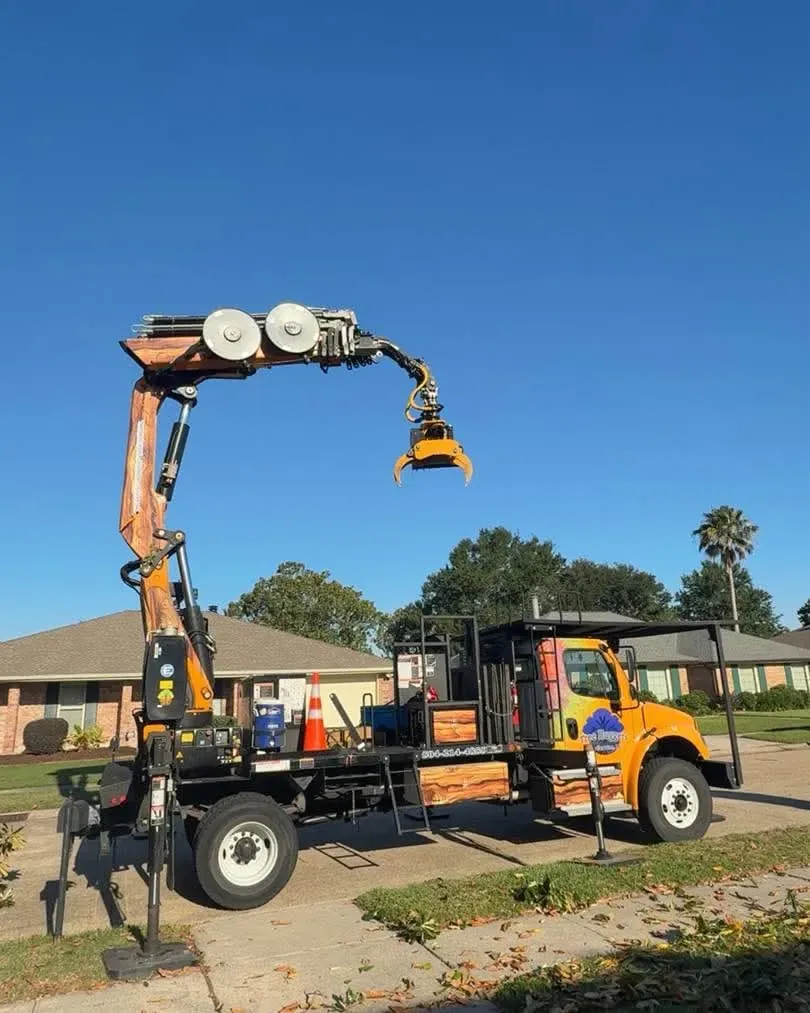
Tree Huggers’ grapple and heavy-equipment photographs demonstrate categories of equipment, but a photograph cannot prove that a machine will fit a particular shoulder or bridge approach. Grade changes, overhead wires, soft soil, turning radii, parked vehicles, and restricted hours may eliminate an otherwise attractive approach. Request a documented method for each high-risk location and explain whether there will be hand work, mechanical assistance, debris loading, or separate hauling support. Do not confuse the equipment arriving with the required permitting and site controls.
Plan debris movement before work begins
Cutting is only one part of clearing. Material has to move from a controlled drop zone to a safe loading or staging location and ultimately to an approved destination. A ditch or shoulder used as a temporary pile can reduce visibility, obstruct water, and force later handling. Decide whether branches will be chipped, whole trees loaded, large logs separated, or material staged for an authorized collection program. Distinguish work completed at the tree from hauling and any off-site acceptance or disposal fees.
The hauling route itself deserves attention. Long stems may not be suitable for ordinary trailers, and loading machines need room without occupying active lanes. Verify container sizes, weight limits, access restrictions, and who maintains the route during a multi-day operation. Some public work requires manifesting loads or documenting origin, while a private corridor clearance may need a simpler receipt. Those duties should come from the actual contract or responsible authority; do not represent every debris job as federally reimbursable.
Define measurable acceptance instead of vague ‘clear everything’
A precise scope can say which trees are marked, how far branches must be reduced, whether deadwood of a stated diameter is included, what stump height is expected, and whether vegetation must be removed from the property. The criteria can differ between travel-lane clearance, a drainage access strip, a future construction boundary, and a utility’s separately controlled easement. The purchaser should confirm whether trees outside the marked footprint are excluded even if machinery can reach them easily.
Use a pre-work walk and a post-work review against the same reference points. Record any exclusions that an owner must resolve, such as a private gate, unavailable utility clearance, inaccessible wet area, or a protected specimen. A final punch list should focus on the required condition of the corridor and agreed disposal, not an arbitrary amount of visible brush. Photographs at the marked limits can support the review without pretending to establish a surveying boundary.
Scope public and private contracts differently
A city or parish may require purchase orders, insurance documentation, a designated project contact, accepted traffic-control plans, daily logs, and an approval chain before additional work. A private developer preparing a lawful driveway approach may have a smaller set of documents but still need written property permission and road permits. Prime contractors often divide clearing, traffic control, civil restoration, and disposal among trades; any interface left implicit can generate safety and payment disputes. Ask who controls access, approves changes, and signs completed quantities.
If requesting a bid, provide a site map, tree list if available, desired finish condition, potential work windows, staging and haul routes, and any wage, insurance, licensing, or reporting terms actually required. Tree Huggers can review a tree-work scope as a contractor or potential subcontractor, but should not be described as an approved public vendor or emergency contractor for an agency without documented confirmation. A transparent proposal states included tasks, proposed method assumptions, exclusions, and what would change the plan.
Prepare a useful right-of-way estimate request
A short, specific inquiry is more valuable than asking for a price to “clear the road.” Give the parish or road name, the nearest cross street, whether the corridor is publicly or privately controlled, the authorized limits, the reason for work, and whether traffic or pedestrians must remain open. Include photographs from safe public viewpoints, not images taken while standing in traffic or approaching downed power lines. Tell the contractor if a lane closure, utility coordination, drainage crossing, or specialized access is likely.
For a serious hazard, keep people clear and use the appropriate emergency or road-authority reporting channel before seeking a routine estimate. For planned work, request an on-site review of access, equipment, clearing limits, the handling and hauling destination, and any work-zone responsibilities. Related reading includes our roadside limb removal guidance and vegetative debris removal guide. The objective is a lawful, safe, inspectable corridor—not just an impressive pile of cut trees.
Related Tree Huggers services
Review these adjoining service scopes when your project crosses more than one type of work: Government Tree Services.
Questions about Right-of-Way Tree Clearing
Who may authorize clearing inside a public right-of-way?
The road or property authority controls permission and requirements. A private tree-work request does not itself authorize cutting on public property.
Does a boundary fence show the right-of-way limit?
Not reliably. Use controlling plans, survey or easement information and the owner or agency’s work authorization.
Can a tree crew close a traffic lane?
A lane closure requires the appropriate road authority and qualified traffic-control planning. It is not automatically included with tree removal.
Are roadside power lines safe after an outage?
No. Treat lines as energized until the utility or authorized qualified personnel establish a safe work condition.
What happens to the brush and logs?
The contract should define collection, staging, loading, hauling and an approved destination, including any separate disposal requirements.
Will every tree in the corridor be removed?
Only trees and vegetation within the agreed and authorized work limits. Retained trees should be clearly marked and protected.
Can a healthy tree be cleared for better visibility?
Some sightline work requires a specific approval or permit; it should not be confused with emergency hazard work.
Is stump grinding automatically included?
No. Stump height, grubbing, grinding and restoration must be stated individually in the work scope.
How are drainage ditches protected?
Plans should keep cuttings and loading equipment away from culverts and inlets and identify any restoration responsibilities.
Can equipment enter from a neighboring lot?
Only after the necessary permissions and access arrangements are established with the responsible owner.
What should be in a corridor bid request?
Include the limits, tree list or map, traffic conditions, access route, expected finish, and any contract or permitting requirements.
Does this page establish Tree Huggers as an approved public vendor?
No. Vendor eligibility and contract awards must be verified for the specific agency and procurement.
Get a scope for your property
Right-of-way clearing is controlled by the corridor owner and its safety requirements, not simply by the vegetation visible from the road. Start with the exact road segment, governing agency or private easement, permitted limits and whether work is needed for line of sight, drainage access or planned infrastructure.
Share available plans, maps and authorized condition photographs. Note shoulders, sidewalk use, signs, overhead conductors, culverts and vulnerable areas that must remain accessible. Do not assume a contractor may place vehicles or cut vegetation within a public right-of-way without the relevant approval.
Request a scope that defines clearing limits by station, map or marked boundary; retained vegetation; traffic and pedestrian controls; utility coordination; equipment entry; and handling of chips, stumps and woody debris. Identify who supplies permits, lane-control measures, disposal instructions and inspection acceptance requirements. The job should distinguish initial hazard response from general vegetation maintenance or grading. If the corridor contains sensitive infrastructure or restricted access, those conditions belong in the estimate rather than becoming a field assumption after mobilization.