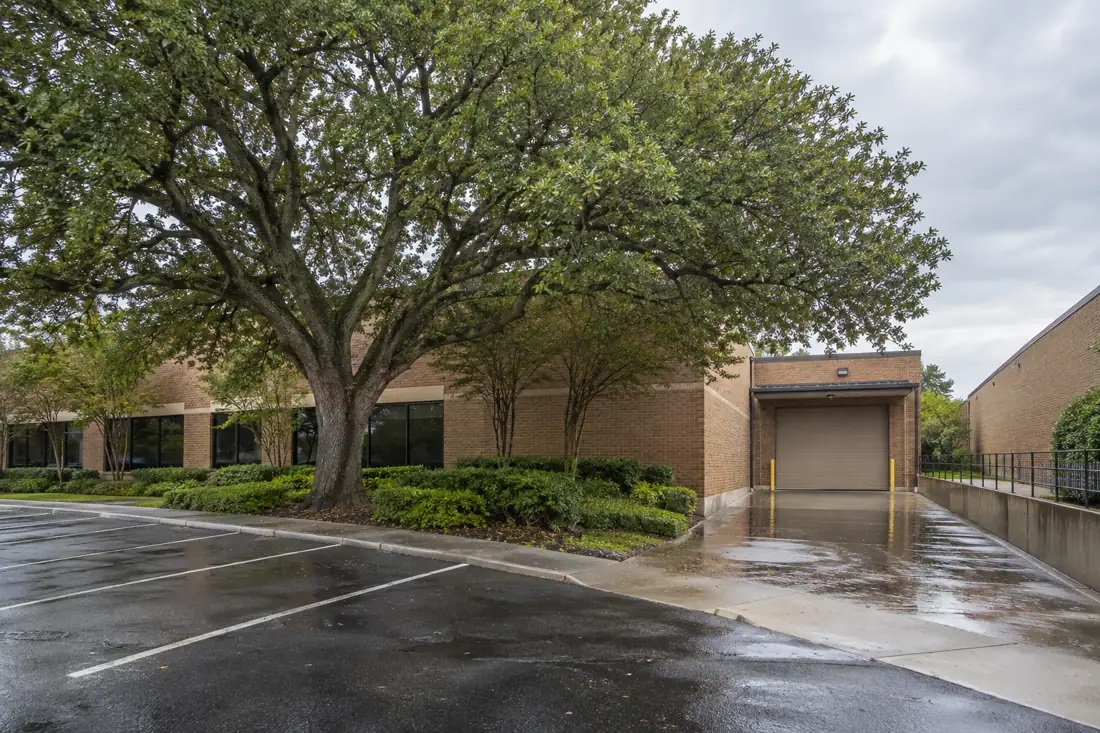
Fast response without losing control of the work zone
Emergency debris operations are different from routine cleanup. Access may be limited, roads may be partially blocked, utilities may be compromised and owners or agencies may be under pressure to reopen a site quickly. Tree Huggers approaches these scopes around safe access, production planning, equipment staging, debris handling and clear communication with the project contact.
Scope & hazards
Identify access restrictions, downed trees, hanging limbs, structures, utilities and priority areas.
Mobilize
Match equipment, crew, hauling and staging requirements to the debris volume and site conditions.
Clear & reduce
Open critical routes first, then process vegetative debris in a controlled sequence.
Document
Maintain photos, locations and completion notes when the project requires supporting records.
Scopes we can support
Downed Trees
Removal of storm-failed trees from access routes, managed properties and project sites.
Hazardous Limbs
Controlled removal of broken or suspended limbs before cleanup crews work below.
Vegetative Debris
Processing, reduction, loading and hauling coordination for woody storm debris.
Blocked Access
Priority clearing for driveways, roads, service lanes, entrances and emergency routes.
Commercial, municipal and prime-contractor support
We can work directly for property owners and managers or support a larger prime contractor when tree and vegetative debris are one part of a broader disaster scope. The goal is to provide a clearly defined tree-worb package that integrates with traffic control, hauling, disposal, utility restoration or site recovery activities already underway.
Related capabilities
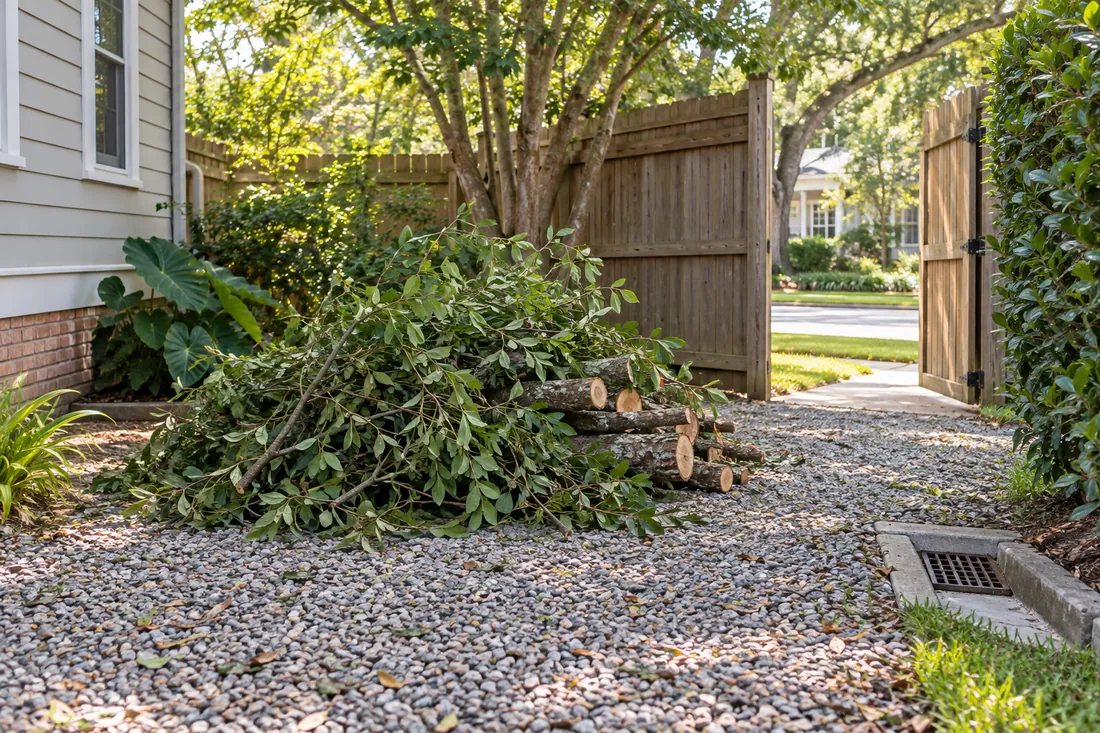
Vegetative Debris Removal
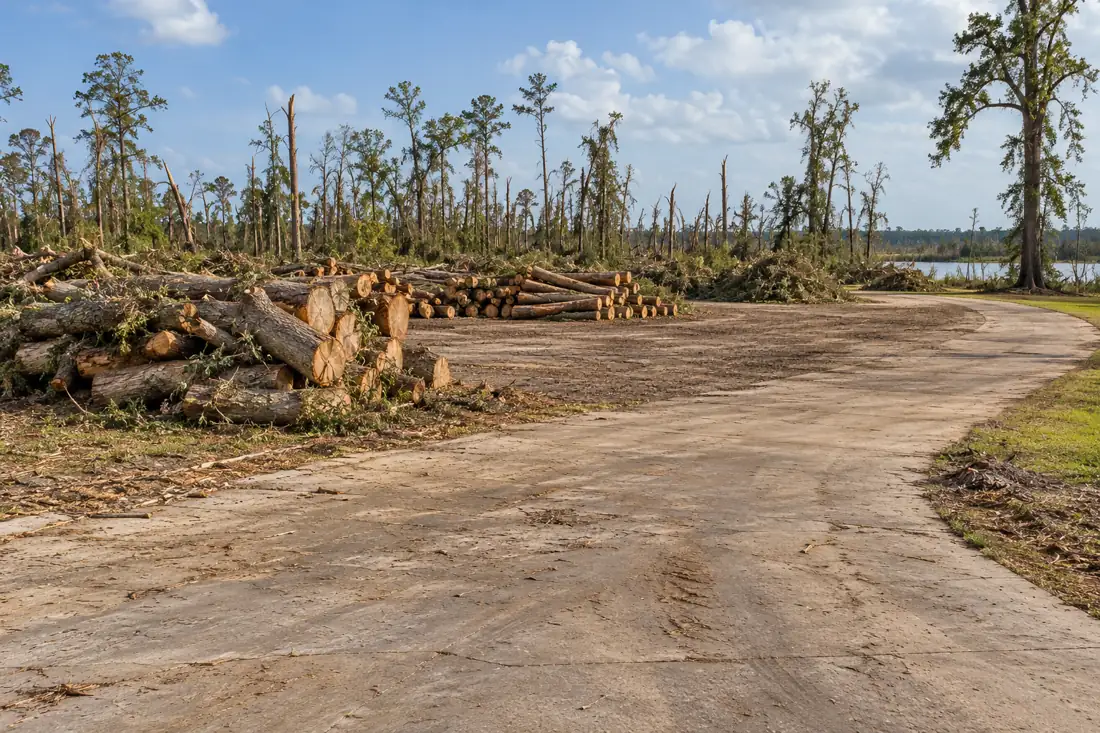
Disaster Mobilization
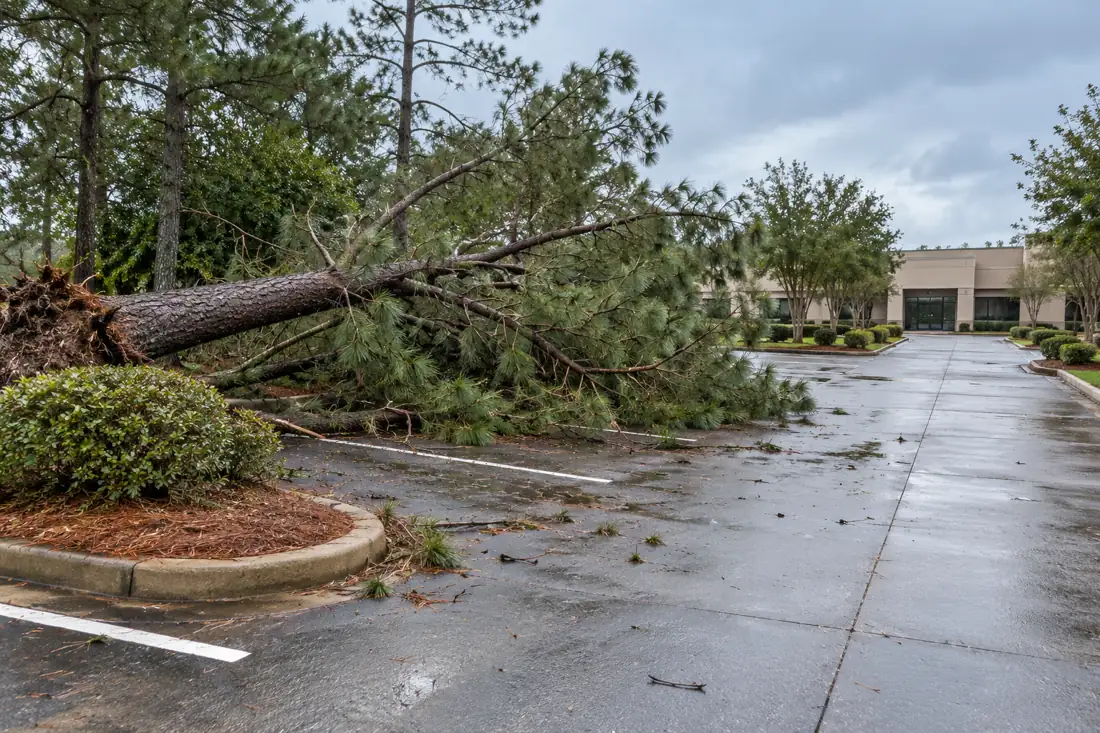
Commercial Storm Response

The first emergency task is to recognize the threat
After a tropical storm or sudden wind event, a request may mention a tree across a road, a hanging limb over an entrance, or branches resting on a roof. Those are not interchangeable situations. The immediate task is to identify who is exposed, whether the scene is safe to approach, and which utility or public authority must be involved before work starts. A tree that blocks a driveway is inconvenient, but a suspended trunk beside a damaged service line may require a controlled exclusion area and specialized responders.
Use a first-response map that separates hazards from access
An emergency inquiry should identify the essential route first: an occupied building entrance, a fire lane, a gate used by responders, or access to utility equipment. Tell the contractor which route is required and which areas remain off-limits. This helps separate the work needed to restore access from broader cleanup that can be planned afterward.
Use photographs only from positions already safe to occupy. Do not move branches to expose a hazard or enter an area with unstable trees, wires, or structural damage. If the danger involves public travel, emergency access or electrical infrastructure, contact the appropriate authority or utility before routine tree-work coordination.
Once the immediate condition is controlled, record the agreed removal limits, material staging, hauling and remaining concerns. A single emergency scope should not imply that every tree on a property has received a full inspection. This scene is an educational visual rather than an actual disaster response record.

Ask for the site address, nearest intersection, accessible entrance, visible obstruction, affected occupancy, and safe photographs from a distance. Have the contact describe whether people are inside a damaged structure, whether wires are on the ground, whether water covers the work area, and whether road traffic is active. Do not ask an untrained resident to climb on debris, stand beneath a widowmaker limb, or cut a heavy trunk under tension to make an estimate easier. For immediate public danger, contact the appropriate emergency agency or utility first.
[/fusion_text][/fusion_builder_column_inner][/fusion_builder_row_inner]Triage access restoration separately from complete cleanup
An emergency response often has two legitimate endpoints. One is the minimum safe action needed to restore access to a critical entrance, service gate, or route. The other is full dismantling, haul-off, removal of remaining hazardous wood, stump work and cosmetic cleanup. Treating these endpoints as identical leads to mismatched invoices and unmet expectations. A crew may clear a route sufficiently for the authorized authority to evaluate reopening while additional trees still require work nearby.
The buyer should decide whether the first phase is hazard isolation, access opening, controlled removal, or debris haul and identify who can authorize expansion. An access-only quote must not imply that all remaining damaged trees are stable or that the entire property is restored. Where a building or bridge is damaged, the relevant engineer, building owner, utility, or road authority may need to approve re-entry or reopening. Tree Huggers can manage an agreed tree-work scope; it does not certify unrelated structural systems as safe.

Establish command, contact and authority before arrival
Major incidents often bring owners, property managers, security, first responders, utility crews, insurers and general contractors to the same location. A contractor needs one clear work-order contact, a defined approval chain and a process for additional hazards discovered after mobilization. Who can close a gate? Who can authorize after-hours work? Who supplies an approved traffic plan? Who confirms that a power line is de-energized? If those responsibilities remain unclear, extra crews can create confusion rather than speed.
For public incidents, follow the agency’s incident-command or operations arrangements and contractor instructions. For commercial sites, coordinate with the facilities manager and any prime contractor directing the recovery. If a homeowner asks a private crew to cut a tree extending onto someone else’s property, written permission and boundary information may still be needed. A disaster does not remove all legal or operational controls. The field supervisor should have a reliable contact for changes, unavailable access, or newly discovered hazards.
Plan for energized conductors and damaged infrastructure
Wind-damaged trees can trap distribution wires under heavy limbs or pull service drops across driveways. In some situations, a wire may be hidden in foliage or lying on the ground under water. Never treat a line as safe merely because nearby lights are out. Electric utility personnel or appropriately qualified line-clearance specialists must control that exposure. The same caution applies to damaged gas systems, flooded electrical equipment and unstable structures where tree work could aggravate an existing hazard.
OSHA’s tree-care inspection guidance identifies electrical contact, falls and mechanized equipment among significant tree-operation hazards. The exact applicable rule depends on the task. A contractor’s equipment capability is not a substitute for qualification or utility coordination. Site photos can help reveal the general relationship between trees and wires, but never prove a conductor is safe to touch. When the necessary isolation or authority is missing, establish distance and wait for the qualified response.

Approach storm-loaded wood as a changing mechanical system
A fallen tree may have its weight transferred through a roof, fence, another tree, or a partially lifted root plate. Cutting one section changes the load on the others. Branches can spring, trunks roll, and root systems move after tension is released. The most dangerous part of a large removal may be a seemingly small cut that frees a compressed section. Experienced crews plan the sequence, load support, escape route and landing areas before touching the saw, not while a cut is opening.
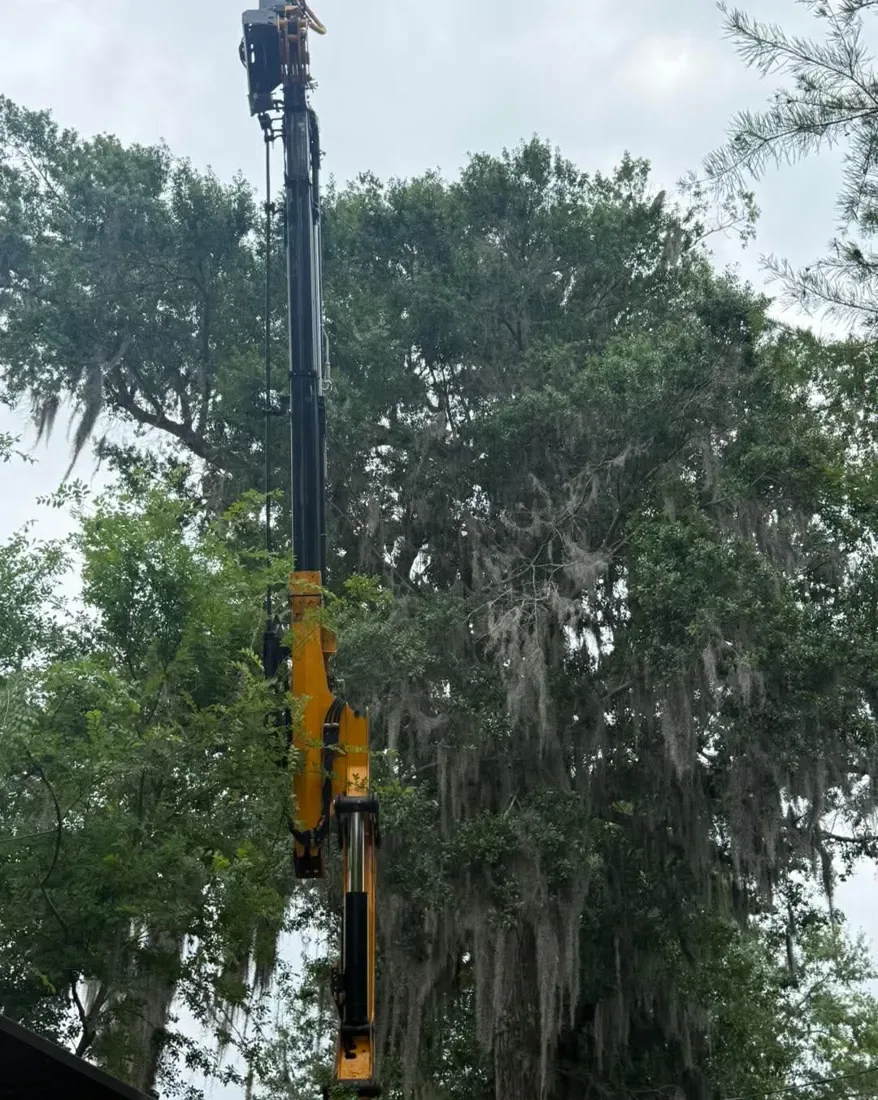
Mechanical grapples, cranes, rigging and sectional removal can improve control in suitable settings, but none is universally appropriate. A crane may need a bearing surface that survives saturated ground; a grapple truck may be blocked by power lines; manual saw work may not be suitable beneath another suspended limb. Ask for an equipment and access review rather than demanding a particular machine. A useful estimate identifies assumptions about stability and makes a clear stop-work provision for new hazards discovered during dismantling.
Protect people and operations around the debris
Even when the initial tree hazard is isolated, emergency tree work can obstruct a shopping-center entrance, a public sidewalk, a hospital service lane, or the route a fire truck would take. Mark a controlled work area and keep untrained observers outside it. A busy storm cleanup is not an opportunity for residents to collect limbs while machines are operating. Determine where crew vehicles park, how loaded trucks exit, and which entrances can remain open without crossing the work area.
If public roads are involved, the road authority and qualified parties should determine traffic-control requirements under applicable rules. The FHWA MUTCD provides the federal framework for temporary traffic controls, not automatic permission to close a lane. Document owner or agency restrictions on nighttime work, noise, public access and occupied buildings. When multiple contractors are present, establish separate work zones and a shared check-in process so one crew does not enter another crew’s drop area.
Document the threat without delaying essential safety
Photographs from before work help show which tree fell, what it affected, the extent of obstruction and why a particular response was justified. Record the site, approximate observation time, work-order identifier, affected entrance or asset, and the authorized action. Do not send somebody underneath a broken canopy merely to satisfy a paperwork requirement. Where it is safe, match after photographs to the same location and note what hazards or materials remain outside the emergency scope.
For public or insured work, preserve written approvals, crew logs, changed conditions and material disposition records if required. These are useful operational records, not evidence that any particular insurance claim or FEMA cost is automatically eligible. Financial and program decisions belong to the responsible insurer, agency or program administrator. An honest emergency scope lists what was observed and completed while identifying work that will require later inspection, specialized trades or a separate authorization.
Handle debris and off-site material honestly
Emergency access work can generate large quantities of logs and brush quickly. Decide whether safe material will be left in a designated holding area for a later haul or fully removed in the same phase. The location must not obstruct storm drains, accessible exits, sidewalks, hydrants or traffic. Some piles contain broken fencing, metal roofing, wires and other mixed material; these are not automatically acceptable as ordinary vegetative debris. A debris handler should identify what it is authorized and equipped to carry.
In a major declared disaster, public programs may operate separate vegetative-debris collection with specific eligibility and monitoring. Do not promise that a private contractor’s emergency tree bill will be reimbursed or picked up by the government. The actual purchaser’s agreement controls included disposal, handling and records. Our disaster debris hauling guide addresses larger, sustained collection and documentation after immediate hazards have been stabilized.
Explain timing without inventing response guarantees
A severe storm may affect multiple parishes, roads and utility systems at once. Availability depends on active hazards, crew assignments, safe access, weather, communications, equipment and the permissions needed to work. An emergency page should help a caller identify the problem quickly without promising that a crew will arrive in a particular number of minutes. A customer should ask what can be assessed immediately, which information is needed for safe dispatch and when the contractor expects to confirm a next step.
The first contact can state whether the site is accessible, which hazards are present, and whether additional agency or utility action is required. A qualified worker should determine whether a visit, preliminary remote triage or referral is appropriate. The company should communicate any accepted appointment or mobilization commitment specifically, not rely on an unverified general slogan. Where a location must remain isolated, the site manager should maintain controls until authorized people have addressed the danger.
Request a clear emergency scope and completion handoff
A good emergency quote identifies the tree or obstruction, the phase of work, the method, exclusions, hauling plan and any necessary utility or traffic support. Confirm how newly discovered dangerous material will be documented and approved. On public, industrial or multi-building properties, provide the facility manager’s contact and any procurement instructions. Avoid circulating personal phone numbers, insurance details or residents’ private data in public project photos or online analytics.
For safe initial inquiry, send the address, a short description of the hazard, safe photos, the affected entrance and whether authorities or utilities have been notified. Tree Huggers can review potential tree-work availability and next steps, but immediate life-safety issues should be reported through appropriate emergency channels. For broader work see vegetative debris removal and public works tree services. The target outcome is a controlled scene, an accurate work record and an explicit handoff—not just fast cutting.
Related Tree Huggers services
Review these adjoining service scopes when your project crosses more than one type of work: Commercial Tree Service.
Questions about Emergency Debris Removal Contractor
Who should I call if a tree is touching a power line?
Keep clear and contact the utility or emergency authorities. Do not approach or move energized or potentially energized material.
Can Tree Huggers guarantee immediate arrival?
No arrival time is promised here. Actual scheduling depends on safety, access, crew availability and a confirmed work order.
Can you reopen an entrance before full cleanup?
A separately authorized access phase may be possible. It does not certify remaining trees, utilities or structures as safe.
Should I try to cut a fallen trunk myself?
No. Storm-loaded wood can roll, spring or shift unexpectedly; seek qualified help.
Does an emergency call include all debris hauling?
Not automatically. Clarify whether the scope is isolation, access clearance, tree dismantling, hauling, or full cleanup.
What should be included in first-contact photos?
A safe overall view of the obstruction, affected entrance and surroundings, without entering the fall zone.
Who approves work on a shared property boundary?
The responsible owners or public authority must establish permission and scope, even during disaster recovery.
What happens if another hazard is discovered?
The field team should secure the area and obtain approval for a revised safe method before expanding the assignment.
Are downed wires safe in standing water?
No. Stay away and involve the electrical utility or emergency responders.
Can storm debris be placed on the street?
Follow local collection and right-of-way rules. Do not obstruct travel lanes, drainage, hydrants or access.
Does the work guarantee an insurance reimbursement?
No. Coverage and payment decisions belong to the insurer and depend on the policy and facts.
What details should a facility manager provide?
Location, priority entrance, observed hazards, public access needs, utility status and an authorized decision-maker.
Get a scope for your property
Urgent tree debris can block a driveway, entrance, loading dock or road while other hazards remain hidden nearby. Describe the location, who must regain access and whether anything is still suspended, leaning or touching a power line. Provide a wide photograph only from outside the possible fall and electrical danger zones; do not move logs under tension or ask a neighbor to hold a damaged limb.
Distinguish wood already on the ground from a remaining standing-tree hazard. If conductors may be energized or the roadway is public, use the appropriate utility or emergency reporting channel first.
Request a staged scope: initial site isolation and hazard review, the minimum safe clearance needed for authorized access, then any additional cutting, hauling and final cleanup. Clarify who can approve closure of a shared route, what equipment needs space, how property damage will be documented and which repairs belong to a separate specialist. A contractor cannot guarantee immediate arrival, electrical clearance or reopening when external authorities control the conditions. Keep proposed response language grounded in what is actually assessed and agreed for the site.