Work around access and public use
Public works tree projects often involve roads, occupied facilities, pedestrian access and multiple sites. A useful work plan identifies the highest hazards, equipment needs, staging areas and project contacts before crews begin moving through the scope.
Identify immediate hazards, blocked routes and high-occupancy areas.
Match crew and equipment to tree size, access and production requirements.
Complete the agreed work with job-related records as needed.
Storm recovery capability
After severe weather, public-property needs may include trees across access routes, hanging limbs, damaged trees near facilities and large volumes of vegetative material. Tree Huggers can combine hazard correction with debris processing for a more efficient recovery sequence.
Related services

Treat public works tree care as an occupied-facility operation
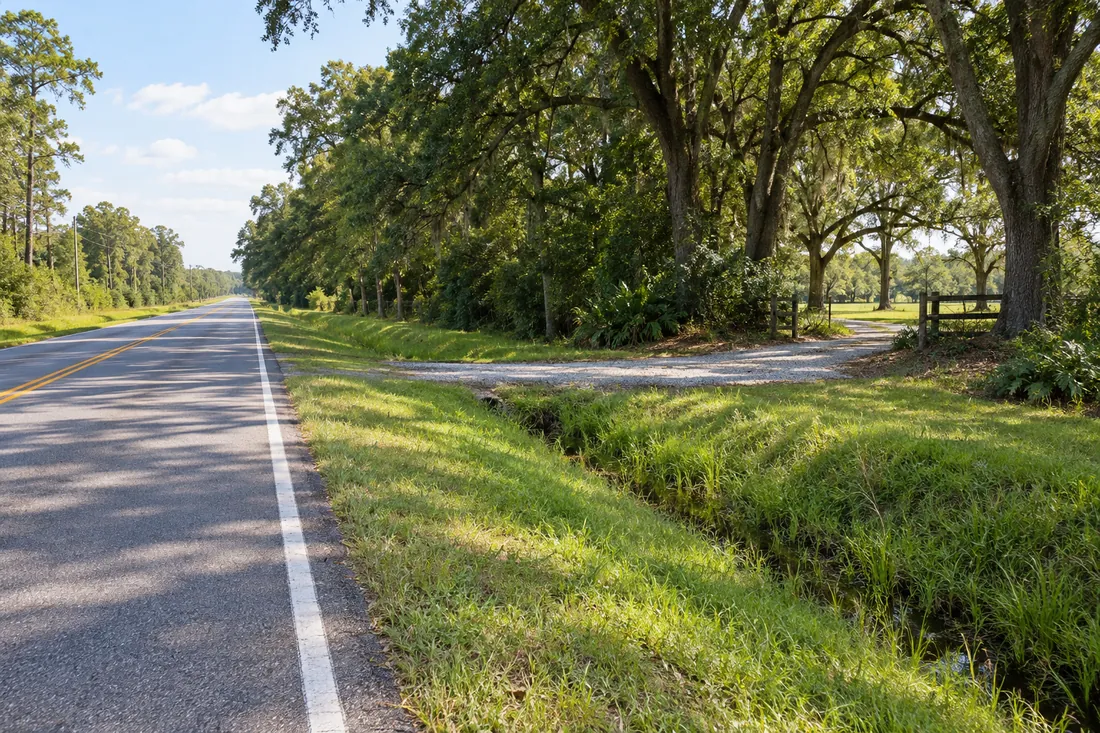
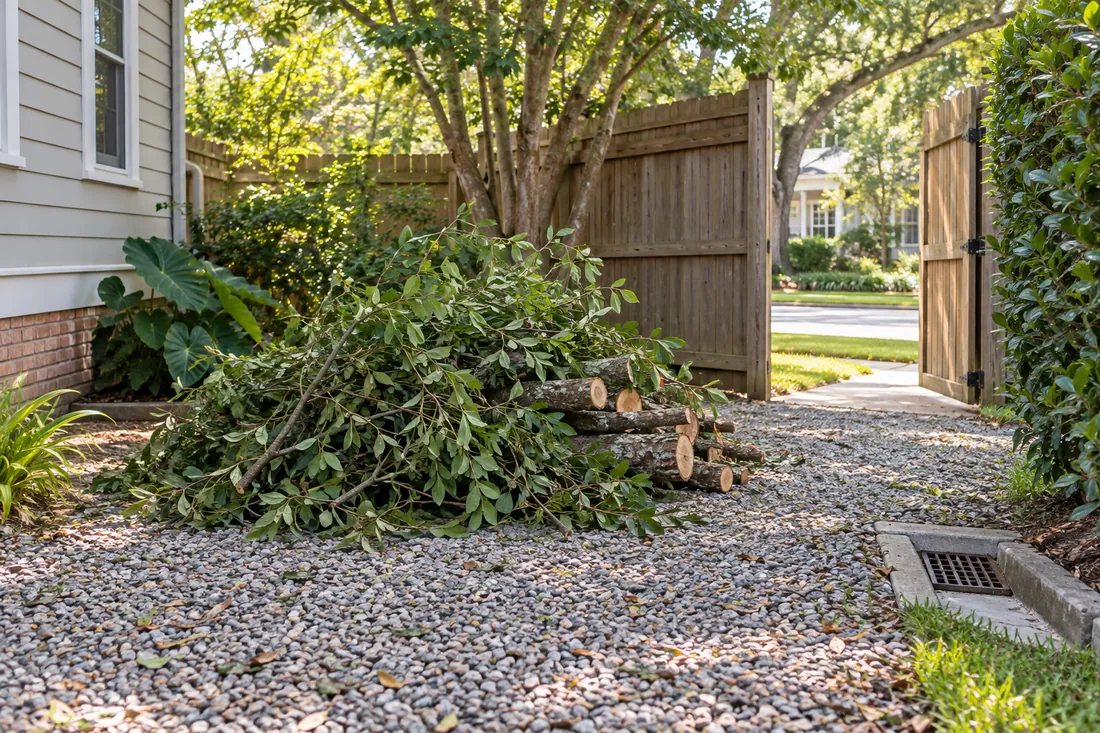
A municipal maintenance yard, drainage pump station, library, school campus, park, and roadway all have different audiences and operating constraints. A public works tree request should explain who uses the space, when the site is occupied, how emergency vehicles enter, and what service must continue while crews operate. The work might involve isolated deadwood removal at a facility one day and a corridor of hazardous roadside limbs the next. A single generic scope rarely captures those differences without a pre-work inspection and clear work orders.
For Tree Huggers, the useful starting conversation is the location, responsible authority, tree condition, required finish, and contact empowered to approve the method. An agency may have a standing maintenance contract, a separate on-call arrangement, or a project-specific procurement; the presence of a public building does not automatically make every tree a public responsibility. Confirm the owner and work authorization before site visits, clearing, or debris movement. Protect the public’s access while accurately describing what the tree-work trade can and cannot provide.
Create a repeatable inventory for multiple work orders
Public agencies may manage dozens of trees along parks, administrative sites, parking areas, and rights-of-way. When a report simply says “several dangerous branches,” the estimator lacks a defensible quantity and site reference. A useful inventory assigns a site address or asset identifier, tree location, visible concern, requested work, urgency, and photographs from safe vantage points. That does not replace an arborist’s diagnostic assessment; it creates consistent locations so field teams, supervisors, and inspectors discuss the same tree.
Separate observations from conclusions. Record “hanging broken limb over south entrance” rather than asserting “tree is guaranteed to fail.” Include occupancy, school pickup or rush-hour windows, nearby conductors, and loading access as practical constraints. The agency can then classify routine pruning, assessment, elevated removal, root or pavement conflicts, and emergency response as distinct types of service. This reduces disputes about whether a price covered inspection, actual cutting, debris removal, and the extra time needed to work around the public.

Design public access before work-zone setup
A tree crew working beside a sidewalk, transit stop, recreation field, or customer entrance must consider more than the fall radius. People often follow the path of least resistance around tape and cones. Public works planning should identify accessible alternate pedestrian routes, vehicle arrivals, equipment unloading areas, and the hours when a temporary closure is possible. If an entrance or route must remain open continuously, the contractor may need another lifting position, a smaller work segment, or a formally authorized shutdown window.
For roadside work, the responsible authority should approve a traffic-control plan consistent with its applicable standards. The Federal Highway Administration’s MUTCD, current 11th Edition with Revision 1, is a reference for temporary traffic control, not a substitute for local approval. Tree Huggers’ equipment and personnel should never be treated as a replacement for traffic-control design or regulatory authorization. Separate traffic-control responsibility clearly in the contract, especially when a prime contractor provides cones, flagging or lane management.
Make utility and building interfaces explicit
Facilities often have service conductors, generators, communication lines, rooftop equipment, underground irrigation, fire suppression connections, fences, and security gates. The biggest tree may be easy to approach, while a small limb beside an overhead line requires a specialized response. During estimating, note utility owners, possible isolation arrangements, restricted work zones and whether a tree is still attached to an energized conductor. Unqualified crews should not enter a line-clearance exposure simply because the project is urgent.
OSHA’s tree-care guidance describes several applicable hazards and task-dependent electrical rules. Building systems deserve similar care: moving a machine near a pump station or wastewater facility may interfere with a service that must remain available. Public facilities can require check-in, escort, safety induction, or security screening. State these requirements before mobilization instead of discovering them when a crew and rented equipment are already on the clock.

Keep landscaping and drainage in the work plan
Public grounds often contain planted trees with historical or community value alongside volunteer vegetation that causes maintenance problems. A right-sized plan preserves healthy specimens that are outside the approved scope, protects irrigation and landscape beds, and avoids unnecessary soil compaction. Reaching a difficult limb may be easier with a larger crane, but access across a root zone or stormwater basin can cause expensive damage. Ask the agency to identify protected trees and landscape features before access is agreed.
Debris and chips must not obstruct culverts, inlet grates, hydrants, drainage conveyances, or accessible paths. If the planned cut would release a large log into a sensitive area, consider mechanical lifting, rigging or a revised staging location. Clarify whether stump treatment, stump grinding, soil restoration, sod, grading and sweeping are part of the tree contract or assigned elsewhere. The tree-work contractor can reasonably handle defined vegetation tasks; civil restoration should not be assumed included unless expressly described and priced.
Write a scope a purchasing department can evaluate
Government buyers and prime contractors need comparable responses, not simply a verbal assertion that a crew can “do any tree work.” A bid package should identify locations, quantities or pricing units, allowable work times, inspection and change-order process, debris ownership, haul destination, invoicing documentation, safety and insurance conditions, and required licenses if applicable.
Separate base work from provisional quantities so an emergency task does not silently expand a fixed-price contract. If a purchaser provides a bid form, use its line items rather than inventing new units.
A submission should say what the contractor proposes to self-perform, what might be subcontracted, the equipment assumptions, and which services are outside scope. Do not claim Tree Huggers holds a particular procurement registration, past performance record, disaster contract, or professional credential without actual verified documentation. A company interested in public work can still provide a responsible capability description and request the buyer’s formal requirements. The government procurement information guide helps organize the documents an agency may request.
Handle urgent work without treating every request as an emergency
A newly cracked limb over an occupied entrance deserves different handling from an old low branch on an unused service road. Triage considers the condition, exposed targets, ability to restrict access, weather, and the possible consequence of delay. The project contact should identify who can approve an emergency expenditure, whether there is an on-call mechanism, and how the site will be secured while qualified responders are arranged. No routine estimate should encourage a staff member to cut a hazardous limb without appropriate training and controls.
Identify who controls each public-facing work zone
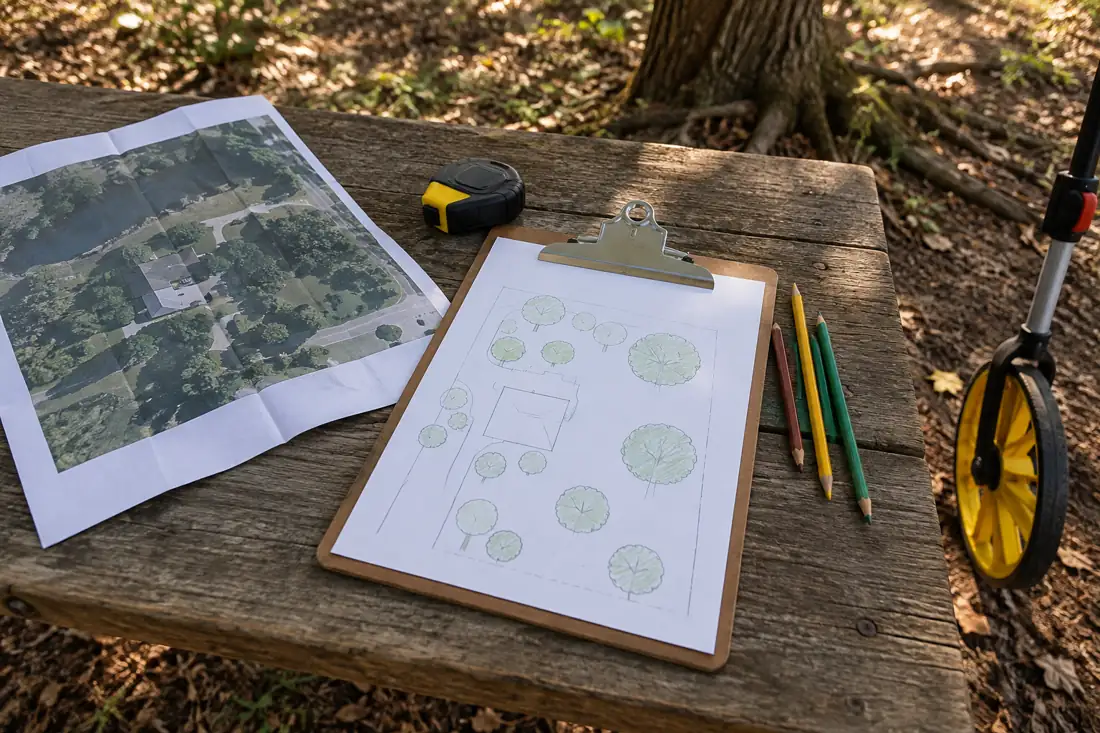
A public works scope becomes clearer when each work zone has a specific responsible contact. A walkway, parking row, gate and adjacent road may operate under different departments or schedules. Mark those interfaces on a simple plan and identify who can authorize temporary closures before assuming the tree contractor can control public access.
The agency should distinguish urgent defects, recurring clearance needs and planned maintenance; combine them only when the access and procurement requirements fit. For multi-site work, use facility names and consistent tree or zone numbers so an estimate, approved task and completion record refer to the same location.
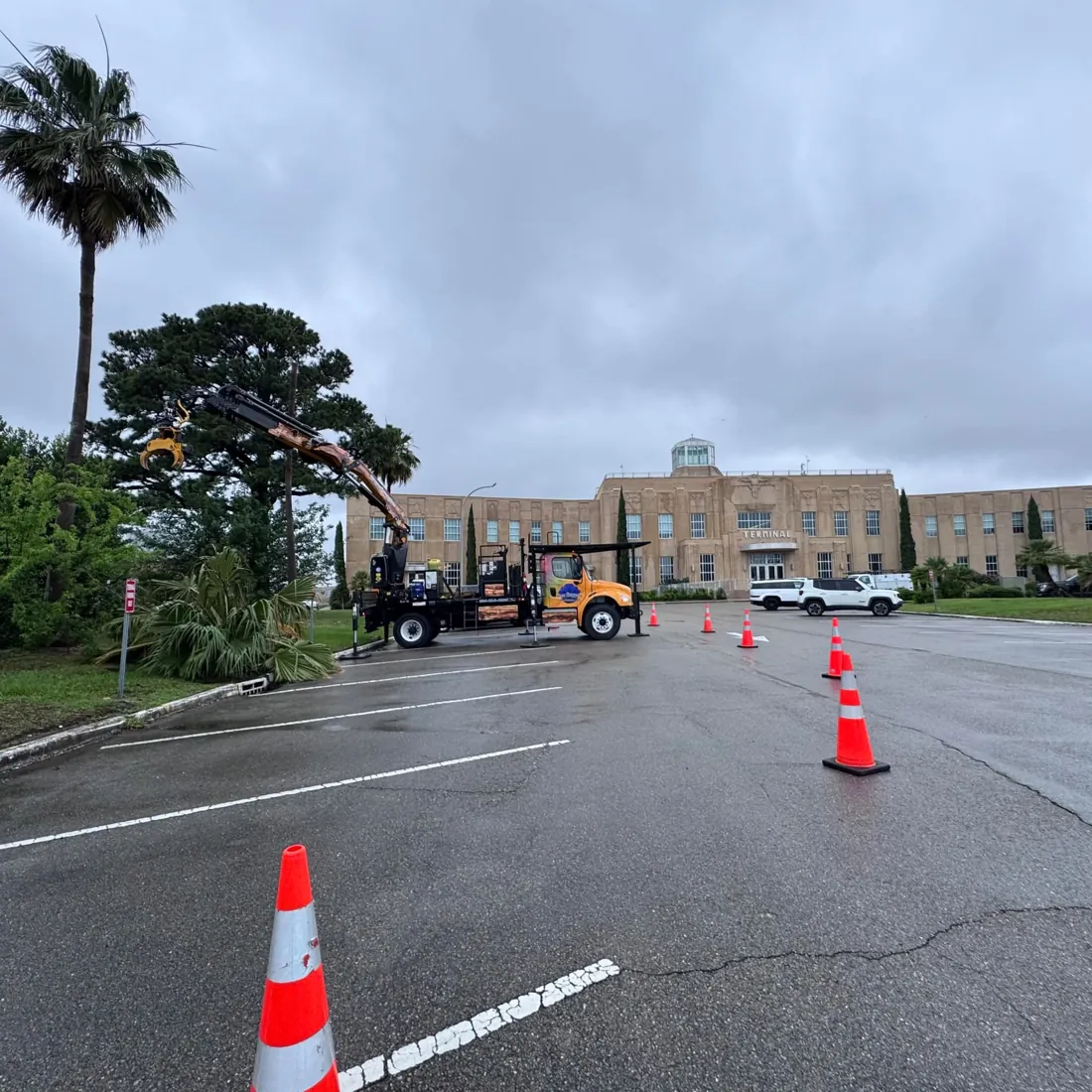
Useful closeout records identify the work performed, excluded work, site condition and remaining follow-up without claiming a condition that was never inspected. The image here is a synthetic example of a public-facing layout, not an actual agency site or completed public contract.

After a hurricane or squall, the most urgent tasks may be clearing an ambulance entrance, reopening a pump-station gate, or removing a tree blocking an operational lane. A larger debris removal campaign can follow later. Distinguish initial hazard isolation, essential access restoration, structural damage assessment by the relevant trade, and complete cosmetic cleanup. An emergency staging fee or premium is never implied by this educational page; actual rates and availability require a documented offer based on circumstances and contractual terms.
[/fusion_text][/fusion_builder_column_inner][/fusion_builder_row_inner]Track daily production without collecting unnecessary information
A simple daily record can show work-order number, site, trees or tasks addressed, crew window, photographs of the approved before/after location, quantities if required, equipment used, and outstanding restrictions. Supervisors should sign off the scope and record any change in authorization. For multiple properties, different work orders prevent a crew from attributing a large extra tree to the wrong facility. Do not include resident personal details in public records or analytics simply to prove a saw was used.
Where the contract calls for tickets or load records, use the specified tracking method and retain supporting documents. A public agency may need inspection acceptance before it can process a payment. The contractor should distinguish its own delivery records from regulatory or funding-program eligibility; an invoice alone is not a reimbursement determination.
If an agency uses a third-party debris monitor or designated acceptance site, coordinate how quantities are measured before the first truckload leaves. This is especially important when tree material is bundled into a larger storm recovery program.
Coordinate projects involving prime contractors and other trades
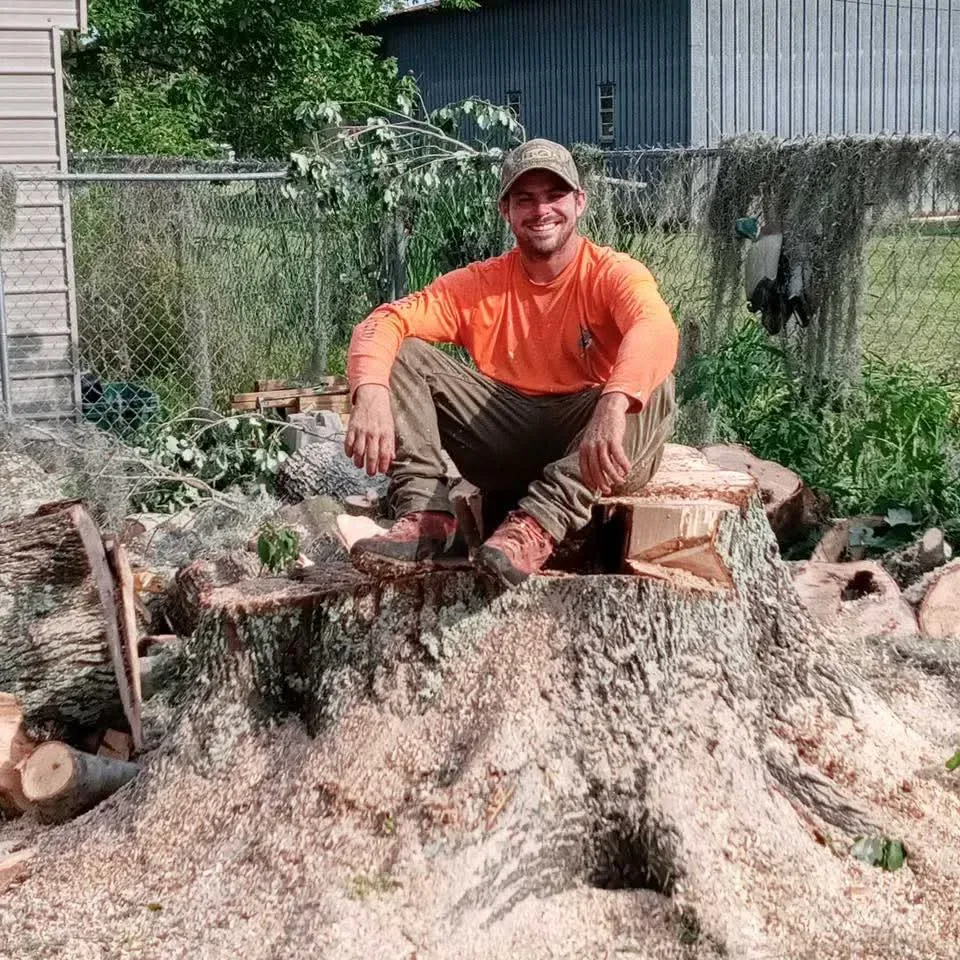
A prime contractor may control safety, traffic, procurement, and scheduling while Tree Huggers supplies defined tree removal, pruning, and debris tasks. On such projects, interfaces are where mistakes arise: the paving crew expects trees to be gone before a date, the utility owner has not authorized a clearance, and the landscaper assumes large logs will be removed. A written scope should identify these dependencies and the person authorized to change the sequence. That protects the client and avoids blaming a subcontractor for unavailable access.
Communicate lift locations, planned equipment footprint, laydown limits, haul restrictions, and which trade restores disturbed surfaces. State whether a professional arborist’s risk assessment or permit is being supplied separately. If trees sit close to a public roadway, identify who provides the approved work zone. A successful public project may involve multiple vendors; the goal is not to make one company claim every specialty, but to have every critical part of the operation assigned to a qualified party.
Send a public works request that can actually be priced
An agency contact can improve its response by providing the exact facility or roadway location, owner of the property, requested outcome, site photos, known hazards, work windows, and procurement method. Attach drawings, bid number, tree inventories, safety requirements, and document deadlines when applicable. Explain who will provide traffic controls, utility coordination, site escorts and hauling destinations. Avoid attaching private resident information or relying on unverified street-level photos from an inaccessible property.
Tree Huggers can review the stated tree-work package and explain what additional site information is needed for a meaningful estimate. Related pages cover right-of-way clearing, roadside limb removal, and debris handling. The most useful inquiry defines a real, authorized work area and an inspectable finish. Current vendor eligibility, licensing, capacity, insurance documentation and contract acceptance must be confirmed for the particular solicitation, rather than assumed from this page.
Questions about Public Works Tree Services
Does Tree Huggers hold a contract with my agency?
Contract status must be confirmed directly; this page is a description of relevant tree-work capabilities, not proof of a public award.
What work-order details are essential?
Identify the facility, tree or asset, requested task, hazards, access hours, authorized contact and completion standard.
Who approves public pedestrian closures?
The facility and responsible public authority establish permitted routes and restrictions. A tree contractor does not independently grant closure authority.
Can you work beside an occupied public building?
A site-specific plan may be possible, subject to safe separation, equipment access and the facility’s required approvals.
Is a tree inspection included with cutting?
State whether the work includes a visual scope review or a separate professional tree-risk assessment. They are not equivalent.
What information belongs in a bid package?
Locations, quantities, pricing units, hours, procurement rules, safety requirements, debris destination and documentation duties.
How are extra hazardous trees authorized?
The contract should identify the buyer’s approval process and written change-order method before field work expands.
Are traffic controls automatically included?
No. State who supplies qualified traffic control and the responsible road authority’s required plan.
What logs are useful to a public buyer?
Work order, location, scope, approved quantities if required, photo evidence, crew window, tickets and outstanding exclusions.
What about protected trees and landscaping?
Mark retained assets and state protection and restoration requirements before machines enter the site.
Can tree work be a subcontract under a prime?
Potentially, with the prime’s scope, site controls, subcontract approval and required credentials verified for that project.
How should public works staff request an estimate?
Provide an authorized contact, facility and tree list, photos, schedules, purchase method, and the specific finish expected.
Get a scope for your property
Public-works tree services should be scoped against a real asset or work order and an authorized procurement route. Identify the responsible department, mapped locations, maintenance or storm-response objectives, and any inspection notes that explain the concern. Distinguish roadside trees, park trees, facility entrances and drainage corridors because each may impose different access and protection requirements. Provide existing plans and site-specific constraints rather than asking a contractor to infer ownership or traffic authority from photographs. Any branches near electrical infrastructure require coordination with the relevant utility.
Request a proposed work package organized by tree or location, permitted operations, measurable completion criteria, safety controls and documentation for the public owner. Clarify who approves change orders, who coordinates traffic management, whether debris must go to an approved destination and what field evidence must be retained.
A contractor should not promise compliance with an unspecified specification or that any particular municipal contract has been awarded. The intended outcome is a reviewable scope with clear inspection handoff, not a generic claim that all public-property tree work is the same.
Tree-hazard decisions and public debris contracts are separate
A public-works tree assignment can begin with a standing tree affecting a road, facility or utility corridor, whereas a debris collection assignment can involve material already safely on the ground. Procurement and inspection documents should identify the difference. List who assesses living-tree hazards, who controls traffic and access, and whether the contractor is authorized to cut, load or only transport material.
For ordinary branch and log pickup, the tree-debris removal guide clarifies material and loading boundaries. For temporary sorting or reduction sites, the storm debris staging guide addresses space, processing and hauling coordination. Public ownership does not automatically make these activities part of the same contract.