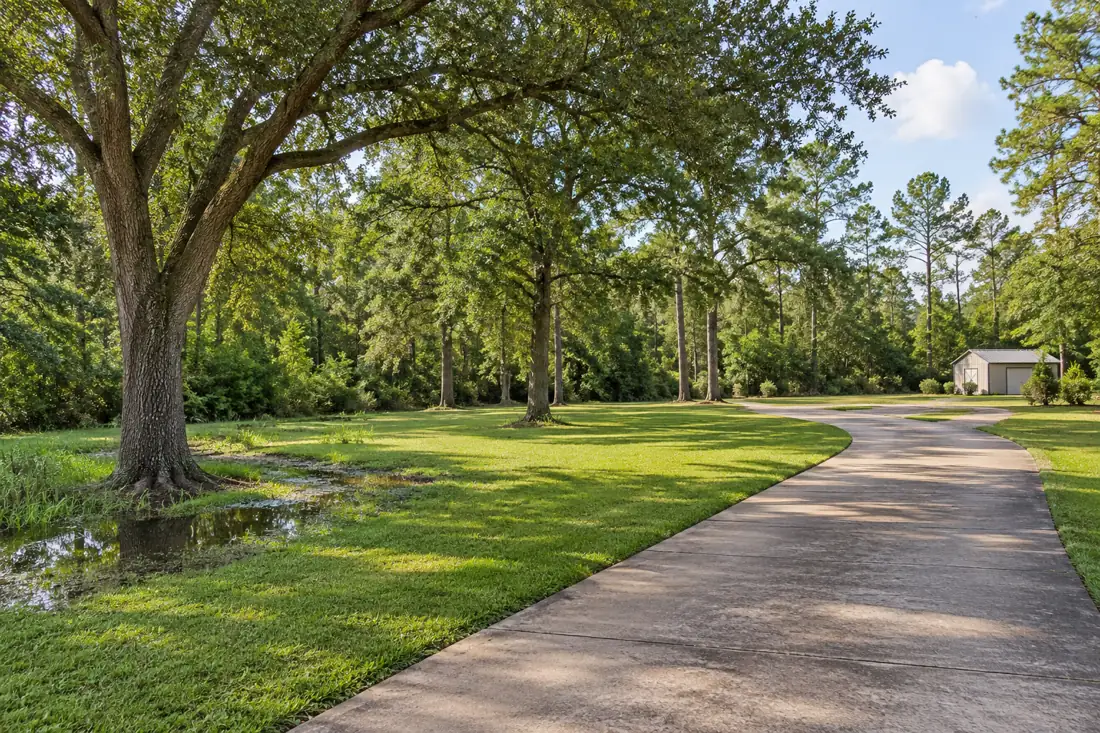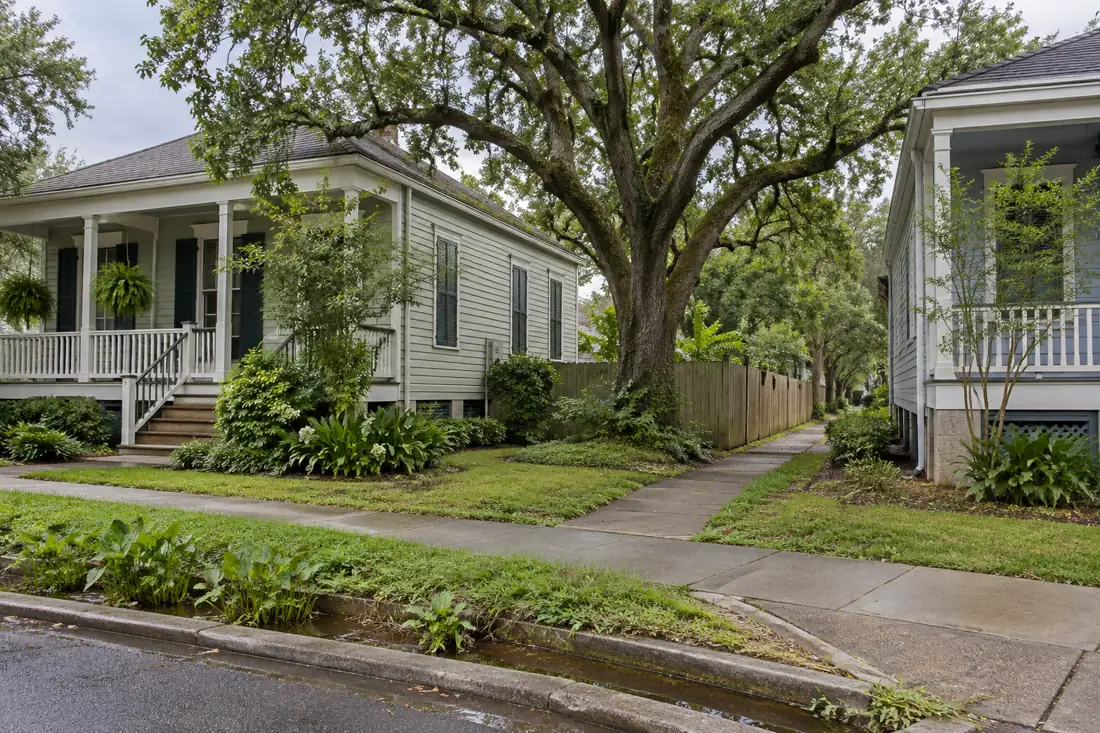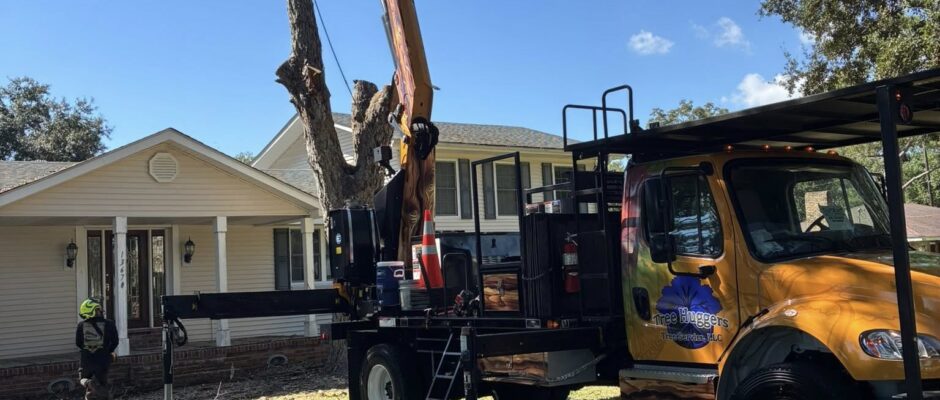
Tree work built for Jefferson Parish properties
Jefferson Parish has a mix of compact residential lots, older neighborhoods with mature live oaks and water oaks, commercial corridors, apartment communities, industrial property and hurricane-exposed streets. That combination makes tree work highly site-specific. A tree that looks straightforward from the street can require controlled rigging, crane support, specialized access or careful protection of roofs, fences, pools, driveways, utilities and neighboring property.
Site planning detail: Jefferson Parish properties range from narrow residential lots to commercial frontages with overhead lines, drainage features and public sidewalks. An accurate tree-service request should identify the specific address or neighborhood through the private inquiry process, then explain the tree condition and nearby targets without placing personal details into public analytics. Show the full tree and approach route from a safe vantage point when optional pictures are useful.
Before any work near a street, easement, ditch or public right-of-way, clarify who controls access and whether local approvals or utility coordination are needed; do not assume every situation requires the same permit. Confirm whether the request concerns pruning, removal, storm debris or a stump, and distinguish hauling from actual tree cutting. No one should enter a hazardous area simply to collect a better photo.
Tree Huggers evaluates the entire work zone before choosing the safest and most efficient approach. We consider tree size, species, lean, visible defects, access, surrounding targets, equipment placement, debris handling and the customer’s goals. The result is a plan designed for the actual property rather than a one-size-fits-all estimate.
Jefferson Parish tree services
Tree Removal
Removal of dead, declining, hazardous, storm-damaged or unwanted trees, including large trees near structures and tight-access removals.
Tree Trimming & Pruning
Selective pruning for clearance, structure, deadwood, roof separation and storm preparation without unnecessary topping.
Stump Grinding
Grinding remaining stumps below grade so the area can be cleaned, landscaped or prepared for future use.
Emergency & Storm Response
Response for fallen trees, hanging limbs, blocked access and hazardous storm damage when conditions allow safe mobilization.
Identify the Jefferson Parish access constraint before choosing a service
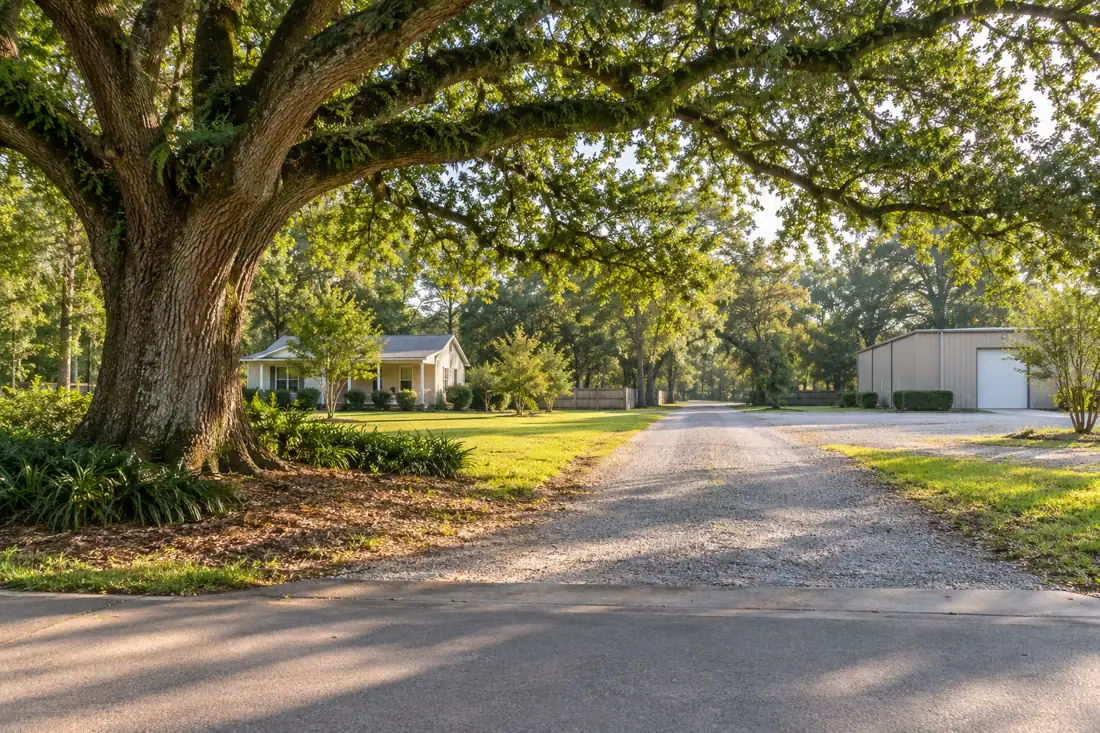
Jefferson Parish tree work is not one uniform access problem. A compact East Bank lot, an older Westbank neighborhood and a broad commercial frontage can require different parking, material handling and protection plans. Start with the street-side approach, gate width, drainage features and any overhead utility corridor. Record the tree location and the specific result requested so an estimator does not substitute a generic pruning or removal package.
Look beyond the driveway
Drainage swales, ditches and buried utilities can limit where cut material or machines may travel. Do not treat a clear-looking lawn as proof it can carry heavy equipment. Ask the property owner to share known underground work and any restrictions imposed by an association or neighboring owner. Public rights-of-way, protected trees and utility work may require separate checks with the appropriate authorities; no blanket permit exemption is implied.
Show the route from the street
For an accurate inquiry, send a view of the entire tree, its base, the route from the street and the closest structures. State whether the concern is deadwood, roof clearance, storm damage, stump removal or a longer-term health question. This lets the assessment focus on the correct service while keeping the final method and approvals dependent on the actual site.
Confirm whether the tree and work area are private or publicly controlled
A Jefferson Parish mailing address does not by itself establish who owns a tree, sidewalk strip, drainage servitude or utility corridor. Identify the parcel boundary and note any street-side roots, shared fences or overhead services before proposing removal or major pruning. The responsible entity may be the owner, a utility or a public authority, depending on the location and governing documents.
Photograph the actual tree from several safe angles and include the nearest access opening, nearby structures and debris exit route. Discuss permit or authorization questions before scheduling rather than assuming every residential tree follows the same rules.

Serving both sides of Jefferson Parish
Our service area includes Marrero, Harvey, Gretna, Westwego, Metairie, Kenner, Jefferson and surrounding Jefferson Parish communities. Being based in Marrero gives Tree Huggers fast access to the Westbank while still allowing efficient mobilization across the Crescent City Connection and Huey P. Long Bridge for Eastbank work.
We work with homeowners, landlords, HOAs, property managers, commercial facilities, contractors and public-sector buyers. Larger scopes can include multiple trees, site clearing, right-of-way work, vegetative debris, storm mobilization and equipment-heavy removals.
Why Jefferson Parish tree work often requires more planning
Mature trees can extend over roofs, service drops, neighboring yards and streets. Soft soils and drainage conditions can affect equipment placement. Hurricane damage may create hidden cracks, hanging limbs or root-zone movement that is not obvious from ground level. For those reasons, the estimate should account for access and risk as much as the diameter of the trunk.
When a crane, lift, remote-controlled equipment or advanced rigging improves control, Tree Huggers can plan the job around that equipment rather than forcing a removal method that increases exposure. The goal is controlled production, protection of surrounding property and a clean work area when the job is complete.
What to expect from an estimate
Photos are helpful for the first conversation, especially when they show the whole tree, the base, nearby structures and access points. For larger or higher-risk work, an on-site look may be necessary before a final scope is established. Estimates can address removal, trimming, stump grinding, debris handling and any access or equipment considerations that materially affect the job.
Why Jefferson Parish Tree Projects Are Not All Alike
Jefferson Parish includes dense neighborhoods, older residential streets, commercial corridors and properties with very different amounts of open space. A mature tree beside a Metairie home may require more access planning than a tree in a broad open yard elsewhere in the parish. The correct service cannot be inferred from the parish name alone. Its condition, neighboring structures, surface conditions and available work area determine what needs assessment.
Tree Huggers serves Jefferson Parish as part of the greater New Orleans region. That does not mean the company maintains a separate staffed office in every community. An inquiry should identify the actual address, tree, site conditions and intended result, allowing the company to discuss whether the work is within its service area and what planning may be required.
Eastbank and Westbank Access Considerations
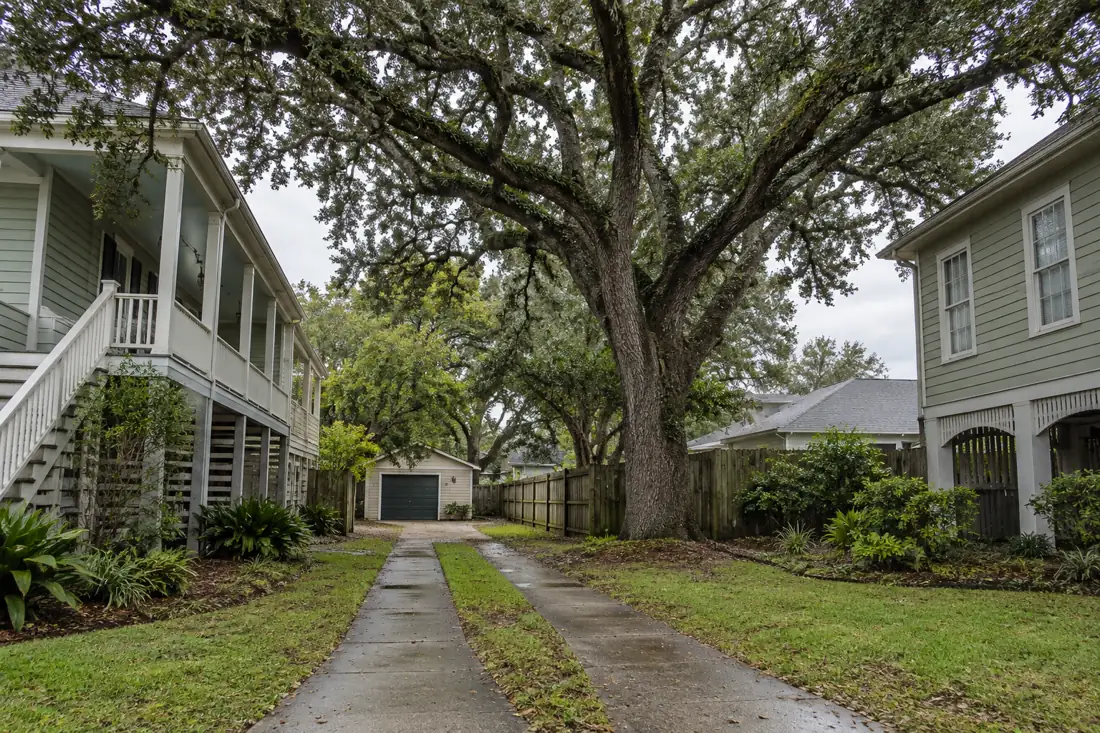
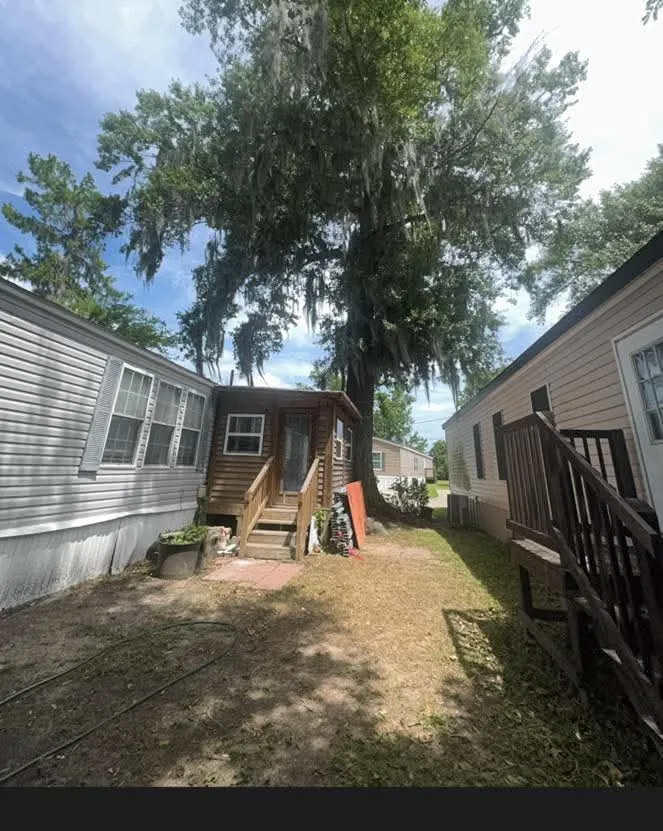
On either side of the Mississippi River, older properties may have constrained driveways, gates, overhead wires and trees that extend over neighboring parcels. An apparent straight path from the street to a backyard may include a tight turn, steps, soft soil or a narrow fence opening. This is especially relevant when the project involves a large trunk, heavy debris or equipment that needs a stable work position.
Before an estimate, walk only the safe accessible route and record the narrowest opening, overhead clearance, surface condition and nearby utilities. A property owner should not move a shared fence or assume access through neighboring land without permission. Distance across the parish is not the only logistical factor: the placement of the tree and ability to move material can significantly change the planned work.
Mature Trees and Nearby Structures
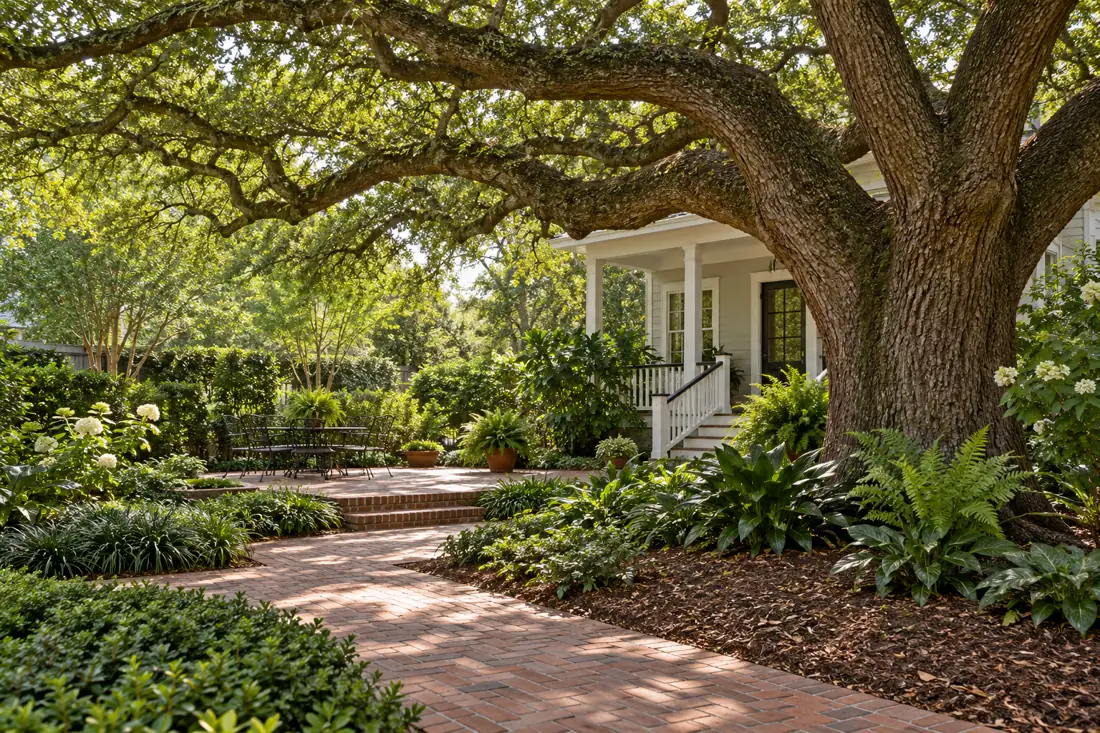
Mature oaks and other large trees can provide extensive shade and character while also placing branches close to roofs, garages, power service connections and sidewalks. A tree that has grown over decades may have a complicated canopy and root zone. The decision between preserving, pruning or removing it should be informed by the actual condition and the targets beneath it, not by height or age alone.
A visible lean, cavity or branch conflict is a reason to describe the concern accurately, not a definitive diagnosis. Ask for an assessment that considers structural connections, recent changes and potential alternatives. If a damaged tree is touching electrical equipment, stay clear and contact the responsible utility. A website location guide cannot determine safety or recommend a universal treatment for every tree in the parish.
Plan Jefferson Parish tree care at the actual property
Jefferson Parish includes dense residential blocks, business corridors, public-use properties and more open landscapes. A tree beside a narrow Kenner driveway can present different access questions from a large tree on a Marrero or Westwego lot. State the exact address and the tree’s position relative to the property, not simply the parish. Photographs from a safe standing point should include nearby structures, parked vehicles, fences and the route equipment would need to use.
Drainage and soils also influence when equipment can travel across a yard. Saturated turf, open roadside ditches, buried irrigation and utility connections can restrict setup even where the canopy is easily reached. Tell the contractor about soft ground, past flooding, recent excavation and any restrictions from a neighborhood or managed property. Do not assume tree services include municipal drainage work, permit approvals or repair of unrelated infrastructure.

Eastbank and Westbank access are not interchangeable
For removal or pruning near an occupied structure, describe the requested outcome and how people use the adjacent space. A branch crossing a roof, a dead crown over a school walkway or a stump beside a planned driveway each requires a different scope. Note what should be retained, where material can be staged and whether hauling or stump grinding is included. Avoid using a neighboring property’s gate or a public lane without the appropriate permission.
Compare written estimates by location-specific work, access, disposal and finish instead of relying on the tree’s apparent height alone. If work touches a public right-of-way or overhead utility, ask who will coordinate the responsible authority and any specialist operations. Keep dated condition photographs and the actual authorized scope together. No generic area-page image can establish the condition or final result at a particular customer’s property.
Storm Response and Drainage Challenges
Heavy rain and severe storms can produce saturated soils, hanging limbs, displaced trees and blocked access. Conditions may differ substantially between two nearby properties because of drainage, fill, construction history and root disturbance. A guide should not claim that wet soil always causes failure or that every storm-damaged tree needs removal. The visible condition and the surrounding risks must be assessed together.
After damage, keep people away from unstable trunks, suspended branches and compromised structures. Take photographs only from a safe location, and document the address, observed changes and blocked routes. If utility infrastructure is involved, contact the appropriate provider rather than a tree crew alone. An emergency request may begin a conversation, but it does not confirm dispatch, insurance coverage or a particular response time.
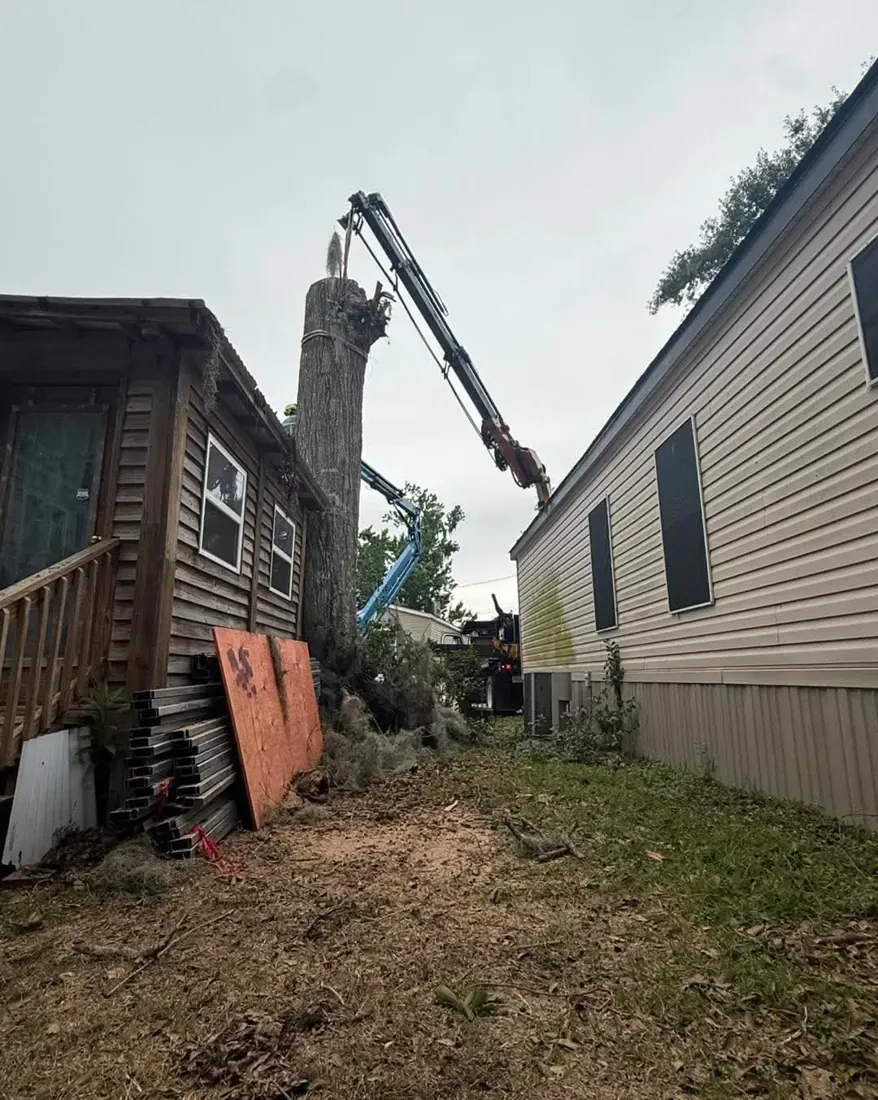
Tree Work Beside Sidewalks and Driveways
Roots, trunks and canopies can conflict with paving and pedestrian routes. A lifted sidewalk may reflect root growth, soil movement or other causes; cutting roots without understanding their support function can create additional problems. Similarly, heavy equipment over an old driveway may require surface protection or an alternate route. The tree and the paved area should be considered as part of one property-planning question.
For an inquiry, identify the visible conflict and how people use the area. Does the route need to remain open? Is the pavement on private property or part of a public right-of-way? Ask who must authorize changes and whether any permit or other coordination is required for that particular parcel. Do not assume that a tree service automatically includes concrete replacement or root excavation.
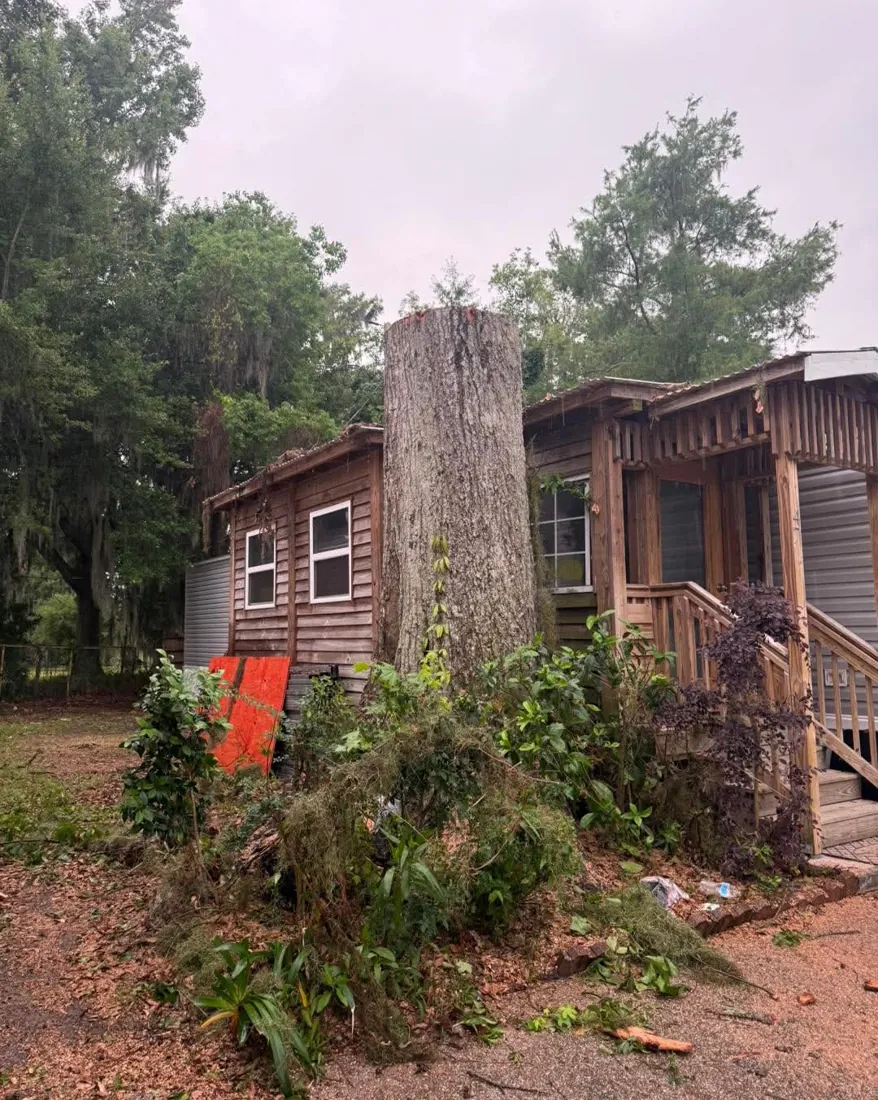
Commercial Sites Need a Work-Zone Plan
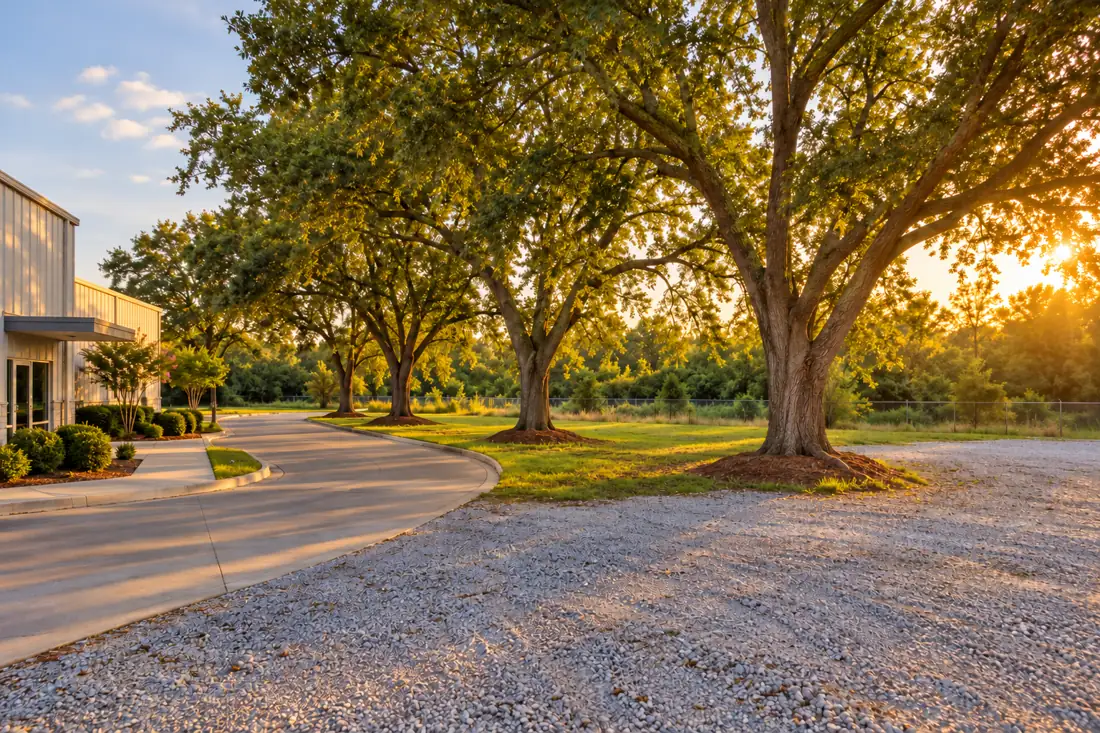
Retail properties, apartment complexes and offices often have vehicle circulation, loading areas, tenant access or public-facing entrances that cannot be closed casually. A tree near a parking lot may involve different planning from one in a private backyard. The work scope should consider active operating hours, pedestrian separation, the route for debris and who can approve temporary restrictions.
A property manager can help by providing a site plan, photographs of access points and a description of peak-use periods. Contract requirements, documentation and the party authorized to approve change orders should be clarified before scheduling. A photo of Tree Huggers equipment does not establish that the company completed a public contract or that a particular commercial work method will suit the site.
Choosing Between Pruning, Removal and Preservation
Different services address different objectives. Pruning can be considered for deadwood, selected clearance or structural management, while removal may be appropriate when a tree’s condition or site use makes retention unsuitable. Cabling or health treatments are separate interventions that require their own justification and do not guarantee recovery. A stump left after removal may also need a distinct grinding and finishing scope.
Homeowners should ask which recommendation fits the observed condition, whether alternatives exist and what limitations remain after the work. A healthy tree that conflicts with a fence may call for a different discussion from a declining tree near a house. This decision should not be reduced to a single online photograph, a generic price range or a service keyword repeated across location pages.
What a Useful Jefferson Parish Estimate Includes
A clear estimate identifies the exact tree or trees, the work objective, how the site will be reached, what needs protection and what material will be removed. It should also address whether stump grinding, hauling, surface restoration or additional permits are included. An estimate that simply says ‘remove tree’ may not provide enough information to compare two proposals or evaluate the finish.
To prepare, send safe wide photographs from the street and yard, the tree base where visible, nearby structures and the narrowest access point. Describe recent storm impacts, previous excavation, shared boundaries and any desired work window. The company can then discuss whether further assessment is needed. An inquiry alone does not reserve equipment, settle a price or authorize cutting.
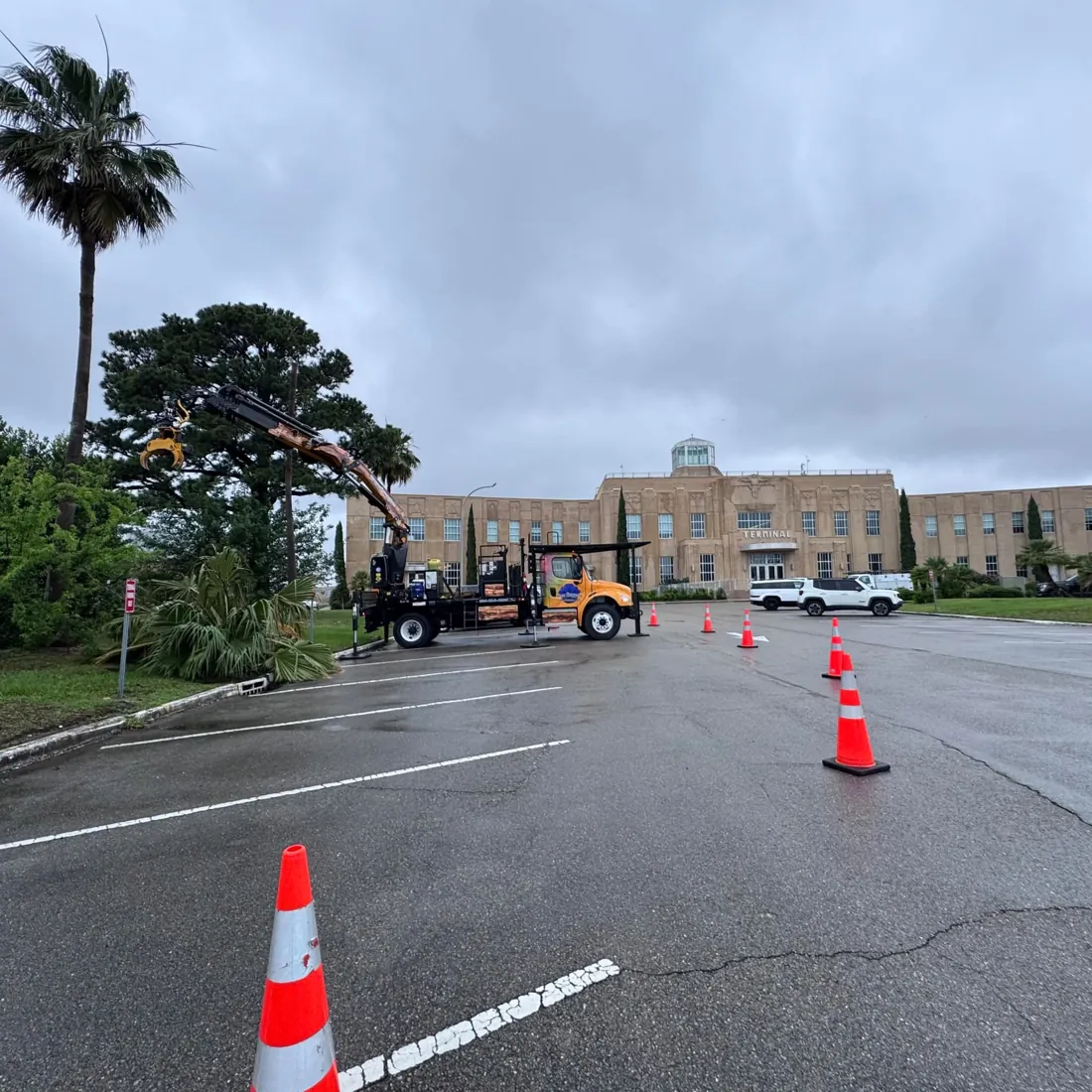
Parish Boundaries and Permissions Matter
The fact that a tree stands near a property line does not determine who has authority to remove it or enter the surrounding land. Shared access, neighboring canopies, public rights-of-way and utility easements can require additional discussion. A contractor’s service area is not a substitute for the legal permissions applicable to a specific property, and assumptions can cause problems after a crew arrives.
Where a neighbor’s fence, driveway or tree is involved, clarify ownership and get necessary approvals before authorizing changes. For parish-maintained areas or street trees, check the responsible authority rather than relying on generalized website advice. Tree Huggers can discuss tree-work logistics but should not be represented as providing legal or permitting determinations without reviewing the actual circumstances.
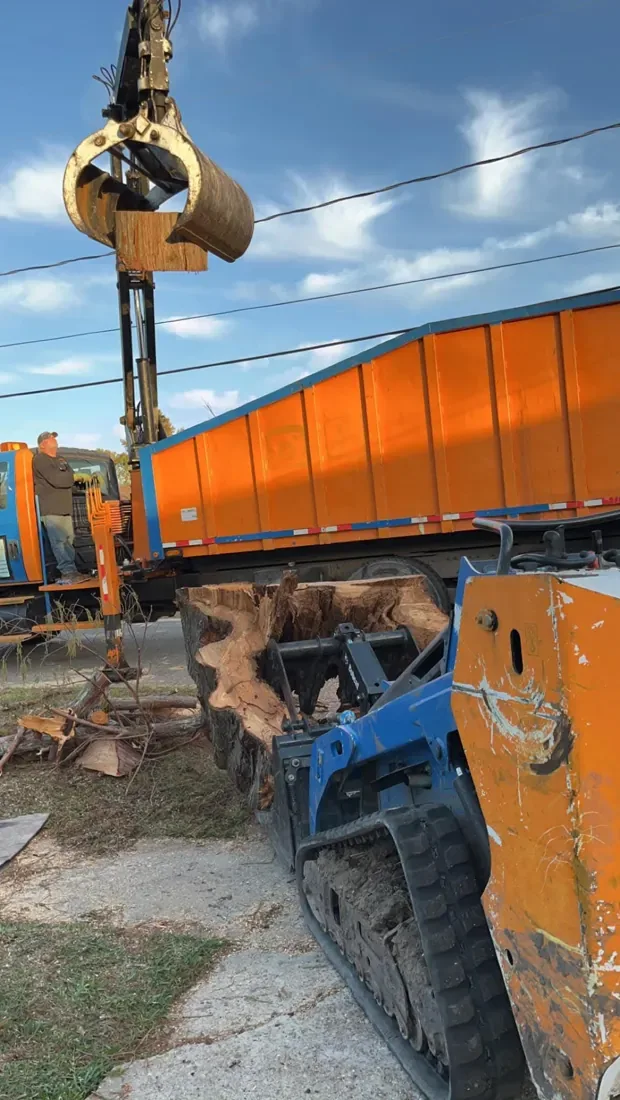
A Practical Path From Concern to Completion
Start by identifying the visible concern, affected tree, property address and the result you want. Safety conditions come first; ordinary maintenance planning can follow a different schedule than a hanging limb or blocked driveway. Include access and debris-handling expectations before comparing prices. A clear sequence of inquiry, assessment, written scope, authorization and final review is more reliable than trying to select an exact method online.
At completion, compare the visible result with the signed agreement: specified branches or trees, handling of logs and chips, stump treatment, openings made for access and any separate restoration commitments. Record outstanding items promptly and use the agreed contact channel. Local knowledge helps frame the conversation, but a truthful plan is still based on the actual Jefferson Parish property, not on a generic template.
Discuss the next step for your property
For Jefferson Parish properties, name the exact address or general service area, the tree’s position relative to fences or streets, and who controls any shared access. Describe known drainage, overhead utilities and occupied routes before discussing equipment. Parish-owned public rights-of-way and private lots may require different permissions; confirm responsibility rather than assuming authorization.
Use the parish guide to choose a local service route
Jefferson Parish spans communities with very different property patterns, from compact Eastbank lots to Westbank homes, commercial sites and public rights-of-way. This guide is the parish-level starting point for tree removal, pruning, stumps and storm work; the on-site plan still depends on the precise address, tree condition, approvals and access constraints. The company does not need a separate staffed location in every neighborhood to serve the area.
For a property specifically in the Jefferson community, the Jefferson neighborhood guide highlights tight-lot and neighbor-access questions. Other service-area pages address their own locations. Choose the local page that matches the work address, then provide safe tree and access photographs rather than assuming the parish-level overview confirms equipment, timing or final pricing for a particular property.
Frequently Asked Questions
Does Tree Huggers have an office in every Jefferson Parish community?
No. Serving Jefferson Parish does not establish separate staffed offices at every community. Contact the company about your actual property address.
Are tree projects the same across the Eastbank and Westbank?
No. Tree condition, access, surrounding structures, soil and property constraints can vary substantially.
Do mature trees always need removal near buildings?
No. A qualified assessment should consider condition, targets and realistic preservation or pruning options.
Should I approach a tree after a storm?
Stay clear of unstable trunks, hanging branches, damaged structures and possible electrical contact. Use safe observations and appropriate emergency resources.
Can roots affect pavement?
Roots can contribute to conflicts, but cutting them without assessing tree stability may create additional risk.
Will a tree-service quote include concrete replacement?
Not automatically. Pavement or landscape repairs must be clearly addressed in the written scope.
What matters for commercial tree work?
Work hours, tenant and pedestrian access, traffic, site permissions and approval authority should be identified.
Is stump grinding included after removal?
Only if the agreed scope says so. Grindings, root excavation and surface restoration are separate considerations.
How do I handle a tree near a shared boundary?
Clarify ownership and the relevant permissions before authorizing access or removal. A service-area page does not determine legal rights.
Do public right-of-way trees require different coordination?
They may. Check the appropriate authority and requirements for the specific property and location.
Which photos help with a Jefferson Parish estimate?
Share safe wide views of the tree, nearby targets, trunk base where visible and the full equipment-access route.
Does requesting an estimate confirm a work date?
No. The inquiry begins assessment and scope discussions. Availability, method and scheduling need separate confirmation.
Get a scope for your property
For a Jefferson Parish estimate, provide the exact Eastbank or Westbank address, safe tree-and-access images, desired result, drainage or gate constraints and any permission questions that affect the proposed work.