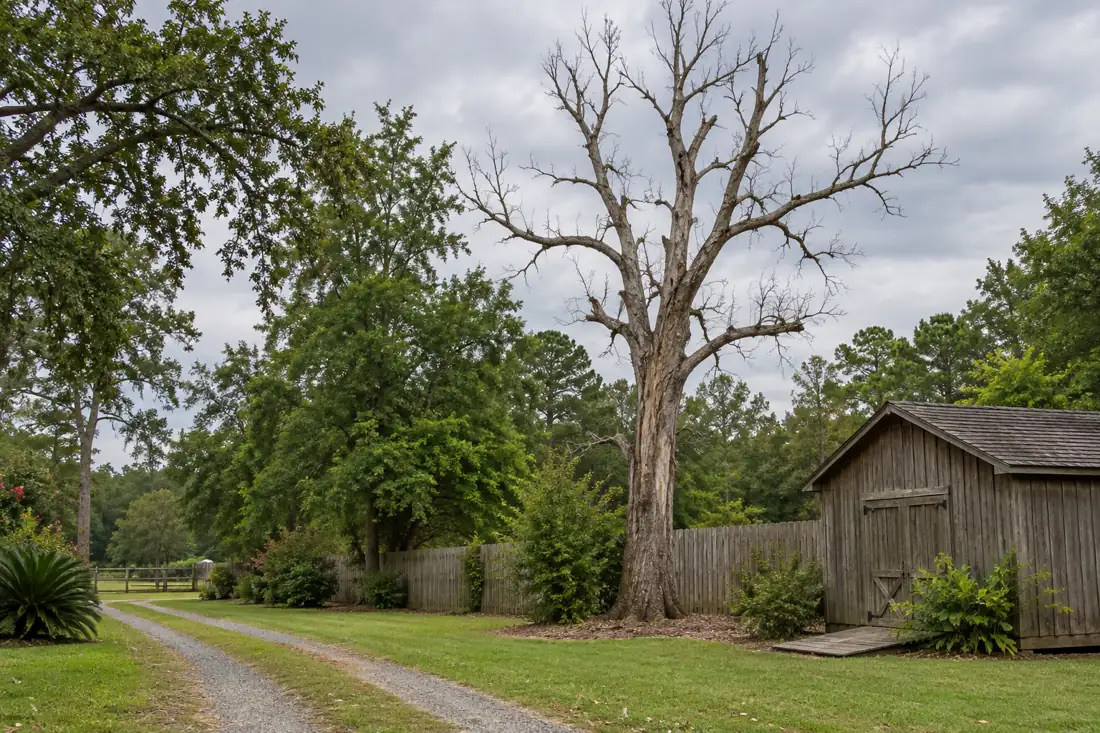
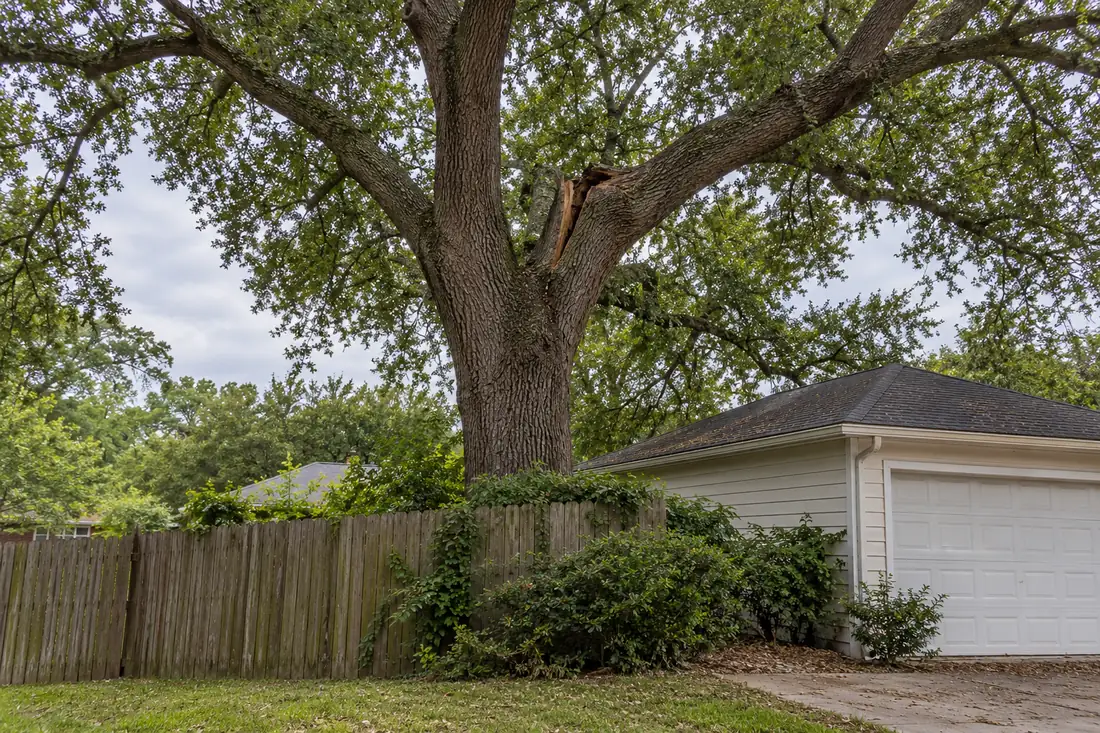
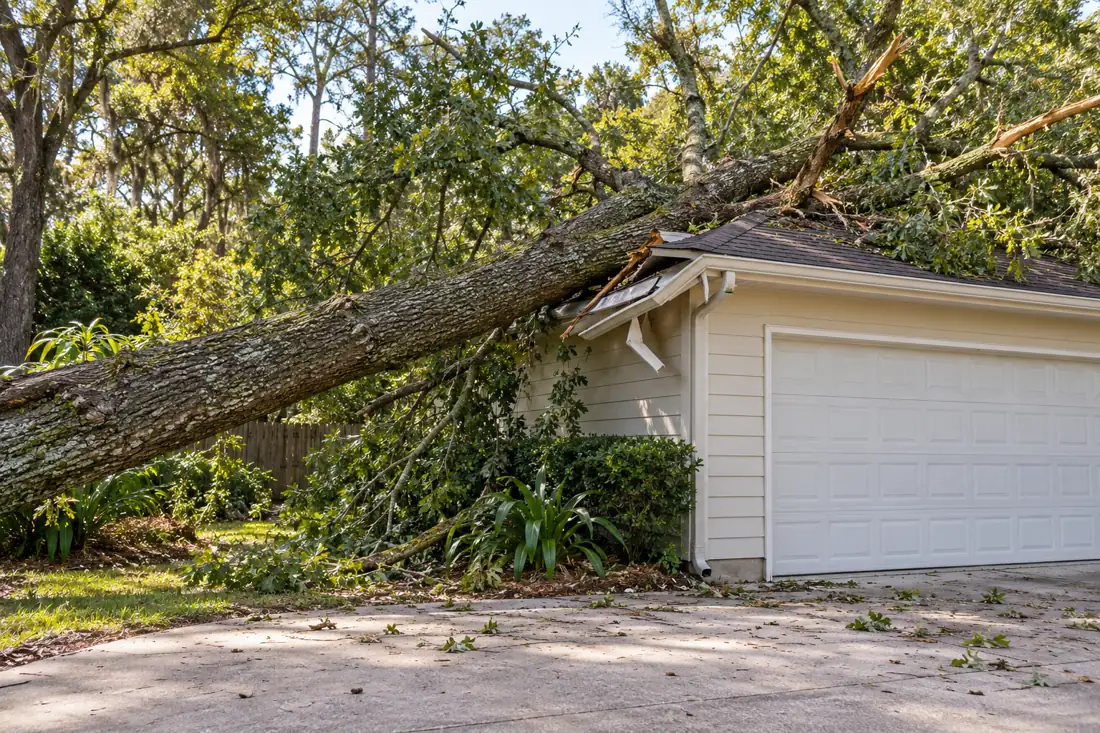
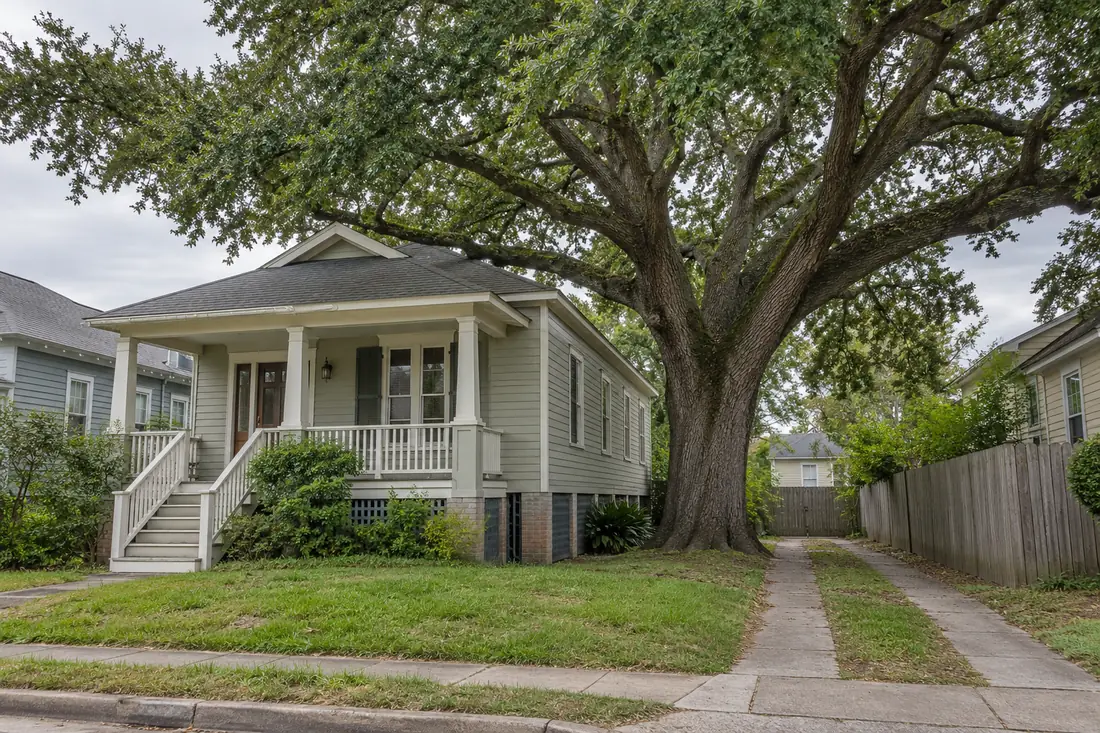
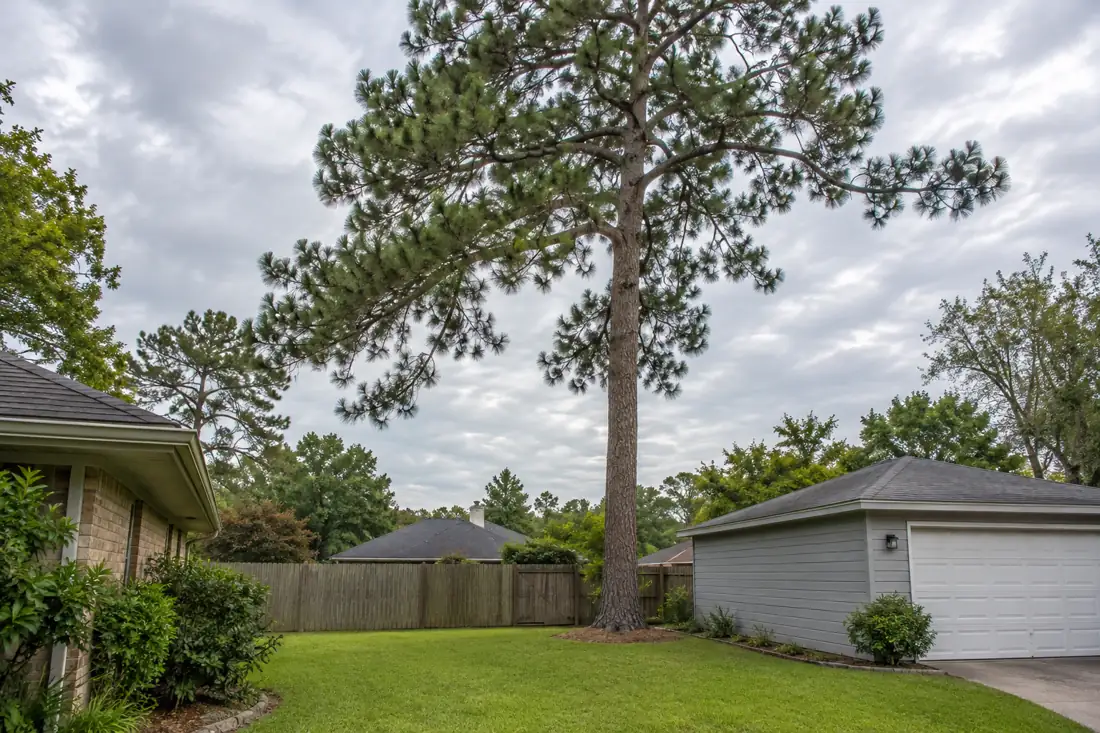
A backyard tree can be easy to see and difficult to reach. A quote needs to distinguish pedestrian access from an equipment route, identify whether another property would be crossed, and account for carrying material out. Photographs of only the canopy leave the largest access questions unanswered. Start with the narrowest gate, turns beside the house and the available landing area.
A no-driveway backyard needs a measurable access plan
Measure the narrowest gate, side-yard passage and turn, not just the front opening. Photograph overhead eaves, downspouts, gas meters, low cables, steps and changes in grade. A machine that fits through the gate may still be unable to turn safely or carry large sections out without hand work.
If a neighbor’s drive or yard is proposed as access, treat that as a separate permission and protection decision. The estimate should identify which surfaces need mats, whether fences come down, where limbs will be staged and where a vehicle can legally load. Do not assume a crew can simply carry large trunk sections through a narrow walkway.
The finish specification matters in a landlocked yard. Confirm whether hauling is included, whether branches are chipped on site or at the truck, and whether stump grinding is actually reachable. If soil is wet or drains are vulnerable, agree on a rescheduling trigger rather than forcing equipment through a yard that cannot bear the load.
Start at the street rather than the stump or trunk. Photograph the entire route to the tree, including the narrowest open gate, changes in direction, steps, soft ground and any overhead obstruction. Record whether logs and brush must travel by hand, cart or another approved method, and identify a lawful place for loading without blocking a neighbor's entrance. A gate width on paper may be misleading if hinges, posts or an immediate ninety-degree turn restrict the actual route.
If equipment or material must cross another parcel, obtain the owner's permission before scheduling; an apparent path or unused side yard is not authorization. Ask the estimator to distinguish what can stay assembled, what might require temporary access work and who restores any moved fencing or landscaping. Keep the written scope specific about hauling and debris limits, because carrying distance and staging control can matter more here than tree height.
Create a route sketch that starts at the street and ends at the trunk. Include clear widths at gates, tight corners, overhanging gutters, air-conditioning lines, slippery steps, landscape beds and places where material can be set down without creating a trip hazard. Note whether the ground is firm enough for carts or would require carrying brush in shorter pieces.
A narrow but straight opening can be easier than a wider gate followed by an immediate turn. Compare the route with the dimensions of the equipment proposed in the estimate rather than assuming a machine will fit because a person can walk through.
Ask the estimator where branches will be processed and how cut sections will leave the site. A backyard job may need controlled lowering, hand transfers and multiple cleanup passes; those decisions affect time and disturbance. Establish which fence panels, plants, pavers or irrigation components must be protected and who is authorized to move anything. Keep the agreed access route and restoration responsibilities in writing, especially if the easiest path crosses neighboring land.

Clarify property lines and borrowed access before pricing
A narrow rear lot may appear accessible from an alley, an adjacent vacant space, or a neighbor's driveway. Appearance is not permission. Determine who owns and controls any route outside the property, whether gates can be opened, and whether public right-of-way requirements apply. Do not tell the contractor to cross adjoining property based on a handshake with someone who cannot authorize it. Any formal access permission should be handled before equipment and scheduling are committed.
If the most practical debris route crosses a neighbor's yard, discuss the path, duration, surface protection, cleanup expectations, and responsibility for damage in writing. Separate that arrangement from the tree-service quote so the roles remain clear. When permission cannot be obtained, the contractor can evaluate an alternative route or a different scope. The estimate should not rely on unavailable property.
Confirm the rear-yard access route. Measure the narrowest gate and passage, mark where removed wood can be staged, and identify which surfaces need protection. If crews must use an alley or neighboring land, obtain the appropriate permission before scheduling. The plan should name the exit route and what happens if it proves unusable.
Map the actual path instead of assuming backyard equipment access
A rear-yard tree can sit only a few steps behind the house yet be far from any route suitable for equipment. Begin by sketching the path from the street to the tree: sidewalk, parking area, side yard, gate, turns, steps, changes in grade, and fixed obstructions. Measure clear widths at the narrowest points rather than quoting only the overall width of the yard. Include low eaves, overhanging plants, gas meters, condensers, and roof extensions that might restrict a machine even where the ground seems open.
A narrow side yard changes more than equipment selection
A rear tree can be easy to see from the street and still difficult to remove without a driveway. Identify the narrowest passage, turning areas, overhead obstacles and where cut material could be lowered. If the proposed route crosses a neighbor’s parcel, written permission must be obtained before treating that route as available. A fence that can be dismantled is not automatically approved for removal.
Describe where logs and brush would be staged and whether the equipment can leave without crossing soft landscaping or drainage features. Ask how the bid handles gate removal and restoration, ground protection and final debris removal. Those choices often explain differences between methods more clearly than the tree’s height alone.

Decide whether a no-driveway backyard requires a hand-carry plan
An estimator should follow the complete exit route with the owner rather than measuring the tree alone. A side passage can be wide at the gate but narrow sharply where an air conditioner, outdoor tap or stair landing projects into it. Record the usable width at each pinch point, overhead clearance beneath eaves, step changes and where workers can turn while carrying long material. Photograph the route in both directions, including the distance from the trunk to the location where trucks may lawfully load. The purpose is to let the crew compare compact equipment, smaller material sections and hand removal without assuming any one method will fit. If a neighbor's driveway appears to be the only practical route, treat that as a separate permission question, not a shortcut already authorized.
Ask the contractor to describe what will move along that path during each phase: workers and tools first, then brush, logs and stump material if grinding is included. A route that works for small brush may not accommodate heavy wood or a loaded cart. Identify where material can pause without blocking a resident's exit, and what surfaces need temporary protection.
If wet ground, pets or a shared passage would prevent safe movement, discuss a changed work window or a different removal plan rather than squeezing through anyway. The written estimate should distinguish tree dismantling, transportation through the yard, loading at the street and restoration of any agreed temporary protections.
A homeowner can compare competing proposals far more fairly when the difficult travel distance is explicit.
A pedestrian route is not automatically a vehicle or debris route. The contractor needs to know whether wood could be carried or moved using smaller equipment, whether a temporary gate opening is possible, and whether all material would have to exit through the house side. Photograph each transition from a safe position. These simple views can prevent an estimate that assumes access the property does not have.
Understand what limited access changes about the work method
A tree in an open field may allow large sections to be placed in a clear landing area. Behind a house, the usable space can be occupied by patios, sheds, roofs, neighbor fences, or gardens. Controlled sectional removal, smaller material sizes, specialized rigging, or other methods may need to be evaluated. A provider should choose the method after understanding the tree condition, targets, and available anchors or equipment positions, not simply from a photo showing the trunk diameter.
Limited access can affect labor, carrying distance, debris processing, and how long the area must be restricted. It does not automatically mean a crane is required, and a crane is not always feasible from the street. Ask for an explanation of the proposed work sequence and the site conditions on which it depends. If part of the tree could be retained, discuss that separately from an all-or-nothing removal decision.
Show underground and surface constraints in the side yard
Side-yard corridors often carry utilities and features that are easy to overlook: air-conditioning lines, irrigation pipes, drainage outlets, landscape lighting, septic components, and private electrical feeds. Identify what you know and disclose prior trenching or soft ground. A small visible gate does not tell the contractor whether the route can support weight. Saturated soil, recent fill, decorative stone, or thin paving can change the plan after a rainy week.
Ask what needs to be located or protected before work. Moving equipment over a concealed feature can create a problem unrelated to the tree itself. If a route is unsuitable, do not pressure the crew to use it merely because it is shorter. A credible plan can include smaller loads, hand movement of material, a different staging position, or postponement until conditions allow the work.
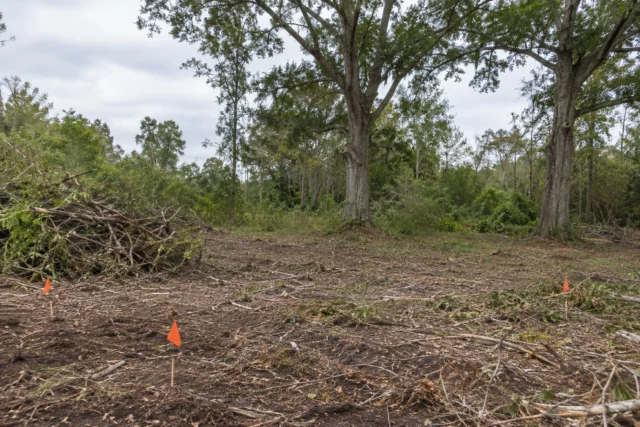
Keep occupants and neighbors clear of the work zone
The backyard may be the only route to a rear door, laundry area, pet enclosure, or storage building. Plan an alternative for people and animals during the work and communicate which gates and paths will be closed. Do not assume a narrow fence will contain falling branches or equipment activity. The contractor should establish and control the necessary exclusion area based on the actual method and property layout.
Notify affected neighbors about reasonable schedule and access implications without implying their property has been inspected or that the contractor has permission to enter. Move vehicles, outdoor furniture, potted plants, and movable equipment before the crew arrives if requested. If the route is shared with a delivery entrance, pause incompatible activity instead of trying to work around it.
Tree Removal Behind a House With No Driveway
On a property without a driveway to the backyard, the route is a project constraint in its own right. A photograph taken from the street might make the tree look straightforward while concealing steps, air-conditioning lines, low roof edges, sharp turns and garden beds along the only exit. Walk the potential route without moving obstacles. Note the narrowest clear opening, any change in ground height, and where heavy pieces could be staged without blocking a doorway.
Debris movement is sometimes the largest practical difference between a rear-yard job and an open-lot removal. Small pieces might need to travel individually along a long path; the available equipment could be limited by gate geometry and the ability of the soil or paving to support loads. Ask for the route to be reflected in the written scope rather than assuming a short distance on a property map translates into easy access.

A more useful photo sequence for a no-driveway property
Photographs should show the full corridor in both directions, not just a close-up of the trunk. Include a view from the gate toward the tree, another from the tree toward the exit, and an image of drainage grates, steps or surface transitions. If permission to use a neighbor's property might be helpful, say that permission has not been obtained unless there is written authorization from the person entitled to grant it.
Before scheduling, establish whether branches will be chipped, logs hauled, wood retained or stump work performed. These choices alter the number and size of trips through the corridor. Ask how people and pets will be separated from the access path during work, what movable items should be cleared, and what surface protection may be reasonable. A specific access and debris plan is more useful than a blanket promise of no disturbance.
Define whether wood will be cut, chipped, hauled, or retained
Rear access changes debris logistics. A large trunk can become many pieces that require repeated trips along a narrow path; branches may need processing before they leave the yard. Ask whether the quote includes hauling all wood, leaving firewood-sized pieces, stacking logs at an agreed location, chipping brush, and removing chips. Wood retained by the owner should have a suitable place that does not block gates, drains, or accessible paths.
Stump grinding is a separate question. A grinder may require a different access width and a different protection plan than the removal crew. If the machine cannot reach the stump, discuss practical alternatives instead of promising a depth or finish that has not been assessed. Ask what happens to grindings and whether soil, grading, or sod replacement is separately priced.
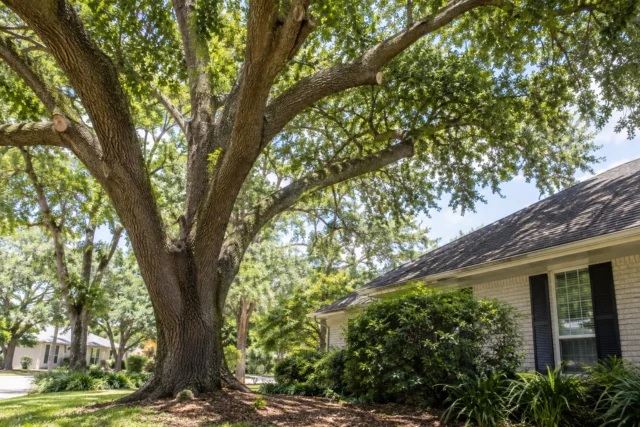
Prepare a realistic sequence for the day of work
Before the crew arrives, confirm the chosen entrance, the location of the tree, which belongings should be moved, and the intended debris-staging area. Ask about work-hour restrictions or shared access conflicts. Weather can affect ground bearing and tree handling, so a planned date is not a guarantee that the same method remains appropriate on arrival. The professional crew may revise the sequence if hidden conditions make the original route unsafe.
During work, household occupants should not enter the active area to inspect progress or take close-up photographs. Coordinate any needed decisions through the authorized contact. If the job exposes a previously hidden fence, wall, or utility condition, record what was found and approve any additional task explicitly before proceeding.
Review the finish at every part of the access path
A homeowner may focus on the missing tree and overlook what happened along the route used to remove it. At handover, compare the yard, gate, narrow corners, pavement, drainage inlets, and staging area with the accepted scope. Clarify whether displaced mulch, rutting, or landscape restoration is included, excluded, or subject to separate approval. Keep photos of actual conditions for follow-up where appropriate.
The removal should also leave a clear understanding of stump height, retained material, and anything temporarily disconnected or moved. A written completion note should describe the work actually performed. For a Tree Huggers estimate, send the full rear-yard view together with the route from the street, gate measurements, and nearby targets; the access story can matter as much as the tree itself.
Choose an estimate that accounts for the entire property
Ask prospective contractors to identify the proposed path, equipment assumptions, debris finish, access permissions, and major obstacles they considered. If one proposal assumes a crane and another assumes hand removal, compare what each method actually includes and what conditions could change it. Neither a machine name nor a generic price per tree explains the site-specific work. A clear written scope supports a realistic conversation about schedule, disturbance, and cost.
Tree Huggers can review photos before determining whether an on-site visit is necessary. Share the dimensions you have, but distinguish measurements taken by the property owner from professionally confirmed clearances. This keeps the first inquiry useful without pretending that a remote estimate has certified the ground, utilities, or neighboring access rights.
Questions about this project
What access information helps an estimator?
Send the narrowest opening, overhead obstacles, turns and the distance between the tree and the loading area. Include photos of the entire route and identify steps, soft ground or features that must remain protected.
Should I remove a fence before the visit?
First ask the contractor to assess access and agree on any temporary opening. Identify who owns the fence, who can authorize the change and who will reinstall it. Do not assume the opening is necessary or included.
Can the contractor use my neighbor's yard?
Only after the required permission and suitable access arrangements are in place. Identify the proposed route and who can authorize it. A quote accepted by one owner does not automatically grant access to someone else's land.
Does a tree estimate determine the property boundary?
No. Resolve an uncertain boundary or ownership question using appropriate property information and professionals. The tree contractor needs an authorized scope and access plan, but a visual work estimate is not a survey or legal determination.
Can the removal method be selected from a photo?
Photos help prepare the discussion but may not show defects, ground conditions or usable access. The contractor may need an on-site assessment before confirming the method, equipment and final scope for the property.
What if the tree changes before the appointment?
Tell the contractor about a new split, failed branch, changed lean or other visible change. Keep clear of the affected area. Changed conditions may require a different assessment, priority or work plan before the crew proceeds.
Does cleanup include every root and wood chip?
That depends on the written scope. Tree removal, stump grinding, chip hauling and root excavation are different tasks. Ask what material is removed, what remains and whether soil or landscape restoration is separately included.
What should a final walk-through check?
Compare the identified trees and tasks with the agreement. Check agreed debris handling, stump treatment, access openings and any listed restoration. Record unresolved items clearly instead of relying on a general impression that the property looks finished.
What should I compare besides the price?
Compare tree identification, work objectives, access assumptions, hauling, stump treatment, site finish and exclusions. Ask whether permits or other coordination are part of the scope and who can approve changes if conditions differ.
Does an online request book the crew?
No. A request starts the estimate conversation. The company still needs to discuss scope, availability and any site assessment. For a dangerous or urgent condition, call 504-458-8336 rather than relying on a form response.
What should I tell Tree Huggers about tree removal behind a house with no driveway?
Explain the property address, the work you want and the specific concerns: gate width, carrying distance, neighboring property permission. Send safe photos of the tree, surroundings and access route. The contractor can then discuss the assessment and scope needed for this situation.
How do I request an estimate for this work?
Call 504-458-8336, text photos or use the estimate form on this page. Include the address, desired outcome and any timing constraints. The company will need to review scope and availability; an online request does not confirm a price, appointment or emergency dispatch.
Get a scope for your property
For a rear-yard tree with no driveway, include clear gate width, turns, ground softness, the distance to the street, and whether any neighboring route is being considered. Describe the desired wood and stump finish separately so the estimate does not assume either one.