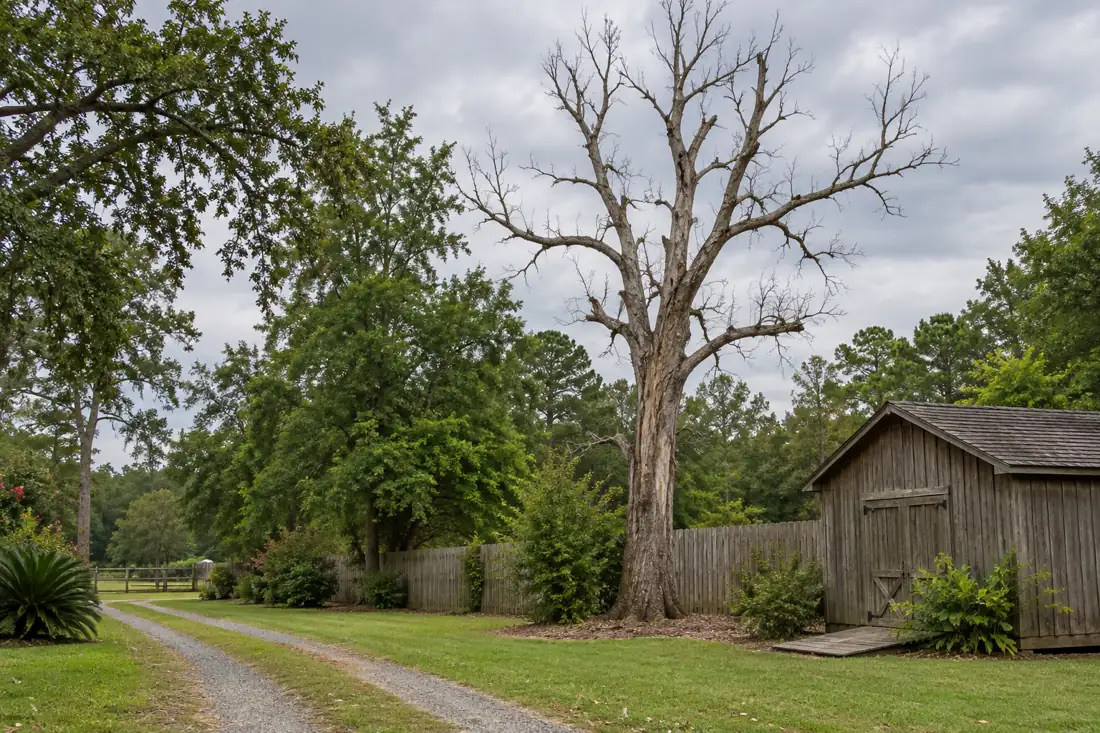
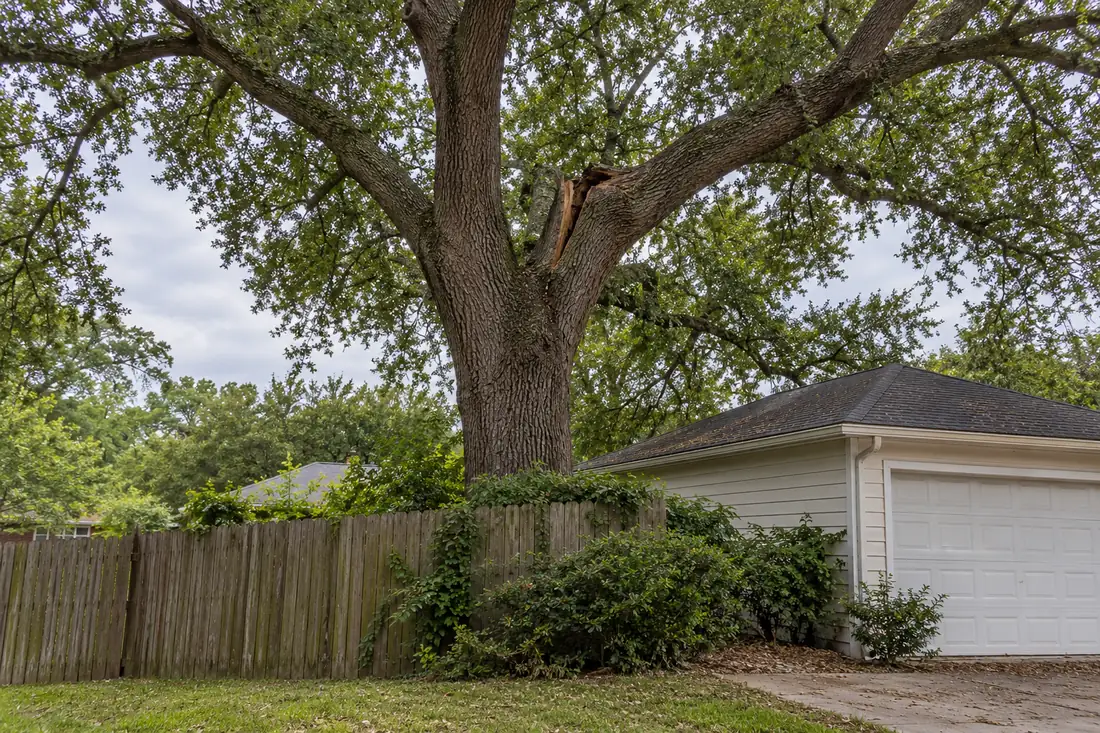
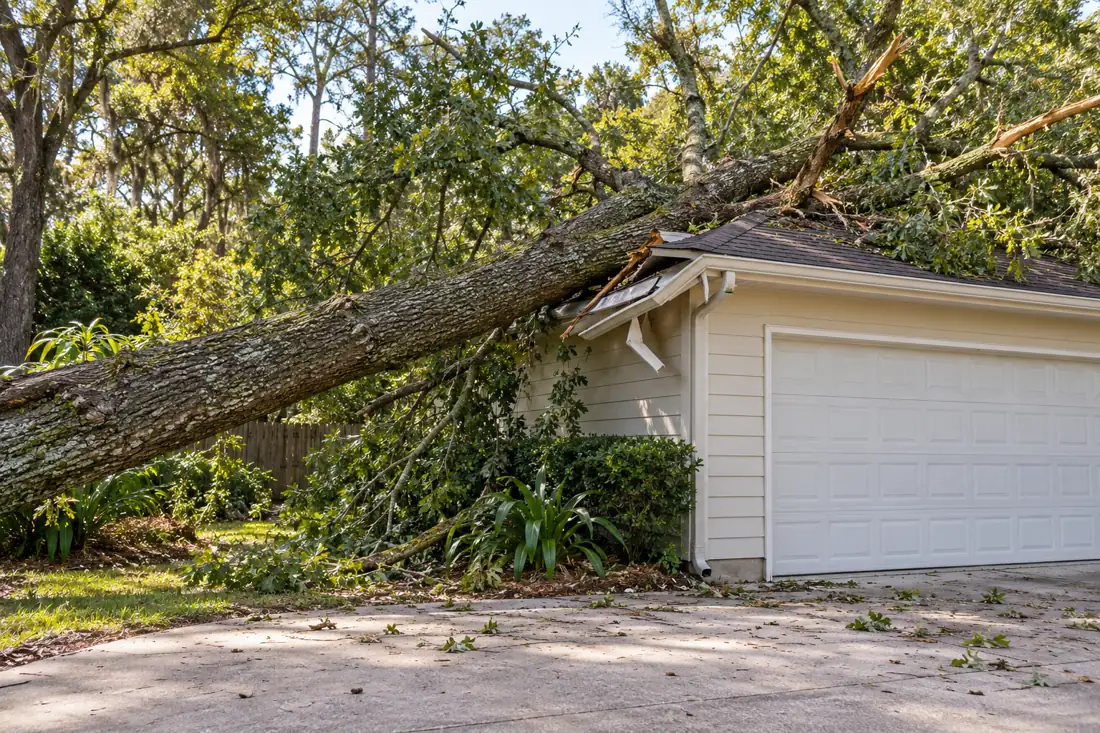
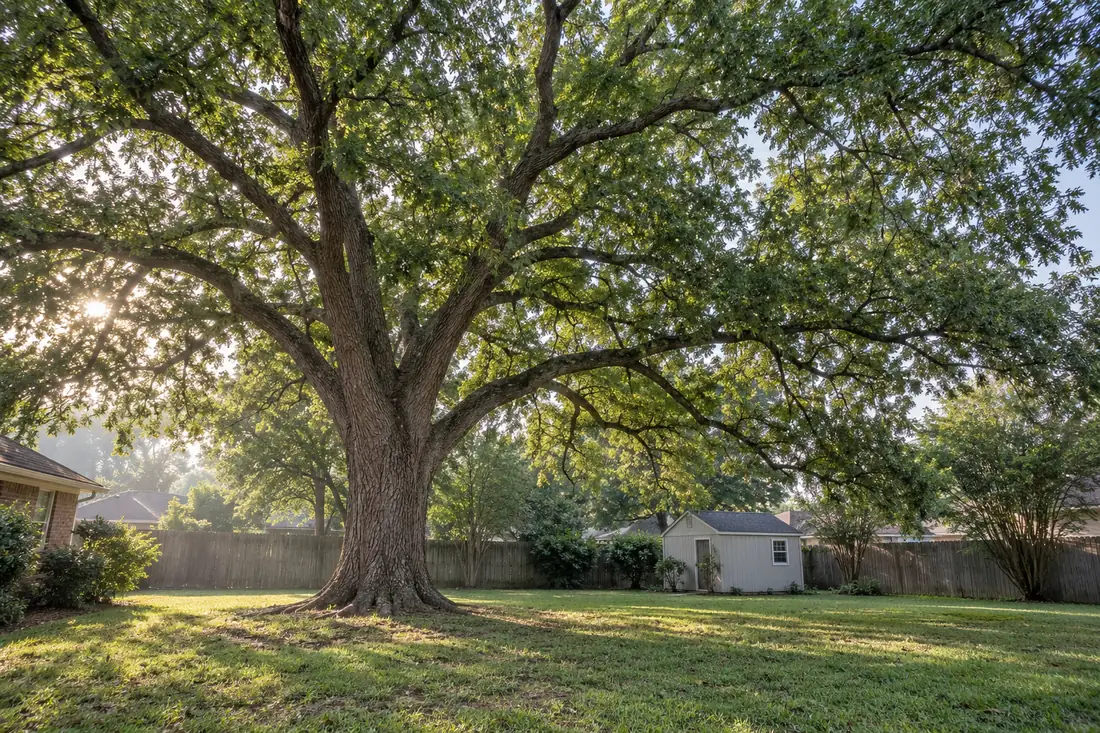
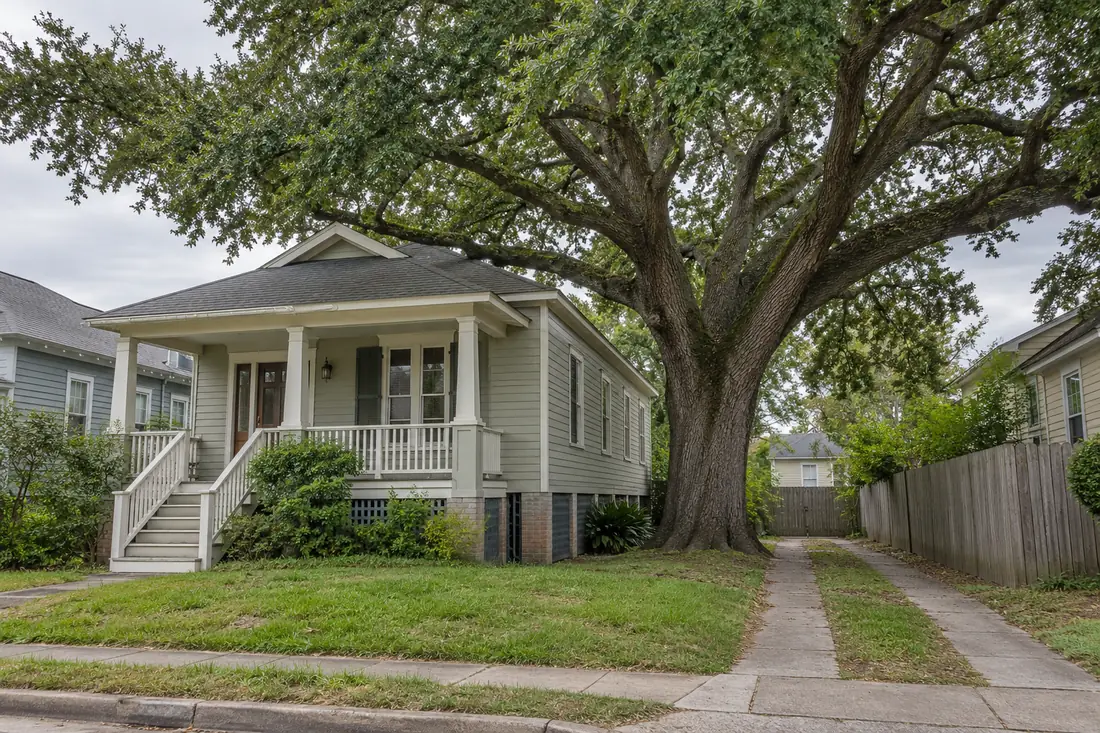
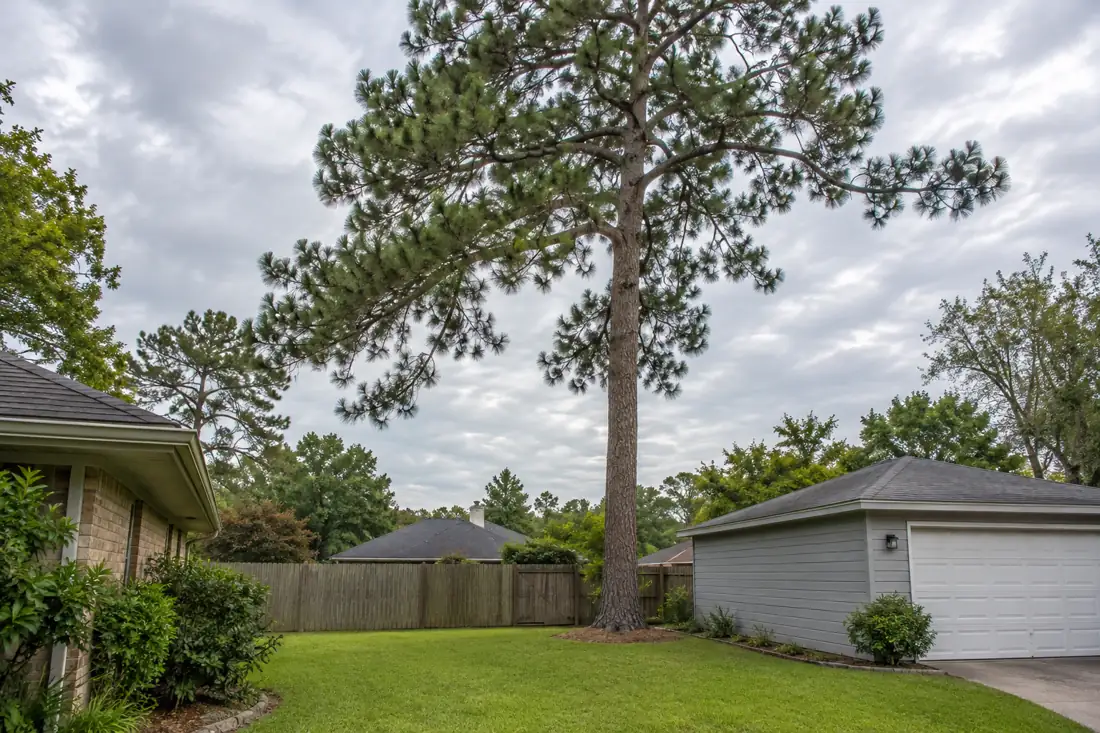
Avoiding lawn traffic may be possible on some properties but it changes the equipment and handling discussion. Show available paved setup areas, the distance to the tree and obstacles between them. Ask the contractor to assess the route and explain any limitations. Do not assume a promise about lawn protection means every surface is guaranteed untouched.
Document the entire no-lawn handling route
Keeping heavy vehicles off grass does not eliminate material handling. Draw the sequence from the tree to the chosen loading spot and label gates, turns, steps, slopes, overhead wires, fences and the clear width at the tightest point. Discuss whether wood can be carried, wheeled or moved using an approved lift from pavement; each option has different working-space and labor implications.
Before approving a method, ask who will protect the driveway, drainage inlets and pedestrian route, and where logs or chips may be temporarily set down. Keep any proposal for neighbor access contingent on the actual owner’s permission. At completion, compare visible turf condition, ruts, edging and hardscape with the agreed before photographs. No route sketch can guarantee zero surface disturbance, but it helps define the decision.
For this project, separate paved setup, reach and surface protection. These details help the contractor understand what must be protected, what information needs confirmation and what result you want from the work. A clear request is more useful than an assumed method or a price based only on tree size.
Measure the width, height and turns of every possible route from the tree to street access. A truck may remain on pavement while crews still carry wood across grass, so ask exactly which portions require ground travel, hand removal or smaller machinery. Show the estimator underground irrigation, drainage lids, pavers and soft soil. A ground-protection mat does not guarantee that wet lawn or a buried utility can carry heavy loads.
Consider whether sections can be cut and carried by a different path or lifted from a qualified hardstanding position; do not assume a driveway can bear outriggers without checking. Agree on where branches are processed and where chips and logs wait for collection. Document what disturbance is anticipated and what restoration is included. A written restriction on vehicle access is clearer than a casual request when a different crew arrives on the scheduled day.
Can a Tree Be Removed Without Driving on the Lawn?
Often, yes. A tree crew may be able to work from a driveway or street, using ropes, rigging, or a lift to control how sections come down. Whether that works depends on the tree’s condition and position, the available setup space, overhead and underground hazards, and the route for carrying debris out. In southeast Louisiana, saturated ground after rain can change access decisions quickly. A site visit should establish whether avoiding the lawn is realistic, not assume it is.
Tell the estimator which areas must remain untouched, including turf, garden beds, drainage features, and the route to the house or street. Explain why: a recently installed lawn, shallow irrigation, soft ground, or limited household access may call for different precautions. Take photos from several angles, but do not approach a damaged or leaning tree to get them. Ask the tree professional to identify a workable equipment position and explain what conditions could require a revised plan.

Map the Tree, Access, and Obstacles
Start by tracing possible routes from the tree to a driveway, side gate, or public street. Note gate width, low branches, fences, air-conditioning equipment, roof edges, parked vehicles, and places where a worker would need to carry brush or wood. A clear path for people is not necessarily wide or strong enough for a lift or loader. In older neighborhoods, narrow lots and closely spaced homes can leave little room to position equipment without crossing planting beds.
Also point out features that are easy to miss: a septic component, drain inlet, irrigation line, buried service, soft shoulder, or a spot that collects water. Do not guess about underground utilities based on visible fixtures; arrange the appropriate utility-locating process before digging or ground disturbance. Ask the estimator to walk the access route and mark likely equipment positions. A sketch showing the tree, street, driveway, obstacles, and protected areas can make the proposed method easier to evaluate.
Define what “no trucks on the lawn” really means
Separate the restriction on powered equipment from the broader goal of protecting turf. A crew might park a chipper or truck on pavement and still need foot access across the yard to carry brush, position ropes or collect wood. Ask for the quote to distinguish tire traffic, tracked equipment, foot traffic and material staging.
A categorical promise to leave every square foot untouched can be misleading where branches must be lowered or moved. Describe whether the priority is keeping heavy equipment off the lawn, avoiding all travel through a new landscape, or protecting underground irrigation.
Make a simple access sketch with the tree, usable driveway or street edge, gate widths, fences, drainage features and the distance from the trunk to the nearest firm setup point. Photograph the paved area and the entire overhead corridor, including eaves and any utility lines, from safe ground-level viewpoints.
A crane or lift is not automatically a better choice; its reach, setup footprint, load path, site grades and any required permissions must be evaluated by a qualified operator. Some removals can be segmented and hand-carried; others cannot safely avoid lawn access.

Record the alternative handling route, not just the turf restriction
Discuss low-impact techniques as options rather than instructions for an untrained property owner. Ask the contractor how cut material would be controlled, what surface protection it considers necessary, where the crew will stage and whether a separate route is needed for stump grinding. Heavy wet wood and repeated wheelbarrow passes can damage soft ground even without an engine. If the yard stays saturated after rain, identify drainage trouble spots and discuss whether postponing nonurgent work would reduce the chance of ruts.
Make the finished condition measurable: specify which beds, paving, edging, sprinkler heads and drains must be left intact, what debris should be removed and whether the estimate includes restoring minor surface disturbance. Photograph existing conditions before work. If adjacent owners share a driveway, obtain the necessary access agreement before scheduling. A clear written plan makes it easier to compare bids that promise lawn protection using different means, without treating a photo-only estimate as a final safe rigging design.
Consider a Driveway-Based Lift or Rigging Setup
A driveway can provide a firm approach and a place to stage a lift, chipper, or log-handling equipment, letting the crew avoid lawn traffic. But pavement is not automatically suitable: the machine’s weight, axle loads, turning space, slope, and distance from the tree all matter. A lift may also need room to deploy stabilizers, whose pads spread load but do not make every surface or edge safe. The crew should assess the actual machine and setup, rather than promise access from a driveway alone.
Ask what the lift can reach from the proposed position and whether its boom can work around the house, roof, or neighboring canopy without forcing a risky angle. Confirm where stabilizer pads will sit and whether the driveway, curb, or nearby ground has been checked for capacity and condition. If the tree is beyond reach, a climber using controlled rigging may be an alternative. The choice should follow a site-specific plan for lowering wood, protecting structures, and keeping people clear.

Evaluate Work From the Street
A street-side setup can sometimes give a lift a direct line to the tree while keeping heavy equipment off the lawn. It can also introduce restrictions that a driveway setup avoids: traffic, parked cars, sidewalks, overhead lines, and limited space for stabilizers or debris handling. A public street or shoulder may require permission or traffic controls from the relevant local authority. Conditions differ among municipalities and parishes, so do not treat a quiet street or wide curb as automatic approval.
Ask the contractor where the truck or lift would sit, how pedestrians and vehicles would be managed, and whether the work needs a lane closure, right-of-way approval, or other coordination. If any electrical line is near the tree, equipment, or rigging path, treat it as energized; keep people and tools away and have the utility and qualified line-clearance specialists determine appropriate arrangements. Never assume a line is harmless because it appears insulated or because the work looks reachable from the street.
Choose the handling route before promising to protect turf
A no-lawn-driving preference should be discussed as an access design question, not as proof that machinery can never touch grass. A tree far behind a home might allow material to be lowered in smaller sections and carried or conveyed along a firm route, but the actual choice depends on canopy geometry, available staging space and what the crew can handle safely.
Send photos of the paved parking area, side gate, turns, steps, utilities and any narrow bridge or deck between the street and tree. If the only route crosses soft soil, ask for an alternate plan instead of laying loose boards yourself.
Distinguish tire traffic from foot traffic, dragging wood, dropped chips and temporary placement of debris. These can affect lawns differently even when the truck stays on the street. Clarify how rainfall, saturated ground and irrigation lines change the plan, and what the written scope says about rut repair or replacing grass.
A contractor may propose protective mats or a different equipment setup, but those are site-specific techniques rather than a universal guarantee. Before approving work, decide which areas are no-go zones and which limited impacts you could accept if explicitly documented.
Account for Narrow Access and Carry Distance
If equipment cannot reach the tree, workers may need to carry brush and wood to a chipper or truck parked at the driveway or street. Measure gates and tight turns, and note steps, fences, and places where debris must pass over paving or planting. Long carry distances can change crew time, handling choices, and the amount of material that can be processed at once. They also create repeated foot traffic, which may affect turf even when no vehicle crosses it.
Ask how the crew plans to move brush, logs, and equipment through the narrowest point, and where those loads will be staged. Small pieces may be easier to carry but require more cutting and trips; larger pieces may need a suitable cart or mechanical aid that cannot fit every route. Agree on the path and protect vulnerable edges before work begins. If the route crosses a neighbor’s land, settle access and restoration expectations before scheduling rather than relying on a verbal assumption.

Protect Turf and Limit Soil Compaction
Avoiding tire tracks does not eliminate ground impact. Workers, log sections, stabilizer pads, repeated trips, and concentrated staging can compress soil, particularly when southeast Louisiana ground is wet or clay-rich. Compaction can reduce pore space, restrict water movement, and stress roots even if the lawn looks intact immediately after removal. A crew may use mats or designated walkways to distribute loads, but mats need a suitable bearing surface and correct placement; they are not a universal guarantee against damage.
Identify the most sensitive areas with the estimator and ask which will be crossed, loaded, or used for staging. Discuss weather limits, mat placement, debris drop zones, and whether work can pause after heavy rain. If turf or a planting bed is especially valuable, define a no-entry zone and a practical alternate route in writing.
Ask how any disturbed area will be left and who handles cleanup or repair. Do not infer that a bare spot or rut can be corrected without considering drainage and underlying soil.
Check Weight, Slope, and Ground Support
Machine access depends on more than width. A lift or loader may be too heavy for a soft shoulder, sloped driveway edge, drain crossing, buried structure, or recently filled ground. A machine may also need to level itself before raising a boom, and stabilizer loads can concentrate substantial force on a small area. Ground that feels firm underfoot may not support equipment safely, especially after rain or near a ditch. The contractor must decide whether the proposed setup is within the equipment’s operating limits.
Point out slopes, retaining walls, culverts, visible cracks, low spots, and locations where water stands. Ask the operator to explain how the chosen machine will be positioned and whether the ground, access surface, and reach have been assessed for that setup. If the equipment cannot be supported or leveled appropriately, changing the work method is safer than improvising on site. A different lift position, climbing and rigging, or more hand handling may be considered, but each option has its own reach and control limits.

Compare Mechanical Access With Hand Work
Mechanical methods can reduce carrying and speed removal when a lift or handling equipment can reach from a suitable surface. They may not fit through a narrow gate, reach over a structure, or operate safely beneath overhead hazards. Climbing and rigging can avoid bringing a large machine onto the property, but it still requires trained workers, controlled lowering, and room to handle each section. Hand-carrying brush and wood is sometimes necessary; it is not automatically cheaper or gentler because repeated trips can affect both time and ground.
Ask the estimator to compare feasible methods for this particular tree: what equipment each needs, what areas each would use, how pieces would be lowered, and where debris would be processed. If the tree is dead, split, or otherwise unstable, ask how that condition affects access and whether a qualified specialist should assess it before work is planned.
Property owners should not climb, cut, or rig hazardous trees themselves. A method should be selected by qualified professionals, with occupants and bystanders kept outside the work zone.
Arrange Neighbor Access and Site Coordination
A lift may reach the tree more cleanly from a neighbor’s driveway or yard, but convenience does not grant permission. Obtain the owner’s agreement before using private property, including permission for equipment, workers, mats, debris handling, and any temporary obstruction. Clarify which route is allowed, when access is available, and how the area will be inspected afterward. If several households share a drive or access lane, coordinate with everyone whose use could be blocked during setup or removal.
Ask the contractor whether neighboring access is essential or simply one option, and what changes if permission is unavailable. Put agreed boundaries and restoration expectations in writing, especially for gates, paving, lawns, and landscaping. Separately verify any public-street or sidewalk requirements with the relevant authority; a neighbor cannot authorize occupation of public space. Make sure occupants know when vehicles should be moved and which doors, paths, or parking areas will be restricted. Keep children and pets away from the work area throughout the operation.

Compare Scope, Tradeoffs, and the Final Plan
A proposal should make the access method understandable, not just name the tree and removal task. Compare what each scope includes: equipment setup, rigging, brush processing, log removal, stump work if requested, cleanup, and any limits on lawn or neighbor access. Greater carrying distance or hand handling may add labor, while a lift or street setup may require coordination or surface protection. There is no reliable universal price comparison; tree size, condition, access, disposal, and site constraints all affect the work involved.
Before approving work, ask what assumptions the scope makes about weather, ground firmness, equipment reach, utility coordination, and permission for access. Confirm who can authorize a change if those assumptions fail, and what alternatives would be discussed before proceeding. Request that protected areas, staging locations, traffic arrangements, and cleanup expectations be clear.
If a contractor cannot explain how sections will be controlled or how occupants will be protected, pause and seek clarification. Choose the plan that addresses actual site risks and acceptable impacts, not simply the one that promises no visible disturbance.
Questions about this project
Can tree equipment use any driveway?
No general assumption should be made. Pavement condition, edges, support, buried infrastructure and the proposed equipment all matter. Ask the contractor to assess the intended setup and route for the particular property.
Do mats guarantee there will be no ground damage?
Ground protection is one part of a site-specific plan. It does not remove every load, soil or access limitation. Discuss the proposed measures and any restoration responsibilities in the written scope.
Does a machine's maximum reach prove it can do my job?
No. Loaded reach, configuration, section handling, obstacles and setup conditions all affect suitability. A contractor needs to evaluate the particular tree and property before confirming an equipment plan.
Can specialized equipment replace a site assessment?
It does not remove the need to assess tree condition, targets, access and support conditions. Ask how the contractor will confirm that the proposed machine and method fit the actual scope.
What access information helps an estimator?
Send the narrowest opening, overhead obstacles, turns and the distance between the tree and the loading area. Include photos of the entire route and identify steps, soft ground or features that must remain protected.
Should I remove a fence before the visit?
First ask the contractor to assess access and agree on any temporary opening. Identify who owns the fence, who can authorize the change and who will reinstall it. Do not assume the opening is necessary or included.
Which property features should I point out?
Identify buildings, vehicles, fences, fixed fixtures, landscape features, utilities and occupied routes. Explain what can move and what must remain. Include existing damage and any buried features you know about along the access route.
Should people remain inside the work area?
The contractor and site contact should establish an exclusion area and access arrangements appropriate to the work. Keep children, pets, visitors and other workers outside the active zone until the responsible parties say it can reopen.
What should I compare besides the price?
Compare tree identification, work objectives, access assumptions, hauling, stump treatment, site finish and exclusions. Ask whether permits or other coordination are part of the scope and who can approve changes if conditions differ.
Does an online request book the crew?
No. A request starts the estimate conversation. The company still needs to discuss scope, availability and any site assessment. For a dangerous or urgent condition, call 504-458-8336 rather than relying on a form response.
What should I tell Tree Huggers about can a tree be removed without driving on the lawn?
Explain the property address, the work you want and the specific concerns: paved setup, reach, surface protection. Send safe photos of the tree, surroundings and access route. The contractor can then discuss the assessment and scope needed for this situation.
How do I request an estimate for this work?
Call 504-458-8336, text photos or use the estimate form on this page. Include the address, desired outcome and any timing constraints. The company will need to review scope and availability; an online request does not confirm a price, appointment or emergency dispatch.
Get a scope for your property
If you want to keep heavy equipment off the lawn, photograph the tree and the paved approach from safe positions, including the narrowest gate or turn and any overhead wires. Explain which surfaces cannot be used and whether trucks can legally stage in an approved location. A contractor can then discuss reach, controlled lowering, hand carrying and protection options; no particular method is guaranteed until the tree, ground conditions and surrounding targets are assessed.