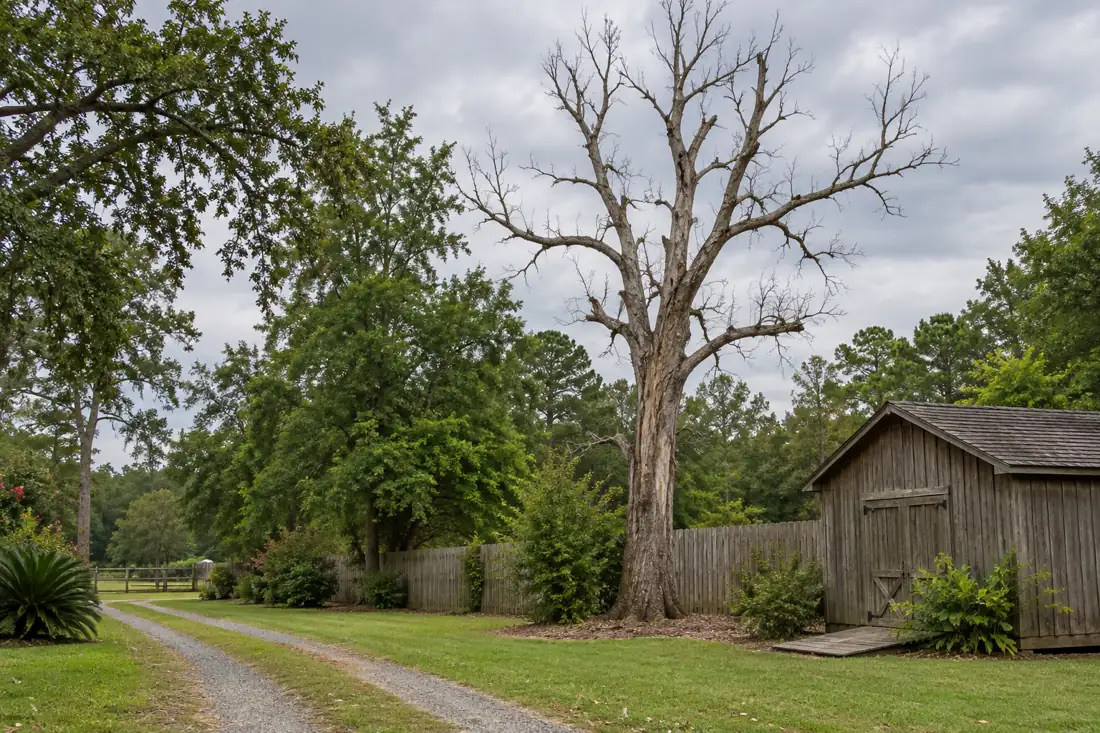
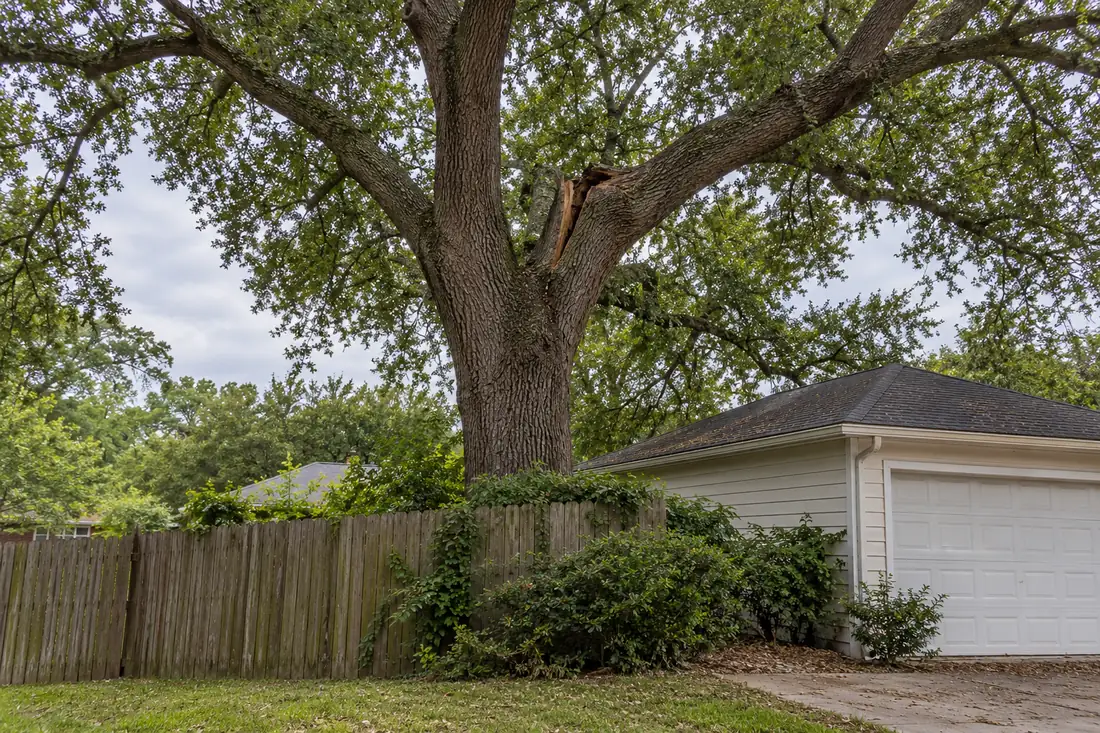
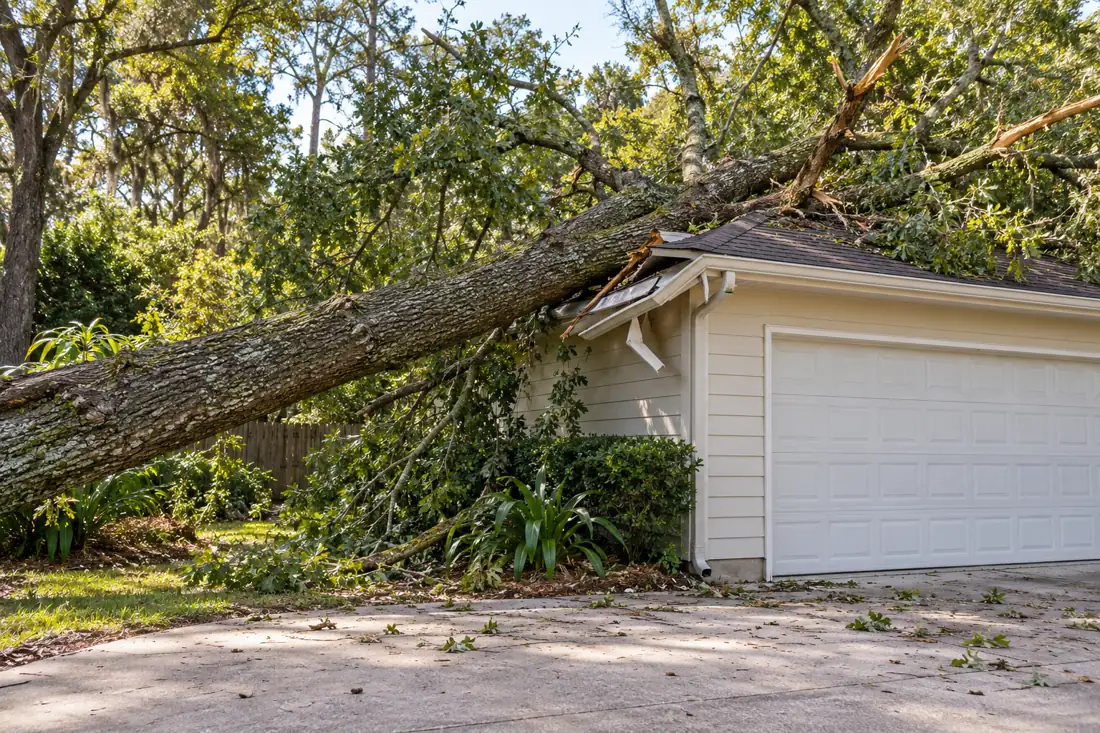
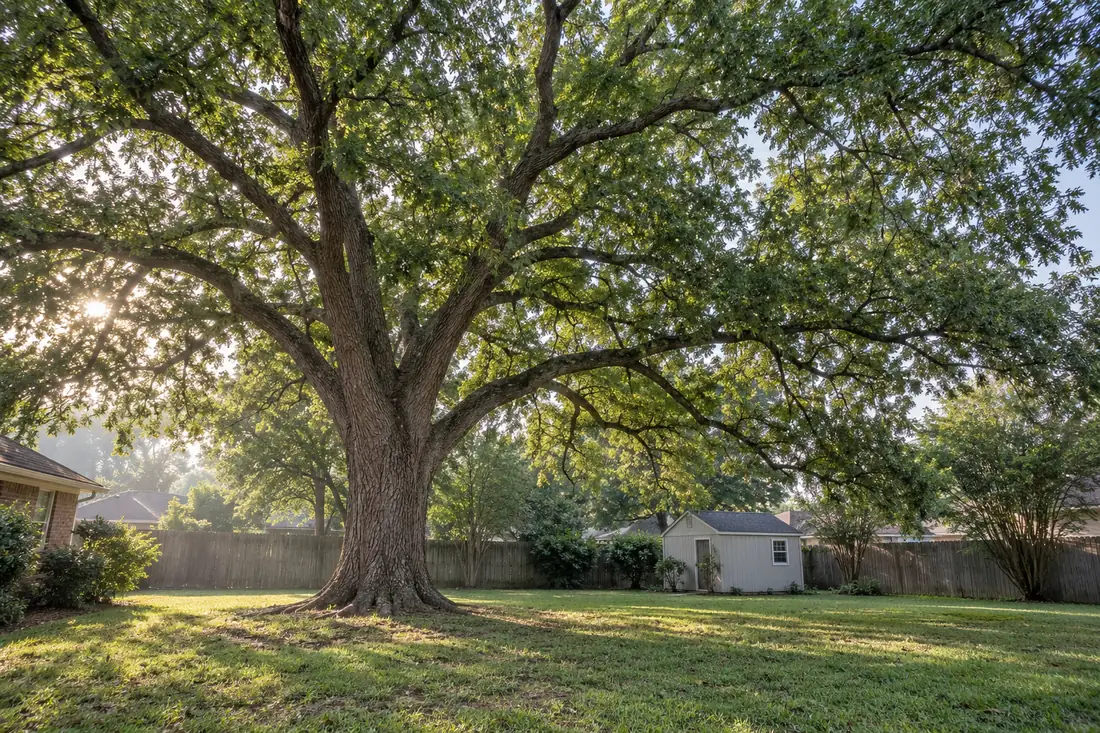
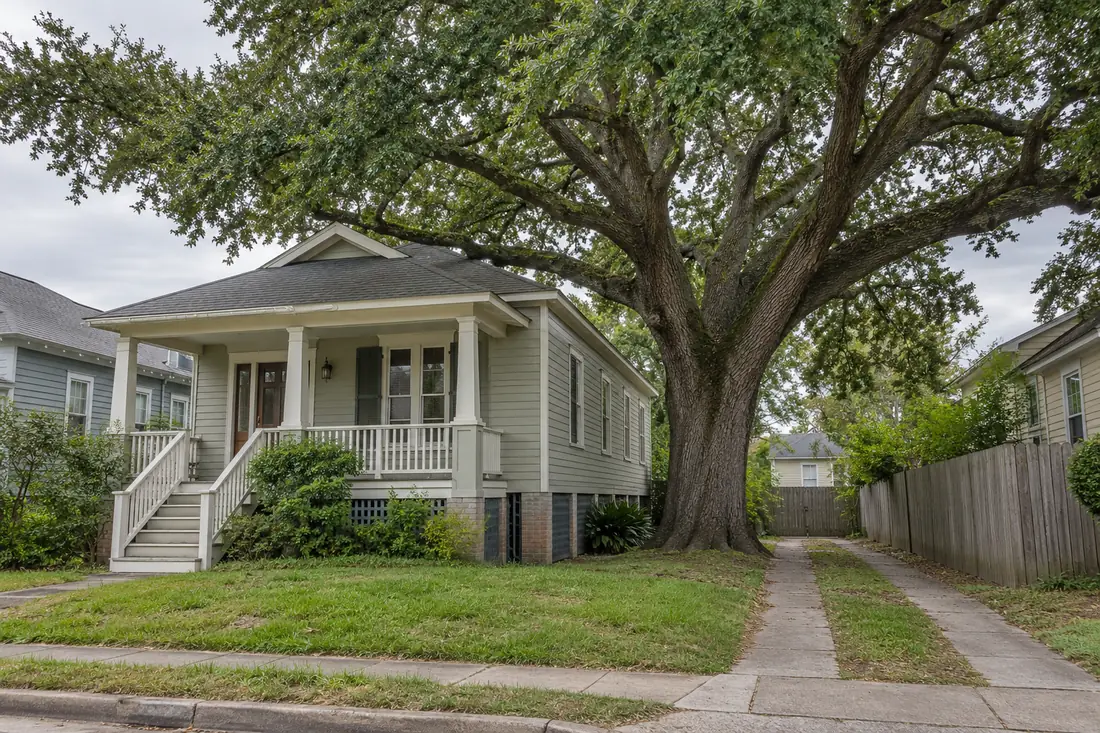
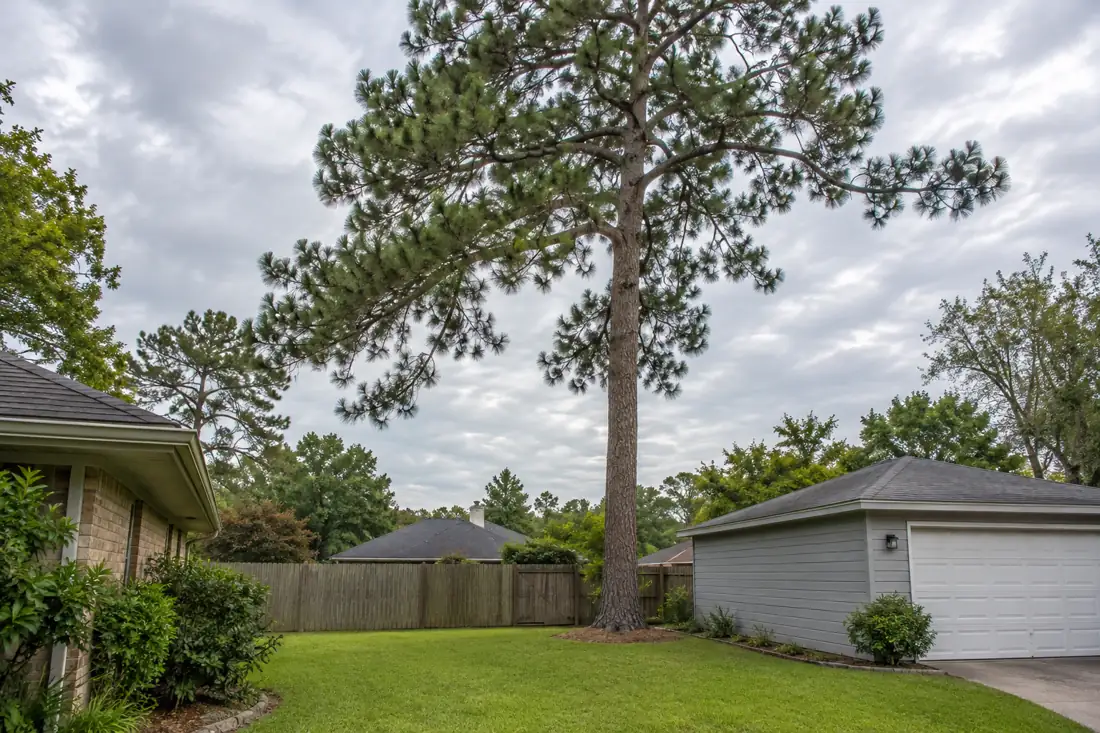
Reach across a building cannot be decided from a street photograph or a machine’s advertised maximum reach. Load, setup location, obstacles and ground conditions must be considered together. Tell the contractor which areas are available for setup and ask for a site-specific assessment before assuming the house can remain between the equipment and the tree.
For this project, separate loaded reach, setup area and structural targets. These details help the contractor understand what must be protected, what information needs confirmation and what result you want from the work. A clear request is more useful than an assumed method or a price based only on tree size.
When a tree is separated from the road by a house, a crane or lift cannot be selected on radius alone. The operator must consider machine setup, ground bearing, overhead conductors, roof clearance, swing path, permitted weights and the sequence of material leaving the site. A boom's advertised maximum reach does not mean it can safely lift a particular log at that distance. Ask how the equipment would reach the work, where it would stand and whether the plan requires crossing another property.
Record window, roof, service-drop and gutter locations from the proposed setup area. Confirm how occupants will be kept away from the load path and who will coordinate traffic or parking where needed. Distinguish a feasible crane plan from a ground-based climber or rigging alternative only after a qualified site assessment. When comparing estimates, require clear descriptions of equipment time, loading area, debris handling and protection of the home; equipment names alone do not describe a complete method.
Can Equipment Reach a Tree Across a House? — Begin with the Access Geometry
A tree behind a house is not automatically reachable just because a crane can be parked on the street. The crew must work out whether a boom can pass over the roof, reach the tree, and handle each cut section from a safe position. Distance, height, boom angle, and the crane’s position all affect that answer. In southeast Louisiana, narrow lots, additions, carports, fences, and mature live oaks can make a map or street view misleading.
Start by identifying the tree, the house footprint, the nearest usable street frontage, and anything between them: roof extensions, utility wires, sheds, pools, and neighboring structures. Ask a qualified tree contractor to inspect both the intended setup area and the backyard, rather than estimating from a photograph alone. The first decision is whether the problem is primarily one of reach, safe access, or both. If no safe work position can be established, equipment size alone will not solve it.

Measure the Work Area, Not Just the Tree
A useful site assessment records the tree’s approximate height and canopy spread, the distance from the proposed equipment position to the trunk, and the height and shape of the house. It also notes gutters, dormers, antennas, overhead wires, and branches that could obstruct a boom. A crane’s reach is measured from its working position, not from the curb in a straight line on a map. The contractor should explain the planned boom path and where the machine’s center will sit.
Walk the frontage with the contractor and identify the actual limits: parked cars, drainage ditches, sidewalks, street trees, mailboxes, and overhead lines can all shift or prevent a setup. In Louisiana, soft, saturated ground after rain may change where heavy equipment can safely stand, even if the surface appears firm. Share information about underground utilities, septic components, irrigation, or known voids. The practical decision is whether a proposed position has enough room, suitable support, and a clear working route.
Compare a Crane, an Aerial Lift, and Ground-Based Work
A crane may lift cut pieces from behind a house to a landing area, but its capacity changes with boom length, angle, configuration, and working radius. A contractor should check the specific machine’s load chart for the proposed setup and explain how the tree sections will be weighed or conservatively estimated.
An aerial lift carries workers to a work position; it is not interchangeable with a crane and may not reach over a house from the street. Access for a lift may be impossible through a typical side yard.
Ask what equipment is proposed, what task each machine will perform, and what site condition could make the plan unsuitable. A large-looking crane is not proof that it can safely lift a particular piece at the required radius. Likewise, a lift’s advertised maximum reach does not describe its usable reach around obstacles.
The contractor should be able to discuss setup, limits, and a fallback approach without promising that a machine can simply reach anywhere. Choose a plan based on the actual load and geometry, not equipment appearance.

Choose Between Rigging and Hand-Sectional Handling
With rigging, trained tree workers attach ropes and hardware so a cut limb or trunk section can be lowered under control. A crane may instead take a piece’s weight before a planned cut and carry it to a designated landing area. These methods require coordinated signals, sound anchor choices, and clear communication between climber, operator, and ground crew. Neither method means a worker should cut a piece while guessing how it will move. Ask how the crew will control swing, rotation, and the possibility of a piece catching on the roof.
Hand sectional handling can mean removing smaller pieces individually and lowering them by rope, rather than lifting large sections over the house. It may reduce crane demands, but it can take longer and still presents serious fall, rigging, and impact hazards. The appropriate method depends on tree condition, branch structure, available anchors, nearby targets, and the landing space. Ask which portions will be lowered, lifted, or dismantled in place, and why. Do not direct workers to cut hazardous limbs yourself or attempt homeowner rigging.
Across-house access cannot be judged from tree height alone
A tree behind a house without a direct equipment route raises questions of horizontal reach, roof clearance and ground support. A crane near the street may have to lift sections over the roof, but a long reach can greatly reduce available capacity. The weight and size of each piece, the precise staging position and nearby wires all matter.
Do not treat a satellite photograph or a verbal guess at tree height as a lifting plan. Safe photographs should show the street or driveway, the house between the machine and tree, the crown, and any apparent overhead obstructions. There is no reason to enter the tree's fall zone merely to demonstrate the distance.
Ask whether conventional climbing with controlled rigging, a roadside lift or another approach is being considered. If a machine is proposed, identify bearing surfaces, underground utilities, drainage structures and the place where removed wood will be set down. Clarify which traffic arrangements or access permissions are assumed, particularly when neighboring lots or public space could be involved.
A quote that says a crane can reach the tree should describe the site facts that still require verification. If the safest option is to postpone work pending permission or a detailed lift evaluation, that is a decision to document rather than a sales objection.
The estimate should also describe what happens to branches, logs and the stump after material clears the roof.
Treat Overhead Power Lines as Energized
A line crossing the street, running to the house, or passing near the canopy must be treated as energized unless the utility confirms otherwise through its procedures. A boom, rigging line, branch, or lifted section can enter a dangerous distance even when no one intends it to. Point out every visible conductor during the site visit, including service drops that may be partly hidden by foliage. Do not assume a line is harmless because it looks insulated, small, or disconnected.
Ask the contractor who will contact the appropriate utility and whether work must wait for utility coordination or qualified line-clearance specialists. Tree crews should not improvise around electrical hazards, and a homeowner should not ask a crew to proceed while a line is merely being watched.
Work near conductors may require a different sequence, restricted equipment position, or utility arrangements. Make the work boundary and responsibility clear before scheduling. If the electrical hazard cannot be controlled under an appropriate plan, the tree work should not proceed.

When a Tree Is Reached Across a House
The distance from the street to the trunk is not enough to select a machine. Aerial equipment reach depends on setup height, boom geometry, load at radius, obstacles and the ground available for stabilizers. The reach shown on a manufacturer's chart is conditional, not an assurance that a contractor can safely move a particular piece over occupied rooms or utility lines.
An equipment option that seems fastest may require road access, neighbor consent or a surface strong enough to carry heavy stabilizer loads. Photograph slopes, curb cuts, septic features and driveways before planning setup. For any lift over a roof, discuss the exclusion area and who can authorize access to adjacent property. Nobody should stand under suspended wood to take a closer picture.

Reach charts never replace a real site survey
An alternative may be climbing and controlled sectional lowering, but that method has its own limitations: branch condition, attachment points, direction of movement and the places pieces can be landed. A tree with compromised wood may not offer reliable rigging points. The decision belongs to a qualified tree professional evaluating the current condition, not to a generalized equipment advertisement.
A sensible estimate names the proposed method and assumptions, including whether traffic management, utility coordination or temporary street restrictions are included. Confirm access and the final cleanup area before the date is scheduled. If an unexpected obstruction prevents setup, the crew should be able to stop and revise the plan rather than force a previously priced method to fit.
Settle Neighbor Permissions and Street Logistics Early
A crane working from the street may need temporary use of a travel lane, parking spaces, sidewalk, or a neighbor’s driveway. The boom or suspended load may also pass above a neighboring parcel, even if the machine remains on your property or the public street. Discuss access and planned work areas with affected neighbors before the work date, and ask the contractor what local approvals or traffic controls may be required. Permission to enter private land is separate from any municipal or utility requirements.
Confirm who will arrange required street occupancy, parking restrictions, barricades, or traffic management; do not assume a contractor’s usual practice covers every location. Give neighbors a clear schedule and explain where people, pets, and vehicles must stay away. If the proposed setup blocks an entrance or affects public access, resolve that before equipment arrives. A practical decision is to postpone until permissions and controls are confirmed, rather than allowing a crew to improvise around a vehicle, pedestrian, or an unexpected road constraint.
Protect the Roof, Yard, and Landing Area
A roof is not a dependable landing pad for cut wood. Branches can puncture shingles, crush gutters, break skylights, or slide into a wall, while concentrated equipment or material loads can exceed what a surface can support. Plywood or a tarp may protect against minor contact but should not be treated as structural protection. Ask where every lifted or lowered piece is intended to go, how it will be controlled, and what will keep it from striking the house during travel.
Clear the agreed landing zone of vehicles, outdoor furniture, toys, and people, and identify fragile features such as pool enclosures, irrigation, paving, and garden walls. Discuss protection for landscaping and any ground bearing concerns; wet Louisiana soils can rut or shift beneath equipment and loaded tires. Do not permit staging of heavy wood on a roof, deck, or unsupported patio without a qualified assessment. Decide in advance how debris will be moved away and how unexpected contact or damage will be reported.
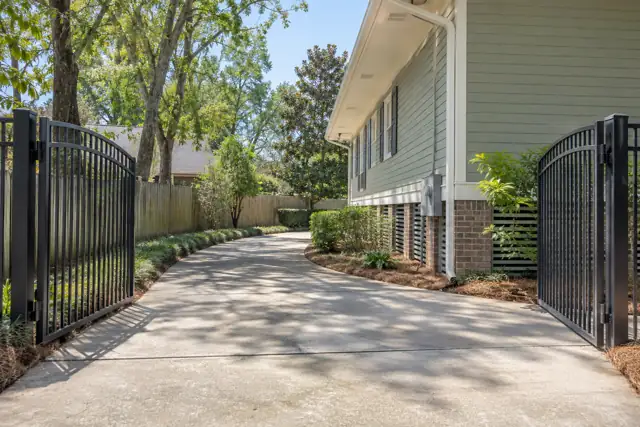
Define Setup Ground and Safe Exclusion Zones
A crane requires a stable setup area and properly deployed supports; the required footprint can be wider than the truck itself. Ask the contractor to identify where the machine and supports will sit and how the surface will be assessed. Driveways may contain buried utilities or drainage features, while lawns can conceal soft ground. The crew should establish an exclusion zone that accounts for the tree, suspended loads, boom movement, and possible dropped or swinging material—not merely the spot directly beneath the trunk.
Occupants, visitors, neighbors, and pets should remain outside the work zone, with a clear way to keep them from wandering into it. The contractor should explain who controls access, how the crew communicates, and what happens if someone enters the restricted area. Keep windows and doors closed where appropriate and follow the site supervisor’s directions. Do not watch from a porch or inside a car parked near the landing area. Work should pause if barriers, communication, or separation from the public cannot be maintained.
Ask for a Work Plan You Can Evaluate
Before accepting an equipment proposal, ask the contractor to describe the sequence: setup location, access route, tree sections, lifting or lowering method, landing area, and cleanup. Ask what measurements or site observations support the reach and load assessment, and what could change the plan on work day. A responsible explanation acknowledges limits and contingencies rather than relying on “the crane can do it.” Verify the contractor’s applicable credentials and ask for current documentation relevant to the work, without assuming any credential guarantees safe performance.
Request a clear written scope that identifies the tree and work limits, expected equipment, property access, debris handling, and responsibilities for permits or utility coordination. Ask how the crew will protect people and property, and who has authority to stop work. Clarify how weather, wet ground, or a changed site condition affects the schedule and plan. Avoid choosing solely by machine size or a low bid that leaves critical details unanswered. The decision is whether the proposed method is understandable, site-specific, and appropriately cautious.

Make the Go-or-No-Go Decision Before Work Starts
On the scheduled day, compare the actual conditions with the agreed plan. A newly parked vehicle, standing water, an active utility concern, unstable ground, or a blocked landing zone can change whether the equipment can be used safely. Ask the site supervisor to reassess rather than treating arrival of the crane as a reason to continue. No homeowner needs to judge technical load limits; the crew’s qualified decision-makers must do that. If conditions differ materially, stop and clarify the revised plan before cutting begins.
Agree that work pauses if the boom, load, or falling material approaches an uncontrolled hazard, if communication fails, or if anyone enters the exclusion zone. Keep children and pets inside or away from the site, and do not cross barriers to retrieve belongings. If a line is contacted or appears damaged, stay clear and notify the utility or emergency services as appropriate; never approach equipment or a fallen conductor.
A safe project may require a different setup, utility coordination, or rescheduling. Reach is useful only when the entire operation can be controlled.
Questions about this project
Does a machine's maximum reach prove it can do my job?
No. Loaded reach, configuration, section handling, obstacles and setup conditions all affect suitability. A contractor needs to evaluate the particular tree and property before confirming an equipment plan.
Can specialized equipment replace a site assessment?
It does not remove the need to assess tree condition, targets, access and support conditions. Ask how the contractor will confirm that the proposed machine and method fit the actual scope.
Can tree equipment use any driveway?
No general assumption should be made. Pavement condition, edges, support, buried infrastructure and the proposed equipment all matter. Ask the contractor to assess the intended setup and route for the particular property.
Do mats guarantee there will be no ground damage?
Ground protection is one part of a site-specific plan. It does not remove every load, soil or access limitation. Discuss the proposed measures and any restoration responsibilities in the written scope.
Which property features should I point out?
Identify buildings, vehicles, fences, fixed fixtures, landscape features, utilities and occupied routes. Explain what can move and what must remain. Include existing damage and any buried features you know about along the access route.
Should people remain inside the work area?
The contractor and site contact should establish an exclusion area and access arrangements appropriate to the work. Keep children, pets, visitors and other workers outside the active zone until the responsible parties say it can reopen.
What access information helps an estimator?
Send the narrowest opening, overhead obstacles, turns and the distance between the tree and the loading area. Include photos of the entire route and identify steps, soft ground or features that must remain protected.
Should I remove a fence before the visit?
First ask the contractor to assess access and agree on any temporary opening. Identify who owns the fence, who can authorize the change and who will reinstall it. Do not assume the opening is necessary or included.
What should I compare besides the price?
Compare tree identification, work objectives, access assumptions, hauling, stump treatment, site finish and exclusions. Ask whether permits or other coordination are part of the scope and who can approve changes if conditions differ.
Does an online request book the crew?
No. A request starts the estimate conversation. The company still needs to discuss scope, availability and any site assessment. For a dangerous or urgent condition, call 504-458-8336 rather than relying on a form response.
What should I tell Tree Huggers about can equipment reach a tree across a house?
Explain the property address, the work you want and the specific concerns: loaded reach, setup area, structural targets. Send safe photos of the tree, surroundings and access route. The contractor can then discuss the assessment and scope needed for this situation.
How do I request an estimate for this work?
Call 504-458-8336, text photos or use the estimate form on this page. Include the address, desired outcome and any timing constraints. The company will need to review scope and availability; an online request does not confirm a price, appointment or emergency dispatch.
Get a scope for your property
Provide a street view showing the whole house, side access and the tree crown. If a lift or crane may be involved, request a site-specific equipment and ground-support assessment.