A pole can carry several different services, and a tree’s proximity may require utility coordination. Keep away from conductors and avoid identifying a wire as safe by appearance. Show the contractor the pole and connections from a safe distance. Only the appropriate qualified parties should establish electrical clearances and utility responsibilities.
Utility pole proximity and the boundary of a tree crew’s work
A tree close to a utility pole presents more than a simple access problem. Before requesting removal, identify whether branches are near overhead wires, guy wires, transformers or service attachments and whether any utility equipment is visibly damaged. Stay away from wires and anything touching them; do not use poles, ropes, ladders or vehicles to move the tree. A photograph taken from a distant safe position is more useful than a risky close-up.
Utilities and qualified line-clearance specialists may have to determine the safe work boundary. The customer should not assume that a tree contractor can disconnect, shield or relocate energized equipment. If a line is down or apparently contacted by vegetation, treat the site as an electrical emergency and contact the utility or emergency services as appropriate before a tree-work crew mobilizes.
For an estimate, provide the pole’s position relative to the tree, safe access from the street, nearby structures and the intended final condition. The contractor’s written scope should say which party handles utility coordination, which portions are excluded pending clearance and whether stump and debris work follow later. No promise about power restoration belongs in an ordinary tree-removal quote.
For this project, separate conductors, service drops and utility coordination. These details help the contractor understand what must be protected, what information needs confirmation and what result you want from the work. A clear request is more useful than an assumed method or a price based only on tree size.
Identify the pole, transformer, service connections, guy wires and the tree branches close to them without approaching wires or using a ladder to measure distance. A branch in contact with energized equipment can be dangerous even if it does not appear to move. Keep people away from fallen conductors or trapped limbs and call the utility or emergency responders when there is an immediate electrical risk. Qualified line-clearance operations may be required before any ordinary tree work.
Provide the utility and tree contractor safe-distance photographs and describe neighboring roads, walks and property access. Clarify who controls electrical clearance, any necessary isolation, public traffic precautions and debris removal. A pole in a public area does not automatically establish ownership of every affected tree. Request an explicit coordinated work sequence and avoid accepting a claim that one machine or ladder makes working beside energized conductors safe.
Start with the pole, not the saw
A tree beside a utility pole can threaten more than the pole itself. In southeast Louisiana, a mature live oak, pine, or water oak may have a heavy crown, sprawling limbs, and roots extending well beyond the visible trunk. Look from a safe location for leaning, cracked, dead, or storm-damaged wood; contact with any wire; and limbs that could swing toward the pole if disturbed. These are observations for planning, not reasons to approach, climb, prune, or test the tree.
Record the property address, pole location, tree species if known, and visible concerns for the utility and tree-care professionals. Take photographs only from a place where you can remain well away from wires and damaged wood. Do not touch the pole, guy wires, attached boxes, or anything caught in lines. Decide early whether the tree can remain pending assessment or whether a hazard requires urgent utility attention; do not begin removal just because the trunk appears to be on private property.

Treat every line as potentially energized
A pole may carry electric distribution conductors, service drops, communication cables, or several kinds of line at different heights. Insulation, color, apparent thickness, or a cable’s position is not a reliable way for a property owner to establish that it is safe. A line may be energized even when it looks abandoned or a neighborhood has lost power. Wind, wet foliage, and storm damage can also move conductors into places that were clear during an earlier inspection.
Describe what you can see, but leave identification and electrical decisions to the relevant utility. Ask which electric utility serves the site and whether telephone, cable, or fiber providers also have equipment on the pole. A communication cable is not a substitute for a safe work zone: it may be tangled with power conductors or affected by a fallen energized line. Make no plan that depends on a worker judging a line safe by sight or on a tree crew contacting it carefully.
Utility-pole proximity: what a photograph cannot establish
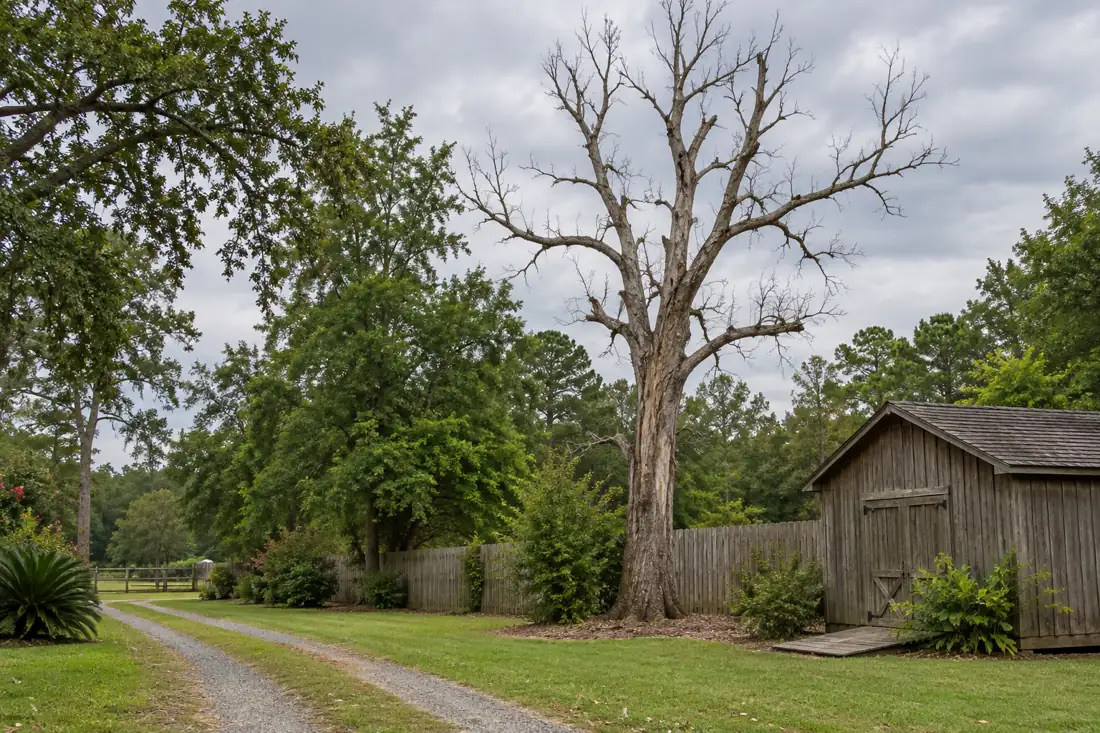
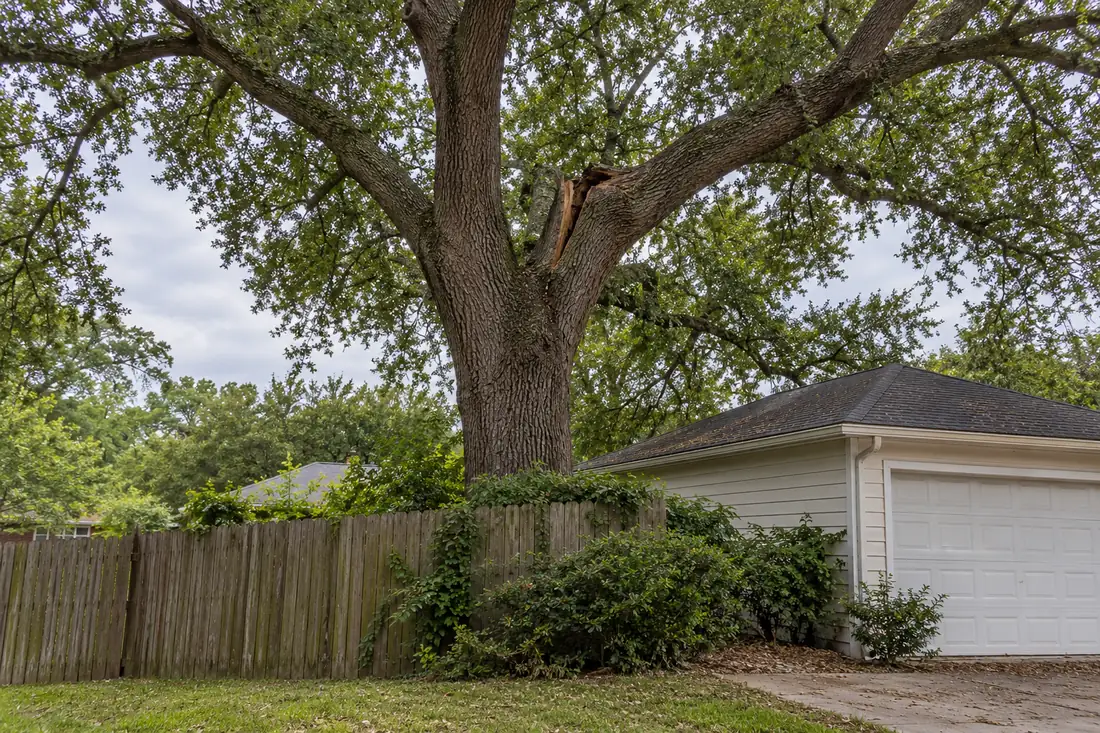
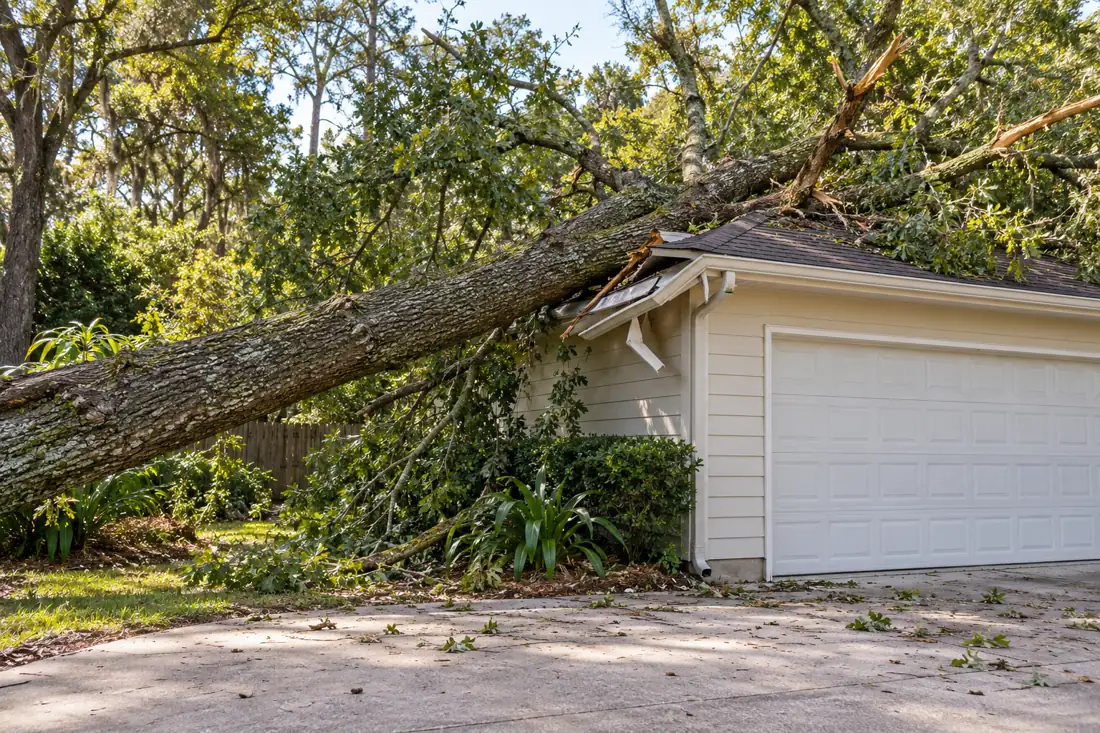
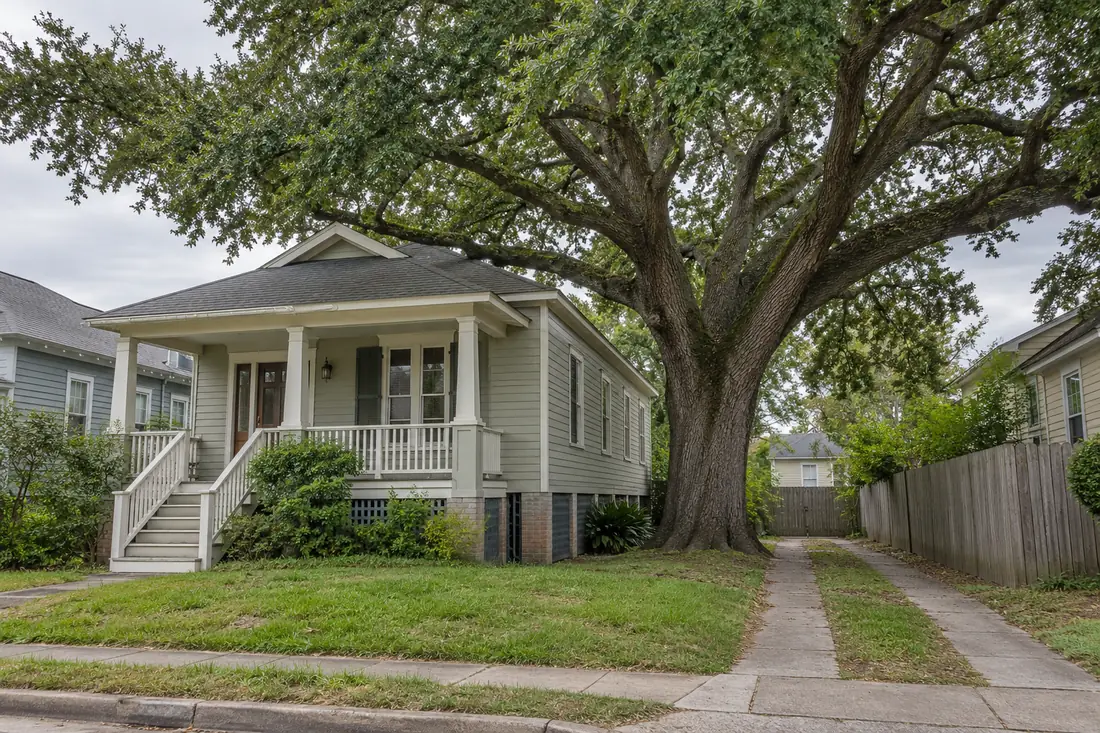
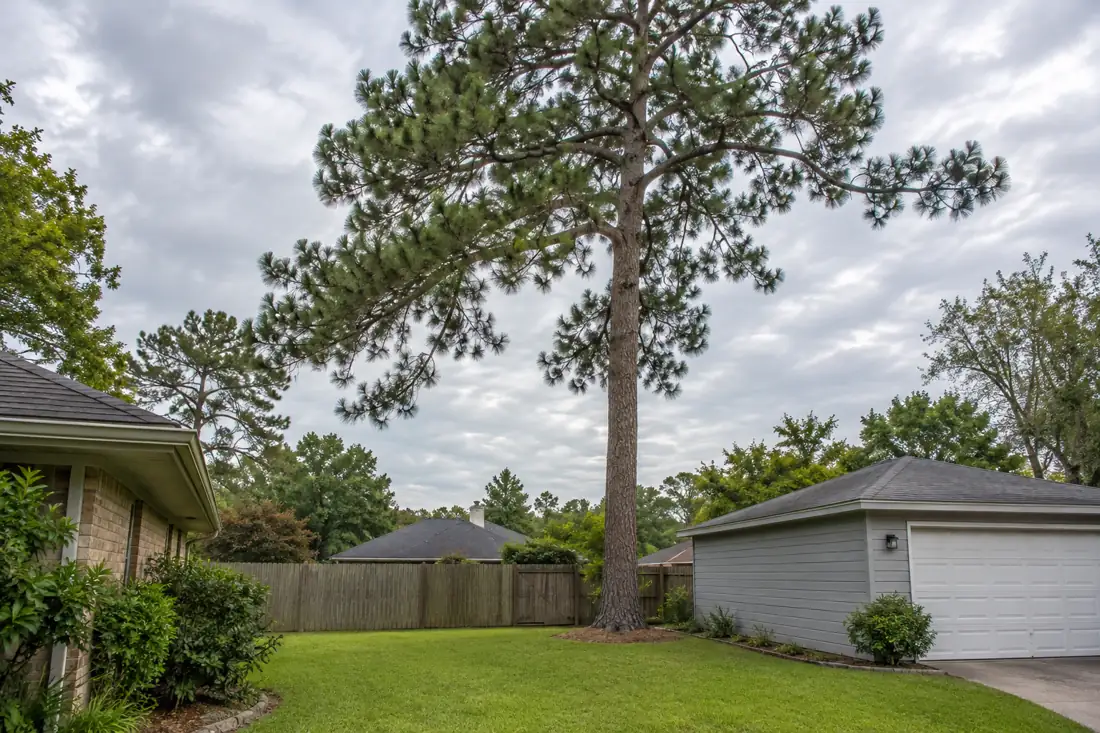
The planning images on this page are not photographs of a Tree Huggers job and cannot identify who owns the nearby lines or whether a branch has electrical clearance. From a location already open to the public, a useful report identifies the nearest pole or street landmark, the affected tree, any visibly sagging line and whether access to a home or road is affected.
Do not step closer to obtain a better angle, and never use a ladder, drone or long tool around conductors. A line that looks inactive may still be energized.
Separate the utility's decision from the proposed tree scope. If a conductor is damaged, low or in contact with vegetation, contact the utility or emergency services as appropriate and keep others clear. A tree contractor's ordinary estimate does not authorize cutting close to live equipment. The eventual written scope should distinguish utility-controlled work, authorized tree work, protected ground space and final cleanup, so a photograph is used to communicate the question rather than to declare the site safe.
Bring the right utility into the plan
Contact the electric utility before scheduling work near its pole or conductors. Give the dispatcher or vegetation-management representative the exact address, pole or service location, tree condition, planned scope, and any signs of contact, arcing, smoke, or a fallen wire. Ask whether the utility needs to inspect the site, arrange its own line-clearance work, coordinate with other pole users, or establish a restricted area. Contact the appropriate communications providers when their attachments may be affected.
If a conductor is down, sparking, smoking, or touching the tree, pole, vehicle, fence, or ground, keep people away and call emergency services and the electric utility using local emergency procedures. Do not approach to take pictures, move a branch, or help someone near it. For planned work, get the utility’s direction in a form the contractor can act on, including whom to contact on work day. The property owner’s permission does not authorize a tree crew to handle utility equipment.

Require utility-controlled isolation where needed
When the utility determines that electrical protection is necessary, the utility must arrange and control the appropriate isolation or other protective measures. A contractor’s request, a breaker being switched off, or a verbal assurance that a line is probably inactive is not proof that the work area is safe. Ask the utility what work it will perform, what conditions must remain in place, and how its representative will communicate the work status to the tree crew.
Before work starts, the tree contractor and utility should agree on who has authority to stop work and how crews will respond if a line moves, equipment contacts a conductor, or conditions change. Do not ask a tree worker to verify electrical status or treat a utility appointment as blanket permission to work. If required utility personnel or protections are unavailable, postpone the work. The practical decision is simple: no agreed, utility-directed protection means no cutting or equipment operation in the affected area.
Make utility ownership and clearance a separate first decision
A pole may carry electrical, communications and other lines at different heights. A cable's color, thickness or insulation appearance does not establish that it is harmless. Photos should show the full pole and tree relationship from a safe public vantage; do not stand beneath broken limbs or walk closer to get a measurement.
Report any downed wire, sparking, smoke or immediate electrical concern to the utility or emergency services as appropriate. Only qualified parties can establish whether the tree crew may work at a particular clearance and whether isolation, trimming or utility coordination is needed.
Before comparing removal quotes, ask how the contractor plans to contact the responsible utility and who will handle a delay if access depends on a utility crew. Do not assume a routine arborist estimate includes electrical service interruption, reconnection or work on the utility's own equipment.
Where a pole also restricts truck setup or lifting, describe the road and property conditions separately. The contract should state the tree work being offered and any conditions precedent, rather than implying that the property owner can authorize utility operations.
Get a tree-specific removal assessment
A qualified tree-care professional should inspect the tree’s structure, likely movement, and relationship to the pole and lines before proposing a removal method. A tree leaning toward a pole, a split union, a hollow section, or a hung limb can behave unpredictably under load. The professional should explain whether the tree can be dismantled in sections, requires specialized access, or needs utility involvement before any branch or trunk is released.
Ask for a scope that identifies what will be removed, how sections will be controlled, and what conditions would make the crew stop. Discuss whether nearby structures, fences, driveways, neighboring property, or drainage features constrain the work. A sound plan accounts for the tree’s actual defects and the conductors’ location, rather than assuming a clear fall path. If the proposed method relies on a worker pulling, climbing, or cutting near a potentially energized line, seek clarification and utility coordination before authorizing work.

Check qualifications and communication before mobilizing
Choose a contractor with relevant experience in hazardous tree work near utility infrastructure, and ask who will supervise the site and coordinate with the utility. Request a plain-language explanation of the crew’s planned method, equipment, and limits of work. Confirm that workers know which lines and equipment are off-limits and that there is a clear way to communicate with utility personnel. Credentials and experience should be described accurately; no contractor should present itself as able to authorize electrical isolation on the utility’s behalf.
Agree on a pre-work briefing, emergency contacts, access route, and stop-work procedure before machinery or crew members enter the site. Ask how the contractor will handle a change in weather, an unexpected wire, or a tree condition that differs from the inspection. Do not assume a contract, insurance document, or general safety statement guarantees that every hazard is covered or eliminated.
Read the scope and responsibilities, request clarification where needed, and postpone if the contractor and utility have not aligned on the boundaries of the work.
Plan equipment position and line clearance
A lift, crane, chipper, bucket truck, or log truck needs a planned position that accounts for every part of the machine, including booms, cables, loads, and movement during setup. Soft ground, a narrow driveway, sloping lawns, and nearby wires can limit safe placement. A vehicle parked clear of the pole may still become hazardous if a boom swings, a limb shifts, or a load is carried through the line corridor.
Have the contractor explain the proposed equipment locations and how the work zone will stay separated from utility facilities. The utility and qualified work crew must determine applicable clearances and controls; a property owner should not estimate a safe distance or direct machine operation near lines.
Identify obstacles such as parked cars, overhead service drops, sheds, and low branches during planning. If the required equipment cannot be positioned and operated under the agreed protections, change the work method or defer the project rather than improvising on site.
Locate underground services and check the ground
Tree removal can involve stump grinding, root work, vehicle loading, and temporary ground protection, all of which may affect buried services. Electric, gas, water, sewer, drainage, and communications lines can cross a yard even when no surface marker is visible. In Louisiana, wet soils and recent rain can also reduce bearing strength, hide soft spots, and make heavy equipment more likely to rut or shift.
Before digging or grinding, use the applicable local underground utility notification process and arrange any private locating needed for lines that public locating services do not mark. Confirm how the contractor will protect marked facilities and whether the planned stump treatment changes the scope. Keep machinery out of questionable ground until the operator has assessed access and support. If a service location is uncertain, stop that portion of the work and obtain appropriate locating or utility direction instead of probing the ground with tools.
Start with electrical clearance and ownership questions
A pole may carry primary distribution conductors, transformers, service drops, communications wiring and equipment serving more than one property. Wire position, insulation appearance and line height are not reliable ways for a homeowner to decide what is energized. Do not approach, touch or cut branches near a wire, or move a fallen cable. If a tree or branch contacts a power line, keep others away and use the utility's emergency reporting procedure. In immediate danger, contact emergency services from a safe place.
For an inquiry, give the exact address and pole location without sharing unnecessary account details. From a safe standing position, capture a wide image showing the tree, pole, nearby structures and affected access corridor. Identify visible changes such as a hanging branch or newly leaning trunk without guessing at electrical clearance measurements.
The utility and qualified tree-care professionals determine who may work, what isolation or line protection is needed and whether the operation can proceed. An estimate that ignores these steps is not a reliable scope.

Know what the tree contractor can evaluate and what the utility controls
Ask whether the planned work is routine trimming for service clearance, removal of a hazardous limb, or full tree removal for reasons unrelated to a utility. Those are different objectives, and a utility's vegetation program may not cover the property owner's requested work. An approval for one does not automatically authorize another. Record any utility case or work-order reference provided and explain site access restrictions, nearby foot traffic and adjacent trees that must be retained.
Before scheduling nonemergency work, confirm in writing which party coordinates with the utility, who is responsible for required clearances and whether the planned date depends on utility availability. Do not promise neighbors a shutdown or a completion time without confirmation from the utility. Include debris hauling, stump work, surface protection and access restoration as separate items so the complete scope remains understandable even if an electrical safety hold delays cutting.
Control people, property, and changing conditions
Set a work perimeter that keeps occupants, visitors, delivery drivers, and passersby away from the tree, equipment, and any area the crew identifies as hazardous. This matters especially near sidewalks, shared drives, streets, schools, and neighboring lots. Ask who will place and monitor barriers or traffic controls, and how the crew will prevent someone from entering while workers are focused overhead. Keep pets indoors and arrange another route for people who normally cross the work area.
Rain, lightning, strong wind, saturated ground, or a newly fallen limb can change the plan and the tree’s behavior. Southeast Louisiana weather can shift quickly, so confirm who makes the decision to pause and how work will resume after conditions improve. Do not let residents retrieve belongings or move vehicles beneath a questionable tree or near a line during a delay. If a wire becomes visible or conditions worsen, keep the perimeter in place and contact the utility or emergency services as appropriate.

Authorize work only when the plan is ready
Before removal begins, confirm that the scope, utility coordination, access, equipment position, underground locating, and public controls match the site as it exists that day. Ask the crew lead to review the sequence and identify the person empowered to stop work. If the tree has changed since inspection, a line has shifted, or utility protection is not in place as agreed, hold the start and resolve the discrepancy with the responsible professionals.
After removal, keep people away until the crew confirms that its work area is clear and the utility has addressed any affected lines or attachments within its responsibility. Ask whether stump work, debris removal, or restoration remains and whether those tasks require separate locating or access controls. Do not assume a cleared canopy means the pole or lines have been inspected or repaired. Close the project by documenting the completed scope, outstanding utility actions, and any restrictions the contractor or utility has communicated.
Photos that show the pole and tree without approaching wires
A tree near a utility pole requires two separate decisions: whether the tree can be accessed safely and who must control any electrical clearance. An estimate photograph should establish the surroundings, not encourage anyone to inspect an energized line at close range. Stay outside the affected area and never use a ladder, pole, or drone near conductors.
- From an existing safe sidewalk or other public viewpoint, show the full tree and pole in one broad frame.
- If possible from the same safe position, photograph the direction the conductors travel and the nearest branches without claiming a measured clearance.
- Show the street or driveway access, parking limitations, and any equipment route that does not pass under the wires.
- Explain whether there are sagging conductors, arcing, or a fallen line in words; do not approach to obtain a close-up.
If a line is down or a contact hazard is suspected, keep everyone away and contact the utility or emergency services. A tree-service estimate cannot substitute for the utility's clearance or authorization. In the request, identify the service provider if known and ask who will coordinate the electrical assessment before any tree work is discussed.
Questions about this project
Can I identify a safe wire by looking at it?
No. Do not approach or touch wires, a tree contacting them or connected objects to investigate. Keep clear and contact the utility or emergency services when there is an immediate electrical hazard.
Does a tree estimate include utility disconnection?
Only if the appropriate coordination and responsibilities are explicitly arranged. Utility work may require the service provider or another qualified party. Confirm those arrangements before assuming the tree crew can proceed near affected services.
Which property features should I point out?
Identify buildings, vehicles, fences, fixed fixtures, landscape features, utilities and occupied routes. Explain what can move and what must remain. Include existing damage and any buried features you know about along the access route.
Should people remain inside the work area?
The contractor and site contact should establish an exclusion area and access arrangements appropriate to the work. Keep children, pets, visitors and other workers outside the active zone until the responsible parties say it can reopen.
What access information helps an estimator?
Send the narrowest opening, overhead obstacles, turns and the distance between the tree and the loading area. Include photos of the entire route and identify steps, soft ground or features that must remain protected.
Should I remove a fence before the visit?
First ask the contractor to assess access and agree on any temporary opening. Identify who owns the fence, who can authorize the change and who will reinstall it. Do not assume the opening is necessary or included.
How should extra work be approved?
Use the agreed approval process and identify the change, reason, scope, price or schedule effect as applicable. Confirm who has authority before treating an additional tree or task as part of the original job.
What completion records are useful?
Keep the agreed scope, tree or area identification, authorized changes, invoice and labeled photos where appropriate. Include unresolved items and a contact. Contract-specific records should follow the buyer's stated requirements.
What should I compare besides the price?
Compare tree identification, work objectives, access assumptions, hauling, stump treatment, site finish and exclusions. Ask whether permits or other coordination are part of the scope and who can approve changes if conditions differ.
Does an online request book the crew?
No. A request starts the estimate conversation. The company still needs to discuss scope, availability and any site assessment. For a dangerous or urgent condition, call 504-458-8336 rather than relying on a form response.
What should I tell Tree Huggers about tree removal near a utility pole?
Explain the property address, the work you want and the specific concerns: conductors, service drops, utility coordination. Send safe photos of the tree, surroundings and access route. The contractor can then discuss the assessment and scope needed for this situation.
How do I request an estimate for this work?
Call 504-458-8336, text photos or use the estimate form on this page. Include the address, desired outcome and any timing constraints. The company will need to review scope and availability; an online request does not confirm a price, appointment or emergency dispatch.
Get a scope for your property
For a tree near a utility pole, keep clear of wires, damaged equipment and suspended branches. From a safe distance, describe the pole, conductors and any service drop crossing the canopy; never approach, move or identify wires by sight as harmless. The utility owner may need to determine safe clearances or perform necessary electrical work before tree crews proceed. Ask what coordination is required, who will authorize it and which tree operations can safely be quoted.