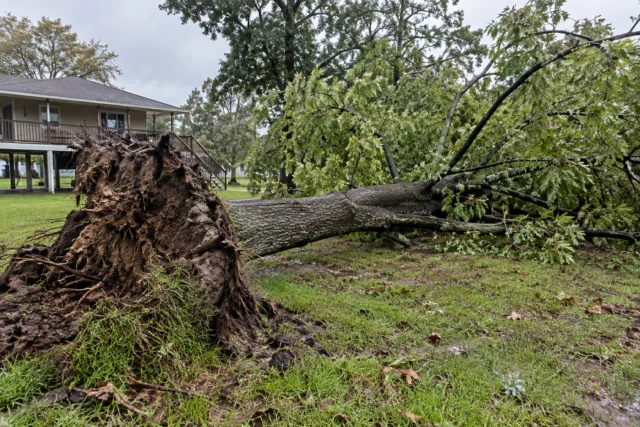
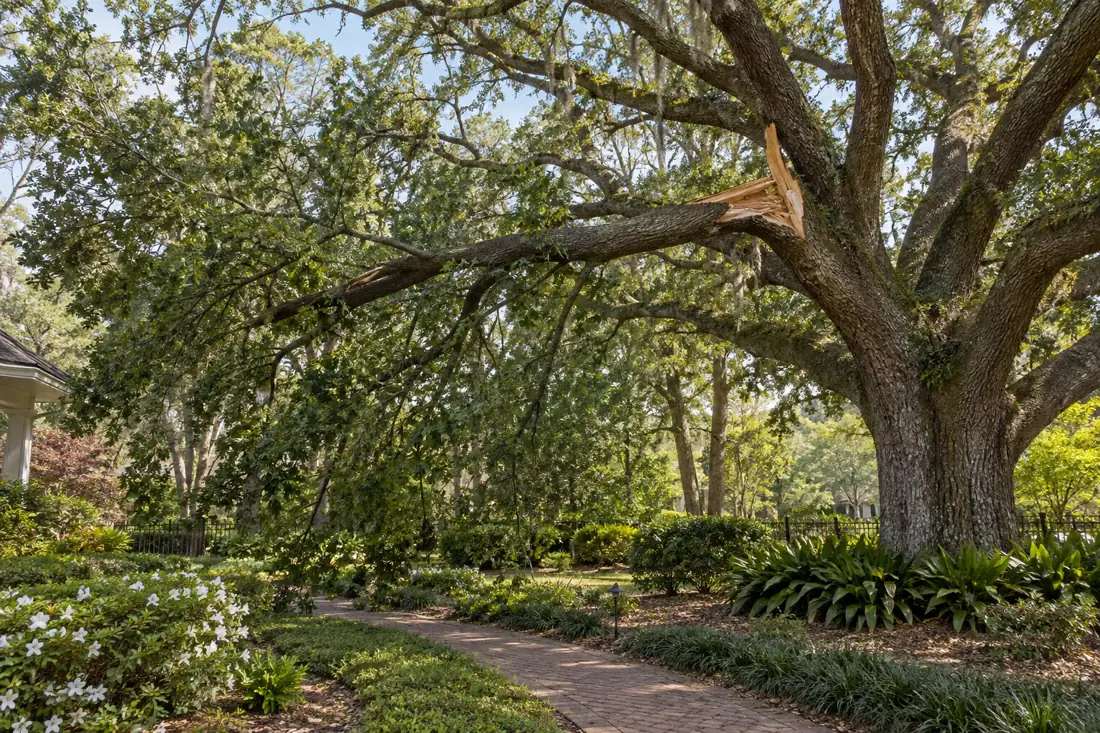
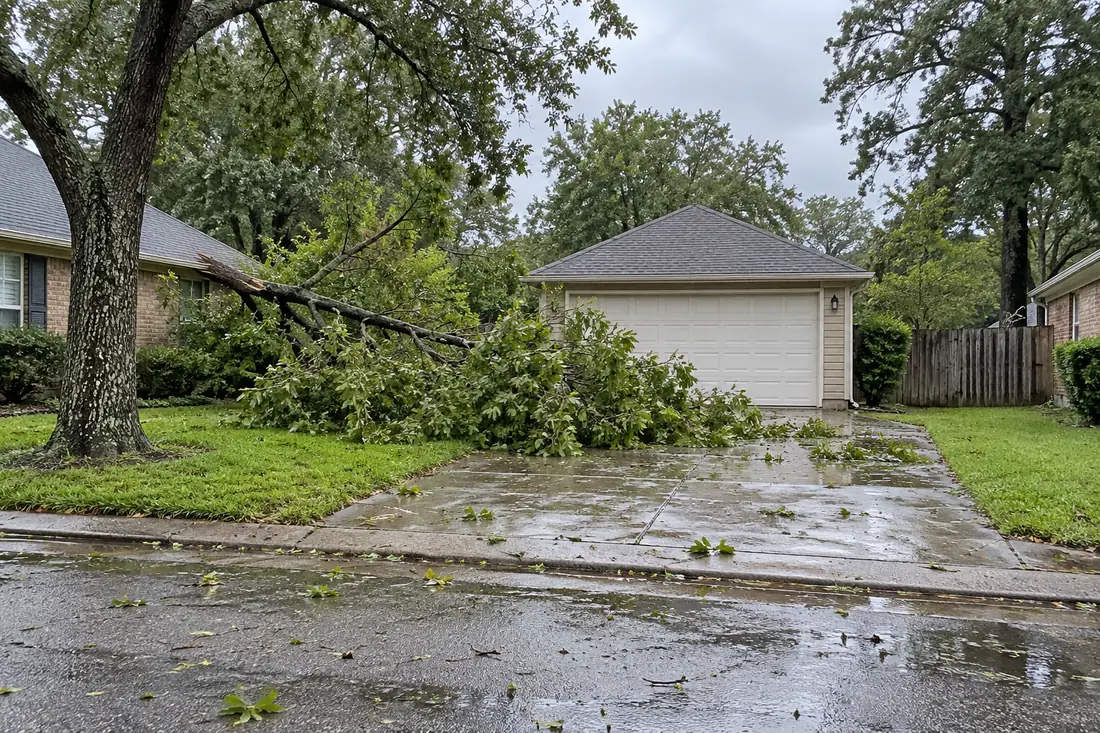
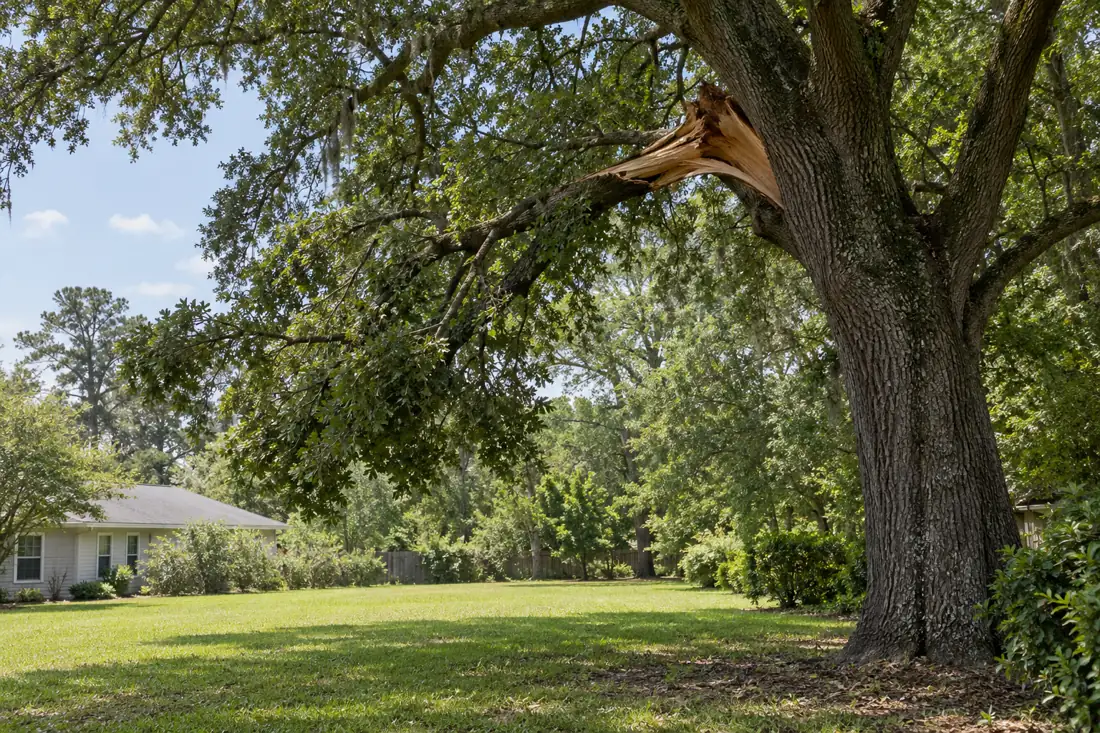
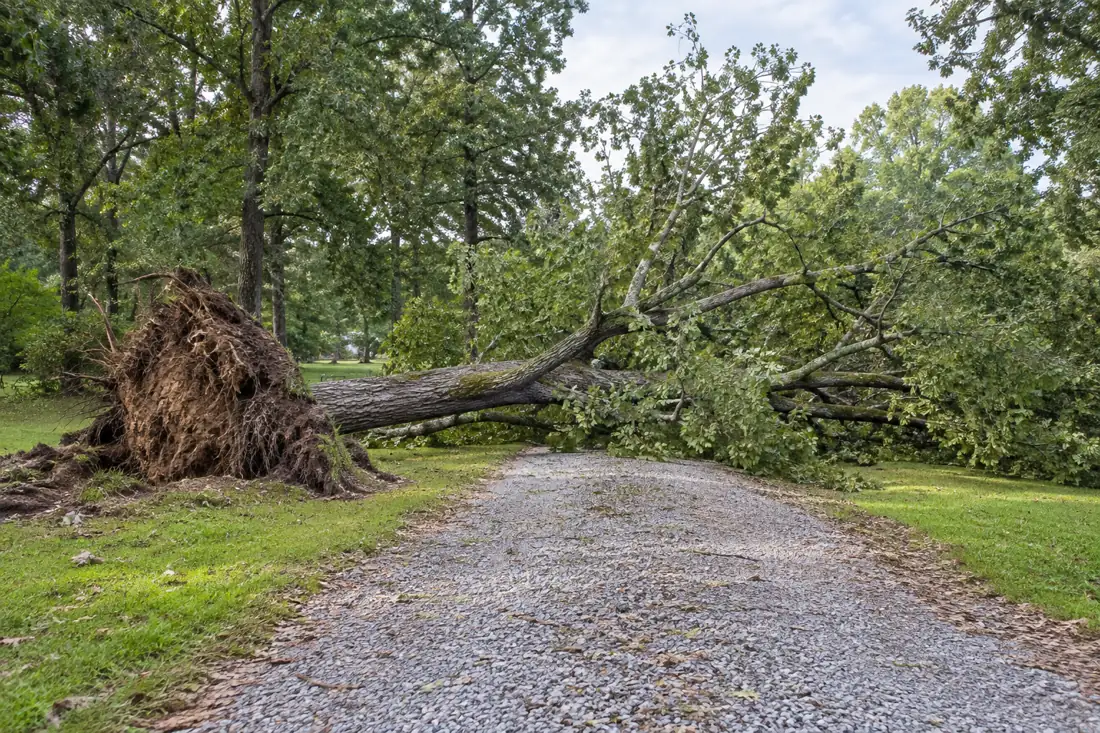
A rental-property response needs a property contact, tenant communication and a clear way to approve work. Identify occupied units, access restrictions and any immediate hazards. Ask whether initial stabilization and full removal need separate authorizations. Keep the tree scope and any building repairs clearly documented for everyone involved.
Rental-property storm response with owners and occupants
A storm tree issue at a rental property should be reported with the tenant’s immediate safety in mind and the owner’s authorization in mind at the same time. If a limb hangs over a doorway, parking area or occupied room, restrict that area before arranging a normal inspection. The person reporting should describe the problem and supply safe photos, but should not be instructed to climb, cut or pull damaged wood.
Identify one contact who can approve work, another who can arrange access if necessary, and the correct process for informing tenants. A property manager may need to coordinate locked gates, pets, parked vehicles, storage spaces and emergency exits. The written plan should distinguish urgent risk reduction from later debris hauling, landscape restoration and a decision about the remaining tree.
Documentation should include the reported observation, date, access limitations, approved scope and work actually completed. Avoid making promises about insurance coverage or guaranteed response times. Give residents a clear instruction to stay away from the hazard and a realistic process for notifying management if conditions change.
For this project, separate tenant access, work authorization and repair coordination. These details help the contractor understand what must be protected, what information needs confirmation and what result you want from the work. A clear request is more useful than an assumed method or a price based only on tree size.
Identify affected units, shared entries, parking spaces and walkways by location rather than by vague tree descriptions. Give residents a safe way to report new leaning, hanging limbs, damaged wires and blocked exits without entering a hazard zone. A manager should keep one record of reports, restrictions and qualified inspections while arranging alternative routes where feasible. Tenant observations should prompt evaluation, not automatic conclusions that the whole tree must be removed.
Create a work order that identifies the tree, equipment access, permissions, notice needs, hauling and final cleanup. Keep residents, pets and parked cars out of the crew's transfer route. Separate urgent access restoration from later tree maintenance, building repairs and insurance questions. Record which restricted areas remain closed at the end of each work period. Do not promise a callback time or completed repair without actual confirmation; update residents only with verified conditions.
Storm Tree Damage at a Rental Property
After a southeast Louisiana storm, a fallen limb, leaning trunk, or torn roof can turn a routine rental into a safety and coordination problem. Start by treating visible damage as incomplete evidence: saturated soil, wind-driven rain, and hidden cracks can leave additional hazards out of sight. Keep tenants away from the affected area and do not ask them to inspect the roof, climb a ladder, move a hanging limb, or operate a saw. The immediate objective is to protect people, not to restore appearances.
The owner or authorized property manager should establish one point of contact for tenants, responders, and contractors, then record the time and known conditions. Ask tenants to report injuries, active leaks, smoke, sparking, unusual odors, and blocked exits without approaching hazards. In neighborhoods with narrow streets, drainage canals, or limited access, tell arriving crews about gates, pets, and safe approach routes. Do not promise a repair date or that a home is safe based on a quick view from the ground.

Check for Immediate Threats and Set Boundaries
If anyone is injured, trapped, or facing an immediate threat, call 911. Treat downed or low-hanging electrical conductors as energized, even if lights are out or the wire appears insulated. Keep people well away and contact the electric utility or emergency services; do not touch a tree, fence, vehicle, or puddle that may be in contact with a line. A tree contractor is not a substitute for the utility’s response, and tenants should not be sent to investigate a suspected electrical hazard.
Create a clear exclusion area around suspended limbs, split trunks, unstable fences, and debris that could shift. Use a locked gate, closed room, or staffed barrier where practical, and tell every household member what route to avoid. Do not use cones or caution tape as a reason to let people pass close to a hazard. If the damage blocks an exit or compromises a stairway, tell tenants to use a safe alternate route only if one is plainly available; otherwise seek emergency guidance.
Rental-property damage: record the hazard and the authorization trail
Illustrations of managed properties cannot show which tenant route, shared gate or occupied unit is affected at a particular duplex. The first site note should use a consistent unit or entrance reference, identify any branch across a common path, and record whether access to doors, parking or utilities is restricted.
Ask occupants to stay away from potentially unstable limbs, but do not ask them to climb, cut or move material for the sake of a better photograph. Keep interior and personal tenant details out of marketing media.
Access permission and authority to approve additional work are different. Record the owner or manager who can authorize the tree assessment and scope, the tenant-contact procedure and the area that must remain closed. A proposal should identify what is included in making the route usable, what is deferred for separate assessment, and how the site will be left after hauling. Do not imply a property was a completed Tree Huggers job merely because an educational duplex photograph appears beside this guidance.
Separate tenant safety from owner authorization
For a leased home, establish one reliable contact for the owner or property manager and another for the occupant who can explain current access concerns. A tenant may report a hazard without having authority to commission major removal; emergency responders or utilities may have separate roles where immediate dangers exist.
Share instructions for avoiding blocked doors, damaged fences, falling branches and any suspected electrical contact without asking tenants to investigate the tree. When requesting an estimate, supply the lease contact's permission for entry, parking limitations, pets or gates, and the safest available photographs. Confirm whether the proposal includes hauling, stump work, fence restoration or only tree sections.
Keep the renter informed of planned access interruptions without promising a specific arrival time before the provider confirms scheduling.
Create a single safe decision path for an occupied rental
A rental property can have several affected parties: tenants, owner, property manager, neighboring units, maintenance staff and the tree contractor. Assign one authorized representative to approve the tree-work scope, confirm how that person will be reached, and keep a record of which occupied areas cannot be entered.
Tell tenants not to pass beneath hanging branches or attempt to clear tree debris from a shared walkway. If a building exit is blocked or anyone faces immediate danger, contact emergency services instead of waiting for a routine estimate.

Define Tree Work Without Asking for Hazardous DIY
A qualified tree service can evaluate and perform work such as removing a fallen tree, cutting accessible debris, or addressing a damaged tree when its crew can do so safely. Do not ask a tenant, maintenance worker without the proper qualifications, or owner to climb, fell, rig, or cut a hazardous tree. Suspended limbs, split leaders, trees under tension, and trees near buildings or conductors require appropriate expertise and equipment. If a contractor declines a task as unsafe or outside its scope, preserve that limitation and arrange the correct specialist.
Ask the tree professional to identify which trees and limbs are included, what will be removed or retained, how workers will protect people and nearby property, and where debris will be placed. Clarify whether stump work, hauling, fence removal, or cleanup is included rather than assuming it is.
A tree that remains after an emergency cut may still need later assessment by a qualified arborist. Do not interpret a cleared driveway or a completed tree-service ticket as confirmation that the building, roof, wiring, or yard is safe for normal use.
Create a tenant-safe access plan with a named decision maker. Rental-property storm work often involves an owner, manager, tenant and possibly a neighboring property. Before scheduling, identify who can authorize the tree scope, provide gate access and move vehicles, and who is responsible for notifying occupants about restricted areas. Document any blocked entries, damaged fences, leaning material and nearby service lines from outside the hazard zone. Keep tenant contact information within the service inquiry process, not in public job photographs. Prioritize safe egress and reasonable temporary isolation while the actual work sequence is determined onsite. Coordinate separately with qualified building or utility professionals when a tree has affected a structure or energized equipment.
Assign responsibility before an emergency rental-property visit
Storm damage at a rental home involves both the physical hazard and the authority to order work. A tenant can report a fallen tree or blocked exit, but the property owner or authorized manager typically must clarify who can approve a quote and grant access.
Report immediate threats to emergency services or utilities as appropriate, and do not send tenants into the danger zone for photographs. Request an overview showing the affected tree, occupied entrances and any vehicles or shared walkways. Confirm whether occupants can safely leave without using the damaged area.
Provide the contractor with one reliable property contact and a backup, plus directions about gates, pets and permissible staging. Ask the manager to document notices to occupants, access arrangements and whether the job concerns immediate hazard control or planned cleanup. If a tree affected a neighboring unit, mark the boundary and avoid promising to work on another owner's property without permission.
Keep temporary housing, insurance claims and building repair decisions separate from the tree-service scope. A simple dated condition log makes later coordination clearer without inventing a conclusion about fault or coverage.
Map the site from safe areas: unit numbers without publishing tenants' private information, shared entrances, parking, utility meters, fence gates, stormwater drains and designated access for responders. A fallen branch beside one duplex door may affect neighboring walkways or the only accessible route for another tenant. Do not present an alternate route as suitable without checking it. Photos provided to the contractor should show the hazard and property context without displaying unrelated personal items or sensitive resident information.

Keep tenant communication separate from contractor authorization
Request a written phased proposal for temporary exclusion or urgent access restoration, full tree removal or pruning, hauling, stump treatment and cleanup. A quick passage cleared through debris is not proof that the rest of a damaged tree is stable. Coordinate any roof, fence, electrical or drainage repair with the appropriate trades. The property manager should document whether permissions are needed to access a neighboring lot and how tenants will receive factual notices about the work zone and actual work hours.
After the tree work, make a safe walk-through of common areas and verify the agreed debris handling, blocked exits, surface damage and access restoration. Retain the scope, invoices and safely obtained incident photos for records without assuming the insurer will reimburse particular costs. Keep communications accurate and avoid guarantees of a same-day response, complete accessibility or unaffected utilities until the responsible professional has confirmed those facts.
Communicate with Tenants Before Arranging Entry
Contact each affected household promptly using the contact method on file, and provide a second channel if power or internet service is down. State what is known, what remains uncertain, which areas are off limits, and how to report changing conditions. Give a realistic next update time even when a contractor has not yet confirmed arrival. Ask tenants to keep children and pets away from work zones, avoid moving debris, and preserve damaged belongings until the owner explains how documentation and cleanup will be handled.
Owners and managers must follow the lease and applicable Louisiana law when entering an occupied unit; storm damage does not automatically erase notice or access requirements. Check the lease, applicable emergency-entry rules, and the facts before entering, and give notice when required. For urgent entry, explain the reason and planned work, limit entry to what is necessary, and document attempts to reach the tenant. Coordinate access around sleeping schedules, medical needs, and pets when possible, without delaying action needed to address an immediate threat.

Arrange a Safe, Limited First Inspection
A first visit should be a ground-level observation by someone who can safely reach the site, not an invitation to climb onto a roof or enter a damaged attic. Look from a safe distance for displaced shingles, sagging ceilings, broken windows, exposed wiring, leaning trees, blocked drains, and water near electrical equipment. Photograph conditions only from a safe location. If the structure shifts, a ceiling bows, or a strong gas odor is present, keep people out and contact the appropriate emergency or utility service.
Make a short hazard log with location, time, weather, visible condition, and action taken. Separate what was directly observed from what a tenant or neighbor reported; for example, write “tenant reports a new ceiling stain” rather than presenting it as a confirmed roof opening. Southeast Louisiana rain can quickly worsen exposed interiors, but urgency is not a reason to enter an unstable structure. Ask a qualified building professional or emergency responder to assess access when the damage makes a normal walk-through unsafe.
Coordinate Utilities and Qualified Specialists
Storm damage can involve more than one trade. Contact the electric utility for conductors or service equipment hazards, and use the gas utility or emergency services for a suspected gas leak. Ask a qualified electrician to evaluate damaged wiring and a licensed or otherwise appropriately qualified roofer or building professional to assess roof and structural conditions.
Confirm that each contractor’s proposed task matches their training and authorization. Keep tenants away until the responsible utility or specialist has addressed the hazard within that professional’s scope.
Before dispatch, give contractors the property address, access restrictions, observed hazards, tenant contact plan, and whether emergency services or a utility have been called. Ask who will direct the work, what area will be controlled, and whether additional specialists are needed before anyone begins. A tree crew may identify a nearby line or damaged roof, but its presence does not certify electrical clearance, structural safety, or habitability. Record the name of the person providing each assessment and the limits they place on their conclusion.
Separate Debris Removal from Building Restoration
Tree removal and building repair are different scopes, often handled by different contractors. A tree crew may clear a limb enough to reach a structure, but the opening left in a roof still needs an appropriate building professional to inspect and repair it. Ask who will provide temporary weather protection, how exposed rooms will be protected from further rain, and who will verify that temporary materials are secure.
Temporary covering can reduce further exposure, but it is not a completed roof repair or proof that the interior is dry.
Have the building professional describe observed roof, framing, ceiling, window, and water damage separately from tree impacts. Ask what conditions require opening additional areas, whether electrical isolation is needed, and how interior drying or damaged materials will be evaluated. Do not let a contractor’s description blur emergency stabilization with permanent repair.
If water reached light fixtures, outlets, or equipment, keep affected circuits out of use until assessed by a qualified electrician. Preserve tenant belongings and avoid directing occupants to handle wet or potentially contaminated debris.

Approve a Clear, Itemized Work Plan
Request written estimates or work authorizations that name the property, describe each task, identify included locations, and distinguish labor, equipment, hauling, and disposal where the contractor can provide that detail. Useful line items might separately describe removal of a specific fallen limb, loading and hauling debris, temporary roof protection, and a later permanent roof repair. Ask which work is urgent, which can wait for inspection, and what conditions could change the scope. Avoid a vague authorization such as “clear storm damage” when several structures or trees are involved.
Before approving added work, ask the contractor to explain the new condition, its location, the proposed response, and whether delay would create a safety or weather risk. Confirm who has authority to approve changes and how approval will be recorded. Do not invent quantities, scope, or completion claims for a file, and do not pressure a contractor to describe unrelated maintenance as storm damage.
Keep signed authorizations, estimates, change approvals, invoices, and completion notes together so the owner can compare what was proposed with what was actually performed.
Keep an Honest, Useful Damage Record
Document the date and time of reports, visible conditions, tenant communications, access attempts, contractor visits, utility contacts, and actions taken. Take photographs from safe positions before cleanup when feasible, then add dated images as work progresses. Preserve original files and identify what each image shows without claiming that a photograph proves the cause of every defect.
Save relevant lease notices, work orders, receipts, estimates, and contractor correspondence. If conditions change after rain or another storm, make a new entry rather than silently replacing an earlier description.
If the owner may submit an insurance claim, report facts through the insurer’s required process and follow the policy’s instructions. Do not promise that a loss is covered, inflate damage, or delay urgent measures simply to obtain photographs. Keep emergency mitigation records distinct from permanent repair records, and retain invoices that explain what was done and when.
If a tenant reports damaged personal property, explain how the report will be documented without representing the owner’s coverage decision or deciding the tenant’s insurance claim. Ask the insurer or qualified adviser about policy-specific questions.

Make Occupancy Decisions Beyond the Tree Crew’s Scope
A tree crew’s completed work does not decide whether an apartment is habitable or whether tenants may return to a damaged area. The owner or authorized manager must consider the full situation, including safe exits, roof and ceiling stability, weather protection, electrical and gas conditions, water intrusion, sanitation, and any direction from public authorities or qualified specialists. Obtain assessments from the professionals responsible for those systems, and identify any room or building that remains restricted. Do not announce that a unit is safe merely because debris has been removed.
Tell tenants what areas may be used, what remains off limits, who to contact, and when the next status update will arrive. If relocation, temporary access limits, or essential services are involved, check the lease, applicable law, and relevant public guidance; do not invent a universal rule or make an unsupported promise.
Record the basis for each occupancy decision, the people consulted, and any conditions requiring reassessment. Revisit the decision after significant rain, new movement, a changed utility status, or a specialist’s finding, and communicate changes promptly.
Rental storm-damage decisions need a clear authority trail
In an occupied rental, the person who sees the hazard may be a tenant, while authorization for paid work may belong to an owner, manager or association. Establish a single reporting path: what has been observed, whether access is restricted, who is contacting utilities and who has authority for the work order.
Avoid asking tenants to photograph a hanging limb from underneath or to move wood to provide contractor access. Privacy matters as well; a wide outdoor photo should not unnecessarily capture unit numbers, residents or personal property.
The estimate should identify which part of the property is affected, what makes a common walkway or driveway unusable, and which work requires separate approval. Inform affected occupants of closures using the property's normal contact process; tree crews should not promise that a unit is safe to occupy when building and utility conditions are outside their assessment. Maintain separate records for observations, owner approval, access permission and actual completion.
Site-specific information to include with your request
- Collect one safe overview and an access-route image without entering the tree's potential fall area.
- Confirm who may sign the tree-work estimate and who communicates restrictions to current residents.
- Document the condition of shared walkways and re-open them only after the responsible parties accept the work area.
Tenant-safe storm photos and an owner authorization handoff
For a rental home, photographs should clarify property access and the visible tree issue while respecting the tenant's privacy. A tenant can report a hazard without being asked to enter a damaged part of the yard. Owner or manager permission and site access need to be coordinated before an estimate becomes an authorized project.
- Photograph the tree and affected side of the rental from a permitted, safe exterior location.
- Show whether a gate, parking space or walking route is blocked, without including tenants' faces or belongings.
- Describe any fallen limb or visible roof contact from outside the fall zone, not by moving the debris.
- Identify whether the requester is the owner, manager or tenant and who can authorize access and the work scope.
Keep tenant contact details out of uploaded images when possible and use only the information needed for a response. Record whether an occupant has already been directed away from the hazard. A request does not establish authorization, scheduling or an insurance determination.
Questions about this project
Can a business stay open during tree work?
That depends on the site and scope. Discuss occupied routes, exclusion areas, loading and work windows with the contractor and property representative. Do not assume normal access can continue through the active work zone.
Who should communicate with tenants or visitors?
Agree on that responsibility with the property representative. The contractor needs a clear site contact, while the owner or manager should use the property's established process to communicate access changes and work windows.
How should several storm-damaged trees be described?
Use marked photos or a simple tree list showing locations, affected targets and access problems. Identify urgent routes or buildings separately from later cleanup. The contractor can then discuss assessment and a practical work sequence.
Can restoration be handled in phases?
Yes, when the parties agree on clear scopes. Initial hazard or access work, planned removal, hauling and building or landscape repairs may involve different stages and providers. Record the responsibilities and completion requirements for each.
How should extra work be approved?
Use the agreed approval process and identify the change, reason, scope, price or schedule effect as applicable. Confirm who has authority before treating an additional tree or task as part of the original job.
What completion records are useful?
Keep the agreed scope, tree or area identification, authorized changes, invoice and labeled photos where appropriate. Include unresolved items and a contact. Contract-specific records should follow the buyer's stated requirements.
Should I wait for a form reply about a dangerous tree?
For an urgent condition, call to discuss availability and the next step. A form does not confirm dispatch. Keep clear, and contact emergency services or the utility when there is immediate danger or an electrical hazard.
Does emergency work always include full cleanup?
The initial authorized work may focus on stabilization or restoring access. Ask what is included and what follow-up removal, hauling or repairs need a separate scope. Confirm the plan directly with the contractor.
What should I compare besides the price?
Compare tree identification, work objectives, access assumptions, hauling, stump treatment, site finish and exclusions. Ask whether permits or other coordination are part of the scope and who can approve changes if conditions differ.
Does an online request book the crew?
No. A request starts the estimate conversation. The company still needs to discuss scope, availability and any site assessment. For a dangerous or urgent condition, call 504-458-8336 rather than relying on a form response.
What should I tell Tree Huggers about storm tree damage at a rental property?
Explain the property address, the work you want and the specific concerns: tenant access, work authorization, repair coordination. Send safe photos of the tree, surroundings and access route. The contractor can then discuss the assessment and scope needed for this situation.
How do I request an estimate for this work?
Call 504-458-8336, text photos or use the estimate form on this page. Include the address, desired outcome and any timing constraints. The company will need to review scope and availability; an online request does not confirm a price, appointment or emergency dispatch.
Get a scope for your property
For storm tree damage at a rental property, identify the affected tree, unit or building, tenant access needs and the person authorized to approve work. Provide safe exterior photographs without collecting unrelated tenant details or entering an unsafe area. Clarify whether parking, walkways, entry doors or utility service are affected. The estimate should distinguish the immediate access concern from hauling, stump work, repairs and any tenant communication handled by management.