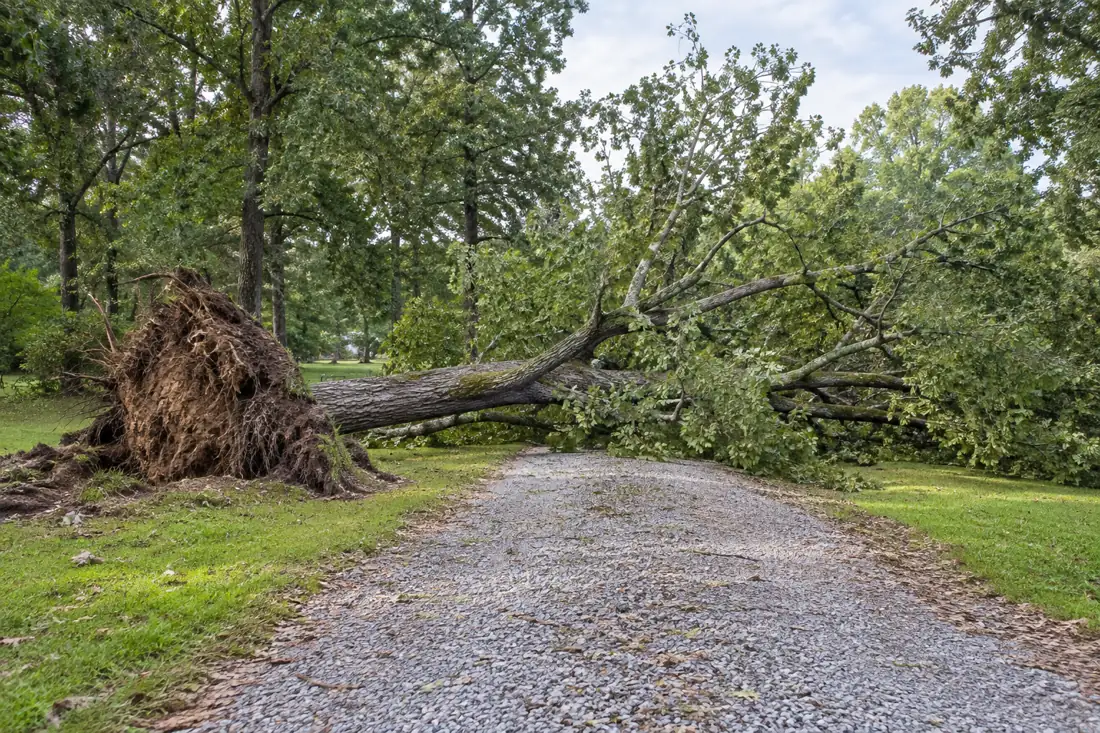
Healthcare properties may need emergency routes and critical entrances maintained throughout the response. Identify the site contact and restrictions before equipment arrives. A marked scope should distinguish immediate hazards from planned follow-up work. The tree contractor’s work window must be coordinated with the facility rather than selected solely around production convenience.
Tree damage at a healthcare property
Report affected emergency access, patient routes, staff entrances, delivery docks and parking separately. A hanging branch above active transport routes demands different control from ground debris in a remote landscape area.
Coordinate access restrictions with facility operations, security and other trades. Do not promise universal response times or immediate restoration where machinery and patient movements conflict.
Separate temporary access restoration, full dismantling, hauling and follow-up work. Keep patient details out of estimate photographs and public-facing records, and record outstanding conditions for facility management.
For this project, separate critical routes, facility coordination and phased access. These details help the contractor understand what must be protected, what information needs confirmation and what result you want from the work. A clear request is more useful than an assumed method or a price based only on tree size.
At a healthcare property, access for patients, ambulances, deliveries and mobility assistance may be more important than the quickest path for a tree truck. Identify emergency routes, accessible walkways, patient drop-off points and outdoor mechanical equipment before deciding where to stage logs or operate machinery. Keep the public away from hanging limbs, unstable trees and temporary work zones. Escalate electrical and structural dangers through the facility's established response process rather than asking landscaping personnel to handle them.
The scope discussion should include work windows, noise-sensitive areas, infection-control or air-intake considerations identified by facility managers, and the location of buried services or sensitive surfaces. Ask whether equipment can reach the tree without blocking critical operations, and which areas need a spotter, flagger or alternate access arrangement. Separate temporary risk reduction from final removal, pruning, cleanup and planting plans. Record decisions with the authorized site representative; neither photos nor an estimate provide a medical-facility safety clearance.
Put emergency and patient access ahead of the tree-work sequence
A healthcare property cannot always stop using a driveway or entrance while storm debris is removed. Start by identifying ambulance access, fire routes, patient drop-off, accessible entrances, staff access and any route to critical equipment. These routes may serve different needs even when they look like ordinary pavement. The facility representative should tell the tree contractor which spaces must remain available, which could be closed temporarily and which require a separately approved alternate arrangement before work begins.
If a fallen tree or unstable limb presents an immediate danger, the facility must use its established emergency response and authority contacts. A nonemergency tree-service request cannot be assumed to create an instant dispatch. Keep people away from suspected falling wood and do not send staff beneath damaged branches merely to direct vehicles.
A safe work plan should state the limits of any exclusion area and who has authority to change access arrangements. The ability to maintain essential care is a site-management decision, not something a tree crew can infer from a satellite image.

Establish one authorized facility contact and a clear escalation path
After a storm, several departments may be reporting separate tree problems: maintenance may see blocked service access, security may see parking hazards and clinical staff may need a quiet, protected route. Ask the facility to designate an authorized contact who can prioritize work, approve scope and reach other decision-makers. A tree contractor should not have to resolve conflicting verbal instructions from staff members while equipment is operating. Set a process for new information and changed conditions.
The initial site briefing should identify who controls gates, loading areas, security screening and after-hours entry. Provide an agreed telephone contact for urgent coordination during the work window without sharing private patient information. Do not place clinical records, patient names or health details in tree-service photos or ordinary analytics events.
The work order should include general operational constraints needed for safe access, not sensitive information unrelated to the job. If a gate or route cannot be used, the facility contact should specify an approved alternative before the crew proceeds.
Healthcare tree work: make critical access explicit
A tree near a clinic is not just a landscaping concern if the same driveway serves patient drop-off, accessible parking or emergency access. The illustrative clinic scene does not demonstrate a verified storm incident. Ask the facility's authorized representative to identify the exact tree, path and operating restrictions, including any entrances that cannot be blocked. Photograph the exterior only from a safe position without capturing patients, vehicles or confidential details in public materials.
Separate the facility's operational decisions from the tree contractor's scope. The plan should identify temporary exclusion space, equipment standing areas, patient and service access, utility considerations and the point at which a facility representative can accept the area back. If a limb remains suspended, a clear walkway beneath it does not make passage safe. Do not promise that normal operations can continue or that an assessment can be completed remotely from a picture.
Preserve critical healthcare circulation and facility operations
Healthcare grounds may have ambulance access, deliveries, patient transport, accessible entrances and utility systems that cannot be blocked without coordination. Have the facilities or incident-management contact identify essential routes and any patient-care areas next to damaged trees. Separate urgent access hazards from vegetation debris that can wait for controlled cleanup.
Ask where equipment can turn and park without obstructing medical arrivals, fire lanes, generators, oxygen infrastructure or service loading. A plan should state who approves lane closures and which personnel confirm reopening. Utility lines, stormwater structures and weak soil need independent evaluation where relevant. No educational image can demonstrate that a healthcare property is safe to operate or that an emergency-service route is adequately protected.
Keep healthcare routes operating while hazards are assessed
Ask the authorized facilities lead to identify ambulance approaches, patient drop-off, accessible ramps, delivery routes and emergency exits before storm cleanup begins. Record each affected tree against those routes and distinguish immediate access hazards from optional pruning and later debris removal. Keep temporary staging out of critical circulation areas.
Specify who authorizes a closure and reopening and whether nearby damaged standing trees require a separate assessment after debris has been removed. Do not place patients, identifiable vehicles or restricted operations in the estimate photographs; a safe exterior tree overview and facility-approved access sketch provide better information without collecting private details.

Healthcare site response: protect critical access without making medical promises
Healthcare facilities often have patient entrances, ambulance approaches, oxygen deliveries, waste collection and employee parking that cannot all close together. The facility, not a tree contractor, determines continuity-of-care priorities. Give the estimator a map showing damaged trees, equipment routes and facility restrictions, and identify who will approve a closure or redirect traffic. A hanging limb over an ambulance lane demands a different access plan from fallen brush near a rear landscape bed. Treat overhead lines, generator areas and potentially energized equipment as special hazards handled with the facility and appropriate utility personnel.
Describe the work in phases: immediate hazard isolation, time-sensitive access clearance, deliberate removal of remaining damaged trees and debris handling. Avoid assumptions about noise limits, medical schedules or infection-control requirements; ask the facility representative for site-specific restrictions. Equipment staging should be checked against fire lanes, entry canopies, deliveries and pedestrian accessibility. At handoff, document the actual route cleared, remaining obstructions, surface damage and follow-on work for site staff to evaluate. A completed tree cut is not equivalent to a clinical or regulatory clearance.
Protect essential access during healthcare property tree work
Healthcare properties have overlapping routes: patient drop-off, accessible entrances, emergency vehicles, staff movement, deliveries and service equipment. When trees are damaged, the authorized facilities representative should map the route that cannot be obstructed before inviting work vehicles onto the site. A tree beside a decorative courtyard may require different timing than the same defect beside an accessible entrance or an ambulance lane.
Record damaged trees by numbered zones with safe photos taken away from suspended wood and electrical hazards. Note clearances under covered approaches, curb ramps, medical oxygen or other designated utility installations only when the facility has verified their locations. A contractor cannot infer hidden services or medical operations from photographs. Facility personnel and qualified utility contractors must supply restrictions and any necessary shutoff or protection instructions.

Patient and service routes take priority over convenient equipment placement
Separate scope items so operations staff can plan transitions: stabilization or removal of hazardous wood, debris hauling, inspection of retained trees, and site restoration if separately agreed. Confirm that equipment setup, loading and disposal are covered in the proposal. Site protection may include fragile paving and landscape beds, but it should not be confused with any guarantee that a clinical facility can stay open through every stage.
Provide the facility's contact hierarchy, approved work windows, required permits or contractor credentials, and any posted access restrictions. Avoid including patient identities or medical details in inquiries or photographs. Agree on how unexpected hazards will be communicated and who can authorize revised work; tree contractors can advise on their scope, while the facility remains responsible for clinical continuity and public reopening decisions.
Survey storm damage by hazard and location, not just tree count
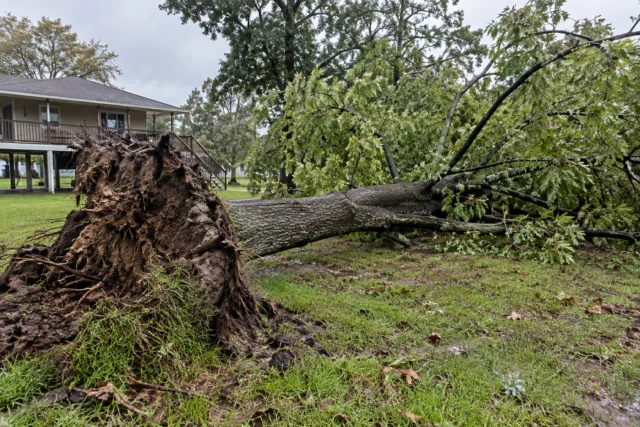
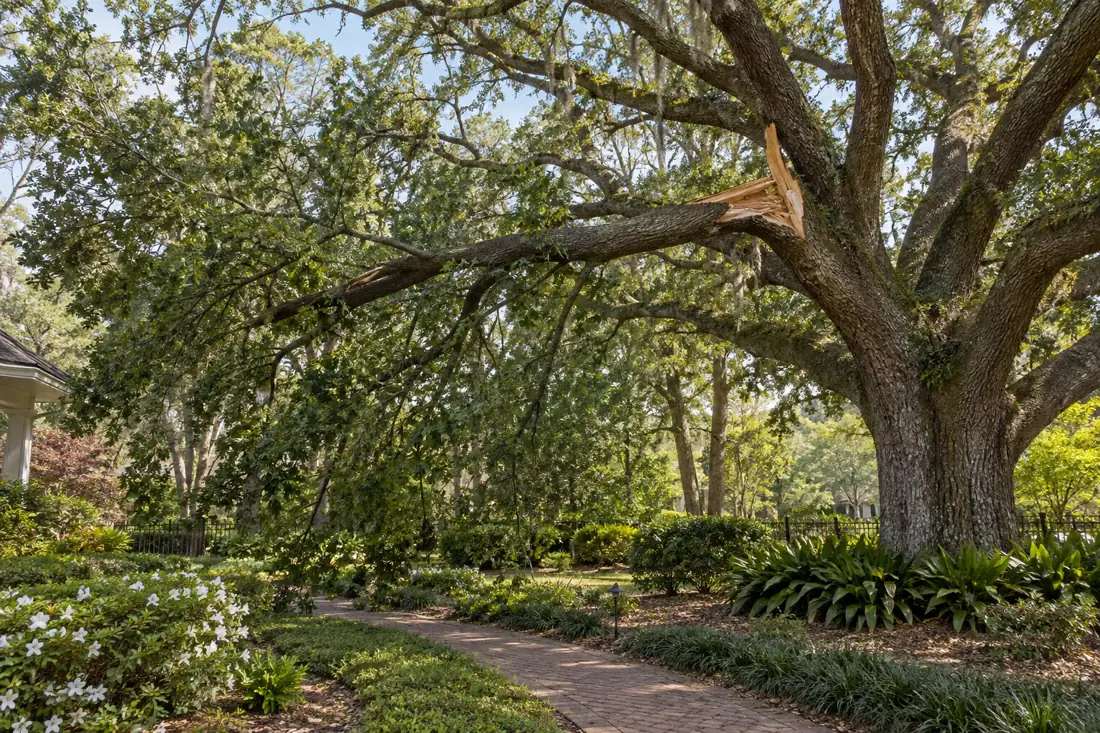
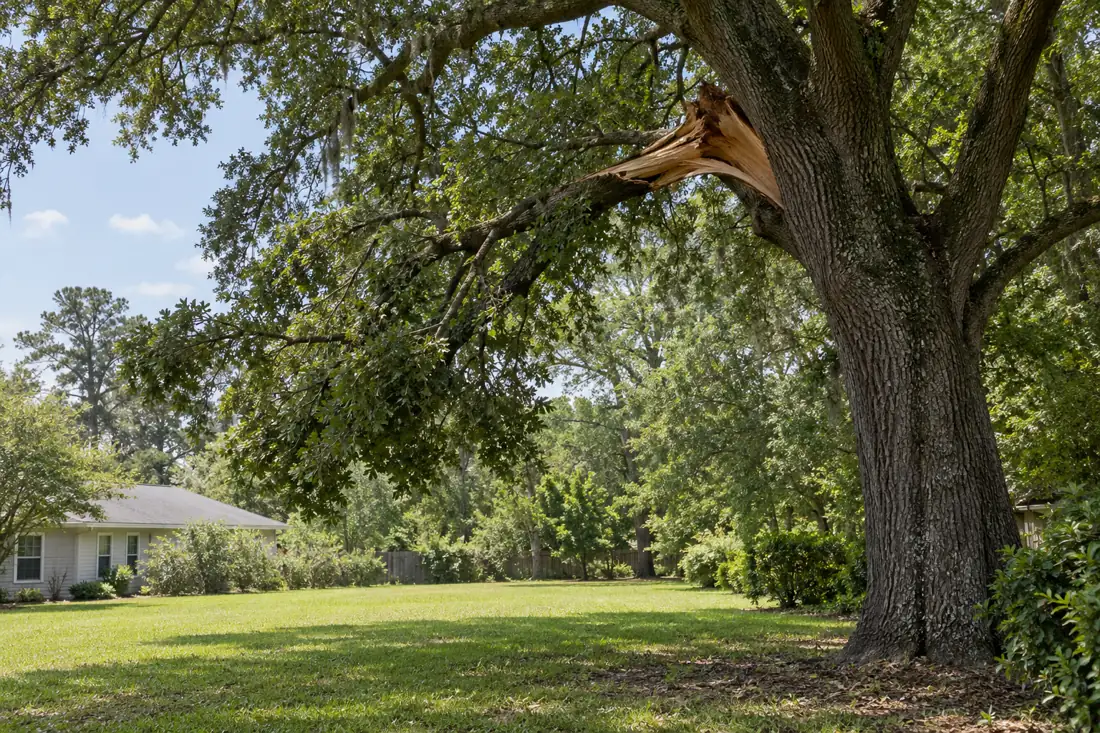
Storm conditions can leave hanging limbs, cracked unions, partially uprooted trees, blocked sidewalks and debris on roofs or fencing. The number of affected trees alone is not enough to plan the response. Create a location-based list showing each concern, the nearest facility entrance or service area, and whether people or vehicles may enter the affected zone. Safe photographs from outside the hazard area can help confirm what was observed. Do not climb, pull suspended wood or touch trees that may contact overhead wires.
Sort issues by potential exposure and operational importance without giving unqualified personnel the responsibility for structural risk judgments. A branch over an emergency route calls for different coordination from a detached tree in an unused landscape bed. The tree professional may identify additional defects during inspection, and the plan should allow for that without treating every observation as preauthorized removal. Separate confirmed conditions from reports that still require checking. This produces a safer, more auditable scope for an occupied property.
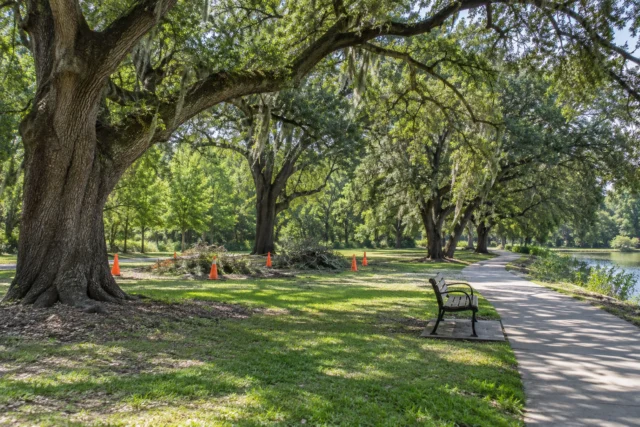
Coordinate utilities and buildings with the proper specialists
A tree leaning onto a transformer enclosure, overhead line, medical-gas area or mechanical plant presents responsibilities beyond routine pruning. The tree contractor needs to know those interfaces, but it should not assume authority over utility disconnection or building systems. Damaged conductors must be handled through the utility or qualified electrical professionals. Facilities personnel should provide restrictions for equipment rooms, emergency generators, fuel storage and other infrastructure where relevant to the work area.
If limbs reach a roof, awning or elevated walkway, the sequence may require a building professional to evaluate the structure and a tree crew to handle wood under an agreed plan. Avoid treating visible branch removal as proof that the roof or equipment is safe for occupancy. Ask each provider to document its own scope and handoff point. When a permit or specialized safety plan is needed, identify who obtains approval rather than assuming the facility's general property access permission covers every activity.
Choose equipment positions that preserve critical routes
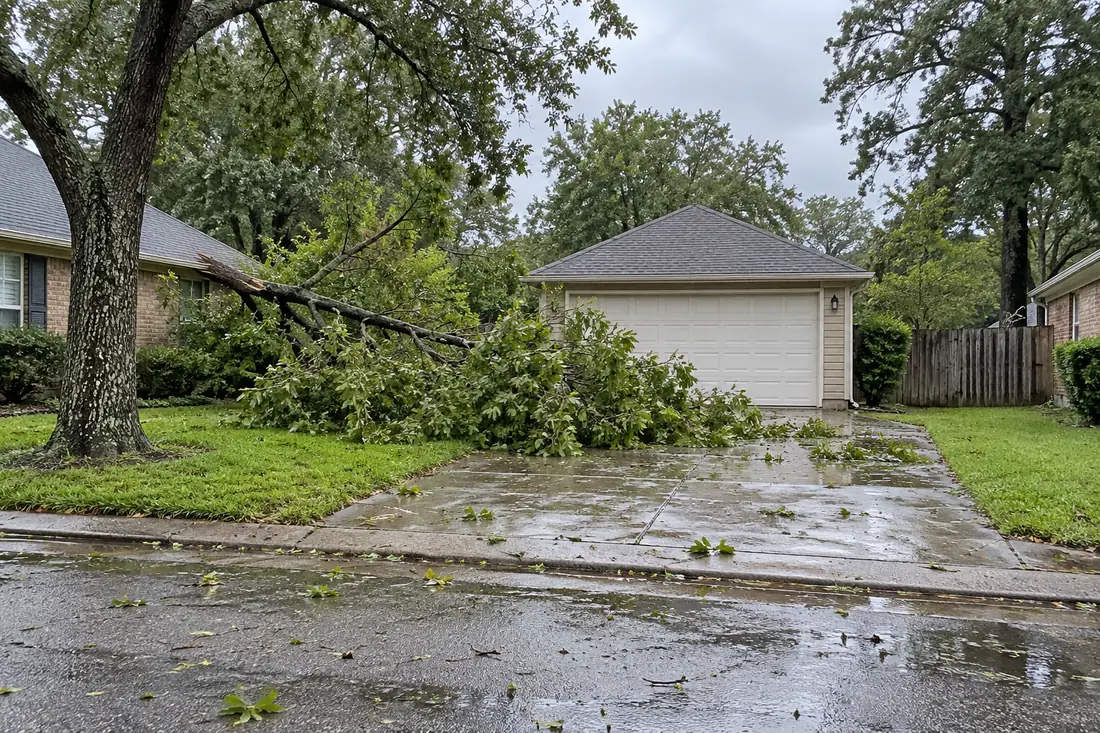
Trucks, chippers, trailers and lifts may need room outside the immediate canopy. A straight road might be too narrow to accommodate those vehicles and an emergency vehicle simultaneously. Tell the estimator which driveway widths, turnaround areas, loading docks and clearances are operationally sensitive. A temporary work zone should be planned for the entire process, including brush staging, log handling, chipper loading and departure. Avoid placing debris piles where they obstruct fire equipment, curb ramps or sight lines.
The crew should evaluate ground-bearing conditions, overhead restrictions and the proposed route before equipment is committed. Recent rain, buried utilities, landscape beds and drainage grates can affect setup. If a lifting plan would require occupying an essential route, the facility contact needs to approve a safe alternative or a different work window.
Do not assume that a night shift is automatically safer; lighting, staff coverage, noise and security conditions also matter. Scope and logistics should be tailored to the actual facility rather than a generic storm cleanup package.

Divide immediate hazards from scheduled restoration
The first phase may involve stabilizing or removing an immediate tree hazard so a route can function again. Later phases can include additional pruning, full removal, stump work, hauling and landscape repair. Define each phase by its authorized result instead of using a vague instruction such as clear everything. The facility and contractor should agree which parts of the site remain restricted until inspection or cleanup is complete and who can authorize reopening. A crew leaving the area is not by itself a formal facility reopening decision.
When several trees are affected, priority may change as conditions become clearer. A newly identified hanging limb near a patient entrance can require the original sequence to be reconsidered. Document that change and obtain authorization before expanding the job. Distinguish debris that is safe to remove under the tree contract from material that another licensed specialist must handle. Phasing makes estimates, operational notices and final records much easier to reconcile, especially where multiple contractors are responding to one storm event.
Protect accessible travel and give practical occupant notices
An alternative path that requires stairs, a steep curb or a long unmarked detour may not serve people using wheelchairs, walkers or other mobility aids. The facility's access coordinator should identify approved routes and any staff assistance process without disclosing individual patient details. Signs, cones and barriers must be coordinated with security and applicable site procedures. A tree contractor should not independently decide where people with limited mobility can be redirected around a dangerous work zone.
Give relevant departments the approved work window and restricted areas through the facility's normal communication channels. Visitors may not know the building layout; clear wayfinding matters even for a short project. Include elevators, ramps, ambulance bays and accessible parking in the access conversation when they are near the work zone. If a route becomes unexpectedly blocked, stop and re-coordinate rather than moving a barrier and hoping everyone can adapt. A usable route is a functional requirement, not simply an opening in the fence.
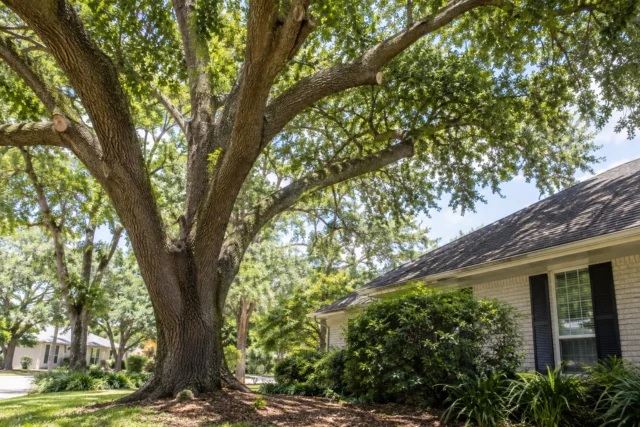
Document authorization, debris handling and changes
Healthcare property management often needs a clear record of vendor work. A useful file includes the agreed tree or area identifiers, service description, site access assumptions, relevant safety coordination, authorized change orders and accepted completion notes. Do not invent photographs of completed work or use a generated educational scene as proof of a real project. Keep genuine facility-provided site images in the appropriate restricted record, with sensitive information excluded or protected as required.
The debris plan should specify whether branches, trunks and chips will be removed from the facility or staged temporarily in an approved location. Clarify if stump grinding, landscape repair, surface restoration or building repairs are separate. Where multiple vendors handle the same area, record which party accepts each handoff. A before-and-after site-condition record can help resolve practical questions about damage or cleanup, but it must correspond to actual work rather than an illustrative marketing graphic.
Verify safe handoff before the facility reopens an area
At the end of each work phase, the contractor should report which tree tasks were completed, what material remains and whether any concerns require further evaluation. The facility's responsible representative should inspect the affected route and decide when it can return to service under its procedures. The remaining tree condition, pavement, drainage grates, fences and any temporary barriers may all affect that decision. Do not promise that every nearby tree is risk-free because one branch was removed.
For an estimate request, provide the site contact, safe photos, the affected operational area, relevant access restrictions and the desired first-phase outcome. Ask Tree Huggers to explain what can be assessed and quoted, without treating a submitted form as a guaranteed immediate response. Separate urgent emergency channels from planned vendor coordination. A precise scope and documented handoff support continuity of facility operations far better than a broad offer to make the grounds look normal again.
Healthcare tree-work planning starts with continuity of access
A healthcare site may rely on a separate ambulance approach, patient drop-off, accessible entrance, loading dock, employee route and emergency generator service area. A tree limb that obstructs one route may be critical even when it looks minor in an ordinary landscape photograph. The facilities lead should explain which access must remain continuously available and who coordinates rerouting.
Avoid taking patient photographs or disclosing facility security details while preparing a request for tree work. A landscaped-entrance image is planning context, not proof of a particular storm incident.
Set the equipment staging and truck movement route so tree work does not create a second access failure. Identify overhead electrical service, roof-edge exposures and any other specialty assessments before lifting or cutting begins. The handoff should distinguish an area physically cleared by the crew from an entrance operationally reopened by the facility. Do not promise that medical services can continue or resume without the facility's own operational and safety assessment.
Site-specific information to include with your request
- Document critical entrance and delivery priorities with the authorized facilities representative.
- Ask for a staged work plan that maintains agreed access and includes a clear stop-work or escalation contact.
- Record which routes are clean, accessible and accepted at the finish, and which restoration tasks remain separate.
Healthcare-site photos with patient privacy protected
A healthcare property may need uninterrupted ambulance, delivery or pedestrian access while a tree is evaluated. The photograph should document a tree and a route, not patients, treatment activity or restricted operations. Use the authorized facilities representative for safe access and communications.
- Show the affected tree and its relation to an entrance or service road from an approved safe position.
- Include any alternate access that a work crew must keep open, without filming patients or staff identifiers.
- From outside the hazard zone, use zoom to record visible hanging limbs, fallen material or ground disturbance.
- Tell the coordinator which departments or access routes may be affected without uploading patient information.
Ask for a work window and scope coordinated with facility operations, security and any relevant utility provider. Keep clinical information out of the inquiry. Tree-service photographs cannot certify emergency-route safety or establish a healthcare facility reopening decision.
Questions about this project
Can a business stay open during tree work?
That depends on the site and scope. Discuss occupied routes, exclusion areas, loading and work windows with the contractor and property representative. Do not assume normal access can continue through the active work zone.
Who should communicate with tenants or visitors?
Agree on that responsibility with the property representative. The contractor needs a clear site contact, while the owner or manager should use the property's established process to communicate access changes and work windows.
How should several storm-damaged trees be described?
Use marked photos or a simple tree list showing locations, affected targets and access problems. Identify urgent routes or buildings separately from later cleanup. The contractor can then discuss assessment and a practical work sequence.
Can restoration be handled in phases?
Yes, when the parties agree on clear scopes. Initial hazard or access work, planned removal, hauling and building or landscape repairs may involve different stages and providers. Record the responsibilities and completion requirements for each.
Can the crew block a public sidewalk or road?
Required arrangements must be coordinated with the appropriate authority. Identify public routes and restrictions before scheduling. A private work agreement should not be treated as automatic permission to occupy or close public space.
When should parked vehicles be moved?
Set the timing and responsible contact before the work window. Vehicles may need to leave the tree zone, equipment route and loading area. Confirm where access must remain available during each phase.
How should extra work be approved?
Use the agreed approval process and identify the change, reason, scope, price or schedule effect as applicable. Confirm who has authority before treating an additional tree or task as part of the original job.
What completion records are useful?
Keep the agreed scope, tree or area identification, authorized changes, invoice and labeled photos where appropriate. Include unresolved items and a contact. Contract-specific records should follow the buyer's stated requirements.
Should I wait for a form reply about a dangerous tree?
For an urgent condition, call to discuss availability and the next step. A form does not confirm dispatch. Keep clear, and contact emergency services or the utility when there is immediate danger or an electrical hazard.
Does emergency work always include full cleanup?
The initial authorized work may focus on stabilization or restoring access. Ask what is included and what follow-up removal, hauling or repairs need a separate scope. Confirm the plan directly with the contractor.
What should I tell Tree Huggers about storm tree work at a healthcare property?
Explain the property address, the work you want and the specific concerns: critical routes, facility coordination, phased access. Send safe photos of the tree, surroundings and access route. The contractor can then discuss the assessment and scope needed for this situation.
How do I request an estimate for this work?
Call 504-458-8336, text photos or use the estimate form on this page. Include the address, desired outcome and any timing constraints. The company will need to review scope and availability; an online request does not confirm a price, appointment or emergency dispatch.
Get a scope for your property
On a healthcare property, identify ambulance access, patient entrances, accessible parking, loading areas and any utility or emergency generator zones near the affected tree. Send safe photographs and a simple marked access map through the authorized facilities contact, without including patient information. A proposal should show which routes must remain in use, how equipment will be staged, whether work can be phased and what constitutes a safe completed handoff.
Confirm in writing who can approve closures, coordinate with facility security and inspect the route afterward. Do not assume that routine landscape access is suitable for an active clinical site.