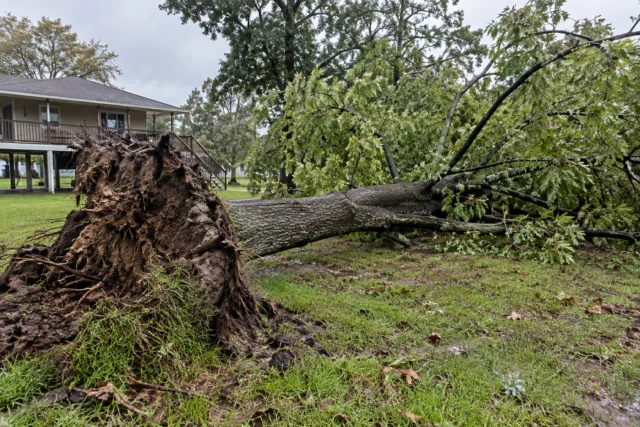
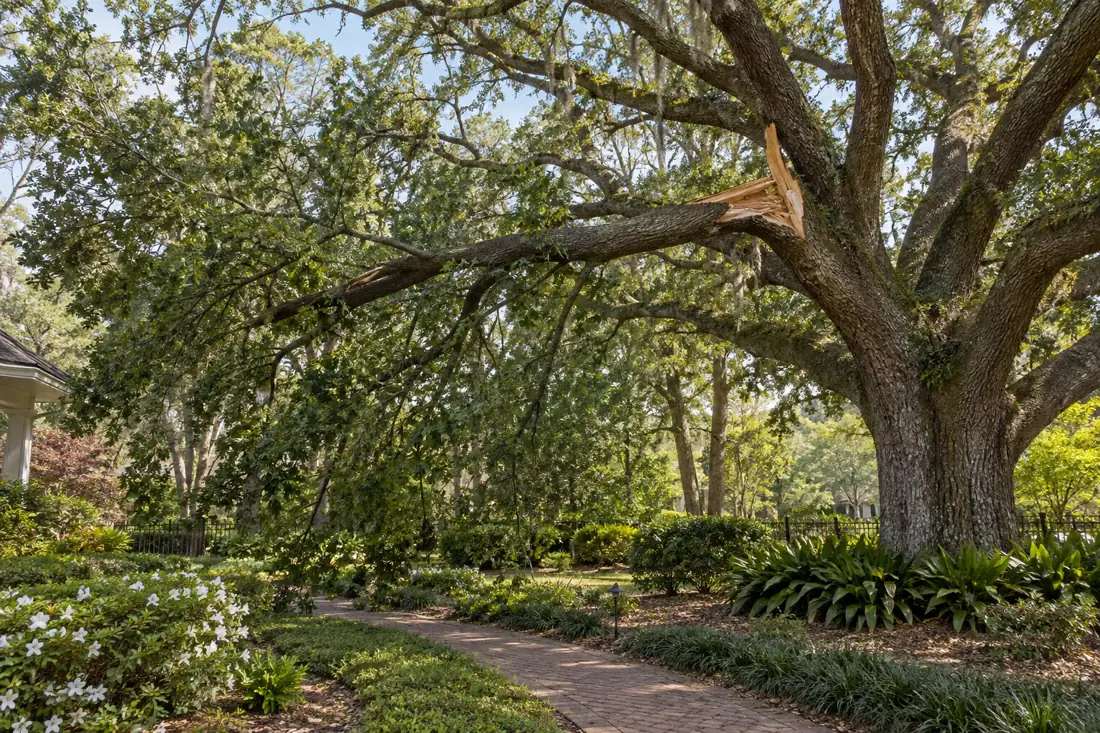
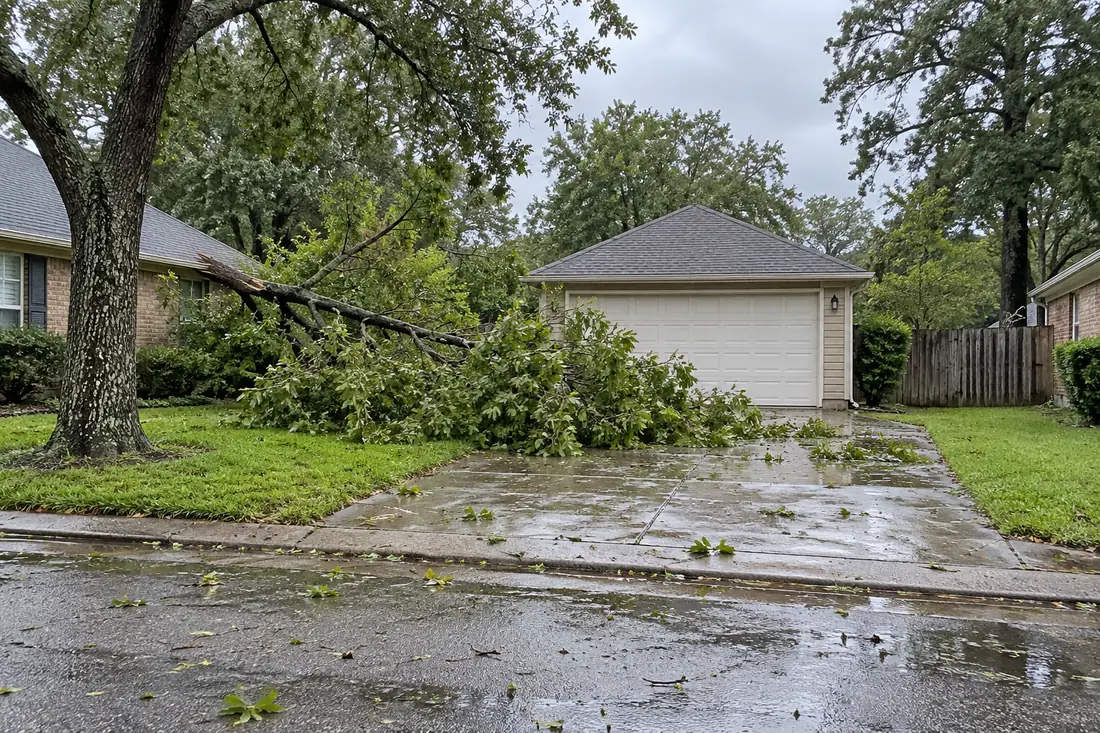
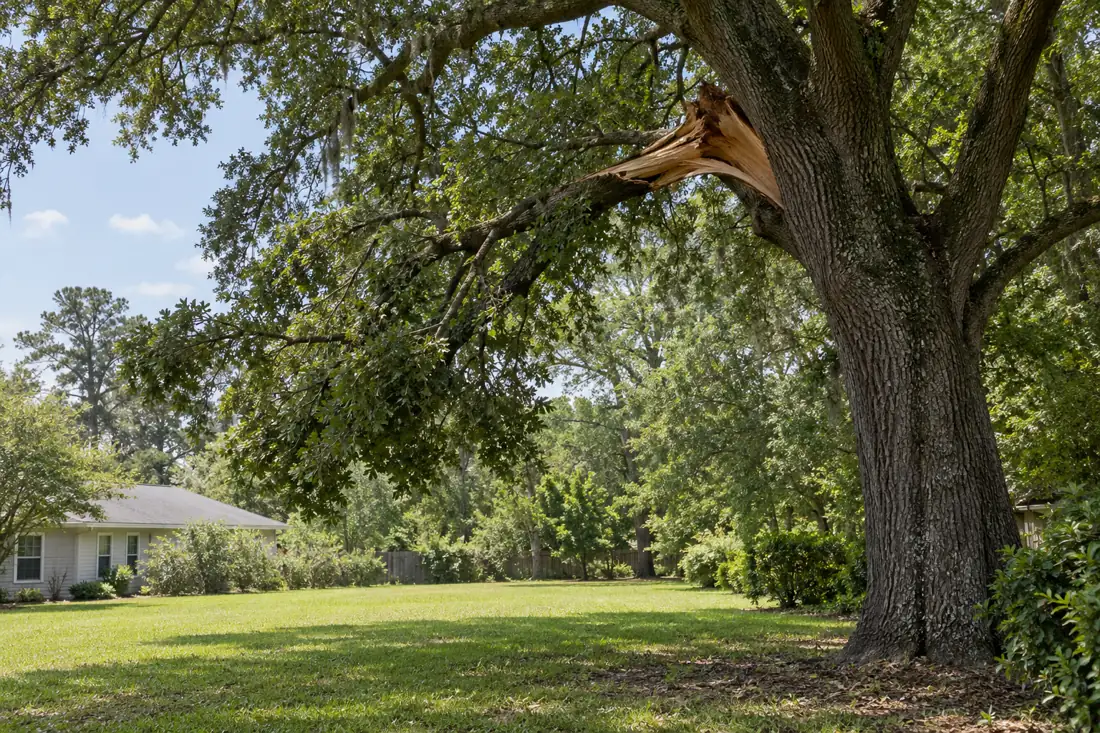
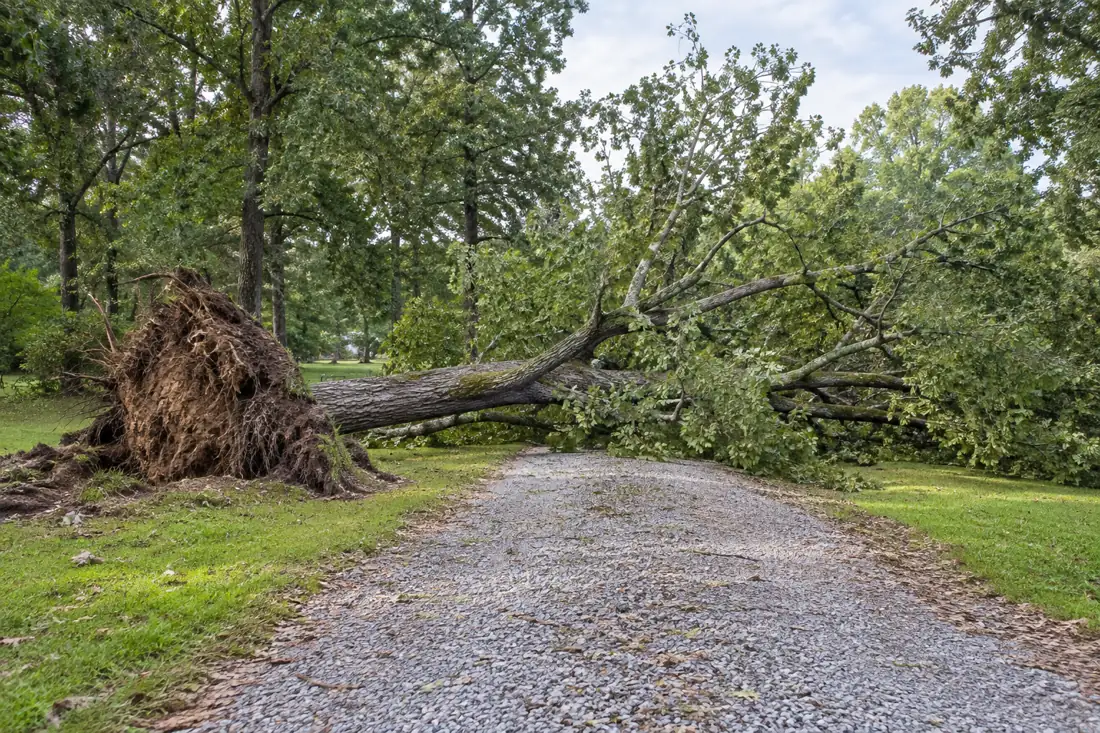
A church may need access for services, staff and community activities while cleanup is planned. Identify occupied areas, parking needs and any tree hazards affecting entrances. Coordinate the work window with the property representative and agree on debris staging. Special events and public use should be included in the scheduling conversation.
Church-property storm cleanup around public gathering areas
A church property may have worship entrances, classrooms, play areas, parking lanes and volunteer-access spaces that need different priority levels after a storm. Before tree crews arrive, identify where people will gather and which areas must remain closed. A hanging limb over an entrance or a damaged trunk near a frequently used walkway is not the same priority as loose brush in an unused corner. Do not allow volunteers to handle suspended or tensioned wood.
Prepare a simple site map or written list with location names that staff can recognize, such as east parking entrance or courtyard gate. Provide safe overview photographs and note known underground services, irrigation, vehicles and access for emergency responders. Assign an authorized representative to approve changes when unexpected hazards appear. Clear communication matters when different groups use the grounds on different days.
Request a scope that separates emergency hazard removal, general debris reduction, hauling, final sweeping and optional stump treatment. Document which pedestrian routes reopen after the crew verifies its own work zone is clear; the customer must make its own broader occupancy decision. Avoid reporting work as completed merely because the first dangerous limb was removed.
Church grounds often combine large parking areas, covered walkways, classrooms, gathering lawns and buildings that may remain in use between services. Mark entrances that must remain open, including accessible routes, as well as spaces that can be temporarily closed to protect visitors. Check trees over drives and roofs before asking volunteers to clear fallen material; branches suspended in other branches may be difficult to recognize from ground level. Coordinate a temporary access plan with facility leadership rather than placing debris beside an occupied doorway.
Provide the tree estimator with the next service or program schedule, proposed vehicle access, property contact and any restrictions on staging near utilities or historic landscape features. Ask how the crew would isolate work zones, control pedestrian movement and remove chips and heavy wood without damaging pavement or irrigation. Distinguish immediate hazard mitigation from optional pruning, stump removal and later landscaping. Keep photographs and written scope notes with the facility's records, without making claims about an insurer's coverage or a guaranteed reopening date.
Storm Cleanup for a Church Property
A storm can leave a church campus looking usable while hidden hazards remain: hanging limbs, cracked trunks, saturated ground, and debris concealing holes or broken glass. In southeast Louisiana, wind and heavy rain may also leave standing water, soft soil, and downed lines after the sky clears. Begin by keeping people out of affected areas, not by organizing a cleanup crew. A calm, visible boundary protects worshippers, schoolchildren, daycare families, outreach visitors, cemetery guests, and anyone arriving to help.
Assign one person to observe from a safe location and record conditions without approaching unstable trees or debris. Note blocked entrances, damaged roofs, leaning trees, water over paths, and any wires on the ground; photographs taken from a distance can help trustees and responders understand the situation. Do not touch or move a wire, even if it appears inactive. If there is immediate danger, call emergency services or the appropriate utility. The first decision is which spaces must remain closed pending assessment.

Obtain Trustee Authorization Before Work Begins
Storm response can involve urgent decisions, but urgency does not remove the need for clear authority. Identify who may close buildings, authorize an assessment, contact the insurer or utility, approve a contractor, and commit church funds under the congregation’s governing rules. Trustees or designated leaders should document the scope they approve, who may expand it, and how decisions will be recorded. Where people are at risk, close the area promptly while seeking the required authorization for subsequent work.
Before engaging a tree-care provider, clarify what the property needs: an on-site hazard assessment, removal of an already fallen tree, limb work near a building, or help coordinating with a utility. Ask who will direct the work, what areas must be closed, how equipment will reach the site, and what conditions would change the plan. Confirm that the provider is qualified for the proposed work; do not assume a credential, contract term, or insurance arrangement without checking it. Keep written approvals and contact details together.
Church access: distinguish routine schedules from storm restrictions
An educational church-property image cannot identify actual tree damage or prove that an entrance is safe. For a congregation site, record the affected tree using a fixed landmark, then identify the accessible entrance, drop-off lane, parking section or walkway that may be exposed. If there is suspended wood or an unstable tree, keep the area out of use rather than redirecting people beneath another part of the canopy. A wide photograph from a safe place can show circulation, but it cannot certify the tree.
Coordinate storm cleanup around the property calendar
Religious and community properties may rely on different walkways for services, funerals, deliveries, schools and evening events. Ask the authorized property representative to map damaged-tree exclusion zones and entrances that must stay usable. Keep volunteers and visitors out of areas with hanging branches, freshly leaning trunks or unstable debris.
Set out urgent hazard assessment, temporary barriers, debris hauling and restoration as separate phases. Identify memorials, sensitive landscape beds, parking surfaces and neighboring property to protect. Clearing debris from one entrance does not automatically authorize reopening the area beneath a damaged standing tree; the appropriate site representative should make that decision after qualified review.

The property contact should coordinate requested work with the calendar of worship, volunteer events and vendors without promising an unverified completion time. Ask the authorized facilities contact to confirm who may approve extra work and which routes must remain usable. Written scope should separately address barricades, equipment staging, wood removal, surface protection and how access will be handed back. The accompanying building image illustrates planning considerations rather than a specific completed project.
Protect access for gatherings and community services
Church property decisions often involve several authorized volunteers, staff members and event coordinators. Identify one person who can approve tree work and a second contact responsible for communicating temporary building or parking restrictions. Note worship times, school activities, food distribution, funeral services or accessibility needs without promising the grounds can remain open during hazardous operations.
Mark damaged trees, drop zones, loading areas, sidewalks and accessible entrances on a simple plan. If equipment must cross landscaped areas, ask about soil conditions and protection before committing to a route. Keep storm response separate from later routine pruning and restoration. After work, document which routes have reopened and which conditions still need a building, pavement or landscape contractor.
Separate Visitor Routes from Work Zones
Church properties often have several users arriving at different times and through different doors. Mark a simple site map with the work area, safe visitor entrance, closed paths, delivery route, and a place for crews to park. Use sturdy barriers or clear signs at decision points so a family cannot wander from the sanctuary entrance toward a damaged tree. A verbal warning at one doorway is not enough when people may approach from the school, kitchen, parish hall, or cemetery.
Keep workers, equipment, and debris movement apart from visitor circulation wherever possible. If a tree crew must cross a route used by visitors, arrange a controlled closure and reopening with a named person managing access; do not ask children or volunteers to watch for machinery. Preserve a continuous accessible route only when it is genuinely outside the work zone and safe to use. If that cannot be maintained, identify another usable entrance or postpone that activity rather than improvise a route through active work.

Protect Accessible Parking and Emergency Access
An open parking lot is not necessarily a safe or accessible one. Fallen branches can hide in spaces, standing water can conceal uneven pavement, and equipment may block curb ramps or accessible stalls. Keep designated accessible parking and the route from those spaces to the usable entrance unobstructed where conditions allow. If the usual route is closed, make a practical alternative known before visitors arrive, and ensure it does not send anyone through a crew’s operating area.
Keep fire lanes, ambulance access, and building exits clear of parked vehicles, brush piles, trailers, and temporary storage. Tell crews which gates or drives must remain open and who can move a vehicle if emergency responders need access. For a school or daycare, coordinate arrival and dismissal plans with administrators so parents do not converge on a narrowed drive beside cleanup. If emergency access cannot be preserved, restrict use of the affected building or event space until a safe arrangement is established.
Church and community properties need an event-aware cleanup plan
An occupied church site can function as a worship venue, classroom, food distribution point and community gathering area in the same week. Before the estimate, identify Sunday entrance routes, accessible drop-off, classrooms, restrooms, playgrounds, parking and any scheduled public events. A damaged limb near a main entrance may have a different priority from a downed tree at the edge of an unused yard.
Have a designated property decision-maker coordinate closure notices and determine whether an alternate entrance can stay open without crossing the work zone. Volunteers should not be assigned to clear suspended trees or enter an arborist exclusion area.
The work sequence should distinguish safety and essential access from nonurgent canopy or landscape work. Agree on equipment staging locations that leave emergency access and accessible parking available where safely possible, protect historic or commemorative trees subject to professional review, and address debris movement across pedestrian routes.
A tree estimate can describe removal and cleanup without assuming the contractor is also responsible for pavement repairs, fencing or event staffing. After the work, the property representative should inspect entrances, parking, landscaping and documented deferred hazards before restoring public access.
Treat Electrical Hazards as Live
A line lying across a lawn, draped through a tree, or tangled with a branch must be treated as energized. Stay well away, keep visitors out, and contact the electric utility or emergency responders according to the circumstances. Never ask a church employee, volunteer, or tree worker to pull a branch away from a line. Do not assume that a line is harmless because power is out in the building, the wire looks small, or nearby lights are off.
Tell the utility where the hazard is and describe what it touches, using observations made from a safe distance. Ask who will determine when the electrical hazard has been addressed and what boundaries should remain in place meanwhile. Tree work near conductors requires appropriate utility coordination and specialists qualified for that exposure; ordinary cleanup arrangements are not a substitute.
Keep the affected area closed until the responsible parties confirm what work can proceed. Do not advertise a space as safe based only on the absence of visible sparks or sound.

Assess Trees Before Choosing Cleanup Work
A tree that remains upright can still be hazardous after a storm. Look from a distance for a split trunk, a lifted or exposed root plate, fresh cracks, a sharply changed lean, broken limbs caught overhead, or branches resting on a roof. Wet Louisiana soils can reduce stability, and a tree may shift as water drains or wind returns. These observations are reasons to keep people away and request qualified assessment, not invitations to test a trunk, climb, or pull on a limb.
Ask the tree-care professional to explain which trees or limbs present an immediate concern, what evidence supports that judgment, and which areas need continued restriction. Ask whether the proposed work could affect buildings, paths, utilities, or neighboring property, and how the crew will control access and debris. Request a clear distinction between urgent hazard work and optional pruning or landscape changes. Church staff and volunteers should not attempt chainsaw work, climb ladders, or cut suspended, tensioned, or overhead limbs.
Coordinate storm cleanup around occupied church routes
Religious and community properties often host services, classes, deliveries and volunteer activities at different times. Record the next planned uses and identify the trustee, manager or other representative who can authorize tree work. A person with a building key might not have contracting authority. Mark primary doors, accessible parking, assembly areas and any alternate route that property management has actually evaluated. A closed entrance beneath hanging limbs should remain closed despite an upcoming gathering.
Memorial trees, cemetery features, playgrounds, outdoor seating, lighting and drainage may need special protection. Photograph these from safe locations and describe neighboring shared driveways or fences. Do not ask volunteers to clear fallen branches beneath a damaged crown. The contractor must know when the lot can be fully restricted for equipment and whether visitors will be nearby. Safe operating boundaries take precedence over a previously announced event time.

Separate property authorization, public access and equipment staging
Use separate scope items for urgent assessment, removal or pruning, chip and log hauling, stump treatment and site restoration. Structural damage and electrical hazards may require other qualified trades or utilities. If an event must move or an entrance close, let the authorized property representative communicate the change. Tree contractors cannot guarantee public access is safe merely because the principal trunk has been cleared.
Finish with a walkthrough of walkways, curb ramps, steps, drains, lighting and retained trees. Agree who can remove barriers and reopen parking after relevant checks. Keep accurate dates and a list of work performed without suggesting a synthetic planning scene is a photograph of the church’s past job. Document outstanding repairs separately so visitors get precise information instead of an unsupported all-clear.
Preserve Cemetery Features and Memorial Plantings
A cemetery combines walking routes, grave markers, memorial trees, and plantings with personal meaning. Storm debris may obscure inscriptions or cover a grave, while equipment travel can compact wet soil or damage roots and borders. Establish a quiet, clearly bounded work route that avoids graves and planting beds wherever feasible.
Before moving debris near a marker, identify whether it is resting on the stone, a vase, edging, or a memorial plant. Do not use a marker as a convenient place to lean tools or stack brush.
Ask the cemetery caretaker, family representative, or designated church contact to identify vulnerable memorials before equipment enters the area. Photograph visible conditions from respectful distances and note pre-existing damage without treating a photograph as proof of cause. Discuss hand removal of light, loose material only where a professional considers the location safe; never have volunteers pull a limb that is trapped against a monument or tree. Agree in advance who can authorize movement of memorial objects and how the cemetery will be checked after work.

Keep Volunteers Outside Tree-Hazard Work
A willing congregation can help with useful tasks, but enthusiasm does not make storm-damaged trees predictable. Falling limbs, shifting trunks, hidden nails, unstable ladders, and operating equipment can injure people who have little experience with the hazards. Do not assign volunteers to cut, climb, lift suspended branches, enter a marked tree zone, or direct a machine operator from close range. Give every volunteer a defined assignment, a supervisor, and a clear boundary they are not permitted to cross.
Suitable support may include making calls, preparing an attendance list, distributing closure notices, or setting out refreshments in a separate, cleared location. Before anyone handles ground debris, have the responsible site lead confirm that the specific area has been released from tree and electrical hazards and that the task is appropriate.
Provide gloves and other task-appropriate equipment where needed, but do not imply that protective gear makes hazardous cutting safe. If a volunteer sees movement, a new crack, or a barrier breach, they should withdraw and report it.
Manage Debris, Water, and Building Edges
Storm debris should not be piled where it blocks drains, covers fire access, presses against a building, or narrows an accessible route. Keep brush and logs separated from visitor paths and away from places where children play or families gather. After heavy rain, look for ponding near doors, washouts at path edges, and soft ground under vehicle routes, all from a safe position. A branch on a roof may also conceal damage beneath it, so do not climb up to investigate or pull material down.
Ask the cleanup lead how debris will be moved, where temporary staging is permitted, and whether equipment could damage pavement, turf, irrigation, or tree roots. Confirm who will inspect work areas for loose material and who will arrange building or drainage evaluation if damage is suspected. Do not burn debris or use a church dumpster for large material without checking local rules and site arrangements. Keep the site closed if water, structural concerns, or debris still make the intended route uncertain.

Reopen in Stages and Review Each Use
Reopening should follow the needs of each group, not a single campus-wide announcement. Trustees and site leaders can review the sanctuary entrance, school and daycare arrival routes, weekday outreach rooms, accessible parking, restrooms, and cemetery paths separately. A cleared worship entrance does not establish that a playground or cemetery is ready. For each activity, name the approved space, the route people will use, the areas that remain closed, and the person who can pause use if conditions change.
Before reopening, ask the tree professional whether the agreed work is complete and whether any restricted areas still require barriers; ask the utility or other responsible specialist about hazards within their scope. Walk visitor routes without entering unreleased work zones, check signs and accessible access, and communicate changes to staff, families, and event leaders.
Arrange a follow-up check after additional rain or wind, especially where soil remains soft or damage was observed. Keep closure authority clear, and reopen remaining areas only through a documented decision by the authorized church representative.
A church storm response should protect the next gathering
Church properties often combine weekday office visits, worship services, childcare, food distribution and parking in the same grounds. A fallen limb near an entrance can affect these uses differently. Make a zone map from existing site information and identify which entrances remain open, which routes need accessible alternatives and which cemetery or memorial features require protection. A contractor should not infer authority from a volunteer's request; establish the trustee, property manager or other designated approver before paid work begins.
Coordinate the tree crew's loading area and debris route with scheduled gatherings and any emergency vehicle access. If a cemetery border, monument or historic planting is near the work, describe it in the scope before machinery arrives. Reopening should occur by usable zone, not simply because the truck has left the parking lot. Photographs should show outdoor access conditions without depicting parishioners or implying a real job was photographed.
Site-specific information to include with your request
- Confirm who approves the scope, receives changes and signs off on debris removal.
- Define the accessible pedestrian and vehicle route that must remain usable during each work stage.
- Inspect and document any protected landscape or memorial features before and after equipment passes.
Church-property photos should include the public-use route
For a church or worship property, the photo record must help separate the affected tree from entrances, accessible paths and planned public use. Do not move people through a closed area to stage a better image. A facilities or property representative should coordinate any permission to enter and the timing of work.
- Show the tree and the nearest entrance or walking route from outside the restricted area.
- Include parking aisles or the assembly/drop-off zone if they affect safe crew access.
- From a safe point, document fallen material in a planting strip without moving it.
- Identify who can approve work and any scheduled use that affects the proposed exclusion area.
A written scope should distinguish making a route safe, removing the tree or limb, hauling debris, and any later grounds repair. Keep congregation members out of photos where possible. Do not assume that a service request automatically authorizes closure, work or reopening.
Questions about this project
Can a business stay open during tree work?
That depends on the site and scope. Discuss occupied routes, exclusion areas, loading and work windows with the contractor and property representative. Do not assume normal access can continue through the active work zone.
Who should communicate with tenants or visitors?
Agree on that responsibility with the property representative. The contractor needs a clear site contact, while the owner or manager should use the property's established process to communicate access changes and work windows.
How should several storm-damaged trees be described?
Use marked photos or a simple tree list showing locations, affected targets and access problems. Identify urgent routes or buildings separately from later cleanup. The contractor can then discuss assessment and a practical work sequence.
Can restoration be handled in phases?
Yes, when the parties agree on clear scopes. Initial hazard or access work, planned removal, hauling and building or landscape repairs may involve different stages and providers. Record the responsibilities and completion requirements for each.
Can the crew block a public sidewalk or road?
Required arrangements must be coordinated with the appropriate authority. Identify public routes and restrictions before scheduling. A private work agreement should not be treated as automatic permission to occupy or close public space.
When should parked vehicles be moved?
Set the timing and responsible contact before the work window. Vehicles may need to leave the tree zone, equipment route and loading area. Confirm where access must remain available during each phase.
Does cleanup include every root and wood chip?
That depends on the written scope. Tree removal, stump grinding, chip hauling and root excavation are different tasks. Ask what material is removed, what remains and whether soil or landscape restoration is separately included.
What should a final walk-through check?
Compare the identified trees and tasks with the agreement. Check agreed debris handling, stump treatment, access openings and any listed restoration. Record unresolved items clearly instead of relying on a general impression that the property looks finished.
How should extra work be approved?
Use the agreed approval process and identify the change, reason, scope, price or schedule effect as applicable. Confirm who has authority before treating an additional tree or task as part of the original job.
What completion records are useful?
Keep the agreed scope, tree or area identification, authorized changes, invoice and labeled photos where appropriate. Include unresolved items and a contact. Contract-specific records should follow the buyer's stated requirements.
What should I tell Tree Huggers about storm cleanup for a church property?
Explain the property address, the work you want and the specific concerns: service schedule, parking, public access. Send safe photos of the tree, surroundings and access route. The contractor can then discuss the assessment and scope needed for this situation.
How do I request an estimate for this work?
Call 504-458-8336, text photos or use the estimate form on this page. Include the address, desired outcome and any timing constraints. The company will need to review scope and availability; an online request does not confirm a price, appointment or emergency dispatch.
Get a scope for your property
For a church property, identify the tree or debris concern and the dates when worship, classes, deliveries or community events need clear access. Send safe wide photographs of damaged trees, walkways, parking entrances and the area where debris could be staged. Name the person authorized to approve work and flag any cemetery markers, gardens or overhead wires that should remain untouched.
Ask for a written plan that separates immediate hazards from later cleanup, explains temporary closures and specifies which branches, logs and surfaces will be addressed before the grounds reopen.
Separate tree stability from church-ground reopening
For a church property, clearing branches out of a parking aisle does not establish that an adjacent newly leaning tree is stable. The authorized property representative should map both tree hazards and the entrances, accessible routes and service times affected by temporary closures. Keep volunteers and visitors away from suspected unstable trees while the appropriate assessment is arranged.
Use the partially uprooted tree guide when saturated ground and a changed lean are involved. If the work also includes staging large quantities of branches and logs, the storm debris staging guide helps distinguish equipment routes, material separation and hauling responsibilities. Both decisions belong in the written scope but should be priced and approved distinctly.