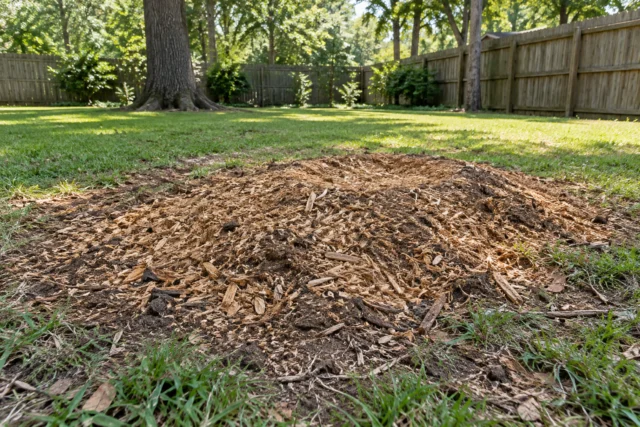
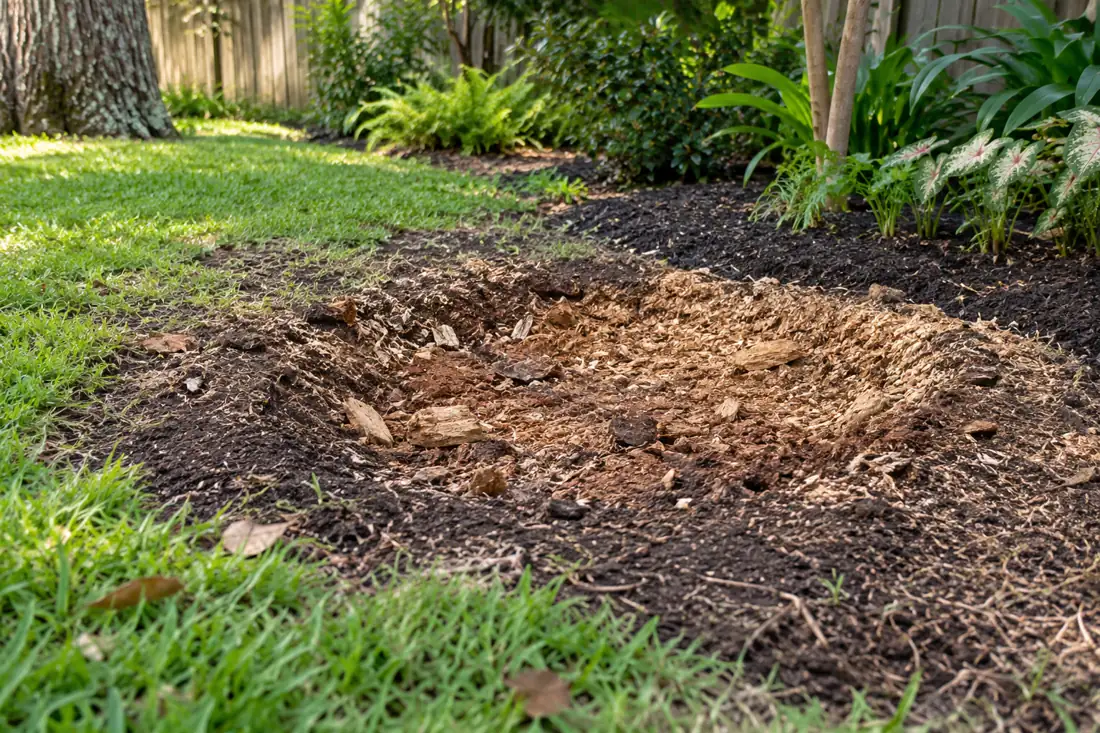
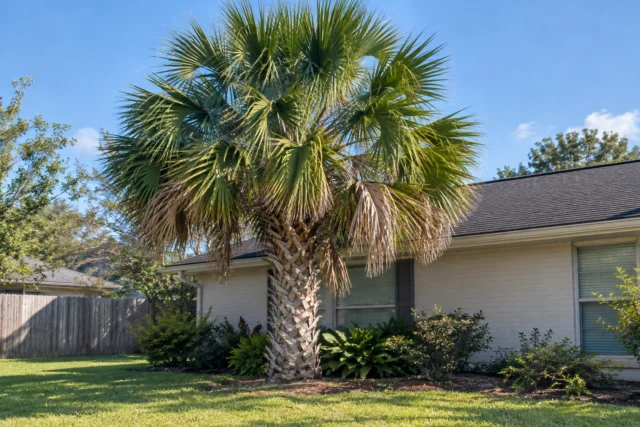
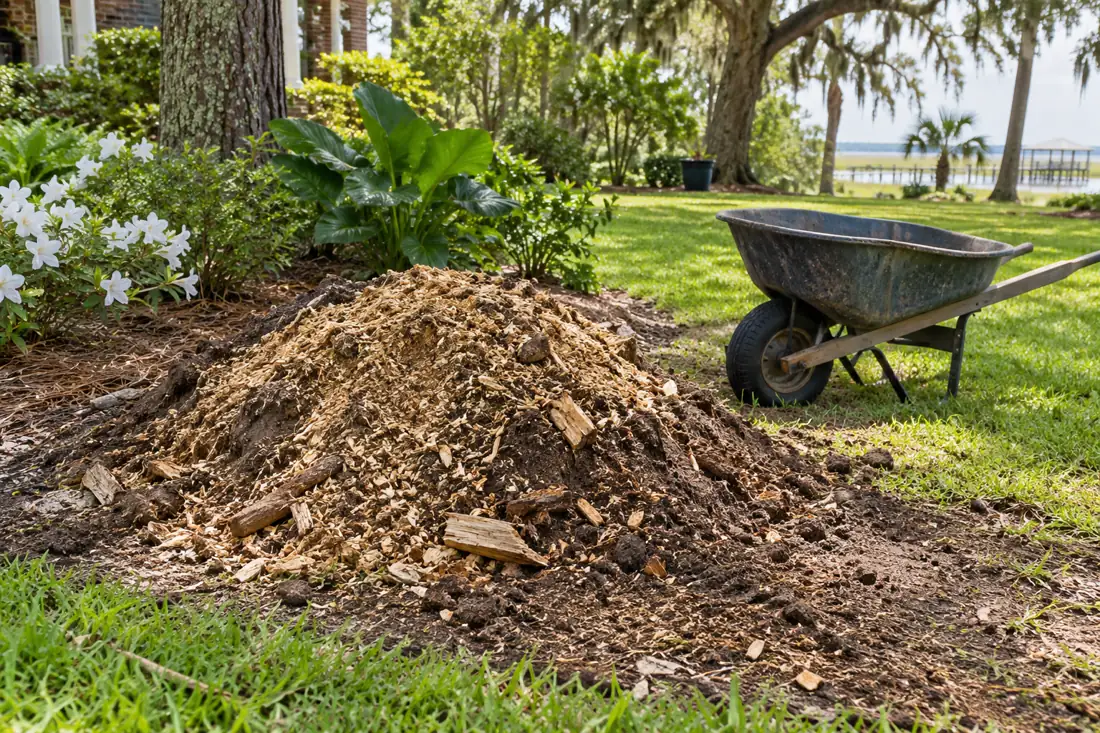
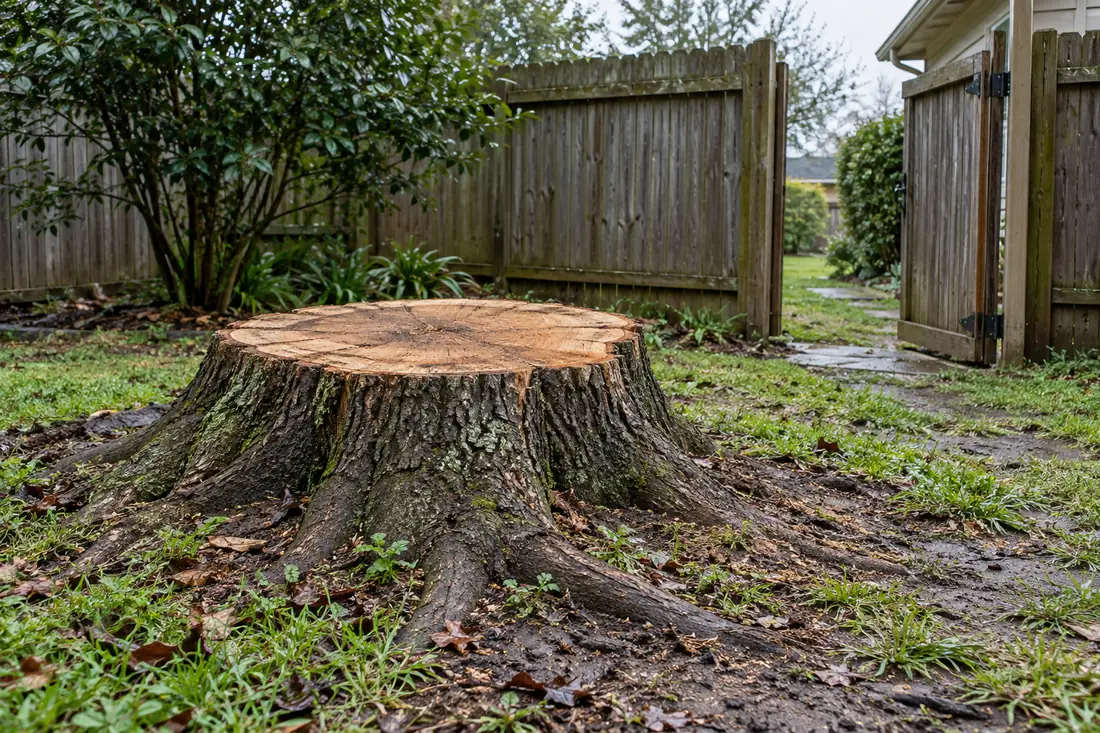
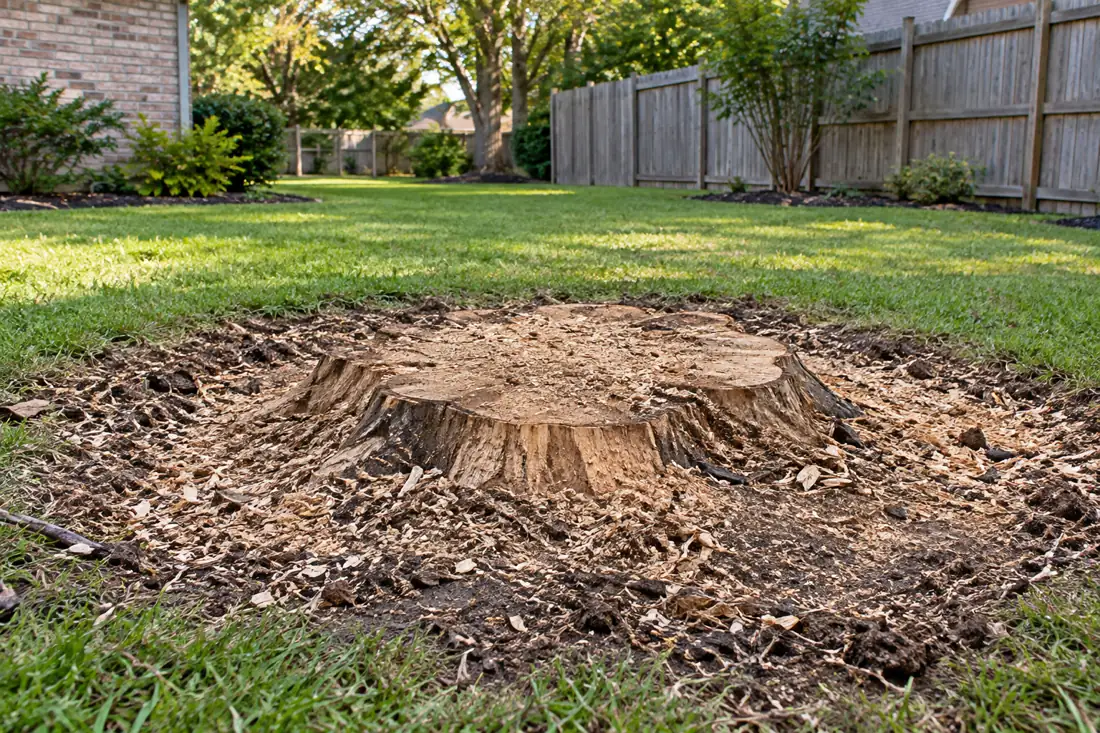
A stump beside a house requires attention to utilities, foundations, exterior surfaces and machine clearance. Show the entire base and the approach route rather than only the cut surface. The grinding scope should identify depth and limits without promising removal of every root beneath the structure.
What a foundation-side grinding estimate should resolve
Photograph the stump from the house side and the lawn side, including the distance to siding, foundation vents, visible piping, steps and any retaining edging. Grinding does not make nearby structural roots disappear, and a contractor should not promise a perfectly level planting bed without stating how spoil and residual wood are handled.
Agree on the equipment route before discussing depth. A tight access route may require a narrower grinder or a restricted work area, which can change what portion of the stump can be reached safely. Ask whether the quoted depth is measured below existing soil grade, the top of the root flare or the intended future surface.
For a new planting area, separate stump removal from soil rehabilitation and utility verification. Mark private irrigation, drains and wiring before any digging; public utility markings do not identify every private line. The final scope should state whether chips stay, are removed or are blended with imported soil, because concentrated woody chips are not an ideal planting medium.
When a stump sits close to a house, first establish what the grinder can reach without risking the structure or service connections. Mark the stump against the foundation, steps, patios, condensate lines, drain outlets and visible meters. Tell the contractor about known underground utilities and arrange required locating before intrusive work.
A machine may need a narrower route and protection for siding, windows or paving; it cannot promise removal of wood beneath footings or a slab. Decide whether the finished area needs only chip cleanup or additional landscape preparation. Record house-side clearance and inaccessible roots in the written scope so a later contractor does not mistake the finished surface for a fully excavated site.
Keep house connections out of the cut zone
The wall nearest a stump may conceal service conflicts that cannot be evaluated from a stump-only photo. Look for meter locations, condensate drains, buried landscape wiring, irrigation piping, exterior outlets, gas connections and drainage routes entering the ground. Record their visible positions for the estimator, but do not excavate or probe around them to guess the underground path. The grinder's cutting envelope and the route used to maneuver it must both be evaluated against the foundation and exposed finishes.
Agree on whether the proposal covers only accessible wood removal or any separate foundation-side excavation and restoration. Grinding cannot establish that buried roots under a slab or footing have disappeared, and it is not a structural repair. When irrigation crosses the same area, the irrigation-specific guide explains owner-supplied records, locating responsibilities and post-work testing; that is a distinct handoff from preventing direct contact with the house. For the related but distinct decision, see Stump Grinding When Irrigation Is Nearby.
Keep the stump plan separate from foundation work
Take a wide photograph that includes the house wall, nearby doors, steps, air-conditioning lines and any surface drain, then a close photograph of the stump base. Tell the estimator whether the location is a crawlspace edge, slab, raised foundation or other known construction; do not guess about unseen footings. Mark visible utility hardware, but do not dig to locate hidden lines yourself.

Distinguish root flare from buried roots
The broad swelling at the base of a tree helps estimate the visible working area, but it does not show the full shape of the root network under soil, patios or foundations. Some older stumps have roots rising at the surface; others disappear below grass or fill. Ask whether the proposed work covers only the central stump or any exposed roots that are a trip concern. Those are different scopes with different access and ground-disturbance implications.
Grinding is not a reliable way to diagnose why a wall has cracked or a slab has moved. Existing structural defects should be documented separately, and a qualified structural specialist may be needed if a building problem is suspected. Avoid promising that grinding the stump will stop ongoing settlement or automatically make a future repair safe. The useful estimate specifies the wood to be removed and the surface condition the crew expects to leave.
Check space between stump and foundation. Distance from a stump to a house controls grinder access, debris protection and safe reach. Identify foundation edges, steps, irrigation, utilities and buried drainage before quoting depth. Clarify what remains underground near the structure and how the depression will be finished. Grinding does not remove every root extending beneath a building.
Describe the desired result in the space between the stump and the building. Grinding access, excavation, waterproofing, foundation repair and later landscaping are not interchangeable tasks. A written proposal should identify an achievable grinding boundary and the party responsible for any subsequent structural or hardscape decision.
If a future slab is planned, coordinate the separate concrete-preparation requirements.
Protect the route to a stump beside the foundation
When a stump sits close to a wall, the machine’s path may be harder than the grinding itself. Measure the gate opening and note steps, pavers, low eaves, air-conditioning lines or irrigation heads along the route. A photograph that shows the stump and the building in the same frame helps the estimator understand clearance without implying that machinery can reach every side.
Grinding is not foundation repair and should not be used to investigate buried building elements. If the stump is tied into a retaining wall or foundation-adjacent hardscape, ask where the equipment’s safe operating boundary will be. Agree separately on what happens to chips, exposed soil and any protective covering placed over the access path.

Begin at the foundation rather than the stump
The first measurement should establish where the stump meets the building environment, not merely how wide the visible wood appears. Look at the distance from the stump flare to the exterior wall, steps, porch footings, downspouts and paved edges. A stump on a sloping lot may seem far from the house at eye level while its roots or surrounding grade extend toward a foundation. Explain these relationships during the site review so the equipment plan is grounded in what can actually be reached.
Photograph the stump, the access route and nearby structures from stable ground without pulling away siding or disturbing the stump. If a basement, crawlspace or shallow utility enters the area, identify its approximate location for the contractor without claiming the visible root system establishes an underground clearance. The goal is to separate facts a homeowner can observe from concealed conditions that require locating or professional evaluation before grinding begins.
Create a realistic machine approach
A compact grinder still needs a physical route from its unloading point to the wood. Gates, air-conditioning equipment, exterior faucets, decorative stone and narrow turns may determine which machine can be used. Measure the narrowest clear opening, not just the apparent width of the side yard. Low branches, wet ground or a raised threshold can become obstacles even where the gate itself is wide enough. Access planning can avoid unnecessary disturbance to an otherwise healthy landscape.
Do not assume that a machine will safely cross a porch, drain cover, thin paver edge or hidden irrigation line. A contractor should assess ground support, wheel or track loading and the turning area before committing to an approach. Where access is genuinely constrained, discuss a different grinder, a revised work sequence or a narrower achievable scope. An honest access limitation is more helpful than a quote based on equipment that cannot reach the stump.
Coordinate house-side grinding with foundation and utility protection
Begin with a wide photograph showing the stump, wall, driveway access and outdoor equipment. Measure the gap between the widest stump flare and the foundation face, then note any basement, crawlspace opening, raised pier, drain, meter or condensate line nearby. A root may disappear beneath a slab without demonstrating that it has damaged the structure. Avoid using a stump-grinding estimate to diagnose a foundation crack; request a qualified structural assessment if cracking or movement is a concern. Keep that decision distinct from the tree-work proposal.
Ask how the proposed grinder will reach and operate at the house side. Equipment width alone does not establish that the cutting arc clears the siding, hose runs or electrical service. The operator may need a shallow or partial grind near a fixed obstacle, which should be explained in writing before a finished grade is promised.
Do not assume that a machine can safely reach all wood buried under a walkway or footing. Mark private irrigation, drainage or lighting lines as well as any public utilities before disturbance.
Protect the occupied property during the visit. Move loose garden objects, identify fragile windows or screens exposed to debris, and agree where chips will be directed. Keep doors, children and pets out of the immediate work area while the contractor establishes safe barriers. If an air-conditioning condenser is close, ask whether temporary protection or a different tool path is appropriate without obstructing ventilation or servicing. The contractor, not the homeowner, should determine machine operation and cutting distances based on field conditions.
Define restoration after grinding separately from the cut. A chipped excavation close to a wall may need selected material removed, clean soil added and drainage graded away from the building. Avoid filling soil against siding, weep holes or pier vents to make the area look level.
Photograph the remaining ground contour and identify what will be done by the grinder crew versus a landscaper. If roots remain beneath permanent construction, explain that this is a scope limitation rather than promising that every root can be removed.

Grinding near a house: distinguish stump depth from foundation disturbance
A stump close to a house may be beside a slab edge, pier, crawlspace, sewer cleanout, condensate line, utility riser, or landscape wall. Grinding only the above-ground stump does not require pretending that every root beneath a foundation can be removed. Document the actual distance to the wall, grade changes, drainage paths, air-conditioning equipment and any exposed connections. Review access to the stump and where chips can safely discharge; wheel guards and screens do not eliminate all flying-debris concerns. A structural crack in a wall should be separately evaluated rather than blamed on the stump without evidence.
Agree on the intended end use of the area—mulch bed, lawn, paving, or a later foundation project—before choosing a grinding depth. If roots appear to extend beneath structural elements, an arborist or appropriate construction professional should advise on disturbance instead of a crew blindly chasing roots.
Utility locating and a site walk are essential, especially where private irrigation or low-voltage cabling may be unmarked. Ask the estimate to state reachable material, excluded roots, chip hauling, backfill, site protection and how concealed obstacles will be handled. This guide is about controlled stump reduction near structures, not structural repair or a guarantee that all underground roots disappear.

Map utilities and attachments without guessing
Electrical service, gas piping, irrigation and drainage may run alongside the house where the stump sits. The route of a visible meter or cleanout is not proof of where every line travels underground. Identify known service entrances and any homeowner diagrams, then arrange the appropriate utility-location process before excavation or grinding where required. Private systems can need separate locating beyond a public utility-marking request.
Never use a grinder, pry bar or probe to search blindly for a buried cable or pipe. Ask the contractor to explain how marked locations and possible private lines change the permitted depth and working area. If something cannot be located with adequate confidence, the estimate should explicitly exclude that portion until the uncertainty is resolved. A smaller safe scope is preferable to implying that a wood-removal tool can identify utilities.
Confirm the boundary near the foundation
A stump beside a house may involve roots close to foundation elements, service lines, drains, exterior equipment and narrow machine access. Mark the stump and nearby visible features in ground-level photographs, including steps and any finished surface that might be damaged. The operator should confirm the safe grinding envelope and identify whether portions of the stump or roots must remain because of those constraints.
Do not assume deeper grinding is always possible or that the service includes excavation, backfill, utility repair or foundation work. Record the agreed finish condition and intended use of the area so a later planting or landscaping contractor understands the limitations. This is a site-specific access and protection question, not a fixed-depth recipe.
Think about the wall and nearby glass
A rotating cutting wheel throws chips, soil and small fragments, so siding, windows, doors and vehicles near the work zone matter. Screens and temporary protective arrangements should be chosen by the contractor for the equipment and geometry involved. A close stump can also limit the direction the grinder operates, affecting how the crew moves around the trunk. The relevant question is whether every planned cutting position allows controlled operation without contacting the building.
Before work starts, move loose patio furniture, pots and toys out of the route and close windows near the area. Ask how the crew will establish the exclusion zone for other occupants and pets. Protective measures reduce exposure but do not turn every tight-space stump into a routine job. Where the wheel cannot safely approach the house-facing edge, define the residual wood honestly instead of representing the stump as completely removed.

Agree on actual grinding depth and result
The words remove the stump can mean very different things to different people. A lawn restoration may require the visible stump ground below the surrounding grade, whereas a future paving or foundation project requires coordination with that project's specifications. Identify the intended next use of the spot before choosing a depth. Also ask whether any raised roots or multiple stems are included, since one broad root flare can be larger than the central cut surface.
Do not use a generic depth promise without first considering nearby utilities, grading and machine reach. The contractor should describe what depth is practical and what buried obstructions might lead to a change in the plan. If the surface must later support a slab, driveway or structure, grinding alone does not establish bearing capacity or compaction. Treat the tree-work scope as one step in a larger site-preparation sequence.
Decide what happens to the grindings
Ground wood and soil normally occupy more loose volume than an intact stump. In a confined bed beside a house, that material can pile against siding, block a vent or bury a drain opening if no removal plan exists. Ask whether the quote includes raking chips level, hauling them away or leaving them for the property owner. The answer affects both cost and the condition of the area when the crew leaves.
Keep organic debris below siding and away from ventilation openings according to the building's maintenance needs. If chips are to be reused elsewhere, identify a suitable spot before the crew arrives. A deep hole backfilled mostly with coarse chips can settle as the material decomposes, so discuss whether clean soil and later top-up are needed. The handoff should describe the expected surface, not just the cutting operation.

Schedule around residents and other trades
A grinder beside a home can affect access through a door, a side path or the only gate to the backyard. Let the crew know about school pickup, deliveries, pets, home maintenance visits or anyone who requires the route to remain clear. Ask what parts of the work area must be empty and for roughly what sequence, without assuming a specific completion-time guarantee. Good scheduling reduces the pressure to work around people in an unsafe space.
If siding, drainage, foundation, patio or fence work is already planned, coordinate the order before the stump appointment. Grinding ahead of a finished landscape may reduce rework, but structural excavation and utility relocation can change the appropriate stump scope. Keep those separate contractors informed of what has and has not been removed. Photograph the agreed condition after work so the next trade understands the remaining roots, chips or soil settlement concerns.
Prepare a useful estimate request
A productive inquiry includes stump diameter at ground level, the approximate space to the house, photos from two angles, the narrowest access width and the intended use of the spot. Mention raised roots, nearby glass, meters, drains or irrigation and whether you want chips hauled away. None of these details substitutes for a site assessment, but they help the contractor identify questions before recommending equipment and scope.
Ask for a written explanation of the included grinding area, depth assumptions, access arrangements, cleanup and exclusions. If the stump is immediately beside a structural footing or a known service line, say so plainly rather than asking for an instant price based only on diameter. Tree Huggers can review the information through its normal service inquiry process; no quote, availability window or clearance is guaranteed by an online form.

Check the result before equipment leaves
After the grinder stops, look at the entire worked footprint from more than one side. Confirm whether the agreed stump surface and reachable roots were addressed and where any unavoidable wood remains against the house. Check that chips are not covering wall vents, downspout outlets, drain grates or nearby irrigation controls. The completed scope should be judged against the written agreement, not against an expectation that all underground roots have disappeared.
Take a few after photos for the next landscaper or contractor, especially when the area will be filled or paved. Note any loose material that must settle or be removed before the next stage. If a new hole or depression appears weeks later, address the surface condition with appropriate soil and grading guidance rather than assuming the stump has regrown. Clear documentation makes follow-up discussions specific and useful.
Questions about this project
Can a grinder work right against a foundation?
That must be determined from the machine, visible clearance, buried-service information and the agreed protection plan. A quote should not promise grinding underneath a foundation or unseen structural components. Request a boundary and specific exclusions when the stump touches masonry or other building elements.
Will stump grinding fix roots affecting a house?
Grinding the visible stump does not establish the condition of a foundation or remove every buried root. If there is cracking, movement or drainage trouble, involve an appropriate building professional. Keep the tree scope and any structural investigation clearly separated.
Which property features should I point out?
Identify buildings, vehicles, fences, fixed fixtures, landscape features, utilities and occupied routes. Explain what can move and what must remain. Include existing damage and any buried features you know about along the access route.
Should people remain inside the work area?
The contractor and site contact should establish an exclusion area and access arrangements appropriate to the work. Keep children, pets, visitors and other workers outside the active zone until the responsible parties say it can reopen.
Will a utility locate show every private line?
Do not assume it will identify all irrigation, pet-fence, drainage or other customer-owned systems. Provide available plans and ask what additional locating or coordination is needed for the actual work and access area.
Who should arrange utility-related preparation?
Set that responsibility before scheduling. The property contact, contractor and relevant providers need to identify who handles locating, disconnection, relocation or separate repair work. Uncertain utility information should be resolved rather than guessed.
What access information helps an estimator?
Send the narrowest opening, overhead obstacles, turns and the distance between the tree and the loading area. Include photos of the entire route and identify steps, soft ground or features that must remain protected.
Should I remove a fence before the visit?
First ask the contractor to assess access and agree on any temporary opening. Identify who owns the fence, who can authorize the change and who will reinstall it. Do not assume the opening is necessary or included.
What should I compare besides the price?
Compare tree identification, work objectives, access assumptions, hauling, stump treatment, site finish and exclusions. Ask whether permits or other coordination are part of the scope and who can approve changes if conditions differ.
Does an online request book the crew?
No. A request starts the estimate conversation. The company still needs to discuss scope, availability and any site assessment. For a dangerous or urgent condition, call 504-458-8336 rather than relying on a form response.
What should I tell Tree Huggers about stump grinding near a house?
Explain the property address, the work you want and the specific concerns: building clearance, buried services, grinding limits. Send safe photos of the tree, surroundings and access route. The contractor can then discuss the assessment and scope needed for this situation.
How do I request an estimate for this work?
Call 504-458-8336, text photos or use the estimate form on this page. Include the address, desired outcome and any timing constraints. The company will need to review scope and availability; an online request does not confirm a price, appointment or emergency dispatch.
Get a scope for your property
House-side stump grinding should begin with the relationship among the stump, foundation edge, steps, walls, drains and utility entry points. Provide a wide photograph that shows the building and a closer view of the stump base, along with the narrowest approach for equipment. If a previous tree pushed against siding or a walkway, describe that history without assuming all the damage came from roots.
Mention buried services, irrigation, exterior electrical runs or known drainage lines. Do not expose utilities or undermine foundation soil merely to take photos.
Ask for a scope that marks the grinding footprint and practical limits beside the building, explains how nearby hard surfaces will be protected, and distinguishes stump reduction from root excavation or structural repair. Confirm who is responsible for utility locating and whether a special machine or hand-work restriction is necessary. Discuss where chips will go, the intended final grade, and whether soil preparation belongs to a separate landscaper. The estimate should not imply that grinding a stump also solves foundation movement or moisture problems.