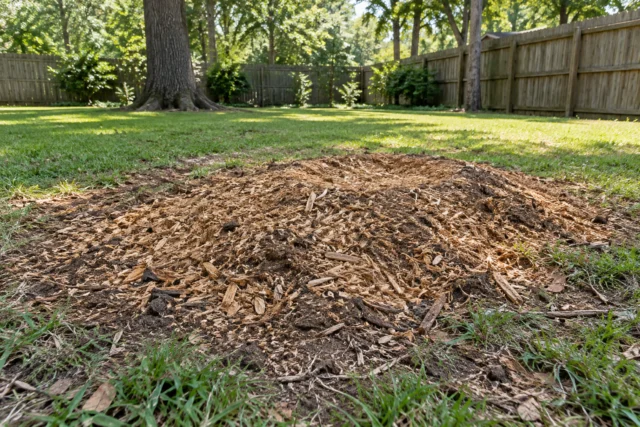
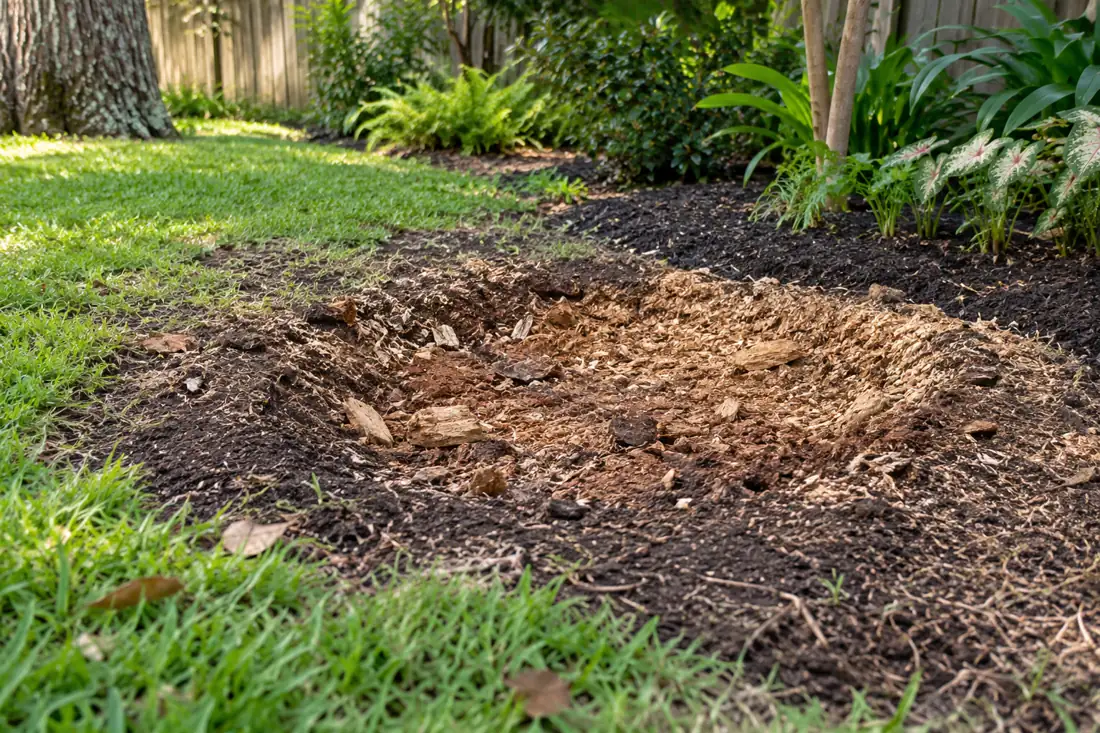
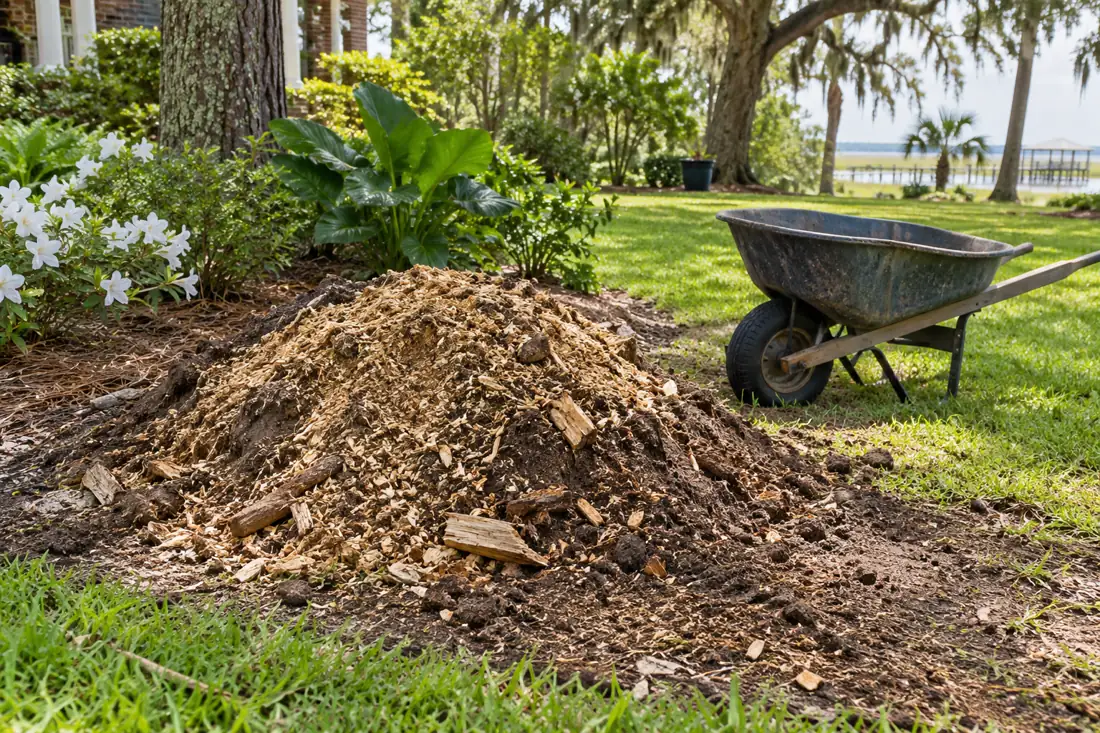
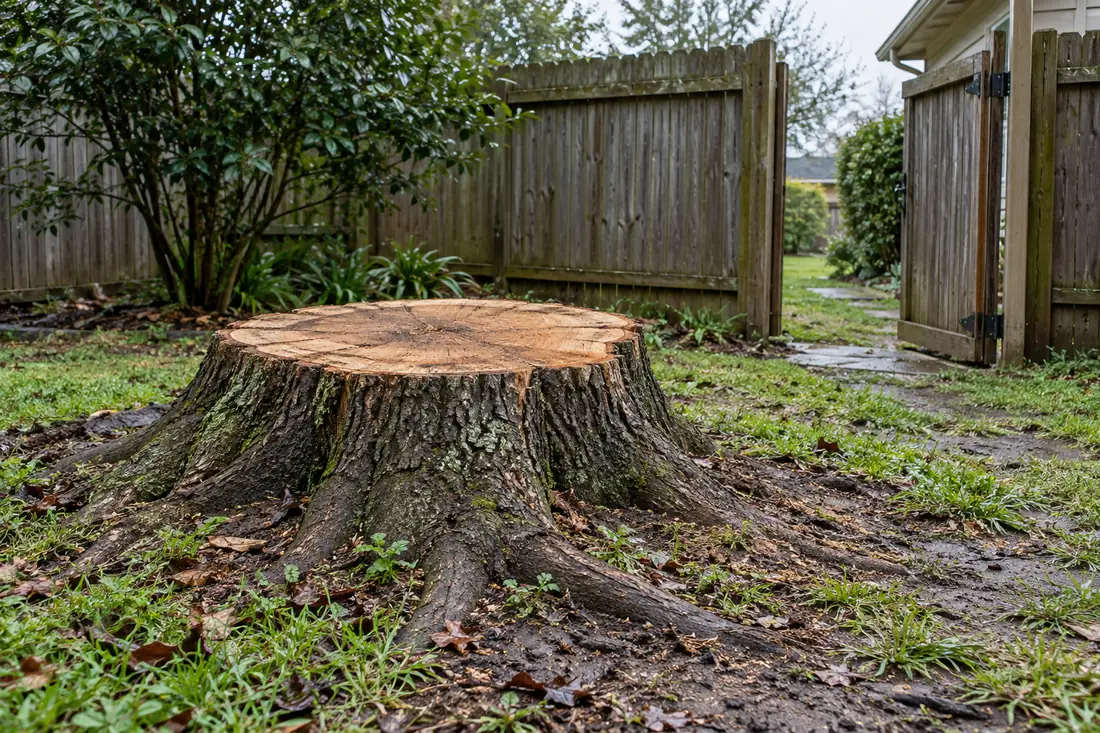
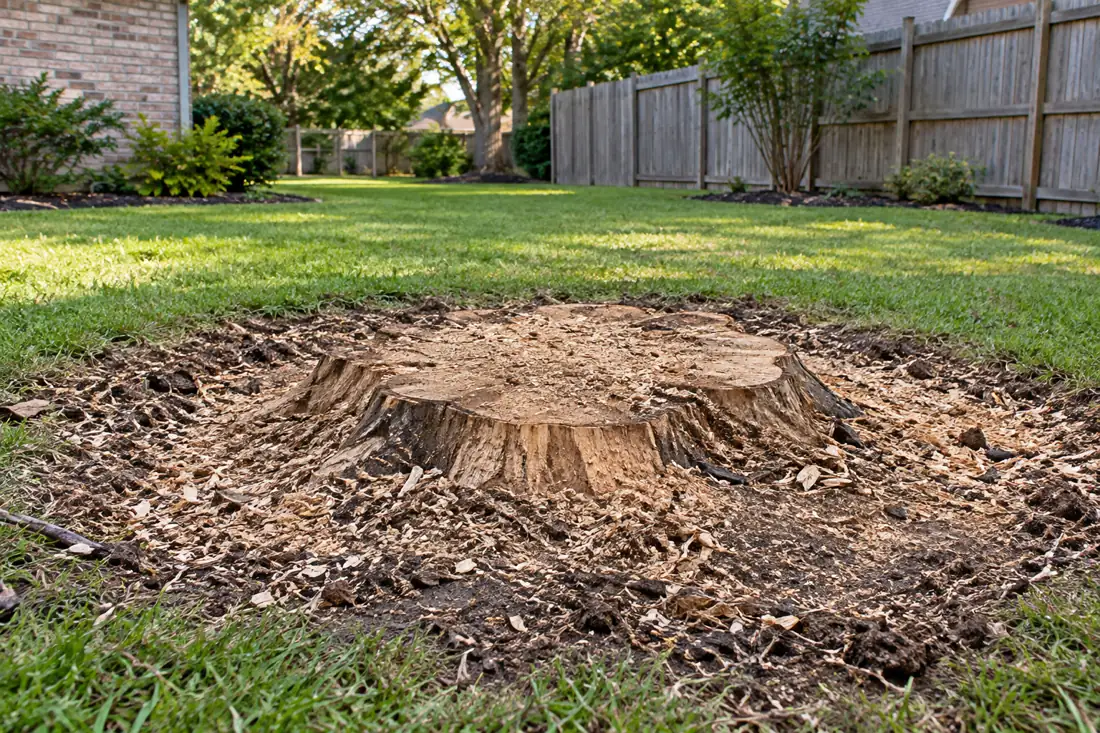
A large oak stump can extend well beyond the visible cut face through buttress roots and surrounding wood. Ask how the area will be measured and what depth or lateral extent is included. Machine access, utilities and the desired future use all affect the quote. The finish should be clear before grinding begins.
Include the oak’s broad buttress flare in the measured scope
An old oak stump may have a wide, irregular ring of structural roots beyond the round saw-cut face. Photograph the entire flare and mark the outer edges relevant to the future landscaping plan. Ask about grinder size and access before assuming a narrow gate or delicate surface can accommodate the work, especially near retaining edges, walkways or buried irrigation.
Decide whether the goal is simply to remove a tripping obstruction or to prepare ground for sod, replanting or construction. Each requires a different discussion about lateral roots, depth, chips and soil replacement; none should be implied from stump diameter alone.
A mature oak can leave a wide flared base and substantial surface buttress roots beyond the trunk diameter. Walk the intended footprint and distinguish exposed roots included in grinding, roots belonging to living neighboring trees, and roots under paving or structures. Photograph the flare with a measuring reference and show the equipment route. Multiple passes may be required, but achievable depth depends on machine reach, soil, obstacles and subsurface services.
Specify whether the bid covers only the central stump or named surface roots as well. Excess chips and ground restoration may become a separate project; agree on handling in advance. Do not imply that every underground oak root will be excavated.
Treat an oak's flare as part of the scope
A large oak's cut trunk diameter can seriously understate the accessible wood to be ground. Buttress roots may extend radially from the base, and their distribution is not a neat circle. The estimator should examine the flare, close obstacles and intended finish before selecting equipment or quoting a depth.
An image of the center cut is useful but insufficient: take a second view from farther back showing the whole root plate and the path from the street. Do not cut or excavate roots merely to improve the photograph.
Ask how far beyond the trunk the quoted work is expected to reach and how the resulting chip volume will be managed. If the future use is planting, distinguish stump removal from the planting bed; if it is hardscape, involve the paving trade in excavation and base requirements. The general cost guide can help compare line items without implying a standard oak surcharge or universal equipment price, neither of which can be established remotely. For the related but distinct decision, see Stump Grinding Cost in New Orleans.
Measure the oak's buttress area, not just the cut face
For a mature oak, include photographs with the full root flare and exposed buttress extensions. Place a tape or another reliable scale beside the stump without climbing onto unstable wood. Record the widest above-ground footprint, nearby trees, vehicle approach, paving and known buried services. The cut trunk diameter alone may understate the lateral area that needs discussion.

Consider the tree's former scale and condition
Large oak wood can be dense, irregular and extensive below the cut, which affects machine selection, time and debris volume. Provide the approximate height of the remaining stump and any information about when the tree was removed, without guessing facts you do not know. A recently cut stump, an old weathered remnant and a stump partly buried in fill can present different access and identification problems.
The reason for the original tree removal is useful background but does not automatically determine the grinding method. If the stump was part of a split or storm-damaged tree, identify any remaining hazardous material before equipment comes close. Ask the estimator what can be determined by observation and what remains uncertain underground. A quotation should explain assumptions rather than pretending to know the entire root structure from a photograph.
Define the large-stump grinding footprint. A large oak stump can have a broad root flare and extended lateral roots. Grinding the visible center may not clear a future planting or paving area. Mark the desired footprint and agree on diameter, achievable depth, chip handling and clean-soil preparation. Check utilities and nearby hardscape before setting machinery.
Ask the estimator to identify the grinding boundary around exposed buttresses, proposed depth, chip handling and what surrounding roots or wood will remain. If the location will be replanted or excavated, coordinate that next purpose before work. Machine access and ground conditions may matter as much as the stump’s diameter.
Use the stump-measurement guide to prepare useful photographs and dimensions.
An oak’s broad root flare deserves its own measurement
The cut face of an oak stump may be much smaller than the broad buttress and flare that extend into the ground. Take safe ground-level photographs of the complete footprint, including nearby edging, driveways and planting beds. The estimator should consider the area that needs grinding, the proposed depth and whether buried restrictions could limit machine movement.
The desired finish matters: a mulched bed and a flat lawn have different grade requirements, and new construction may need independent excavation planning. Removing the stump does not mean every root has been extracted. Keep chip disposal, surface leveling and replacement soil as explicit scope items so a large amount of ground material does not become a surprise after grinding.

Map the oak's actual stump and buttress footprint
A mature oak stump may carry sweeping buttress roots that extend well beyond its saw-cut face. The visible diameter alone can understate the area where substantial wood needs grinding. Take safe photographs from several directions with a fixed reference, and describe any high roots that cross the planned lawn or planting area. The estimator needs to know whether the goal is a low stump, an even lawn or preparation for a future feature.
The plan should mark pavement, fence posts, trees to retain and any known buried systems. Confirm how far the agreed grinding will extend beyond the trunk and whether visible buttress roots are included. Do not assume that the contractor will follow every root across the property. A measurable boundary and depth make it easier to compare proposals and to identify which parts may need a different method or separate excavation.
Define the purpose of the finished space
The depth and lateral limit of grinding should follow how the owner will use the space. A lawn may need a suitable soil layer and manageable grade, while a new tree, fence, patio or building work can require more extensive preparation and separate specialist input. Make the future plan visible before the work is priced. A standard stump finish should never be described as structurally ready for construction without an appropriate evaluation.
Where the intended use may change, ask about options and the consequences of choosing a limited scope now. The quote should distinguish grinding the stump, removing chips, importing soil, compacting material and landscape installation. Each task can have a different provider. A clear finish definition avoids disappointment when a large oak stump appears gone but buried roots or organic material still affect the owner's next project.
Estimate the oak stump's flare, buried limitations and material volume
Photograph the full oak stump from several sides with a recognizable scale, then measure across its widest root flare at ground level. The cut surface at the top may be substantially narrower than the lower buttressed wood. Note the stump height, ground slope and major exposed lateral roots that extend toward permanent structures.
For a large live oak, a single diameter can understate the machine travel and chip volume. Ask the estimator to define exactly which flare sections are included and how far outward work is expected to proceed.

Measure the Oak Stump Beyond the Visible Center
A large oak stump often extends beyond the obvious circular cut. When discussing grinding, show the outer buttress roots, nearby hardscape and the entrance path for equipment. A diameter measured across the center alone may not describe the entire surface area that needs attention.
Ask what depth and horizontal extent the proposed grinding covers, whether protruding roots are included, and where the chips will remain. A new lawn, planting bed and paved surface can require different finish expectations. Those are scope questions; a photograph cannot certify underground clearance.
Before work, identify sprinkler lines, irrigation controls, fences and suspected buried utilities for the appropriate locating process. Do not dig into unknown lines to improve a photo. After grinding, document the agreed surface condition and any remaining large wood before committing to soil preparation, new sod or construction.
Look beyond the stump to nearby trees that will remain. Surface roots from other mature oaks may cross the same area, and it can be difficult to distinguish every root without careful site knowledge. A grinding crew should not treat all woody material around the stump as disposable. When live roots or stability concerns are suspected, request an arboricultural assessment before cutting. Likewise, mark irrigation, buried electrical lines and previous fill before the operator commits to a full grind depth across the footprint.
Plan machinery access and debris logistics separately from the cutting time. Heavy equipment and a large volume of chips can affect turf, garden beds and narrow drives, especially after rain. Identify a stockpile location that does not block drains or access and ask whether hauling means one trip or multiple loads.
If the chips are left on site, confirm their approximate placement and the owner's plan for them. The estimate should state whether a clean soil finish or only a ground wood surface is included.
Set a realistic finish expectation. A huge stump can be reduced to a usable grade while long lateral roots and deep sections remain, depending on access and the agreed limit of work. If the area will become a garden, lawn or construction surface, involve the next contractor early so material removal and soil replacement can be priced accurately.
Photograph the completed hole, record the grind boundaries and retain the final chip-disposal agreement. Do not promise that the oak's buried wood will vanish immediately or that settled soil will never move.
[/fusion_text][/fusion_builder_column_inner]

Choose an access route for the right equipment
A large stump may require equipment that cannot pass through a narrow garden gate or turn beside a wall. Photograph the route from the street to the work area, including the tightest opening, overhead obstructions, steps, slope and soft ground. Mention sprinkler boxes and fragile paving. Do not remove a fence panel without first confirming that the opening is needed and who has permission to alter it.
The contractor may propose a different machine, staged approach or access point based on those constraints. Ask whether site protection or surface restoration is included and which obstacles must be moved before arrival. Equipment capacity is not the only consideration: the safe way to handle chips, maintain pedestrian access and avoid damage to retained trees also matters. If access changes after the quote, request a revised plan before the crew mobilizes.
Check buried utilities and nearby structures
Oak roots often occupy a broad shallow area near drives, walks, pipes and irrigation. Before grinding, identify available service plans and have utilities located through the applicable process when needed. Explain the proximity of foundation edges, retaining walls, fence posts or drainage structures. A tree contractor should know which features the owner needs protected and which proposed work may require coordination with other trades.
Do not infer that a root caused a crack or plumbing fault merely because the root passes nearby. If a structure or pipe is already damaged, share the inspection findings from the appropriate professional. Grinding can remove surface woody material within the contracted boundary, but it is not a general utility repair or foundation correction. Any required exposure of buried services should be planned deliberately rather than discovered through uncontrolled cutting.

Decide how the large volume of grindings will be handled
A wide buttress system can produce far more chips than a compact stump of similar visible height. Ask where the material will go, whether hauling is included and how the site will be left. Leaving a mound may be acceptable if it has an agreed purpose and location; it should not block a drain, sidewalk or shared access route. The quote should clarify whether soil mixed with wood will be removed as part of that handling.
Consider the site's final elevation and how remaining organic matter may settle over time. If the owner wants sod or another finished surface, the next provider may need to remove more material and prepare a suitable soil layer. Do not assume all grindings make appropriate backfill. The quantity is uncertain until work proceeds, so ask how unexpected volume will be treated under the agreed scope and authorization process.
Protect living oaks and neighboring root systems
Where another oak stands nearby, its roots may share the same yard area even if its trunk is outside the grinding zone. A visible root connected to the old stump is not always easy to distinguish from a root serving a retained tree. Mark the trees to keep and explain their importance. Avoid broad excavation or cutting outside the agreed footprint without professional consideration of possible effects on living trees.
The same caution applies when an old stump sits near an established hedge or valuable planting bed. The owner and contractor should identify what must remain undisturbed and how close equipment can safely work. If the intended design requires removal of roots within a retained tree's functional root zone, that may call for a separate assessment. Getting a flat yard should not inadvertently create a new tree-health problem.

Plan for uneven grade and later settlement
Removing a broad oak stump leaves a volume that must be addressed differently depending on the future surface. Wood chips compress and decompose differently from suitable soil, and the resulting area may change elevation after rain and use. Ask who will provide and place any backfill and whether the landscape installer will check grade before laying sod or pavers. Grinding depth by itself does not establish a stable finished surface.
If the stump sits on a slope or near a drainage swale, the plan should maintain the intended flow of water rather than creating a new pocket or barrier. Photograph the original contours and nearby drains. Should a deeper excavation be needed, confirm whether it remains stump work or becomes a separate earthwork project. This distinction is particularly important when an owner intends to build over the old root area.
Request a scope that describes limits and exclusions
A clear large-oak estimate should identify the stump, approximate surface dimensions, agreed depth, lateral reach, access plan, chip handling and final condition. It should also name assumptions about buried obstacles and whether roots beyond the defined area are excluded. If the quote simply says grind oak stump, ask for a more complete description before work begins. Two prices may not be comparable if they assume very different boundaries.
Include safe site photos, the desired next use and any ownership or utility constraints with the request. Ask who will be present to approve decisions if buried material changes the planned work. The contractor may need an on-site evaluation to confirm machinery and handling. Do not use a web request as proof of immediate booking or a guaranteed price. A written scope helps both sides review what completion means.

Verify completion without disturbing the ground
After the machine work, compare the treated area with the agreed perimeter and depth reference to the extent it can be inspected safely. Check the agreed handling of chips, access openings and any separately promised surface protection. Do not probe for deep roots or buried cables yourself. If a landscaper will finish the area, arrange a clear handoff about what is known to remain below grade and what material still needs processing.
Retain photographs showing the before condition, the completed grind and the surrounding grade. Later sod installation, planting or construction may reveal additional root material outside the original boundary; that does not automatically mean the contractor failed an explicitly limited scope. Address any discrepancy against the actual agreement. The useful end point is a documented, usable result for the planned purpose, not a claim that every underground root vanished.
Questions about this project
Why can an oak stump be wider than its trunk measurement?
Mature oak root flares and buttresses can extend well beyond the visible saw-cut diameter. Show their full footprint in photos and ask how the contractor will measure the actual grinding area. Do not infer the work scope from trunk diameter alone.
Will grinding a large oak remove its long roots?
Not necessarily. The contract should specify the visible stump and the agreed surrounding extent. Roots farther away or under hardscape may remain. Discuss later excavation or planting needs separately, especially near structures and other retained trees.
Can I cut a surface root to flatten the lawn?
Do not assume that is harmless. The root may matter to tree condition or stability. Describe the conflict and ask for an assessment and appropriate options before cutting or excavating near the tree.
Does a nearby tree prove it caused a plumbing problem?
No. Use the plumbing provider's findings and identify the affected system. Coordinate any tree or root work with that information rather than assuming location alone establishes the cause or the right remedy.
What access information helps an estimator?
Send the narrowest opening, overhead obstacles, turns and the distance between the tree and the loading area. Include photos of the entire route and identify steps, soft ground or features that must remain protected.
Should I remove a fence before the visit?
First ask the contractor to assess access and agree on any temporary opening. Identify who owns the fence, who can authorize the change and who will reinstall it. Do not assume the opening is necessary or included.
Does cleanup include every root and wood chip?
That depends on the written scope. Tree removal, stump grinding, chip hauling and root excavation are different tasks. Ask what material is removed, what remains and whether soil or landscape restoration is separately included.
What should a final walk-through check?
Compare the identified trees and tasks with the agreement. Check agreed debris handling, stump treatment, access openings and any listed restoration. Record unresolved items clearly instead of relying on a general impression that the property looks finished.
What should I compare besides the price?
Compare tree identification, work objectives, access assumptions, hauling, stump treatment, site finish and exclusions. Ask whether permits or other coordination are part of the scope and who can approve changes if conditions differ.
Does an online request book the crew?
No. A request starts the estimate conversation. The company still needs to discuss scope, availability and any site assessment. For a dangerous or urgent condition, call 504-458-8336 rather than relying on a form response.
What should I tell Tree Huggers about large oak stump grinding?
Explain the property address, the work you want and the specific concerns: buttress roots, grinding extent, access. Send safe photos of the tree, surroundings and access route. The contractor can then discuss the assessment and scope needed for this situation.
How do I request an estimate for this work?
Call 504-458-8336, text photos or use the estimate form on this page. Include the address, desired outcome and any timing constraints. The company will need to review scope and availability; an online request does not confirm a price, appointment or emergency dispatch.
Get a scope for your property
A large oak stump may include wide buttress roots that extend well beyond what people call the stump diameter. Show the complete root flare, any adjacent tree roots that should remain untouched, and nearby fencing, utility covers, pavement or masonry. A measuring tape across the widest visible base helps communicate the scope better than a photograph of the cut surface alone.
Include clear equipment access and whether heavy or soft ground is expected along the route. Do not try to saw off buttress roots as a preparation step.
Ask which visible root flares and lateral portions are included in grinding, how the crew will determine a practical working boundary, and what protection is planned for nearby trees and hardscape. Confirm handling of the unusually large volume of chips and whether additional soil or hauling is a separate service.
Grinding is not the same as pulling out an entire mature oak root system. A good written scope describes the measurable extent of work, the intended future use of the site and any conditions that require re-evaluation.