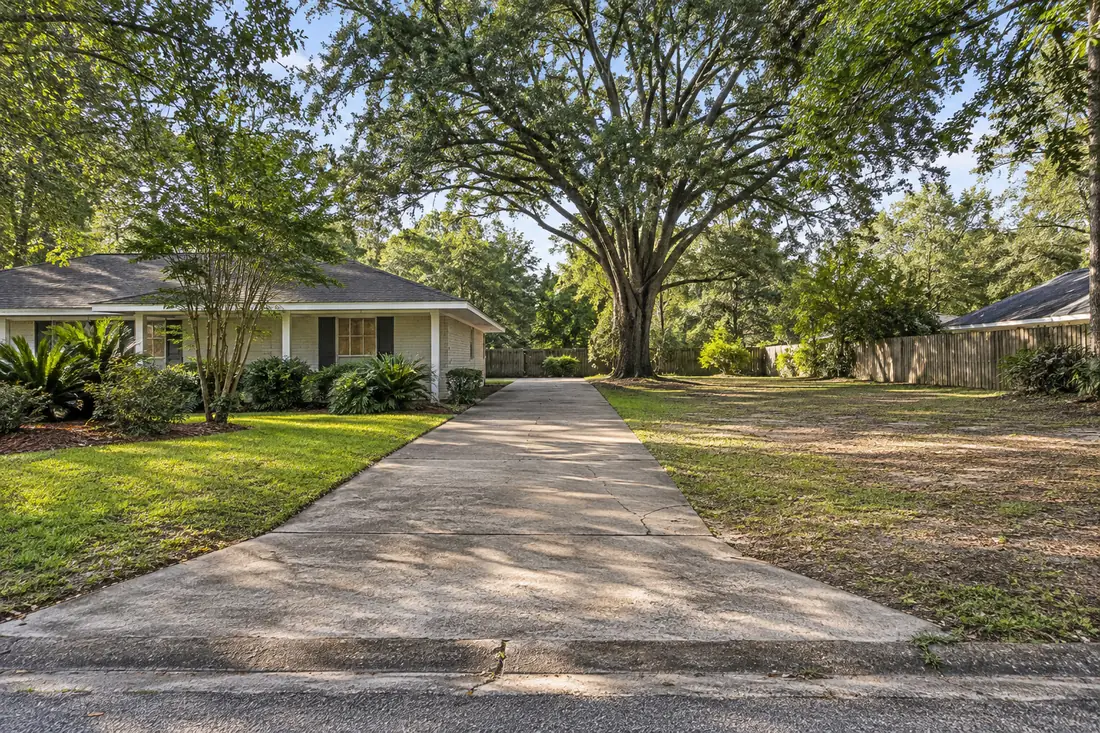
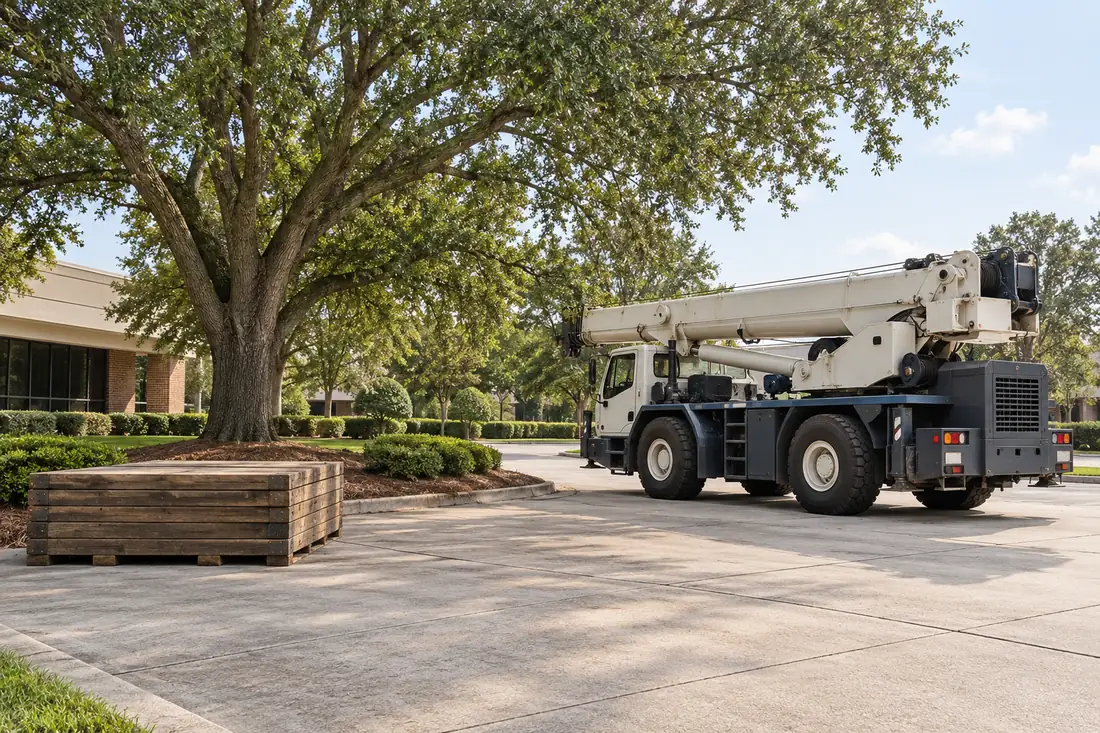
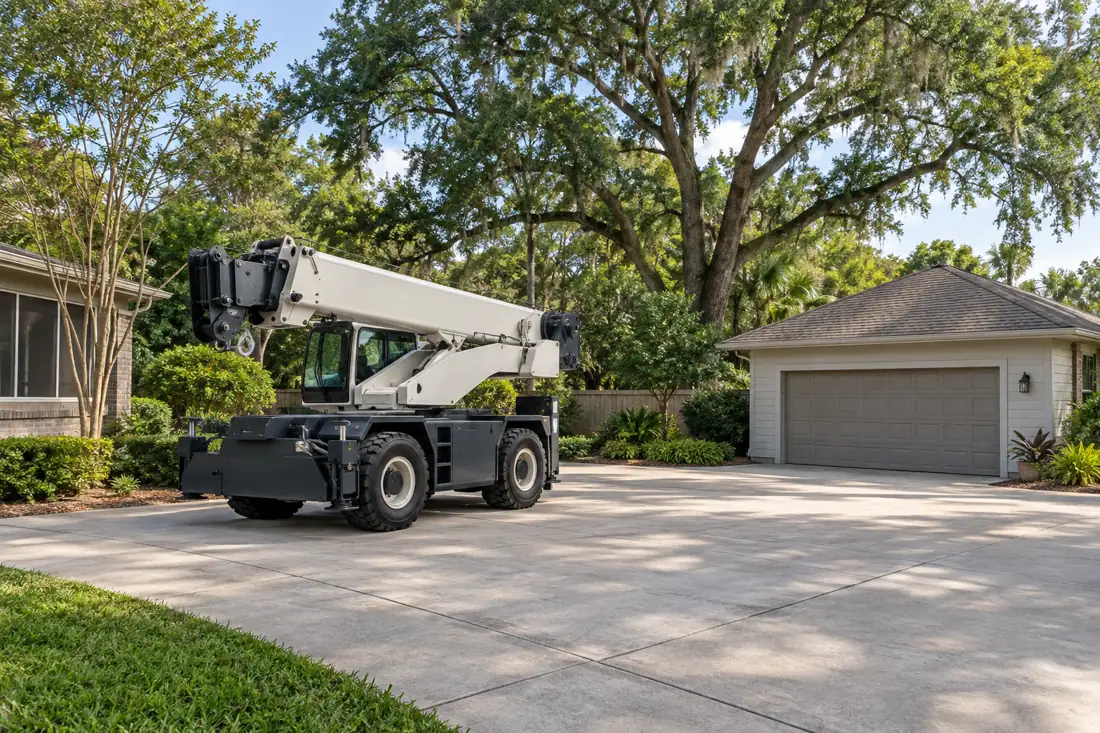
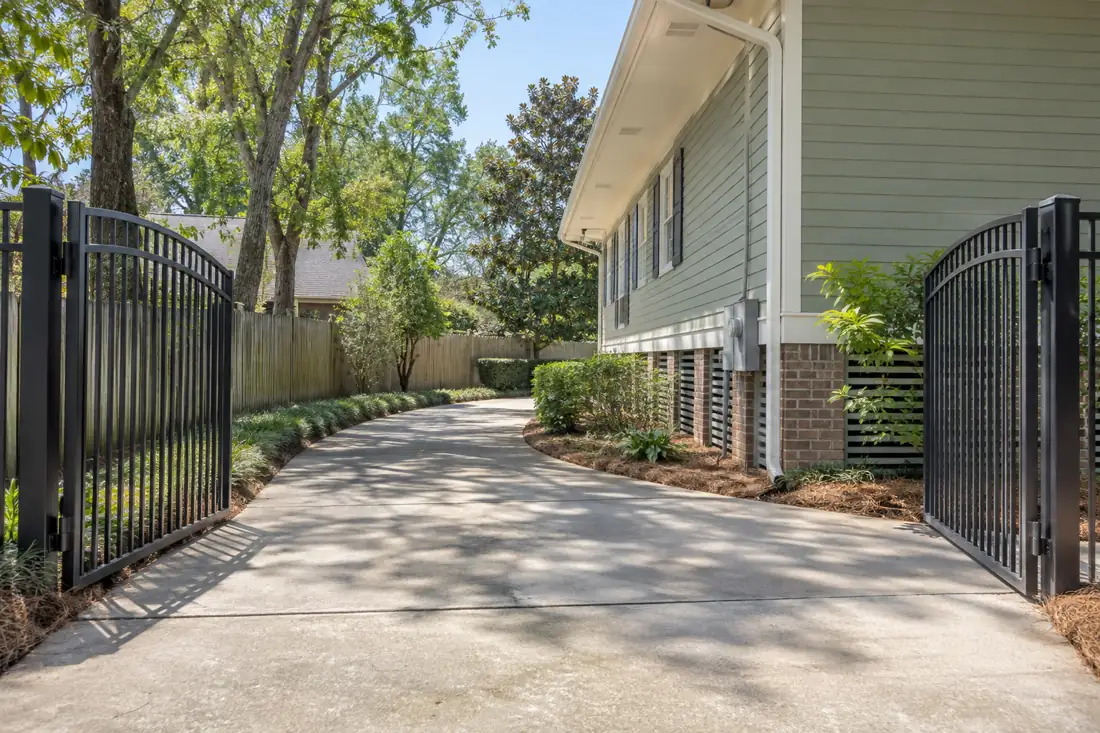
A grapple saw combines cutting and material handling, but it still needs suitable access, positioning and control of the work area. The machine’s capabilities do not remove the need to assess the tree and the site. Show gates, overhead obstacles and staging space so the contractor can evaluate whether this method fits the job.
Site planning detail: Grapple-saw suitability depends on the actual route to the tree and the work envelope around it. Measure gates and driveways, note sharp turns, slopes, low branches, service lines and soft ground, and photograph the intended loading area. A machine’s published reach and capacity do not establish safe working conditions on an unfamiliar property. Ask the contractor which access constraints must be checked on site and how the proposed method would protect neighboring structures, fences and landscaping.
Keep exclusion zones and material handling in the work plan even if much of the operation is remotely controlled. A credible estimate should allow an alternative method if the ground or route is unsuitable, without pretending every property can accept the same equipment.
A grapple saw may reduce some manual handling in a suitable setting, but the machine's reach and cutting envelope still require a practical site review. Document driveway width, turning area, grade, soft soils, overhead lines, tree spacing, fences and the space needed for collected material.
Mark pedestrian routes and public access that cannot be interrupted without coordination. Do not assume a machine shown in a promotional video can navigate a narrow yard or operate safely beneath every branch. Actual equipment dimensions and working restrictions matter more than the equipment name.
Ask whether the operator can place and process each planned section without reaching beyond rated limits or passing material over occupied areas. Clarify the need for traffic control, protective mats, temporary removals or a secondary crew for debris. On constrained sites, rigging or smaller equipment may be safer or more practical. An estimate should describe why the proposed approach fits the site and identify any access conditions that could change it. That prevents a price discussion from overlooking the actual work zone.
Identify the actual machine and proposed approach
A grapple saw is an attachment used with suitable lifting equipment, not a single universal machine with fixed access requirements. The carrier may be a crane, a material-handling vehicle, or another specialized configuration, and each has different transport, support, and operating constraints. Before assuming one can reach a tree, ask the contractor what equipment combination is being considered and what it is intended to accomplish at your property.
Photographs should show the entire approach from the street, including gate clearances, overhead wires, turning room, slopes, curbs, and ground conditions. A machine that can reach the canopy on a specification sheet may still be unable to enter or set up safely. Do not use approximate brochure dimensions to direct a carrier across a residential driveway or a commercial lot without a qualified site assessment.

Provide photographs that answer access questions
When contacting Tree Huggers, take wide photos from the street, the property entry, the proposed machine position, and the tree from two directions. Include the roofline, overhead utilities, gate, loading area, and vulnerable lawn or drainage features. A simple marked sketch can help identify the path, but it should not be represented as a surveyed drawing. Keep out of any unstable tree area while collecting information.
Explain whether the tree is standing, partially fallen, leaning, or damaged and whether access requires another person's permission. Mention retained trees and objects that must be protected. The contractor can determine whether a grapple-saw approach merits site evaluation or whether another method is more appropriate. Clear information improves planning while keeping equipment capabilities and cutting decisions with qualified professionals.
Describe both the crane setup and grapple-saw reach
A grapple-saw attachment may handle some limbs without a person positioned at the cut, but it still operates from lifting equipment that needs approved support and sufficient working radius. Photograph the full canopy and the approach to the tree, then show roof edges, wires, fences, neighboring land and locations where each piece could be lowered.
A published boom length or attachment capacity does not establish that a particular branch can be removed safely. The tree's condition, section weight and line of travel still control the method.
Ask the contractor to explain which parts could be mechanically handled and what requires a climber, rigging or another sequence. Consider where the pieces go after reaching the ground: a crane may clear a roof but leave heavy wood in a narrow yard with no easy hauling route. Exclusion zones, traffic control and permission for a staging area are part of the plan. Request an itemized cleanup scope rather than assuming the attachment also solves stump grinding, chip removal and surface restoration.
Separate arrival clearance from the actual operating position
A driveway may look open in a photograph and still fail as an equipment route. Start at the public street and record the turns, shoulders, curbs, culvert edges and entrances a carrier would have to negotiate. Note where a delivery van already struggles, whether parked cars reduce the width, and whether a neighbor controls part of the apparent access.
Do not attempt to measure an unsafe roadway or stand beneath a compromised tree. These observations help a contractor choose what to investigate; they are not a substitute for equipment dimensions, site measurements or a professional transport plan.
The place where equipment can stand is a separate question from whether it can get through the gate. A backyard opening may provide a straight travel lane without allowing sufficient positioning, support or a controlled handling area. Photographs from the driveway toward the tree and from the tree toward the street make that distinction easier to discuss.
Mark the areas that must stay usable for residents, deliveries or emergency access. Ask the contractor whether the proposed method requires a different entry, temporary closures or permission to use another property before discussing any alteration to the site.

Document surfaces and buried features without guessing their capacity
A concrete slab, asphalt edge or compacted-looking lawn does not prove it can support a machine under its operating conditions. Identify cracked pavement, soft turf after rain, drainage swales, covers, shallow utility routes and any buried tank or line that you know exists. If you have drawings for irrigation or private drainage, share them as reference information and flag areas where installation history is incomplete. The qualified equipment team must determine whether the proposed carrier and its supports are appropriate; an owner should not treat a lawn mat, board or assumed soil bearing value as a guarantee against rutting or structural damage.
Ground conditions can change between estimating and the planned work date. A dry approach photographed in September may be saturated after a November storm. A driveway also may be narrowed by temporary scaffolding, material deliveries or vehicles that were absent at the initial visit. Give the estimator the current condition and the expected schedule of other trades.
Discuss a weather-related reassessment and who can approve an alternate route. A written scope should identify the proposed protections, any surfaces excluded from restoration and how unexpected underground features will be handled without implying a perfect no-damage promise.
Plan what happens to each section after the cut
The cutting attachment is only one part of the removal sequence. A limb or trunk section must travel to a controlled placement area, and that area must be accessible to the supporting crew and equipment. Ask where tree material is expected to land, where brush and logs will be processed, and how trucks will leave the property.
A route that allows a cutting machine to approach the tree may still leave no practical space to handle the resulting material. The contractor needs to make those decisions with the real site geometry, the tree’s condition and an appropriate exclusion plan.
Look closely at neighboring fences, roof overhangs, outdoor kitchens, retaining walls and established planting beds when discussing the handling corridor. Identify property boundaries accurately instead of assuming that an empty neighboring yard can be used for staging. For an occupied commercial property, consider refuse pickup, deliveries, customer entrances and fire lanes.
Those uses may require a separate work window or temporary pedestrian routing. The important customer outcome is not simply a machine reaching the tree: it is a defined path for doing the work and returning the affected areas to agreed use.

Make access changes and responsibility explicit before approval
A proposed temporary fence opening, removal of a gate panel, parking restriction or private driveway use should be described in the written estimate before anyone starts changing the property. Record who has authority to approve it, who will coordinate with the affected owner, what will be restored and whether related work is included or excluded. Shared driveways, rental properties and managed sites often have more than one decision maker. Do not ask a neighbor for permission based only on a verbal assumption that a crew will need the space; first ask the contractor to confirm the proposed approach and the actual area involved.

A useful estimate review distinguishes the initial plan from conditions that may require a change. The contractor may discover an undocumented feature, an inaccessible support area or a safer alternative method during assessment. Ask how changes to equipment, access, hauling and surface protection will be communicated before the scope is revised. For comparison shopping, have each bidder identify the same tree, intended outcome, handling and debris finish so two very different methods are not mistaken for identical proposals. No manufacturer catalog or illustration establishes what Tree Huggers will use on your property.
Confirm access permission as a specific decision
Before anyone removes a gate panel or uses a shared driveway, have the proposed route and temporary work area marked on a simple site sketch or annotated property photograph. Identify the owner or manager who may approve each change and the person responsible for restoring the agreed condition. A neighbor’s verbal willingness to help is not a substitute for a confirmed equipment plan or appropriate permission.
Ask what happens if saturated ground, a parked vehicle, an unmarked service line or a newly identified overhead obstruction makes that route unsuitable. The crew may need another method or a revised schedule. A conditional access plan should describe that decision before mobilization, not treat an unexpected obstacle as blanket permission to enlarge an opening or move someone else’s property.

Check the handoff and the site finish against the agreed scope
Before closing the project, use the scope to review what was supposed to happen to wood, chips, brush, temporary barriers and any authorized access modifications. Ask whether stump treatment was included, separately quoted or not part of the job. Check that gates and resident routes can be reopened only when the responsible crew says the active work zone is clear. If material is intentionally retained for the owner, identify the location and size category in advance rather than treating every log left on the ground as a cleanup failure. Record any unresolved surface concern factually without claiming that every mark proves damage from the operation.
For a first inquiry, send one wide photograph of the whole tree, a street-to-gate view, the likely access route and an image showing the nearest structures. Add the property address and the result you want, not a preferred grapple-saw brand or a guess at safe lifting capacity.
If there is an actively falling tree, a hanging limb or a possible energized conductor, do not enter the area to collect more photographs. Call the appropriate emergency or utility service as conditions require, then discuss tree-work assessment from a safe location. The purpose of this guide is a better scope conversation—not a do-it-yourself equipment plan.
Check the work site before selecting a grapple saw
The biggest machine cannot solve an access route that is too narrow, soft, steep or obstructed. A grapple-saw plan needs the dimensions of the approach, turning room, ground support and a practical position from which the machine can reach the intended branches. Public traffic, private fences, overhead utilities and the location of the landing or loading area all affect whether the approach makes sense.
For an explanation of the cutting-and-handling method itself, see how a grapple saw changes tree removal. This page is intentionally about site feasibility. A contractor may recommend rigging, climbing or another lift instead; the estimate should explain what equipment will actually be used and who is responsible for restoring any approved temporary access changes.
Questions about this project
Does a machine's maximum reach prove it can do my job?
No. Loaded reach, configuration, section handling, obstacles and setup conditions all affect suitability. A contractor needs to evaluate the particular tree and property before confirming an equipment plan.
Can specialized equipment replace a site assessment?
It does not remove the need to assess tree condition, targets, access and support conditions. Ask how the contractor will confirm that the proposed machine and method fit the actual scope.
What access information helps an estimator?
Send the narrowest opening, overhead obstacles, turns and the distance between the tree and the loading area. Include photos of the entire route and identify steps, soft ground or features that must remain protected.
Should I remove a fence before the visit?
First ask the contractor to assess access and agree on any temporary opening. Identify who owns the fence, who can authorize the change and who will reinstall it. Do not assume the opening is necessary or included.
Can tree equipment use any driveway?
No general assumption should be made. Pavement condition, edges, support, buried infrastructure and the proposed equipment all matter. Ask the contractor to assess the intended setup and route for the particular property.
Do mats guarantee there will be no ground damage?
Ground protection is one part of a site-specific plan. It does not remove every load, soil or access limitation. Discuss the proposed measures and any restoration responsibilities in the written scope.
Which property features should I point out?
Identify buildings, vehicles, fences, fixed fixtures, landscape features, utilities and occupied routes. Explain what can move and what must remain. Include existing damage and any buried features you know about along the access route.
Should people remain inside the work area?
The contractor and site contact should establish an exclusion area and access arrangements appropriate to the work. Keep children, pets, visitors and other workers outside the active zone until the responsible parties say it can reopen.
What should I compare besides the price?
Compare tree identification, work objectives, access assumptions, hauling, stump treatment, site finish and exclusions. Ask whether permits or other coordination are part of the scope and who can approve changes if conditions differ.
Does an online request book the crew?
No. A request starts the estimate conversation. The company still needs to discuss scope, availability and any site assessment. For a dangerous or urgent condition, call 504-458-8336 rather than relying on a form response.
What should I tell Tree Huggers about grapple saw access requirements?
Explain the property address, the work you want and the specific concerns: positioning, overhead obstacles, material handling. Send safe photos of the tree, surroundings and access route. The contractor can then discuss the assessment and scope needed for this situation.
How do I request an estimate for this work?
Call 504-458-8336, text photos or use the estimate form on this page. Include the address, desired outcome and any timing constraints. The company will need to review scope and availability; an online request does not confirm a price, appointment or emergency dispatch.
Get a scope for your property
Grapple-saw equipment can control and move selected tree sections, but the machine still depends on physical reach, clearance and stable positioning. Photograph the full tree, its top, nearby buildings and utility lines, then show the route and potential staging surface. Include narrow turns, fence heights, overhead branches and the space where removed sections could be placed or loaded.
Do not estimate safe reach from the machine's advertising specifications or assume every limb can be captured and cut in the same pass. The condition of decayed or storm-damaged wood may change the work method.
Request a method discussion that distinguishes grapple-saw work from climbing, rigging or crane assistance as site conditions require. The written scope should address setup rights, ground protection, exclusion zones, traffic or neighbor access and what happens to sections after cutting. Ask how hidden utilities or inadequate support will be handled before equipment arrives. The practical question is whether the particular tree and site permit a suitable controlled sequence, not whether the machine appears capable of reaching the canopy from one photograph.