A large oak can vary widely in section size, shape, condition and reach requirements. Whether a grapple saw is suitable depends on the actual tree, machine configuration and site. Ask for an equipment plan based on the assessed work rather than treating a machine name as a guarantee for every large-tree removal.
Site planning detail: Large live oaks cannot be evaluated for grapple-saw work using canopy size alone. The crew must consider available reach, the condition of the trunk and major unions, likely section geometry, equipment limitations and the ability to transfer wood to a safe loading area. Photograph the whole tree, the driveway or street access, neighboring buildings and any visible defects from a safe ground position. A mature oak close to a house does not automatically need removal; risk reduction and preservation may be viable outcomes after assessment.
Ask the estimator to explain the proposed method and the conditions that would trigger a change. Avoid treating a video of a similar machine on another property as proof that the same approach is safe here.
The size of an oak alone cannot answer whether a grapple saw is appropriate. Mature trees may have broad lateral branches, included unions, heavy deadwood or sections extending over buildings and utilities. Show the estimator full-crown photographs and identify every target beneath the intended path. Ask about the machine's rated capacity, reach and ability to control each section at the planned cutting positions. Different oak forms and access conditions can make one setup viable and another unsuitable, even for trees with similar trunk diameters.
Do not assume a mechanical grapple eliminates the need for climbers, rigging, a ground crew or controlled exclusion areas. Ask how limbs would be sequenced, where sections would be placed and what method will be used if the machine cannot reach a section safely. Note soil conditions, protected roots, fences and possible road closures.
The estimate should explain the chosen work method and its limits without promising a particular machine will always be faster or cheaper. If preservation is an option, compare the proposed removals with a qualified assessment of tree condition.
Begin with oak structure, not machine advertising
A mature oak can have a wide, asymmetrical canopy with long horizontal limbs, large forks, internal defects, and heavy wood. Asking whether a grapple saw can handle a large oak has no reliable yes-or-no answer from tree height or trunk diameter alone. The suitability depends on the specific attachment, carrier, working radius, tree condition, access, and where pieces can be safely transferred. A photograph of a big oak is useful context, not a load calculation.
An experienced contractor should explain which parts of the operation the grapple saw might perform and which require other methods. Some sections may be reachable and controllable while others lie outside the safe envelope. Do not assume the attachment can grip the entire limb just because its jaws appear large. The project may need a combination of specialized equipment, professional rigging, and ground handling rather than a single dramatic cut.

Examine major limb spread and attachment positions
Live oaks in particular can spread widely over driveways, roofs, patios, and adjacent trees. A carrier parked near the trunk may not have a suitable approach to an outer limb. The attachment needs controlled access to each section and room for the cut material to move without striking something. A limb's curved shape and large fork may complicate how it is held even when its wood diameter is within apparent limits.
Provide multiple views of the crown, not only a front-facing photograph. Show which branches cross structures, fences, overhead facilities, or neighbors' property. A qualified operator must choose piece sizes and approach angles according to actual equipment limits and the tree's condition. Homeowners should not request unusually large lifts to shorten the job. Safe subdivision can be more important than the number of cuts.
Assess the full oak crown rather than only its trunk
A large oak may have a convenient trunk location but limbs extending over several unrelated targets. Identify which branches overhang roofs, fences, sidewalks and neighboring lots. Wide views from multiple directions tell more than a close photograph of the trunk. The size of one branch does not establish whether any specific grapple saw can safely hold or transport it.
Section condition matters alongside dimensions. Decay, cavities, split attachments, storm damage and uneven weight distribution can change how the job should be sequenced. Qualified professionals need to assess those factors and the actual machine capabilities. A contractor video showing a similar-looking oak is not evidence that the same approach fits a different tree or property.

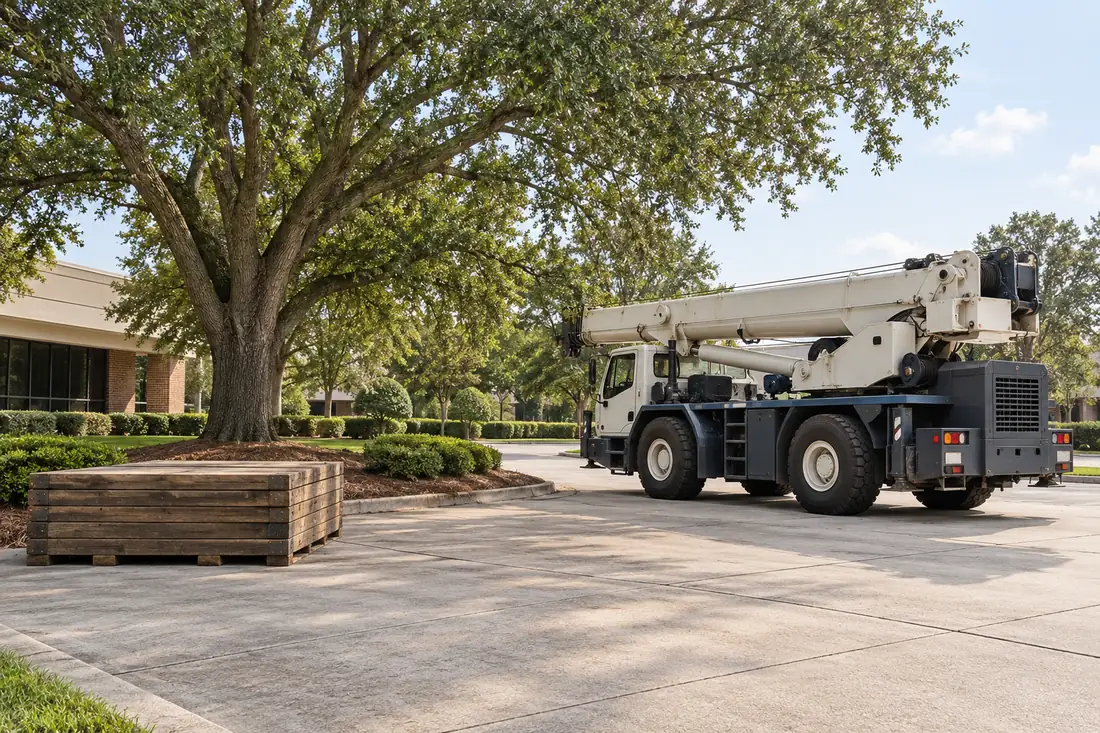
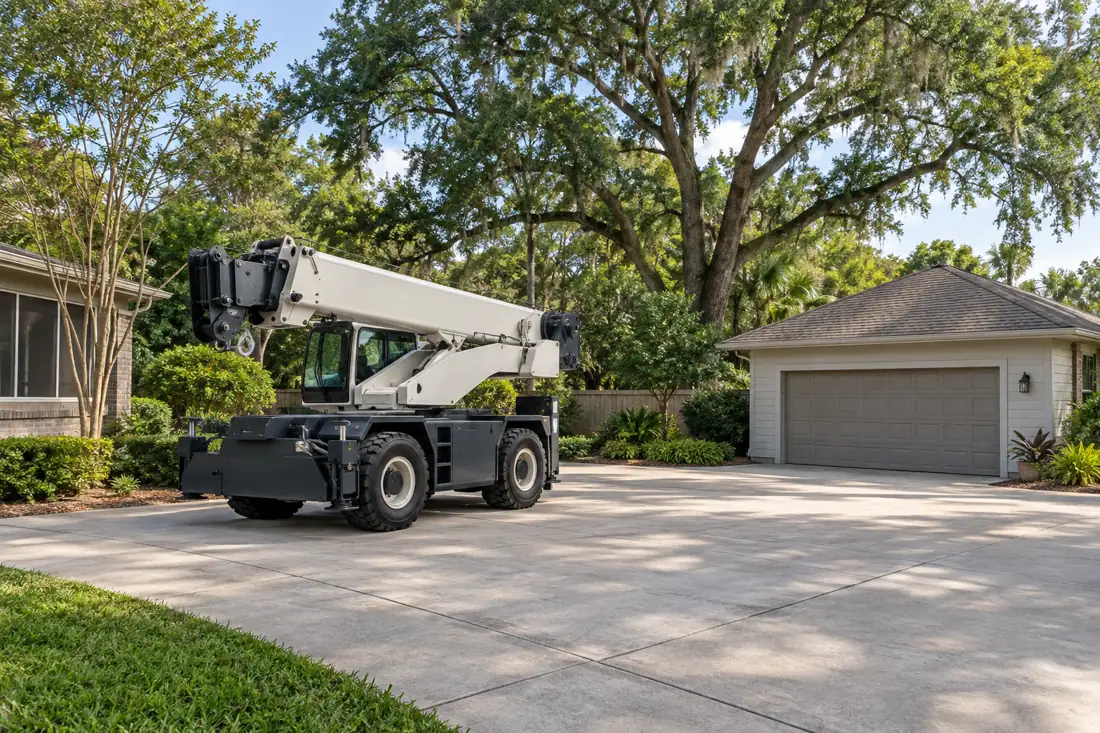
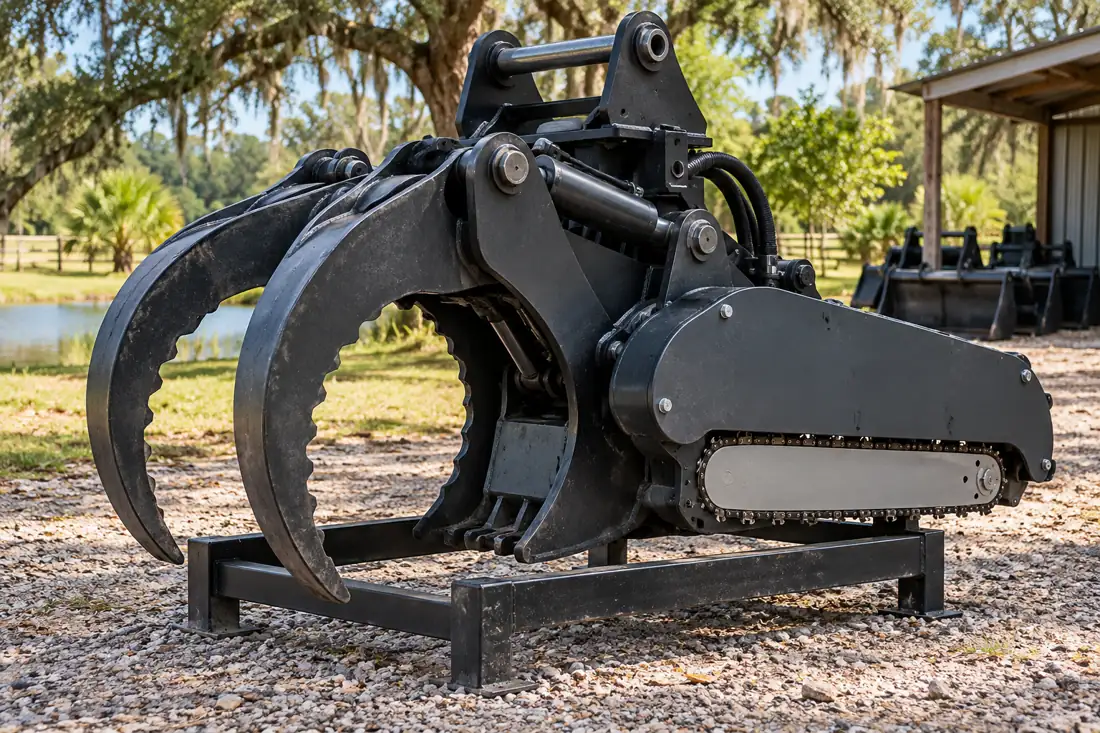
A large oak and a grapple-saw attachment in the same picture do not demonstrate that the attachment can handle that tree. Section size, reach, attachments, loading limits, footing and nearby targets require a site-specific professional plan. The image is an educational example, not a capacity chart, a promised method or evidence of a completed customer job.
Each long limb creates a different handling problem
Ask bidders to distinguish crown work, main-stem removal, stump treatment, wood hauling and restoration. Some projects require a combination of climbing, rigging and machinery. Confirm where sections will be placed and how retained branches or landscape features will be protected. Comparing only the named equipment can hide important differences in scope.
Send safe full-tree photographs with the approach route, utility locations and neighboring boundaries visible. Note cracks or dead sections without climbing to inspect them. The contractor should explain method assumptions and what might trigger a revised scope after site assessment.
Account for live wood weight and decay
Fresh oak wood is heavy, and the mass of a branch depends on its true shape, moisture, internal condition, foliage, and length. Surface diameter estimates do not reveal every hidden cavity or split. Professional lift planning must use a defensible evaluation of sections and equipment ratings. Do not use an online weight chart as instructions for a specific lift, particularly when the piece is suspended near a building.
A hollow or partially decayed limb may behave differently when gripped or cut, and a cracked union may release without warning. Tell the arborist about mushrooms, previous storm cracks, lightning damage, or changes in lean you have observed. Keep people away from the tree if failure is suspected. The presence of remote-operated machinery does not make an unstable oak predictable or remove the need for professional structural judgment.

Check road access and carrier setup
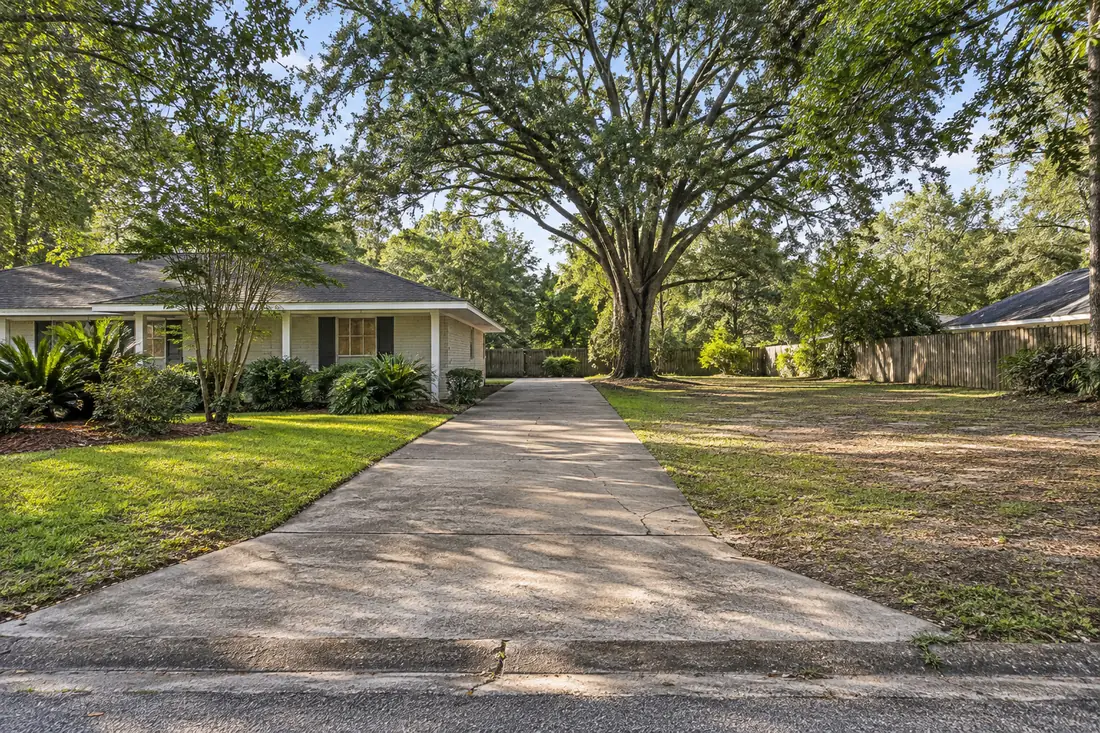
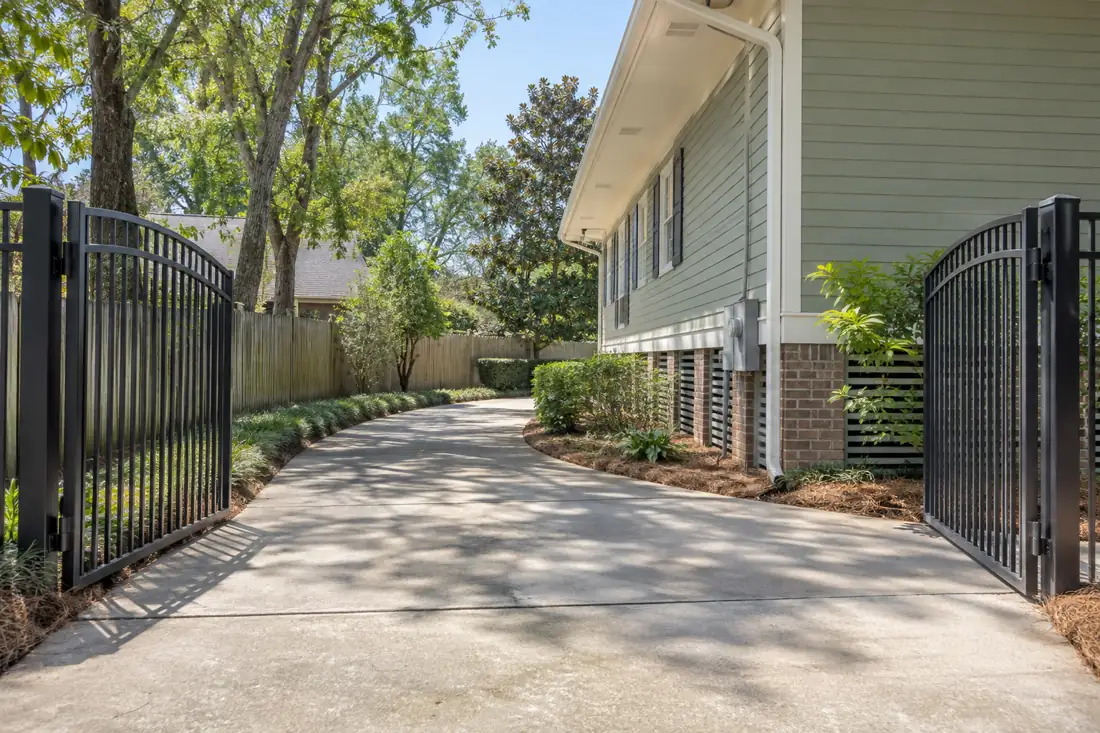
The largest oak on the lot is not automatically the hardest tree to reach. The carrier may be limited by gate width, a narrow street, driveway turns, overhead utilities, soft turf, or concealed drainage structures. A workable setup must support the equipment under its planned loads. Ground that is firm enough for a pickup truck may be unsuitable for heavy lifting supports.
Photograph the approach road, possible working positions, and property features that could be affected. If a crane or boom truck is involved, qualified personnel must assess the setup and support requirements. Do not let an operator place equipment over a septic tank, poorly supported culvert, or uncertain retaining wall simply to improve reach. Where access is restricted, different equipment or selective conventional rigging may be more appropriate.
Judge a large oak by structure and work radius, not diameter alone
A mature oak often has a broad crown, heavy lateral limbs and branch unions that alter how sections move when cut. Dead wood, decay or old splits can reduce the reliability of planned attachment points. A grapple saw might be useful for certain sections, but the attachment's name or a quoted tree height is not evidence that it can manage the entire oak. Show trunk, canopy, visible defects, nearby roofs and available ground from safe positions; do not climb the tree for measurements.
Ask the estimator which sections may be mechanically cut and how the remaining trunk and major wood will be processed. The operator must evaluate actual lift geometry and loads rather than relying on a single advertised capacity. Work over a building also requires a clear plan for lowering and handling material after it is cut. Separately define chip and log haul-off, retained wood, stump removal and protection of nearby trees. A mechanized crown removal can still leave substantial work and access challenges at ground level.
Consider the canopy that must remain
Sometimes the request involves removing only a dangerous limb rather than taking down the entire oak. A grapple-saw approach must account for the structure and health of the retained tree, including how cuts and handling could affect the branch collar or neighboring unions. A method that efficiently removes large wood is not automatically suitable for precision pruning intended to preserve long-term canopy function.
Ask whether the work goal is complete removal, risk reduction, clearance, or structural pruning. For a retained oak, the contractor should consider professional pruning principles and the tree's response rather than merely removing the maximum amount reachable by the equipment. Overly aggressive crown reduction can create new weaknesses or stress. The best equipment choice should serve the intended biological and safety outcome.

Evaluate buildings, roofs, and overhead services
A large oak often reaches across a house, garage, pool enclosure, or neighboring property. Removing sections in these settings requires controlled movement and a clear landing strategy. The contractor may favor specialized lifting or rigging to reduce the chance of uncontrolled impacts, but every option introduces its own hazards. Describe the structures and access needs fully before deciding a grapple saw is the preferred approach.
If overhead electrical conductors are nearby, the professional work plan must address them through appropriate utility and qualified-operator coordination. Do not approach or cut around wires yourself. A remote attachment can still enter hazardous proximity through its carrier, saw, or handled sections. No claim about reach or convenience overrides electrical safeguards or the need to establish an authorized working envelope.
Identify an appropriate landing and processing zone
A machine may reach part of the oak but still lack a safe place to set down the removed wood. A large branch can occupy more ground area than anticipated, especially with forks and foliage attached. Plan for a controlled landing zone, separate cutting or chipping area, and a route for hauling vehicles. Keep these away from occupied structures, pedestrian routes, utility covers, and areas with uncertain bearing.
Decide whether some oak rounds will stay for firewood or landscape use and how large they can reasonably be moved. Retaining logs does not justify stacking them against a fence or leaving them on a slope where they can roll. The work proposal should say where material is placed and who completes final processing. For a constrained property, debris handling may be as important to feasibility as the attachment's cutting capacity.

Understand when another method may be better
If decay, branch geometry, access, electrical proximity, or support conditions prevent controlled grapple-saw work, a different professional technique may be required. Options can include traditional sectional removal, specialized rigging, other mechanized assistance, or a staged combination. The right approach is a site-specific decision, not an endorsement of one machine for every mature oak.
Ask the contractor to explain how the selected method manages the main risks: unstable wood, obstacles, load handling, ground protection, and crew exposure. An honest explanation may include limitations and a decision to defer parts of the work pending additional assessment. Be wary of claims that any attachment makes the operation risk-free or automatically eliminates the need for trained ground personnel.
Plan around oak health and seasonal conditions
A living oak may require different decisions from a dead or storm-split specimen. If the tree is not an immediate hazard, evaluate whether targeted care or structural mitigation could meet the owner's objective without full removal. The timing of work, wildlife considerations, and local restrictions can matter as well. Obtain a qualified assessment instead of concluding that size alone makes the tree dangerous.
Weather also affects equipment setup and safe operations. Saturated soil, wind, and storms can change bearing conditions and tree movement. A plan made during dry weather should be reviewed when significant conditions change. Do not press the crew to continue merely because a grapple saw was mobilized; stop-work decisions are part of professional risk management, especially for an oak with substantial lateral limbs.

Prepare a meaningful evaluation request
For a Tree Huggers inquiry, send safe wide-angle photos of the entire oak, its major limb spread, nearby buildings, possible equipment positions, and the route from the street. Describe any cracks, dead sections, hollow areas, previous storm damage, or branches that have moved noticeably. Include whether the objective is full removal or preservation with selective work. Do not climb or enter a hazardous area for closer pictures.
Ask the contractor which equipment approaches deserve evaluation and what limits must be confirmed on site. The quote should distinguish cutting, handling wood, hauling, stump services, access protection, and any restoration. A large oak deserves a reasoned plan rather than a quick promise based on diameter. Good decisions match the tree's actual structure and the site's constraints with qualified people and appropriately rated equipment.
Questions about this project
Does a machine's maximum reach prove it can do my job?
No. Loaded reach, configuration, section handling, obstacles and setup conditions all affect suitability. A contractor needs to evaluate the particular tree and property before confirming an equipment plan.
Can specialized equipment replace a site assessment?
It does not remove the need to assess tree condition, targets, access and support conditions. Ask how the contractor will confirm that the proposed machine and method fit the actual scope.
Does healthy-looking foliage mean a tree is structurally safe?
No. Leaves do not establish the condition of roots, trunk or branch connections. Explain visible defects and recent changes, and ask for an assessment appropriate to the tree and nearby targets.
Should I test a cracked branch or trunk?
Do not pull, shake, climb or cut damaged material to test it. Keep clear of the affected area and describe the condition from a safe location. Qualified assessment and an appropriate work plan are needed.
Can the removal method be selected from a photo?
Photos help prepare the discussion but may not show defects, ground conditions or usable access. The contractor may need an on-site assessment before confirming the method, equipment and final scope for the property.
What if the tree changes before the appointment?
Tell the contractor about a new split, failed branch, changed lean or other visible change. Keep clear of the affected area. Changed conditions may require a different assessment, priority or work plan before the crew proceeds.
Which property features should I point out?
Identify buildings, vehicles, fences, fixed fixtures, landscape features, utilities and occupied routes. Explain what can move and what must remain. Include existing damage and any buried features you know about along the access route.
Should people remain inside the work area?
The contractor and site contact should establish an exclusion area and access arrangements appropriate to the work. Keep children, pets, visitors and other workers outside the active zone until the responsible parties say it can reopen.
What should I compare besides the price?
Compare tree identification, work objectives, access assumptions, hauling, stump treatment, site finish and exclusions. Ask whether permits or other coordination are part of the scope and who can approve changes if conditions differ.
Does an online request book the crew?
No. A request starts the estimate conversation. The company still needs to discuss scope, availability and any site assessment. For a dangerous or urgent condition, call 504-458-8336 rather than relying on a form response.
What should I tell Tree Huggers about can a grapple saw handle a large oak?
Explain the property address, the work you want and the specific concerns: section handling, reach, site fit. Send safe photos of the tree, surroundings and access route. The contractor can then discuss the assessment and scope needed for this situation.
How do I request an estimate for this work?
Call 504-458-8336, text photos or use the estimate form on this page. Include the address, desired outcome and any timing constraints. The company will need to review scope and availability; an online request does not confirm a price, appointment or emergency dispatch.
Get a scope for your property
A mature oak is not simply a large version of a small straight tree. Its spread, heavy lateral limbs, possible decay, multiple attachment angles and nearby targets can make machine-based section handling more complex. For an inquiry, capture a wide view of the entire crown and trunk, then show the nearest suitable staging surface and every significant overhead or building obstruction.
Include known weak unions or previous major limb failures as observations rather than diagnoses. Do not stand beneath a suspicious limb to measure its size or rely on photos to calculate safe lifting capacity.
Ask the qualified crew whether a grapple saw is appropriate for particular sections, whether another controlled method is necessary and how material will be landed or loaded. The written scope should address reach, ground support, safe limits, exclusion zones, branch handling and protection of structures and retained trees. A 'yes' to the equipment question should not be taken as an unconditional guarantee that every oak can be handled that way. Site inspection may change the proposed sequence without changing the goal of safe removal.