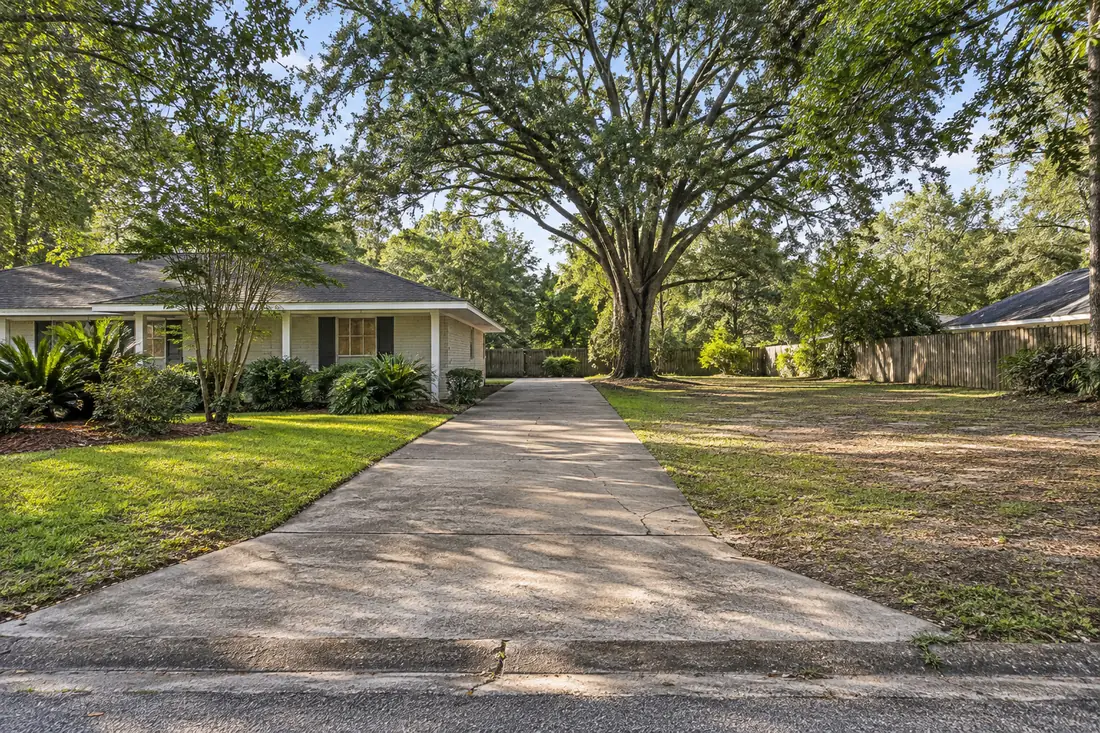
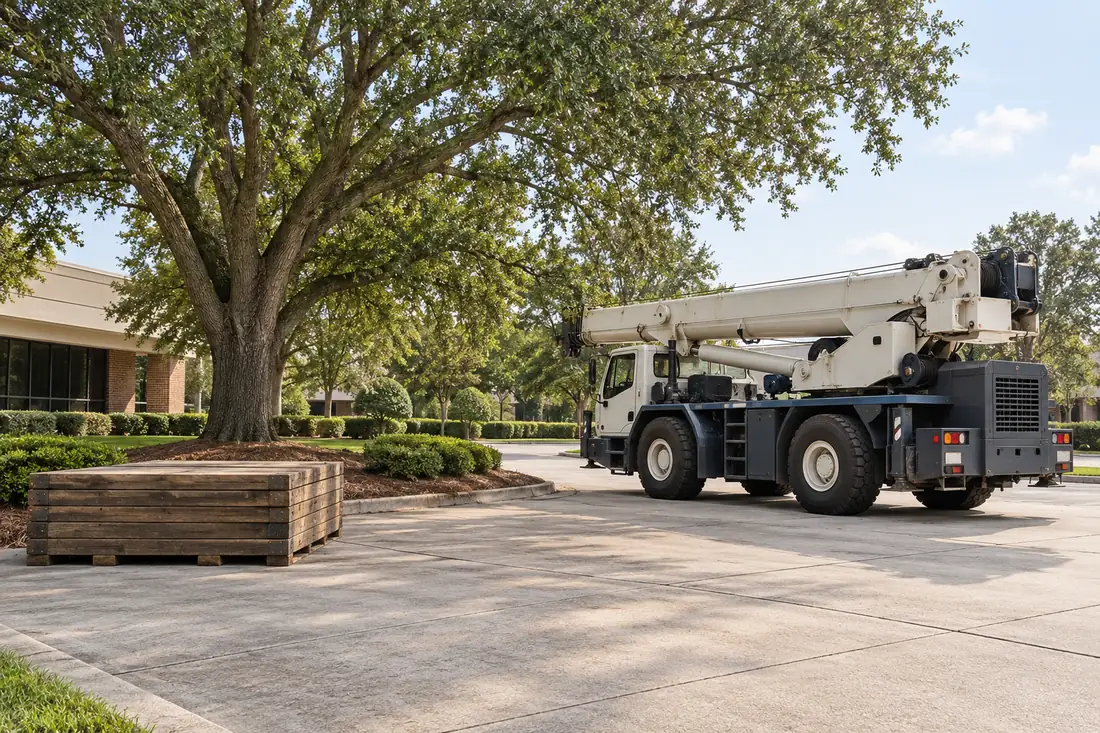
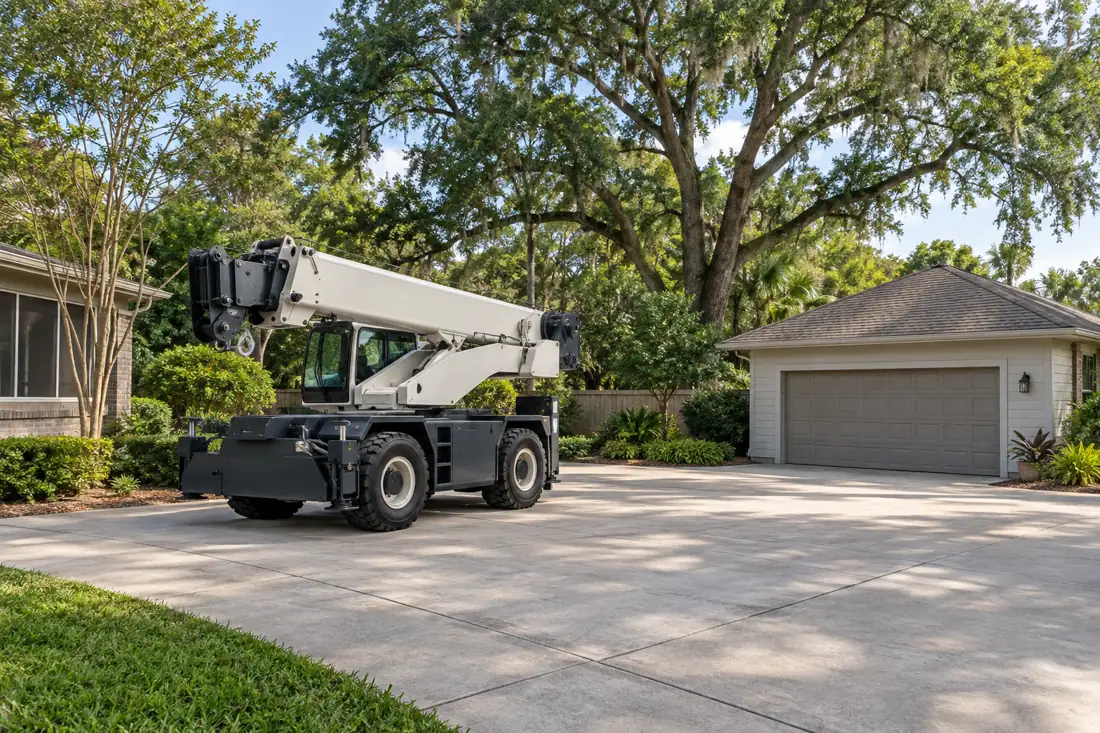
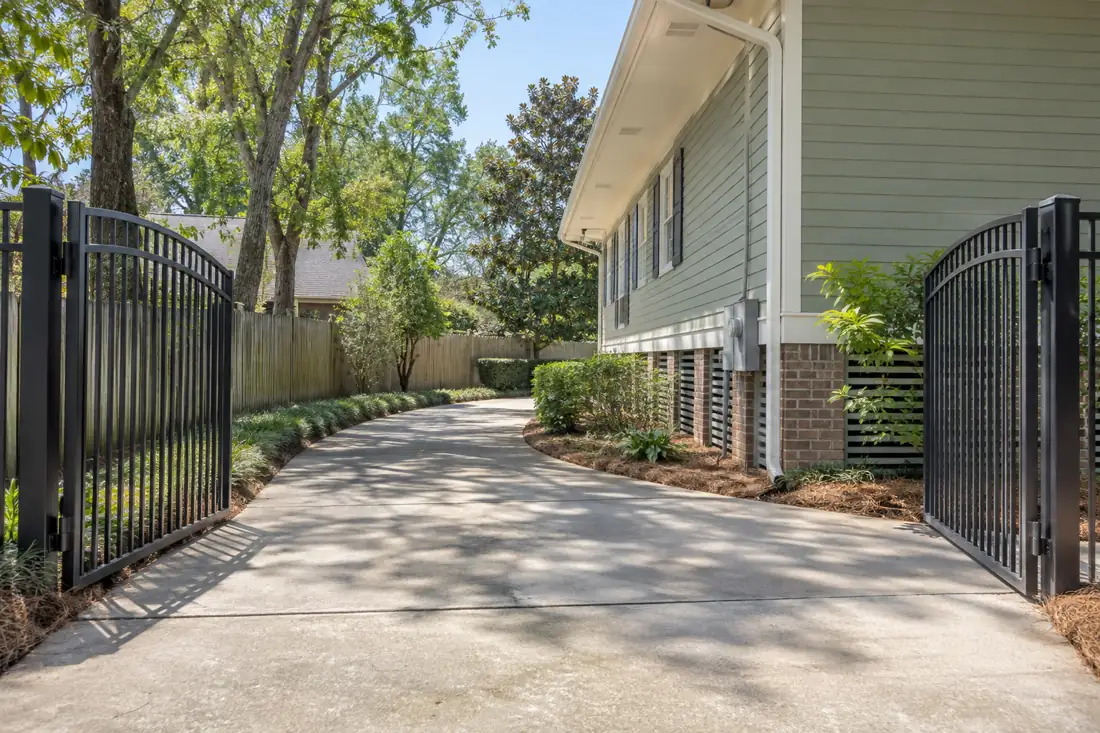
A crane needs more than a place to park the truck. Setup footprint, support conditions, obstacles and the distance to the work must be considered together. Show available areas and identify buried infrastructure or restrictions. A site-specific equipment assessment is needed before a removal method or loaded reach can be confirmed.
Site planning detail: Crane tree removal requires verified setup space, ground support and a load path, not just a driveway wide enough to park a truck. Include potential outrigger areas, drainage structures, buried utilities, overhead wires and the approach from the road in photos. Recent wet weather or unknown pavement construction can change what equipment can safely be supported. Ask who evaluates the setup and arranges any necessary street, sidewalk or utility coordination.
Clarify where cut sections will be lowered, staged and loaded onto trucks. A remote photo assessment can inform an estimate but cannot certify lift loads or bearing capacity. If a crane cannot be safely positioned, the contractor should reassess the method and written scope rather than assume a smaller machine will solve every limitation.
A crane proposal depends on far more than tree height. Show the assessor the potential setup surface, available street or driveway width, overhead cables, nearby structures and the route for material leaving the site. A crane must have appropriate clearance for outriggers, boom movement and the planned load path, while ground support must suit actual conditions.
Photographs help with planning but cannot replace an on-site evaluation or engineering judgment where warranted. Do not promise that pavement, buried utilities or a landscaped area can support the equipment without verification.
Ask who will assess access restrictions, needed permits or traffic coordination and responsibility for protecting finished surfaces. Discuss where cut sections will land, whether the crew will use rigging in combination with the crane, and how suspended loads will be kept away from people. If crane access is not feasible, request another method and the practical difference in disruption. A written estimate should distinguish the proposed method from a guarantee that the equipment can be positioned exactly as pictured before the site is examined.
Measure clear space, not an imaginary crane pad
A potential crane setup position needs more than an empty rectangle on a driveway or street. Operators may consider underground services, surface loading, overhead lines, swing clearance, outriggers, access turns and whether pedestrians or vehicles can be separated from the operation. Property owners can supply wide photographs and approximate distances, but they should not approve ground bearing or lifting arrangements themselves. A map view is a starting point for discussion, not a rigging plan.

Trace the entire arrival and departure route
The approach to a property can be the limiting factor even if the final setup area is spacious. Look for sharp driveway turns, culverts, overhead utilities, low branches, narrow road shoulders, parked vehicles, and pavement that may not support heavy equipment. Identify public right-of-way restrictions and any driveway or bridge with uncertain load capacity. The route also must allow a controlled exit when the work is finished.
Photograph the access from multiple directions, not just the final crane location. A road with no obvious overhead wires near the tree may have service drops across the entry lane. If using the street or a neighboring lot is being considered, verify permissions and any required traffic controls before scheduling. The lift contractor should evaluate transport clearances and restrictions; do not direct a driver to test a questionable surface by trial and error.
Keep crane calculations with the qualified equipment team. A crane-assisted removal requires a real setup assessment, not a reach estimate from an aerial photograph. Point out slope, storm-softened ground, buried tanks, utilities, overhead obstacles and access restrictions to the operator and lift planner. Ask who controls pedestrian exclusion, traffic interruptions and the suspended load path. Record where outrigger support might be considered without instructing anyone to position a crane on an unverified surface. The buyer should approve a scope that describes operations and restoration, not assume crane use is automatically the safest option.
If the only apparent location is a public street or near utility lines, document that constraint for the contractor and identify the relevant controlling authority before scheduling. Keep the tree removal estimate separate from the engineering, permissions or traffic arrangements that may be necessary for a feasible setup. The crane-cost guide helps interpret which portions are priced and excluded, while this page focuses on whether the site can safely accommodate the proposed method. For the related but distinct decision, see Crane Tree Removal Cost.
Understand what the crane needs beyond a parking spot
A crane-assisted tree removal requires more than finding an open area where the carrier appears to fit. The professional lift plan must consider arrival route, operating position, ground bearing conditions, outriggers or other supports, boom reach, swing clearance, and a controlled area for lowering material. The dimensions vary by crane model, load, radius, and site. A homeowner should not infer feasibility from the truck's overall length or a promotional photograph.
Start by showing the tree and potential staging areas in wide photographs that include nearby buildings, overhead lines, gates, curbs, and the route from the street. Include narrow turns and low-hanging obstacles that may prevent the crane from reaching an apparently generous driveway. The contractor and qualified crane team should determine the actual setup needs after assessing the site, rather than relying on a generic minimum square-foot claim.
Check the complete crane operation rather than a parking spot
A crane needs an approach route, adequate setup footprint, suitable bearing conditions and safe loaded reach. A wide driveway might let the truck arrive but leave insufficient outrigger clearance or working radius. Share photos of pavement, grades, drains and nearby structures from safe positions, and identify any known buried tanks or service lines. Only the appropriate qualified team can determine actual load limits and support requirements; an online photo cannot validate the setup.
Trace the approach from the road to the proposed setup and loading area. Mark turns, gate widths, low branches, overhead utilities, adjacent roofs, public sidewalks and possible neighbor access needs. If temporary parking control or road occupation may be required, establish who secures authorization. Do not post unofficial closure notices or assume arriving equipment authorizes a pedestrian detour.

Loaded reach, ground bearing and public clearance require professional evaluation
Wet soil, hidden voids or changing wind can invalidate an apparently feasible plan. Pavement appearance does not establish the ground’s bearing capacity beneath a loaded outrigger. Ask how the crane operator, tree rigging crew and site manager will coordinate the exclusion area and evaluate conditions before lifting. Compare crane assistance against other professionally assessed removal methods instead of choosing solely by machine size.
Break the proposal into equipment mobilization, tree cutting, material handling, site controls, protection and any agreed restoration. Identify where cut sections will be lowered, how logs will leave and whether stump work is included. If the site cannot support the chosen crane method, require a revised professional plan rather than improvisation during setup. Document the final approved limits without promising a universal solution or fixed price.
Evaluate bearing capacity without guessing
A crane may concentrate high loads through supports that occupy a relatively small footprint. Grass that supports a passenger vehicle is not evidence that it can safely hold an outrigger. Soil composition, recent rainfall, underground voids, buried structures, and existing pavement all influence support conditions. A qualified lift team must assess bearing and determine suitable mats or other engineered protection for the specific equipment and planned loads.
Advise the team of known septic features, culverts, utility trenches, old excavations, retaining walls, drainage channels, and soft areas that remain wet after storms. Historic site plans can be useful, but unverified underground assumptions are not a substitute for evaluation. If adequate support cannot be established, moving the crane, selecting other equipment, or changing the removal approach is more responsible than forcing the original plan.

Measure the working envelope around the tree
Reach and clearance involve the distance and geometry between the crane, the tree sections, the intended lowering area, and surrounding obstacles. A tree's height alone does not establish the required boom length or crane capacity. A smaller section at a long working radius may impose different demands than a larger section lifted closer to the machine. These calculations belong to qualified operators and rigging professionals.
Show the team roofs, chimneys, balconies, power lines, other canopies, signs, and overhead structures within the possible swing path. The work area must account for suspended loads and exclusion zones, not simply the crane's physical footprint. Homeowners should never stand under a load to take photographs or ask for a lift to pass above an occupied space for convenience. The professional plan controls the work envelope.
Identify loading and wood-processing positions
Lifting sections out of a tree is only part of the job. The crew needs an appropriate place to place logs, separate branches, chip material, and load hauling vehicles. A site with an acceptable crane pad may still have no suitable landing area within safe operating limits. Ask the contractor how the sequence will avoid blocking essential access or piling sections against a building, utility box, or retaining wall.
The tree team may choose to cut lifted sections into smaller pieces at a designated processing area, but that area must also be controlled and protected. Describe whether wood is to be hauled away or retained, and where any retained logs can sit without rolling or obstructing use. Do not assume a crane eliminates the need for ground crews, chipper access, or debris transport through the property.

Account for utility proximity and coordination
Overhead power lines and service drops are especially significant because a crane's boom, load, or rigging may enter hazardous proximity even if the trunk is some distance away. Do not estimate a safe distance yourself from a photograph or apply a generic clearance rule to every voltage and operation. The crane company and tree contractor must follow applicable regulations, utility requirements, and professional planning practices.
Identify all visible utilities and ask who is responsible for contacting the utility owner where required. If a line must be de-energized, protected, or otherwise addressed, that coordination should occur before setup. Homeowners and neighbors must not move wires or attempt pruning near energized conductors. An unresolved electrical conflict can require postponement or an entirely different tree-removal method.
A crane needs a route and a support plan
A crane's lifting capacity is only one part of a tree-removal plan. The estimator also needs to consider the vehicle route, gate or street width, turning radius, overhead obstructions, lifting distance, ground bearing, and areas where outriggers might stand. Grass over recently filled soil, paving over an old trench, and a driveway above utilities can look solid without proving adequate support.
Ask whether permits, parking control, or temporary access agreements may be needed for the proposed setup. The tree and the crane are only two elements of a larger work zone that must also accommodate people, branch handling, and debris trucks. Share photos from the street toward the tree and from the proposed setup location; do not assume a satellite view settles the feasibility.
Plan crane space beyond the truck footprint
A crane setup requires more than enough driveway width for the carrier to park. An operator also considers level support, outriggers, counterweight swing, lifting radius, and the location where cut sections can land. Show the whole proposed area in photographs, including curb approach, pavement joints, nearby drains, buried utilities that are known, roof projections and overhead wires.
A residential slab can look sound while hiding uncertain support conditions, so do not assume it can carry concentrated equipment loads. Only qualified personnel can approve a lifting setup and appropriate support protection.
Ask the estimator to separate the crane position from space for hauling trucks, wood processing and safe pedestrian access. Discuss whether road or neighbor permissions are needed and how the crew will keep emergency routes available. Ground mats are not a guarantee against damage or failure on weak soil.
If support or clearance is unsuitable, the safer alternative may be a revised method or work sequence rather than forcing the crane into place. Request written exclusions for driveway repair, landscaping and stump handling so the quote describes the finish, not just the lift.

Crane feasibility depends on load, reach and bearing—not just space
A crane can fit in a driveway and still be unsuitable for the lift. The contractor has to assess the actual weight and position of tree pieces, distance from the planned setup, boom geometry, overhead constraints and ground bearing conditions under the stabilizers. The vehicle route must also support the machine's arrival and departure. Ask where any protective mats, barriers, pedestrian controls or road permissions may be required; do not assume a visually wide parking area is engineered for an outrigger reaction.
Provide a site map showing the tree, accessible surfaces, known buried drainage or utilities, slopes, walls and structures that cannot be disturbed. The lift plan and selection of equipment belong to the qualified contractor using the actual site and machine specifications. Keep the estimate explicit about crane setup, removal sequencing, landing zone, disposal and cleanup. A generated planning image should never be read as a certified lift plan or a photograph of an executed crane operation.
Plan for road, pedestrian, and neighbor access
A crane positioned near a driveway or street may temporarily occupy space needed by pedestrians, mail service, deliveries, or neighboring homes. Identify any right-of-way permissions and traffic-management requirements well before the crew arrives. If a sidewalk or shared lane must close, the detour should be accessible, properly controlled, and genuinely usable. Do not treat a few cones as automatic authorization for road occupancy.
Discuss when access might be interrupted: crane arrival, outriggers deployment, active lifts, log loading, and demobilization. A neighbor may have an appointment that cannot accommodate a surprise closure. Give realistic windows rather than promising continuous passage beneath a suspended load. Keep unauthorized people out of the operating zone even when work appears paused between picks.

Weather and ground changes can invalidate a setup
Rain can soften soil, alter traction, and change bearing assumptions. High winds or storms can also affect the safe handling of lifted tree sections. A plan prepared under one set of conditions should be reevaluated when conditions materially change. Do not pressure an operator to continue because a truck has already arrived or because a homeowner has arranged a particular day off work.
Ask the project contact how changes will be communicated and whether a revised access plan is needed after heavy rain. A stable paved area may be safer than a lawn in some conditions, but the pavement and its support still require evaluation. Professional stop-work decisions should be respected. A postponed lift can be less costly than an uncontrolled event affecting property, people, or utilities.
Compare crane assistance with feasible alternatives
Crane assistance can reduce certain kinds of ground handling or help lift sections away from structures, but it is not always the best method. Restricted access, inadequate bearing, overhead conflicts, or limited landing space can make sectional climbing, other mechanized equipment, or a revised work plan preferable. The choice should follow a professional assessment of the tree's condition, site geometry, and the hazards of each method.
Ask the contractor to explain the purpose of the crane in the proposed operation: controlled lifting, reducing impact on a protected surface, accessing a damaged canopy, or managing a specific obstacle. A useful explanation connects the equipment to the site rather than presenting a crane as inherently superior or safer in every situation. The final quote should identify the selected method and what access preparations are needed.

Prepare an informative crane-removal estimate request
Send photographs showing the whole tree, the approach street, any potential setup pads, overhead obstructions, nearby buildings, and where wood could be lowered. Include known drainage, septic, culvert, or underground utility concerns and identify whether a neighbor's property would be involved. A simple plan with rough distances can help the first conversation, but it does not replace the qualified measurements and calculations required for an actual lift plan.
Ask for a scope that explains tree sections, crane coordination, access protection, traffic measures when applicable, debris handling, stump work, and restoration responsibilities. Confirm who obtains needed permissions and who communicates schedule changes. Tree Huggers can review your site information and determine what professional evaluation is necessary before quoting a crane-assisted method, without inventing a universal setup dimension or guaranteed lifting capacity.
Questions about this project
Does a machine's maximum reach prove it can do my job?
No. Loaded reach, configuration, section handling, obstacles and setup conditions all affect suitability. A contractor needs to evaluate the particular tree and property before confirming an equipment plan.
Can specialized equipment replace a site assessment?
It does not remove the need to assess tree condition, targets, access and support conditions. Ask how the contractor will confirm that the proposed machine and method fit the actual scope.
Can tree equipment use any driveway?
No general assumption should be made. Pavement condition, edges, support, buried infrastructure and the proposed equipment all matter. Ask the contractor to assess the intended setup and route for the particular property.
Do mats guarantee there will be no ground damage?
Ground protection is one part of a site-specific plan. It does not remove every load, soil or access limitation. Discuss the proposed measures and any restoration responsibilities in the written scope.
Can I identify a safe wire by looking at it?
No. Do not approach or touch wires, a tree contacting them or connected objects to investigate. Keep clear and contact the utility or emergency services when there is an immediate electrical hazard.
Does a tree estimate include utility disconnection?
Only if the appropriate coordination and responsibilities are explicitly arranged. Utility work may require the service provider or another qualified party. Confirm those arrangements before assuming the tree crew can proceed near affected services.
What access information helps an estimator?
Send the narrowest opening, overhead obstacles, turns and the distance between the tree and the loading area. Include photos of the entire route and identify steps, soft ground or features that must remain protected.
Should I remove a fence before the visit?
First ask the contractor to assess access and agree on any temporary opening. Identify who owns the fence, who can authorize the change and who will reinstall it. Do not assume the opening is necessary or included.
What should I compare besides the price?
Compare tree identification, work objectives, access assumptions, hauling, stump treatment, site finish and exclusions. Ask whether permits or other coordination are part of the scope and who can approve changes if conditions differ.
Does an online request book the crew?
No. A request starts the estimate conversation. The company still needs to discuss scope, availability and any site assessment. For a dangerous or urgent condition, call 504-458-8336 rather than relying on a form response.
What should I tell Tree Huggers about crane setup space for tree removal?
Explain the property address, the work you want and the specific concerns: setup footprint, support conditions, working distance. Send safe photos of the tree, surroundings and access route. The contractor can then discuss the assessment and scope needed for this situation.
How do I request an estimate for this work?
Call 504-458-8336, text photos or use the estimate form on this page. Include the address, desired outcome and any timing constraints. The company will need to review scope and availability; an online request does not confirm a price, appointment or emergency dispatch.
Get a scope for your property
Crane setup should be assessed as a real footprint with support and overhead limitations, not a circle sketched around a truck. Show the route from the street, driveway widths, turning areas, slopes, drainage inlets and any soft soil or buried vaults near the proposed setup.
Photograph overhead lines, building eaves, canopies and poles without entering a hazardous area. Describe whether a sidewalk, parking space or shared access road could be affected and who controls those areas. Only the qualified crew can determine if ground support, reach and lift conditions are suitable.
Ask for a written scope identifying who evaluates the setup site, ground-bearing concerns and any permissions or traffic restrictions. Establish how wood will travel from the tree to the landing area, where debris will be processed and whether ground mats or surface protection are proposed. A crane is not automatically faster or safer for every location, and an estimate should not imply that a street, driveway or utility corridor is approved for staging without the necessary checks. Confirm that cleanup and reopen-the-route responsibilities are included.