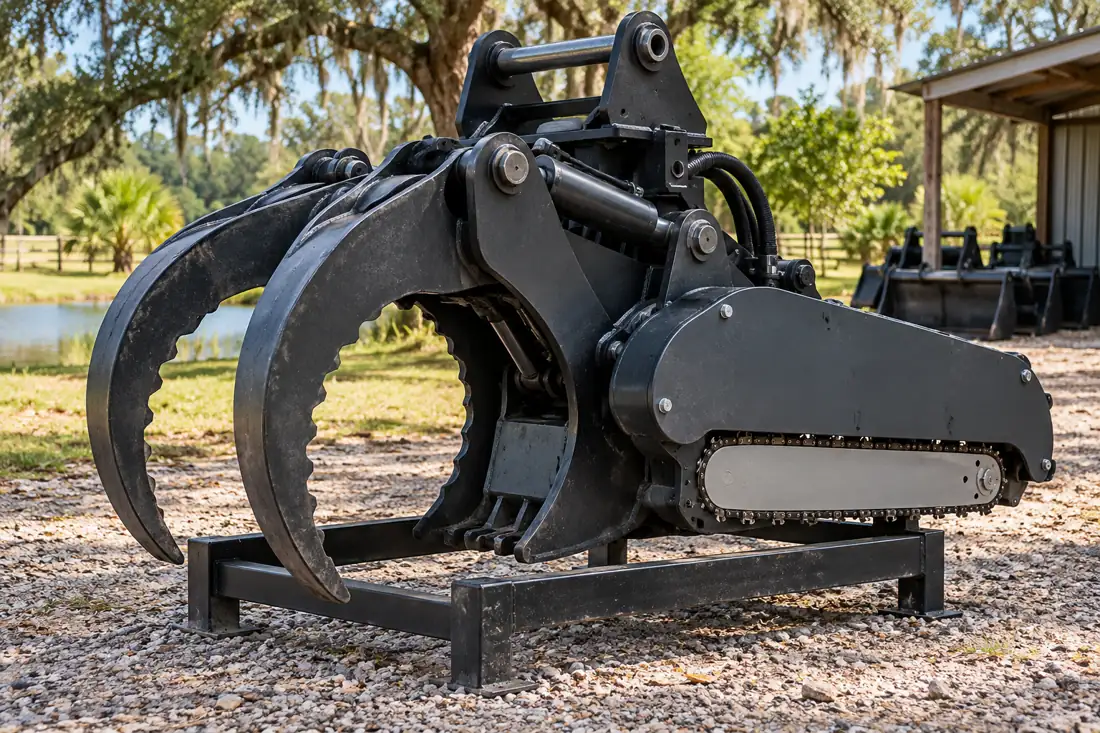
Different methods solve different access and handling problems. A useful comparison considers tree condition, reach, targets, ground support and the way debris will leave the site. Ask which methods are feasible for your property and why. Equipment choice should support the scope rather than replace assessment with a sales label.
Practical scope and safety guidance: Compare a crane, grapple saw and conventional rigging against the same tree and the same final cleanup condition. Each option changes where operators stand, how pieces travel, what ground support is needed and which access approvals are required. Mechanical handling may reduce some manual steps but can require a bigger work zone, mobilization and traffic interruption. Climbing and rigging can suit sites where a qualified crew has an appropriate method, yet it is not the safe default for a compromised trunk or every overhead conflict.
A useful proposal should explain the chosen method’s staging area, utility dependency, exclusion area, expected equipment deliveries, debris pickup and restoration. Ask bidders to show what is excluded, including stump grinding or pavement protection. A headline equipment price by itself is not an apples-to-apples comparison. Do not claim that any machine is universally fastest, cheapest or safest.
Rather than choosing a crane, grapple saw or climbing crew by advertised speed, write down the actual hazards and finish requirements. Identify the tree condition, nearby structures, electrical conflicts, ground support, useful access width, safe landing area and whether branches can be controlled without contacting the roof or street.
A crane may reduce handling in some configurations, while a grapple saw can change where the operator stands, and conventional sectional rigging can work when vehicle access is impossible. None of these labels alone proves suitability. Ask the contractor how the selected system is rated and controlled at the working position.
Compare written proposals on the same outcome: which tree or limbs are removed, how sections reach the ground, what happens to trunk wood, whether stump treatment is included, how property surfaces are protected and when the work zone reopens. Ask what conditions would cause a revised method, who approves any price change and whether the estimate assumes a utility or traffic coordination step.
Exclusion zones and competent operators remain necessary regardless of mechanization. A sensible decision often combines methods across phases; it should not require the owner to choose equipment without understanding the reasons for that choice.
Start with the tree and the acceptable end result
The question is not which machine looks most capable in a video. The useful starting point is the tree's condition, size, position, surrounding structures and the result the property owner wants. Document whether the objective is a complete removal, selective pruning or a professional evaluation before deciding. A method that works for a clear open lot may be inappropriate beside occupied rooms or overhead utilities.
Ask the contractor to describe the scope in ordinary language before discussing a crane, grapple saw or climber. Record whether the stump, surface roots, log hauling, chip removal and cleanup are included. Keep the target tree unambiguous in photos or a site sketch. Similar-looking quotations can differ substantially when one includes difficult hauling and another stops once wood reaches the ground.

Understand conventional sectional removal
Conventional work may involve trained arborists assessing the tree and dismantling it in sections, with ground personnel managing the material. The exact approach depends on the tree's condition and surrounding hazards; it is not automatically the simplest or safest choice. From the owner's perspective, the important questions are where the work zone lies, how access is arranged and which property features need protection.
Discuss whether the tree is sound enough for the contemplated method, without asking a homeowner to make that judgment. A deteriorated trunk, compromised roots or storm damage can affect professional method selection. The contractor should explain any conditions that would require changing the approach. Avoid deciding from photographs alone that a tree is climbable or that a particular cutting sequence will be used.
Know what a crane changes and what it does not
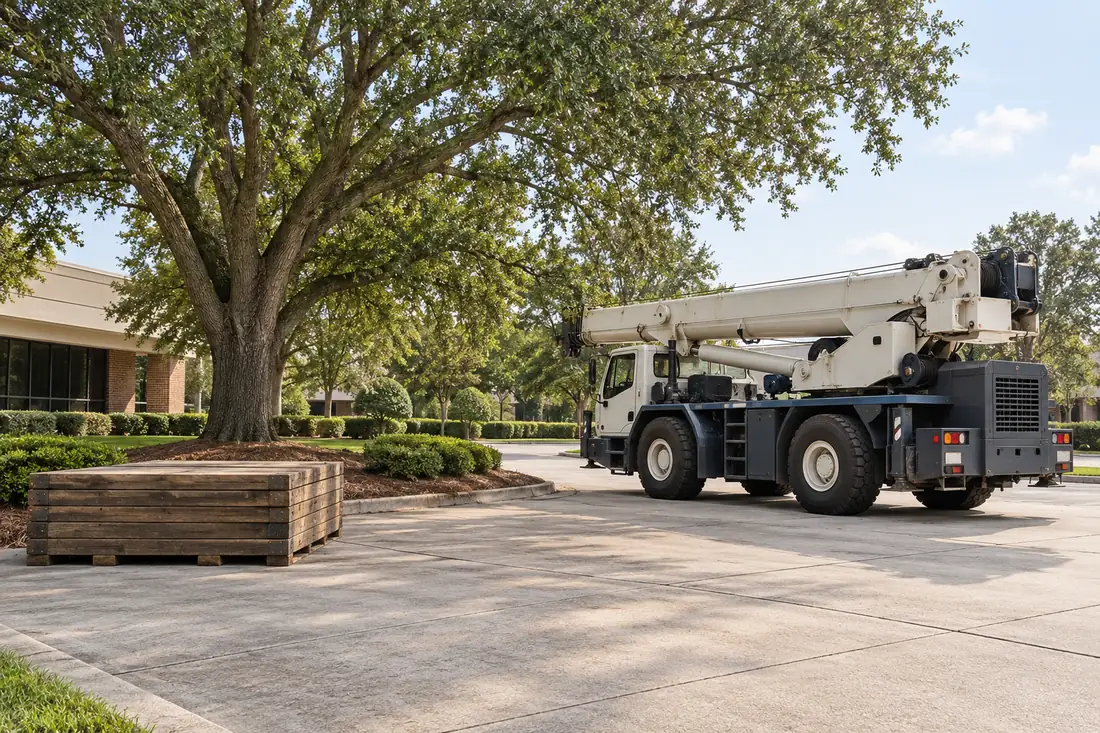
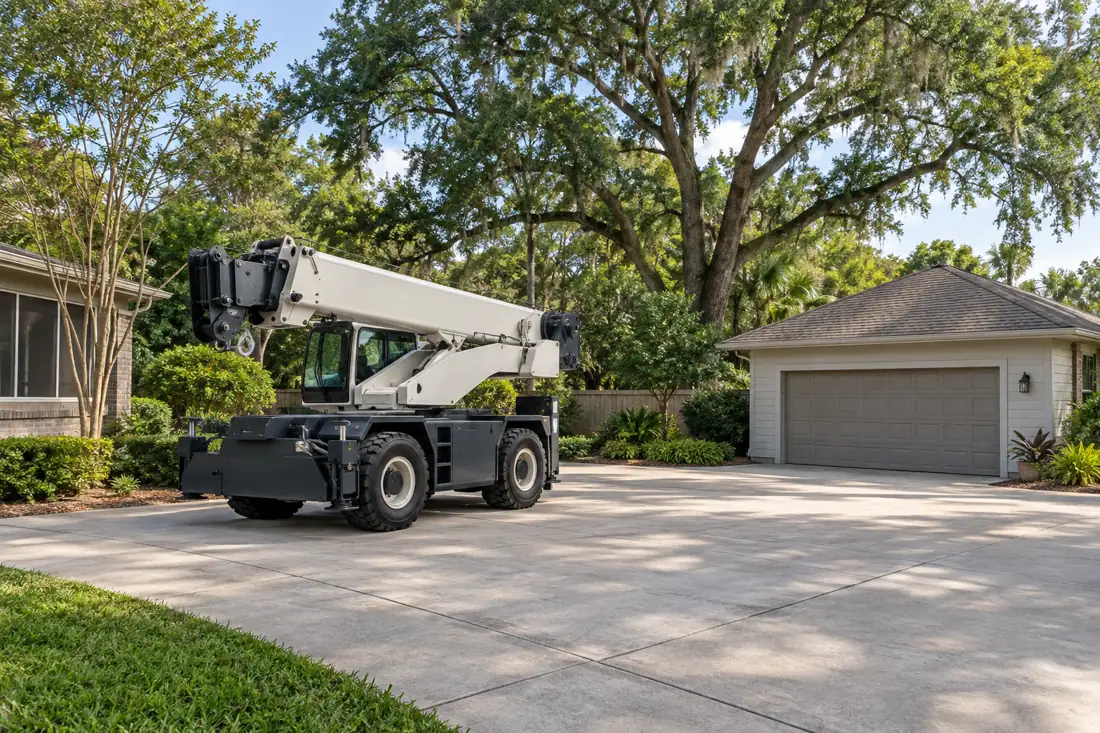
A crane can provide lifting capability that may be valuable where sections cannot be handled through a normal drop or lowering area. However, the crane must have an acceptable setup position, ground support, access route and configuration for the actual task. Published reach and lifting figures are not proof that a machine can perform a particular lift from the curb or driveway shown in a listing.
Ask which portions of the operation require the crane and what restrictions are assumed. A crane-supported project still needs trained tree personnel, a controlled work zone and a plan for loading and disposing of wood. If the crane position depends on a roadway, neighboring parcel or underground surface, those interfaces need prior review and approval. A crane is one component of a full tree-removal plan, not a substitute for it.

Understand grapple-saw and mechanized cutting systems
A grapple-saw system combines material handling and a cutting attachment, which can reduce some manual handling in suitable circumstances. Its use depends on equipment compatibility, reach, tree geometry, work-zone control and operator qualifications. Large equipment near branches does not by itself indicate that the method is appropriate. Ask the contractor how this option fits the specific tree, not whether the company owns the machine.
The owner should also ask where the removed material goes after each section is separated. Mechanized cutting can alter the location of debris processing, the need for truck space and the duration of access restrictions. It may be a good fit in one setting and poor in another with narrow turns or limited setup room. Method selection must remain with the qualified crew after a genuine site assessment.
Compare crane, grapple saw and conventional removal on the same terms
A crane lift, grapple-saw cut and conventional sectional removal each depend on a different combination of crew skill, equipment access, wood structure and material handling. A crane may lift heavier sections but require a substantial approved setup. A grapple-saw attachment can limit some direct cutting exposure while still needing a crane and a landing zone.
Climbing with controlled rigging may fit a tighter site but depends on reliable structures and a trained team. None is automatically the best choice based on the tree's height.
Ask competing estimators to describe the method, why it fits this tree, and what they would do if weather, decay or support conditions change. Compare the same end state: protection, hauling, log cutting, stump treatment, chip removal and disturbed-ground cleanup. A quote that ends when branches hit the ground cannot be compared directly with one that restores a usable yard.
Also ask about utilities, traffic and adjacent-property permissions before scheduling. The chosen method should be a qualified site-specific decision, not a marketing claim about a machine.
Choose the Removal Method by Access, Loads and Finish Work
A crane-supported removal, a grapple-saw operation and a climbing-and-rigging approach may all be discussed for the same tree, but they solve different physical problems. Begin with the tree's soundness, distance to targets, available landing space and the travel route for debris. A crane can support planned sections when its setup and lifting geometry work; a grapple saw can combine controlled cutting and material handling in appropriate reach; conventional rigging can function where machinery cannot be positioned. None eliminates the need for a site-specific hazard assessment.
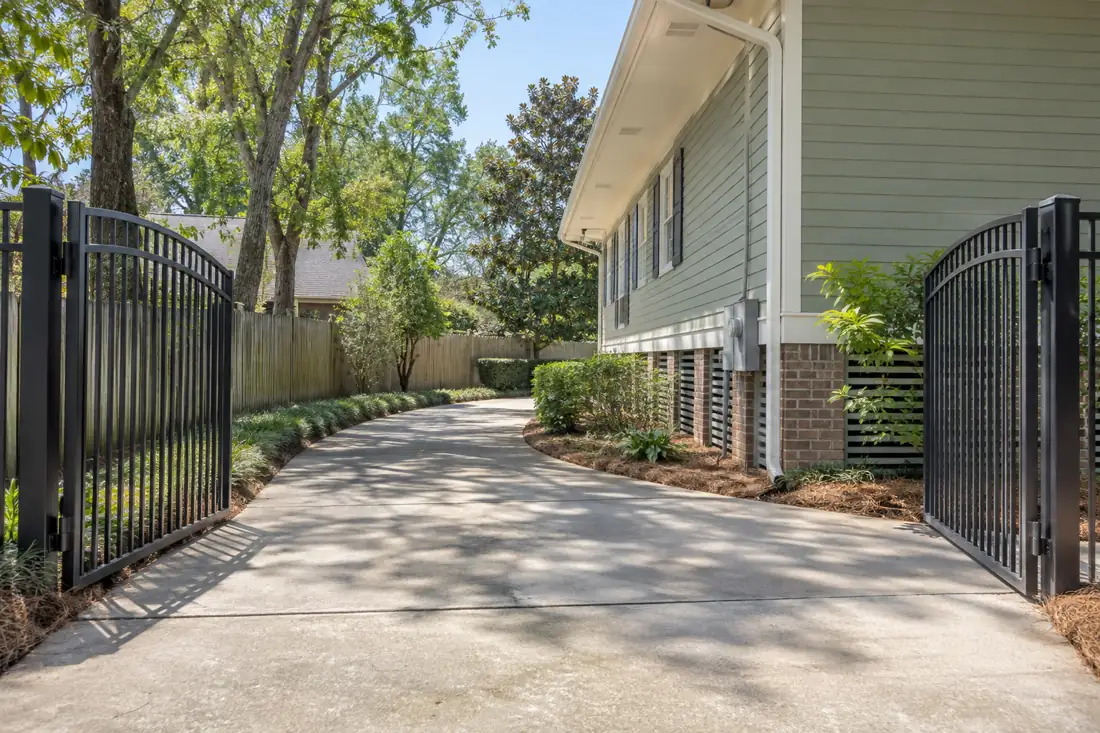
The picture to request from an estimator is a workable sequence, not a list of impressive equipment. Ask where outriggers or ground protection would sit, whether the boom has adequate reach without crossing restricted space, and whether overhead conductors create a separate utility coordination issue. If the equipment requires access through a neighbor's drive or a narrow gate, put those permissions and restoration limits into the proposed scope before comparing prices.

Questions that separate a feasible plan from an attractive equipment label
Contrast what will happen to each cut section after it is separated. Some limbs can be lowered to a planned drop zone; others must be lifted, carried or reduced into smaller pieces near the tree. The disposal route and final debris handling may govern the total duration even when the cutting method looks fast. For trees with compromised trunks or major decay, ask how the professional intends to avoid relying on weakened wood as an anchor; do not treat remote equipment as permission to work beneath hazardous limbs.
Make the acceptance criteria identical across alternatives: which tree is removed, the stump height or grinding depth, hauling versus retained logs, lawn and driveway protection, site cleanup, and any required traffic or gate arrangements. A proposal that says only 'crane removal' is not equivalent to one that includes controlled lowering, material transport and complete debris removal. Choose on safe feasibility and a written result rather than assuming the largest machine or lowest apparent price is best.
Compare available access and ground conditions
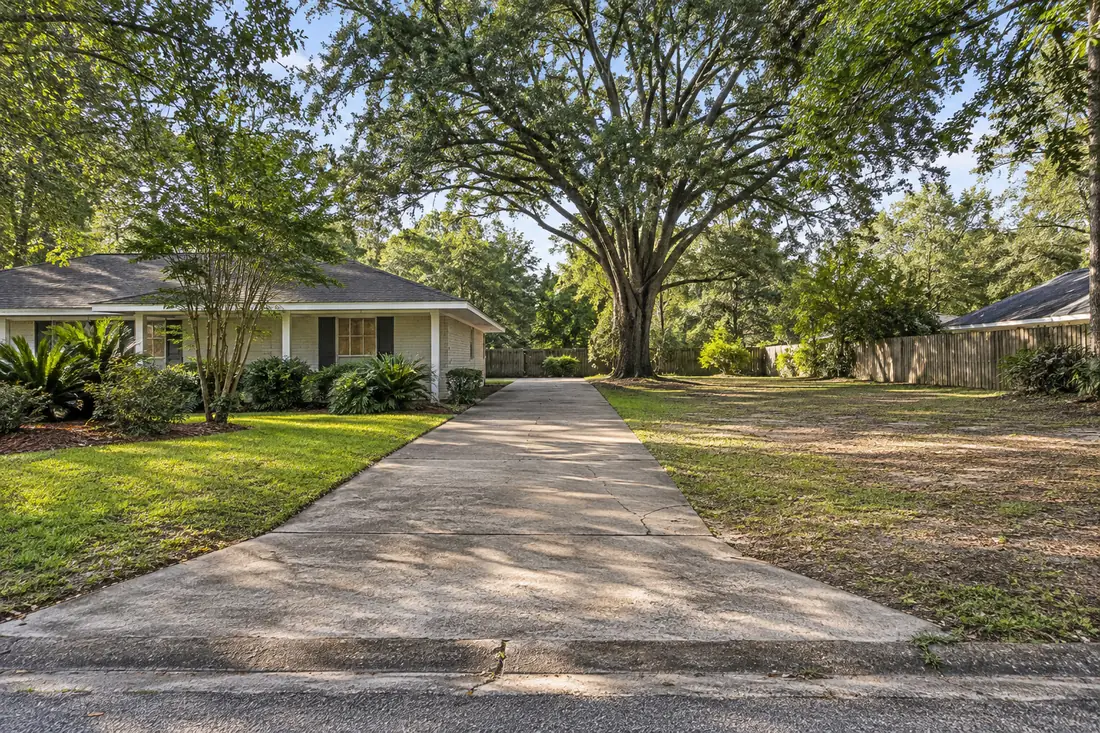
A large, open street may appear to favor heavy equipment, but underground services, pavement design, parked vehicles or road permissions can complicate its use. A backyard may have enough room around the tree but an approach too narrow for a machine. Assess the route, setup area, operating envelope, material-handling path and exit together. One favorable dimension cannot establish overall suitability.
Share drainage, recent grading, retaining walls, septic or utility infrastructure and existing surface damage with the estimator. The contractor should decide what needs further verification, ground protection or changes to the method. Avoid promising that protective mats eliminate all surface effects. Where site conditions remain uncertain, a quote should distinguish confirmed inclusions from assumptions that could alter the approach.

Account for structures, utilities and neighbors
Nearby buildings, fences, roofs, outdoor equipment and service lines can determine which method is feasible. A tree over a house presents different constraints from one over a vacant yard, even at the same trunk diameter. Photograph the relationship between the canopy and nearby features from safe positions. Tell the contractor about occupied areas and any property boundary concerns before discussing equipment options.
Electrical and other utility hazards require the appropriate qualified coordination; the homeowner should not estimate clearances or move lines. If public space or a neighbor's land is involved, ask who obtains authorization. Make sure the proposed plan addresses bystanders and the safe exclusion area as well as the tree itself. A sensible method is one that fits the site and its people, not merely the tree's measurements.
Separate speed claims from a realistic work window
Mechanized equipment can change how a crew performs work, but a faster cutting sequence does not necessarily shorten the full project. Delivery, setup, ground preparation, public-space arrangements, traffic movement, wood processing and cleanup all consume time. Ask the contractor for a realistic sequence and any conditions that could interrupt it, rather than assuming a machine eliminates preparation or the need for multiple trips.
For occupied properties, agree on access restrictions by phase. Deliveries or residents may need a clear alternative route while the team is operating and loading. Allow the contractor to postpone or revise work if weather or changed site conditions make the selected method unsuitable. An estimated completion window should be treated as planning information, not as a guarantee that safety decisions will be sacrificed to meet a deadline.

Compare quotes using identical completion standards
Request written descriptions of the tree or trees included, removal extent, stump treatment, debris disposal, surface protection and final cleanup. Note whether the proposal assumes a specific equipment position, road access or nearby utility coordination. Without those details, a lower number may simply reflect a smaller scope. Ask for clear change-approval steps if unanticipated conditions require a different method.
It can be helpful to compare more than price: relevant experience, documented business qualifications, insurance information appropriate to the project and clarity about responsibility. Do not treat a marketing photograph or a machine brand as proof of competence. A careful contractor should be able to explain why an approach is proposed and what alternatives would change. The owner should understand the decision without being expected to supervise technical operations.
Understand what happens if the method must change
A preliminary proposal may rely on assumptions that cannot be confirmed until a site visit or closer professional evaluation. Hidden decay, restricted access, unexpectedly soft ground or an unavailable setup area can force a method change. Agree in advance on who can authorize altered work, how costs are documented and whether a new work date might be necessary. Do not permit unapproved work solely to preserve the original appointment.
Keep an accessible record of the original scope and any approved changes. If the operation pauses, the responsible crew should secure its work area under its own procedures. A homeowner's useful role is to communicate access and property information, not to direct lifting, rigging or cutting. A transparent change process makes an unexpected complication manageable without inventing guarantees about the result.

Ask the right method questions at your estimate
Send wide views of the tree, structures, access route and likely loading area, then identify what must stay protected. Ask: Which methods are being considered and why? What assumptions govern the choice? Are permits, public-space arrangements or utility coordination needed? What will the crew leave behind? Which exclusions or optional services matter for this property? These questions encourage a useful explanation rather than a demonstration of equipment.
The final proposal should reflect the specific tree, the actual site and the desired outcome. Neither conventional climbing, crane support nor a grapple saw is universally best. A professionally selected method balances the tree's condition, available space, surrounding risks and complete handling of material. Compare documented scope and responsible planning, then keep the approved details available for the crew on work day.
Questions about this project
Does a machine's maximum reach prove it can do my job?
No. Loaded reach, configuration, section handling, obstacles and setup conditions all affect suitability. A contractor needs to evaluate the particular tree and property before confirming an equipment plan.
Can specialized equipment replace a site assessment?
It does not remove the need to assess tree condition, targets, access and support conditions. Ask how the contractor will confirm that the proposed machine and method fit the actual scope.
Should I tell the contractor where to attach ropes?
No. Those decisions belong with qualified people assessing and performing the operation. Identify the targets, restrictions and desired outcome so they can develop an appropriate method for the tree and site.
What should I ask about controlled handling?
Ask how the work area will be managed, what property needs protection, where material will be handled and how it leaves the site. Confirm those practical expectations along with access and cleanup.
Can the removal method be selected from a photo?
Photos help prepare the discussion but may not show defects, ground conditions or usable access. The contractor may need an on-site assessment before confirming the method, equipment and final scope for the property.
What if the tree changes before the appointment?
Tell the contractor about a new split, failed branch, changed lean or other visible change. Keep clear of the affected area. Changed conditions may require a different assessment, priority or work plan before the crew proceeds.
Can tree equipment use any driveway?
No general assumption should be made. Pavement condition, edges, support, buried infrastructure and the proposed equipment all matter. Ask the contractor to assess the intended setup and route for the particular property.
Do mats guarantee there will be no ground damage?
Ground protection is one part of a site-specific plan. It does not remove every load, soil or access limitation. Discuss the proposed measures and any restoration responsibilities in the written scope.
What should I compare besides the price?
Compare tree identification, work objectives, access assumptions, hauling, stump treatment, site finish and exclusions. Ask whether permits or other coordination are part of the scope and who can approve changes if conditions differ.
Does an online request book the crew?
No. A request starts the estimate conversation. The company still needs to discuss scope, availability and any site assessment. For a dangerous or urgent condition, call 504-458-8336 rather than relying on a form response.
What should I tell Tree Huggers about comparing crane, grapple saw and conventional tree removal?
Explain the property address, the work you want and the specific concerns: method feasibility, site constraints, complete scope. Send safe photos of the tree, surroundings and access route. The contractor can then discuss the assessment and scope needed for this situation.
How do I request an estimate for this work?
Call 504-458-8336, text photos or use the estimate form on this page. Include the address, desired outcome and any timing constraints. The company will need to review scope and availability; an online request does not confirm a price, appointment or emergency dispatch.
Get a scope for your property
A crane, grapple saw or conventional climbing and rigging approach should be chosen for site conditions, not marketing alone. Share wide photographs of tree form, property access, canopy overhang, structures, utility lines, soil condition and the intended cleanup area. Ask each bidder to describe their method, equipment position, work exclusion zone, debris handling and any site restrictions that could rule it out.
Compare like-for-like written scopes, including whether stump work, removal of chips or logs, surface protection and permits are included. Neither a crane nor a grapple saw automatically reduces every risk or avoids a needed site visit.