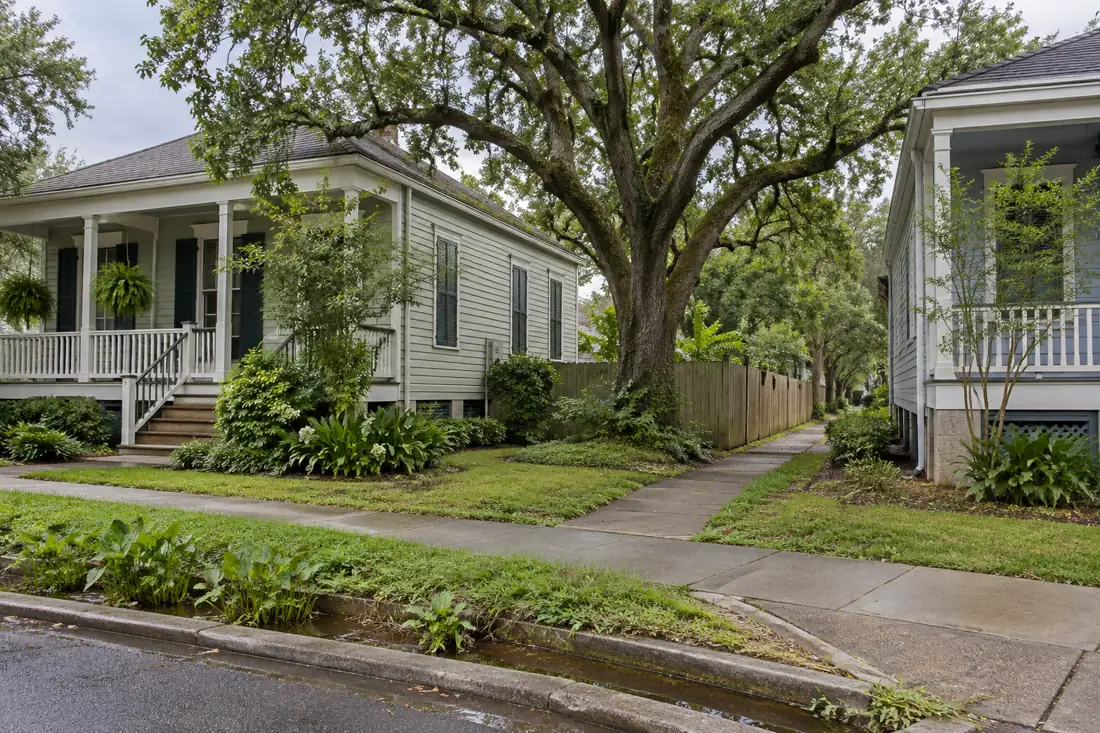
Tree service from Saint Jude Street
Tree Huggers Tree Service LLC is based at 342 Saint Jude St in Marrero. From here, crews can reach Marrero, Harvey, Gretna, Westwego, Algiers and surrounding communities efficiently while still mobilizing across Greater New Orleans for larger work.
Marrero ground conditions and debris routing
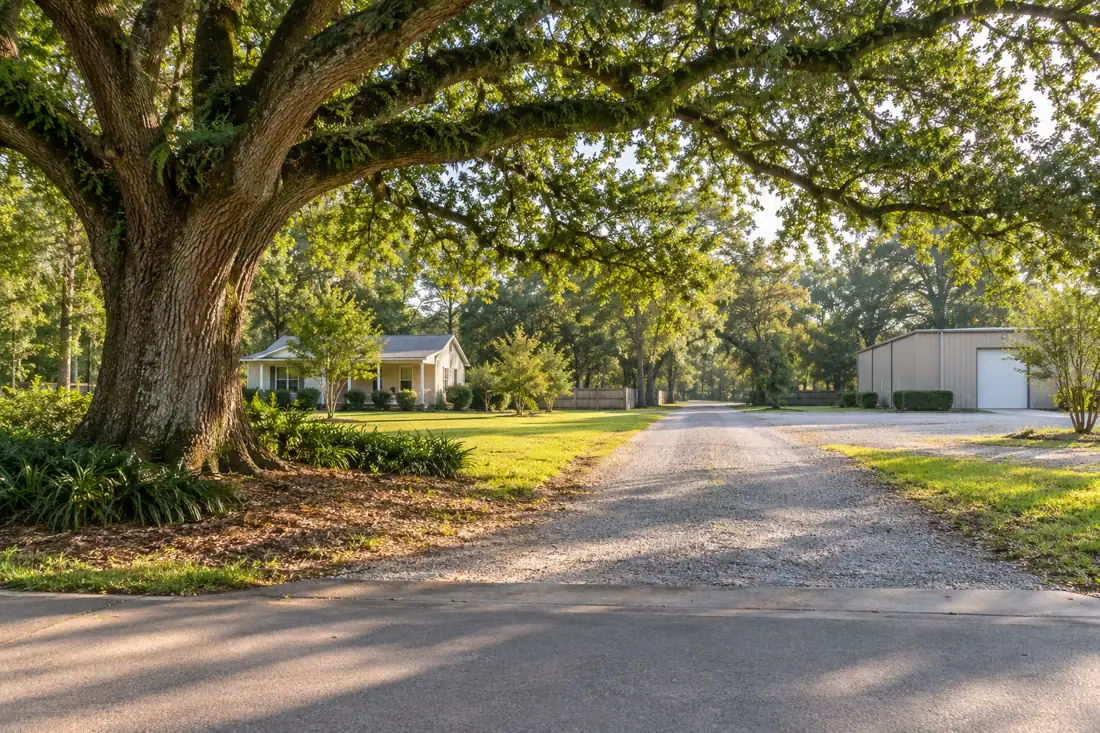
A Marrero property can have very different access conditions after a dry week and after prolonged rain. In a tree-work inquiry, explain whether a driveway, side passage or lawn is the intended equipment route and whether low ground becomes soft or holds water. Photos of the actual route and any drainage features help avoid making assumptions about where heavy equipment can travel. Never use a yard’s apparent dryness as proof that the soil can carry a particular machine.
If the work involves a leaning trunk, cracked limb or exposed roots, document what changed and when without assigning a cause. Keep children and pets out of the possible fall area. Do not use a vehicle, rope or hand tools to test whether the tree is stable. The estimate needs to separate hazard assessment, controlled removal if recommended, debris processing and optional stump grinding, because each can require different access and surface protection.
Describe what the customer wants the site to look like when the crew leaves: wood stacked or hauled, chips spread or removed, and gates or walkways restored. Where the tree overhangs a neighbor’s property, obtain permission for access before work is scheduled. Clear descriptions reduce surprises without promising a fixed price or completion time before an on-site review.
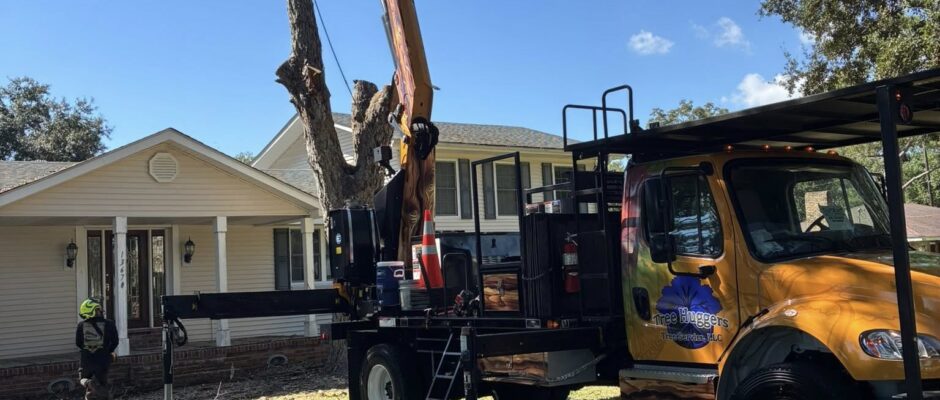
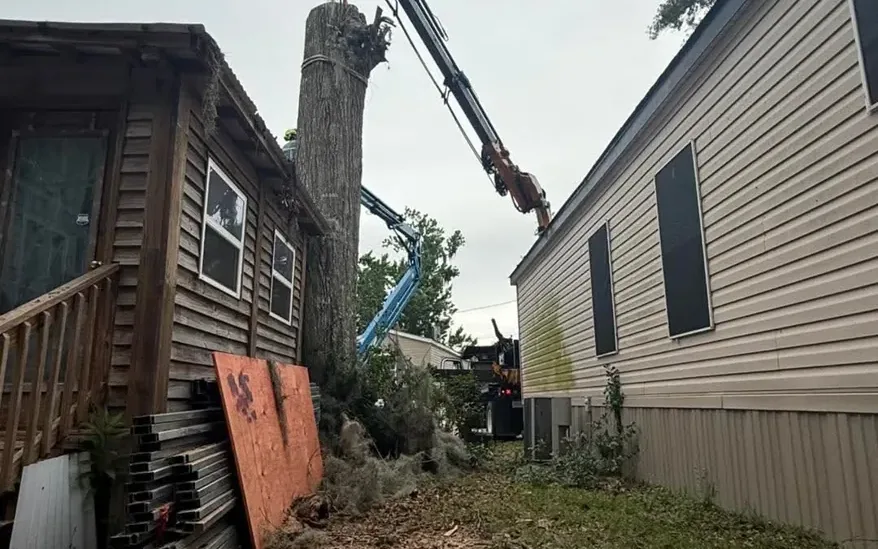
Services include tree removal, trimming, stump grinding, emergency storm response, high-risk tree work, cabling, injection and other tree-care needs. Large trees near roofs, fences or neighboring property are evaluated for controlled rigging, aerial access or crane support when appropriate.
A local starting point, with a plan for your yard
The first question is usually simple: can the tree stay, or does it need to go? The useful answer comes from looking at the tree and the property together. A broad canopy shading a Marrero backyard may need selective clearance over the roof. A declining tree beside the same roof may call for a removal assessment. Those are different conversations, even when the trees look similar from the street.
Tree Huggers is based in Marrero, and this page is for homeowners and property contacts planning work in the community. Start with the address and your main concern rather than trying to select a machine. Explain whether the tree has changed recently, whether a branch is touching a structure and whether access is through the front drive or side yard. That gives the estimate a useful starting point.
Match the service to the problem you want solved
For roof contact, discuss tree trimming and pruning with a specific clearance objective. For a dead tree, major structural concern or a tree that conflicts with planned construction, start with tree removal. Describe the outcome in ordinary terms: keep the shade, clear the driveway, remove the dead tree, or prepare the garden for a fence. The contractor can explain what needs evaluation before committing to a method.
A request to make everything smaller is less useful than showing the branch and the target beneath it. Likewise, a stump that catches a mower is different from a stump in the exact line of a new footing. Separate the tree work from the finish you need afterward. An estimate should connect those objectives to identifiable tasks so you can understand what the crew is being asked to deliver.

Walk the access route from the street to the tree
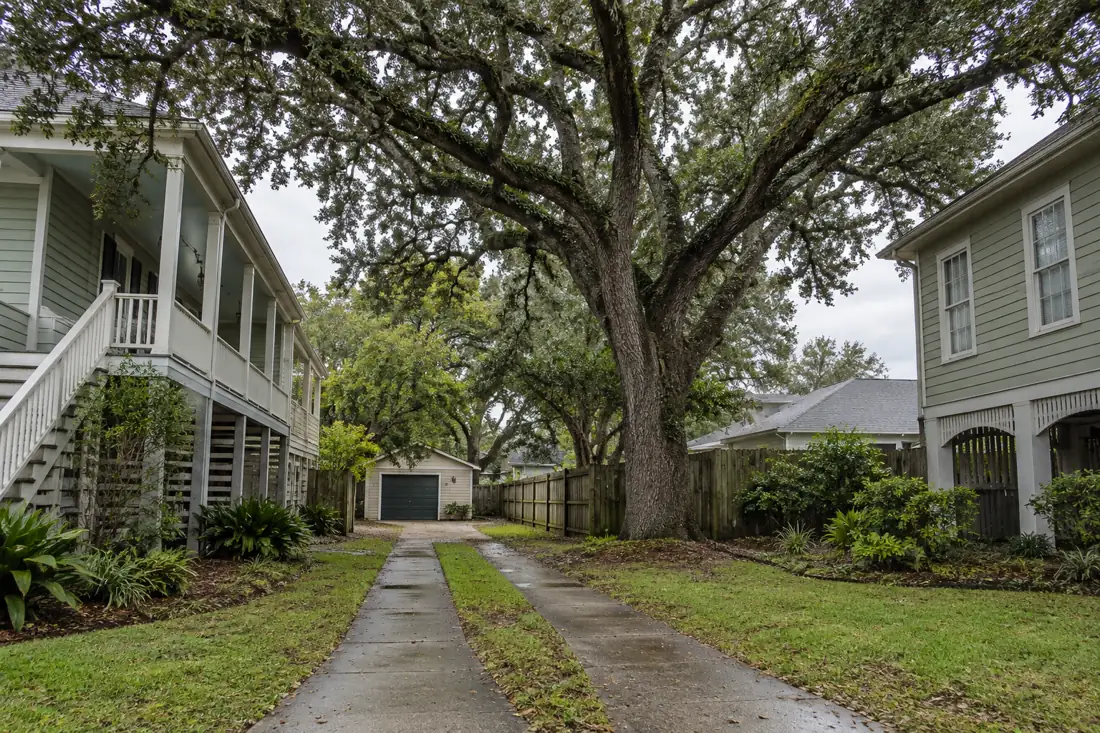
A backyard job begins well before anyone reaches the trunk. In addition to the gate width, the route can include a turn beside the house, air-conditioning equipment, a low eave, a raised patio and a second gate. Take a wide photograph from the driveway, another at the narrowest point and a final view looking back toward the street. Mention anything that cannot be moved, including a fixed generator or established planting bed.
Do not dismantle a fence or trim another tree just to create access before the proposed route is reviewed. There may be another workable approach. If an opening is needed, agree on its location, preparation and reinstatement. A neighboring yard is a separate access arrangement, even if it looks convenient. The useful result is an authorized route that fits the work, with no surprise assumption about who moves or restores a feature.
Protect the features that make the yard yours
A removal plan needs to account for more than the house. Show the estimator your shed, pool equipment, vegetable beds, irrigation components, pavers and any known buried service along the proposed route. Small features can be difficult to see in a distant tree photo. Explain which surfaces are decorative or already damaged, and identify places that stay soft after rain. Ground protection may be appropriate, but its suitability still depends on the surface and loads involved.
Think about daily use, too. A side door may be the family’s normal entrance, and a backyard gate may be the only way to move pets outside. Arrange an alternative before the work window. Keep furniture and vehicles out of the agreed area when requested. That preparation lets the crew concentrate on the tree while the household has a clear plan for entering, leaving and keeping people away from active handling.

Marrero Yard Access and Drainage Can Shape the Scope
At a Marrero residence, the tree itself may not be the hardest part of the job. Mature shade trees can sit behind narrow side gates, pool fences, sheds and stretches of soft lawn that limit where equipment or brush can move. A site assessment should distinguish the tree condition from the practical route for the crew. Describe whether the trunk is in front, behind or alongside the house and identify any obstruction between the street and the work area. The difference between carrying branches by hand, using smaller equipment or placing a larger machine in a supported position can change the plan. Never assume a neighboring driveway may be used without permission.
Ground conditions deserve attention in a low-lying yard. Saturated soil, an irrigation line, exposed drainage pipe or a buried utility can affect where equipment is safe to stand and how a path should be protected. A contractor should consider those constraints without promising that a heavy job will cause no disturbance.
Before any digging or stump grinding, applicable utility-location procedures and privately installed lines should be addressed. A visible surface root near a sidewalk is not proof that it caused all cracking, and an old oak does not automatically need removal because the yard is damp. Ask which observed condition supports the recommendation and what alternatives remain.
Questions for suburban lots, fences and crowded backyards
For a tree near a fence or roof, include photographs that show clearance and likely lowering zones. If a limb extends over another lot, ask who owns the tree and what consent is needed for access. A professional may be able to prune a specific branch without removing the entire tree, depending on condition, structure and the objective.
If a tree is dead or severely damaged, the work plan must still account for where each piece will go and which surfaces could be affected. Keep children and pets outside the work zone and do not enter beneath hanging branches to gather pictures. A safe wide-angle view from the driveway is enough to begin a discussion.

A good proposal explains what remains when the crew leaves. Will logs be hauled or placed on site? Is stump grinding included, and if so, what material will fill or remain in the hole? Does cleanup include raking smaller debris from paved surfaces or does it have a narrower definition? Discuss any lawn restoration separately from the tree operation rather than assuming it is automatic. For a routine estimate, provide the Marrero location, main concern and access limitations. For an urgent danger to people or utility lines, use the appropriate immediate safety contacts; an online form is not a live emergency-dispatch system.
Keep useful shade when the tree can reasonably remain
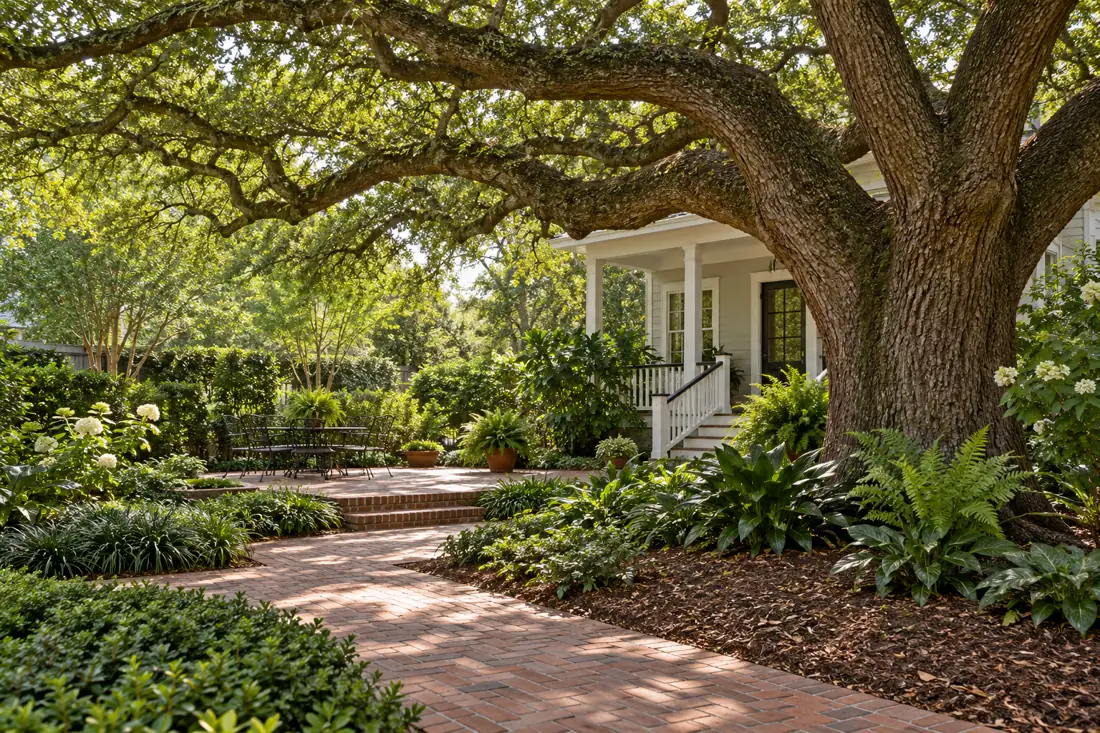
Removal is not the only purpose of a tree-service visit. If your priority is keeping a mature tree, say so. Ask which concerns can be addressed with appropriate pruning, which require closer evaluation and what would need monitoring after the work. A branch rubbing a roof, deadwood and a visible trunk defect should not all be treated as the same problem. Photographs can introduce the concern; they do not establish the internal condition of a tree.
Avoid promising yourself that a certain amount of cutting will make the tree storm-proof. The goal is a defined care decision based on its condition and surroundings. If a support system or treatment is proposed, ask what problem it addresses and what ongoing review it needs. Tree Huggers also discusses cabling and bracing and other preservation needs where appropriate. Retaining the tree should come with an understandable plan, rather than a vague assurance that it is now safe forever.
Decide what happens below the cut trunk
Tree removal, stump grinding and rebuilding the planting area are separate decisions. A low stump may be acceptable in an unused corner but unsuitable in a play area or along a mower route. Show the intended use before agreeing on stump grinding. A future fence, paved area or planting project can require different coordination from a simple lawn finish. Share the layout with the people doing that later work.
Ask whether grindings stay on site, whether material is hauled away and whether backfill or grading is included. Grinding does not automatically remove every root throughout the yard or prepare soil for any future structure. Identifying the desired finish early prevents an understandable but expensive mismatch: expecting a ready-to-build surface when the price only covered reducing the visible stump. Keep any later landscaping or construction work clear in the written scope.
Separate routine work from a new storm concern
If a tree has newly leaned, lifted soil, a hanging limb or contact with a building, describe that change when calling. Keep people out of the affected area. Do not move branches to get a better photograph or walk underneath a damaged crown. For wires on or near a tree, contact the appropriate emergency or utility service and keep clear. The tree-work request should explain the hazard without requiring you to approach it.
For nonurgent work, share a preferred window and any household constraints, such as a move, delivery or roof project. For urgent work, call to discuss current response availability instead of assuming a submitted form dispatches a crew. The emergency and storm page explains the response conversation. Clear urgency information helps distinguish a planned trimming visit from a condition that needs immediate attention or coordination before tree work can begin.
Coordinate the tree work with your next home project
If a roof repair, new shed or driveway project follows the tree work, send that sequence with the estimate request. The tree contractor needs to know whether access will change or a new feature will occupy the handling area. A route available today may disappear when another trade stores material beside the house.
Keep the separate contractors informed of the accepted scope and finish. If the tree company is only removing and hauling the tree, do not schedule a builder on the assumption that stump excavation, grading or structural preparation is included. Confirm those interfaces before booking the next stage so the yard is handed over in the condition each person expects.
Read the estimate as the plan for the finished property
Look for the tree location, agreed task, handling and hauling arrangement, stump decision and cleanup boundary. If there are two trees at the rear fence, identify which one is included using a marked photo. If you want a particular limb retained, point it out before accepting the work. A short written clarification is more useful than hoping the crew remembers an informal comment from an earlier visit.
At completion, compare the result with those same notes. Check the agreed work areas, material left intentionally and any separate follow-up item. Keep the invoice and useful photographs with your property records. To start a Marrero estimate, text safe photos with the address and desired result, or use the estimate form above. Include the side-access views as well as the canopy. The better first message is often three clear pictures and one specific goal, rather than a close-up of bark alone.
Tree Service Marrero questions
Is Tree Huggers based in Marrero?
Yes. The company’s established home base is Marrero. Send the work address when asking about an estimate; proximity alone does not confirm a visit time or dispatch.
Can I ask to preserve my backyard shade tree?
Yes. Make retaining shade an explicit objective. Discuss the tree’s condition, appropriate pruning and whether further evaluation is needed before choosing removal.
Which photos help with a narrow side yard?
Include the driveway entrance, the narrowest gate or turn and the route to the tree. Keep the roofline and fixed equipment visible where possible.
Should I remove my gate before the estimate?
Wait for the access review. If a temporary opening is useful, confirm who prepares it, who owns it and who reinstalls it.
Does a tree-removal price include my stump?
Only when stated in the agreed scope. Ask about cutting height, grinding, chip handling and the surface you expect afterward.
What if my tree is over my neighbor’s shed?
Identify the shed and boundary during the estimate. Any entry or equipment access across another property needs its own authorized arrangement.
Can the yard remain in use while work happens?
The active tree and handling zone needs controlled access. Discuss alternate entrances, children, pets and household movement before work starts.
Can pruning guarantee the tree survives a hurricane?
No. Discuss realistic care objectives and remaining concerns. No pruning scope can make a tree immune to severe weather or future failure.
Should I photograph exposed roots after a storm?
Only from an already safe position. Do not approach a leaning tree or unstable root plate to document it; describe the visible change by phone.
What should I say about a future fence?
Show the fence line and schedule. Identify whether stump work, roots, access or a temporary opening must be coordinated with the fence contractor.
How can I compare two Marrero tree quotes?
Compare the same trees, tasks, hauling, stump work and finish. Ask for clarification wherever one quote leaves an item unstated.
How do I start a local estimate?
Text the address, safe tree photos and access views, or use the estimate form. Mention whether the request is routine or involves a recent dangerous change.
Let’s plan your tree work.
Send the property address, safe tree photos and the result you need. Include access restrictions and the person who can approve the work.