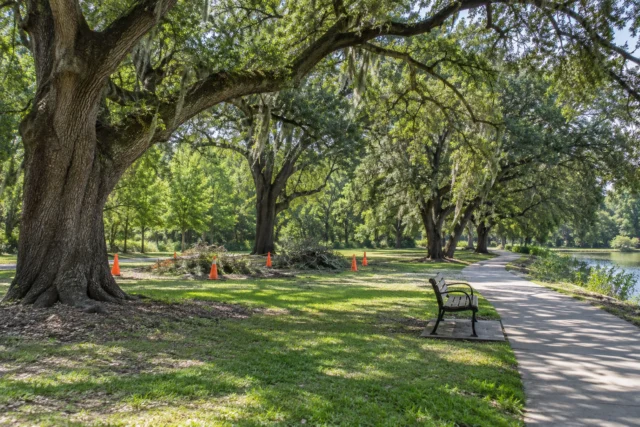
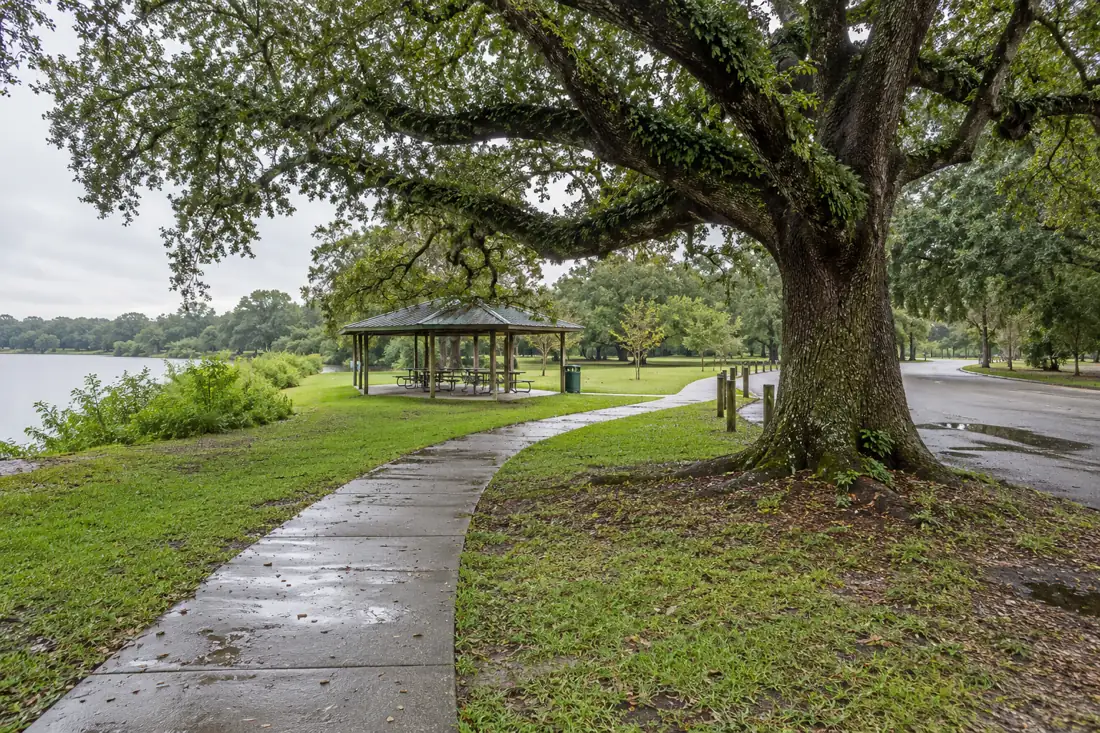
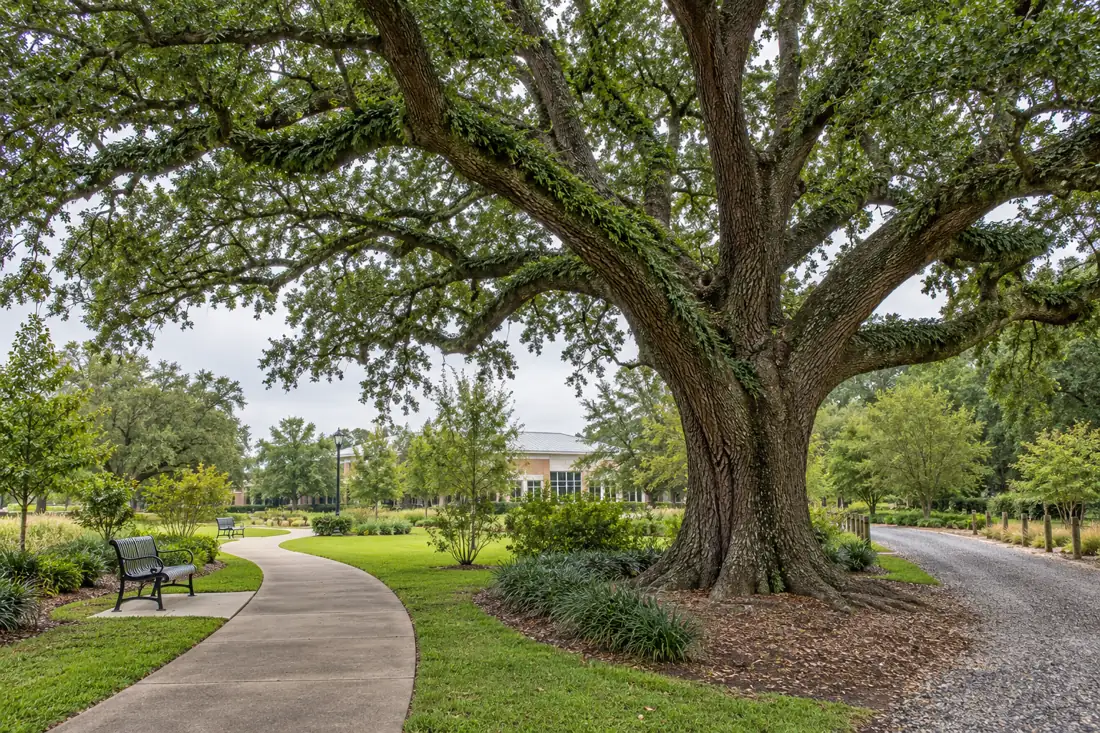
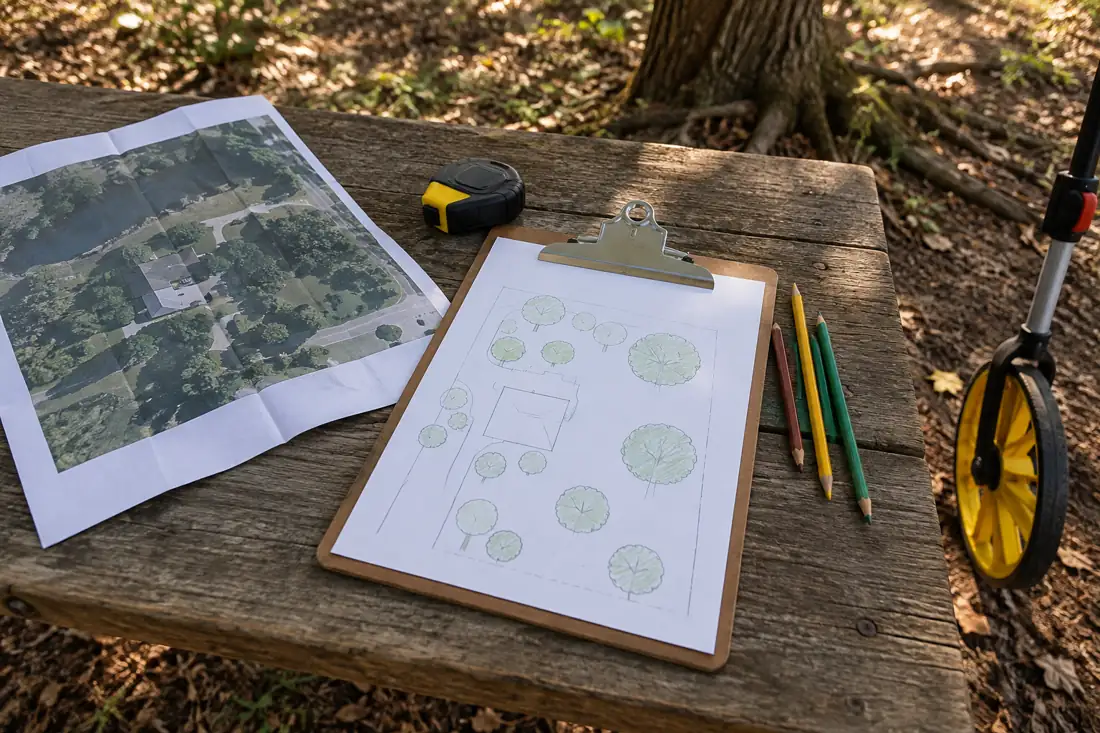
A photo record should identify location, tree number, work phase and the visible result. Use consistent labels and safe viewpoints so the buyer can relate images to the approved scope. Photographs support documentation but do not replace technical assessment or prove conditions outside the frame. Agree on the required format before field work.
Site-specific planning checkpoint: A reliable public tree-work photo record connects the image to a named location, tree identifier, work item and observation date. Start with safe wide views that show nearby structures and access, then add useful details of the actual condition. Use a ruler or another known reference only when safely possible and necessary; a camera angle alone cannot measure a trunk or establish hidden decay. Avoid unnecessary images of customers, occupants, vehicle plates or private documents. Preserve unedited originals and record when an annotation or resized preview is created. A useful closeout set repeats comparable viewpoints and links each image to inspector notes and approved changes. Photographs should support quantity and condition review without claiming to prove work that is outside the frame.
Photographs should answer a documented question, not decorate a file
Set up a repeatable photo naming system before the first site walk. Use the stable tree or location ID, a view direction, the date from the real capture file, and the reason for the image. A wide image establishes context, while a closer view may show bark damage, access clearance, a marked boundary, or the precise area to be restored. Do not add fabricated GPS coordinates or camera metadata to a stock, generated, or illustrative image.

Show the entire target and surrounding conditions
A before view should establish the tree's relationship to the building, road, drainage feature or adjacent property. Add closer detail when safe, such as a split union, damaged limb or trunk defect. A close-up without context can make two different trees look alike. Include landmarks that will remain visible after the work, especially when several trunks stand in a row.
Photos do not provide a complete risk assessment by themselves. Shadows, leaves and camera angles may conceal defects, while a visible defect does not establish probability of failure. If technical evaluation is required, distinguish the qualified inspection record from the photography. Employees should not climb, enter exclusion areas or approach damaged conductors to capture a more impressive angle.
When documenting progress, take photographs only from authorized and safe locations; no image is worth crossing an exclusion zone or interfering with crews. Note when visibility, lighting, temporary covers, or equipment blocks the condition. Separate pre-existing defects from work-created changes and label any illustration so it cannot be mistaken for field evidence. Where people, license plates, security features, or private windows appear incidentally, follow the owner's privacy and retention rules.
Connect each photo set to the current tree schedule and work-order revision. A reviewer should be able to compare a before view with an after view from a similar angle, while understanding any view that could not be repeated. Summarize unresolved issues in words rather than forcing the image to carry an engineering conclusion. Photos support the record; they do not prove a claimed cause, permit status, or contract acceptance by themselves.
Read the related public tree work: site walk checklist guide · Review public-sector tree-work services
Give every field photograph a purpose: A strong public tree-work image register begins with a purpose: prove location, document condition, show an authorized work step or support completion review. For each tree or work zone, capture a wide establishing view from a safe position, a closer view of relevant features and a final view matched to the starting angle where practicable. Use a consistent tree ID and label the date of the actual photograph, not the file’s download or compression date.
Design a photo register before anyone arrives
A usable public tree-work record begins with a list of sites, tree identifiers, work tasks and required photo phases. Agree on the naming scheme with the buyer before crew mobilization. One image can show a dramatic branch without establishing which approved tree it belongs to. The register should connect each image to a location map and scope line rather than relying on memory.

Separate progress images from acceptance images
A cutting-stage photograph can show the operation but may not establish final cleanup, stump treatment or reopened access. Define which photos belong to mobilization, work in progress and completion. If a buyer requires specific angles, explain how to obtain them safely and whether certain viewpoints are unavailable. Do not interrupt an active lift or cutting sequence for documentation.
At the finish, take a broader site view that shows the affected area and relevant retained structures. Supplement it with details only if they answer a contract requirement. A pile of chips is not evidence of all specified pruning. The closeout record should refer to acceptance criteria in the scope and identify any field inspection or separate test the buyer still needs.
Include a field for photographer or source when known, date recorded by the actual device when available, and any uncertainty in the location label. Do not invent camera GPS or retroactively label a generated illustration as a completed job. The organization receiving the record should be able to understand it without proprietary photo software or a conversation with the person who took each picture.
Document tree numbers and mapped locations consistently
Use durable site identifiers that correspond to the drawing or work order. A numbered tag, stake or mapped reference may help, but confirm that placement does not create another hazard or violate property requirements. Photograph the mark in relation to the tree and capture an orientation view. Avoid recycling the same number for another stem when a location is deleted.
When field identifiers change, keep a cross-reference showing the old and new numbers. For multi-site contracts, include the facility name or code in the filename and register. A photo labeled Tree 4 after is nearly useless if the contract contains six separate Tree 4 entries. Consistency is more valuable than a complicated file naming system that crews cannot reliably follow.
Keep original files and edits distinguishable
Some annotations make a photo more useful, such as a circle around the target tree or an arrow identifying a gate. Preserve the original image and save the annotated version separately, with a clear link between them. Cropping, resizing and compression can be helpful for a report, but they do not create a new photographed scene or prove a new event.
Do not fabricate timestamps, coordinates, camera settings or photographer names when records are incomplete. If images come from the property owner or another contractor, state that provenance. Avoid adding fake five-star customer ratings to editorial asset metadata; an internal media-quality rating is a different concept. The photo register should prioritize accurate identification and unaltered supporting evidence.

Creating Useful Photo Evidence for Public Tree Work
Decide how each photograph will be named before the first site visit. Use an approved tree number, a work-zone code and a clear phase such as pre-work, condition discovered or finish. Photograph the full tree and nearby landmarks before capturing details. A close-up of a cavity can be informative, but without context it may be impossible to match it to the right tree on a campus or park map.
Use safe and comparable viewpoints. Do not enter a drop zone or climb a tree to recreate a supposed before photograph. A distant image with the entire work area visible may be more useful than a dangerous detailed view. When a frame cannot show the intended feature, record that limitation rather than moving a barrier for documentation. The register should note who captured the evidence without inventing identity or camera GPS metadata.

A consistent image register is more valuable than a dramatic shot
Keep untouched originals separate from resized copies used in reports. Cropping for legibility may be helpful, but it should not hide important nearby conditions or turn one photograph into multiple claimed job scenes. Retain a reference to the source image and document any annotations as annotations. A contractor-provided educational image should never be presented as evidence of the owner's actual property or a verified past job.
At handover, compare the photo list to the approved work schedule. If a site has seven numbered trees and only five finish images, explain the discrepancy rather than treating the photo folder as complete by default. Pair every exception with a short factual note and an authorized action. The record can support acceptance, future maintenance and scope discussions, but it cannot establish unseen defects or replace technical inspection where that is required.
Photograph safely on occupied or damaged sites
Work near roads, playgrounds, schools and offices may leave no safe viewpoint for a particular close-up. Coordinate approved positions with the site supervisor, stay outside exclusion zones and never stand beneath suspended material. The same rule applies after storms, when limbs may be hung up, trunks may be unstable and electrical services may be compromised.
If no safe image can be taken, log that limitation rather than inventing evidence. A site sketch, existing survey or professional note may document the issue until access is safe. Photos should not be solicited from occupants in a way that encourages dangerous behavior. The value of a reliable record is lost if collecting it creates another exposure.

Deliver files in the buyer's requested format
Confirm accepted file types, naming rules, security requirements, size limits and upload channel before the crew starts building its archive. A folder of hundreds of unnamed phone images can be harder to review than a compact index containing selected views. Group photos by site and scope, then provide a manifest so missing locations can be identified.
Respect privacy where a public facility, occupied home or sensitive infrastructure appears in the background. Do not expose tenant details or personal contact information through filenames or marketing galleries. If the buyer requires a formal record retention period, follow that requirement. A complete handover identifies what was delivered, what was not possible to photograph and which approvals remain outstanding.
Treat each photo as a traceable contract record
For public tree work, a photo is valuable when reviewers can tie it to a particular tree, location, date, task and approval requirement. Build a simple register with the owner's official tree identifier and a consistent wide view, then add close views that answer specific inspection or quantity questions. Preserve original files where required, label edits and retain a straightforward chain from field observation to daily log to closeout package. Avoid geotagging an image with coordinates that were never captured.
Separate proposed work, in-progress operations, finished condition and later maintenance needs. A dramatic or polished picture is not a substitute for a measured quantity or signed acceptance. Follow the public owner's actual records specifications, including privacy restrictions at schools or occupied facilities. Generated website illustrations must never appear among documentary proof of performed work, awarded contracts or inspected sites.

Preserve originals separately from annotated copies and record who supplied them when known. Do not invent GPS coordinates or call a generated planning illustration a field photograph. Photo logs should relate back to the contract item and the written authorization. Record the direction of view, what is obscured and why an image was taken. Avoid identifiable bystanders, vehicle plates and unnecessary private-property details in materials intended for public display. A photograph can show a cleared walkway but cannot alone verify a disposal receipt, an underground condition or a formal inspection. Use it as one piece of evidence alongside approved quantities, records and documented exceptions.
Pair images with a short factual field narrative
A useful caption names the site, tree identifier, viewpoint, visible work stage and relevant contract item. It should not state that the tree is structurally sound or that a whole property is safe unless the applicable qualified review supports that conclusion. Describe changes that viewers can actually see: branches removed, wood stacked at the agreed location or the access route cleared.
Attach the authorization and any approved change numbers to the same record. Photos can support a quantity worksheet but do not independently measure a hauling load or determine whether every scope item was satisfied. If part of the work remains incomplete, say so. Factual captions make the image collection intelligible to inspectors, auditors and future maintenance personnel.
Audit image coverage against the contract checklist
Before submitting a photo folder, compare the image register with every authorized tree and required work phase. Look for missing locations, repeated filenames, misleading close crops and photos attached to the wrong site. When a photo is absent because access was unsafe, record that explanation rather than filling the gap with an unrelated image.
The audit should also flag images that reveal private addresses, people, license plates or restricted facility information outside the reporting purpose. Apply the buyer's handling requirements and avoid unnecessary publication. A useful photo packet is complete enough to verify stated work while remaining accurate about what was not visually documented.

Keep photographic evidence distinct from marketing media
A project evidence file and a website portfolio serve different purposes. Photographs supplied by a customer or public agency may not be approved for advertising, and their existence does not grant permission to claim the job as a Tree Huggers project. Preserve ownership and use restrictions in the asset register. Never replace a real field image with a generated planning illustration in a completion record.
If a visual aid is helpful for explaining a proposed method, label it as illustrative and keep it separate from actual photographs. Internal five-star media quality ratings are not customer reviews or business ratings. This honest distinction protects the credibility of the work record and avoids confusing procurement reviewers with promotional material.
Build an auditable image register for each authorized work phase. A public-work photo folder is useful only when an independent reviewer can connect each image to a location, tree identifier, activity and documented observation. Use a simple index showing the assigned site code, viewpoint, work phase, file name and whether the view is before, during or after the specified work. Keep original files when available and record any cropping or annotation as a derivative; don't alter EXIF to manufacture camera locations or capture times. Verify that before and after views are truly comparable before implying a result. Store images containing faces, license plates, addresses or private claim details according to the buyer's records and privacy requirements rather than placing them in a public gallery.
Make the photographic record specific and privacy-conscious
Useful contract photography answers a question rather than simply providing a gallery of attractive trees. Assign a work-zone or tree identifier before photographing, then use a repeatable viewpoint to document the initial condition, agreed limits, access restrictions and finished state. Include a scale or landmark when it helps interpret the scene, while recording the actual measurement separately. Keep files associated with the correct bid item and date in the project record; photos from different locations should not be presented as a single before-and-after pair.
Avoid collecting unnecessary personal information in the images. Check for visible license plates, occupants, employee identification, residential interiors or security-sensitive facility details before distributing photos beyond the authorized project team. A public-facing case study needs separate permission and accurate identification of what Tree Huggers actually performed. For a government buyer, confirm retention, naming, delivery and access-control requirements in advance so the record remains useful without creating an uncontrolled collection of sensitive site information.

Make each photo traceable to a tree and a decision
A public-tree photo record needs a location reference that another reviewer can repeat. Use an authorized site map and a simple tree code; capture an overview identifying the route, followed by a condition detail only if safe. Preserve the observation date and distinguish what was seen from any later conclusion about cause, risk or corrective scope.
Protect privacy by keeping faces, plates and unrelated private details out of images. The record should distinguish areas inspected, temporarily restricted, referred for additional assessment and formally reopened by the responsible site authority. A photograph of removed limbs does not establish that every adjacent standing tree is safe.
Make each field photo answer a contract question
A photo log should show which tree, location and work stage a picture actually documents. For a removal or pruning item, pair a safe wide view establishing surroundings with a closer view of the relevant condition and a comparable completion view where feasible. Number the images to the approved tree list; an impressive close-up without a location reference is difficult to audit.
Preserve the source files and a separate caption register rather than altering the original to make a claim. Record actual available dates and file provenance; do not invent GPS coordinates, capture identities or a customer-job history. If a condition cannot be photographed safely, state the access limitation instead. The broader public-buyer documentation guide covers the approvals, contract quantities, change records and signoff that must accompany a photographic package.
- Use the same work-area ID in filenames, captions and the tree schedule.
- Label progress, before-condition and acceptance images separately.
- Avoid photographing identifiable visitors or restricted facilities unnecessarily.
Build a Public-Work Photo Log That Can Be Audited
Public tree-work photographs become useful evidence when another reviewer can tell where, when and why each view was taken. Use the contract's tree or station identifier rather than an unstructured camera roll. Start each group with a wide view showing a recognizable site reference, then capture the relevant trunk, canopy, access route, traffic controls or material staging from a safe position.
A photo does not measure compaction, establish a hidden root condition or certify a utility was de-energized, and the caption should not imply that it does.
Keep originals available to the authorized project team while limiting unnecessary faces, license plates, home interiors or personal information in outward-facing materials. Make edited or annotated copies clearly distinguishable from source evidence. At closeout, index before, during and after views to the same location and note any missing observation, unresolved hold point or approval that must come from the prime or agency. If the work includes an incident or damage allegation, preserve relevant records without inventing certainty from images that only show the surface.
- Use a consistent location and tree identifier in filenames and report entries.
- Capture a wide establishing view before detail images where safe and permitted.
- Preserve unmodified originals; keep markup in clearly labeled copies.
- Record unresolved limits, excluded work and needed agency inspections in the same handover.
Review how infrastructure primes divide responsibility for tree work
Build photo evidence that another reviewer can follow
Use stable tree and work-area identifiers, wide establishing views and then close details where safe and permitted. Record source, work stage, view direction and any uncertainty. An educational planning picture or metadata field cannot prove an actual contract event.
Preserve originals separately from compressed or annotated copies. The buyer should be able to connect each image with the authorized item, an observed condition and the acceptance or follow-up decision without needing to guess from the photo alone.
Questions about this project
Which photos should I text first?
Send a wide tree view, the base if safely visible, nearby targets and the equipment route. Add the address, desired work and any recent change. Identify each tree clearly if the request involves several.
Can photos confirm that a damaged tree is stable?
No. Photographs may omit defects, support conditions and other important details. Use them to prepare for the contractor's assessment, and avoid entering hazardous areas to obtain a better view.
Is a total tree count enough for a large quote?
Usually the parties also need locations and tasks. Use consistent tree numbers, marked photos or a site plan so the estimate and crew instructions refer to the same trees and retained areas.
Does a work inventory include a condition assessment?
Only if that service is expressly part of the scope. A list used to identify and price tasks should not be mistaken for a documented assessment of every tree's condition or risk.
What should a government buyer send first?
Send the agency or prime contact, project reference, site, scope, deadline, access conditions and required documents or submission format. Identify the authorized contact for questions and the buyer's process for clarifications.
Does a capability page prove contract eligibility?
No. Request and verify current documentation relevant to the particular opportunity. Registration status, certifications, licensing, insurance and availability should not be inferred from a broad marketing statement.
How should extra work be approved?
Use the agreed approval process and identify the change, reason, scope, price or schedule effect as applicable. Confirm who has authority before treating an additional tree or task as part of the original job.
What completion records are useful?
Keep the agreed scope, tree or area identification, authorized changes, invoice and labeled photos where appropriate. Include unresolved items and a contact. Contract-specific records should follow the buyer's stated requirements.
Does cleanup include every root and wood chip?
That depends on the written scope. Tree removal, stump grinding, chip hauling and root excavation are different tasks. Ask what material is removed, what remains and whether soil or landscape restoration is separately included.
What should a final walk-through check?
Compare the identified trees and tasks with the agreement. Check agreed debris handling, stump treatment, access openings and any listed restoration. Record unresolved items clearly instead of relying on a general impression that the property looks finished.
What should I tell Tree Huggers about public tree work photo documentation?
Explain the property address, the work you want and the specific concerns: photo labels, scope matching, safe viewpoints. Send safe photos of the tree, surroundings and access route. The contractor can then discuss the assessment and scope needed for this situation.
How do I request an estimate for this work?
Call 504-458-8336, text photos or use the estimate form on this page. Include the address, desired outcome and any timing constraints. The company will need to review scope and availability; an online request does not confirm a price, appointment or emergency dispatch.
Get a scope for your property
For documentation questions, provide the work identifiers and required evidence format, without uploading unrelated private information.