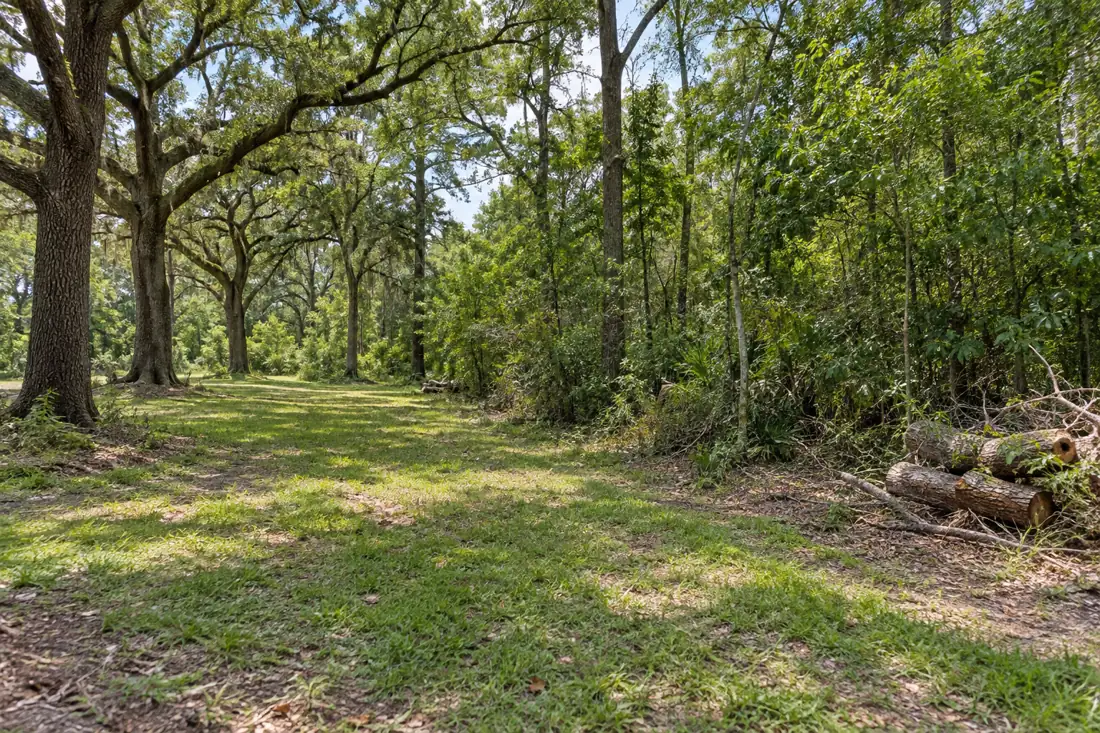
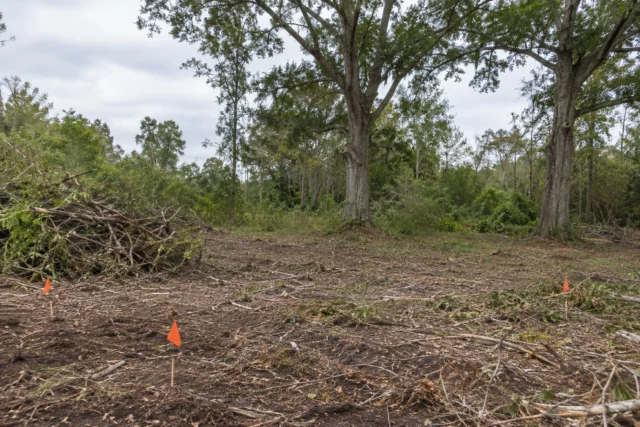
Define work boundaries, material handling and protection for trees and features that remain.
Protect the trees that the clearing plan intends to keep
Mark retained trunks, root areas, access routes and stockpile locations before clearing equipment arrives. A drawing that only circles the trees to remove can overlook compaction, grade change and root injury around the trees intended to survive. Confirm property boundaries and identify areas where branches extend over neighboring structures. If the site needs utility installation, drainage changes or fill, coordinate those decisions before equipment tracks across the proposed protection zone. A fence around the trunk alone is rarely a complete root-protection strategy.
Build the estimate around defined limits: vegetation to remove, material to preserve, debris disposal, stump finish, access restoration and the party responsible for any required approval. For retained trees, identify whether monitoring or specialist evaluation is needed after grading. Do not assume a tree will remain healthy because its trunk was untouched; roots and drainage can be affected outside the visible canopy. Ask for a final walkthrough confirming that retained trees, markers and protected site features were respected.
Begin with the intended use of the cleared space
A property owner may want usable yard, access to a rear area, room for a landscape project or preparation for another contractor. Explain that end use before asking for a clearing price. Tree and brush removal, stump treatment, excavation, grading and construction preparation are different tasks. A quote should identify which part Tree Huggers is being asked to discuss and which part belongs to a separate project or provider.
The land-clearing service page introduces the work conversation. This hub helps organize the boundary and retained features that shape it. A request to clear everything can be unclear where vegetation crosses a property line, surrounds a retained tree or hides infrastructure. The desired result should be visible on a plan or marked photos, with the customer able to explain what the finished area is intended to become.
Make the work boundary unambiguous
Use appropriate property information to establish the authorized area. A contractor’s walkthrough is not a boundary survey. Mark the proposed clearing limit on a map and agree on how it will be recognized in the field. Include excluded strips, neighboring features and any location that needs further confirmation before work. A rough aerial outline can introduce the area but may not resolve every on-ground relationship.
Connect the written scope and field markings to the same limit. If several areas are proposed, identify which ones are currently authorized. Do not assume a gap in a fence or a line of brush is the property boundary. Where responsibility is uncertain, resolve it with the relevant owners and professionals before the clearing task proceeds. Clear limits help the customer inspect the result and help the crew avoid interpreting a broad instruction differently across the site.

Identify retained trees before access is chosen
Mark the trees and planting areas you want kept as clearly as the vegetation to remove. Explain whether they are valued for shade, screening, landscape character or another purpose. The access and material-handling plan should consider those retained features. A tree left standing can still be affected by surrounding activity, so preservation needs more than a note saying do not cut this trunk.
The preservation hub helps frame a site-specific protection discussion. Share proposed excavation, traffic and storage with the relevant tree and project professionals before the layout is fixed. Ask how agreed limits will be communicated to the people using the site and who can authorize a change. A later treatment or pruning task should not be assumed to reverse damage that could have been considered while the clearing route was still being planned.
Describe what the overgrowth may conceal
Tell the estimator about known old fencing, dumped material, stumps, drainage structures, services and other features beneath or within the vegetation. If you do not know what is hidden, state the uncertainty rather than presenting the area as clear ground. Do not enter unsafe overgrowth or move unstable material just to make the description complete. Safe edge photographs and honest site history can prepare the review.
The scope should explain how an unexpected condition or mixed waste will be handled through the approval process. Ordinary vegetative clearing does not automatically accept building waste, hazardous material or every item discovered inside a brush line. Identify the point at which another provider or revised task may be needed. This makes the estimate’s assumptions visible and avoids turning a defined tree-and-brush project into an unlimited obligation to remove unknown material from the property.
Identify retained trees before anyone starts clearing
The clearing sketch should mark trees and buffers to retain, approximate work limits, equipment entry, drainage paths and the intended use after clearing. An operator needs to know which root zones cannot be driven across and where cut material may be staged without blocking a ditch or shared road. Photograph the boundary from safe accessible areas.
Separate brush cutting, tree removal, stump treatment, hauling and grading in the requested scope. A casual drawing does not replace a survey, permit or owner authorization. Verify uncertain lines, easements and restrictions before ground disturbance, especially when adjacent trees or off-site drainage could be affected.

Mark retained vegetation before clearing begins
Selectively clearing a lot requires two separate maps: what should leave and what must remain. Mark property edges, retained trees, drainage paths, fences and planting beds. A rough aerial sketch can orient the crew but cannot establish disputed boundary lines. Explain how the land will be used after the work, whether for lawn, a new fence, access or a future building. This purpose identifies conflicts but does not authorize unplanned excavation or grading.
Discuss how equipment and debris will move without repeatedly crossing retained root zones or compacting soil beneath valuable trees. Identify fragile paving, underground irrigation, soft ground, access gates and neighbors who may be affected. A retained mature oak may need a separate protection and construction-design discussion where a proposed foundation or driveway changes the root environment. Clearing visible vegetation does not automatically make a site safe for heavy construction.
Mark what must remain before clearing begins
A clearing estimate should distinguish vegetation to remove from trees and features to protect. Walk the accessible boundaries, identify retained trees on a map and note any uncertain property line rather than assuming the cleared edge is the legal boundary. Ask how temporary access, debris handling and ground protection will work around the trees that stay.
Do not promise a graded building pad when the requested scope is only selective vegetation removal; soil disturbance and final grading are separate activities. If a future builder needs access, share the planned route early so retained-tree protection is not compromised by late staging changes.
A useful closeout confirms the retained trees, cleared zone and handling of brush and wood separately.
Use a retained-tree map as the project boundary
A lot-clearing plan should identify each tree to remain before equipment access is chosen. Number or label retained trees on photographs and note their trunks, visible root flares, canopy reach and nearby grading or trenching plans. A narrow protection ring around the trunk may not protect the soil and roots needed to sustain the tree; ask for a site-specific protection area.
Keep the work boundary and the future use of the cleared space distinct, and confirm whether any stump work or hauling is part of the current phase. If hidden debris or an unexpected utility is discovered, the crew should clarify the changed scope before proceeding.
This planning step helps preserve valuable shade without promising that every retained tree will survive later construction.

Planning example: opening space while retaining shade
Suppose an owner wants brush removed for a larger usable yard but intends to keep three mature trees. A rough instruction to clear the back could leave the retained areas, hidden old fencing and future stump decisions unclear. The request should show the proposed boundary, marked retained trees, entry route and intended finish. Unknown concealed items should be identified as an estimating uncertainty rather than ignored or investigated by entering unsafe overgrowth.
The contractor and owner can discuss the accepted vegetation, handling and any separate stump or surface task. Protection and access should account for the trees staying on site. If the owner later expands the footprint, update the accepted plan and any price or timing effect before work.
This hypothetical example illustrates selective clearing rather than a universal construction-ready promise. It is not a documented company project or a boundary determination. The clear starting point is what must remain, followed by what is authorized to leave and the condition the next user or contractor should expect at handoff.
Connect entry, production and material removal
Show the route from the street or site entrance to each clearing area and the loading position. Include gates, turns, overhead conflicts, slopes and ground that stays wet. An open interior area is not enough if equipment and trucks cannot reach it by a suitable authorized route. If access crosses another property, identify the separate arrangement required before treating it as part of the plan.
Ask how brush, logs and other accepted material will be handled. Hauling, retained wood, chipping and staging can lead to different site finishes and work needs. The equipment and debris hubs explore those connected questions. The proposed method should account for retained trees and surfaces along the entire route, not simply select equipment based on the total apparent area of vegetation.
Define clearing versus construction preparation
Define removal, brush hauling, stump grinding, root grubbing, grading, fill, compaction and restoration as distinct tasks. A quote should list the included parts and the next contractor's responsibilities, especially if a level construction surface is desired. At closeout, compare the marked limit to what was actually cleared and document retained trees, stumps, material piles and excluded areas. Describe generated educational images as planning references, not documentary evidence of a completed clearing job.
Decisions to confirm
- Map removed and retained vegetation
- Protect root zones and drainage routes
- Separate clearing from engineering and grading
- Record retained features and final debris disposition
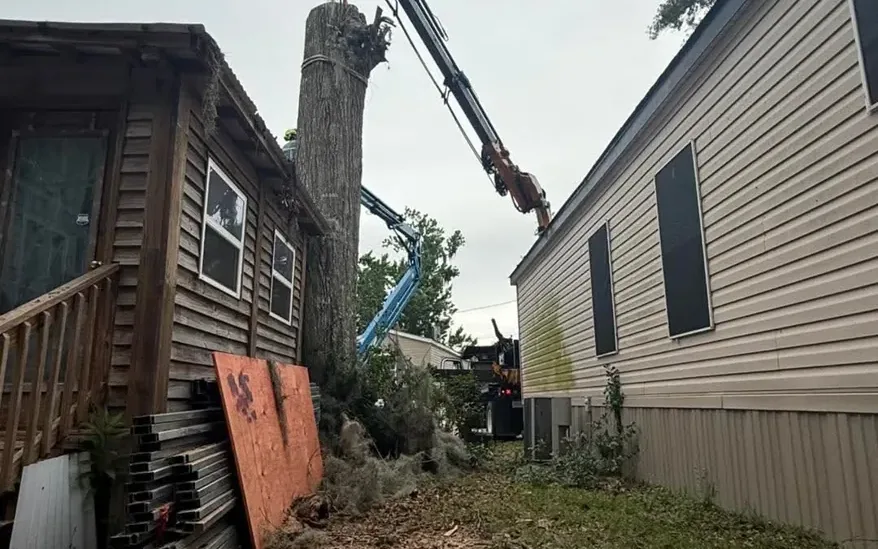
Specify stumps, roots and the final grade separately
An area can look open while still containing stumps, roots and uneven ground. Identify what the clearing task includes below the removed vegetation and what is needed for the next use. Stump grinding is different from full excavation or preparation of a structural base. If a builder, fence installer or landscape contractor requires a particular finish, share that requirement before accepting the tree-work scope.
Clarify whether chips or other material remain and who handles soil, grading, turf or planting. Avoid interpreting a phrase such as cleared lot as a universal construction-ready condition. A precise finish helps the next provider plan its work and helps the owner compare proposals that may otherwise include very different tasks. Keep each responsibility connected to a specific area so the final handoff does not depend on an informal assumption about what clearing normally means.
Keep changes tied to the accepted footprint
A customer may decide to extend a clearing area or retain another tree after the initial walkthrough. Review those changes before the crew acts on them. Update the map, task and any price or timing effect through the agreed approval process. The person meeting the crew should know which version is authorized and who can approve a difference if another condition becomes visible.
For a staged property project, label the current area, future options and excluded work. Do not let adjacent unapproved vegetation become part of the task simply because the equipment is already on site. The same discipline helps when multiple contractors work nearby: each should understand the boundary and retained features that apply to its role. A concise current record is more useful than several conflicting sketches or text messages with no clear accepted version.
Review completion against the boundary and handoff
At completion, use the accepted map and retained-tree list. Check the agreed vegetation removal, material handling, stump tasks and finish by area. Identify excluded or deferred features accurately rather than judging only whether the lot looks generally more open. If another contractor follows, record what it should expect and which items remain its responsibility.
To start a clearing discussion, send the address, intended use, safe site views, proposed limit and retained features. Include known hidden-site concerns, access and any project sequence. The company can discuss assessment, scope and current availability for those conditions. The guides below expand specific questions, while the service page connects the request to Tree Huggers. A good clearing project begins with deliberate retention and ends with an understandable, agreed handoff.
Start a lot-clearing plan with what stays and what the land must become
A lot-clearing plan is not just an instruction to remove everything that looks overgrown. Start with the intended future use, legal property limits, permitted access and every feature to retain: mature trees, drainage paths, fences, utilities and protected landscape areas. Then define the vegetation and material that may actually leave. The resulting plan gives the clearing crew a work boundary and the next contractor a handoff that can be checked.
This general planning guide helps owners sequence survey, clearing, utilities and later construction without conflating responsibilities. A mature oak on the property can require a more detailed exclusion zone, root-care advice and careful machinery routing than other retained plants. The selective oak-clearing guide examines those extra protections. Neither page assumes that a tree-service crew decides ownership boundaries, permit requirements or engineering design for the future site.
- Prepare a marked sketch showing keep/remove boundaries and access points.
- Identify the next contractor and what finish they need from the clearing crew.
- Define what happens to cut vegetation, surface debris and discovered obstructions.
For the related but different decision, see Selective Lot Clearing Around Mature Oaks. Confirm the work required for this property before relying on a general example.
Lot Clearing and Retained Tree Planning questions
What should a clearing request explain first?
State the intended use of the space, proposed boundary and features to retain. Distinguish tree and brush work from later excavation or construction preparation.
Can a walkthrough establish my property line?
No. Use appropriate property information and professionals to resolve uncertain boundaries before authorizing disputed clearing.
How should clearing limits be marked?
Make the map, field markings and written scope agree. Identify excluded strips, retained areas and locations needing confirmation.
Should retained trees be marked before access planning?
Yes. Routes, storage and material handling should account for retained trees and their surrounding site, not only avoid cutting the trunks.
What hidden features should I mention?
Describe known fencing, stumps, waste, drainage, services or other concealed items. State unknowns honestly rather than entering unsafe vegetation to investigate.
Does clearing include every waste type discovered?
Not automatically. Identify accepted material and how unexpected mixed waste or conditions will be reviewed and authorized.
Why does the entry route matter on an open lot?
Equipment, trucks and material still need suitable authorized access. Gates, turns, overhead conflicts and ground conditions can shape the method.
Does clearing remove every stump and root?
Only the expressly agreed tasks are included. Define stump grinding, excavation and root work separately where relevant.
Is a cleared area automatically construction-ready?
No. Confirm grade, soil, structural preparation and other requirements with the relevant providers. Clearing alone does not establish those conditions.
Can the footprint expand during the job?
Only through the agreed approval process. Update boundaries, retained features and any price or timing effect before the change is performed.
How should phased clearing be recorded?
Label the currently authorized area, future options and excluded work clearly. Ensure the crew and customer use the same accepted version.
What should completion be checked against?
Use the boundary map, retained-tree list, material decisions, stump tasks and agreed finish, including the handoff to any following contractor.
Define the clearing boundary before choosing machinery
A general lot-clearing plan should distinguish the area to open from the trees, fences, drainage features and planted zones to keep. Start with a property drawing and a plain-language description of the intended result: usable yard, equipment passage, vegetation reduction or preparation for a separate construction contractor. Mark obvious access constraints and describe where branches, brush and stumps should go. Removing vegetation is not the same as delivering a compacted, graded building pad; assign those later requirements to the appropriate project scope.
Where large mature oaks are the main constraint, the selective-oak clearing guide goes deeper into root protection, canopy clearance and machinery exclusion planning. Where the next project is a new fence, the fence-removal guide focuses on alignment, post holes and keeping the equipment route open until tree work finishes. This page addresses the overall boundary and retained-feature handoff. Request a tree-by-tree clarification for ambiguous specimens; do not assume anything outside a marked clearing zone is authorized to be touched.
Related decisions: Selective Lot Clearing Around Mature Oaks · Tree Removal Before Installing a New Fence
Map the clearing limits before equipment arrives
Describe the exact clearing boundary, where the property line is confirmed, and which mature trees or understory areas must remain. A marked site plan or safe overview photo can help distinguish the proposed clearing area from features to protect. Flag drainage, slopes, fencing, utility locations and the route equipment could use. If ownership or boundaries are unresolved, obtain appropriate authorization before treating a map or inquiry as permission to remove trees.