Organize tree work by risk and property priority
Multi-property work is easier when trees are not treated as unrelated one-off calls. We can group needs by immediate hazard, trimming, removal, storm damage and longer-term maintenance so managers can see what requires action first and what can be scheduled later.
Make tree-work requests actionable across multiple managed properties
Property managers benefit from a consistent location record: building number, unit-side description, tree identifier when one exists, hazard photographs and contact for site access. Separate reports of a hanging limb, a root conflict, a blocked route and a general appearance complaint. These require different priorities and may involve different approvals. A tenant report is useful evidence of a concern but does not substitute for an on-site assessment. Define who can approve work, who receives updates and when temporary isolation may be needed.
For bids and completed jobs, keep the written scope, site map, disposal decisions, before-and-after documentation and any exceptions together. Confirm how crews should handle resident vehicles, pets, irrigation and common-area traffic. Where a tree affects a shared boundary, resolve ownership and permission before scheduling equipment. Periodic follow-up can help flag changes after storms or construction, but it should not be described as a guarantee that a tree will never fail.
Addresses, site contacts, access notes, tree concerns and urgency.
Sequence emergency, high-risk and routine work around tenants and property operations.
Close out locations with job-related photos and a clear record of completed scope.
Occupied-site planning matters
Parking, residents, deliveries, gates, pets, playgrounds and landscaping all affect how tree work is staged. Clear notice and site coordination help keep production moving without creating avoidable disruption.
Related property services
Make one record for each property
A portfolio request should start with a short site list rather than a long thread of unlabeled tree pictures. Give each property its address, access contact and main concerns. Link photographs to that address and identify which ones show the current condition. When an owner forwards an older photo, label its date if known instead of allowing the estimating team to mistake it for a current view.
Tree Huggers can discuss work across managed properties while keeping the scope of each location clear. The manager’s role is especially useful when access, approval and billing belong to different people. Name the person who opens the gate, the person who approves the proposal and the contact for completion questions. They may be the same person, but establishing those roles prevents delay when the crew needs a field answer.
Turn tenant reports into identifiable tree concerns
A resident may report the tree by my window, while maintenance describes the same tree as the one near Building B. Use a marked site photo or simple map to connect those descriptions. Give the tree a consistent identifier and record the observed concern in ordinary language: roof contact, a fallen branch, an obstruction or a visible change. Avoid treating a resident’s diagnosis as an established condition without review.
Keep the request separate from the authorization. A complaint log can introduce concerns without approving every suggested removal. Ask the contractor to distinguish observations, proposed tasks and work included in the current quote. This makes it easier to explain the project to the owner and to residents who may otherwise assume that every tree discussed during the walkthrough will be cut or pruned on the same visit.

Prioritize the work by the decision it needs
A portfolio often contains a mixture of urgent changes, routine clearance and future landscape preferences. List those categories separately and explain the reason for a stated deadline. A tree newly resting on a structure needs a different conversation from a request for a more open view next spring. The contractor can review the actual conditions and advise what assessment or work scope is appropriate; a budget category alone does not establish tree risk.
For larger proposals, request clearly separated options or phases. Identify what is being accepted now and what remains under review. Keep deferred items in the property record without implying that they have been scheduled. A useful priority list helps the manager allocate approvals and communication while allowing the field method and timing to be determined by the tree and site, rather than by a general desire to treat every address the same way.
Plan resident communication around the actual zone
Residents need practical information: which area is affected, which vehicles must move and how they can reach their unit. A general notice that tree work is happening may not be enough if the active area includes a stair, parking row or normal pet route. The manager should coordinate the property’s communication process with the contractor’s planned work boundary and timing before issuing a final notice.
Discuss visitors and deliveries as well as residents. A person approaching from a different building may not have seen the original message. Keep an on-site contact available to handle access questions, and arrange an alternative if a normal entrance is affected. Work-zone control needs to continue through handling and cleanup, with reopening confirmed by the responsible parties. Do not ask residents to guess whether a pause in cutting means the area is available again.
Give the crew workable access information
Send gate instructions through the company’s agreed private channel, rather than placing sensitive access codes in a public page or photo caption. Identify gate width, overhead obstacles, locked interior areas and the route to each tree. Include the time when access is available and a contact if the gate does not open. A portfolio schedule can unravel when a correct tree scope is paired with an unusable entry arrangement.

Triaging tenant reports without losing the tree location
Tenant messages often describe a symptom rather than a location: a branch over my car, debris by the stairs, or a tree that looks dead. Convert each message into an address, building, side of building, tree reference, photo angle, date received, and observed change. This avoids sending two different vendors to the same complaint or overlooking a second tree whose crown appears in the background.
A coordinator can separate immediate access concerns from routine landscape questions without diagnosing a tree from a photograph. A newly hanging limb over an occupied walkway calls for a different response than recurring leaf litter. Keep the route clear or restrict access through the property manager’s established procedures while qualified personnel assess the condition. Do not promise that a specific defect is safe or dangerous before an appropriate site review.
At completion, close the original tenant report against the same location ID and note what was actually addressed. A concise record should distinguish performed pruning or removal from monitoring advice, deferred approvals, and unrelated maintenance. For multi-property owners, that distinction is more useful than an invoice that merely says tree service without identifying a building or tree.
Explain parking enforcement, loading restrictions and other contractors working on the property. The estimator needs to know which spaces can be reserved and who arranges that reservation. If equipment will cross a courtyard or planted area, identify known infrastructure and sensitive surfaces. The equipment discussion should follow those conditions, not assume all sites with the same building type can use the same method or setup.
Clarify owner approvals and changes
Many managers have limits on the work they can authorize without owner review. Share the relevant approval arrangement before scheduling. If the contractor discovers a different condition or proposes another task, there should be a practical way to reach the person who can decide. Avoid letting a resident request or an informal maintenance conversation become an unrecorded expansion of the accepted scope.
Keep tree identifiers, revised tasks and any price or timing effect together in the change record. If only one phase of a larger proposal is accepted, say so expressly. This protects the clarity of the job without requiring every participant to remember the full history of the portfolio discussion. It also gives the manager a straightforward explanation when an owner asks why one tree was completed and another remains on the future-work list.
Agree on debris, stumps and landscape interfaces
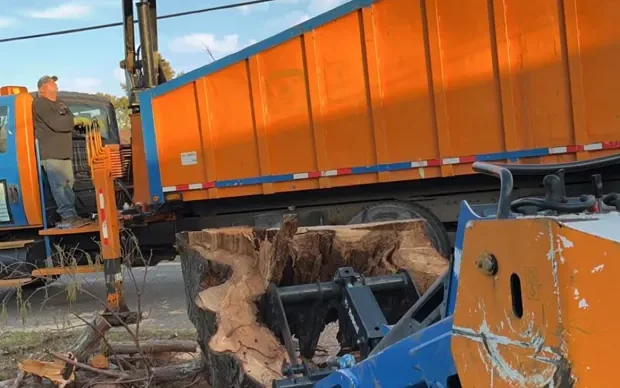
A property manager may use different contractors for tree work, irrigation and landscape maintenance. Describe the desired handoff between them. Removal and stump grinding do not automatically include replacement plants, irrigation repair, soil placement or every later use of the space. Identify which contractor owns each finish item before residents are promised a fully restored bed or lawn.
Consider where wood or chips can remain without interfering with parking, drainage or shared paths. If all material must be hauled, state that in the scope. If a stump lies near a planned walkway or fence, share that project information before the grinding task is priced. The useful completion standard is specific enough for the manager to inspect and for the next contractor to understand without having to renegotiate the handoff after the tree crew leaves.
Use a portfolio storm list with one coordination contact
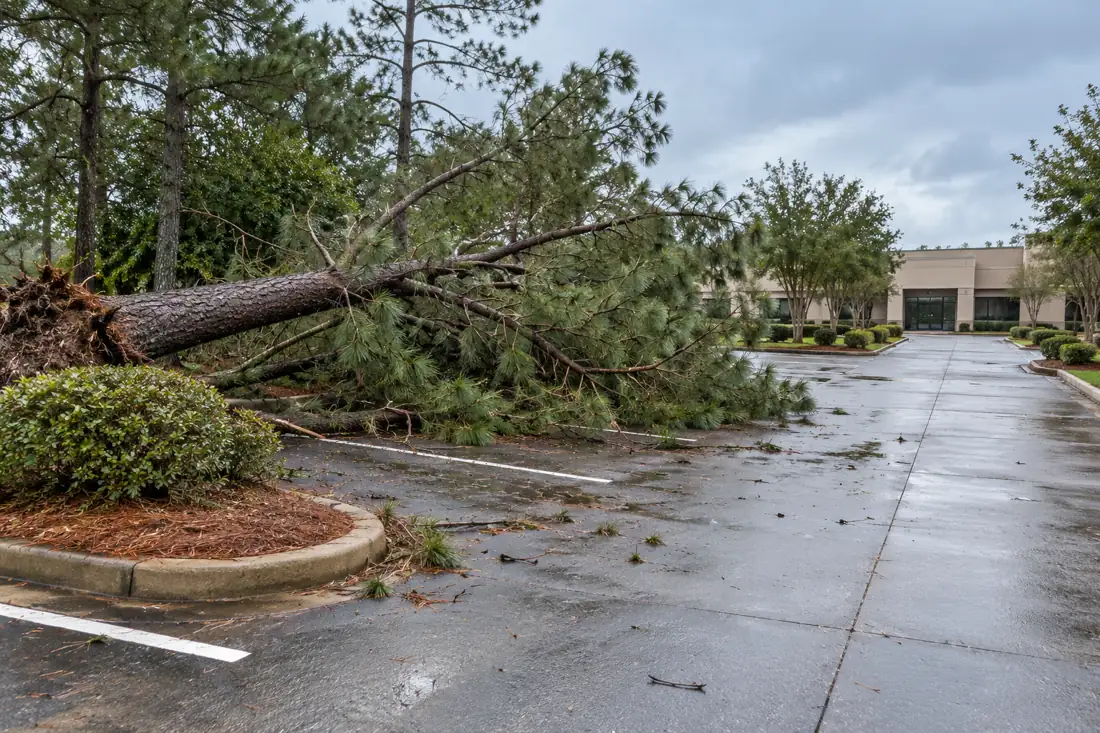
After severe weather, collect site reports by address and practical obstruction. Identify blocked entrances, trees on structures and visible wire conflicts without asking staff to approach unstable material for photos. Use appropriate emergency or utility services for immediate threats. Call Tree Huggers about response availability and explain the priority locations; an online list by itself does not establish dispatch or the sequence of field visits.
Keep temporary access work distinct from complete cleanup. Record what was authorized at each site and which follow-up tasks remain. Commercial storm response can involve several stages as conditions become clearer. One coordination contact helps the company obtain current information and helps the manager avoid sending several conflicting instructions from different properties during a changing event.
Close each address with a usable record
Before work, agree on any photographs, invoice fields or owner reporting the portfolio needs. At completion, reconcile the accepted tree list and approved changes by address. Identify deferred items and anything awaiting another contractor. Photos should be labeled well enough that a remote owner can tell which tree or area they show; a collection of attractive canopy pictures is not a substitute for a clear completion record.
To begin, send the property list, highest-priority concerns, marked photos and approval contacts. If the request covers a single apartment property, the multifamily service page provides related context; association properties can use the HOA page. The purpose of organizing the information is simple: a manager should be able to move from complaint to proposal to completed work without losing the address, authority or agreed result along the way.
Property Management Tree Service questions
Can one manager request work at several addresses?
Yes. Provide a property list with separate tree identifiers, access contacts, priorities and restrictions for each address rather than mixing all photos together.
How should we use tenant tree complaints?
Record the observation and connect it to a marked tree or location. Treat the report as information for review, not an automatic diagnosis or work authorization.
Should a manager rank tree risk without an assessment?
Describe observed conditions and urgency honestly. Ask what evaluation is needed; a budget or complaint category does not determine the tree’s condition.
Who tells residents about the work?
Agree on property communication responsibilities with the manager. Notices should reflect the actual work area, parking changes, access alternatives and confirmed window.
Where should gate codes be sent?
Use the agreed private business channel. Do not place sensitive access information in public captions, website content or broadly distributed site photographs.
Can a tenant authorize an extra limb removal?
Use the property’s designated approval process. A tenant request should not expand the accepted work unless the authorized decision maker approves it.
How can an absent owner review completion?
Agree on a labeled photo record, tree list, changes and invoice details before work. Keep the record organized by address and task.
Does tree cleanup include our landscape contractor’s work?
Only items expressly agreed are included. Define the handoff for chips, backfill, irrigation, replacement plants and any later paving or fence project.
Can we accept only part of a portfolio proposal?
Identify the accepted addresses and tasks clearly. Keep deferred work separate so it is not mistaken for an authorized or scheduled item.
How should staff report storm damage?
Send the address and visible obstruction from a safe location. Do not approach unstable trees or wires for photos; call appropriate emergency services where needed.
What if the gate is unavailable on the workday?
Contact the company promptly. A changed route or access window can affect method and schedule and should be reviewed before mobilization.
What is the best first portfolio message?
Send addresses, marked photos, main concerns, operating restrictions and the approval contact. State the decision or work phase you want the proposal to support.
Let’s plan your tree work.
Send the property address, safe tree photos and the result you need. Include access restrictions and the person who can approve the work.