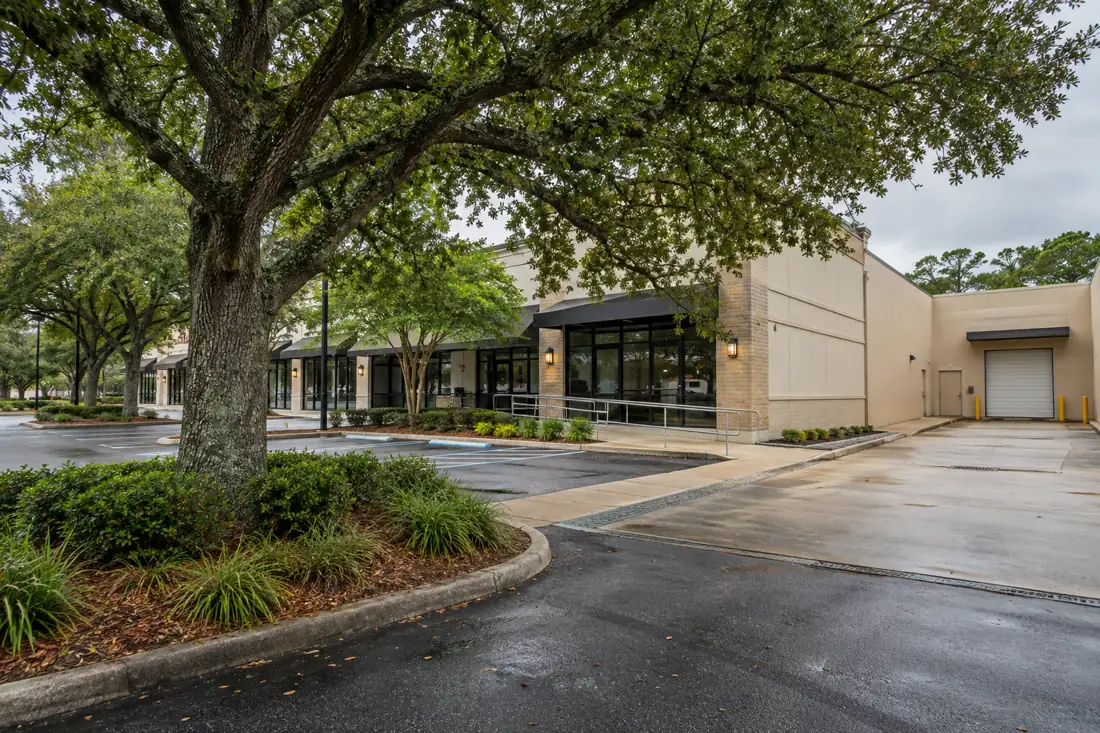
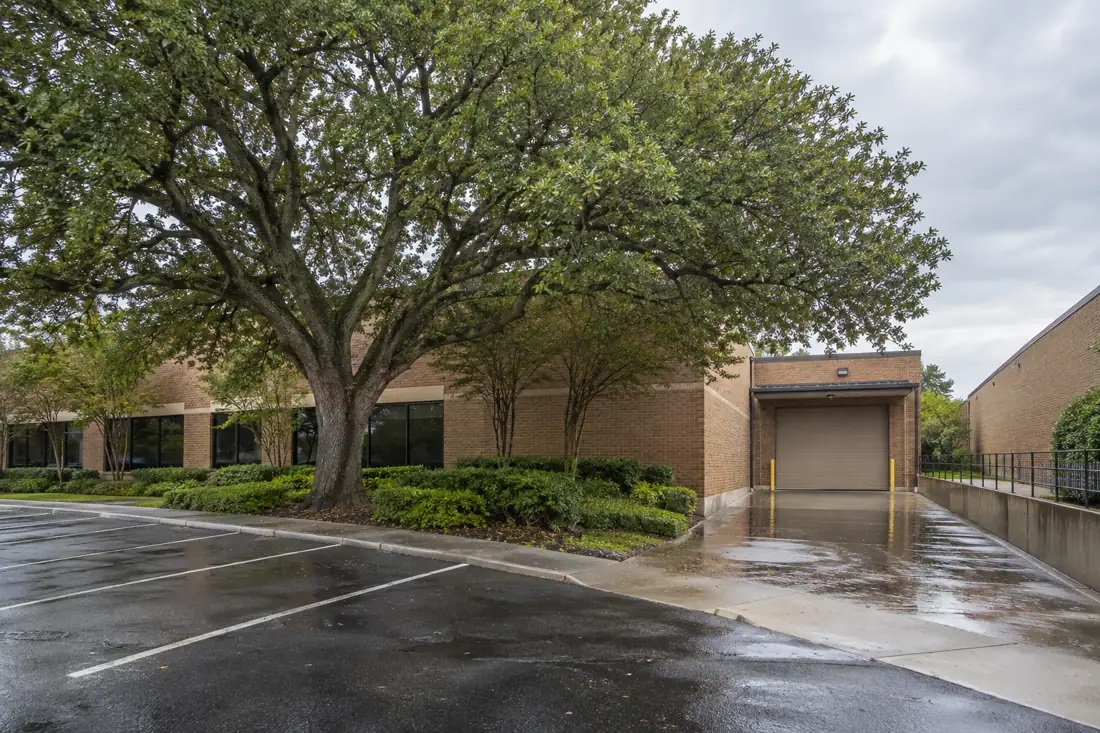
Confirm the facility work area
Manufacturing properties may have controlled entrances, process areas and site-specific requirements that affect tree work. Share those requirements before a price or schedule is confirmed. Identify where equipment may operate and which routes must stay clear. Tree work should be coordinated with the facility’s authorized representative and other ongoing activities.
Practical scope and safety guidance: Industrial tree work requires a reliable picture of the property’s operational and safety boundaries. Mark secured gates, truck turning areas, loading bays, perimeter fences, overhead conductors, buried services and drainage corridors. Provide the site contact who can approve entry, escort requirements and any facility-specific safety orientation. Tree removal near utilities or equipment must be coordinated with the responsible operators; a clear lawn in a photograph does not prove ground-bearing capacity or access.
An estimate should distinguish vegetation clearance from full removals, stump treatment, haul-off, disposal documentation and post-work cleanup. If work must occur outside normal operating hours, specify that constraint rather than assuming it is included. Written work limits and a closeout checklist help prevent unwanted clearing and clarify who handles any additional site restoration. No illustrative image should be presented as evidence of a particular industrial job.
Plan tree work around site access
Large facilities may have restricted gates, equipment movement, overhead obstacles and limited staging areas. We review those conditions first so the tree work can be sequenced without creating unnecessary conflicts.
Identify gates, work zones, overhead obstacles and equipment staging areas.
Sequence dangerous trees, access clearing and routine vegetation work.
Process and move material to the agreed staging or hauling area.
Mechanized production for larger scopes
Where access allows, mechanized handling and remote-controlled cutting can improve production and reduce repeated manual handling. Crane support may also be useful on large trees near structures or restricted areas.
Start with an authorized facility brief
Identify the actual work address, the facility contact and the person who can approve the tree scope. Explain the objective at each location: clearance, selected care, removal, access opening or another defined task. The request should be assignable to a tree or area rather than a general statement to clean the site. Use identifiers that the purchaser and operations team recognize, with safe photographs tied to those locations.
Send current site instructions relevant to the proposed work. Do not assume a particular contract status, credential or entry authorization from a general capability description. The commercial service page offers related inquiry context. The company needs the actual requirements and an opportunity to confirm what it can provide before a price, schedule or handling approach depends on arrangements that have not been reviewed.
Explain what the proposed route crosses
Show gates, turns, road surfaces, setup space and the route from the tree to loading. Include restrictions associated with facility traffic, deliveries or other work areas. A broad service lane near a warehouse does not establish unrestricted access to every tree along the perimeter. Explain which areas are under the customer’s control and which need separate coordination or permission before relying on them as part of the operation.
The equipment hub explains route and setup information that supports method selection. Mention current ground conditions, overhead features and known buried items relevant to the approach. A clear-looking photo is not a complete site record. The facility should identify the responsible party for information still needing confirmation rather than asking the tree company to infer that an unmarked surface is free of constraints or concealed features.

Keep tree work separate from facility operations
Explain the actual operating interfaces and the contact who controls them. The tree-work plan should not silently include process operations, electrical work or changes to facility systems. If the site has a required procedure or work-area condition, provide that current instruction for review through the appropriate facility contact. Do not invent a generic procedure or assume a tree quote itself authorizes access to an active or restricted area.
Identify when other vehicles, crews or deliveries use the same approach. Discuss the usable work window and how changes are communicated. The planning hub helps organize these practical responsibilities. A proposed method needs to fit the actual facility and task, with a clear boundary between what the tree company performs and the arrangements the site must coordinate. This reduces the chance of two providers each assuming the other controls the same operating interface.
Define clearing without losing retained features
If the request includes vegetation clearing, identify the intended open area and what stays. A perimeter access objective differs from preparing a larger project area for another contractor. Use agreed limits and current site information; do not rely on a convenient fence line or an old aerial image as unquestioned authority for every removal. Explain which boundary and ownership questions are already resolved and which remain with the responsible parties.
The land clearing service gives related scope guidance. Retained trees, screens and landscape areas should be part of the route and staging conversation before operations are assumed. Tree clearing, surveying, engineering, excavation and site restoration have different responsibilities. Connect any next-phase requirements to the relevant provider so an accepted vegetation task does not quietly become a promise of a fully prepared construction or process area.
Choose tree tasks before choosing machinery
Describe the actual trees, surrounding structures and current concerns. Large sections, restricted routes or nearby targets may affect the handling discussion, but a machine name is not a complete scope. The company needs the site and tree review before confirming an appropriate approach. The high-risk removal page provides related information for difficult trees near retained features and occupied or restricted areas.

Map tree-work boundaries against industrial controls
Industrial properties need a tree-work boundary that employees can recognize separately from the facility’s process boundary. Record the tree locations, gate permissions, active equipment corridors, security zones, utilities and prohibited staging areas. A vegetation issue near a fence may be simple landscaping, but the same tree beside electrical distribution or process equipment can require a substantially different authorization and method review.
Do not presume that a contractor may enter a restricted area or operate around energized lines based on an ordinary landscape estimate. The site representative should identify applicable induction, escort, work-permit, isolation and emergency arrangements. Only the responsible facility personnel can define those controls. Tree work can then be estimated with explicit exclusions instead of an ambiguous instruction to clear everything along the fence.
Before turnover, note the actual cleared boundary, retained vegetation, debris destination and surface condition. For repeat sites, link records to asset locations rather than a single facility name. The resulting history helps distinguish a scheduled clearance task from later emergency work and protects against a future crew relying on a drawing that no longer reflects the operating site.
For pruning or condition questions, identify the objective and observations separately. A request to improve clearance differs from a new crack, failure or change in lean. The assessment page introduces that separate review. Clarify the trees included and any follow-up rather than interpreting one maintenance visit as a complete facility-wide tree assessment or a guarantee about trees outside the accepted scope.
Make material acceptance explicit
Identify logs, brush, chips and any separate existing piles. If fence wire, industrial debris, building material or unknown contents are mixed in, disclose that before handling is arranged. Do not sort through questionable material just to create an inventory for a quote. The company needs the accepted tree-material boundary and information limits, not a broad assumption that every item beside a tree belongs in ordinary vegetative hauling.
The debris service helps define the task. Discuss processing, retained wood, staging and hauling destinations for the actual project. Stumps, root work, grading and restoration need their own decisions. If the next provider needs a particular finish, obtain the requirement from that responsible party before relying on it. A clear material and ground handoff makes the quote usable beyond the point where the visible tree or main pile has disappeared.
Route storm concerns through current site contacts
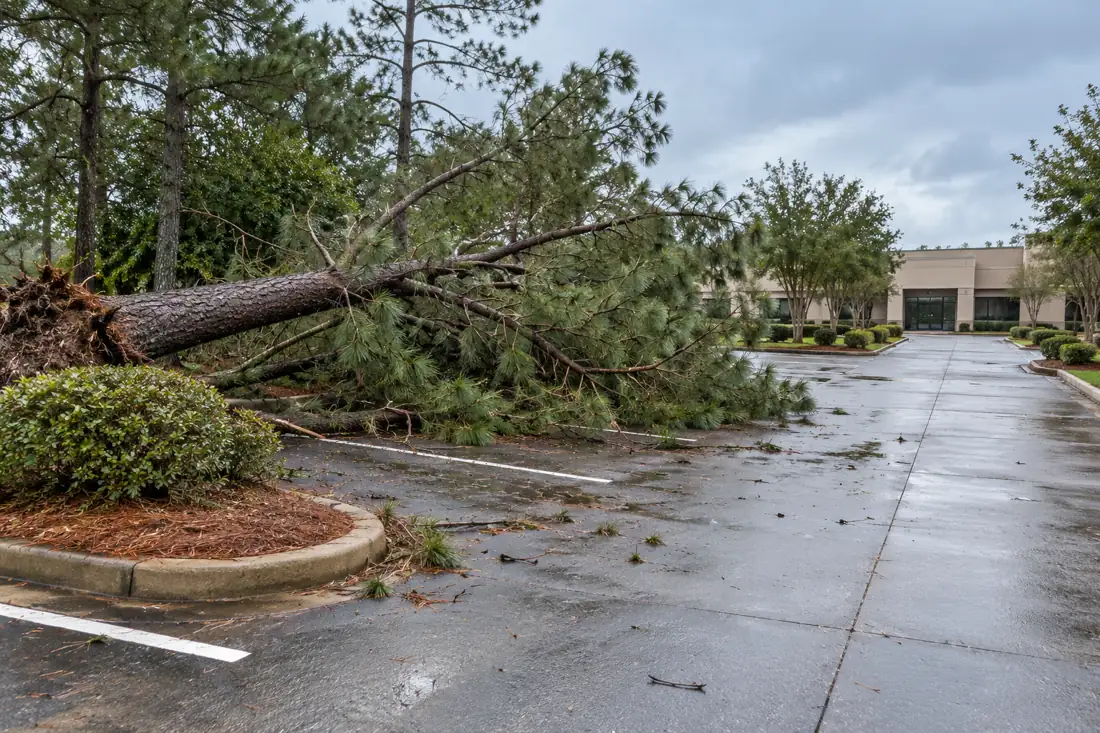
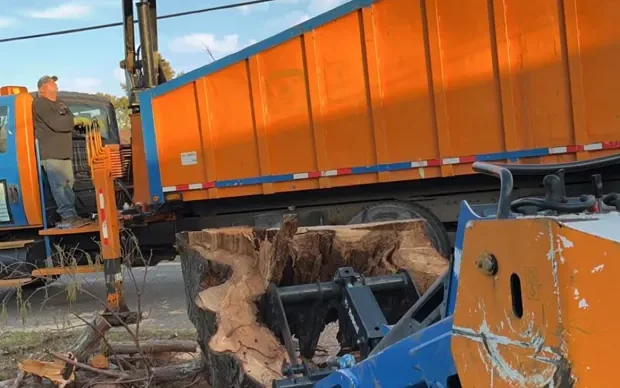
Report newly fallen trees, hanging material, changed standing trees or blocked access directly. Keep people away from damaged areas. Immediate threats to people or electrical involvement require the appropriate emergency or utility service. Call 504-458-8336 about current tree-work availability and identify the facility contact coordinating the affected area. A website request does not confirm dispatch, site entry or that an operational route is ready for use.
The commercial storm response page provides a related starting point. Separate the first accepted tree or access task from wider processing, hauling and repairs. For substantial multi-site work, the mobilization page explains the need for a defined request. Current requirements and conditions still need review; a capability description should not be read as a confirmed deployment or a fixed production rate for an unreviewed facility.
Close out for the facility’s next operation
Use the original tree and area identifiers to record accepted tasks, approved changes and remaining items. Identify who can accept completion and which records the buyer actually needs. Send required formats early rather than assuming an ordinary photo set satisfies every possible project requirement. Records should describe what was performed without inventing quantities, condition ratings, operating approvals or findings that were not part of the commissioned work.
A planning example is selective perimeter clearing with several retained trees, plus a separate removal near a warehouse and later ground work by another provider. Review the finish for each accepted area and the responsibility for the next stage. A usable closeout lets operations and purchasing understand the same result, with additions and unresolved conditions visible instead of buried in a general statement that the site is complete.
Build the tree-work boundary around industrial safety controls
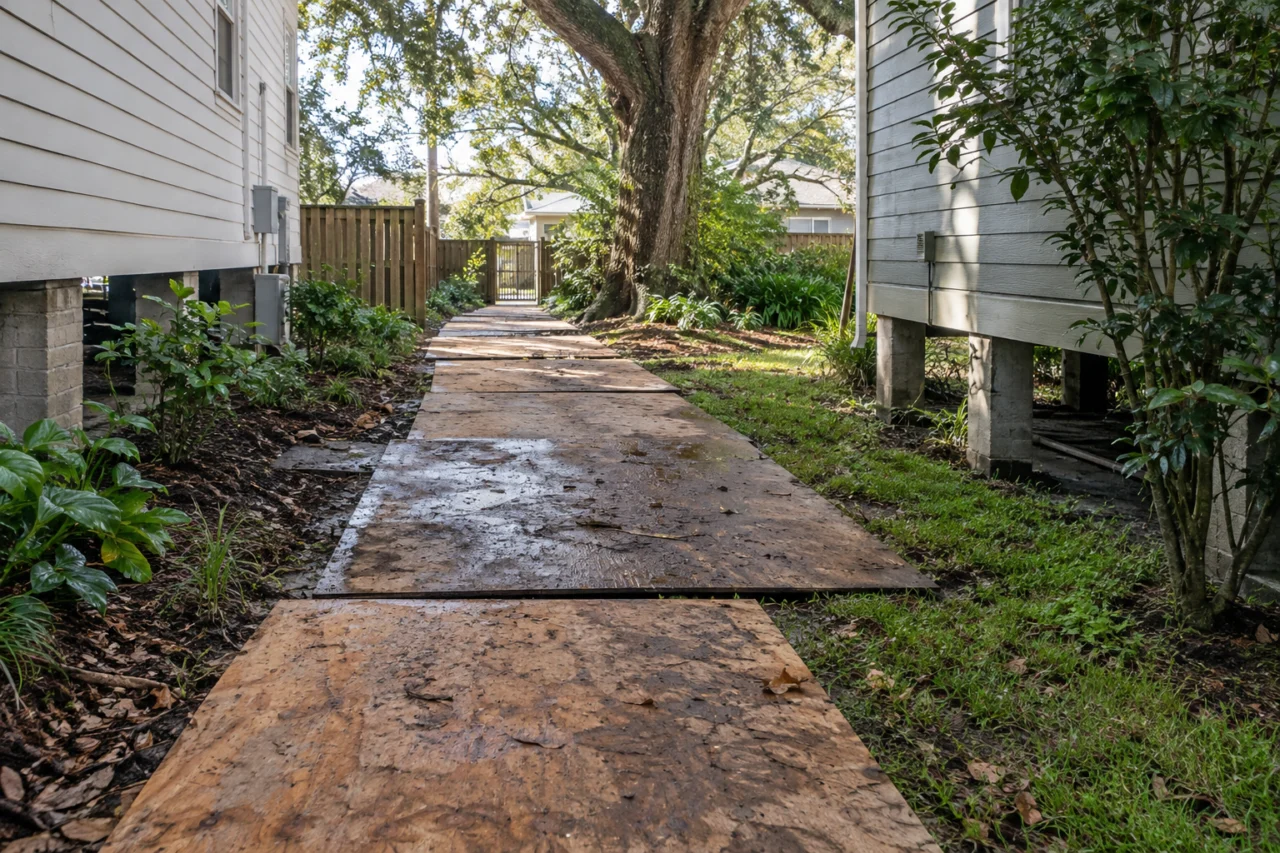
At an industrial site, the safest practical route for people and equipment may not be the shortest line to the tree. Document nearby process areas, overhead services, buried infrastructure, security gates, restricted zones, turning space, drainage features, and access needed by other contractors. Confirm who controls the proposed work area and which routes are actually available. A preliminary map or photograph is useful context but not permission to enter, isolate machinery, or operate beneath an energized or moving facility system.
Ask the facility to identify induction, permits, escort requirements, traffic management, and any lockout or isolation procedures that its own authorized personnel must manage. The tree-work team should not invent facility policies or assume that cutting a tree can proceed while other operations continue unchanged. Distinguish a vegetation-clearing objective from a request to remove specific hazardous trees, retain screening, or protect marked environmental features. Those choices affect the equipment footprint and final material destination.
Before closeout, reconcile the actual trees or areas worked against the authorized plan, including wood disposal, stump treatment, surface condition, and anything that remains restricted or incomplete. Record changes in the facility’s preferred format and have the correct site representative review them. A documented boundary and clear approval path are more useful than a generalized promise that all industrial tree jobs can use the same production method.
Industrial Tree Service questions
What should an industrial tree-work brief include?
Provide locations, task identifiers, safe photos, current site instructions, access constraints and an authorized facility contact.
Does a capability page establish site authorization?
No. Actual entry, buyer and work-area requirements need review for the specific opportunity.
Can a service lane be assumed unrestricted?
No. Explain facility traffic, deliveries, operating interfaces, permission and the route to each accepted area.
Does tree work include operating facility systems?
Do not assume that. Keep tree tasks and facility-controlled operations or specialist work assigned through the responsible contacts.
How should clearing limits be defined?
Use agreed current limits, retained features and appropriate authority rather than an unverified fence or aerial outline.
Should machinery be chosen before the site review?
No. The trees, targets, ground, route, setup and scope inform the method discussion.
Is a maintenance visit a complete tree assessment?
Only the accepted scope is covered. Clarify selected care, condition review and any separate broader assessment request.
What if wood contains mixed or unknown material?
Disclose contents and limits before handling; another arrangement or provider may be necessary.
Does removal include grading or next-phase preparation?
Confirm the finish and obtain relevant requirements from the responsible provider rather than assuming those tasks are included.
What if a storm blocks a facility route?
Keep people away, involve emergency or utility services where appropriate and discuss current tree-work availability through the site contact.
Can large regional work be discussed?
Send a defined scope, sites, contacts, logistics and requirements to review current fit and availability.
What should industrial closeout show?
Use agreed location identifiers for actual tasks, material handling, approved changes and items remaining for another stage.
Let’s plan your tree work.
Send the property address, safe tree photos and the result you need. Include access restrictions and the person who can approve the work.