Electrical hazards can constrain both the tree work and equipment setup. Keep away from conductors and coordinate with the utility or other appropriate qualified parties. Reach alone does not establish that a crane operation is feasible. The tree contractor needs a site assessment and a clear understanding of utility responsibilities before the work is scheduled.
Site planning detail: Overhead utility lines require a separate safety decision before anyone proposes crane positioning. A branch in contact with a line is a potential electrical emergency, even when the visible wire appears insulated. Keep people away and contact the utility or emergency responders as appropriate; do not approach or move the limb to take photos. For a later assessment, show the tree and utility route from a safe distance.
Ask the tree contractor how utility authorization, clearances and public protection will be coordinated. The owner can identify access constraints and property boundaries, but should not select cutting or rigging techniques near energized equipment. Crane availability never overrides electrical restrictions. Record separate responsibility for traffic control, debris removal and restoration once the hazard is properly addressed.
Overhead conductors and service drops require specific planning before a crane is positioned or a limb is lifted. Photograph the overall route and note whether lines pass through the tree crown, behind the proposed setup or near the area where sections would be lowered. Do not use a metal measuring pole, approach conductors or try to distinguish energized from de-energized lines by appearance.
The appropriate utility or authorized professional must determine required clearances and any de-energization or protective arrangements. A crane operator's willingness to lift is not a substitute for that coordination.
Ask the contractor who will contact the utility, who can approve the work area and what must happen before mobilization. Discuss alternate methods if the planned line clearance cannot be established and identify public or private access restrictions. The written scope should distinguish tree cutting, utility coordination, traffic control and debris handling rather than burying everything in a single equipment charge. If a branch is resting on electrical equipment, keep people clear and report the hazard through the utility's established emergency process.
Treat utility proximity as a primary site constraint
A tree beside overhead electrical conductors is not simply an ordinary removal with one extra obstacle. Branches, the trunk, ropes, equipment, or lifted sections may enter hazardous proximity, and electrical hazards may exist even without direct contact. A crane can extend the operating envelope far beyond the visible tree. The first planning question is how the utility conflict will be evaluated and controlled by properly qualified parties, not how close the crane can park.
Do not ask a homeowner, unqualified worker, or neighbor to move a wire, prune around it, or measure clearance from a ladder. Photograph the overall scene from a safe ground location only if doing so does not approach a damaged line or tree. Identify the utility owner if known and communicate the presence of lines early. Qualified tree, crane, and utility personnel must determine the requirements for this specific operation.

Distinguish line types without making assumptions
A property may have high-voltage distribution conductors, service drops, communication cables, and other overhead facilities. They can look similar from the ground, and appearance does not establish whether a line is energized or safe to touch. Do not assume a wire is harmless because it is small, insulated-looking, or lower than the others. Treat unidentified lines as hazardous until the responsible utility or qualified professional confirms their status.
Prepare a site sketch showing line routes relative to the tree, roof, possible crane setup, and debris landing area. The sketch supports communication; it is not a clearance calculation. Contractors should coordinate with the relevant owners rather than relying on the homeowner's guess about voltage or ownership. If a line has fallen or is entangled with a tree, stay away, keep others clear, and contact the utility or emergency services as appropriate.
Identify the electrical restriction before approving a crane plan
A wire near a tree is a separate safety and coordination issue, not simply another obstacle for a long crane boom. Identify the service route, the roadside poles and the location of the tree in safe distant photographs. Different cables may have different owners or rules. Never conclude that a line is safe to approach because it looks insulated or because the nearby neighborhood still has power.
A proposed crane position must account for the boom, the suspended material and the route used to move equipment, not merely the distance from the trunk. Qualified operators and appropriate utility parties determine whether the work can proceed and what controls are required. If a conductor is damaged, down or contacted by vegetation, keep people and animals away and use the appropriate emergency or utility reporting channel.

The planning photograph illustrates why a utility conflict is a separate decision from reach. It does not establish a safe working distance or authorize crane use near conductors. Treat all overhead lines as hazardous, remain clear, and have the utility and appropriately qualified professionals determine the required controls before any work begins.
Utility responsibilities are not ordinary tree-work allowances
Obtain a written scope distinguishing tree removal, utility coordination, access permissions and possible schedule changes. Roadway use, neighboring yards and ground conditions may also affect the setup. An online estimate should not be treated as approval to operate near energized equipment or as a promise that a utility will attend on a particular day.
Provide photographs from safe ground positions and note any known outage, prior damage or access restrictions. Do not move branches, use a ladder for close-ups or try to measure electrical clearances yourself. Record which party is coordinating the restriction, and keep it unresolved in the work order until authorized clearance is established.
Clarify utility coordination before scheduling
Where work approaches energized conductors, the professional operation may require a utility assessment, a planned interruption, protective measures, or a revised method. The exact process depends on the utility, line, jurisdiction, and work. Ask the contractor who initiates coordination, what information is needed, and what condition must be confirmed before the crew mobilizes. Do not assume an informal telephone conversation is the same as clearance for work.
If the utility cannot accommodate the proposed work window, the tree removal may need to wait. A schedule change can affect crane availability, traffic control, and property access, but those costs and inconveniences do not justify bypassing electrical safeguards. Keep the project communications in one record, with actual authorizations and limitations accurately noted. A written plan should identify responsibility without claiming that every utility will follow the same procedure.

Evaluate crane reach and the full operating envelope
The hazard is not limited to the trunk touching a wire. Crane booms, hooks, rigging, lifted tree sections, and the possible path of movement all matter. Clearance and control requirements depend on the equipment and relevant safety rules, not on a generic number published in a homeowner article. The qualified operator and planner must evaluate the actual configuration, load handling, and utility conditions for the job.
A crane set farther away may change the working radius and load limitations, while a closer position may create other hazards. Do not direct the operator to compensate by lifting oversized sections or swinging over occupied space. If an acceptable configuration cannot be established, consider another professional method or postponement. The correct choice follows risk assessment and applicable standards rather than a promise that crane assistance always solves electrical proximity.
Keep line clearance under utility and qualified-contractor control
A crane boom, grapple tool or shifting limb can contact an energized conductor even when the trunk looks far away. Do not estimate safe clearance with a tape measure, touch a drooping wire, or assume a wrapped service cable is safe to contact. If it can be done without approaching a hazard, take a broad photo showing the tree and the location of the power lines. Leave the distinction between power, communications and service conductors to qualified personnel where it is uncertain.
Before agreeing to a removal date, ask who will contact the utility and who is responsible for the electrical safety plan. Approved work windows, utility assistance and traffic restrictions may affect both price and sequencing. If a limb is touching a line or a wire has fallen, stay clear and report the situation to the utility or emergency services as appropriate; do not attempt homeowner trimming.
The quote should identify the coordination responsibility rather than implying that the crew can work around energized wires without it.
Understand tree-condition risks near conductors
A cracked limb, dead section, or heavily leaning trunk may move unpredictably while being cut. Near wires, that instability can create consequences beyond normal property damage. Tell the contractor about changes observed after storms, but do not approach the tree or pull a branch away from a line. Signs such as arcing, sparking, or a hanging conductor require immediate avoidance and appropriate emergency or utility contact.
The professional assessment should consider tree defects, attached vines, branch tension, adjacent canopy, and how sections could shift when material is removed. Some techniques that are acceptable in open space may be inappropriate near overhead facilities. A grapple-saw attachment or crane does not eliminate electrical risk. Qualified personnel must establish a feasible controlled sequence before anyone enters a hazardous work area.

Review access and ground support separately
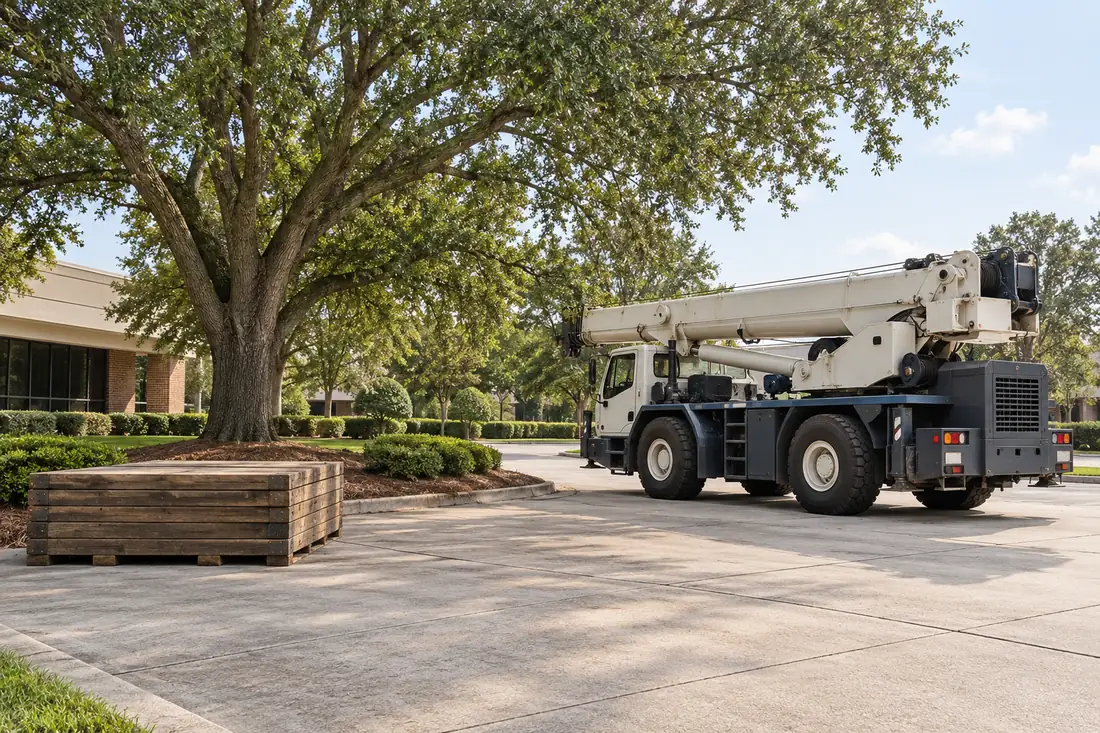
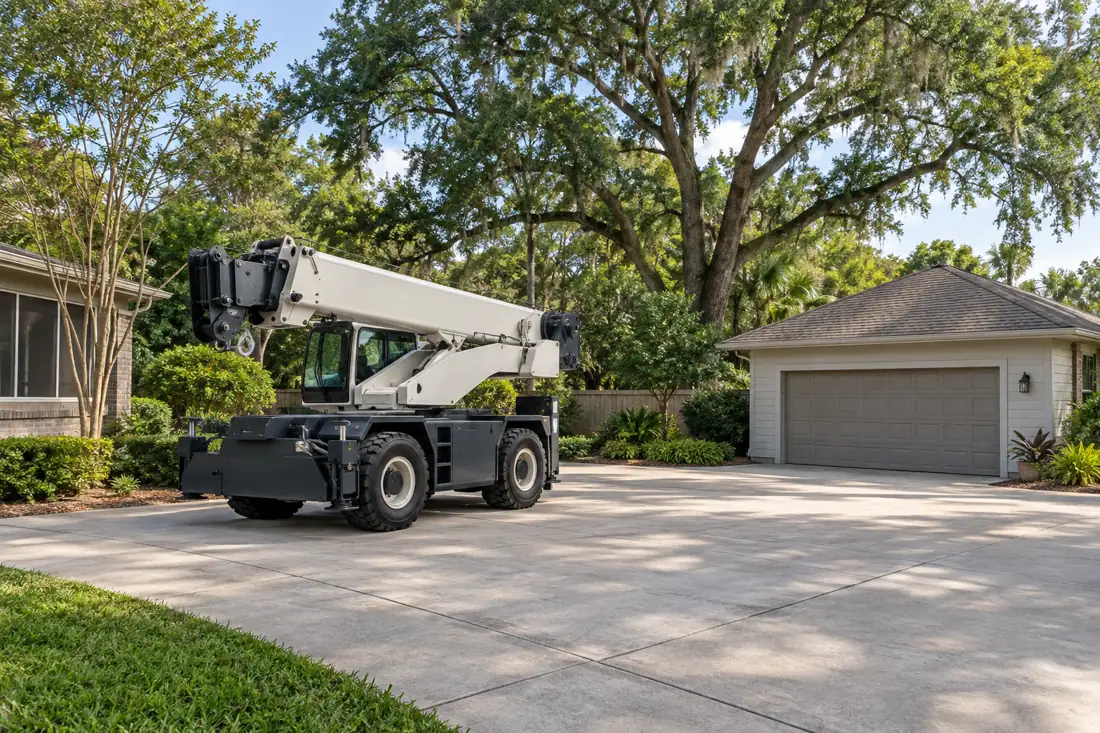
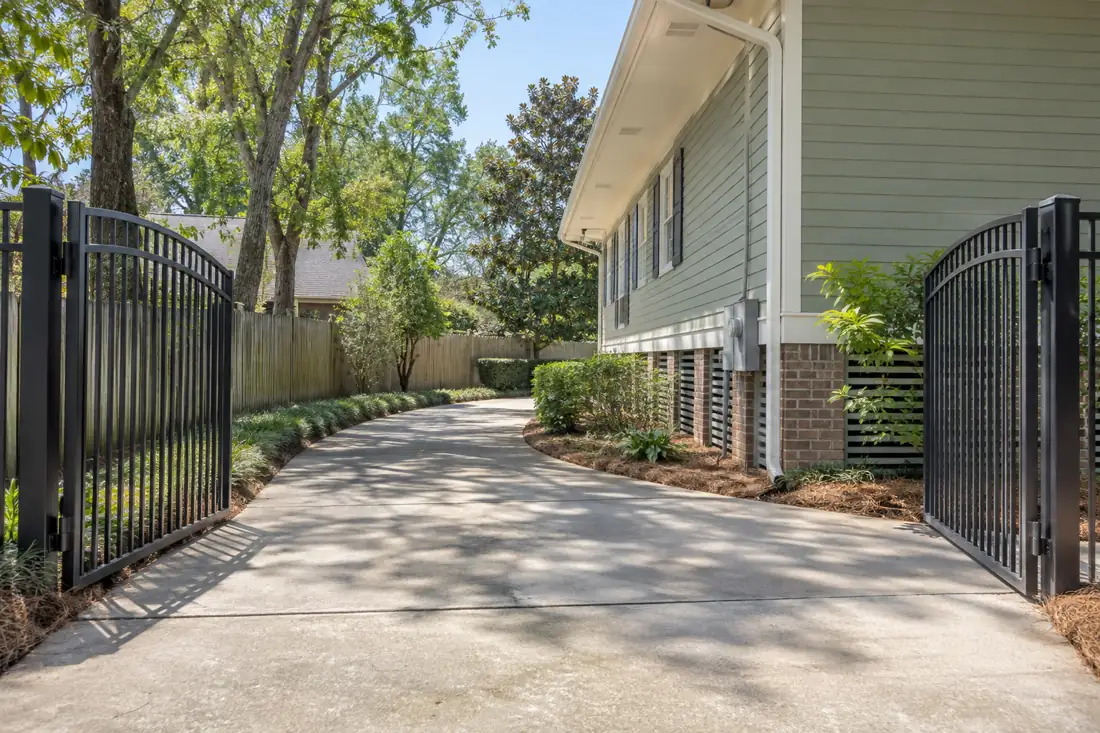
Even after the electrical conflict is addressed, the crane still requires a safe arrival route, stable support, sufficient clearance, and a landing area for sections. Identify underground services, drainage structures, culverts, and soft ground that may affect setup. A driveway may not be designed for concentrated outrigger loads. The crane team must assess support conditions and select protective or engineered measures where required.
Do not permit equipment placement over unknown utilities or on a neighbor's property without the necessary evaluation and permission. A setup location chosen solely to avoid overhead lines might introduce unacceptable ground or building hazards. The entire plan needs to work as a system: safe approach, qualified utility coordination, support, lift path, landing zone, and departure. If one element cannot be satisfied, the operation must change.
Utility coordination comes before crane placement
Cranes, suspended branches, and power lines must be evaluated together before any lifting arrangement is selected. A line's apparent distance in a photograph does not establish safe clearance, and the property owner should never attempt to move or touch a line. Identify the utility, report an immediate hazard through the appropriate emergency channel, and ask what coordination is required before tree work can proceed.
A crane's location, boom path, load movement, and exclusion zones all matter; one safe-looking stationary position does not certify the entire operation. For planning, send photographs taken from a safe position that show the wires, tree and nearby access routes together. Do not use a pole, ladder, roof, or elevated position to improve the picture.
Protect pedestrians, occupants, and neighboring properties
Working near lines may affect a sidewalk, street, shared lane, or neighboring driveway. Identify who needs access and whether approved closures or traffic controls are required. Keep pedestrians and pets out of the controlled zone, even when the equipment appears stationary. A person should never walk under a suspended section to get to a vehicle. Arrange a safe alternative route only if it can actually be maintained during operations.
Provide neighbors with realistic notice of expected restrictions without divulging unnecessary private information. If an electrical service interruption is planned, communicate only confirmed arrangements from the responsible parties. Do not imply the contractor can guarantee the utility's timing. A clear contact and update process prevents visitors or tenants from entering a hazard area because they misunderstood when the work was finished.

Separate emergency conditions from planned maintenance
A healthy tree that has grown near a service drop presents a different planning situation from a storm-damaged trunk resting on a line. For a downed conductor or electrical contact, keep clear and contact the utility or emergency responders as appropriate. Do not attempt to restore access by cutting branches, moving debris, or driving under the wire. Public safety takes priority over routine cleanup.
For nonemergency planned work, there is more opportunity to obtain evaluations, agree on equipment, coordinate dates, and protect surrounding property. Record any new damage found before the scheduled day and notify the contractor. A changed condition can invalidate an earlier work plan, especially where branch stability or electrical proximity is involved. The crew should not be pressured to treat an emergency as an ordinary appointment.
Make the written work scope explain the method
A useful proposal should describe the tree work, why crane assistance is being considered, who coordinates with the utility, any required access or traffic measures, and what material will be hauled or retained. It should also distinguish stump work, restoration, and optional services. Ask how weather, utility scheduling, or new structural findings could affect timing and scope. Do not expect a universal fixed price from the visible proximity of a wire.
If a proposed quote does not address the utility conflict at all, seek clarification before approval. It may be necessary for the contractor to consult specialized partners or revisit the property. Keep all statements precise: planned coordination is not a completed clearance, and a diagram is not approval to operate. Safety responsibilities should be clear before equipment is committed to the site.

Share accurate information without entering the hazard
For an initial inquiry to Tree Huggers, provide the address, describe the tree's condition, note visible overhead utility routes, and submit safe wide-angle photos if available. Include potential access areas, nearby buildings, and a place where removed wood might be handled. Do not climb, touch hanging branches, stand beneath an unstable canopy, or cross a restricted area just to obtain a better image.
Ask what qualified assessment and utility coordination are needed before a method can be selected. If a line is down or the tree is actively contacting electrical equipment, contact the appropriate utility or emergency service instead of treating an online estimate form as the response channel. The goal is to establish a feasible professional plan that does not sacrifice electrical safety for speed or convenience.
Questions about this project
Can I identify a safe wire by looking at it?
No. Do not approach or touch wires, a tree contacting them or connected objects to investigate. Keep clear and contact the utility or emergency services when there is an immediate electrical hazard.
Does a tree estimate include utility disconnection?
Only if the appropriate coordination and responsibilities are explicitly arranged. Utility work may require the service provider or another qualified party. Confirm those arrangements before assuming the tree crew can proceed near affected services.
Does a machine's maximum reach prove it can do my job?
No. Loaded reach, configuration, section handling, obstacles and setup conditions all affect suitability. A contractor needs to evaluate the particular tree and property before confirming an equipment plan.
Can specialized equipment replace a site assessment?
It does not remove the need to assess tree condition, targets, access and support conditions. Ask how the contractor will confirm that the proposed machine and method fit the actual scope.
Can tree equipment use any driveway?
No general assumption should be made. Pavement condition, edges, support, buried infrastructure and the proposed equipment all matter. Ask the contractor to assess the intended setup and route for the particular property.
Do mats guarantee there will be no ground damage?
Ground protection is one part of a site-specific plan. It does not remove every load, soil or access limitation. Discuss the proposed measures and any restoration responsibilities in the written scope.
How should extra work be approved?
Use the agreed approval process and identify the change, reason, scope, price or schedule effect as applicable. Confirm who has authority before treating an additional tree or task as part of the original job.
What completion records are useful?
Keep the agreed scope, tree or area identification, authorized changes, invoice and labeled photos where appropriate. Include unresolved items and a contact. Contract-specific records should follow the buyer's stated requirements.
What should I compare besides the price?
Compare tree identification, work objectives, access assumptions, hauling, stump treatment, site finish and exclusions. Ask whether permits or other coordination are part of the scope and who can approve changes if conditions differ.
Does an online request book the crew?
No. A request starts the estimate conversation. The company still needs to discuss scope, availability and any site assessment. For a dangerous or urgent condition, call 504-458-8336 rather than relying on a form response.
What should I tell Tree Huggers about crane tree removal near power lines?
Explain the property address, the work you want and the specific concerns: electrical proximity, setup limits, utility responsibilities. Send safe photos of the tree, surroundings and access route. The contractor can then discuss the assessment and scope needed for this situation.
How do I request an estimate for this work?
Call 504-458-8336, text photos or use the estimate form on this page. Include the address, desired outcome and any timing constraints. The company will need to review scope and availability; an online request does not confirm a price, appointment or emergency dispatch.
Get a scope for your property
Where crane work could approach electrical conductors, treat the line as an immediate planning constraint rather than a detail for the crew to improvise around. Photograph the general tree-and-line relationship only from a safe public or authorized standing position; never approach, touch or try to move a line for scale.
Explain whether wires serve a house, street or larger utility corridor without asserting their voltage. Note whether any branch or trunk already contacts or hangs near the equipment. If a fallen line or active electrical hazard is suspected, keep clear and contact the utility or emergency services.
Ask who will coordinate with the utility, determine electrical clearances and authorize any needed de-energizing or specialized work. The written plan should separate those prerequisites from crane setup, public access restrictions and debris handling. A crane's reach or a crew's experience does not replace electrical authorization. If safe approach cannot be established, expect the method, sequence or timing to change. Do not promise neighbors a reopening time until the utility-related requirements and property permissions are known.