Customers who keep wood need to define what that means before the removal. Whole logs, manageable sections and split firewood are different outcomes. Identify a safe storage location outside the work route and agree on handling limits. Do not assume tree removal includes splitting, seasoning or delivering wood to several locations.
Site planning detail: Retained firewood should be specified before tree sections are cut and loaded. Decide which rounds should remain, their desired approximate size and where they can be placed without blocking access or damaging landscaping. Cutting logs into rounds, splitting firewood and stacking it are different tasks, and should not be assumed included. Freshly cut wood generally needs seasoning and airflow before it is useful as fuel; keep stored wood off the ground and away from siding.
Do not assume diseased, treated or otherwise contaminated wood is suitable for burning. Confirm whether larger limbs are hauled away while selected logs remain, and whether the contractor will remove loose fragments from the storage route. A clear plan prevents an unwanted heavy woodpile after the crew departs.
If the owner wants firewood, agree on that before the tree is dismantled. Mark an acceptable stacking location, specify which sections remain, the approximate cut length, whether splitting is included, and who moves or stacks heavy pieces. Fresh wood is not seasoned firewood; species, moisture, pests and local restrictions can affect storage and burning.
Do not pile logs against the house, block drainage or create hazards for children or pets. Clarify disposal of remaining branches and chips and whether extra equipment is needed for the retained wood. Record the final quantities and location in writing rather than relying on an informal request to leave a few logs.
Decide whether keeping wood actually fits the removal plan
Keeping firewood can be useful when a suitable tree is removed, but it changes the work scope. Before the crew arrives, decide whether you want logs left whole, cut into manageable rounds, or split and stacked. These are different tasks with different equipment, labor, and cleanup implications. Ask whether the wood from the specific tree is appropriate for your intended use rather than assuming every species, condition, and size makes useful household firewood.
Think about the space available for wood storage and how the rounds will travel from the removal area to that location. A pile near the street may be convenient for the tree crew but unusable for the homeowner who plans to move each piece later. If you have no dry, ventilated storage area or no realistic way to process large rounds, hauling the wood may be the more practical choice despite the appeal of keeping it.

Identify the species and wood condition first
A removed tree may contain sound hardwood, soft decayed sections, dead standing limbs, or wet material. Those differences matter more than a simple rule that all oak makes good firewood or every softwood should be discarded. If you cannot identify the species confidently, ask the contractor what they can verify. Wood with extensive rot, unknown treatment, paint, contamination, or embedded metal should not automatically be reserved for indoor burning.
Even sound wood from a living tree contains moisture. Freshly cut rounds generally need to dry before efficient use, and the amount of time depends on species, size, exposure, and climate. A moisture meter can help assess readiness when used on a freshly split face. Do not treat a fixed calendar date as proof that a load is seasoned, especially in a humid Gulf Coast environment where rain and poor airflow slow drying.
Specify log lengths before the first cut
A firewood request is difficult to honor after the trunk has already been reduced into oversized pieces. Measure the usable depth of your stove, fireplace, or outdoor appliance and communicate a preferred round length before cutting begins. Allow clearance rather than requesting pieces that barely fit. Check whether that length applies to every trunk and limb section or only to wood over a minimum diameter.
Cutting a tree into rounds is not the same as splitting those rounds into pieces ready to burn. A large oak section can be extremely heavy even when it is short. Ask who will split and carry the material and what equipment can reach the proposed storage point. If the scope says wood left on site, it may only mean logs placed in an accessible pile, not a neat rack of seasoned firewood.
Specify what firewood stays after a tree removal
If some cut wood should remain, tell the contractor before cutting begins. Identify which trunk or large branches are to be retained and whether you want long logs, short rounds, split firewood or a mixture. These are different tasks with different handling requirements. Measure the intended storage area and provide a photograph of the route to it.
Species, moisture, decay, embedded metal and uneven log dimensions can affect the usefulness of the wood, so a tree-removal project should not be sold as a guaranteed source of ready-to-burn firewood.

Separate Keep-Wood Piles From the Cleanup Scope
A keep-wood request is easiest to fulfill when the agreement identifies the actual pieces to remain. A trunk section, manageable rounds and brush are different materials. Ask whether the crew will leave logs where cut, move them to a specified accessible area or process them further. Those choices affect equipment access, handling and the final cleanup boundary.
Show the intended stacking spot in the estimate photos, including the route from the tree to that spot. Avoid placing heavy rounds against a fence, over a drain or on soft ground likely to rut. If the location is across a neighbor's drive, confirm permission and the handoff before crews arrive; a convenient photograph does not establish property rights.
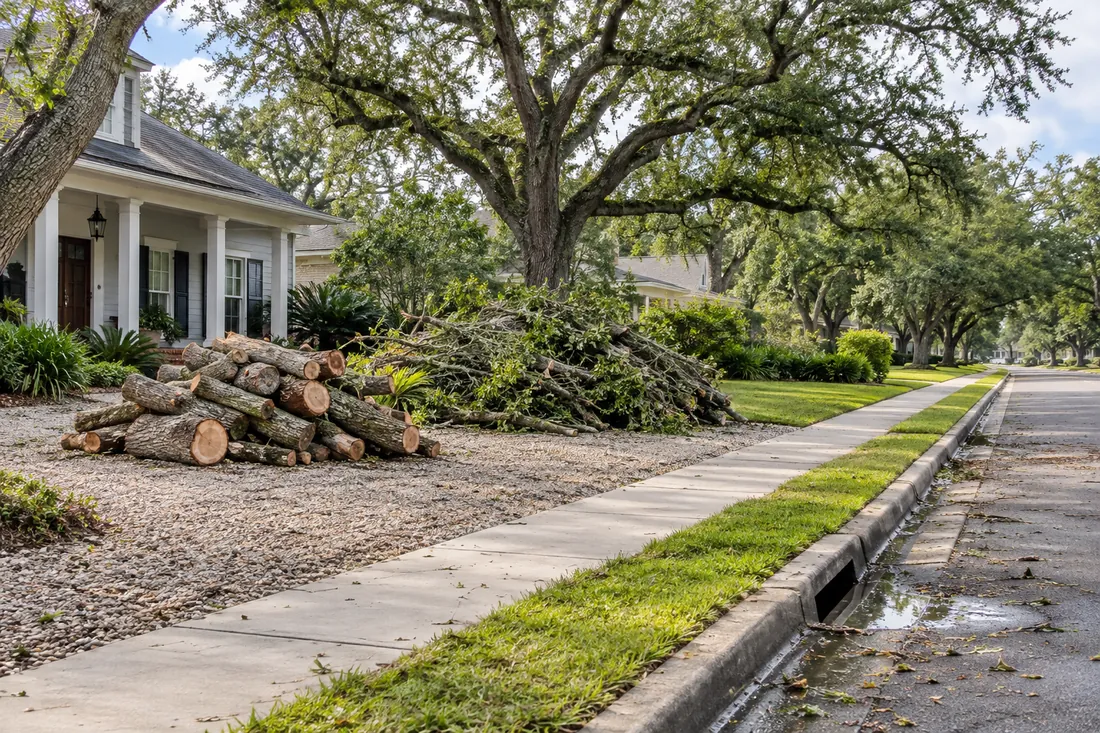
A neat pile in an educational image is not evidence of any particular Tree Huggers job. The useful takeaway is to record what stays, where it stays and who is responsible for future splitting, storage, insects and removal. That helps distinguish a completed tree-removal scope from the owner's later wood-storage decisions.
Decide how wood will be placed without damaging turf, paving or nearby living trees. A few heavy rounds left at the curb may be easy for a loader to stage but inconvenient or unsafe for a homeowner to move afterward. Ask whether stacking is included or whether pieces will simply be left in an agreed location.
Do not request unsafe manual lifting or rely on the crew to split logs unless that service is expressly arranged. Keep retained wood separated from brush headed to disposal so the desired pieces are not accidentally hauled away.
For storage, plan for ventilation, ground separation and practical access. Firewood left directly on persistently wet soil may decay faster and attract insects; stacking wood against siding can create its own pest and moisture concerns. An open-sided cover is generally different from wrapping a damp pile tightly in plastic.
Firewood should be seasoned and checked before use, and local pest or movement restrictions may apply when transporting wood away from the property. Do not promise a safe burning date based only on when the tree was cut.
After the work, compare the retained pieces with the agreed inventory and inspect nearby surfaces for bark fragments, rolling hazards and loose rounds. Confirm whether small branch chips, leaves and sawdust are removed or left under the normal cleanup scope. If wood is too rotten, oversized or inaccessible to be useful, document the change rather than leaving an unplanned pile.
A firewood-retention note belongs in the estimate because it changes both loading and cleanup; it is not merely a casual request to save a few logs.
[/fusion_text][/fusion_builder_column_inner]
Decide which wood is safe and practical to keep
Keeping trunk sections after tree removal may reduce material hauled away, but it creates a separate plan for cutting, stacking and eventual seasoning. Large green logs are extremely heavy. If firewood is desired, tell the crew which species and piece sizes matter and whether the wood can be placed on level ground away from driveways, drains and walkways. Never assume that wood from a diseased or chemically treated source is suitable for a household fire.
Discuss whether splitting, stacking and removing smaller branch material are part of the quote. Freshly cut wood generally needs appropriate storage and drying, and local rules may affect burning. A pile next to a house can obstruct maintenance or attract pests, so choose its final location before work starts. If any sections are not usable for your purpose, identify them for haul-off instead of leaving an unmanageable pile.

Select a stable and accessible stacking area
Choose a storage location away from building siding, doorways, air-conditioning equipment, drainage flow, and play areas. It should allow air to move around the wood and give you room to retrieve logs without climbing across a pile. Keeping wood off bare, wet ground can reduce moisture exposure, but any pallet or rack must support the actual load without tipping. Avoid stacking against a fence that is not designed to carry significant pressure.
A sunny edge of the yard may dry better than a closed shaded corner, but it should not obstruct emergency access or the next mowing route. Consider termites and other pests that can occupy wood stored beside a house. The specific safe distance depends on property conditions and local pest-management guidance. Do not place a large pile over utility access covers or root areas that may need future inspection.
Protect the ground while moving retained rounds
Heavy rounds can gouge lawns, crush irrigation heads, and damage garden edges during relocation. Show the crew the intended travel route and identify gates, stairs, slope changes, pavers, and fragile soil. If ground is soaked, even wheeled carts can leave tracks. Moving wood in smaller loads or choosing a temporary holding area may protect the property better than forcing equipment to a final stacking position during wet conditions.
Decide in advance which party is responsible for moving wood once cutting is finished. The contractor may place rounds beside the work area while the homeowner later handles stacking. That is a valid arrangement if it is explicit and the pile is stable and outside walking routes. Avoid leaving a large round on a slope where it can roll, or placing a pile where children and pets can climb onto it.

Understand the difference between rounds and split pieces
Round diameter affects both handling and drying. Large rounds hold moisture longer, weigh more, and may be too big for a household splitter. Small limbs can also be awkward because knots and forks make neat splitting difficult. When requesting retained wood, describe a diameter range you can actually handle. A pile of irregular branches may be useful for outdoor purposes but is not equivalent to uniform split firewood.
If splitting is part of the contracted service, agree on whether the crew will split all sound rounds or only sizes their equipment can safely handle. Clarify what happens to rotten sections, sawdust, bark, and pieces that will not split cleanly. A good scope identifies what will be stacked, where it will go, and what residual material is hauled. Without that distinction, two parties may have very different expectations about a finished pile.
Seasoning and weather protection require balance
Seasoning is primarily about reducing internal moisture, not simply keeping rain off the top. Split wood usually dries more effectively when exposed surfaces receive airflow. Covering an entire fresh pile tightly with plastic can trap moisture and encourage mold. A top cover that sheds rain while leaving sides open may be more useful, depending on the rack and site. Check pile stability after storms and avoid covers that can blow across the yard.
Wood collected in a wet season may need substantially longer to dry than wood split and stacked during warm, breezy weather. Check several representative pieces rather than assuming the exposed outer logs reflect the whole stack. If the wood is intended for a stove, follow the appliance manufacturer's guidance on fuel type and moisture. Do not burn questionable treated or contaminated wood merely because it came from a tree-removal project.

Distinguish the retained firewood from waste
Most tree removals generate material that is not ideal firewood: brush, fine limbs, leaves, chips, decayed sections, and irregular branch crotches. Mark what you want to keep and what should leave the property. If the crew is also grinding a stump, confirm separately whether the resulting grindings stay or are hauled. Keeping firewood should not accidentally result in an unplanned heap of unusable wood left behind.
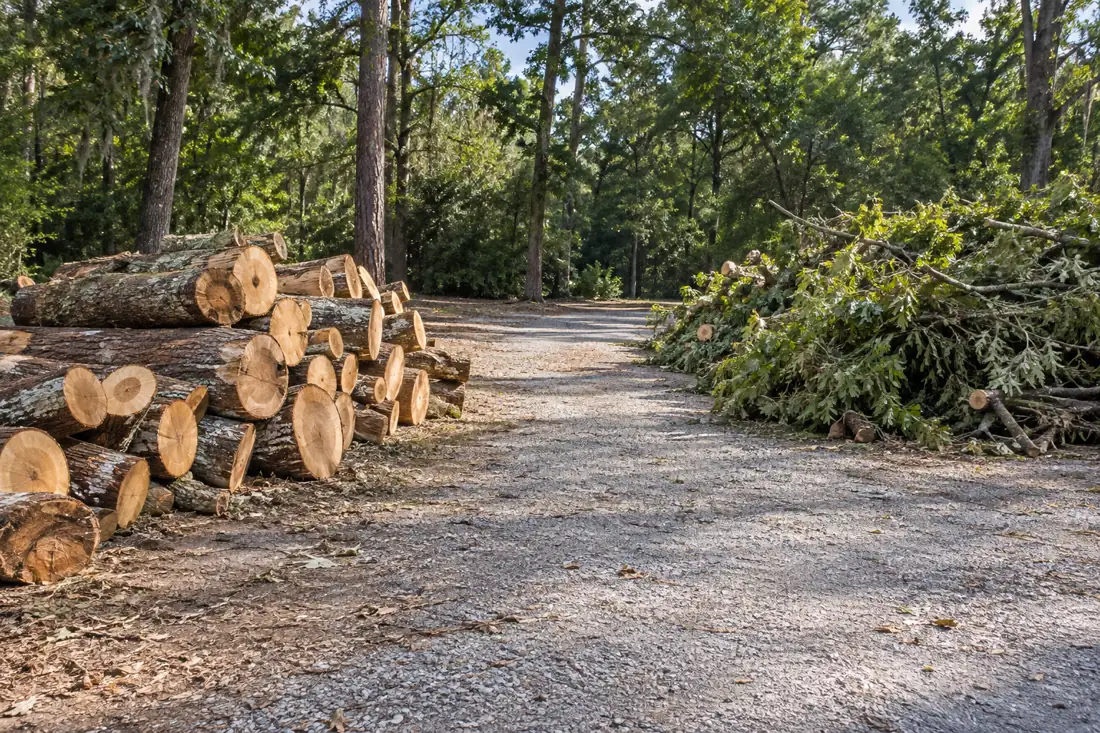
When the tree is large, request that retained rounds be consolidated in one agreed area rather than scattered across the work zone. A photograph of the planned holding location is helpful. Make sure the route to that area does not require reversing heavy equipment near people or buildings. If a hazard or access problem prevents the original plan, ask for a revised placement before the crew makes a different assumption.
Decide how much firewood you actually want
A homeowner asking to keep wood should specify more than 'leave the logs.' Discuss the approximate piece length, where the sections can be safely stacked, and whether large trunk sections are realistically movable with the access available. Splitting, carrying, seasoning, and disposal of unsuitable pieces may be separate work and should be written into the scope if requested.
Freshly cut wood is heavy and can attract insects or retain moisture when stored against a building. A designated drop zone must also remain clear of doors, drains, utilities, and areas used by children. If keeping only a small quantity is the goal, ask that the remainder be handled under the normal debris plan so the property is not left with unwanted heavy sections.
Consider household safety and pest exposure
Unstable wood piles can roll or collapse, and hand lifting heavy rounds can cause injuries. Keep children and animals away from the work area and the stacking process. Wear appropriate protection when handling rough bark and splintered pieces, and use equipment within its rated capability. Large or suspended trunk sections are not suitable for casual homeowner cutting after a removal; leave complex cutting to qualified professionals.
Fresh wood attracts insects and wildlife and can shelter rodents, especially if stacked near food, vegetation, or a building foundation. Examine the pile periodically and follow local pest advice rather than applying unneeded chemicals to wood intended for burning. If the removed tree was affected by a disease or invasive pest, follow applicable local movement guidance before transporting logs off-site. A clean storage plan should make routine inspection easy.

Put the retained-wood decision in the written estimate
Before accepting a removal proposal, ask for wording that identifies the selected tree, desired round length, whether splitting and stacking are included, where the wood will remain, and what material is being hauled. Do not assume a lower disposal volume automatically creates a specific price discount. Cutting, moving, and stacking can offset some hauling work, and the actual equipment plan determines what is reasonable.
After work, walk the site with the agreed scope. Check the retained pile for stability, verify that paths and drains remain clear, and note any wood left for later homeowner processing. Store genuine project photos in your private records rather than labeling illustrative images as completed jobs. If you are unsure whether keeping rounds is practical, describe your appliance, storage space, gate access, and desired outcome when requesting an estimate.
Questions about this project
Does cleanup include every root and wood chip?
That depends on the written scope. Tree removal, stump grinding, chip hauling and root excavation are different tasks. Ask what material is removed, what remains and whether soil or landscape restoration is separately included.
What should a final walk-through check?
Compare the identified trees and tasks with the agreement. Check agreed debris handling, stump treatment, access openings and any listed restoration. Record unresolved items clearly instead of relying on a general impression that the property looks finished.
Does vegetative-debris hauling include building waste?
Do not assume it does. Describe mixed roofing, fencing, soil or other material before pricing. Ask what is accepted in the scope and what needs a separate provider or handling arrangement.
Why does access affect a debris-removal price?
The route, loading position, carrying distance and obstacles affect how material can be handled. Send photos of both the pile and the access, and identify any remaining tree or utility hazards.
What should I compare besides the price?
Compare tree identification, work objectives, access assumptions, hauling, stump treatment, site finish and exclusions. Ask whether permits or other coordination are part of the scope and who can approve changes if conditions differ.
Does an online request book the crew?
No. A request starts the estimate conversation. The company still needs to discuss scope, availability and any site assessment. For a dangerous or urgent condition, call 504-458-8336 rather than relying on a form response.
What access information helps an estimator?
Send the narrowest opening, overhead obstacles, turns and the distance between the tree and the loading area. Include photos of the entire route and identify steps, soft ground or features that must remain protected.
Should I remove a fence before the visit?
First ask the contractor to assess access and agree on any temporary opening. Identify who owns the fence, who can authorize the change and who will reinstall it. Do not assume the opening is necessary or included.
How should extra work be approved?
Use the agreed approval process and identify the change, reason, scope, price or schedule effect as applicable. Confirm who has authority before treating an additional tree or task as part of the original job.
What completion records are useful?
Keep the agreed scope, tree or area identification, authorized changes, invoice and labeled photos where appropriate. Include unresolved items and a contact. Contract-specific records should follow the buyer's stated requirements.
What should I tell Tree Huggers about keeping firewood after tree removal?
Explain the property address, the work you want and the specific concerns: retained wood size, storage location, handling limits. Send safe photos of the tree, surroundings and access route. The contractor can then discuss the assessment and scope needed for this situation.
How do I request an estimate for this work?
Call 504-458-8336, text photos or use the estimate form on this page. Include the address, desired outcome and any timing constraints. The company will need to review scope and availability; an online request does not confirm a price, appointment or emergency dispatch.
Get a scope for your property
If you want to keep firewood, identify that choice before logs are shortened or removed. Show where the tree stands or where wood already lies, and indicate whether you want manageable fireplace-length rounds, longer logs for later processing or only selected sound sections. Note local storage constraints and whether the wood can remain on your property without blocking emergency access, a gate or drainage.
Wood from a recently removed tree may need substantial drying, and suspected disease or pests can affect where it should be stacked or moved. Do not assume every species or section is suitable for indoor burning.
Ask the crew to separate retained wood from hauled debris in the written scope. State whether bucking to an agreed approximate length, splitting, stacking, moving over steps and cleaning sawdust are included or excluded. Choose a stable stack area away from play spaces and building walls, with permission for access if needed.
Define what happens to branches, stumps and pieces that prove unsuitable for the retained pile. This prevents the phrase 'leave the wood' from becoming an unexpected collection of heavy rounds scattered across the yard.