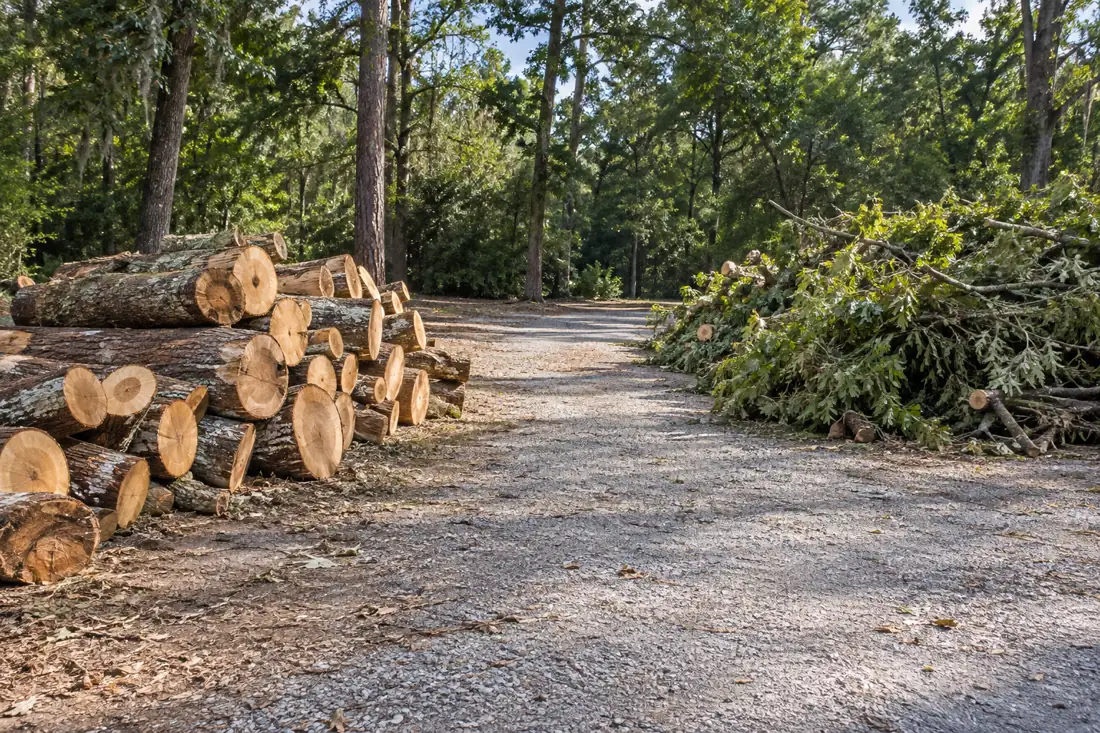
Large logs may be difficult to reach even after the tree is down. The handling plan depends on size, access, ground conditions and the path to the truck. Show the route and explain whether the wood is resting against a structure or another tree. Do not try to roll or shift heavy material for better photos.
Distinguish log handling from an attached fallen-tree hazard
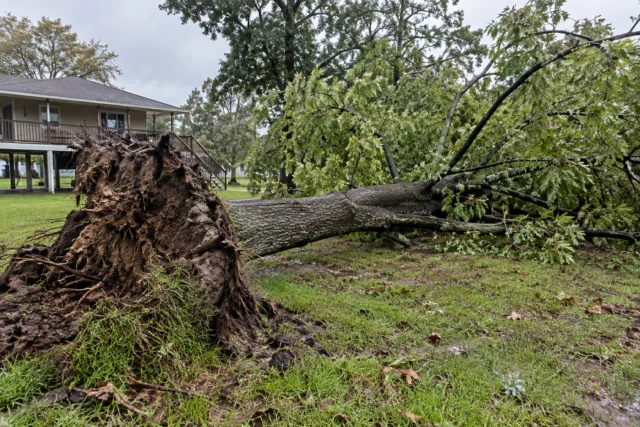
A stack of already detached trunk sections poses a different handling problem from a tree that is still joined to a lifted root plate, partially supported by a fence or suspended against a structure. Before planning log removal, establish whether the material is detached, whether it can roll, and whether the access route can support safe movement and loading equipment. Wood may be too large or heavy to move by hand even when it looks neatly cut.
If the tree is still under tension, elevated or contacting property, begin with the fallen-tree removal assessment rather than a debris-only pickup request. For detached logs, specify the pickup zone, gate clearances, turf protection and whether sawdust or small wood pieces must also be removed.
Site planning detail: A large backyard log can be heavier and harder to reach than photographs suggest. Include approximate length and diameter, the narrowest gate, nearby stairs, slope, overhead obstructions and the walking or equipment route to the truck. If a log is pinned against a fence or still attached to another unstable section, do not try to roll or lever it for better pictures. Identify garden beds, irrigation and paved edges that need protection.
Ask whether the quote includes cutting into transportable segments, hauling all material or leaving selected sections as firewood. Define sawdust and smaller-branch cleanup separately. If a neighbor’s access is needed, obtain permission before the crew plans to use that route.
A log that seems manageable in a photograph can be heavy, wedged against a fence or impossible to remove through a gate in one piece. Record approximate length and diameter, species if known, slope and distance to vehicle access. Note steps, decks, delicate paving, garden beds and routes requiring a neighbor’s permission.
Ask whether the crew will cut logs into transportable lengths or leave selected pieces with the owner, and who handles sawdust and smaller debris. A log still attached to a standing or hung-up tree may require a separate hazard assessment. Define the agreed resting place or full removal as an explicit end condition.
Start with what the logs are and where they rest
Backyard logs may be leftover trunk rounds from a finished tree removal, large limbs left after a storm, or a fallen trunk that someone partially cut. Before asking for removal, note which condition applies and whether any wood is still attached to a tree, wedged under another object, or supported by branches. A log resting freely on level ground is a very different problem from one that could roll into a fence or release stored tension when moved.
Take wide photographs that show the log relative to the house, gates, paths, and nearby objects. Add a closer photo of the thickest section and estimate length and diameter without climbing on the pile. Explain whether pieces are dry or freshly cut and whether soil or roots remain attached. These observations help a contractor decide whether ordinary loading is appropriate or whether a separate cutting, rigging, or hazard-assessment operation is required first.

Respect the weight and movement of trunk sections
Large wood pieces can be surprisingly heavy, especially when fresh or waterlogged. Even short rounds may be unsafe for a homeowner to lift, and a rolling log can gain momentum on a modest slope. Do not attempt to balance logs on a handcart, chain them to a personal vehicle, or ask untrained helpers to lever them over a retaining wall. The hauling provider should select suitable equipment and lifting methods based on actual dimensions and site conditions.
A log with an irregular profile can shift unpredictably as it is lifted. Hollow or decayed wood can also break under a grip that appears secure. Tell the estimator if sections are split, wedged, or partly embedded in the ground. An accurate scope may include cutting into manageable lengths, but cutting under tension or near structures belongs to competent operators using appropriate controls. The goal is to remove wood without creating a secondary injury or property-damage risk.
Agree on log sizes, cut lengths and the final yard condition. A backyard log-removal scope should say whether whole sections will be removed or cut into pieces, whether owners want firewood retained, and where the truck or loading machine can stand. Show gates, steps, soft ground and any narrow turns along the route. Identify if surface roots, plant beds, fences or buried irrigation cross that route. Avoid promising a pristine lawn after moving heavy logs across saturated soil; specify protective measures, chip and sawdust cleanup, and separately priced restoration where needed.
Measure the actual path from log to truck
A large trunk section may lie only a short distance from the road yet be difficult to remove because of a narrow gate, steps, retaining wall or soft ground. Photograph the log alongside recognizable surroundings without climbing onto it. Note whether it is split, partly buried, resting on other wood or near an active utility.
Record the smallest clear opening between the pile and loading point, along with turns and overhead obstructions. Equipment selection depends on weight, shape, reach and ground bearing, not a guess based solely on visible diameter. Do not roll or saw a suspended piece to make an estimate easier; it may shift unexpectedly.
Distinguish log hauling from finishing the tree work
Some jobs involve logs cut and left by another contractor, while others require additional cutting, limb removal, stump treatment or grinding. Make those boundaries explicit. If a previous tree service stacked sections, describe the existing arrangement and whether access has changed since then. The hauler may need to cut pieces smaller or use a loader; neither task should be assumed from the phrase 'pick up wood.' Decide whether usable firewood may be retained on site and who is responsible for handling it safely.
A property owner should not advertise storm-damaged or unknown wood as firewood without understanding its condition and any relevant restrictions.

Heavy trunk rounds require a different hauling plan than brush
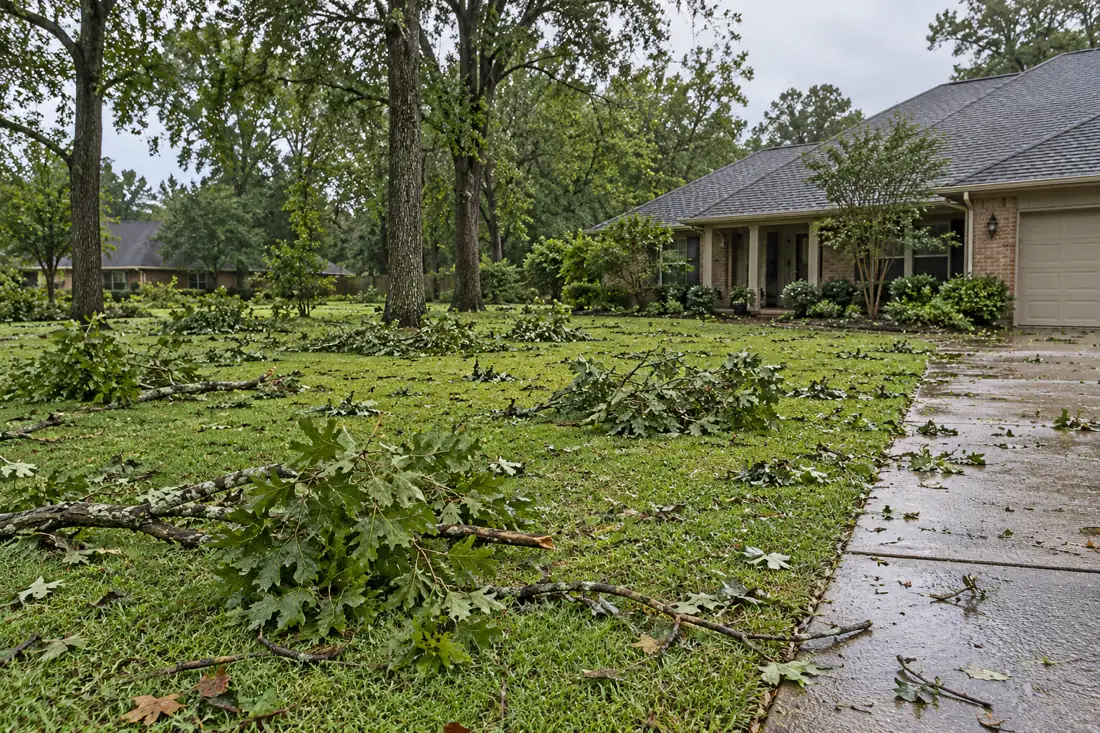
A loose branch pile can be loaded differently from heavy trunk sections, especially when a fence or narrow side passage separates the backyard from the truck. Estimate the sizes and positions of the log pieces without rolling or lifting them yourself. Photograph the route and note steps, slope, soft ground, overhead obstructions and any lawn areas that need protection.
The contractor may need to reduce the pieces or use specialized equipment before they can be moved. Clarify whether the estimate includes cutting to handling size, moving the wood, loading, hauling and sweeping the path afterward. Keep log removal distinct from brush chipping, stump grinding and replacement landscaping so the finished yard matches the agreed work.
Measure the narrowest gate and the turning space
The straight distance from the log to the driveway does not explain how equipment will reach it. Measure gate openings, note hinges and latch projections, and describe tight turns between the house and a fence. Steps, patio edges, air-conditioning units, and low roof overhangs can further restrict movement. A small loader may fit through a gate yet lack room to turn or safely carry an irregular log. A site review should consider the complete route, including the return path with a load.
Avoid dismantling fences or removing permanent features before a contractor identifies what is truly needed. If a panel can be temporarily removed, clarify who is authorized to do it and who will reinstall it. A neighbor's yard may look like the easiest route but cannot be used without consent. Where machine access is impossible, the contractor may propose smaller sections or hand removal for suitable pieces, with a different labor and safety plan.

Plan removal of heavy cut logs from a fenced backyard
Begin with a simple log inventory: approximate length, largest diameter, number of pieces, wood condition and where each piece lies. Photograph the largest rounds with a tape measure or another honest reference, and show whether they rest on level turf, a slope, a deck or a narrow planting strip. Wet logs and dense hardwoods can weigh much more than they appear in a phone photograph. Avoid promising that a piece can be carried through the gate or rolled across a patio before a qualified crew has evaluated the actual size and conditions.
Measure the narrowest access point, including gate posts, steps, fence corners and changes in ground elevation. Record whether the driveway is adjacent or separated by landscaping and whether any utility boxes, air-conditioning lines or overhead wires cross the proposed movement path. A log that fits between fence posts may still be too long to turn the corner safely.
If panels might need to be removed, clarify permission, responsibility and restoration in writing. Do not open a neighbor's gate or use another property as a shortcut without explicit authorization.
Ask the hauling contractor to distinguish lifting, further sectioning, mechanical handling and transport. Cutting a heavy round into smaller sections is not risk-free: wood may roll, bind the saw or expose metal embedded in the trunk. A crew may need a different machine than it uses for brush, and the surface below the log may need protection.
Describe whether all wood leaves the property, some becomes firewood and smaller pieces remain. If the proposal says only debris removal, confirm whether sawdust, chips and stump material are outside that scope.
Use a before-and-after walk-through that includes the lawn beneath the logs and the entire removal path. Check for ruts, damaged edging, torn sod, shifted fence hardware and pieces overlooked behind shrubbery. A final grade or turf repair may need separate work even when the logs are successfully removed.
If a large piece cannot be safely moved without a more extensive access plan, record that limitation and request a revised scope rather than improvising an unsafe route. Clear dimensions and photo evidence make later disputes less likely.

Check slopes and fragile ground along the route
A backyard often includes wet turf, soft fill, small drainage swales, or a recently installed planting bed. Heavy log handling and machine travel can damage these surfaces. Point out uneven areas, old ruts, low spots that retain water, and any surfaces that may conceal a drainage or irrigation line. An operator must determine whether the proposed ground can safely support the machine and load. A dry surface photograph alone does not prove adequate bearing capacity.
If access crosses an exposed root zone of a valuable living tree, discuss protection before work. Temporary mats or a different route may help but cannot guarantee that weak soil will remain untouched. Some work should be postponed until conditions improve rather than forcing equipment through. The estimate should explain who handles any expected rut restoration and distinguish routine cleanup from significant grading or lawn repair.
Plan a log route before sending a hauling crew
Logs left behind a house can be much harder to remove than an equally sized stack at the curb. Record the largest piece length and approximate diameter using a safe visual reference. Show access turns, gate clearance, slopes and surfaces that could be damaged by dragging. Do not roll a heavy log for a picture, and do not assume a compact loader can cross a porch or retaining wall.
Decide whether the goal is complete off-site removal, shorter pieces stacked for later use, or only clearing a walkway. These are different labor and hauling scopes. If the logs include attached branches, dirt, masonry or nails, flag them in advance. The estimate should explain whether cutting equipment is needed, whether a machine or hand-carry route is feasible, and which surfaces the crew will protect. The same property may need a separate tree-risk assessment if broken limbs remain overhead.
Plan backyard log movement around the heaviest piece
Cut logs are often denser and harder to control than brush, especially when large rounds cannot roll straight toward the truck. Identify the largest diameter, length and estimated weight class that the crew must manage; do not ask a homeowner to lift a sample to prove its size.
Photograph the narrowest gate, turns and any slope from the log pile to the possible loading area. A paved route may need protection and a lawn route may be unsuitable when wet. Include overhead obstructions and parked vehicles at the street.
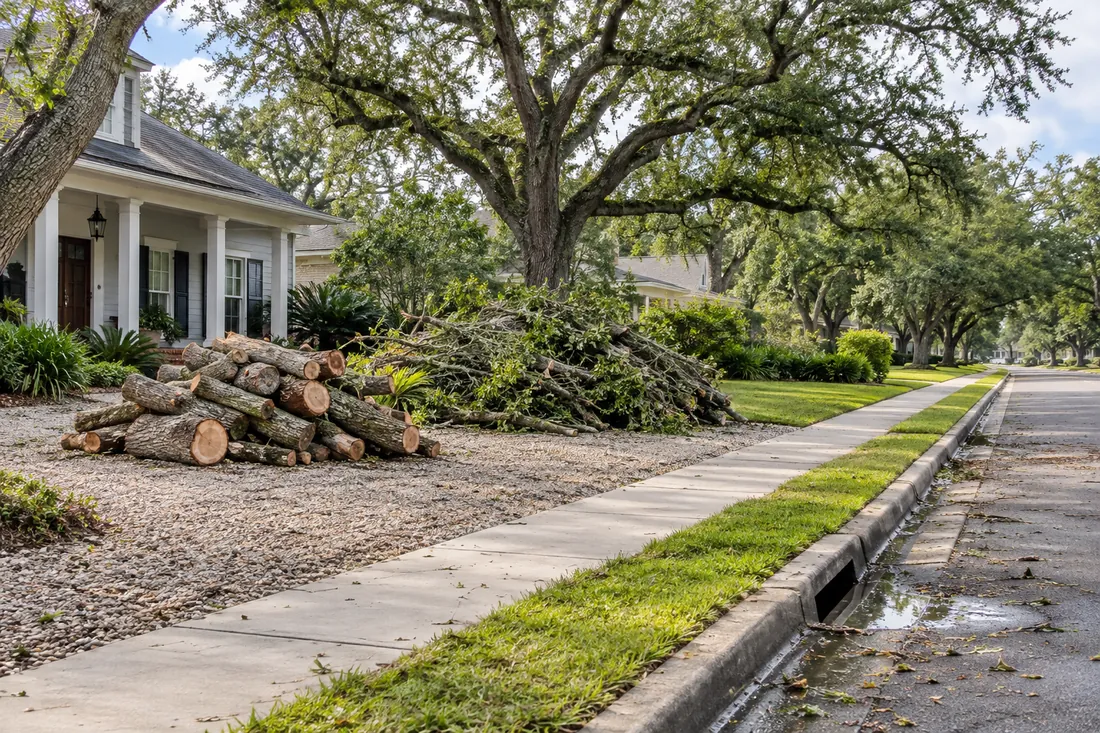
State whether material must be cut into smaller pieces, moved by a narrow machine or handled by another safe method. Clarify who owns or retains the wood, whether chips and branches are included, and whether logs will be placed at a designated pickup point or hauled off site. Stump work, yard restoration and fence removal are separate finish decisions. The illustrated arrangement is not evidence of equipment capacity or a documented completed Tree Huggers job.

Identify hazards around fences, structures and utilities
Logs can be stacked against a privacy fence, shed, pool enclosure, or utility fixture. Moving them may reveal hidden damage or remove support from an already unstable structure. Show all contact points in photographs and tell the contractor if any fence or wall shifted when the tree fell. Do not pull a buried or jammed section free simply to expose it for a quote. That action can turn a stable-looking pile into a moving hazard.
Mark visible irrigation controls, drainage inlets, gas meters, and electrical service features near the pickup zone. Their presence does not reveal every underground route, so use appropriate locating when equipment or ground disturbance makes it necessary. If logs are entangled with wiring or a damaged structure, ask for qualified evaluation before ordinary hauling starts. Proper sequencing is more important than assuming every object in the backyard can be treated as loose wood.

Choose between hauling whole, cutting, and retaining sections
Some property owners want all logs removed, while others want short rounds saved for a fire pit or a woodworker. Decide which pieces are to remain before machinery enters the yard. Mark retained sections clearly, and avoid asking a crew to sort valuable wood by appearance during an active lift. If cutting is required, discuss the intended maximum piece size and whether the service provider actually offers that work.
Wood retained for firewood needs appropriate drying and storage, and certain species or diseased material may call for special consideration. Do not promise that freshly cut sections are ready to burn. If the homeowner wants a portion milled or transported elsewhere, coordinate those arrangements separately. The hauling estimate should identify the exact material leaving the property so a useful log is not accidentally loaded or an unwanted heavy round left behind.
Plan loading and street access without obstruction
A log-removal crew may need a loading zone close to the property, but residential streets can have parking restrictions, school traffic, narrow shoulders, and storm drains. Describe where a vehicle can legally stand and how material would reach it. Keep sidewalks, fire access, and sightlines unobstructed. If the haul involves machinery, the crew should manage pedestrian separation and vehicle positioning rather than relying on a homeowner to hold traffic.
A long carry from the backyard to a truck can materially change labor compared with roadside logs. Ask whether the estimate includes handling through every gate and over each change of grade. If a driveway is shared, arrange the necessary access permission in advance. The site plan should make room for safe loading without turning neighboring property or public space into an unauthorized staging yard.

Clarify wood disposal and any attached material
Clean logs may have different disposal or reuse options from root balls carrying soil, stone, metal fasteners, or treated lumber. Tell the contractor about foreign material and any sections that were painted, burned, or incorporated into a landscape structure. A load described as clean tree wood should not quietly contain household waste. If a special disposal arrangement is required, that belongs in the quote rather than being discovered at the receiving facility.
Some providers can transport usable wood for recycling or processing, but do not assume a particular destination without confirmation. Ask what material is accepted and who is responsible for lawful disposal. A homeowner may prefer to retain clean chips or logs, while others prioritize leaving an open yard. Distinguish those outcomes before work. A responsible hauling plan accounts for both the physical pickup and the material's destination.
Write the estimate around the difficult pieces
A useful log-removal estimate names the collection location, approximate number and sizes of pieces, loading method, additional cutting if needed, and expected cleanup. It should identify significant exclusions such as attached limbs overhead, unstable trunks, buried root plates, or structural repair. If the contractor has only photos and no site visit, disclose access and ground uncertainties rather than presenting every detail as certain.
Compare quotes on the same scope. One provider may include cutting large rounds and hauling scattered bark; another may expect short movable pieces staged beside the drive. Those are not interchangeable services. If the cost changes when hidden material is uncovered, request a clear approval process before extra work begins. This protects the homeowner from surprise charges and the crew from being pressured to handle a hazard outside the agreed operation.

Inspect the yard after the last log leaves
When the wood is gone, inspect the former storage and movement areas for sharp fragments, exposed holes, broken edging, and blocked drainage. Stay out of unstable depressions and avoid touching damaged utility equipment. A clean pickup does not necessarily include removal of the stump, replacement of sod, or repair of the fence that was damaged when the tree fell. Document those needs separately if they remain.
Compare after photos with the pre-work record and the estimate's cleanup language. If the crew intentionally retained firewood or left soil-heavy root material out of scope, note that plainly rather than reporting a completely cleared yard. Keep the paperwork for future landscaping and for any property-management questions. Successful backyard log removal leaves a safe, accessible area within the promised boundary and a transparent list of any remaining work.
Measure the route before discussing the load
Backyard log removal is often constrained less by the total number of logs than by the largest piece and the route it must follow. From a safe position, document approximate log lengths and diameters, whether sections rest on a slope, and the narrowest gate, corner or step between the pile and street.
Identify retaining walls, irrigation, soft soil and finished surfaces along the route. Do not roll, stack or cut a heavy section just to make the quote easier. Ask whether the scope covers loading and disposal only, or additional cutting to make pieces transportable, and what condition the staging area should be left in. This keeps the estimate tied to the actual material and site.
Prepare the yard for safe lifting
Clear ordinary personal items from the agreed access area before the visit only when that can be done without entering a hazard zone. Identify underground sprinkler lines, drains, septic components, buried cables, decorative edging and recent fill. If the ground is wet, discuss whether the job should be staged differently to avoid deep ruts.
A crane or lift may be considered in some situations, but no photograph alone verifies its feasibility or load rating. Nearby fences and retaining walls should be treated as potential limitations, not lifting points. Keep observers away from the work area and never stand beneath suspended sections or moving equipment.
Specify what stays after the logs leave
Ask whether the crew will remove splinters and smaller wood, collect sawdust, level wheel marks, fill a stump depression or only haul the main pieces. If chips or logs are to remain for homeowner use, specify their placement in a safe, accessible area. For a yard used by children or pets, include a final walk-through for sharp fragments and open holes.
Record the existing condition of fragile hardscape and plantings with dated photos where practical. A useful written scope lists the approximate number and form of sections, access assumptions, debris handling and any separate restoration work. That makes a backyard log removal quote comparable and reduces surprises at closeout.
Questions about this project
Does vegetative-debris hauling include building waste?
Do not assume it does. Describe mixed roofing, fencing, soil or other material before pricing. Ask what is accepted in the scope and what needs a separate provider or handling arrangement.
Why does access affect a debris-removal price?
The route, loading position, carrying distance and obstacles affect how material can be handled. Send photos of both the pile and the access, and identify any remaining tree or utility hazards.
What access information helps an estimator?
Send the narrowest opening, overhead obstacles, turns and the distance between the tree and the loading area. Include photos of the entire route and identify steps, soft ground or features that must remain protected.
Should I remove a fence before the visit?
First ask the contractor to assess access and agree on any temporary opening. Identify who owns the fence, who can authorize the change and who will reinstall it. Do not assume the opening is necessary or included.
Can tree equipment use any driveway?
No general assumption should be made. Pavement condition, edges, support, buried infrastructure and the proposed equipment all matter. Ask the contractor to assess the intended setup and route for the particular property.
Do mats guarantee there will be no ground damage?
Ground protection is one part of a site-specific plan. It does not remove every load, soil or access limitation. Discuss the proposed measures and any restoration responsibilities in the written scope.
Which property features should I point out?
Identify buildings, vehicles, fences, fixed fixtures, landscape features, utilities and occupied routes. Explain what can move and what must remain. Include existing damage and any buried features you know about along the access route.
Should people remain inside the work area?
The contractor and site contact should establish an exclusion area and access arrangements appropriate to the work. Keep children, pets, visitors and other workers outside the active zone until the responsible parties say it can reopen.
What should I compare besides the price?
Compare tree identification, work objectives, access assumptions, hauling, stump treatment, site finish and exclusions. Ask whether permits or other coordination are part of the scope and who can approve changes if conditions differ.
Does an online request book the crew?
No. A request starts the estimate conversation. The company still needs to discuss scope, availability and any site assessment. For a dangerous or urgent condition, call 504-458-8336 rather than relying on a form response.
What should I tell Tree Huggers about log removal from a backyard?
Explain the property address, the work you want and the specific concerns: log dimensions, carry route, resting position. Send safe photos of the tree, surroundings and access route. The contractor can then discuss the assessment and scope needed for this situation.
How do I request an estimate for this work?
Call 504-458-8336, text photos or use the estimate form on this page. Include the address, desired outcome and any timing constraints. The company will need to review scope and availability; an online request does not confirm a price, appointment or emergency dispatch.
Get a scope for your property
For backyard log removal, begin with the pieces that are hardest to move, not just the total pile size. Photograph the largest log beside a tape measure or familiar object, then show the gate, turns, steps, drainage ditches and route to the nearest legal truck-loading position.
Note whether logs are fresh and heavy, partly buried, tangled with branches or resting against a fence. Separate material already cut and stable from anything still suspended or attached to a damaged tree. Do not stand downhill of round logs, roll them into a shared path or cut a tensioned trunk just to improve the pictures.
A useful written hauling scope identifies which log sections will be moved, who cuts material too large for safe handling, whether small brush is included and exactly where loading equipment may travel. Clarify permission for any shared gate or neighbor access, treatment of soft ground, protection of paving and where the logs will be disposed of or retained.
If the route cannot fit equipment, ask how that affects the proposed handling method. A cleared log pile does not automatically include stump grinding, soil leveling or repair of an old fence.