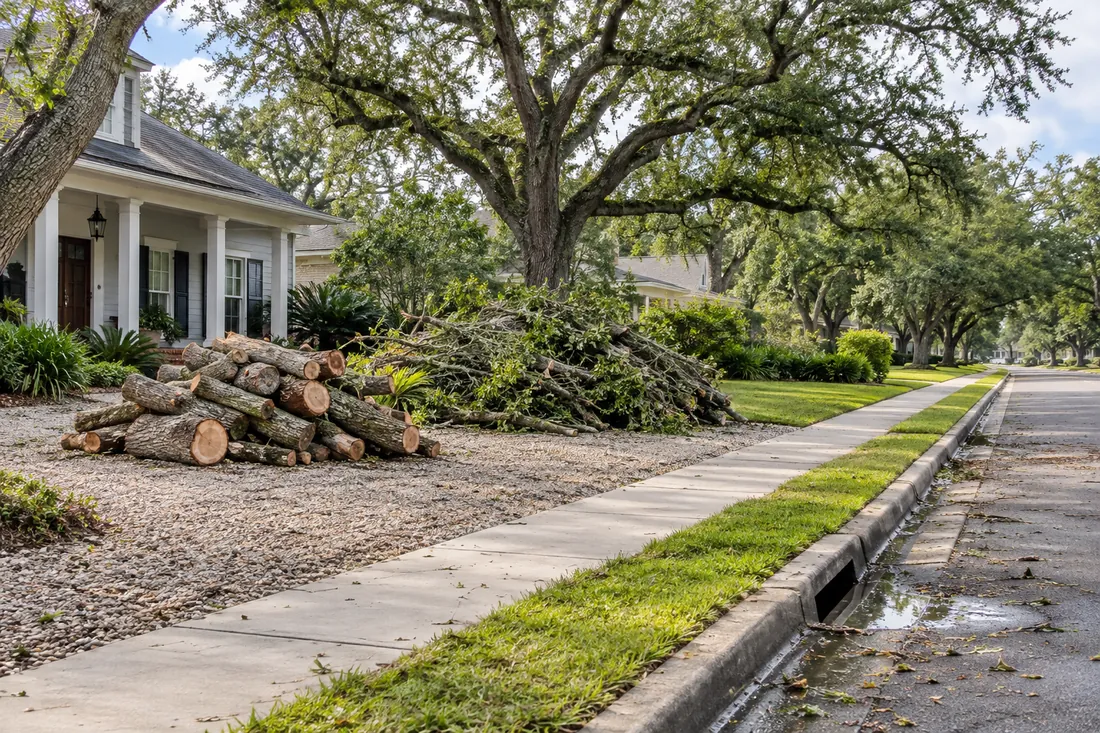
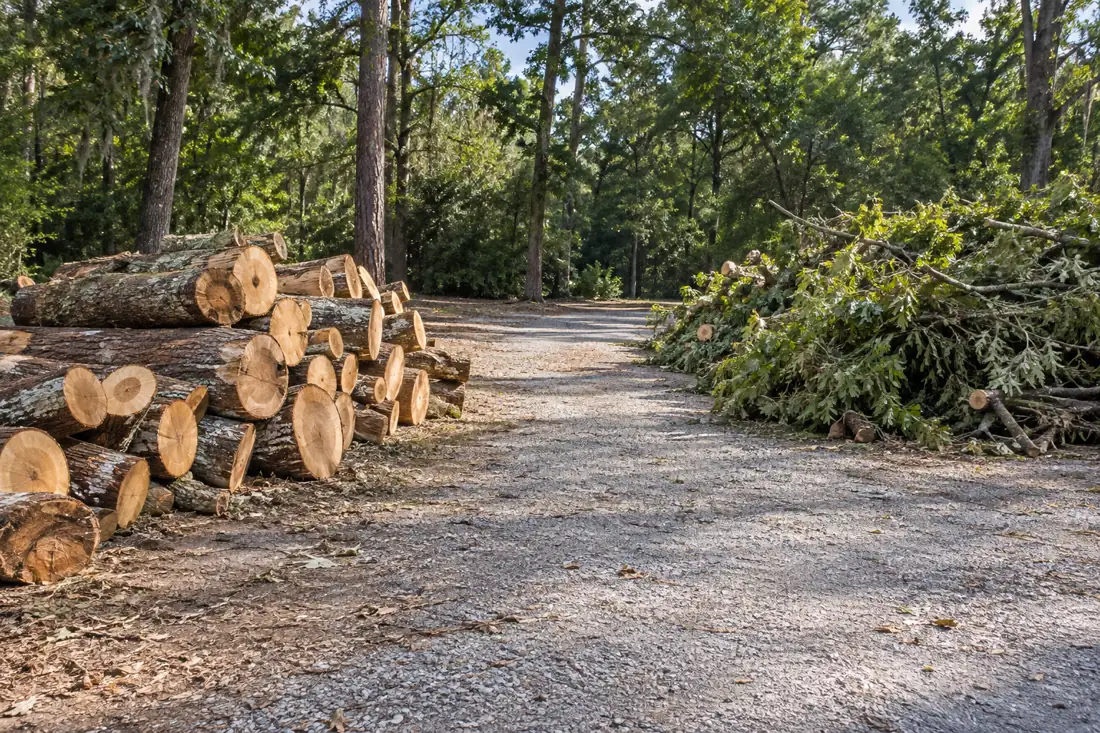
Wood chips can be useful on a property, but the amount, location and intended use should be discussed. A pile left in an access route may create another job for the owner. Ask what the material includes and who will spread or move it. Retaining chips should be an agreed choice in the estimate.
Site planning detail: Wood chips can serve as mulch in an appropriate planting bed, but the volume left by a large tree project can exceed what the property can use. Choose a staging area away from sidewalks, drains, driveways and the trunk flare before asking a crew to leave chips. A deep mound can smother turf, retain moisture and be difficult to move. Ask what wood species and condition will contribute to the chips, including whether visibly diseased material needs separate handling.
Agree whether spreading, moving piles or disposing of excess is part of the quoted work. Keep a clear distinction between chips from branches and larger logs that may still require hauling. The objective is a useful material plan, not an accidental disposal problem on the property.
Ask how much material may be produced, what it consists of and where it would safely go. Fresh branch chips may contain leaves, bark and uneven fragments; they are not automatically the same as screened commercial mulch or stump-grinding residue. Show the crew whether you want a designated pile, distribution in a landscape bed or complete removal.
Mark irrigation heads, valve boxes, drainage inlets and areas used by children or pets. A driveway pile that obstructs parking or a swale is not a finished landscaping service merely because the material could be useful elsewhere.
If chips will stay, confirm whose labor includes moving or spreading them and whether the property has a suitable receiving area. Avoid piling against trunks, siding or fences and keep the visible root flare clear. Discuss material from diseased, treated or mixed sources before placing it in a garden.
If the estimate refers to disposal, ask whether keeping the chips changes that line item rather than assuming a discount. Document the final placement and cleanup requirements so neither the property owner nor the crew has to guess on workday.
Start with the source and composition of the chips
Wood chips left after tree work may contain shredded branches, bark, leaves, fine material, and pieces of different sizes. They are not identical to commercially screened mulch. Ask which trees and materials produced the load, whether there was visible disease or contamination, and whether the crew can keep the chips separate from soil, trash, stump grindings, or other debris. This prevents the homeowner from treating a mixed waste pile as clean landscape material.
If multiple properties or species are involved in an operation, ask whether the chips are from the tree work at your location or a combined load. That distinction matters when you want predictable material for a garden. Do not claim the chips are organic-certified, pest-free, or chemically untreated without documentation supporting that description. For a simple ornamental bed, mixed fresh arborist chips can still be useful when installed thoughtfully.

Choose the destination before the chipper begins
A chip truck or collection area has specific space requirements, and a full load may be far larger than a homeowner imagines. Measure the staging space and identify a route that avoids narrow gates, soft turf, drainage swales, utility covers, and parked cars. Communicate whether you want the entire amount, a smaller portion, or no chips. The best time to decide is before production, not after a mountain of material has been unloaded.
A temporary pile should be away from buildings, fences, play equipment, and stormwater paths. Make sure it does not block a sidewalk or require repeated wheelbarrow trips across a neighbor's property. Ask the crew where it can safely place the material and whether spreading is a separate service. Wood chips left in a consolidated pile are not the same as a finished mulch installation with evenly covered beds and cleaned hardscape.
Decide where wood chips belong. Fresh arborist chips can be useful surface mulch, but not engineered fill or planting soil. Confirm their cleanliness, destination and appropriate depth. Keep piles clear of trunk flares, drainage inlets and access routes. A large temporary pile may block parking or create an unwanted disposal job after the crew leaves.
Decide what the chips are meant to do
Fresh grinding residue and chipped branches are not interchangeable with a finished garden mulch specification. Ask which material the crew is producing and whether it includes soil, bark, larger chunks or pieces from diseased or treated wood. Wood chips can be useful on appropriate paths or beds, but the intended use should be selected before the contractor decides where to blow or pile them.
If you plan to replant immediately, discuss whether the material needs to be removed from the planting area or blended with other site work. A large mound of chips is not a finished lawn surface, and the quote should say whether redistribution is included.
Set clear placement limits around living plants
Loose chips should not be piled against trunks, root flares, house siding, fences or drainage openings. Keep existing irrigation heads, valve boxes and utilities visible, and avoid creating a berm that sends stormwater toward a structure or a neighbor's yard. For landscape beds, agree on a practical layer depth suited to the plants and site rather than assuming that more material is always beneficial.
At a tree base, the root flare should remain visible. Where water already stands after rain, ask whether using chips could obscure a drainage problem. The property owner may also want to protect a narrow lawn strip or walking path from heavy wheelbarrow traffic during distribution.
Use an appropriate depth around established trees
Mulch can help conserve soil moisture and moderate surface temperatures when applied correctly, but deep piles around a trunk can create problems. Keep the root flare visible and avoid piling chips against the bark. Rather than making a mulch volcano, spread a moderate layer across an appropriate portion of the root zone, tapering it away from the trunk. Existing grade, drainage, and species sensitivity should guide the final arrangement.
When a mature tree stands in a compacted lawn, an expanded mulched area can reduce mower and string-trimmer damage. Protect exposed roots without burying them under an excessive depth. Do not cultivate aggressively into roots just to make a tidy circle. If the tree already has decay, unusual fungal growth, or drainage issues, obtain qualified advice before changing the material or depth around its base.

Decide whether saved wood chips suit the intended landscape use
Ask what kind of chips will be produced and where they will come from. Fresh grinding material can include wood, bark, soil, root pieces and occasional debris, whereas chipped branches may produce a different mixture. A homeowner planning to mulch ornamental beds should not assume every pile from a stump grinder is a clean landscape product. Photograph the desired storage area and identify whether the chips are meant for paths, established shrub borders or temporary onsite retention. Keep treated wood, litter and unknown contaminants out of any proposed garden reuse.
Specify the pile location before work, taking drainage and access into account. A large pile placed against a fence, tree trunk or building can trap moisture and obstruct maintenance. Chips on a tarp or designated hard surface can be easier to control than a mound spread over fresh sod.
If the landscape will be replanted, distinguish usable surface mulch from buried stump grindings that may settle as they decompose. Avoid placing a thick layer directly against trunks or root flares, and tailor mulch depth to the plants and site conditions.
The quote should say whether chips remain, are hauled away or are separated into different piles. If chips must be moved to a distant garden, include gate width, slope, wheelbarrow route and any steps in the request. The contractor may be hired to grind or chip wood without also being retained to install mulch throughout the property.
If invasive plants, disease concerns or uncertain wood material are involved, ask an appropriate local horticultural professional before spreading material widely. Saving chips is a practical option, not automatically the right use for every property.
At completion, compare the retained pile with the agreed location and inspect for rocks, hardware, sharp litter and wood pieces too large for the intended use. Confirm whether excess material will be removed under the current agreement or a later service. Do not mix a large pile into planting soil without considering settling, drainage and nutrient balance. The final handoff should clearly distinguish a delivered quantity of raw chips from a completed landscape-mulching service so the property owner can plan the next step realistically.

Think differently about vegetable beds and ornamental beds
Fresh arborist chips are commonly used as a surface layer around ornamental plantings, paths, and tree beds. Do not automatically dig them into a vegetable bed's rooting soil, because decomposition of woody material can temporarily affect nutrient availability near the mixing zone. Keep surface mulch and soil amendment decisions separate. Garden crops with delicate stems may need more space from damp mulch than established shrubs or trees.
For vegetables and edible landscapes, consider what material may have been mixed into the chips and whether pests or unwanted plant fragments are present. Avoid chips from known treated wood or contaminated sites. A surface layer still needs inspection after heavy rain, especially around seedlings and irrigation emitters. If you are uncertain about a species or source, reserve the chips for a nonfood landscape use or decline the material.
Treat wood chips as a material, not finished landscaping
Wood chips produced during grinding or chipping can be useful in some planting areas, but a freshly deposited mound is not the same as prepared topsoil or a stable lawn base. Chips vary in size, may contain soil and can settle over time. State where material may be placed and keep it away from trunk flares, drains and surfaces that should remain clear. Do not presume that a crew will spread, screen or transport chips at no additional cost.
If the goal is a future planting bed, discuss surface grade and the condition of the underlying soil. If the goal is new sod or paving, loose chips generally should not be treated as compacted structural fill. Confirm whether excess chips leave the property, who handles backfill and what finish is expected on the workday. Photographs of the intended placement area help prevent chips from being left where they block access or runoff.
Allow for settling and decomposition
A fresh load can look fluffy and deep on day one, then settle as fine pieces move into gaps and organic material breaks down. Plan a realistic coverage area instead of expecting the initial height of a loose pile to remain constant. Decomposition is part of the reason chips can benefit soil over time, but it also means the surface may need occasional replenishment. Do not interpret a darkening color alone as proof the chips have spoiled.
Different chip sizes break down at different rates. Finer material may mat, while coarse pieces can remain visible longer and shift on a slope. If a path requires stable footing, evaluate whether loose chips are suitable for its users instead of using them on a steep or heavily traveled access route. Near drains, keep material set back enough that runoff does not transport it into an inlet.

Manage moisture without suffocating root areas
Chips help reduce direct evaporation, but they do not replace a watering plan. Check the underlying soil rather than deciding irrigation needs from the visible surface alone. Some landscapes retain moisture under mulch; others remain dry because rainfall is intercepted by dense canopy or an established root mass. If an irrigation head is buried or blocked by the new layer, restore proper exposure and test the system before assuming coverage remains unchanged.
In low-lying Louisiana sites, saturated soil and poor drainage can be more consequential than summer drying. Avoid trapping water against trunks, siding, or timber edging. Mulch that develops persistent foul odor or dense waterlogged mats may require turning, thinning, or relocation depending on conditions. The objective is a breathable protective surface, not a sealed cap that hides soggy or compacted ground.
Plan chip volume, drainage, and final placement
A compact pile of wood chips on the truck can become a surprisingly large mound when unloaded. If you want chips left on site, identify a location that is accessible without crossing soft ground, blocks no drainage inlets, and stays away from foundations, trunks, and walkways.
Discuss whether chips will be loose, spread, or transported farther into the yard; those are different handling tasks. Fresh chips should not be heaped against living tree bark or used as a deep blanket over exposed root flares. Ask what happens to mixed leaves, twigs, or other debris rather than assuming the chips will be clean mulch. Send a wide photo of the proposed drop zone with a visible approach route.
Assess heat, fermentation, and temporary piles
Large fresh piles can warm internally as biological activity increases. Do not leave an oversized, tightly packed pile beside structures or assume that all chips should be stored indefinitely before spreading. Check local fire and materials-handling guidance for unusually large stockpiles. For residential use, smaller quantities distributed promptly over suitable landscape areas are usually easier to inspect and manage than a tall heap left unattended.
If you notice strong sour odor, unusually high heat, or visible steam from a large pile, avoid spreading stressed material directly against sensitive plants. Seek site-specific advice about safe handling and allow material to cool and aerate as appropriate. Workers should account for equipment access and safe footing around the pile. Do not have children play on loose stockpiles where the surface may shift and conceal sharp branch pieces.

Check for invasives and unwanted seeds
Fresh chips may contain green leaves, viable seeds, twig fragments, and material from vines or invasive plants removed during the project. Many seeds will not survive processing, but the source is not guaranteed sterile. Ask what species were chipped and whether any known invasive plant material was mixed in. If the property is near conservation land or sensitive habitat, follow local management recommendations before spreading uncertain material widely.
Look through the pile for plastic, metal, wire, and nonvegetative debris before reuse, particularly after storm cleanup. Ask that contaminated material be removed rather than disguised beneath landscape mulch. If the tree had an active pest or disease requiring special disposal, the crew should follow applicable restrictions instead of redistributing chips around the neighborhood. Honest source identification is more useful than an unsupported promise of total pest control.
Define what the contractor will and will not do
Keeping chips should appear clearly in the written scope: approximate portion retained, staging location, whether spreading is included, and whether excess material is hauled. If you request chips from one specific tree, identify it in advance. Clarify whether stump grindings are part of the same pile; they contain additional soil and fine wood and can behave differently from chips made in a chipper. A clear handoff avoids a surprise mound where a driveway was expected to be clear.
Worksite cleanup still matters when chips are deliberately kept. The crew may need to sweep hardscape, keep storm drains open, and move remaining piles away from walking routes. Ask where a temporary pile may safely remain if rain delays your spreading plans. A short site sketch or photo of the receiving area reduces misunderstandings and helps the contractor determine whether equipment can place the material where you expect.

Use the material as part of a longer care plan
After spreading, take a fresh look at trunk clearances, irrigation performance, accessible paths, and drainage. Check the mulch depth periodically, particularly after heavy rain or landscape maintenance. If you are also planning new plants, consider root competition, shade, and soil conditions rather than assuming a mulch layer alone will correct poor growing conditions. The best reuse plan supports the trees and beds already present.
When contacting Tree Huggers about keeping wood chips, explain which tree work you are planning, the intended receiving space, whether you prefer a pile or a spread layer, and any source restrictions. Include photos of access and nearby utilities, but never climb into an unstable work zone to take them. A site-specific conversation will be more useful than a universal quantity or price estimate, and any retained material should be documented at completion.
Understand what changes as the material ages
Fresh wood chips settle, dry and decompose over time. They can temporarily change the appearance of a bed and may require topping up or rearrangement, especially after heavy rain. Very fine grinding residue behaves differently from coarse chips and may be better removed when a smooth finish is the objective.
Avoid assuming that an entire bag of fertilizer should be added simply because wood is decomposing; soil amendments depend on the planting plan and actual conditions. If the chips include seed-bearing or pest-affected material, seek site-specific guidance before spreading them widely. Keep pets and children away from newly placed piles until the area is checked and usable.
Write the cleanup choice into the estimate
Tell the contractor whether chips should remain in a designated pile, be spread only in specified beds or be hauled away. Show where a truck or chipper can stop without blocking access and identify any surfaces that should be swept afterward. For stump grinding, distinguish surface chips from buried roots and the actual depth of grinding; retaining chips does not mean the hole is soil-filled or immediately ready for sod.
If you expect topsoil, grading or planting, list that as separate work to verify rather than assuming it follows from the word cleanup. The closeout should make it obvious what stays, what leaves and what future landscaping remains the owner's responsibility.
Questions about this project
Does cleanup include every root and wood chip?
That depends on the written scope. Tree removal, stump grinding, chip hauling and root excavation are different tasks. Ask what material is removed, what remains and whether soil or landscape restoration is separately included.
What should a final walk-through check?
Compare the identified trees and tasks with the agreement. Check agreed debris handling, stump treatment, access openings and any listed restoration. Record unresolved items clearly instead of relying on a general impression that the property looks finished.
Should mulch be used to hide a damaged trunk base?
No. Explain the injury or concern and ask for an assessment. Added material can obscure the area rather than resolve the problem. Care recommendations should address the actual condition and site.
Why does the tree-care discussion include mowing?
Repeated contact from mowers or trimmers can injure the base. Share how the area is maintained so the professional can consider protection and site care along with any pruning or treatment needs.
Does vegetative-debris hauling include building waste?
Do not assume it does. Describe mixed roofing, fencing, soil or other material before pricing. Ask what is accepted in the scope and what needs a separate provider or handling arrangement.
Why does access affect a debris-removal price?
The route, loading position, carrying distance and obstacles affect how material can be handled. Send photos of both the pile and the access, and identify any remaining tree or utility hazards.
What should I compare besides the price?
Compare tree identification, work objectives, access assumptions, hauling, stump treatment, site finish and exclusions. Ask whether permits or other coordination are part of the scope and who can approve changes if conditions differ.
Does an online request book the crew?
No. A request starts the estimate conversation. The company still needs to discuss scope, availability and any site assessment. For a dangerous or urgent condition, call 504-458-8336 rather than relying on a form response.
What access information helps an estimator?
Send the narrowest opening, overhead obstacles, turns and the distance between the tree and the loading area. Include photos of the entire route and identify steps, soft ground or features that must remain protected.
Should I remove a fence before the visit?
First ask the contractor to assess access and agree on any temporary opening. Identify who owns the fence, who can authorize the change and who will reinstall it. Do not assume the opening is necessary or included.
What should I tell Tree Huggers about keeping wood chips after tree work?
Explain the property address, the work you want and the specific concerns: chip location, material volume, spreading responsibility. Send safe photos of the tree, surroundings and access route. The contractor can then discuss the assessment and scope needed for this situation.
How do I request an estimate for this work?
Call 504-458-8336, text photos or use the estimate form on this page. Include the address, desired outcome and any timing constraints. The company will need to review scope and availability; an online request does not confirm a price, appointment or emergency dispatch.
Get a scope for your property
Wood chips can be helpful for some landscape uses, but the volume left by a tree job can surprise a homeowner. Explain whether you want chips for paths, existing mulched beds, a temporary stockpile or off-site hauling. Photograph the proposed drop location and the route from chipping equipment to that spot, including low branches, soft ground, gates and sprinkler heads.
If the chips come from a stump-grinding operation, distinguish those grindings from cleaner branches chipped above ground; soil and root material may be mixed into the former. Never pile fresh material against tree trunks or building siding.
Request a scope that describes which chips remain, where the pile will be placed and whether spreading, raking, hauling surplus material and final site cleanup are included. Clarify whether the crew will protect planting beds and keep drainage inlets, sidewalks, public rights-of-way and neighbors' driveways clear. Large chips or fresh material are not equivalent to finished compost or ready-made planting soil. Plan the end use before work begins so the amount retained and the area cleared are measurable rather than assumed.