Tree sections cannot be planned safely from the homeowner’s weight estimate. Species, dimensions, condition and retained moisture are among the considerations for the qualified people planning the operation. Provide site information and let the contractor assess the work. A quote should not turn an uncertain photo estimate into a confirmed equipment plan.
Site planning detail: A safe lift plan cannot be obtained by guessing weight from a tree’s height or trunk diameter. Irregular crown shape, decay, hidden damage, moisture and the proposed sectioning sequence all affect the work. Customers can help by photographing the whole tree, nearby structures, the available landing area and visible cracks without approaching unstable wood. The qualified contractor must evaluate the actual lift radius, configuration and predicted loads.
A previously broken limb or leaning tree may have support or tension that ordinary pictures do not reveal. Ask which assumptions will be checked on site and how the scope changes if equipment choice must change. The estimate should explain logistical constraints without supplying made-up load numbers or unsupported promises.
A photograph of the tree against a house does not provide a reliable lifting load. The mass of a particular pick depends on species, wood condition, moisture, section length, crown shape and the amount of attached foliage. Reach, sling geometry, working radius and crane configuration matter alongside the mass itself.
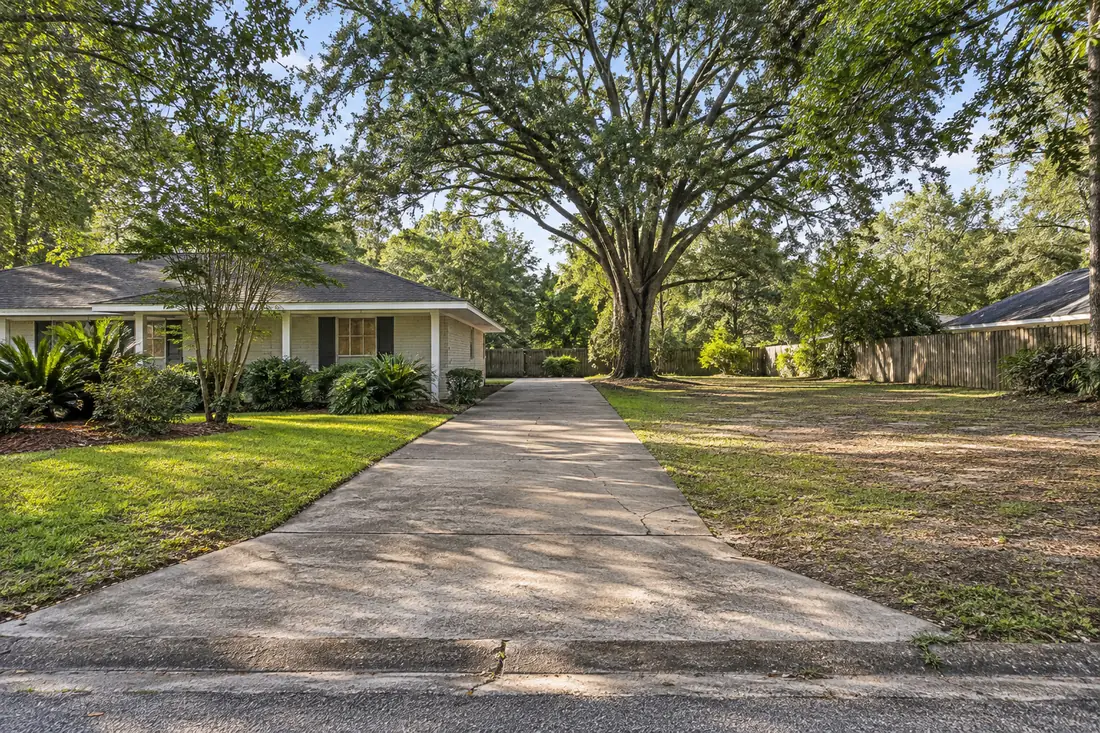
Provide the contractor with clear photos of the tree, nearby buildings, fences, overhead wires, drive access and possible setup positions, but do not turn those photos into an invented tonnage. Mark where the wood could safely be lowered or loaded and whether a truck can reach that area.
Ask the estimator to explain how the tree will be divided into manageable sections and who is responsible for the lift plan, attachment method and equipment rating checks. A credible scope includes ground support, exclusion areas, rigging personnel, a communication protocol, changing weather and an alternate procedure if rotten wood or hidden decay changes the first cut.
Confirm how limits at the furthest working radius affect the plan rather than asking only for the crane's advertised maximum capacity. For a comparison between estimates, request the number of mobilizations, crane and crew allowances, traffic coordination, debris removal and ground restoration as separate line items where practical.
Why tree height cannot predict the lifting load
A tall but narrow tree can present a different handling problem from a shorter tree with massive lateral limbs. Species, trunk diameter, growth pattern, moisture content, attached foliage, decay, and the specific section being removed all influence its mass. A homeowner who reports 'about fifty feet tall' provides useful context but not a safe weight estimate. A qualified crew must inspect the tree and develop a method for the sections it intends to handle.
Tree height also tells little about where a section's weight is concentrated. A heavily branched piece may rotate after separation, and a hollow or storm-damaged trunk may behave differently from an intact one. Request a clear description of why a lifting arrangement is appropriate rather than asking the contractor to promise that a machine can pick up the entire top. A controlled plan uses limits and contingencies instead of confident guesses.

Think in sections, not one whole-tree number
A removal crew may choose multiple cuts and lifts so each piece can be managed in the available space. Segment length, diameter, species, retained branches, and the attachment point change the problem with every lift. A branch with leaves and off-center weight is not equivalent to a straight trunk section of similar length. These judgments require job-specific professional planning, not a homeowner calculator copied from an unrelated tree.
Ask how the scope distinguishes limbs, upper trunk, lower trunk, and debris left on the ground. If nearby property makes sections difficult to maneuver, the crew may need a slower sequence or different access. The number of sections and extent of hauling can affect price even when two trees appear similar from the road. Better estimates discuss the work sequence and constraints without pretending that an exact lift weight is known from photographs.
Avoid photo-based estimates of section weight
A phone photograph cannot establish a safe lifting weight for a tree section. Wood condition, moisture, hollow areas, dimensions and shape all affect actual behavior. Supply views of the whole tree and nearby property, but leave lift engineering, equipment selection and cut sequencing to the appropriately qualified team.
An irregular crown may produce very different handling challenges on opposite sides of the trunk. Ask how the contractor intends to divide the work into manageable phases without expecting public operational instructions or promises that a single large piece can be lifted. Where the condition is uncertain, the scope should allow reassessment.

Ground support and placement matter alongside cutting
Truck positioning, pavement, overhead utilities and available laydown area may place more restrictions on the job than the section itself. Identify gates, walls, drains, street edges and paths that must stay open. Where a practical placement area is missing, smaller sections or a different work method may be necessary.
Ask what assumptions are built into the estimate and who approves a changed scope if defects or access limitations are discovered. Customers can provide safe ground-level photographs and site history without attempting load calculations or influencing the crew's operational decisions.
Understand reach and configuration limits
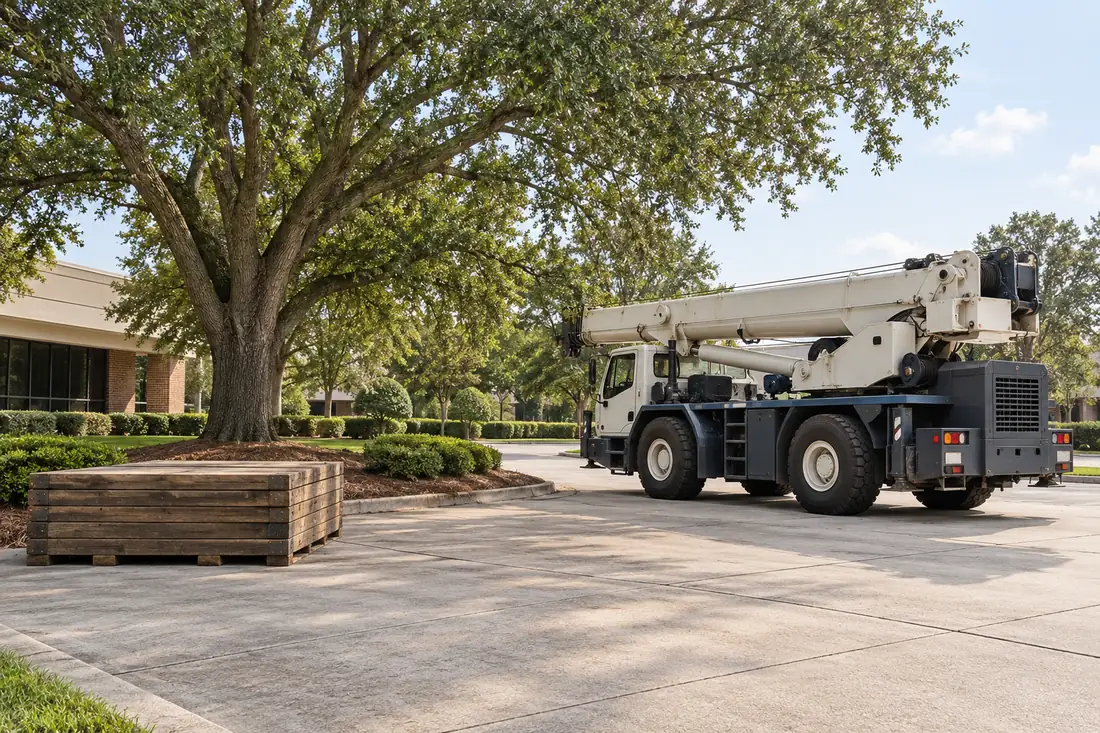
A crane or aerial machine's advertised maximum capacity applies only under particular conditions and configurations; what it can safely handle changes with reach, setup, and other factors. The distance from the proposed setup point to the tree can matter as much as the size of a piece. The qualified operator and tree crew must use appropriate equipment information and on-site assessment when choosing an arrangement.
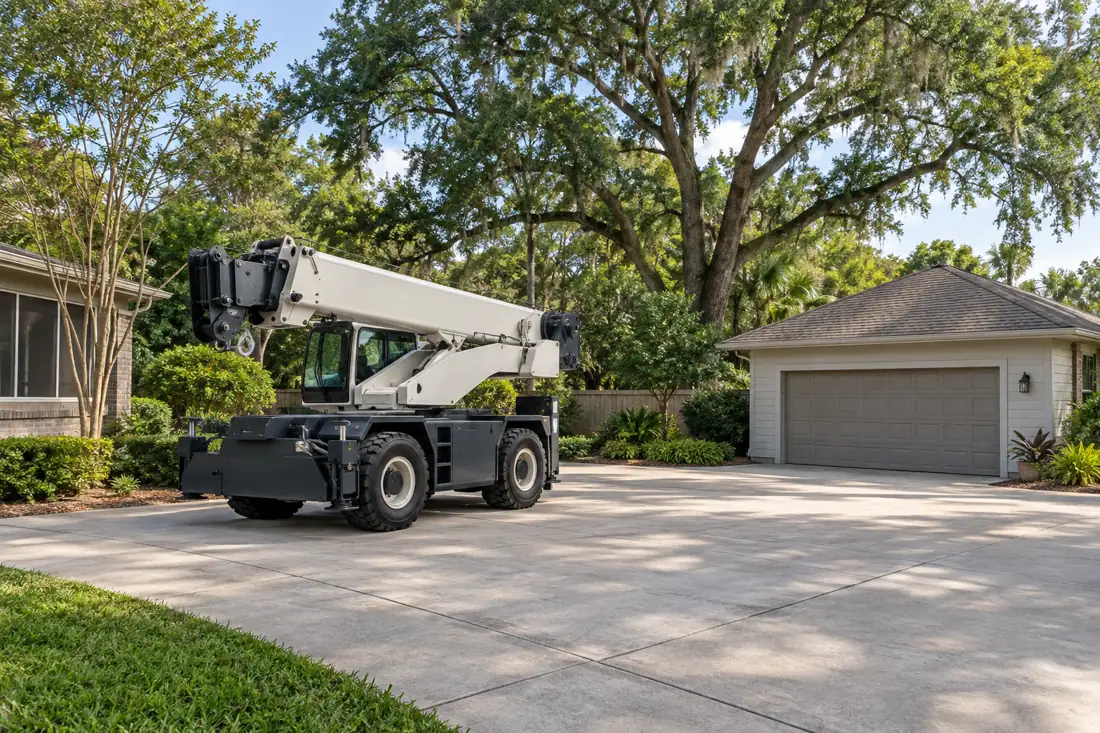
An estimate should identify where the machine is expected to set up and which parts of the tree it must reach, not just cite a large capacity number. A driveway position, street placement, or neighboring lot may create different permit, ground, traffic, and access questions. If the setup point moves after site inspection, the feasibility of the original plan should be reconsidered before work proceeds. Never pressure a crew to lift beyond its planned limits.

Consider geometry and movement through the air
A load that can be picked vertically may still have no clear path to a safe landing zone. A limb can turn around its center of mass, snag another branch, swing toward a roof, or approach a wire as it moves. Ask how the intended sequence creates enough clearance around structures, and whether smaller sections might be more practical. The professional crew determines attachment points, cutting techniques, and control arrangements.

Customers can contribute an accurate map of nearby roofs, solar arrays, eaves, balconies, fences, patios, and service lines. Mention trees and shrubs that need to stay, even if they are not directly below the target. The route through which a cut piece moves should be considered separately from where equipment sits. Do not assume a clear aerial photograph proves adequate three-dimensional clearance.
Do not estimate crane loads from tree height or guesswork
Wood section weight varies with species, moisture, length, diameter, hidden decay and how it is supported. A lifting machine's capacity also changes with configuration and actual working radius, making a catalog capacity unsuitable as a homeowner's lift calculation. A visible trunk size can inform a discussion, but no one should choose a lifting attachment or cutting sequence from a single photo. Provide full-tree photographs and show the support area, nearby structures and where the material can land.
The qualified operator and crew must establish the lifting sequence and adjust it if they find weaker wood or constrained geometry. Ask what would cause the plan to change and how a section would be handled if it cannot be safely lifted as expected. Keep crane support, overhead utilities, traffic and debris handling in the same conversation: each affects the feasible method.
A quote should state what is included after sections reach the ground, because a successful lift does not remove the need for safe wood processing and cleanup.
Evaluate tree condition and unexpected defects
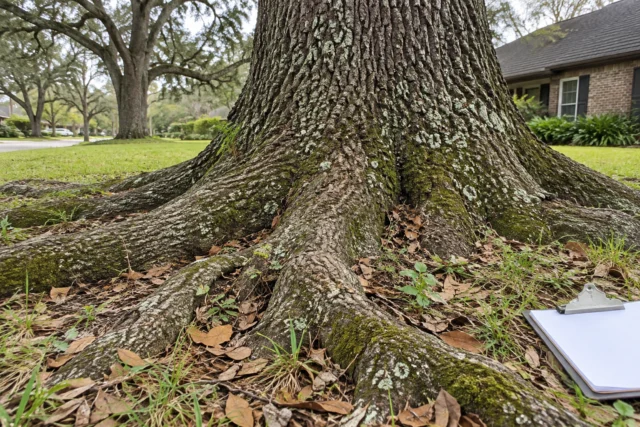
Rotten wood, cavities, large cracks, previous pruning wounds, and storm damage can affect whether a section holds together as expected. Green leaves do not prove that every structural part is sound. Share observations such as new splitting, a recent lightning strike, fungal growth, or a change in lean without entering a hazard area. A qualified professional may need to adjust the sequence after evaluating the actual tree.
An uncertain internal condition can make an aggressive large-section plan inappropriate. The proposal should allow professional judgment and an authorization process for material changes if defects alter the method. Ask what will happen if the crew discovers a deteriorated crotch or unstable top during work. The owner should not drill, strike, climb, or tug at suspected decay to gather evidence; safe observations and earlier photographs are enough for the inquiry.

Ground conditions can limit a lifting plan
Even when the expected sections are manageable, the equipment must be supported by a suitable setup area. Sloped surfaces, old driveways, soft soil, filled ground, drainage structures, underground utilities, and retaining edges can restrict where a machine may operate. In the New Orleans region, recent rain can change conditions rapidly. Provide known site history, buried infrastructure information, and photographs of access routes before the contractor proposes a final placement.
Ground protection or support pads may be part of a professionally designed plan, but they are not proof that any surface is capable of carrying the proposed forces. Ask whether the project requires further ground assessment or special coordination. Where equipment would occupy a street, discuss traffic and permissions early. An apparently convenient setup point is not suitable until the crew confirms its practical and safety constraints.
Account for weather and changing conditions
Wind can influence the movement of suspended material and the stability of work at height, while thunderstorms and saturated ground can alter the operating window. A forecast alone does not guarantee safe conditions throughout the day. Ask how the crew communicates a postponement or revised sequence if weather or ground support differs from the estimate. The desire to finish before a holiday or storm should never override professional stop-work decisions.
Provide the estimator with access limitations that make rescheduling harder, such as a street closure request or a delivery that uses the driveway. Agree on how a change in date will be communicated and who can approve additional work if the method changes. If limbs are already storm damaged, keep people away and report the condition from a safe position. Do not attempt to reduce a tree's weight with unqualified DIY cutting.

Compare cranes, lifts and conventional methods fairly
A crane may enable sections to be transferred over a building, while an aerial lift provides worker access, and conventional sectional removal may suit a different tree and site. These are not interchangeable machines; some projects combine approaches. The correct choice depends on tree structure, available setup, surrounding obstacles, qualified personnel, and the material-handling sequence. Ask what benefit the recommended method provides for this specific property.
Compare bids by the work they actually include, such as pruning or removal limits, staging, hauling, stump treatment, utility coordination, and cleanup. If one contractor proposes a machine-dependent approach while another proposes hand rigging, ask both to describe the constraints and expected impacts. A lower price without a clear scope may simply transfer uncertainty to the property owner. The decision should not depend on the largest machine shown in a marketing photo.
Ask for realistic allowances and change control
A professional estimate can explain which conditions were inspected, what assumptions remain, and what constitutes a scope change without inventing an exact weight for every branch. Request a written description of intended work zones and material handling, and ask whether additional equipment, access permission, or utility involvement would be a separately approved item. Clear procedures are more reassuring than a fixed guarantee unsupported by on-site information.
If the crew discovers a hidden defect or a setup limitation, pause major changes for a documented explanation and approval by the appropriate property contact. Keep photographs, the agreed scope, and any revised work order together. A homeowner can ask good questions without directing lift sizes, rigging methods, or equipment operations. The aim is responsible planning and transparent pricing grounded in conditions actually observed.

Provide useful information before the estimate visit
Send wide photographs showing the complete tree, nearby structures, likely equipment routes, and available street or driveway positions. Include safe close-ups of known cavities, splits, or damage, but do not stand beneath hanging limbs or near wires to obtain them. State whether the property has irrigation, buried utilities, weak paving, gate restrictions, or access shared with another owner. These details make a site visit more productive.
During the discussion, ask what the qualified crew must verify before confirming its method and what information the owner can provide. Record the agreed tree or limbs, cleanup boundaries, retained wood, restoration responsibilities, and timing dependencies. After work, compare the completed job with those deliverables instead of judging it by how large the suspended pieces appeared. Sound tree removal is measured by the outcome and documented scope, not a dramatic lift.
Questions about this project
Does a machine's maximum reach prove it can do my job?
No. Loaded reach, configuration, section handling, obstacles and setup conditions all affect suitability. A contractor needs to evaluate the particular tree and property before confirming an equipment plan.
Can specialized equipment replace a site assessment?
It does not remove the need to assess tree condition, targets, access and support conditions. Ask how the contractor will confirm that the proposed machine and method fit the actual scope.
Should I tell the contractor where to attach ropes?
No. Those decisions belong with qualified people assessing and performing the operation. Identify the targets, restrictions and desired outcome so they can develop an appropriate method for the tree and site.
What should I ask about controlled handling?
Ask how the work area will be managed, what property needs protection, where material will be handled and how it leaves the site. Confirm those practical expectations along with access and cleanup.
Does healthy-looking foliage mean a tree is structurally safe?
No. Leaves do not establish the condition of roots, trunk or branch connections. Explain visible defects and recent changes, and ask for an assessment appropriate to the tree and nearby targets.
Should I test a cracked branch or trunk?
Do not pull, shake, climb or cut damaged material to test it. Keep clear of the affected area and describe the condition from a safe location. Qualified assessment and an appropriate work plan are needed.
How should extra work be approved?
Use the agreed approval process and identify the change, reason, scope, price or schedule effect as applicable. Confirm who has authority before treating an additional tree or task as part of the original job.
What completion records are useful?
Keep the agreed scope, tree or area identification, authorized changes, invoice and labeled photos where appropriate. Include unresolved items and a contact. Contract-specific records should follow the buyer's stated requirements.
What should I compare besides the price?
Compare tree identification, work objectives, access assumptions, hauling, stump treatment, site finish and exclusions. Ask whether permits or other coordination are part of the scope and who can approve changes if conditions differ.
Does an online request book the crew?
No. A request starts the estimate conversation. The company still needs to discuss scope, availability and any site assessment. For a dangerous or urgent condition, call 504-458-8336 rather than relying on a form response.
What should I tell Tree Huggers about planning a tree removal lift without guessing tree weight?
Explain the property address, the work you want and the specific concerns: qualified planning, condition, site information. Send safe photos of the tree, surroundings and access route. The contractor can then discuss the assessment and scope needed for this situation.
How do I request an estimate for this work?
Call 504-458-8336, text photos or use the estimate form on this page. Include the address, desired outcome and any timing constraints. The company will need to review scope and availability; an online request does not confirm a price, appointment or emergency dispatch.
Get a scope for your property
A lift plan should come from measured conditions and professional judgment, not a homeowner estimate of tree weight. Provide wide, safe photographs showing the trunk, limb distribution, reach from possible equipment positions, structures, slopes and overhead lines. Ask what site survey information the crew needs to select rigging, crane capacity or an alternative controlled dismantling method.
Clarify the proposed landing zone, exclusion area, driveway or ground protection, and the debris route. A written scope should separately identify inspection or engineered planning needs, equipment access limitations, permit or utility coordination, final hauling and any uncertain conditions that could change the method.