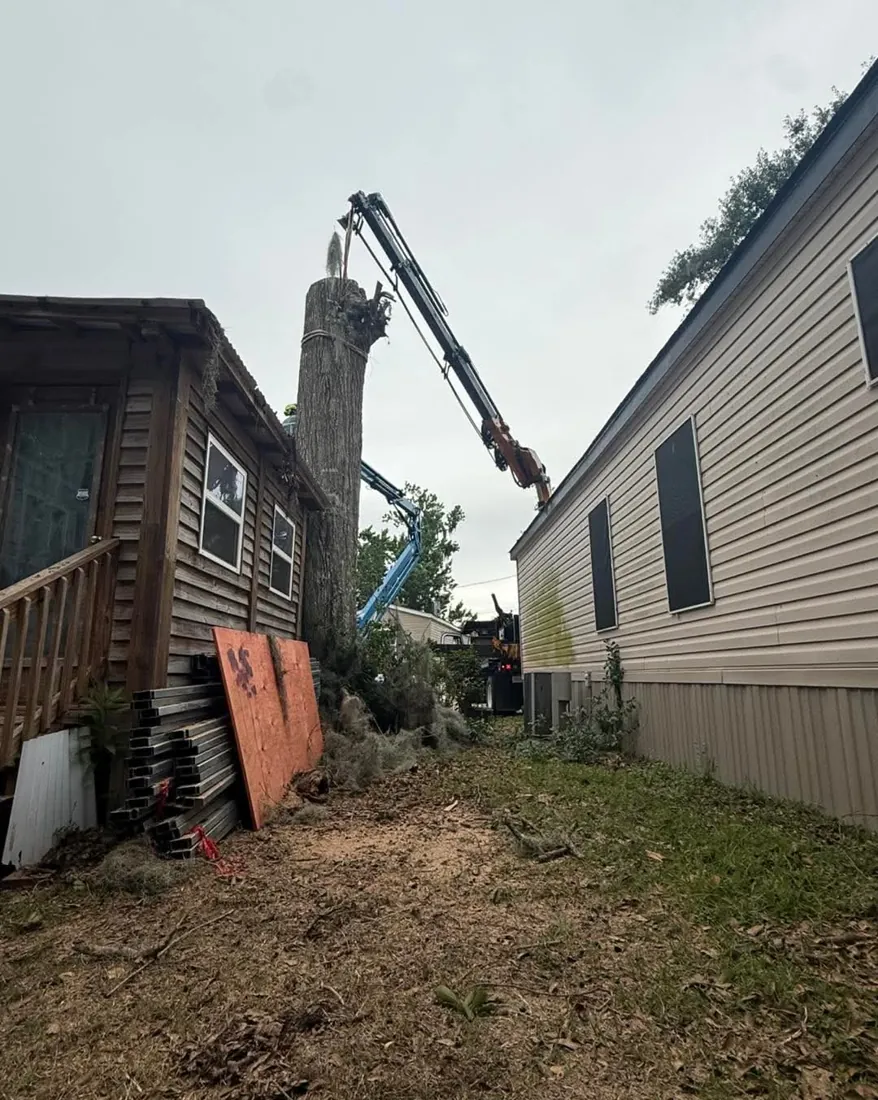
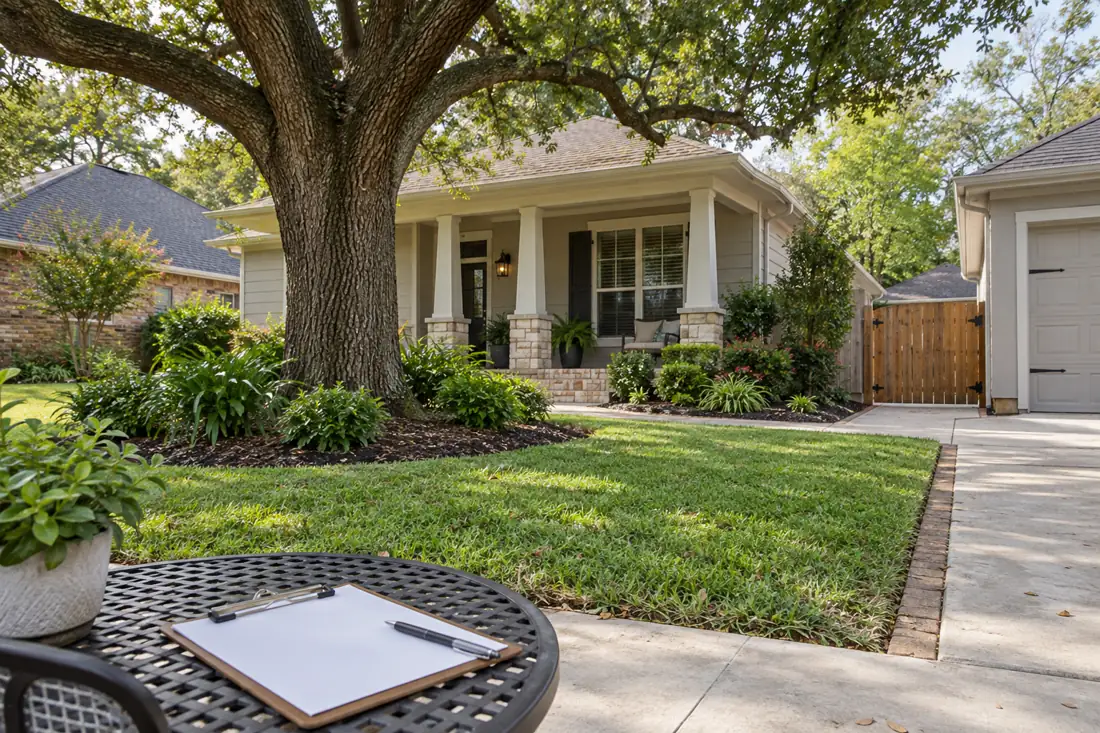
Ask about the actual job: the trees included, condition concerns, proposed approach, property protection, current documentation and cleanup. Confirm who will perform the work and who can approve changes. A usable written scope makes those answers easier to compare. Marketing claims should be supported by current information relevant to the project.
Site planning detail: Before hiring a tree contractor, compare the actual scope and risk controls, not just a headline price. Ask who will supervise the crew, what qualifications are relevant to the proposed work and what proof of current insurance or licensing is appropriate for the job. Review how personnel will manage fall zones, equipment access, electrical exposure, roofs, fences and neighboring property. For pruning, require a description of the intended outcome rather than an undefined instruction to ‘trim everything back.’ For removal, clarify stump work, material hauling, driveway protection and the planned finish.
Ask what happens if a hidden defect or access problem changes the approach, who can approve added charges, and how the change will be recorded. Keep the accepted proposal and any updated scope together. References and photographs can inform a decision but should not be represented as proof that a particular job will have the same conditions or outcome.
Site-specific planning checkpoint: Compare tree contractors using written scope clarity, relevant qualifications and site-specific planning. Ask what trees or limbs are included, how roots, surfaces and structures will be protected, and whether hauling, stump grinding and final cleanup are separate charges. Verify insurance and any required licenses through documents and relevant authorities, not promotional ratings. For electrical conductors or public-road closures, clarify who coordinates with the utility or permit office. Ask how changes are priced and approved if hidden decay or access constraints alter the job. A contractor should identify limitations in photo-only estimates rather than guarantee an outcome from incomplete information. Keep a simple comparison of inclusions, exclusions and contact expectations before deciding.
Ask each candidate contractor to describe exactly which trees and limbs are included, the objective of pruning or removal, access requirements, protection for structures and what will happen to brush, logs, stumps and chips. Two bids with the same total can describe very different work. Ask which crew or subcontractor will attend and who supervises decisions if unexpected conditions arise.
Request current, relevant insurance and licensing information where required, and verify those documents with the appropriate issuing party rather than relying solely on a logo or marketing claim. Discuss how nearby utilities, road access, weather changes and occupied areas affect the proposed operation. The fact that a company offers tree service does not by itself establish a particular certification.
Compare payment milestones, scope exclusions, change-order approval and cleanup expectations in writing. For a potentially unstable tree, prioritize safety and appropriate assessment over an attractive low quote. Retain copies of the proposal and any amendments so the finished work can be compared against what was agreed.
Start with the outcome, not a sales pitch
Before comparing tree contractors, decide what you want the property to look and function like afterward. A limb blocking a driveway, a canopy touching a roof and a tree with a suspected structural defect are different problems. Explain whether the goal is clearance, health-focused pruning, removal, stump treatment or investigation. Invite the estimator to flag a concern you may not have recognized, but ask them to separate observations from recommendations and from work they actually propose to perform.
A useful initial conversation identifies the exact tree, access route and affected people or property. Photograph the tree from several safe angles and include the driveway, roof, fence or utilities in a wide view. For a group of trees, number them on a simple sketch so every proposed item has an unambiguous location. Neither a photo nor an early conversation establishes that work is safe or that a particular machine can be used.

Test a contractor's proposal against a real operating plan
Ask the bidder to explain the objective first: deadwood removal, property clearance, assessment of a defect, full removal or debris hauling. A polished estimate total is less useful than a written description of which tree, which work and which exclusions the price covers. Compare the same desired outcome across proposals rather than judging different scopes as if they were identical.
Discuss who evaluates structural conditions, who leads the crew, what equipment can fit and where material will be lowered. Verify the appropriate business identity, current insurance details and any qualifications needed for the proposed work using independent sources. No screenshot, marketing badge or online claim should substitute for those checks. If the plan requires neighboring access or utility coordination, identify who arranges and approves it.
Before authorizing, document possible change-order triggers, payment terms, cleanup finish and how problems will be communicated. Ask for a clear boundary between ordinary tree work and any specialized assessment or repair by another trade. After completion, walk the agreed work areas, photograph remaining concerns and retain the scope and receipts for property records.
Evaluate the proposal, crew and scope as separate questions
A contractor comparison is strongest when each bidder responds to the same actual scope. Send the same tree identifiers, access photographs, desired result and material-removal instructions to each company. Then compare written inclusions and exclusions rather than only the bottom-line amount. An estimate for pruning with debris stacked on site is not equivalent to one that includes controlled lowering, haul-away and site cleanup.
Ask who will perform the tree assessment, who supervises the field work, which crew or specialist handles electrical-clearance situations, and what happens if a newly exposed defect changes the method. Verify insurance documentation with the appropriate source rather than relying on a badge or social post. Specific license or certification requirements vary by task and jurisdiction; avoid treating a generic online claim as proof.
Request a written process for change orders, cancellation or weather rescheduling and final acceptance. A proposed start date, a persuasive verbal promise or a low quote is not a substitute for agreed property protection and competent work planning. If the central question is whether retaining the tree poses a risk, request the appropriate assessment instead of assuming a cutting estimate answers it.

Ask who will evaluate the actual tree
A professional-sounding quote does not tell you who examined the tree or what kind of assessment occurred. Ask whether the person recommending the work visited the site, what evidence they considered and whether a separate qualified tree assessment is advisable when structural risk is the real question. An estimate can describe a method and price without supplying a formal risk assessment. Request a written distinction when that matters to your decision.
If someone describes a condition as urgent, ask them to identify the visible signs and the specific areas that should remain off limits pending professional review. Cracks, hanging limbs, uprooting, utility contact and changes after a storm warrant careful handling, not an online promise. Never approach a line or enter a fall zone simply to obtain a better photograph. For immediate threats to people or infrastructure, contact the appropriate emergency or utility authority first.
Make competing scopes comparable
Have each bidder define the same tree or tree group, intended result and disposal finish. One proposal may include selective pruning and hauling while another assumes full removal, stump grinding or a different cleanup boundary. Those totals cannot be fairly compared without resolving the difference. Ask what happens to wood, brush, chips and grindings and whether the driveway, landscaping or fence needs special protection.
Clarify what preparation you are expected to do: moving vehicles, opening gates, clearing patio items or obtaining consent for shared access. Ask whether an inspection could change the proposed equipment or method and how a revised scope would be approved. A clear quote should identify assumptions and exclusions without relying on a generic statement that everything will be taken care of. Keep the final written scope with the estimate.

Verify insurance and the contracting entity
Ask the contractor to identify the legal business that will perform or contract for the work, and request current insurance documentation appropriate to the project. A logo, an online badge or a photograph of equipment is not proof of coverage. Where the project requires licensing, permits or a public-space authorization, verify the specific applicable requirement rather than assuming all kinds of tree work are regulated identically.
Find out whether subcontractors are expected, who directs on-site work and who communicates about changes. Ask how the team will address nearby people and structures, especially if occupied entrances or a neighbor's yard could be affected. The goal is not to demand a promise that accidents are impossible; it is to understand responsibility, coverage questions and a realistic work plan before authorizing activity on your property.
Discuss the work zone and its limits
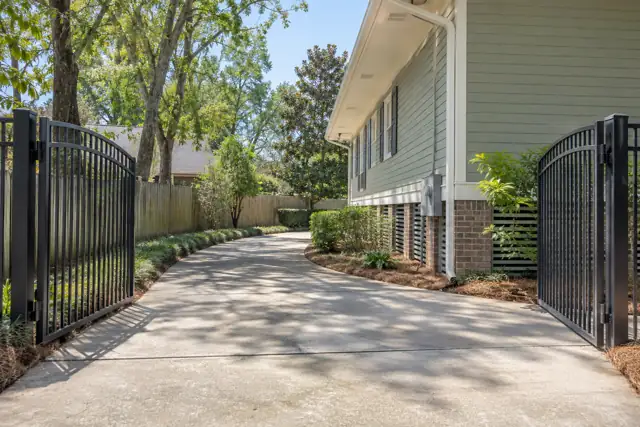
Walk the access path from the road to the tree, not only the open space around its trunk. Narrow gates, uneven soil, low wires, buried services and delicate surfaces can change equipment choices. Identify where trucks might park, where branches can be processed and how residents, pets, deliveries or tenants will be kept clear during active operations. A public sidewalk or street requires separate authority rather than a private homeowner's permission alone.
Ask which surfaces need protection and what the contractor expects you to move. A board over grass, a ground mat or a narrow machine is not a universal solution to weak ground or a tight route. If the plan depends on someone else's driveway or land, obtain permission before treating it as a confirmed access route. Put any access and restoration assumptions into the proposal.
Understand the schedule and what can change it
An estimated start date should be understood alongside weather, access readiness, utilities and crew availability. Ask when the contractor expects to confirm the work window, how you will receive a change notice and whom you should contact if site conditions worsen beforehand. Do not present a requested date as a guaranteed appointment until the contractor has accepted and scheduled the scope.
If the property has school traffic, business hours, deliveries or vulnerable occupants, disclose those restrictions early. Plan for loading and cleanup as well as cutting, because the work zone may remain active after the last branch reaches the ground. Ask what a pause for rain, unexpected defects or site-access problems would mean for the sequence and any additional authorization. Never reenter a cordoned area without the crew's direction.
Agree on records and sign-off
A photograph of the finished yard is helpful but not a complete job record. Keep the approved scope, numbered tree locations, any agreed changes and the invoice together. When a new condition requires different work, request a description of the change before treating it as authorized. For managed properties, identify who can approve adjustments and who performs the final walk-through.
During sign-off, compare the completed work with the written outcome: which limbs were removed, what was hauled away, whether stump treatment was included and what surfaces remain for separate repair. An unresolved concern should be noted rather than covered with a vague statement of satisfaction. Retain records for future maintenance planning and for a later property owner who needs to know what was actually done.

Send an estimate request that gets a useful response
A clear inquiry can be brief. State the neighborhood or service area, whether the property is occupied, the tree location, the visible concern and your desired result. Add safe wide photographs of the canopy, tree base and route, along with one close view of the feature that prompted the request if it can be taken without entering a hazard area. Explain any parking, gate, tenant or utility constraint.
Use the site's estimate form to begin the discussion, not to assume that a price or work date has been confirmed. If a formal risk assessment is needed, say so explicitly. Keep a copy of questions you want answered about scope, insurance documents and cleanup. Tree Huggers can review the request and clarify which next visit or service conversation is appropriate without promising a diagnosis from photographs.
Compare the proposal with the actual request
After a site visit, reread the estimate beside your original description. Was the concern a branch above a walkway, but the proposal calls for removing the entire tree? If so, ask what observation changed the recommendation and whether a qualified assessment is necessary. Does the proposal include the stump or just wood above ground? Are logs to be hauled or left? These questions are more productive than asking only for a lower price.
A useful comparison sheet can have columns for the named tree, proposed operations, site protection, cleanup and exclusions. Write down each bidder's answer rather than relying on recollection. If one contractor has not addressed a utility or neighbor-access issue, request clarification before treating the prices as equivalent. This protects the owner from paying for an incomplete assumption and protects the crew from an unworkable assignment.

Know when not to accept a same-day commitment
A contractor may offer to start quickly, but urgency should not erase unresolved access, safety or scope questions. When a tree shows visible failure, keep people away and seek appropriate emergency or qualified guidance. When the issue is routine clearance, obtain the written proposal and consider whether the recommendation matches the outcome you actually want. A signed authorization should describe what will be done, not merely state that tree work is approved.
Before committing, verify the work area can be prepared and that the appropriate person has permission to authorize it. Check for any insurer, neighbor, utility or public-space coordination that affects the particular site. If answers are incomplete, ask for a revised plan. Choosing a responsible sequence is often more valuable than choosing the fastest advertised appointment.

Compare tree contractors on what is excluded, not only what is included
Two estimates may show similar totals while describing very different tree operations and responsibilities. Test the assumptions before comparing prices.
- Normalize scope: Put the same tree ID, requested result and access conditions in every estimate request. A quote for removing a trunk is not equivalent to one covering stump grinding, chipping, haul-off and surface protection.
- Question assumptions: Ask what changes if wet soil prevents equipment access, a utility clearance is needed or protected plantings constrain the work zone. Require the proposal to distinguish known limits from conditions that will need review onsite.
- Check completion: Clarify where material goes, what the site should look like at the finish, which documents are provided and what triggers final review. Check contractor identity and relevant insurance independently before work begins.
Use a side-by-side comparison with columns for operations, exclusions, access preparation, debris, cleanup and approvals. The lowest number is not necessarily the same deliverable.
Compare Written Tree Bids by Inclusions, Not Price Alone
Two proposals can quote the same tree and still represent different jobs. One may include full log removal, stump grinding and finish grading; another may leave the trunk wood, chips or stump in place. Ask every bidder to work from the same numbered-tree list, site photographs and stated goal, then compare exactly what happens to limbs, brush, logs, chips, soil and damaged lawn.
A clear exclusion matters as much as the price because it tells you which later expenses or specialist decisions remain with the owner.
Verify required credentials and insurance with appropriate issuing sources where applicable, and ask who will supervise the actual crew. Discuss changes caused by unsafe ground, new decay, hidden utilities or inaccessible routes before they occur. A legitimate safety-related stop or change should have a documented approval path, not an expectation that the crew will continue at any cost. Written payment milestones and completion conditions help prevent disagreement about whether the requested result was delivered.
- Give competing companies the same tree map, scope and access information.
- Compare material removal, stump work, surface restoration and traffic control line by line.
- Verify relevant insurance and qualifications without assuming a badge proves coverage.
- Require a written procedure for changes, site damage and completion signoff.
Separate a tree-work price quote from a qualified risk assessment
Questions about this project
What should I compare besides the price?
Compare tree identification, work objectives, access assumptions, hauling, stump treatment, site finish and exclusions. Ask whether permits or other coordination are part of the scope and who can approve changes if conditions differ.
Does an online request book the crew?
No. A request starts the estimate conversation. The company still needs to discuss scope, availability and any site assessment. For a dangerous or urgent condition, call 504-458-8336 rather than relying on a form response.
How should extra work be approved?
Use the agreed approval process and identify the change, reason, scope, price or schedule effect as applicable. Confirm who has authority before treating an additional tree or task as part of the original job.
What completion records are useful?
Keep the agreed scope, tree or area identification, authorized changes, invoice and labeled photos where appropriate. Include unresolved items and a contact. Contract-specific records should follow the buyer's stated requirements.
Is a free work estimate the same as a written risk assessment?
Not necessarily. Explain whether you need pricing, condition advice, a documented assessment or a combination. Ask what the visit includes, who provides it and what limitations apply to any findings or recommendations.
What history should I share?
Share known storm damage, prior failures, construction, root disturbance, flooding, pruning and recent changes. Include the timing and nearby property use. Useful history supports the evaluation without replacing inspection of the current tree and site.
Does cleanup include every root and wood chip?
That depends on the written scope. Tree removal, stump grinding, chip hauling and root excavation are different tasks. Ask what material is removed, what remains and whether soil or landscape restoration is separately included.
What should a final walk-through check?
Compare the identified trees and tasks with the agreement. Check agreed debris handling, stump treatment, access openings and any listed restoration. Record unresolved items clearly instead of relying on a general impression that the property looks finished.
Does a machine's maximum reach prove it can do my job?
No. Loaded reach, configuration, section handling, obstacles and setup conditions all affect suitability. A contractor needs to evaluate the particular tree and property before confirming an equipment plan.
Can specialized equipment replace a site assessment?
It does not remove the need to assess tree condition, targets, access and support conditions. Ask how the contractor will confirm that the proposed machine and method fit the actual scope.
What should I tell Tree Huggers about questions to ask before hiring a tree contractor?
Explain the property address, the work you want and the specific concerns: current documents, work scope, approval process. Send safe photos of the tree, surroundings and access route. The contractor can then discuss the assessment and scope needed for this situation.
How do I request an estimate for this work?
Call 504-458-8336, text photos or use the estimate form on this page. Include the address, desired outcome and any timing constraints. The company will need to review scope and availability; an online request does not confirm a price, appointment or emergency dispatch.
Get a scope for your property
The right questions begin with the tree and the consequences of the work, not simply the lowest quoted amount. Ask a contractor to identify the trees included, observed condition, proposed pruning or removal technique, equipment access, exclusions and cleanup. Request current license or insurance documents where applicable and check the actual coverage or credential relevant to the assignment.
Find out who handles utility coordination, neighbor permissions, road access and any required site survey. A general assurance that a project is 'easy' is not a substitute for measured access and a written scope.
Ask how the contractor will protect paving, irrigation, fencing, structures and retained trees, and what happens if hidden decay, roots or obstructions alter the plan. Confirm who may authorize a change, what evidence of completion will be provided and whether logs, chips and stumps are included. If the quote includes a safety conclusion, ask what qualified assessment supports it. Compare proposals line by line rather than assuming that similar prices cover the same work.