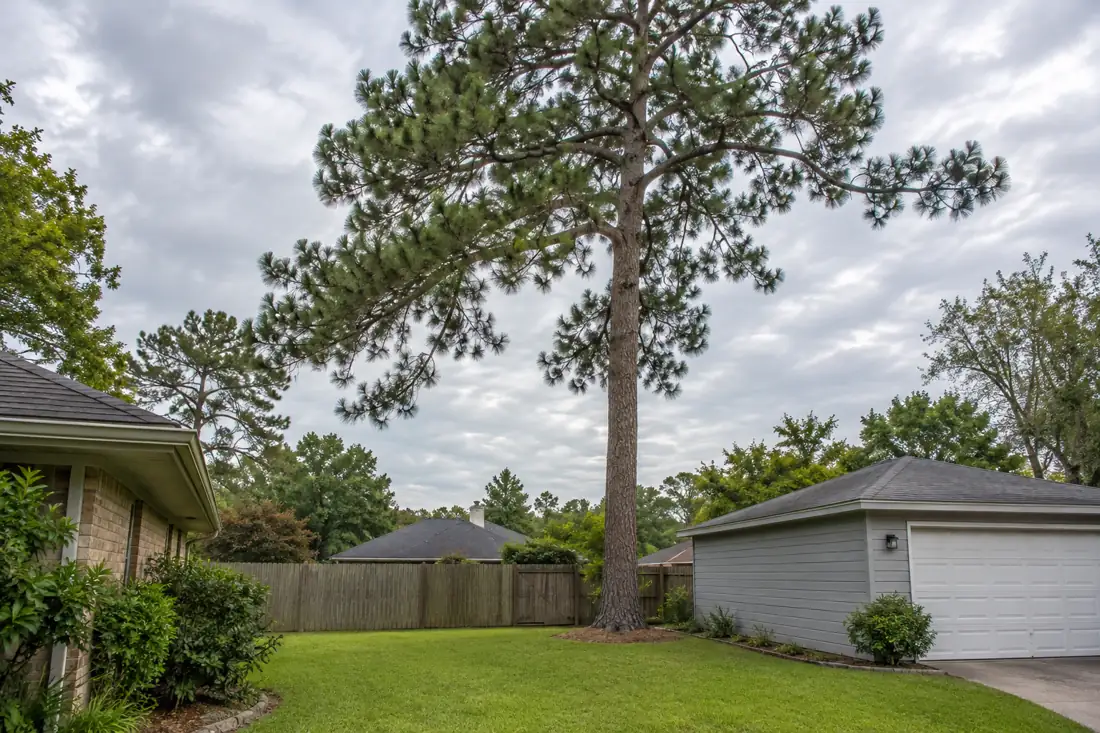
Screen enclosures can leave almost no room for uncontrolled debris. Show the enclosure height, roof line and available access alongside it. Ask whether any temporary opening is needed, who handles it and how the work area will be kept clear. Screen repair and enclosure removal are separate scopes unless specifically included.
Measure the actual gap between the tree and screen enclosure, including the upper frame, roof panels, doors and nearby pool equipment. Wide views from more than one side help distinguish a branch that merely overhangs the enclosure from one touching or loading its framing. Screens and slender aluminum members are not rated to catch falling wood or support workers, so the plan must address controlled handling outside their footprint.
Explain how the space is used and whether access passes through a screen door, narrow patio opening or pool-deck route. Before any proposed temporary panel removal, identify ownership and who would coordinate a qualified enclosure contractor for disassembly and repair. Include loose screens or preexisting frame damage in the pre-work photos. The estimate should distinguish tree cutting, material transfer, protection of the pool and any separate enclosure restoration.
Screen enclosures may have lightweight aluminum members, fasteners and panels that are not rated to carry a suspended branch or the crew's weight. Map the whole cage, doors, gutter connection, roof lines and nearby pool or patio. Determine whether the planned tree work is possible outside the frame or requires coordinated removal of selected panels by a qualified enclosure contractor. A ladder leaned on a screen rail or a section dragged across its roof can create damage far beyond torn mesh.
Record the enclosure condition, including existing bent members, loose screens and corrosion, before scheduling. Discuss how limbs can be supported or moved without touching the frame and where debris will be lowered. Confirm who is responsible for any panel removal, storage, reinstallations and seal or fastener repairs. Check that emergency exits and household access remain usable. Do not state that the enclosure is safe to load merely because similar jobs have been done nearby.

Clarify whether the tree is being removed or only cleared back
Some requests begin because branches scrape a roof screen, shade the pool, or shed leaves into a patio. Those concerns do not establish that the entire tree must come down. Ask for an assessment of whether appropriate selective pruning can address the objective while retaining the tree. If removal is requested because of visible damage, decay, or a change in lean, describe those observations without asserting a diagnosis. The tree’s condition and the consequences of failure need competent evaluation.
Clearance should be described in relation to the actual screen roof and sidewall, not in a vague instruction to “cut away everything over the patio.” Excessive cutting may injure a retained tree or create poor branch structure. Where branches directly span the enclosure, the contractor must plan how sections are controlled so they do not fall onto the screen. Compare pruning and removal scopes separately before approving significant work.
An aluminum screen enclosure may have lightweight framing, fragile roof panels and attachment points that cannot be treated as a place to rest or lower debris. Photograph the enclosure's full roof and door positions as well as the adjacent tree. A close view of screen mesh alone is not evidence that the proposed work can be performed safely.
If a panel opening or temporary removal is suggested, confirm who owns the enclosure, who approves the work, and who is responsible for restoration. The estimate should also address how debris will be kept away from the screen and how any pre-existing damage or leaks will be documented.
Document the enclosure before equipment arrives. Screens and enclosure frames can be damaged by twigs, vibration or an awkward lifting route. Identify fragile roof panels and structural members near the tree, then discuss controlled lowering without leaning against the enclosure. Confirm gate access and safe ground-crew positions. Photograph existing defects separately from any subsequent work.
Protect screened outdoor structures as work boundaries
A screen enclosure can have mesh panels, narrow frames and roof spans that cannot bear dropped wood or temporary rigging loads. Record the tree’s position relative to enclosure corners, gate widths, adjacent walls, neighboring lots and available ground. Take an overview only from safe access areas rather than moving below suspect branches to obtain a close image.
Ask how each piece will be controlled and where workers can stand without treating screens, railings or furniture as tie-off points. The estimate should identify protective coverings, temporary panel removal if needed, repair responsibility and how debris will be carried out without scratching deck finishes.

Check enclosure frame geometry before approving the removal method
A screened patio or pool enclosure often sits close to branches while leaving almost no usable space between the roof, posts and tree. Take photographs that show the entire enclosure and the tree in one view, then record the tallest point and narrowest gap where safe access allows. Consider whether a worker or material-handling route can remain outside the structure; a screen frame is not a support or anchorage point for tree rigging. Existing bent rails, patched screens and loose fasteners should be documented because they may need separate evaluation. The quote should not quietly assume an enclosure panel can be removed, replaced or walked upon just because that seems convenient.
If temporary disassembly is proposed, identify who is licensed or otherwise qualified to handle the enclosure work, who protects pool equipment and where detached panels will be stored. The tree contractor's cutting and hauling scope should be clear even if another trade handles the enclosure.
Ask how the work area will stay free of occupants and pool users and whether the final cleanup includes debris caught on top of the screen or inside the enclosure. Do not climb on a screen roof to inspect it afterward. A ground-level comparison with the pre-work photographs can establish an initial condition record, but structural or screen-performance concerns belong with the appropriate enclosure specialist.
Treat the screen enclosure as a fragile system, not just a fence
A screened patio or pool enclosure combines light framing, fasteners, roof panels, door assemblies, and screen material that may not tolerate the loads of a falling branch. A limb that appears small from the lawn can still damage the upper framework or tear panels during handling. Removal planning must account for the full height and footprint of the enclosure, not only the distance between the tree trunk and the screen wall. Ask which components must be protected or temporarily opened.
Take wide photographs from the yard and from inside the enclosure if it is safe. Show the highest roofline, gates, support posts, nearby utilities, and places where branches pass directly above the structure. Do not climb the enclosure or lean equipment against its frame to get a better view. Note existing bent rails or damaged mesh separately so a later inspection does not confuse preexisting conditions with tree work.
Establish how the crew can reach the tree without using the enclosure
The closest line on a map is not always a usable access path. A tree may be only feet beyond a pool screen yet reachable by equipment from the street, a side yard, or another approved setup area. Photograph gate widths, turns, pavement edges, and the path material would take to reach a trailer. Show drainage covers, underground irrigation, decorative beds, and soft ground that may need consideration. Do not assume a screen door is a suitable route for machinery or large wood.
An estimator should explain whether access requires temporary removal of a panel, opening a fence section, specialized rigging, or a different work method. No homeowner should remove enclosure parts or enter a hazardous area solely to make the quote easier. Clarify who would be responsible for any approved temporary opening and subsequent reinstallation. If another contractor handles screen work, record that interface before either party mobilizes.
Plan for controlled sections and an exclusion area
A confined enclosure-side site may offer little room for brush or logs to land. A crew may need to work in smaller sections with controlled movement, different setup positions, or specialized equipment, depending on the tree and property. The owner cannot determine the safe method from the diameter of the trunk alone. Discuss any overhead conductors, neighboring roofs, or vegetation connections that affect how material may be handled. Do not stand inside the enclosure during overhead tree work.
Identify when the pool, patio, and adjacent entrances will be closed to occupants. Pets, children, guests, and service personnel need clear direction about staying outside the controlled zone. Equipment may also require a temporary restriction beyond the backyard. If a tree appears unstable, keep the potentially affected area clear pending professional advice. A promise that no branch will ever touch a fragile structure is not a substitute for a method and contingency plan.
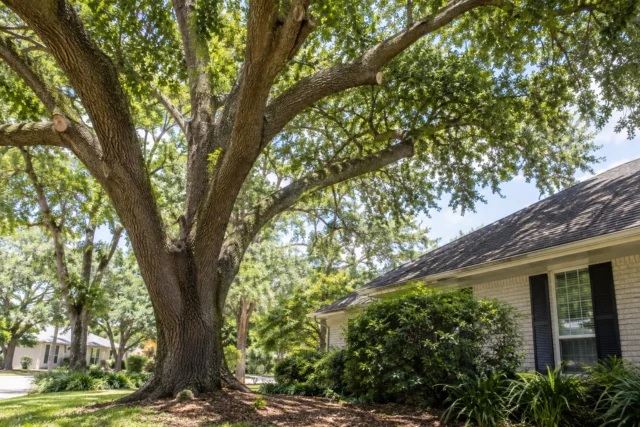
Protect water, pumps, and patio finishes in the work scope
Pool decks and enclosure foundations may contain buried plumbing, conduits, drains, and equipment lines that are not visible in photographs. Tell the estimator where the pump, filter, heater, control box, drains, and known underground services are located. Note recent repairs or delicate finishes. A wet paver surface, narrow coping edge, or shallow landscape bed may not be appropriate for machine loading. The work plan must consider where workers and materials will actually travel.
Discuss the disposition of leaf litter, twigs, and sawdust that may enter the pool area. An ordinary tree removal estimate is not automatically a pool-service or structural-screen-repair contract. Ask what cleaning is included, what is excluded, and which surfaces need separate protection. Do not drain a pool, operate electrical equipment, or dismantle screening on the basis of a generic tree-service checklist without advice from the responsible professionals.
Screen enclosure measurements change the work plan
Screened patios and pool enclosures are especially vulnerable to sideways movement of a limb or cable. A useful estimate request identifies the enclosure footprint, approximate roof height, door openings, and whether there is a clear path outside the screening. Do not assume a screen panel can be removed safely or replaced without a separate trade or written agreement.
Ask which party handles temporary disassembly, protective coverings, and any documented repairs if the work disturbs an existing structure. Workers also need an exclusion area outside the enclosure, not only inside it. Wide photos from two sides are generally more informative than a close-up through mesh; avoid climbing onto the enclosure or roof for a better angle.
Tree Removal Around a Screen Enclosure
A screen enclosure can make a tree appear closer than it is because its tall frame occupies space that would otherwise be open air. The contractor must evaluate the canopy, trunk, attachment points and the enclosure's independent condition. Aluminum members and screen panels are often not intended for loads from falling or suspended branches, so their presence should inform the method rather than serve as support.
Owners should not remove enclosure components themselves merely to create a route for branches. If temporary removal of screens, gutters or trim could be helpful, identify who is permitted to perform the work and who would put everything back. Existing panel tears, loosened screws and roofline leaks belong in the pre-work condition record.

What to verify on site: Confirm the actual enclosure height, mesh and aluminum frame condition, roof clearance and any temporary panel removal authority. A picture does not establish a safe lowering path or prove a panel must be dismantled.
Work around the enclosure without assuming it can take loads
Consider whether debris can leave through a side gate or must be moved through a patio entrance. That access choice can change section sizes, carrying distance and where a crew may place equipment. Photographs that show the full height of the enclosure beside the tree are more informative than isolated views of limbs against sky.
A complete estimate should distinguish vegetation removal from enclosure repair, screen replacement or waterproofing. Ask what steps are expected before tree work, who will manage the exclusion area, and what cleanup is included at the roofline. Do not treat an intact screen after work as proof that the underlying frame or connections were inspected.
Write down responsibility for any temporary enclosure changes
An enclosure sometimes limits every obvious access route. If a qualified provider proposes temporarily taking down a screen panel or gate, the written scope should identify who authorizes it, who performs it, and who restores it. Some enclosures have warranties, permits, or conditions that require a specialist. An estimator should not silently assume that the homeowner will accept disassembly or that tree-service labor includes repairing damaged frames. Keep any separate contractor’s work and timing aligned.
Photograph existing wear before authorized changes occur, with attention to rails, doors, mesh and nearby masonry. If a different method could avoid disassembly, compare the practical tradeoffs rather than choosing solely on a single price line. When the enclosure is attached to a neighbor’s structure or lies near a property line, confirm ownership and permissions early. Those questions are easier to address before a crew arrives with equipment and a booked schedule.
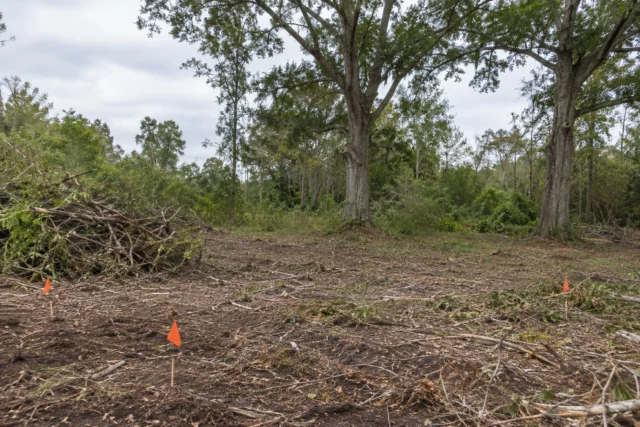
Define the debris, stump and final cleanup result
After the main tree is removed, wood and brush still need to leave a confined space or be handled on the property. The estimate should specify whether logs, branches and chips are hauled, stacked, or retained. If stump grinding is requested, ask about access for the grinder, the expected remaining depth, surface cleanup and what happens to grindings. A stump beside an enclosure footing or buried pipe may require a different conversation from one in an open lawn.
Discuss whether the patio is to be swept, whether screen tracks are cleaned, and whether any incidental leaves remain for routine pool maintenance. A precise finish standard prevents disagreement about what “complete cleanup” means. Avoid treating replacement of screens, pavers, soil, irrigation or landscaping as included unless the contract explicitly says so. The scope should distinguish tree operations from restoration tasks that may belong to a different trade.
Compare proposed methods using the complete site constraints
Two tree-removal estimates can differ because one assumes clear access while the other allows for protected handling near the screen. Ask bidders to identify the same tree, nearest structures, setup location, material route, and allowed work zone. If one quote excludes screen disassembly, stump work or debris hauling, note those exclusions rather than comparing totals as though the outcomes were identical. A lower figure is not necessarily a simpler or safer job.
Ask what would cause the method or price to change: an unseen split, unsuitable ground, a blocked gate, or a requirement from an enclosure repair contractor. Do not request a rigid guarantee that concealed conditions cannot affect the plan. A suitable contractor can explain its proposed controls and qualifications without inventing a perfect, risk-free scenario. Record the plan and contingency responsibilities before work begins.
Keep evidence and reopen the space deliberately
Take a few ordinary ground-level photographs of the enclosure and surrounding tree before work for identification and condition reference. After the crew has released the area for use, compare the result against the agreed removal, debris and restoration scope. Check accessible screen doors and visible panels without leaning on newly disturbed structures or entering unreleased work zones. If a specialist must reinstall a panel, keep the enclosed space closed until that work is completed appropriately.
Retain the estimate, any change authorizations, and completion photographs together. Document an unresolved screen repair or a tree-related concern separately, rather than assuming a clean patio proves every system is unaffected. For recurring maintenance, note what canopy clearance was achieved and what may need monitoring. The useful goal is a clearly understood project near a delicate enclosure, not an unqualified promise of zero future tree or storm risk.
Questions about this project
Which property features should I point out?
Identify buildings, vehicles, fences, fixed fixtures, landscape features, utilities and occupied routes. Explain what can move and what must remain. Include existing damage and any buried features you know about along the access route.
Should people remain inside the work area?
The contractor and site contact should establish an exclusion area and access arrangements appropriate to the work. Keep children, pets, visitors and other workers outside the active zone until the responsible parties say it can reopen.
What access information helps an estimator?
Send the narrowest opening, overhead obstacles, turns and the distance between the tree and the loading area. Include photos of the entire route and identify steps, soft ground or features that must remain protected.
Should I remove a fence before the visit?
First ask the contractor to assess access and agree on any temporary opening. Identify who owns the fence, who can authorize the change and who will reinstall it. Do not assume the opening is necessary or included.
Can the removal method be selected from a photo?
Photos help prepare the discussion but may not show defects, ground conditions or usable access. The contractor may need an on-site assessment before confirming the method, equipment and final scope for the property.
What if the tree changes before the appointment?
Tell the contractor about a new split, failed branch, changed lean or other visible change. Keep clear of the affected area. Changed conditions may require a different assessment, priority or work plan before the crew proceeds.
Does cleanup include every root and wood chip?
That depends on the written scope. Tree removal, stump grinding, chip hauling and root excavation are different tasks. Ask what material is removed, what remains and whether soil or landscape restoration is separately included.
What should a final walk-through check?
Compare the identified trees and tasks with the agreement. Check agreed debris handling, stump treatment, access openings and any listed restoration. Record unresolved items clearly instead of relying on a general impression that the property looks finished.
What should I compare besides the price?
Compare tree identification, work objectives, access assumptions, hauling, stump treatment, site finish and exclusions. Ask whether permits or other coordination are part of the scope and who can approve changes if conditions differ.
Does an online request book the crew?
No. A request starts the estimate conversation. The company still needs to discuss scope, availability and any site assessment. For a dangerous or urgent condition, call 504-458-8336 rather than relying on a form response.
What should I tell Tree Huggers about tree removal around a screen enclosure?
Explain the property address, the work you want and the specific concerns: enclosure height, limited access, repair responsibility. Send safe photos of the tree, surroundings and access route. The contractor can then discuss the assessment and scope needed for this situation.
How do I request an estimate for this work?
Call 504-458-8336, text photos or use the estimate form on this page. Include the address, desired outcome and any timing constraints. The company will need to review scope and availability; an online request does not confirm a price, appointment or emergency dispatch.
Get a scope for your property
For a tree close to a screen enclosure, photograph the roofline and all sides of the frame, including the narrowest path from the tree to the yard entrance. Identify loose or torn panels beforehand and ask whether any enclosure preparation is separately needed.