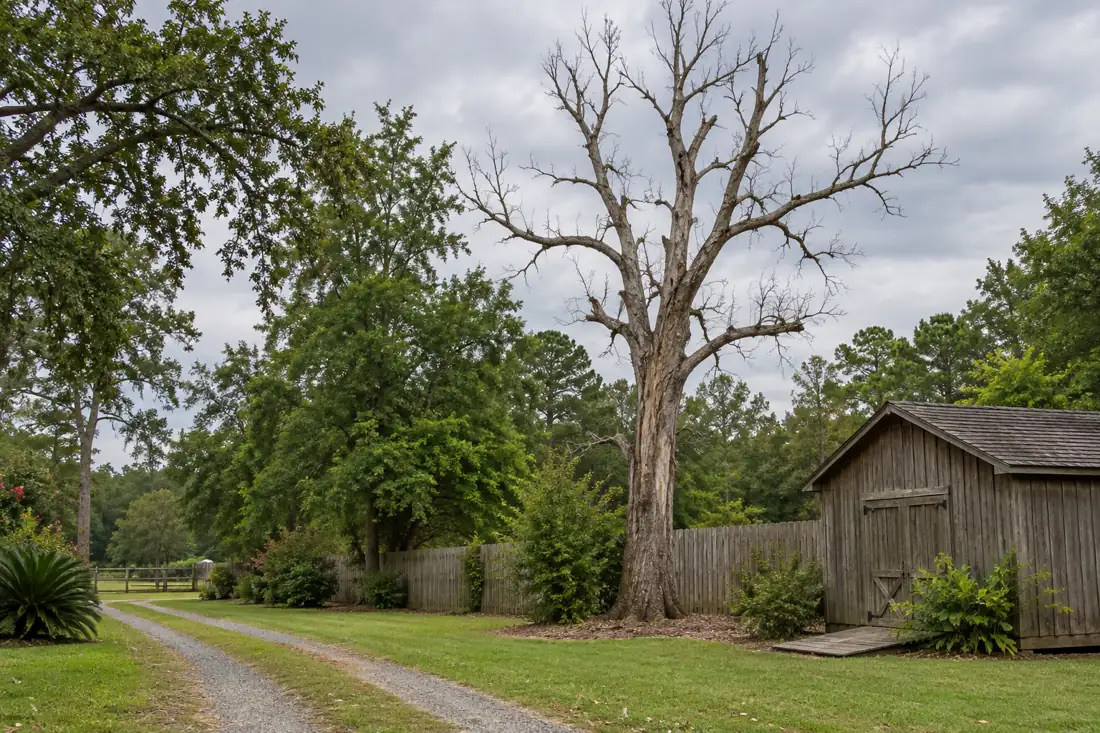
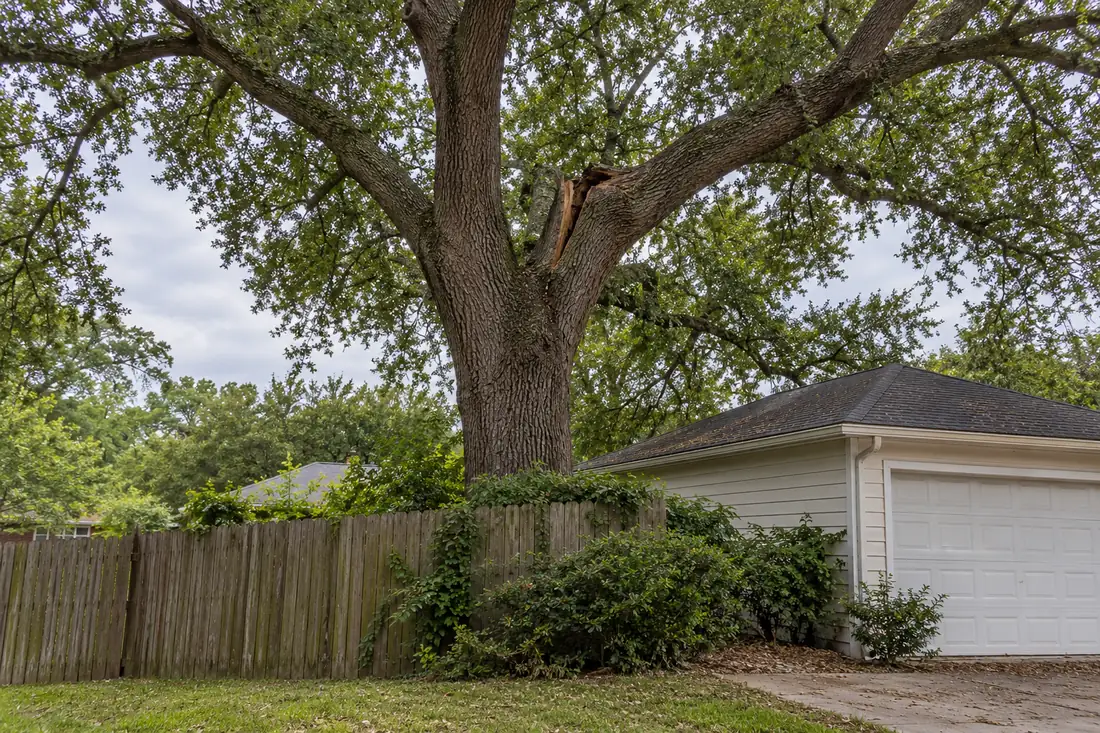
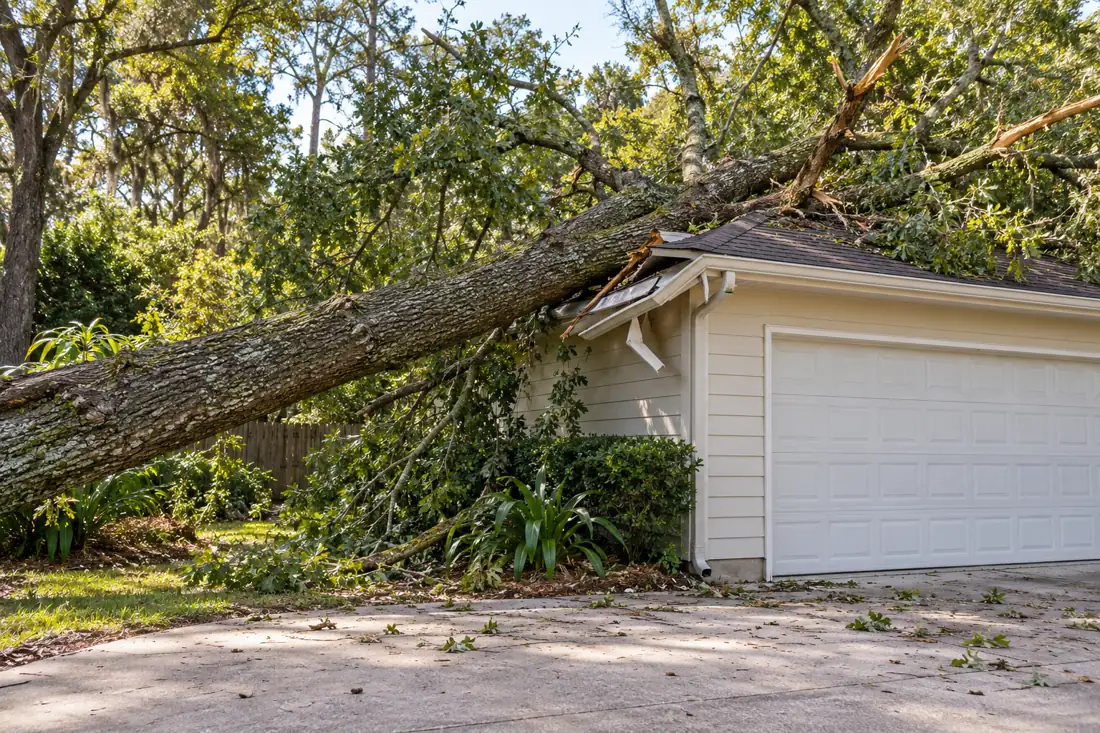
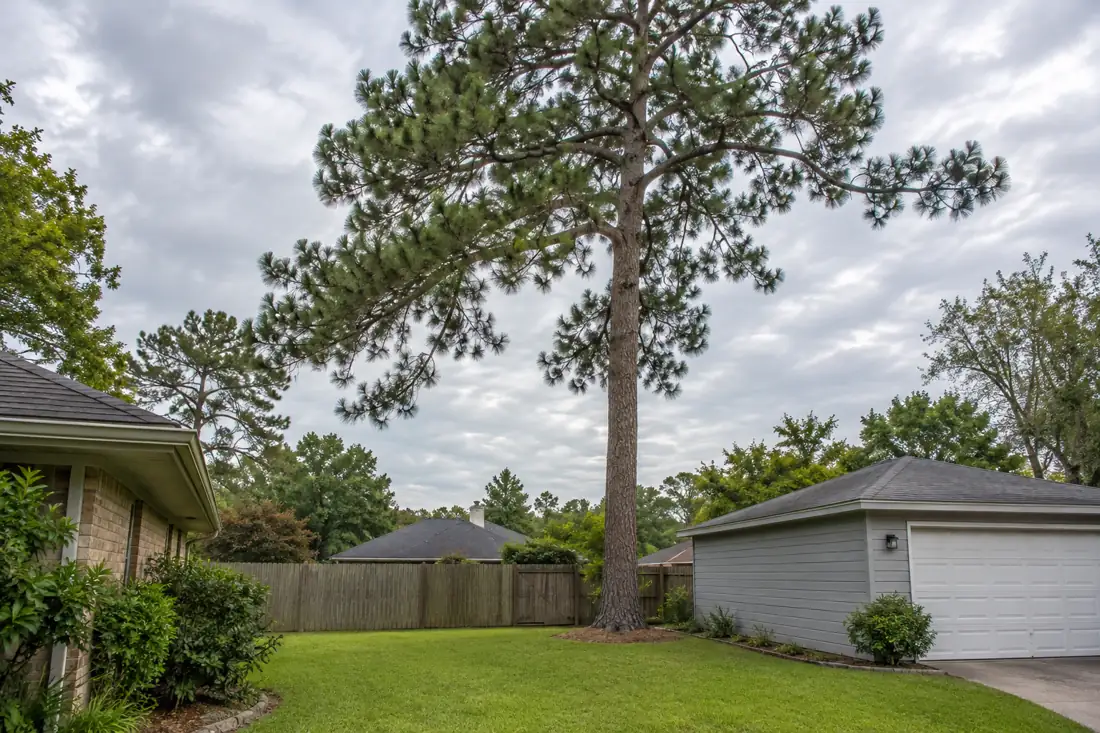
A fence can block machinery, restrict handling and conceal a boundary question. Decide whether panels may be temporarily removed and who will reinstall them before agreeing to the scope. If the tree is close to the property line, identify the owner and obtain any permissions needed for access; proximity alone does not establish ownership.
Show both sides of the fence from safe public or authorized locations so the estimator can identify posts, gates, panels, nearby roots and the landing space. A panel that appears removable may contain wiring, irrigation or a gate latch that complicates access. Specify whether the fence is yours, shared or a neighbor's; a fence line by itself is not proof of ownership or permission to enter. State whether it must remain operational throughout the work.
Discuss the movement of logs and equipment before approving any temporary opening. Ask who would detach panels, secure the opening while work is underway and restore the fence afterward, including hardware and alignment. If sections of tree extend past the boundary, distinguish a request to remove your tree from authority to enter or alter neighboring property. Put those limits and any agreed landscape protection into the written estimate rather than assuming the crew will improvise.
Measure the tree-to-fence gap at the trunk, but also look up into the crown and along the entire loading route. Fence posts, footings, rails, gates and decorative caps can be damaged by movement that would not affect open ground. A property boundary may not follow the visible fence exactly; do not authorize crew access or dismantling across the line without permission.
Ask whether sections can be lowered away from panels or need a temporary opening. A panel's removal is not equivalent to permission to work on a neighboring parcel.
Write down the intended state of the fence afterward. Include photographs of existing leaned posts, cracked boards or loose hinges, and agree who handles panel storage, reinstatement and landscape repair. Check underground sprinklers or lighting near posts before grinding or moving heavy equipment. If neighbors need notice for temporary loss of privacy or pet containment, coordinate that beforehand. The estimate should distinguish tree removal, stump work, fence work and debris hauling as separate items so each can be inspected at completion.

Work out whether the tree or equipment can pass the gate
A gate may appear wide enough for a person carrying a saw but be too narrow for a chipper, grinder or other equipment. The route may include a turn, step, slope or fragile paving that is more restrictive than the opening itself. Show the approach from the street, gate swing, neighboring structures and the space beyond the fence. Do not remove posts or force machinery through a gate before the provider evaluates the route.
A contractor may plan to process wood into smaller sections, use different equipment, or propose a temporary opening if it is authorized. Each approach has cost and property-protection implications. Ask which equipment needs access to the trunk and which needs access for hauling or stump work. A workable route must allow safe entry and exit; fitting through the narrowest point alone does not establish suitability.
A tree close to a privacy fence can make handling awkward and may also raise an ownership or access question. Identify the boundary and the narrowest route before assuming any panels can be removed. Permission from the person who ordered tree work does not automatically authorize entry or alterations on an adjoining parcel.
Photograph the present condition of posts, panels, roots and landscaping from a safe position. The written scope should specify whether temporary openings, reinstallation, stump treatment or soil restoration are included and who must approve them. Avoid treating a preliminary access sketch as confirmed property-line evidence.
Protect the fence and people beyond it. Locate fence posts, overhanging branches and any leaning trunk whose load could shift toward the property line. Do not assume a panel can be taken down or equipment brought onto a neighbor's side. Ask how cut sections will be controlled, where debris will land, and who checks the fence afterward.
Establish the tree's position relative to the fence and property line
A tree beside a fence creates two different questions: where the trunk and roots physically stand, and which owner has authority over the property involved. Fence placement is not reliable proof of a legal boundary. Before approving work that may cross onto adjoining land or require removal of fence panels, establish who owns the relevant spaces and who can grant access. A tree contractor can assess physical access, but should not be expected to adjudicate boundary disputes or supply legal conclusions.
Take wide photographs showing the entire tree, fence run, nearby gates and adjacent structures from a place you may lawfully and safely stand. Note whether the trunk leans toward the fence, whether branches touch it and whether roots have altered nearby paving. If ownership is uncertain, identify that as an open issue rather than implying permission. The physical removal plan and the authorization plan both need to be sound.
Inspect the fence as a structure with multiple vulnerable parts
Wooden privacy panels, vinyl rails, chain-link fabric, masonry columns and gates can all be damaged in different ways. A section may already lean, rot or have loose fasteners, even if it looks intact in one photograph. Show posts, gates, retaining walls and any overhead features near the tree. If a limb or trunk actually presses on the fence, explain that separately from ordinary proximity. Do not lean against an unstable fence or pull vegetation away to check hidden surfaces.

Agree on access and boundaries before fence-side work
Identify the fence line, side gates, plants, shed walls and each space where a crew might stand or move wood. A contractor should not assume permission to dismantle a shared fence, use a neighbor’s yard or bring equipment through an unapproved entrance. Mark disputed boundaries for verification rather than declaring ownership based on a photo.
The scope should say how limbs will be lowered without striking panels, whether temporary removal and reinstallation are included, where logs will leave the property and who authorizes unexpected changes. Document existing visible conditions from safe points before work, without suggesting the image itself establishes who is responsible for damage.
Resolve a fence-side removal as both a tree job and an access agreement
The narrow strip between a trunk and a fence can hide sprinkler lines, post footings, vines and differences in grade. Measure the usable workspace on the owner's side without stepping across the boundary. A photo from each end of the fence usually shows more than a close-up of the trunk: posts, rails, overhangs and the route for moving brush become visible.
Ask whether a panel has already been repaired or braced and document its condition before equipment arrives. Never assume that a shared appearance makes the fence jointly owned or that the neighboring yard can be used for a lowering area. Those questions should be resolved with the appropriate owners before the contractor relies on that space.
Clarify whether any fence component might need temporary removal, who is authorized to perform it, where the sections will be stored and who restores the agreed condition. If the tree can be removed without disturbing the fence, the estimate should say what clearance and handling method makes that feasible, without promising impossible zero-risk outcomes.
Stump and root work beside post foundations can create a different issue from cutting the trunk; ask for a distinct stump line item rather than allowing it to become an unexamined add-on. At the end, compare the posts, panel alignment and accessible ground with the original photographs, then document any concern promptly through the contracted communication route.
Where the fence is a shared feature or part of a controlled entrance, ask which parts could be temporarily removed and who may approve that change. A tree-removal price should not silently assume that a fencing contractor will be present or that an old panel can be reinstalled without repair. Photograph existing visible condition so later restoration responsibilities can be discussed on factual grounds.
Identify what can safely happen above the narrow strip
A trunk close to a fence may have its canopy above a roof, driveway, neighboring tree or utility service. There may be very little open ground for whole sections to land. Ask the estimator to explain how material will be controlled without striking fence rails, posts or adjacent property. The tree's condition matters, particularly if a crack, heavy lean or decay could change how it bears loads. Do not assume a straight-looking trunk can simply be pushed away from the fence.
The controlled zone may include an adjoining yard or path even when the tree stands entirely on one lot. Obtain necessary permissions and agree on how people and pets are kept clear. Overhead electrical equipment calls for appropriate coordination and qualified personnel. A homeowner should not cut connecting limbs or tie ropes to the fence in an attempt to prepare the site. Those actions can increase rather than reduce the hazard.
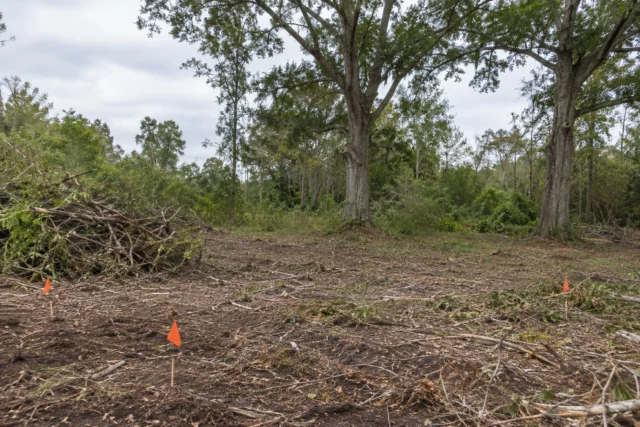
Separate tree removal, stump grinding and fence restoration
An estimate to remove the standing tree may end with a low stump. Grinding that stump beside fence posts or underground footings is a separate technical question and may not be included. The desired future use matters: a new fence line, driveway extension or landscaping bed may require a specified finish, but not every stump can be ground to the same depth near structures and services. Ask about access for a grinder and the handling of grindings.
If a fence panel must come out, record who removes it, whether temporary security is needed, and who reinstalls or replaces it. A tree crew may not be a fencing contractor. Specify logs, brush, chips and remaining root or stump material separately so the owner knows what cleanup entails. Where roots affect the fence, don't assume removing the tree will instantly straighten old posts or repair previous movement.
Confirm fence-side permission and access
A trunk near a privacy fence raises two separate issues: controlling tree material and determining what access is authorized. Photograph the gate, posts and nearby root flare before assuming that a panel can be removed. Even if a temporary opening helps, the agreement should say who authorizes it, protects adjacent property and restores the fence. A synthetic image of a tree and fence does not determine the actual legal boundary.

Tree Removal Beside a Fence
A fence next to a tree is both a physical obstacle and a possible property-line issue. A narrow gap between the trunk and panels may prevent tools from reaching one side, while posts and footings can occupy the same soil area as major roots. Photograph the base from within your property and identify whether any nearby panels are already leaning, loose or damaged.
Temporary panel removal may improve access in some layouts, but it should not be included in a quote on the assumption that the owner can authorize alterations to a shared or neighboring fence. Determine which party controls the panels and gates, whether removal and reinstatement need separate permission, and who would be responsible for any restoration. A verbal conversation should not be represented as documented consent.

Account for the boundary without presuming access
The work plan should distinguish branch lowering, trunk sectional work and stump grinding. Even after a trunk is removed, a stump or root flare beside fence footings can be difficult to grind without affecting posts. Ask whether the proposed depth and edge clearance are feasible and what portions of wood or roots would remain untouched to protect nearby structures.
Before work begins, move movable objects from the fence line, keep children and pets out of the exclusion area, and avoid leaning against a potentially unstable boundary. Photographs taken from either end of the fence are more useful than a close-up of bark alone. The written scope should identify whether cleanup extends to both sides of the boundary and should never assume access to another property.
Protect neighboring plants, services and occupied routes
Fence lines often carry irrigation tubing, lighting wires, garden beds, drainage features, air conditioning lines or utility services. Let the estimator know about those features before selecting equipment or a loading route. A crew may need a controlled area on both sides of the fence, but it cannot assume access to someone else's property. Ask how material will be transferred to the hauling point without dragging heavy wood across a fragile boundary feature.
If the fence encloses pets, children or a business yard, temporary opening can create a separate access and security problem. Coordinate who will supervise the opening and when it will be secured. Do not promise occupants that a gate will remain available throughout the operation unless the method supports it. Establish realistic access restrictions and a clear handoff when the crew releases the area.
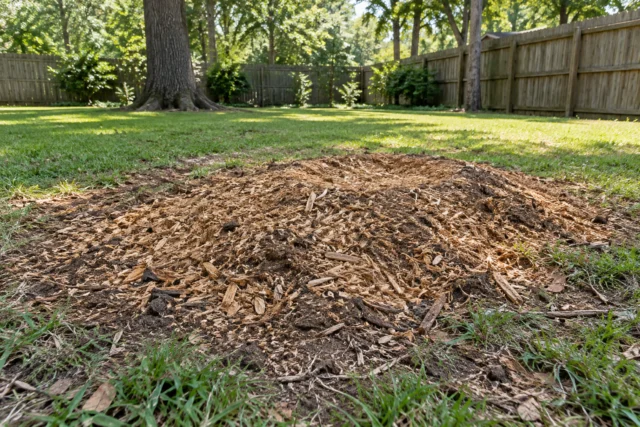
Compare removal proposals with the same constraints
Two companies may be quoting different projects even if both write “remove tree by fence.” One may include sectional handling, stump grinding and temporary panel removal; another may exclude all three. Compare the affected tree, setup area, material route, owner permissions, protection plan, debris disposition and restoration boundaries. A lower price is not necessarily equivalent if the contractor assumes a gate or work zone that is not actually available.
Ask what would require a change in method or scope, such as hidden decay, an unexpected underground service or a fence that cannot be safely disassembled. The person authorized to approve such changes should be identified before work begins. Do not request an unrealistic guarantee that every existing piece of old fencing will remain unaffected. Instead, insist on documented expectations and prompt communication about unforeseen conditions.
Document conditions and verify the agreed finish
Before the job, photograph accessible fence panels, posts, gates and the tree from safe ground. Distinguish existing leaning or damage from the tree's current position. If a neighbor has authorized access, keep that permission and any restoration expectations with the written estimate. The completion check should compare the agreed tree removal, wood and debris handling, and temporary access changes with what was actually done. Do not enter an area until the crew has released it.
If the fence requires separate repair, record the condition and who will arrange that work under the real agreement. A newly cleared strip may still contain roots and soil unevenness; removal of the trunk does not constitute a fully prepared building pad. Keeping these details explicit avoids confusing tree service with fencing, grading or landscape installation.
Send a site-specific request instead of a guessed price
To request an estimate, identify the tree beside the fence, show the whole canopy and gate path, and explain the final result you need. Include whether stump work or fence access is expected, and disclose any neighbor-permission question early. State any visible cracks, hanging limbs or other immediate concerns without attempting to diagnose the tree from photographs. A visit may be needed to verify equipment access and a feasible material route.
Ask for a written scope separating tree removal, stump treatment, hauling and restoration responsibilities. If the tree appears unstable or involves electrical equipment, keep people clear and contact the appropriate professionals rather than seeking a routine quick quote. Clear dimensions and permissions are often more important to this job than a tree-height estimate. A focused inquiry gives Tree Huggers enough context to discuss a workable next step.
A fence boundary is a permission problem before it is an access route
When a trunk or limb stands close to fencing, the work plan needs to identify the fence structure, any shared ownership questions and whether equipment or wood can safely pass an existing gate. A loose panel, post footing or concealed utility may matter even when the tree itself looks straightforward. Do not assume a neighbor's side is available for access just because it offers more room.
Ask the estimator to separate tree dismantling, authorized fence-panel handling, stump work and any fence restoration in the written scope. Photograph the trunk-to-fence distance from your property and note gate width without entering an unsafe area. If the real limitation is a driveway carrying equipment or truck loads rather than a boundary fence, use the driveway-specific guide to plan pavement protection, vehicles and buried drainage.
- Identify who can grant permission for temporary panel removal.
- Show the gate, posts and likely wood-removal route.
- Keep the fence repair responsibility distinct from the tree-work price.
Questions about this project
Can the contractor use my neighbor's yard?
Only after the required permission and suitable access arrangements are in place. Identify the proposed route and who can authorize it. A quote accepted by one owner does not automatically grant access to someone else's land.
Does a tree estimate determine the property boundary?
No. Resolve an uncertain boundary or ownership question using appropriate property information and professionals. The tree contractor needs an authorized scope and access plan, but a visual work estimate is not a survey or legal determination.
What access information helps an estimator?
Send the narrowest opening, overhead obstacles, turns and the distance between the tree and the loading area. Include photos of the entire route and identify steps, soft ground or features that must remain protected.
Should I remove a fence before the visit?
First ask the contractor to assess access and agree on any temporary opening. Identify who owns the fence, who can authorize the change and who will reinstall it. Do not assume the opening is necessary or included.
Which property features should I point out?
Identify buildings, vehicles, fences, fixed fixtures, landscape features, utilities and occupied routes. Explain what can move and what must remain. Include existing damage and any buried features you know about along the access route.
Should people remain inside the work area?
The contractor and site contact should establish an exclusion area and access arrangements appropriate to the work. Keep children, pets, visitors and other workers outside the active zone until the responsible parties say it can reopen.
Does cleanup include every root and wood chip?
That depends on the written scope. Tree removal, stump grinding, chip hauling and root excavation are different tasks. Ask what material is removed, what remains and whether soil or landscape restoration is separately included.
What should a final walk-through check?
Compare the identified trees and tasks with the agreement. Check agreed debris handling, stump treatment, access openings and any listed restoration. Record unresolved items clearly instead of relying on a general impression that the property looks finished.
What should I compare besides the price?
Compare tree identification, work objectives, access assumptions, hauling, stump treatment, site finish and exclusions. Ask whether permits or other coordination are part of the scope and who can approve changes if conditions differ.
Does an online request book the crew?
No. A request starts the estimate conversation. The company still needs to discuss scope, availability and any site assessment. For a dangerous or urgent condition, call 504-458-8336 rather than relying on a form response.
What should I tell Tree Huggers about tree removal beside a fence?
Explain the property address, the work you want and the specific concerns: fence panels, ownership, material handling. Send safe photos of the tree, surroundings and access route. The contractor can then discuss the assessment and scope needed for this situation.
How do I request an estimate for this work?
Call 504-458-8336, text photos or use the estimate form on this page. Include the address, desired outcome and any timing constraints. The company will need to review scope and availability; an online request does not confirm a price, appointment or emergency dispatch.
Get a scope for your property
For a tree beside a fence, provide a wide view of the trunk and property boundary plus detail photographs of fence posts, gates and any visible root conflicts. Say clearly whether the fence is yours, shared or managed by someone else, without assuming that temporary removal is approved.