Separate contact problems from tree-stability questions
A branch brushing gutters may be a targeted clearance problem even when the trunk is close to a house. Fresh soil cracking, new lean, a major weak attachment or visible root damage deserves a different discussion. Record which issue exists: physical contact, projected future growth, drainage changes, foundation movement or concern about an entire tree falling.
Avoid digging roots or heavily cutting the crown to ‘test’ the tree. Ask for an assessment that evaluates the tree and the nearby structure together, with a clear explanation of whether selective maintenance is reasonable or removal is being considered for a separate documented hazard.
What matters more than distance alone?
A healthy small tree close to a wall is different from a mature tree with heavy limbs over the roof.
Branches rubbing roofs or siding can often be managed through pruning.
Visible hardscape movement or root damage should be considered together with tree stability.
Pruning may solve the immediate conflict
Selective clearance pruning can move limbs away from roofs, chimneys and gutters while retaining the tree. Excessive cutting simply because a tree is close to a house can create new structural or health problems.
Removal may make sense when risk cannot be managed
Severe structural defects, major root conflicts, repeated roof contact, very limited growing space or an unsuitable mature tree may make removal the more practical long-term choice.
Related resources
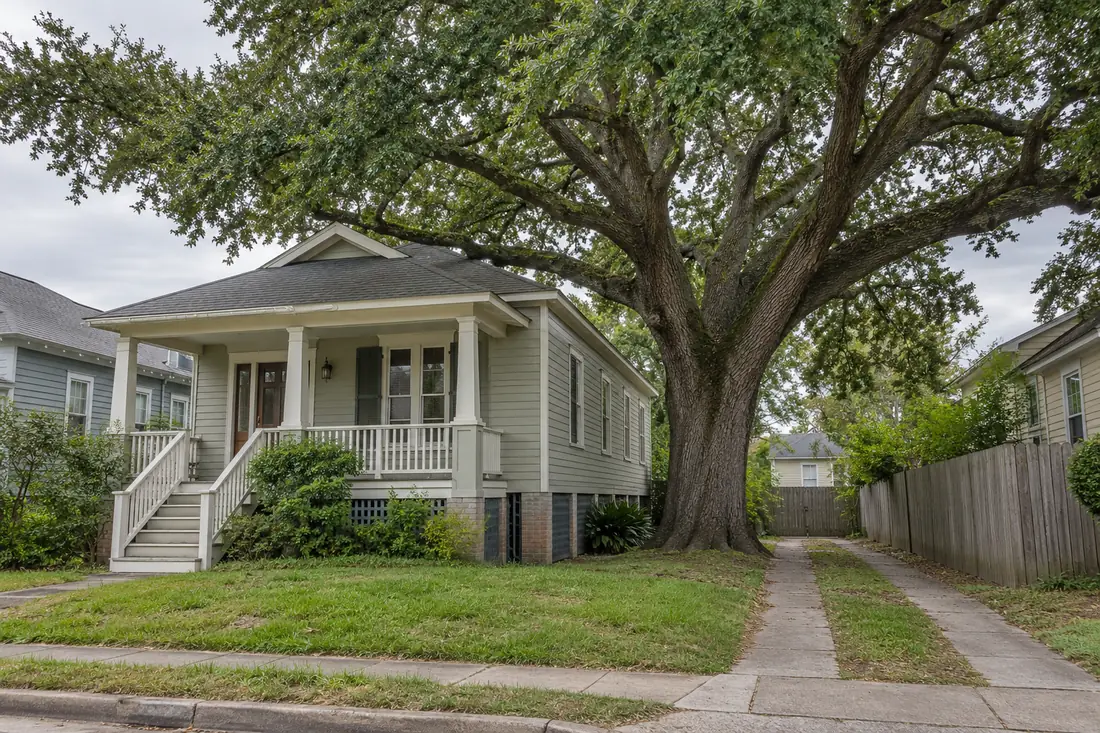
Distance is one measurement, not a diagnosis
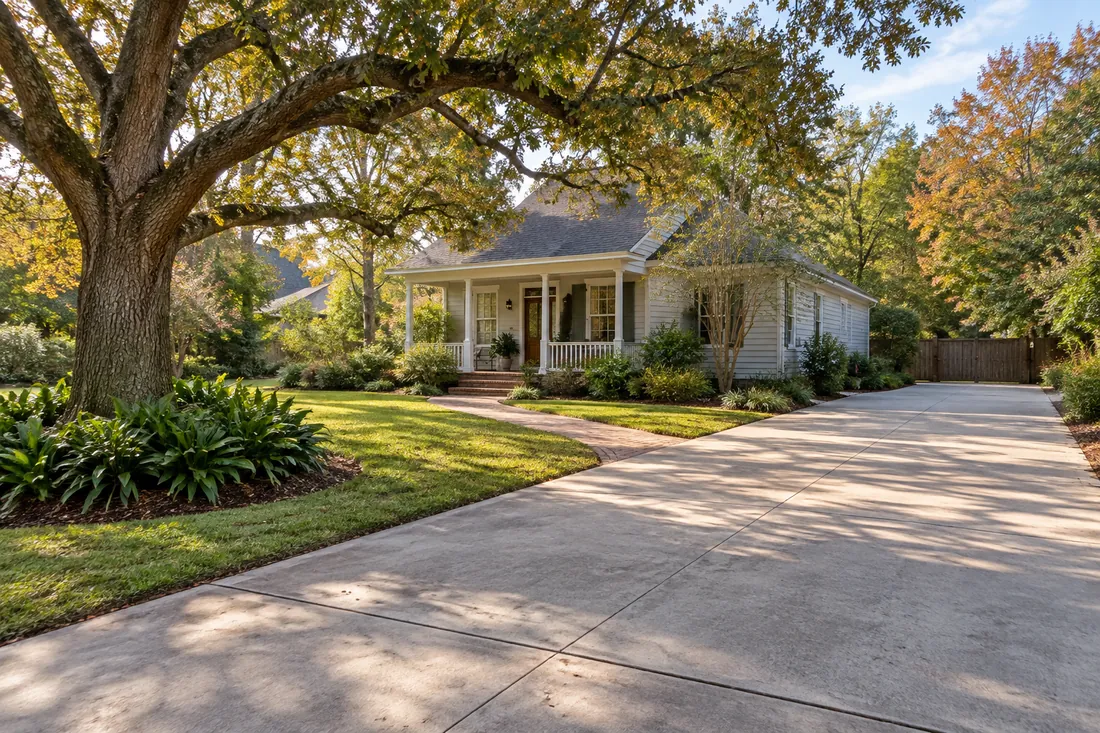
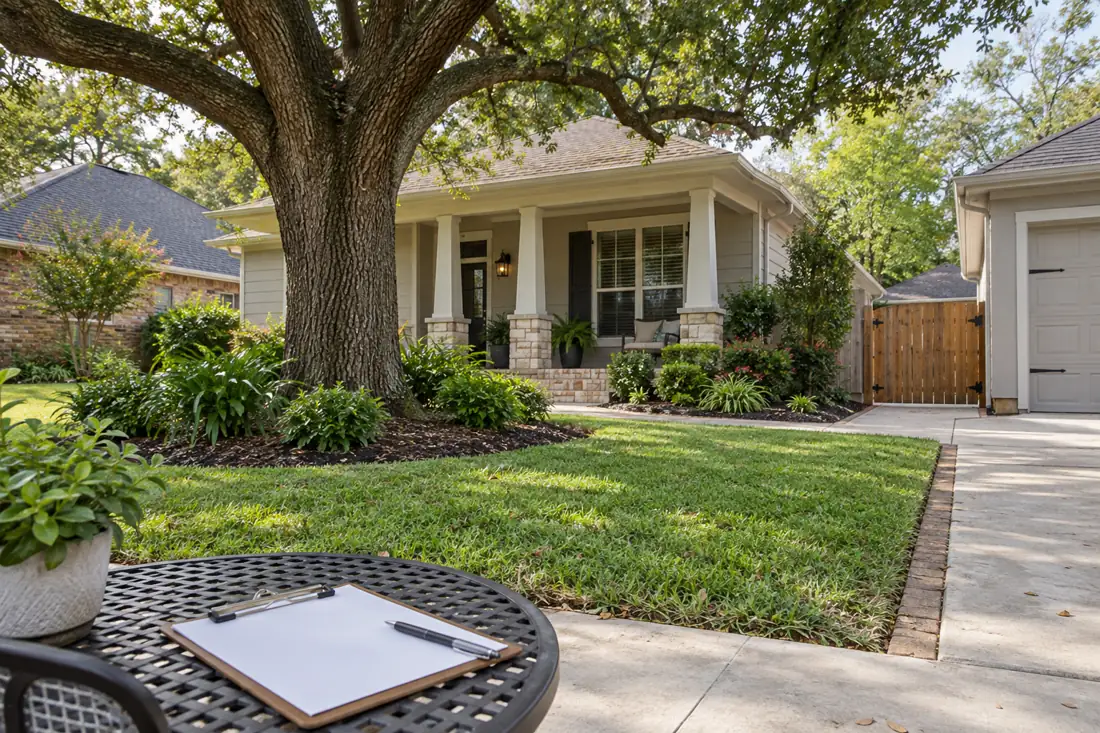
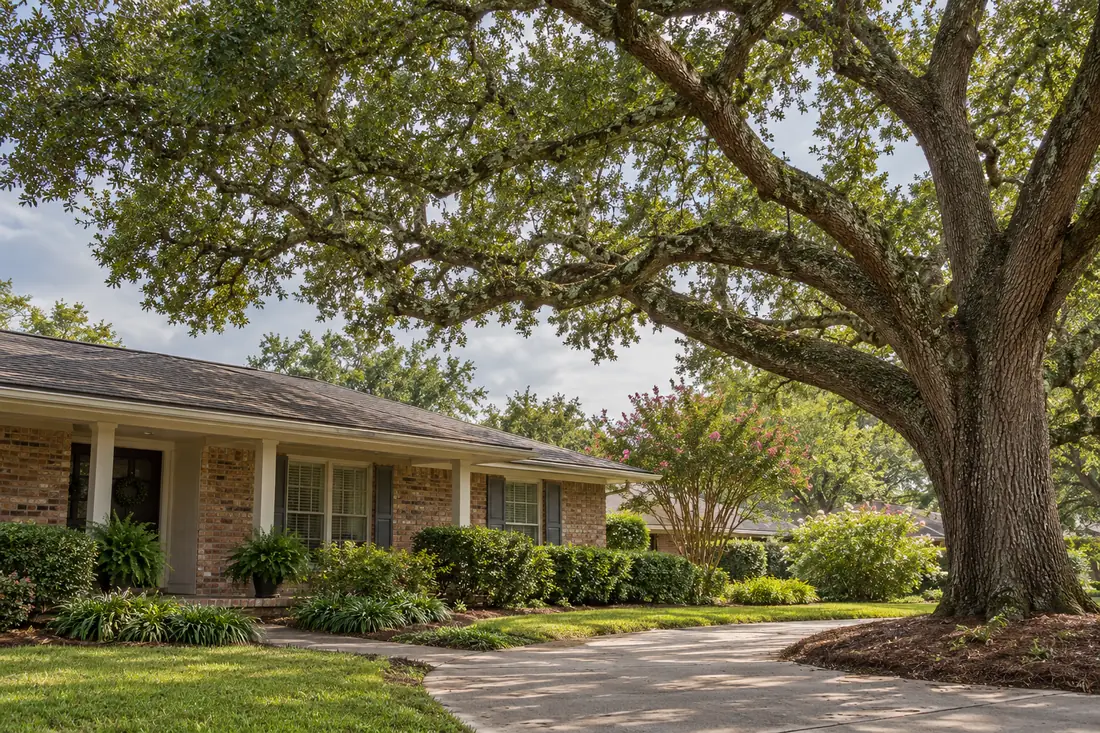
A tree close to a house can be an asset, a maintenance challenge or a genuine hazard depending on its structure and surroundings. An established live oak several feet from a wall is not evaluated in the same way as a young ornamental tree in a narrow bed.
The tree’s height, species, branch architecture, lean, rooting conditions, history and the building’s use all affect the assessment. A simple rule about how many feet are safe cannot account for these differences. Begin with the actual conflict rather than a distance that sounds reassuring.
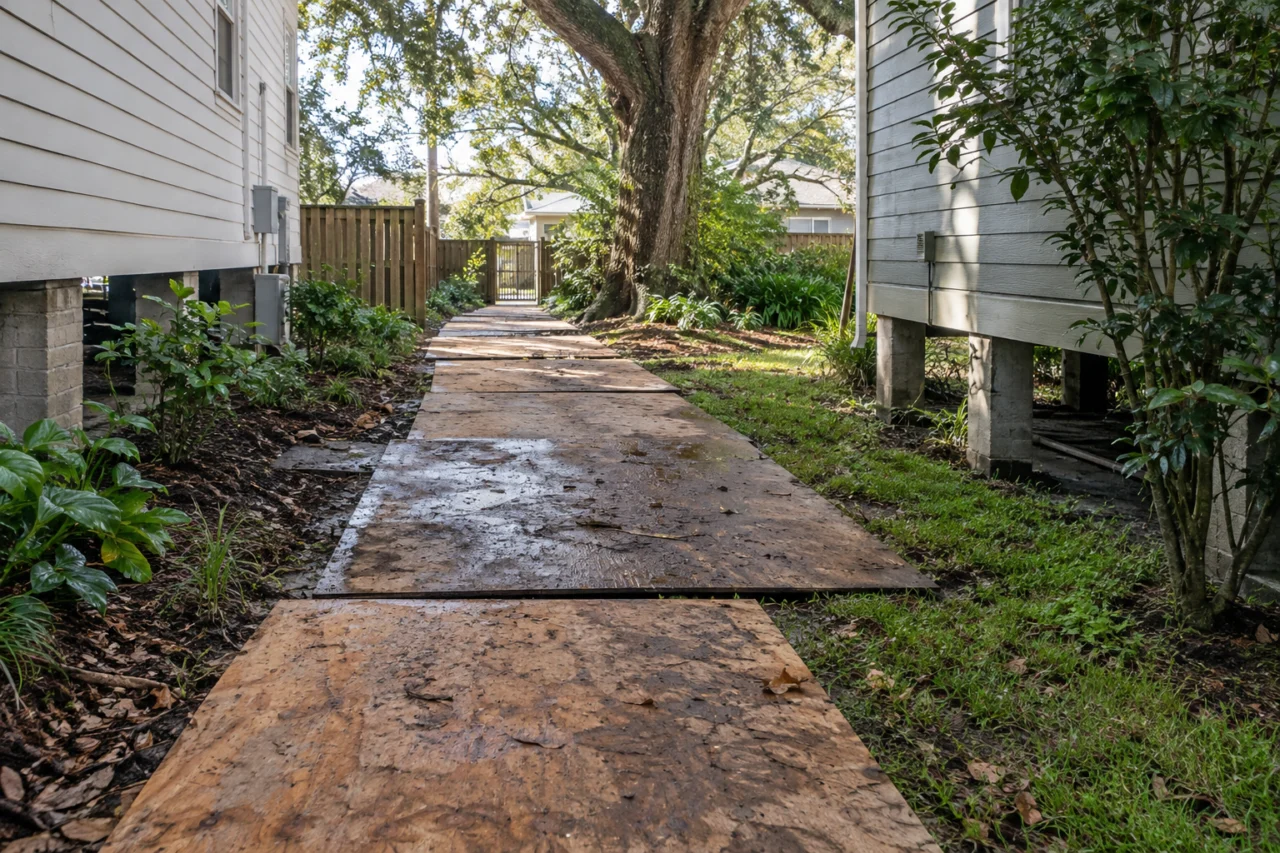
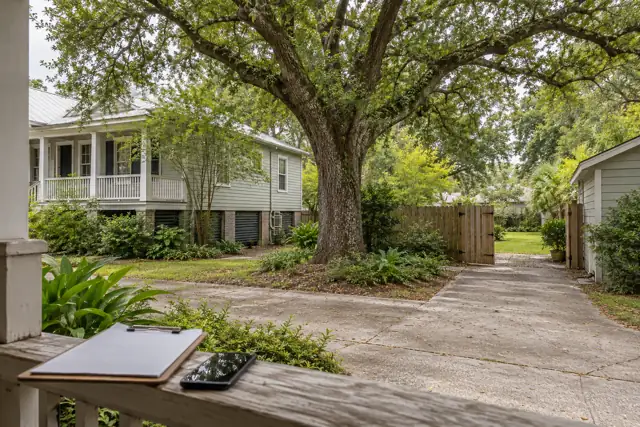
Stand where you can see the entire tree and building together. Notice which limbs cross the roofline, whether branches touch siding, whether the trunk has room to expand and whether the ground around its base has been altered by paving or construction. A photo of one branch near a window does not show the rest of the structure.
Describe when the conflict first became noticeable and whether it changed after a storm or renovation. A careful conversation separates routine clearance from structural defects that need closer attention.
Measure the actual conflict before deciding on removal
A mature trunk near siding does not necessarily mean every branch is unsafe, just as a wide setback does not prove healthy anchorage. Separate roof rubbing, gutter debris, roots affecting a walkway, foundation questions and a newly unstable trunk. Each issue has a different evidence set and may need a different professional. Photos should show building proximity from a safe open area rather than requiring access to a roof.
If a limb is touching a utility line, leave the area alone and use the utility’s procedures. The tree-service inquiry can describe general scope but is not permission to perform line-clearance work.
Distinguish contact, overhang and falling potential
Branches brushing gutters or rubbing siding create a different management question from a large cracked limb suspended over a bedroom. Contact can produce wear, blocked drainage, noise or pest access; it does not prove that the tree is unstable. Overhang alone is not evidence that a limb will fail, but an overhanging limb can increase the consequences if it does. An evaluator should inspect connections, deadwood, decay indications and the condition of the crown rather than rely solely on where the branch ends.
Roof access and tree access must both be considered. A crew may need room for a bucket truck, climbing, controlled lowering or specialty equipment, depending on the tree and surrounding obstacles. Fences, narrow driveways, overhead lines and neighboring structures can dictate what techniques are practical. A request to ‘cut everything over the house’ may be unrealistic or harmful if it would remove a large portion of the crown. Ask what clearance goal can be achieved without creating poor branch structure or excessive wounds.

Why pruning has limits
Selective pruning can solve a specific conflict when a tree’s structure allows it. Appropriate cuts may clear a roof, remove dead or damaged limbs and adjust branches that conflict with a driveway or building. The International Society of Arboriculture’s pruning guidance distinguishes cleaning, raising and reduction, rather than treating every job as a request to make the canopy smaller. A sound proposal explains which branches are targeted and what the remaining crown is expected to look like.
Avoid topping or stripping major limbs simply because a tree is close to a structure. Large indiscriminate cuts may stress the tree, create vigorous weakly attached regrowth and fail to solve the long-term clearance issue. A mature tree that requires repeated severe cutting may be poorly matched to its site. Discuss realistic maintenance intervals and whether a branch can be reduced to a suitable lateral connection. If the work would leave an unbalanced or severely diminished crown, ask the evaluator to consider other options openly.
Consider the building and ground together
A narrow side yard may contain utility lines, drainage features, irrigation and foundations within reach of the same roots and branches. The presence of roots is not a diagnosis of foundation damage, and a crack in the building requires its own structural investigation. If concrete has lifted, a drain is blocked or soil has changed, document those conditions separately. Tree work should not be sold as a guarantee that masonry movement will stop. For a related discussion, see tree roots near foundations.
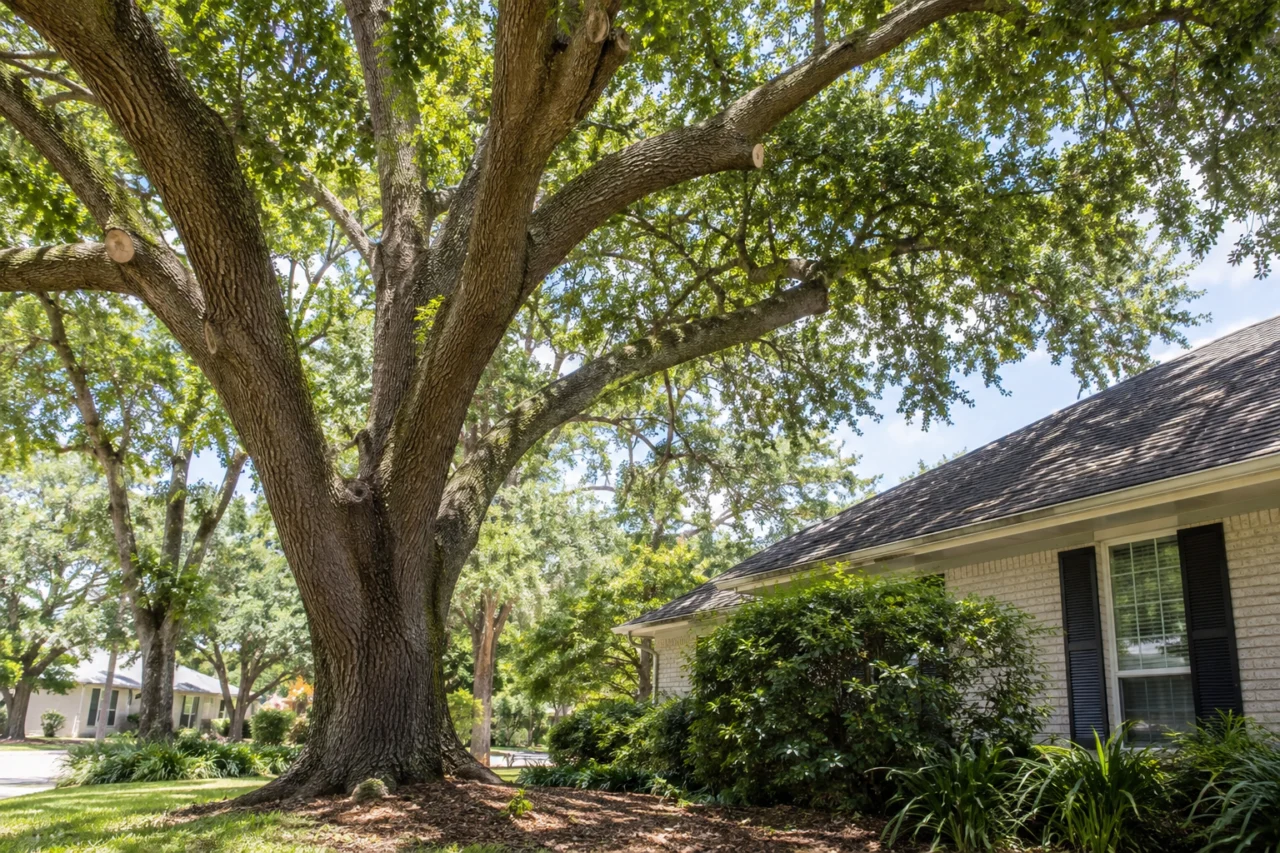
A mature tree may also be affected by work done for the building. Excavating beside a wall, adding fill, paving a previously open bed or running heavy equipment through wet soil can disturb significant roots. Before a contractor modifies the site, compare the proposed route and work zone with the tree’s likely root area. A tree can appear normal immediately after construction even if stress emerges later. The decision about keeping it should account for upcoming projects as well as today’s appearance.
How to judge potential consequences
A branch or whole-tree failure is more consequential where people sleep, vehicles park or children play than where the same material might fall in an unused corner of a large property. This does not mean a tree by a house must be removed. It means the assessment should name the targets and the exposure instead of discussing a defect in isolation. ISA’s tree-risk resource describes management options that include pruning, changing use of a target area, supporting particular defects or removal when justified.
Ask whether the observed issue is chronic or newly changed. A tree that has leaned slightly for decades presents different evidence from one that developed a new lean after heavy wind accompanied by soil lifting. Fresh cracks at major unions, hanging material and large dead limbs require prompt professional attention. From a safe viewpoint, photograph the base and any new displacement. Do not tug on branches, climb for a closer image or use a vehicle to pull a limb away from the roof.
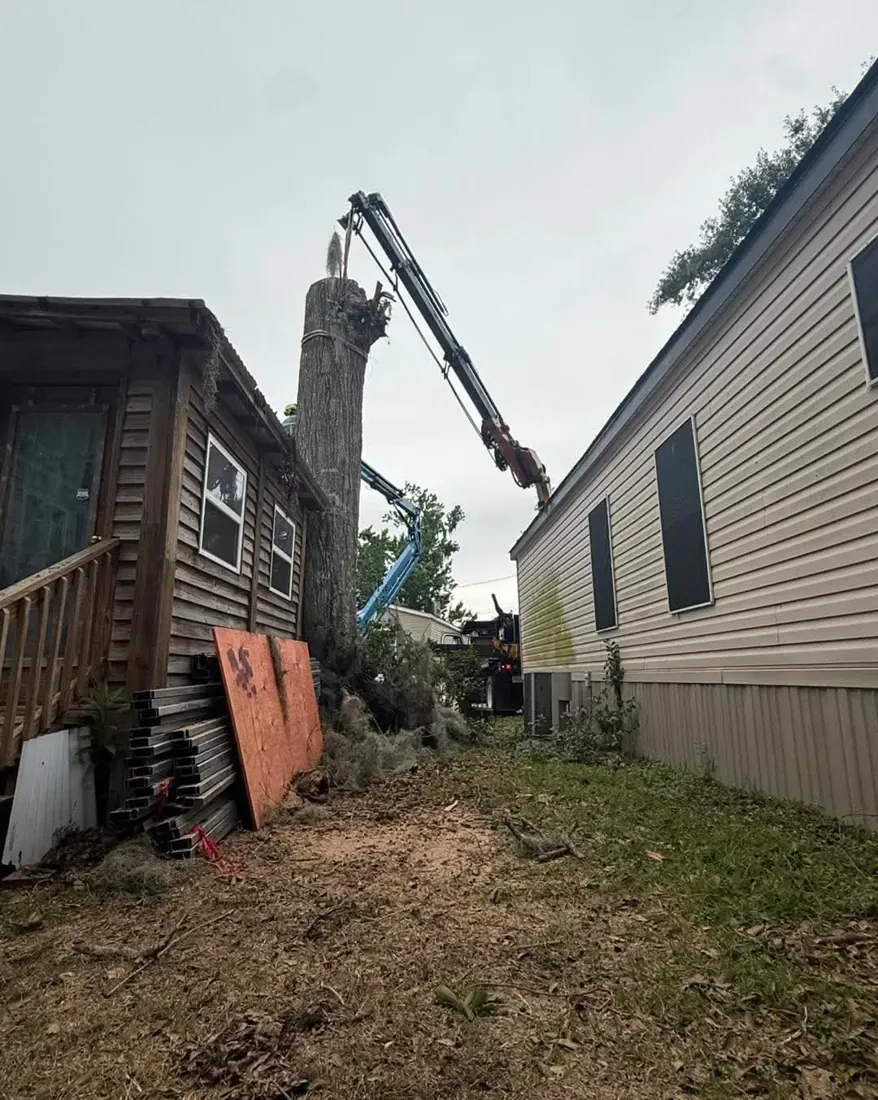
When removal belongs in the comparison
Removal may make sense if a tree is structurally compromised, likely to need destructive repeat pruning or incompatible with an essential use of the site. A discussion should consider tree value and preservation possibilities without pretending that removal is always the only responsible answer. If another professional has supplied an assessment, retain its actual wording, date and limits. A homeowner may reasonably seek a second qualified opinion for a prominent established oak before committing to a permanent choice.
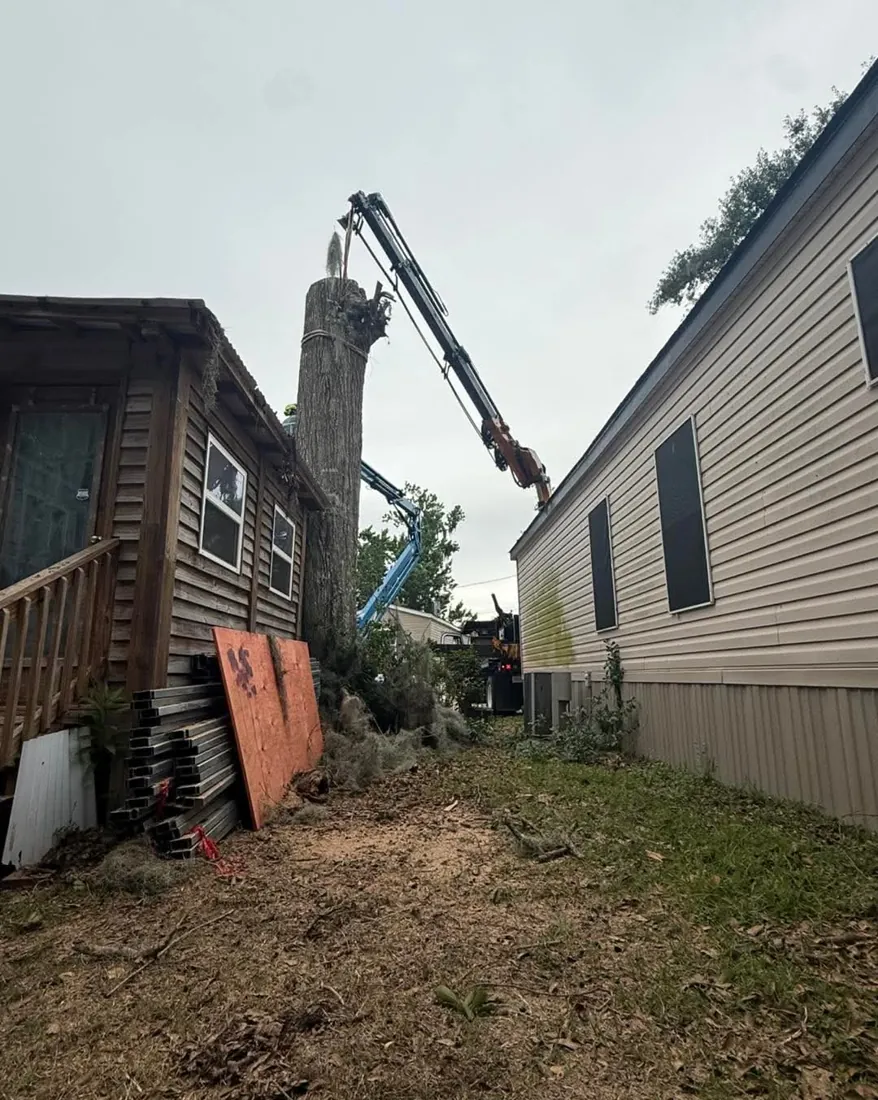
The logistics of removal near a house can be more demanding than those of open-ground removal. The crew needs a plan for controlled sections, rigging or mechanical handling, debris placement and protection of the building and hardscape. Ask how the tree will be approached and where equipment will operate, not merely how quickly it can be cut. Nearby service lines or shared property access may require separate coordination. Stump removal and landscape restoration should be specified independently when the quotation is compared.
Planning a visit without guessing the cost
Supply the address, a full-tree photograph, a picture from the street showing access and a view that illustrates the conflict with the house. Note the roof height, fence gates, parking restrictions, overhead lines and any neighboring property involved. Explain whether you want routine clearance, a documented risk review, removal pricing or more than one option. Those goals lead to different scopes. An estimate made from one close-up image cannot fairly account for rigging, protection or hauling needs.
Map the actual building conflict before choosing removal
A tree can be close to a wall without presenting the same issue as a limb rubbing a roof. Describe the specific conflict: branch contact, gutter obstruction, trunk growth against a structure, apparent soil movement or concern about a future failure. Measurements and ground-level photographs of the building/tree relationship make the question clearer than a single statement that the tree is too near.
If the conflict is canopy clearance, ask about selective pruning that respects the remaining structure and likely growth. A foundation crack, drainage defect or suspected buried-pipe issue needs its own appropriate building or utility evaluation; a tree-service estimate alone cannot establish why that condition developed. Avoid cutting large roots yourself to make room.
Compare retention and removal proposals by the problem they actually solve. The written plan should identify access, protection of siding and roof surfaces, disposal, stump treatment if applicable and where another trade must work separately. Inform neighbors where entry or branches cross a boundary, and preserve a simple before-and-after record of authorized work.

If you have a fixed deadline for roof repair, painting or another contractor’s work, say so early, but do not assume Tree Huggers has accepted an appointment through a form. Text-first contact can help identify the location and objective; a site assessment may still be necessary. Written proposals should distinguish tree assessment from physical work, identify branches or trees included and state what cleanup and site finish are planned. Keep the final scope accessible to everyone who can approve changes.
A practical outcome for close-growing trees
The best result is not always the widest clearance or the shortest stump. It is an appropriate decision about the tree and property over time. For some situations, selective pruning preserves healthy canopy and reduces building contact. For others, a qualified evaluation shows that the remaining structure or root condition cannot support a reasonable long-term plan. A maintenance schedule can help make preservation sustainable when the tree’s condition and location support it. None of these results should be promised from a website photograph alone.
Review tree trimming, tree risk assessment and tree removal for the corresponding services. If you contact Tree Huggers, describe the part of the property affected and what you want changed, along with any safety concerns. If the situation involves broken limbs near live wires or immediate danger to occupants, remain clear and contact the appropriate emergency or utility service first. That distinction protects people while the actual tree-work scope is developed.
Plan for a tree close to the house without an automatic removal
A trunk close to a house deserves a thoughtful review, not an automatic order for removal. Consider whether branches actually contact roofing, whether the trunk or roots are affecting structures, and whether the tree has visible defects. The mature canopy may also provide shade and neighborhood character. Different concerns lead to different options: selective pruning for clearance, monitoring for a stable tree, or removal when site and condition justify it.
Measure planning needs through safe observations, not rooftop climbing or branch pulling. Share photographs showing the tree base, the full crown, the nearest roof or wall and the route a crew might use. If a fence, gate, patio or air-conditioning unit blocks movement, explain that before the estimate. Tree work beside a house often requires handling smaller pieces and protecting surfaces that would not matter in open ground.

Distinguish canopy clearance from trunk and root concerns
Ownership and access can complicate an otherwise simple request. Confirm boundary questions where appropriate, notify affected neighbors and identify any overhead utilities. If the roof is already damaged, coordinate the tree scope with a qualified roofing or building professional rather than asking a tree crew to certify the structure. Avoid assuming that removing a tree will automatically repair moisture, foundation or drainage problems.
A clear proposal should identify the exact concern, intended clearance or removal extent, material handling and cleanup. Ask which work is excluded, such as stump treatment, fence dismantling or landscape replacement. Good planning weighs the condition of the tree, the occupants’ exposure and feasible work methods. The closest trunk is not necessarily the most hazardous tree, and the biggest canopy is not necessarily the most expensive one to manage.
Questions about Tree Too Close to a House
How close is too close for a mature tree?
There is no universal distance that determines safety. Species, size, structure, roots, soil, building use and site history all influence the decision. A site review is more useful than a rule copied online.
Does overhang mean the tree is dangerous?
Not by itself. A branch can overhang a structure without an obvious defect. Its condition and the consequence of failure still deserve consideration, especially over occupied spaces.
Can pruning solve branches rubbing the siding?
Often targeted clearance work can reduce contact when the tree’s structure allows appropriate cuts. The remaining crown and future growth should be considered rather than simply cutting every visible limb.
Will topping make a close tree safer?
Topping is generally poor tree care and can create large wounds and problematic regrowth. Ask for a pruning objective and cuts consistent with established arboricultural practice.
Should I remove a healthy tree only because it shades my roof?
Shade alone is not a diagnosis of risk. Discuss maintenance needs and property objectives, then compare preservation or removal based on the actual tree and site.
What if the tree developed a new lean toward the house?
Treat a new lean, especially with cracked soil or lifted roots, as a reason to keep clear and seek timely professional assessment. Do not try to pull it upright yourself.
Do tree roots automatically damage nearby foundations?
No. Roots and structural movement require separate evaluation. A foundation specialist and tree professional may need to coordinate before excavation or major root removal.
Can a large limb be removed over the roof?
The crew needs to evaluate attachment, weight, rigging options, nearby utilities and access. Controlled methods may be required; do not assume it can simply be dropped into the yard.
What happens to the stump if the tree is removed?
Stump grinding or removal may be separate from cutting and hauling the tree. Ask about depth, access, utilities, grindings and the finished condition near the building.
Should I ask for an arborist inspection or a removal quote?
State whether you need advice about condition, pricing for a specific scope or both. These are different services, and the estimate should identify which conclusions it provides.
Which photos best show the house conflict?
Send the full tree and building together, plus safe views of the base and branches involved. Identify the affected room, roof section or access route without standing under damaged material.
How do I compare two proposals fairly?
Compare actual branches or trees included, access and protection methods, debris handling, stump scope, exclusions and any follow-up. A lower number may reflect less completed work.
Get a scope for your property
Distance from a house is only one part of a tree decision. Consider branch position, attachment defects, trunk condition, roots, roof contact, wind exposure and how the space below the canopy is used. Record whether clearance problems are seasonal, whether a branch actually touches the structure and whether a recent lean or crack developed.
Use wide photographs taken from safe ground; do not climb onto a roof to inspect branches or pull a loaded limb away from gutters. A healthy tree close to a home may require selective clearance rather than removal.
Ask the estimator to identify which branches or trees are included, the objective of any pruning and whether there are viable alternatives to removal. Confirm that work can be done without using a roof, fence or neighbor’s yard as an assumed staging area. The written scope should discuss controlled lowering near structures, protection for siding and landscape areas, debris movement, stump treatment if needed and any separate permission requirements. A claim that a tree is ‘too close’ needs an explanation tied to actual conditions.