Roof clearance is about more than leaves
Branches rubbing shingles, gutters or siding can cause wear and should be managed.
Roof overhang decisions before a limb is cut
A tree growing over a roof does not automatically require whole-tree removal. The important first step is to identify the actual conflict: branches rubbing roofing, storm-damaged wood above an occupied area, blocked service access, or excessive overhang with no contact. Photographs from the ground should show both the canopy and the roofline. Do not walk a roof or climb into the canopy to document a branch, especially after rain or wind.
Ask the evaluator to distinguish ordinary clearance pruning from reduction cuts, defect management and removal. Improper heading or excessive canopy removal can create weak regrowth and other problems. A request to make every branch stop at a property line may also be biologically or mechanically inappropriate; the written recommendation should address natural branch structure and a realistic clearance objective.
Plan the job around gutter condition, fragile roofing, solar equipment, exterior wiring and where cut material can be lowered without striking the building. Define who will inspect any existing roof damage and how cleanup is handled. The tree contractor’s scope should not be presented as a roofing repair warranty, and a remote estimate should not promise a safe rigging method without seeing the site.
Site planning detail: Branches over a roof can create several different problems: direct contact, recurring leaf buildup, storm exposure and blocked access to gutters or roof work. Start with photographs from the ground and identify which branch or limb is the concern, without walking onto a roof or working near electric service. The safest solution may be selective clearance pruning rather than broad canopy reduction. Ask the estimator to discuss branch attachment, clearance goals, safe equipment position and whether removing a large limb could leave an unbalanced canopy.
Coordinate with a roofer if damage or leaks are already present, because tree work does not itself repair roofing. Protect gutters, landscaping and neighboring access in the scope. After pruning, confirm the specified clearance is visible, cut quality is appropriate and no hanging debris remains. Avoid promises that a particular clearance eliminates all future storm or leaf problems.
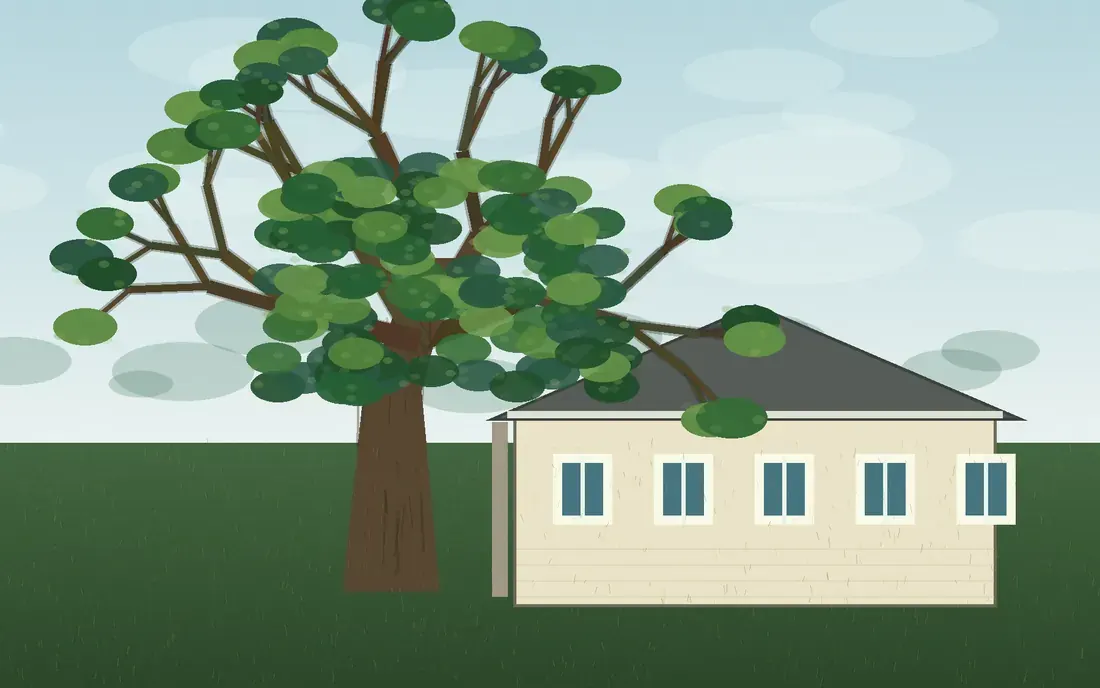
Deadwood over a roof is a more immediate branch-failure concern.
Plan roof clearance without sacrificing the whole canopy
Branches above shingles can create shade and leaf accumulation, but removing too much living crown at once can stress a tree or create poorly attached regrowth. Identify which limb actually rubs the roof, blocks access or carries an observed defect. A photograph taken from the ground should include the branch origin, roof edge and available work area. Do not climb onto the roof for a closer angle.
An appropriate plan balances building clearance with tree health and long-term regrowth. A small branch-tip trim and a complex rigged limb removal are different scopes; the estimate should distinguish them.
Heavy limbs may be healthy but still deserve structural review if they extend over important targets.
Prune for clearance without stripping the tree
The goal is to create reasonable clearance and reduce specific hazards while keeping enough healthy canopy for the tree to function normally. Removing too much on the house side can unbalance the canopy and create new problems.
When removal becomes part of the conversation
If a large tree has severe defects, poor root conditions, repeated major failures or an unsuitable long-term relationship with the structure, removal may be more practical than repeated heavy pruning.
Related resources
Tree Trimming
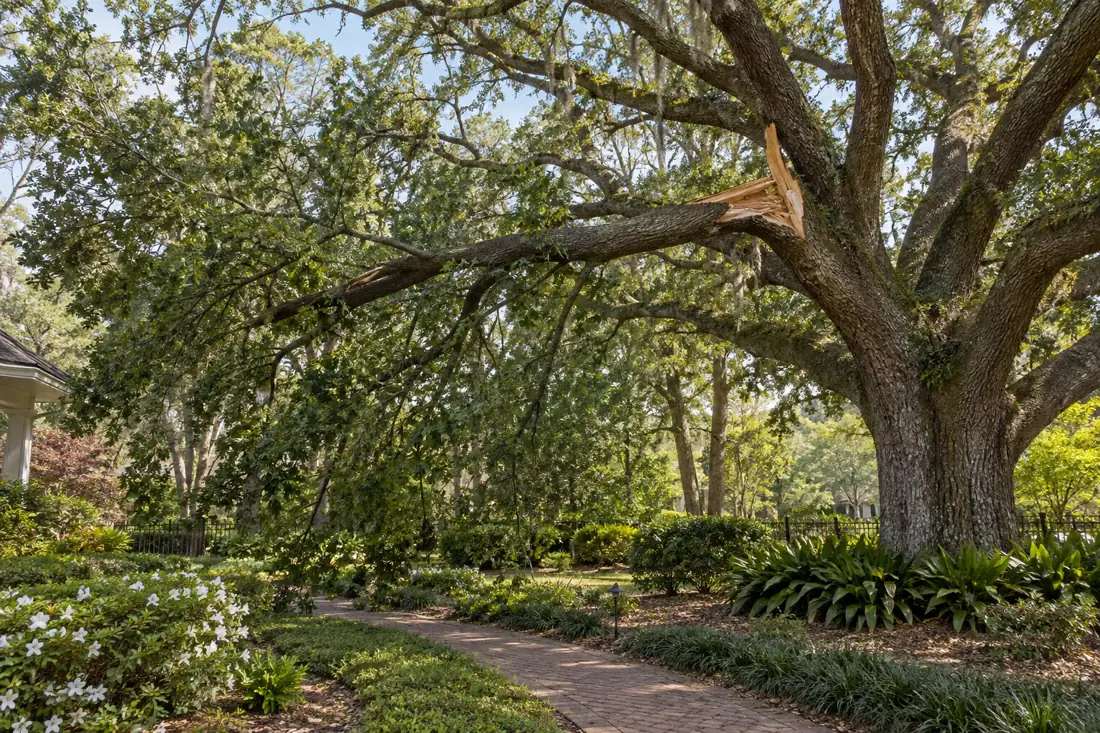
Hanging Limb Removal
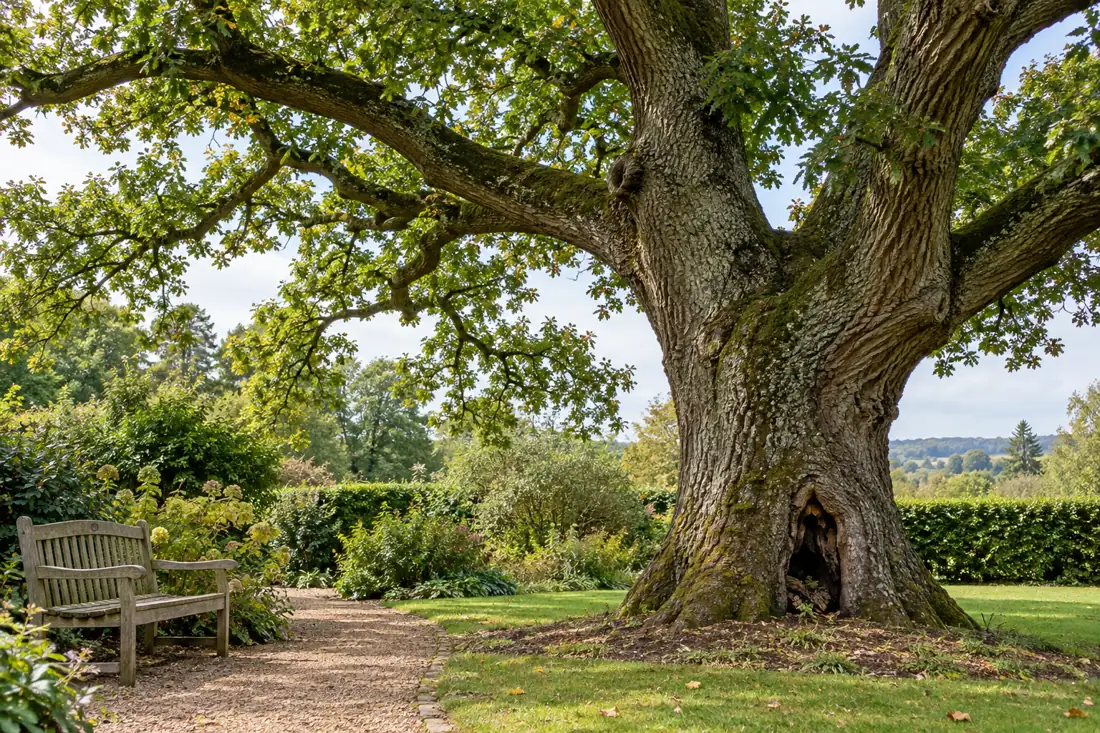
Tree Risk Assessment
Identify the kind of roof conflict
A branch that overhangs a roof is not necessarily defective, but it deserves an inspection that considers what would happen if it failed. Some limbs simply drop leaves, shade the shingles or approach gutters; others rub the roof, contact a chimney or contain obvious deadwood.
A large branch that passes above an occupied room raises a different concern from fine growth above a detached shed. Describe the part of the roof involved, the tree species if known and whether the problem has changed recently. Avoid treating all overhang as one emergency.
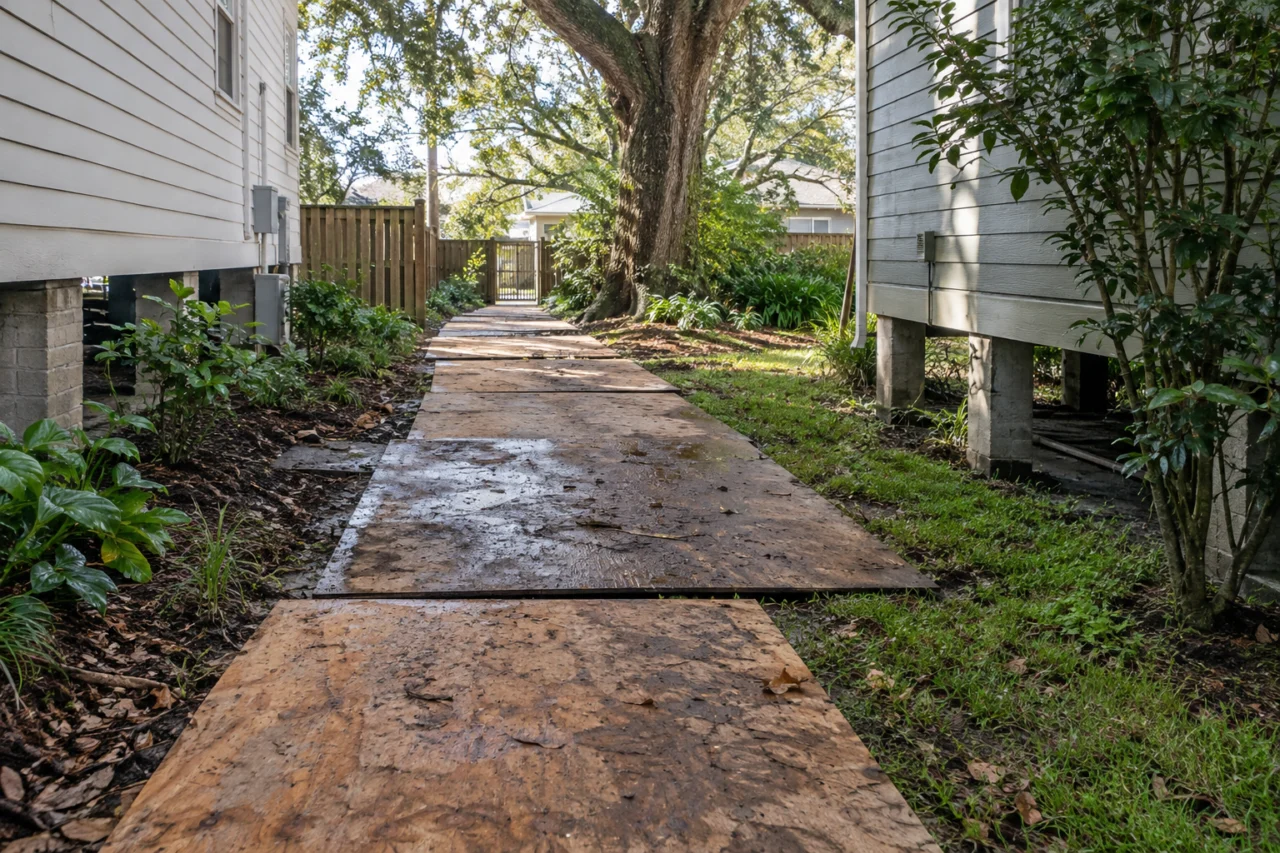
Look at the roof from a safe ground position. You may see a limb resting on shingles, a narrow clearance at a gutter, branches moving against fascia or a broken section held by neighboring growth. Do not walk on the roof to pull branches or take pictures underneath unstable material.
A wide image showing the tree and the entire roof is often more useful than a close-up of leaves. The initial goal is to establish the work objective: clearance, damage prevention, an evaluation of suspect wood or removal of material that has already failed.
Roof clearance has multiple dimensions
A limb can be vertically clear of the roof yet still scrape a wall, rake a gutter during wind or obstruct a service entrance. Another limb may be above an area that cannot safely support debris or work equipment. Ask the tree-care professional how much clearance is appropriate for the specific tree and roof geometry, recognizing that branches continue to grow and move.
A rigid clearance number copied from another property may not fit the branch structure or the maintenance plan. Future access for roofers matters too.
Overhead utilities, antennas, solar equipment, gutters, skylights and neighboring structures may limit how wood can be cut and moved. A section can be too heavy or awkward to drop even when the ground appears open. Work may involve controlled lowering, climbing or suitable mechanical equipment selected after access has been reviewed. The route to the tree matters as much as the reach over the roof. Tell the provider about narrow gates, steep driveways, buried drains, irrigation and fragile landscaping before a method is proposed.

Choose pruning cuts for tree structure
Effective clearance pruning works with the tree’s branching pattern rather than cutting every limb at the edge of the roof. A qualified arborist may remove deadwood, selectively reduce the reach of a branch or redirect growth toward an appropriate lateral. ISA’s pruning guide explains the difference between cleaning, raising and reduction. A good estimate identifies the actual branches and remaining structure. It should not promise that a mature tree will stay a fixed distance from a roof indefinitely.
Excessive topping, flush cuts or removal of large amounts of live foliage can create wounds and future maintenance problems. A tree that needs repeated drastic reduction for roof clearance may warrant a discussion about its long-term compatibility with the property. Do not accept a plan described only as ‘cut back hard’ without understanding where the cuts occur. If a damaged union or extensive decay is present, pruning may need to follow a more formal risk review instead of proceeding as routine seasonal maintenance.
Evaluate damage separately from shade and debris
Leaves and small twigs in gutters are a maintenance issue; a branch grinding against shingles or a large dead limb over a roof is a different condition. Tree-care professionals can address the tree but should not be treated as roofing inspectors. If there are water stains, damaged flashing, crushed vents or broken roofing, a qualified roof contractor may need to evaluate those components. Keep photographs and estimates for roof repair separate from tree-service records so each provider’s findings remain clear.
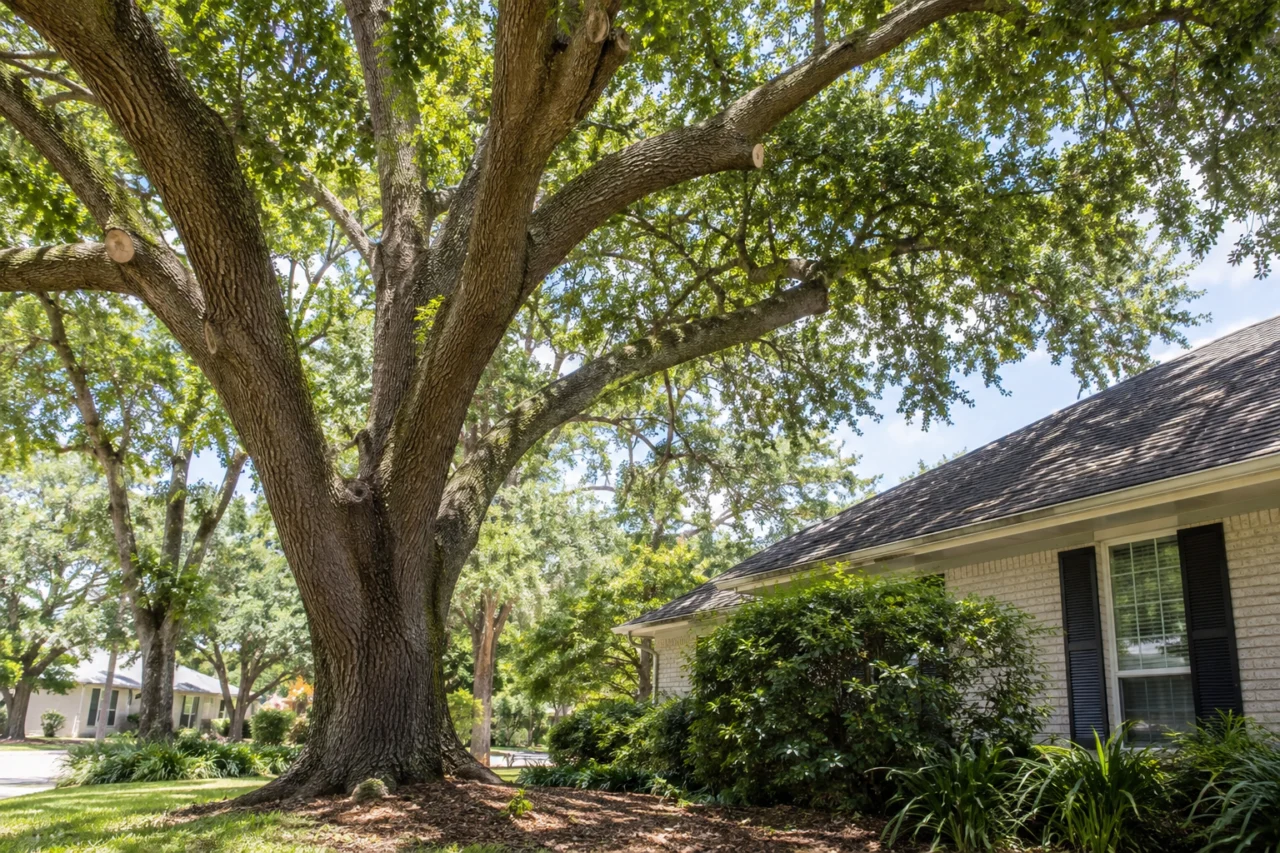
If a branch already touched or damaged the roof during a storm, note what happened and when. Photographs can help document the sequence, but do not ask workers to recreate an impact or stage a before-and-after scene. Where insurance might be involved, report the facts under the applicable policy process; a tree contractor cannot guarantee a carrier’s coverage decision. If a branch is currently resting on a structure, the first operation may be controlled removal, with repair and other tree care scheduled separately.
Recognize when overhang suggests a bigger problem
Large dead branches, splitting at the union, a crack that has opened after wind, fungal fruiting bodies near a load-bearing area or fresh movement around the base deserve closer attention. The fact that a limb is directly over a roof increases potential consequences but does not itself establish its likelihood of failing. ISA’s risk-management resource recommends addressing tree condition and nearby targets together. A competent review considers both the branch and the supporting trunk and roots.
If a storm left broken wood hanging over the house, do not approach the drop zone to collect debris or examine the cut. A branch may shift without warning, particularly if it is caught in another limb. Keep occupants and vehicles clear of the affected area when feasible, and contact the appropriate utility or emergency service if conductors or immediate danger are involved. A professional needs to evaluate access and stabilization, not just the shape of the cut seen from the driveway.
Work around a home without new damage
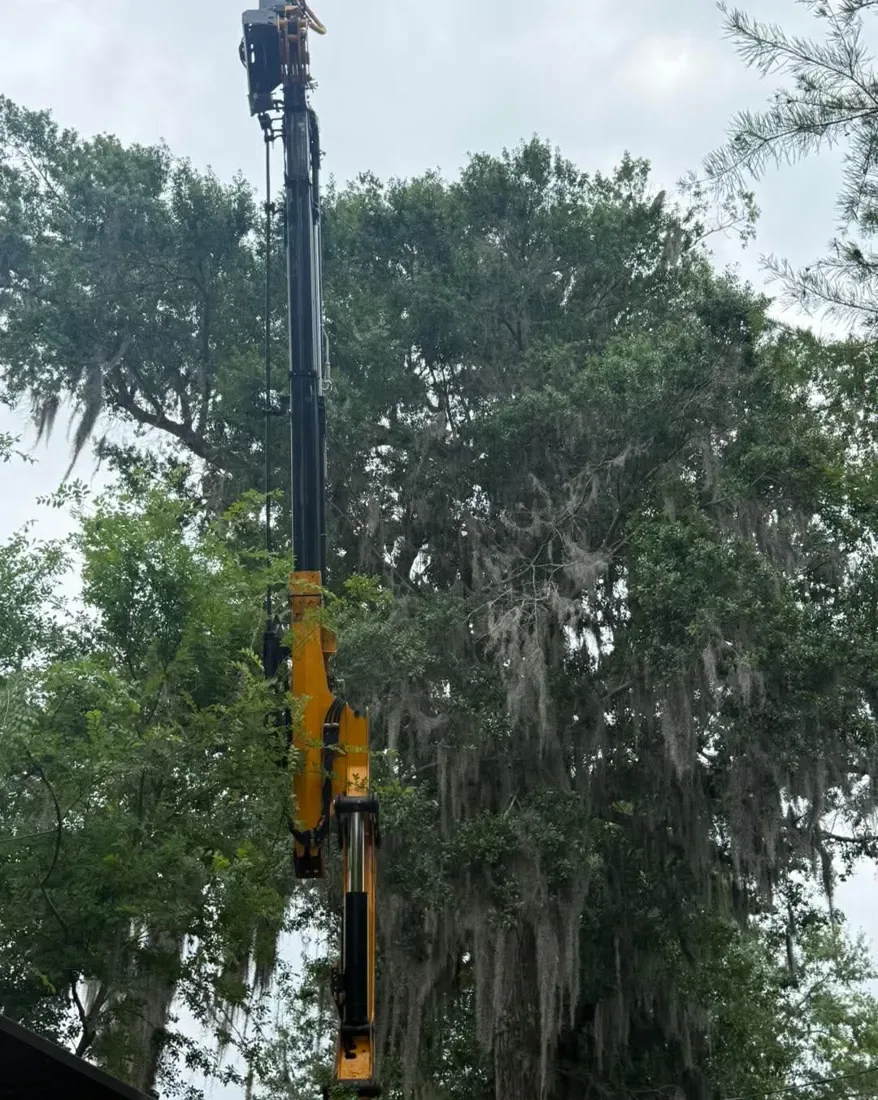
Tree work above a building requires explicit site protection. Ask what method will control the wood, where the crew can position equipment and how the roof, gutters, fences and landscaping will be protected. A contractor may need to identify a safe lowering area or use specialized access because the driveway cannot support a particular machine. The exact method is determined by the crew’s assessment, not a website claim that one piece of equipment is always safer or faster.
Discuss debris removal and the condition of the site after work. Will leaves and small branches be cleared from accessible ground, will large logs be hauled, and who is responsible for material already on the roof? Are roof repairs outside the tree scope? Written answers prevent misunderstanding after the main limb is down. Do not assume stump grinding, landscaping repair or gutter cleaning are included in a canopy-pruning quote. Identifying exclusions makes different estimates comparable on the same work objective.
Think about a maintenance interval
For a healthy tree that can be retained, discuss when clearance should be reviewed again and what kinds of changes warrant earlier contact. Growth rates, branch architecture and the space available around the roof influence how long an improvement lasts. A yearly calendar is not a substitute for observing a new crack or hanging branch after a storm. Ask a qualified professional what changes the owner can safely monitor from ground level and which require another visit.
A maintenance plan should also recognize future roofing work. If a new roof, gutter replacement or solar installation is planned, explain the timing before pruning. Coordinating access could avoid repeated disturbance, though the tree should not undergo heavy unnecessary cutting simply to ease a contractor’s schedule. Preserve a record of which branches were worked on and when. That history can help a future arborist distinguish routine growth from new injury or storm damage.
Preparing an estimate that matches the real problem
Send a wide picture of the tree and roof from the front or side, a safe view of the nearest branch and any known defect. Include roof height if known, the address, access limits and which portion of the structure is affected. State whether the objective is preventative clearance, storm-damage removal, a risk assessment or a combination. If you have a roofer’s recommendations, share them as supporting information rather than as a substitute for tree assessment. The tree crew can then describe a practicable scope.

Define a safe roof-clearance outcome rather than an arbitrary cutback
Roofline requests often mix several different objectives: removing a dead branch above occupied rooms, eliminating direct shingle contact, allowing gutter service or reducing routine debris. Identify which one matters for this property and photograph it from safe ground, including enough of the crown to show how the requested cuts relate to the rest of the tree.
Ask the tree professional to describe selective cuts and their effect on canopy balance, not merely a distance to cut everything back. The right clearance depends on branch direction, growth potential, tree structure and nearby utilities. A roof contractor should inspect actual roof or gutter damage; trimming branches does not repair worn shingles, flashing or drainage.
Before authorizing work, confirm whether access needs a neighbor’s permission and where cut wood can be lowered without damaging decking, landscaping, fences or solar equipment. The completion check should compare the agreed roof conflict with the resulting clearance and note future inspection needs. Never climb onto a roof to gather close photographs for the estimate.
Read tree trimming services, hanging-limb removal and tree risk assessment for related next steps. Tree Huggers can discuss suitable work after the branch condition and access are known. Do not enter an unsafe area to get a better photo, and do not assume an estimate form constitutes emergency dispatch. For an immediate hazard, communicate directly with the appropriate service. A clear job scope should leave the roof protected and the remaining tree managed thoughtfully.
Address branches above a roof with a defined objective
Branches over a roof can create concerns about contact, debris and storm exposure, but an overhanging canopy is not automatically unhealthy or unsafe. Begin by identifying the actual issue: a limb rubbing shingles, deadwood above an occupied room, repeated gutter blockage or the desire for practical maintenance access. The desired outcome determines which branches need review. Removing every branch above the roof may not be biologically appropriate or structurally helpful.
A mature tree’s response to pruning depends on branch size, species, season, previous cuts and the resulting balance of the crown. Avoid asking for topping or severe one-sided reduction solely to open a roof view. An appropriate assessment considers the branch attachments and the whole tree. If damage to roofing is suspected, a separate roofing inspection may be necessary; tree contractors should not be expected to certify roof integrity.

Roof protection requires precision, not indiscriminate cuts
Ground access can be more complicated than it appears from the street. Fences, neighboring property, pool equipment, solar panels, utility lines and soft lawn surfaces affect handling. Show the roofline and branch position using photographs from safe ground locations. Do not climb onto the roof to obtain pictures or attempt to shake down dead limbs. Confirm whether the proposed equipment needs neighbor or street permissions.
Ask the provider to describe the target clearance, specific sections proposed for pruning, how material will be lowered or removed and what cleanup includes. If the tree needs additional structural evaluation, keep that recommendation distinct from routine roof clearance. A written scope reduces the chance of unnecessary cutting while making the homeowner’s practical concern clear. Any eventual decision should reflect actual condition and site constraints rather than a fixed distance applied to every tree.
Questions about Tree Growing Over a Roof
Is every branch over a roof unsafe?
No. Overhang increases possible consequences if a limb fails, but risk assessment also considers branch condition and likelihood of failure. A stable overhanging branch is not automatically a removal order.
How much clearance should I request?
Appropriate clearance depends on branch structure, roof design, tree health and ongoing growth. Ask the evaluator what is realistic rather than using an arbitrary number for every property.
Can a crew remove one large limb without removing the tree?
Sometimes. A professional must assess attachment, tree response, rigging and nearby property before confirming that one-limb removal is a suitable scope.
Will aggressive topping prevent future roof problems?
No. Topping can damage tree structure and encourage unwanted regrowth. A selective pruning plan should identify legitimate cuts and their purpose.
Who repairs shingles or gutters if branches already hit them?
Tree removal and roof repair are distinct services. Ask a qualified roofer to evaluate structural or roofing damage, and keep written scopes from both contractors clear.
What if a branch is resting on the roof after a storm?
Keep people out of the affected area and avoid pulling or cutting it yourself. Qualified tree personnel may need controlled removal before roof professionals can inspect and repair.
Are overhead utility lines relevant to roof pruning?
Yes. Work near power conductors requires appropriate coordination and qualified personnel. Never touch a branch or tool that could contact an energized line.
Do I need to clean my gutters before tree trimming?
Do not climb or work beneath damaged wood. Ask whether gutter cleaning is a separate service, and address structural hazards before routine maintenance.
Can tree pruning be coordinated with a new roof installation?
Often advance coordination helps define safe access and clearance, but it should not justify damaging cuts. Share the roofing project schedule with the tree professional early.
What if branches move against siding only during wind?
Describe the contact location and frequency if observed safely. A professional can examine branch structure and discuss appropriate clearance without promising movement will stop permanently.
How should a roof-overhang estimate describe debris?
Ask whether branches are lowered or cut in sections, where material will be collected, whether hauling is included and how buildings and landscaping will be protected.
What photos are useful before scheduling?
Send the tree and roof in one frame, safe ground-level views of the branch and any visible damage, plus access and utility details. Never climb for a better angle.
Get a scope for your property
Branches over a roof create questions about clearance, branch condition and safe work positioning. Collect safe ground-level views showing the roofline, overhang, trunk and neighboring access. Note any rubbing contact, fallen twigs, blocked gutters, cracked limbs or recent storm change, without claiming those observations prove structural danger. Do not walk onto a roof or stand below a suspended branch to get a close-up. A pruning plan should recognize tree species, sound branch attachment and the amount of live canopy that can reasonably be removed.
Before accepting a quote, ask how limbs will be controlled over shingles, gutters, solar panels or skylights and where they will be lowered. Confirm any crane or climbing access, protection of nearby landscaping and whether debris hauling and final cleanup are included. If a roofer is also involved, coordinate sequence so one trade does not damage or obstruct the other’s work. The written result should be more specific than ‘trim tree away from roof’ and should avoid promising zero future leaf or branch fall.