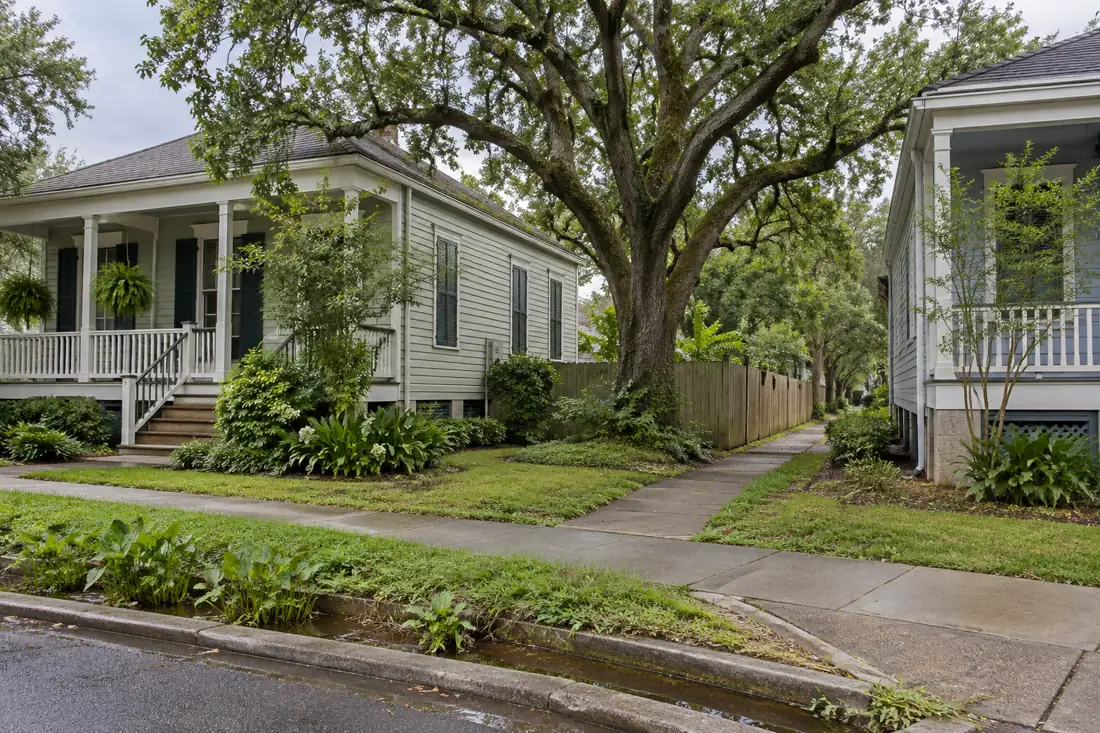
Drainage projects can change soil levels, roots and equipment routes around trees. Share what was excavated or installed and identify any symptoms since the work. A tree assessment should consider that history before recommending treatment or pruning. Future work should protect the new drainage features as well as the remaining trees.
Site-specific planning checkpoint: After a drainage project, ask for the final layout or as-built information when available rather than relying on where the trench used to be. Identify new pipes, basins, culverts, swales and shallow drainage paths before routing machinery or cutting roots. Photograph existing grades and locations where water stands, but avoid promising a tree operation will fix broader drainage performance. If roots were cut during construction, note the tree’s condition, canopy changes and timing for a qualified assessment. Protect new inlets against chips, sawdust and soil displacement, and avoid compacting recently disturbed backfill. The project scope should distinguish selective pruning, tree-health assessment, removal, stump grinding and restoration of disturbed ground. Ask the customer to share any contractor restrictions or warranty concerns about the new infrastructure, then coordinate with the appropriate drainage contractor or authority before working across it.
Gather any approved drainage drawings, photographs from construction, known trench routes and information about new catch basins or pipe crossings.
Recheck the drainage project's finished elevations
Tree work after a drainage improvement starts with the finished grade rather than an old property sketch. Walk the new swales, inlets, driveway crossings and low areas with the drainage contractor's plans available. Mark where fill was added, soil was removed and equipment crossed existing root zones. These details matter because a tree that stood beside a shallow ditch may now be next to a deeper cut, compacted shoulder or new discharge point.
Ask which surfaces are final and which still need grading, seed, sod or erosion protection. A tree contractor should know the intended direction of runoff before setting down a machine, stacking wood or spreading grindings. Photograph the current ground condition from fixed landmarks, not as proof of any particular work history, and note places where recent rain has already exposed soft edges or standing water.
Use as-built drainage information before ordering pruning or removal
Gather any approved drainage drawings, photographs from construction, known trench routes and information about new catch basins or pipe crossings. Compare these with current grades and visible swales. Record the specific areas where soil was cut, filled or compacted; do not assume that the work on the ground matches the original plan. A timeline of observed tree changes can help evaluation without declaring an unproven cause.
Ask which buried pipes, covers, recently backfilled trenches and erosion-control features cannot be crossed or used for debris storage. Verify equipment-loading questions with the responsible drainage professional where necessary. The tree contractor should understand where runoff must travel before proposing a chip pile, a landing area or grinding near an inlet.
Separate the condition assessment from the proposed tree scope. A recommendation might involve monitoring, selective pruning, root-zone protection or removal, depending on a qualified on-site evaluation. Specify who handles any soil repair or drainage restoration and preserve the useful evidence without turning an observation into a liability claim.

Locate pipe runs and underground drainage components
New buried drain lines are easy to overlook once trenches have been backfilled. Request as-built information when available, identify visible cleanouts and catch basins, and flag any suspected underground connections. Calling the appropriate utility-location service helps with covered public utilities, but private drainage lines and irrigation may require separate owner records or a qualified locator. A contractor should not treat unmarked soil as a guarantee that nothing lies beneath it.
Before grinding a stump or setting stabilizers, discuss how far equipment may safely approach each line. If the exact alignment is unknown, choose a conservative method or delay intrusive work until the route is confirmed. Record these limits on the site sketch so the truck operator, climber and cleanup crew follow the same boundaries instead of relying on a verbal warning that can get lost.
Protect swales from equipment ruts and blocked flow
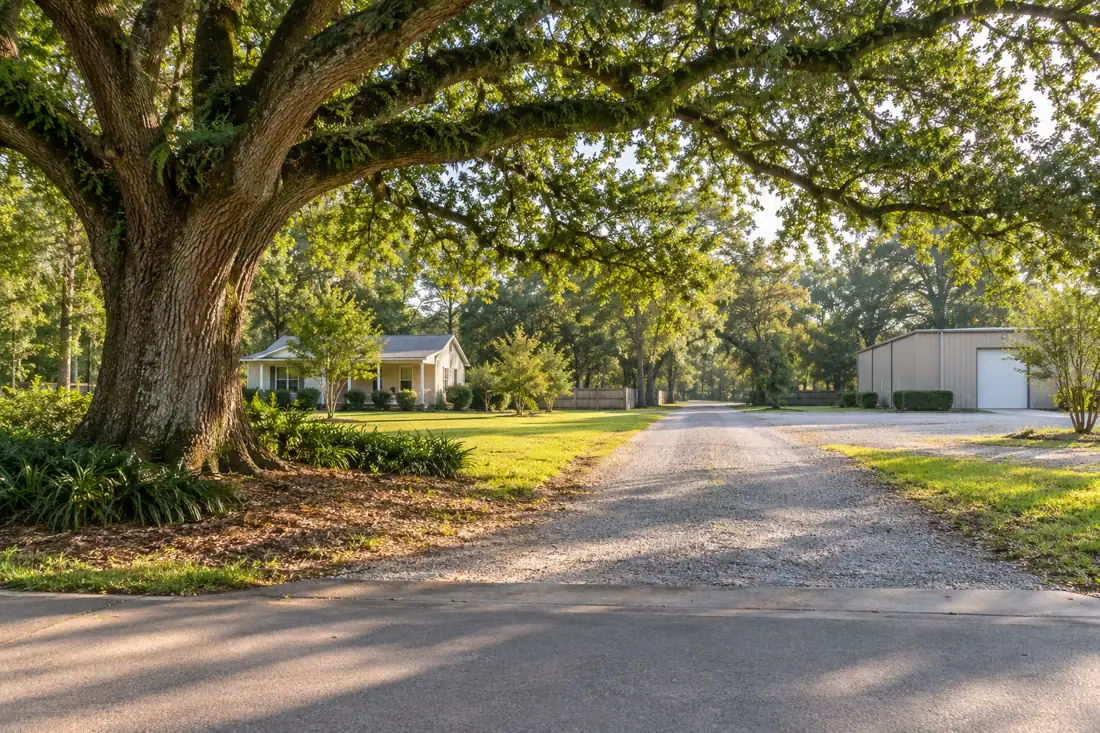
A shallow landscaped swale can lose its purpose when heavy tires create a ridge across it. Plan equipment travel along established pavement or evaluated firm ground, and use suitable ground protection only where the crew judges it effective. Avoid assuming a sheet of plywood can support a truck or protect newly saturated soils. The most important question is whether the access route stays stable and still drains after the crew leaves.
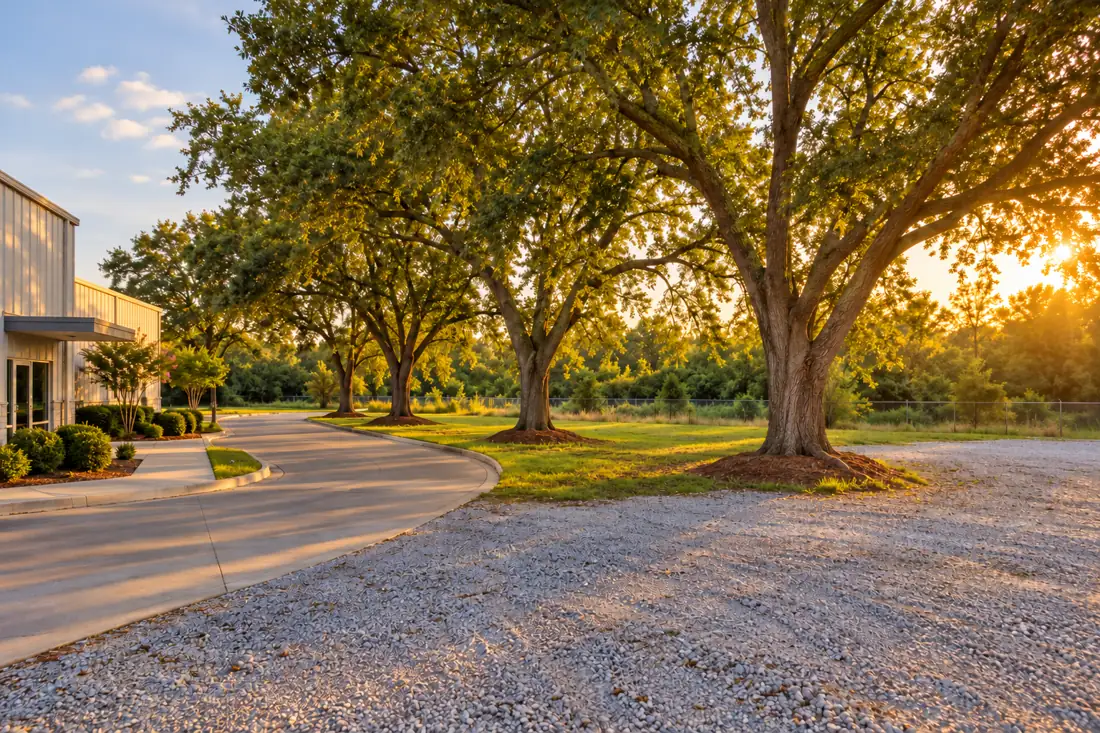
Wood, brush and sawdust piles should sit outside water paths, inlet throats and overflow areas. Even temporary stockpiles can send fine debris downstream during an afternoon thunderstorm. Mark a staging place that allows loading without backing into a steep ditch, and specify a final walk to remove stray branches and material that could obstruct the improved drainage system.

Evaluate root-zone disturbance before deciding on removal
Excavation, imported fill and repeated construction traffic can change root growing conditions without creating an immediately obvious trunk defect. Inspect the relationship between disturbed soil and the canopy, looking for new lean, declining foliage, broken surface roots, or a change in soil moisture near the trunk. Those signs warrant evaluation, but they do not prove that a tree is unsound or must be removed.
Where an established tree is valuable, ask whether limiting work, reducing competing vegetation, monitoring condition or obtaining a qualified tree assessment makes more sense than clearing it. Root damage can be uneven and delayed; a photograph taken immediately after grading cannot predict the full response. The estimate should distinguish a confirmed structural concern from a precautionary recommendation based on uncertain underground conditions.
After drainage construction, protect what was installed and document what changed
A completed drainage project may leave new catch basins, shallow connecting pipes, repaired pavement and backfilled soil that is less consolidated than the older ground nearby. Before planning a tree crew route, request an as-built sketch or other reliable layout if available and mark visible inlet covers, cleanouts and new grades.
Do not infer underground pipe positions solely from the apparent straight line between basins. Tree roots may have been affected during excavation, but a canopy symptom after the project is not enough on its own to assign a cause.
After drainage construction, separate settlement evidence from tree-work needs
Fresh drainage improvements can change the surface around a tree: excavated soil, newly placed stone, reconstructed sidewalks, trenches, altered runoff and machinery paths may be visible. None of those observations alone establishes compaction quality, root injury, engineering failure or who is responsible. First record the actual tree concern and the construction timeline separately.
Note visible changes such as exposed roots, broken limbs, disturbed grade or an unusual lean from a safe location, with dated photographs that show the whole tree and the nearby excavation. Do not probe a trench or cut an exposed major root to investigate.
If the tree remains standing, a qualified assessment may be appropriate before assuming it must be removed. Identify which organization performed the drainage work and whether an easement or maintenance area limits equipment placement. A tree contractor can describe its proposed pruning or removal method, but should not certify buried utility depths, settlement causes or engineered backfill.
Keep civil repair, tree work and landscaping restoration as separate decisions and obtain written work limits before loading equipment onto fresh pavement or soft trench backfill. For work tied to a new driveway or planned construction, use the dedicated clearing guide to define future access and retained trees.
Plan safe access when soil is newly saturated
Recently worked soil may look dry on the surface while remaining weak below. A drainage project often concentrates runoff in places where equipment previously could travel. Walk the approach after representative weather, check the travel distance from the hard road to the work position, and identify slopes or soft shoulders that may not carry truck loads. Do not make a machine-access promise based only on an aerial image.
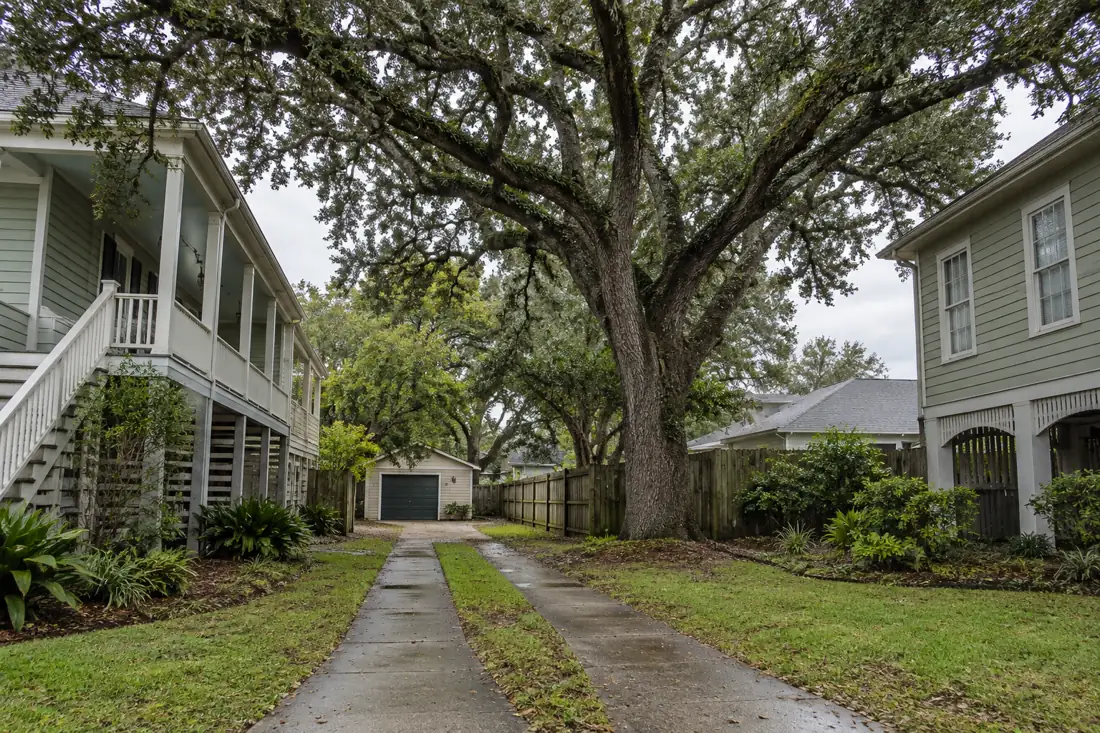
A tree-removal plan may use climbing, sectional dismantling or equipment staged at a more distant firm area. Those options affect time, debris movement and property protection. Keep pedestrians and vehicles away from unstable ground during evaluation, and let the qualified crew determine loading and rigging rather than trying to calculate equipment capacity from a homeowner's photographs.

Coordinate Tree Work Following Drainage Upgrades
After a drainage project, the yard may look finished while buried pipes, catch basins and recently graded surfaces remain vulnerable to heavy loading. Before tree work, obtain or sketch the known layout: inlets, outlet direction, shallow swales, buried pipe lines and new retaining edges. Photograph the surface during dry conditions rather than stepping into wet excavations. Share the location of any recent trench around tree roots; root disturbance can affect a tree independently of the reason the drainage work was installed.
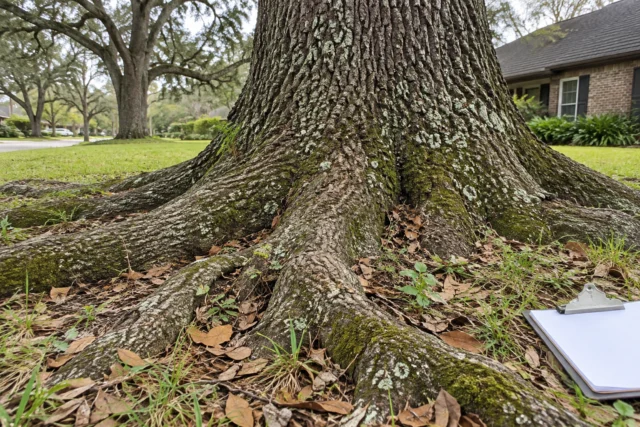
Changes in grade can alter the amount of soil surrounding the root flare. Do not cover an exposed root flare with spare fill or cut visible roots to make a mowing surface level without professional assessment. If the tree has declining foliage after excavation, describe the timing and observations separately from a diagnosis. An arboricultural evaluation may be appropriate before choosing removal, especially if the tree was intended to remain as part of the landscaping plan.

Use the new drainage layout as a constraint, not an afterthought
Equipment tracks can flatten a new swale or block the water route even without breaking a buried pipe. Ask the contractor to show the entrance route and places where branches or logs could be held without resting on grates or soft sod. Discuss ground protection and whether conditions are dry enough for the proposed method. It may be safer to revise the access sequence than to repair a finished drainage system afterward. Identify who would be responsible for any drainage-system repair, rather than assuming tree-service cleanup includes it.
Put restoration expectations in the written scope: debris removal from inlets, protection of new sod and edging, and inspection of the intended water path before demobilization. If someone has the drainage drawings, make them available to the tree-work planner. The objective is to finish the tree work without undoing the grading that was supposed to manage runoff. Any structural drainage redesign or pipe repair should remain assigned to the appropriate specialist.
Coordinate work around outlets, ditches and culverts
At a culvert or ditch outlet, the opening and downstream discharge path deserve the same attention as the nearby tree. Fallen limbs, roots and stockpiled logs can restrict the opening and redirect water toward buildings or neighboring yards. Identify the inlet and outlet on the job sketch, including the practical places where a worker can reach accumulated debris without entering an unsafe slope or moving water.
Do not cut through a bank or excavate an outlet merely to make hauling easier. If tree work could affect a drainage structure or an erosion-control installation, ask the responsible designer, property manager or drainage contractor to confirm acceptable protection. The tree crew can then plan cuts, lowering and cleanup around these fixed constraints rather than improvising while machinery is already in place.
Protect new sod, erosion mats and planted beds
New sod and erosion-control blankets are not equivalent to established turf. Equipment traffic, drag paths and concentrated chip piles can peel or smother them. Show the crew where temporary seed, blanket staples, coir rolls or freshly planted shrubs lie. Where vegetation cannot be protected fully, discuss that limitation in the estimate and agree on who is responsible for landscape restoration after tree access.
Brush can be carried in controlled bundles or moved along a designated path, but every method involves tradeoffs in labor and available clearance. Avoid promising an untouched lawn when the trunk location leaves no practical route. A clear pre-work photo record and realistic written cleanup description reduce confusion about whether existing grading marks or fresh access disturbances belong to the drainage project or the later tree work.

Separate drainage repairs from tree-service scope
Tree crews and drainage contractors may both work around roots, soil and debris, yet their responsibilities are different. A tree estimate should identify pruning, sectional removal, stump work, hauling and surface protection. It should also explicitly state whether trench repair, pipe reconstruction, inlet reset, finish grading or sod replacement is excluded. The separation matters most when work occurs close together and several contractors are using the same access route.
If the tree contractor finds a suspected damaged line, the safest process is to pause intrusive work near it, photograph the relevant physical condition without disclosing private property information, and consult the appropriate trade. Do not let an unforeseen repair become an unapproved addition to the tree job. A documented change order can identify what changed, why, and who authorized the revised scope.
Check wet-weather timing and public access
A good weather window is about ground condition, visibility and safe work positioning, not just whether rain is predicted that hour. After a major drainage improvement, some areas may remain wet longer than expected as soil settles. Ask how the crew will decide whether to postpone a machine-heavy operation and where vehicles can wait without blocking a culvert, driveway or emergency route.
Keep owners, tenants and contractors informed about changing access plans, especially when an inlet or driveway serves several people. Weather-related delays may require shifting debris hauling or changing the order of cuts. Build enough flexibility into the schedule that nobody feels pressured to push equipment across unstable ground simply to meet an arbitrary completion time.

Document cleanup and monitor the drainage path
Final inspection should cover the tree and the drainage improvement as two connected systems. Walk the new swales and culvert mouths for stray branches, wood chips, loose soil and wheel depressions. Compare agreed access areas with pre-work photos, and check whether sediment has collected against an erosion barrier. Note any condition requiring the drainage contractor rather than the tree crew to evaluate it.
After the next significant rain, the owner can observe runoff from a safe location and report blocked inlets or unexpected pooling. This is not a substitute for professional drainage inspection, and it should never involve entering a flooded ditch. A well-documented handoff gives the property owner a practical maintenance record and makes the next tree visit easier to scope correctly.
Protect recently restored drainage surfaces as separate assets
After drainage work, newly placed sod, sidewalks, aprons, lids and backfilled trenches may look finished while still requiring special protection. Mark their locations and ask the responsible project authority about load or access restrictions. Do not let the tree crew use a trench line as a convenient machine track or log stockpile.
Before starting, record visible condition in repeatable photographs; these are factual observations, not evidence of hidden compaction quality. Debris disposal and surface-restoration acceptance should be explicit rather than buried in a generic cleanup clause.
- Mark catch basins, access lids and restored trench limits.
- Document any unverified load restriction as a hold point.
- Keep chips and brush away from inlets and flow paths.
- Check visible surfaces and drainage openings after demobilization.
Questions about this project
When should tree work be discussed on a building project?
As early as practical, while the footprint, access, excavation and staging can still be coordinated. Identify retained trees and share drawings before clearing or other site activity creates avoidable conflicts.
Does stump grinding complete construction site preparation?
Not necessarily. Excavation, root removal, base preparation, compaction and grading may require separate work and acceptance criteria. Coordinate the tree scope with the contractor responsible for the next construction phase.
Can tree equipment use any driveway?
No general assumption should be made. Pavement condition, edges, support, buried infrastructure and the proposed equipment all matter. Ask the contractor to assess the intended setup and route for the particular property.
Do mats guarantee there will be no ground damage?
Ground protection is one part of a site-specific plan. It does not remove every load, soil or access limitation. Discuss the proposed measures and any restoration responsibilities in the written scope.
Will a utility locate show every private line?
Do not assume it will identify all irrigation, pet-fence, drainage or other customer-owned systems. Provide available plans and ask what additional locating or coordination is needed for the actual work and access area.
Who should arrange utility-related preparation?
Set that responsibility before scheduling. The property contact, contractor and relevant providers need to identify who handles locating, disconnection, relocation or separate repair work. Uncertain utility information should be resolved rather than guessed.
Is a free work estimate the same as a written risk assessment?
Not necessarily. Explain whether you need pricing, condition advice, a documented assessment or a combination. Ask what the visit includes, who provides it and what limitations apply to any findings or recommendations.
What history should I share?
Share known storm damage, prior failures, construction, root disturbance, flooding, pruning and recent changes. Include the timing and nearby property use. Useful history supports the evaluation without replacing inspection of the current tree and site.
Is leaving the trunk untouched enough to protect a tree?
No. Roots, soil conditions and nearby work can matter even when the trunk is not cut. Identify retained trees before planning access, excavation and storage, and ask what site-specific protection is appropriate.
Can pruning undo construction-related root damage?
Do not assume it can. Share the work history and ask for an assessment of the current tree and site. Pruning, monitoring or other recommendations should address an identified need rather than substitute for protection planning.
What should I tell Tree Huggers about tree work after drainage improvements?
Explain the property address, the work you want and the specific concerns: changed grade, root disturbance, new infrastructure. Send safe photos of the tree, surroundings and access route. The contractor can then discuss the assessment and scope needed for this situation.
How do I request an estimate for this work?
Call 504-458-8336, text photos or use the estimate form on this page. Include the address, desired outcome and any timing constraints. The company will need to review scope and availability; an online request does not confirm a price, appointment or emergency dispatch.
Get a scope for your property
Include the drainage contractor's available layout, photos of inlets and swales, and the locations where equipment must not travel.