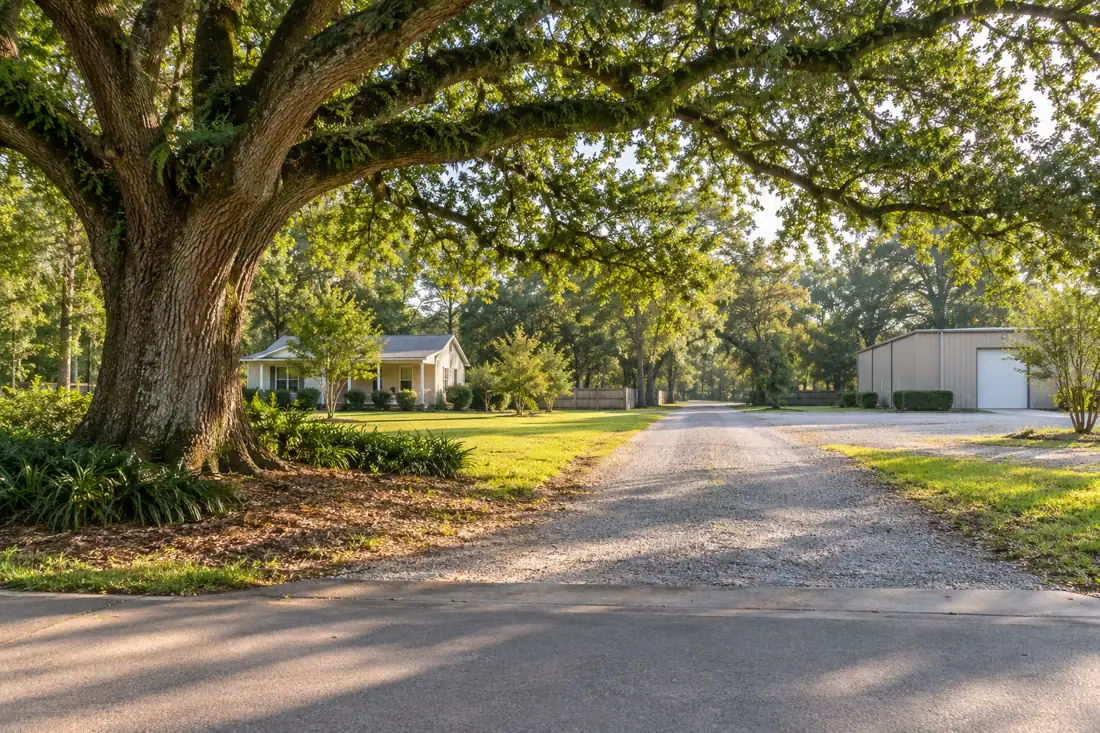
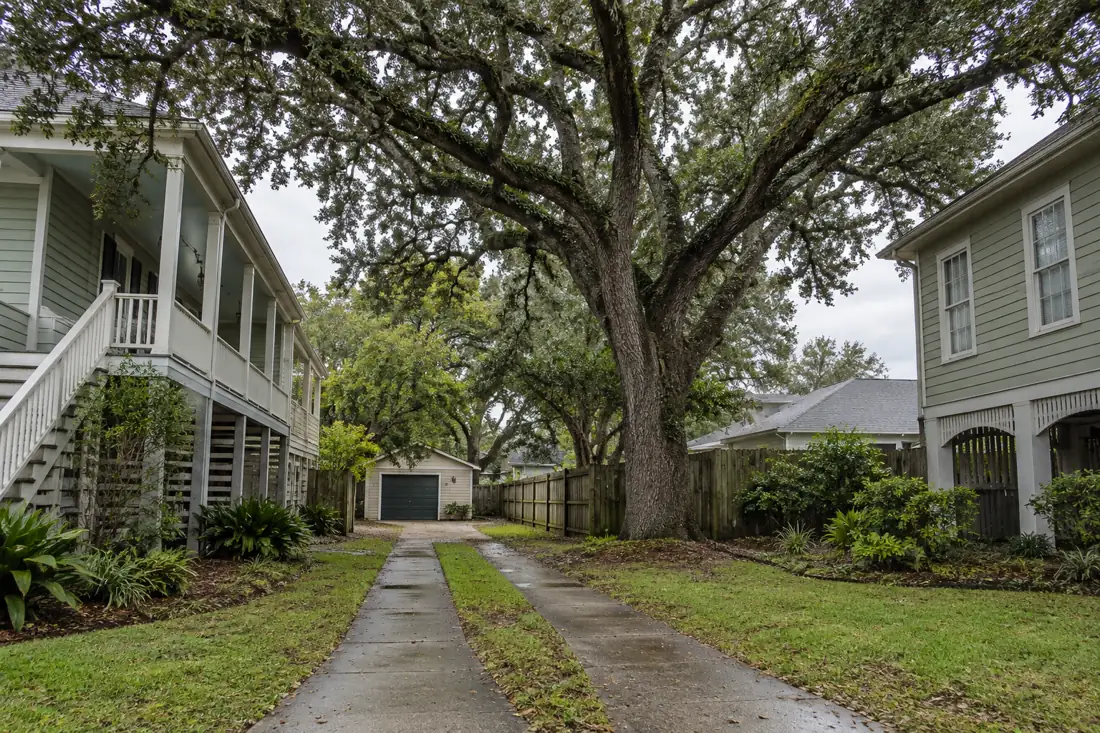
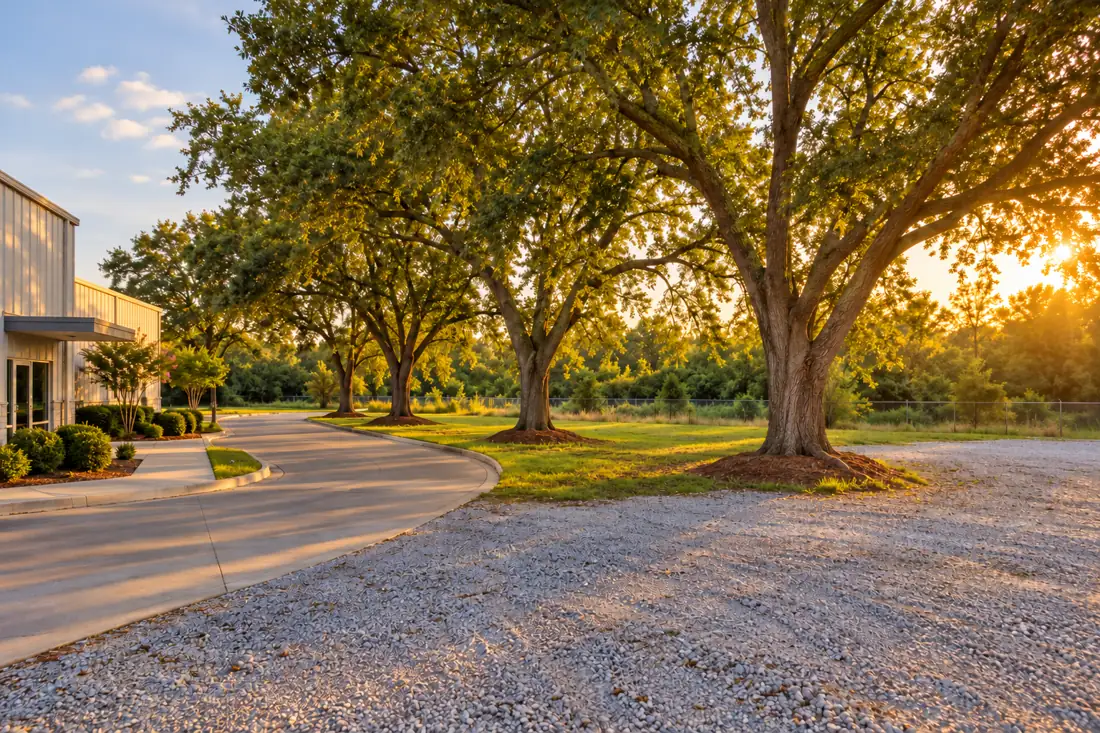
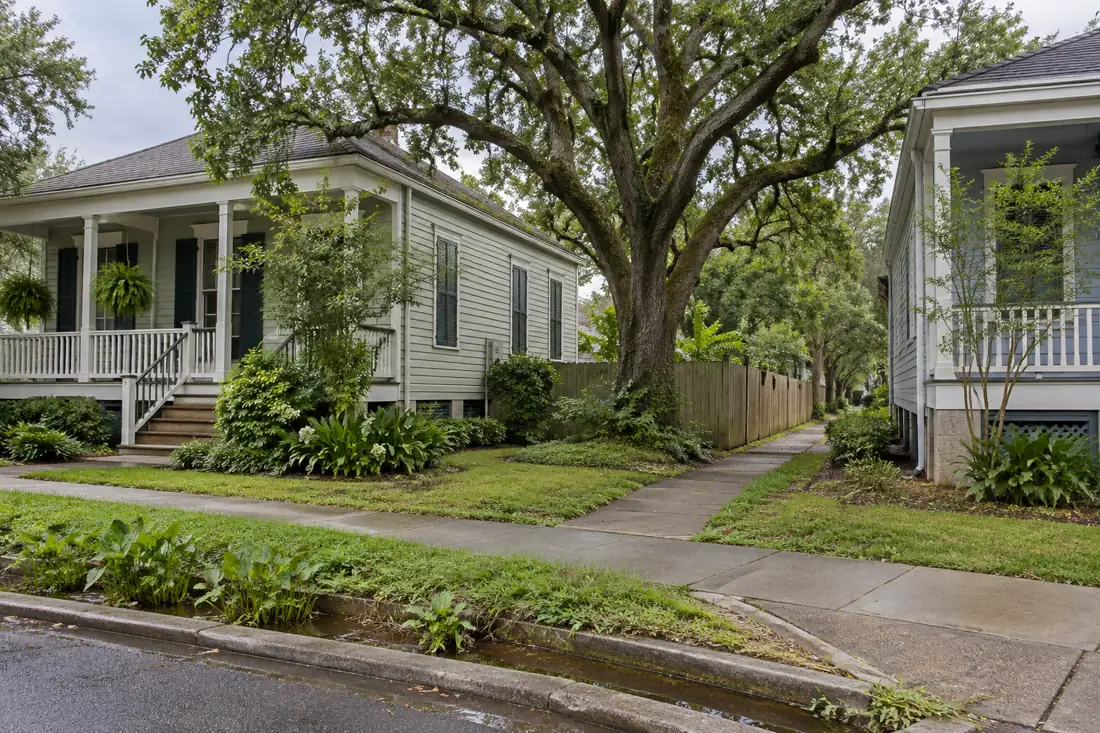
A canal-side property may have soft ground, restricted bank access or infrastructure requirements. Identify the responsible authority and any known limitations before planning machinery. Do not assume the bank is available as a staging or disposal area. The tree scope should account for retained vegetation, material handling and site-specific permissions.
Site-specific planning checkpoint: Canal-side tree work should begin with a safe ground-access review, not with a machine parked near the slope. Record the tree’s distance from the bank, any erosion or standing water, and where equipment could travel without loading an uncertain edge. Determine which public agency, servitude holder or landowner controls the canal access and what restrictions apply to vegetation removal or maintenance. A tree service cannot infer bank stability from a photograph, nor should material be placed where it can obstruct drainage. Keep woody debris, chips and runoff away from the channel unless the governing scope expressly addresses lawful disposal. If retained trees support the bank, discuss root-disturbance consequences before choosing stump grinding or extraction. A precise quote separates tree care from bank engineering, canal maintenance and any property-restoration tasks requiring other qualified parties.
Record the canal edge and visible conditions from stable, authorized ground.
Treat the canal bank as a constrained edge
A canal-side tree project is not simply a yard job with a water view. The bank may have slopes, soft ground, drainage structures, easements or restrictions on vegetation and equipment. Start by identifying the tree relative to the edge, any levee or maintained drainage route, and the ordinary property access. Do not assume the bank is part of a usable staging area or that the owner controls every strip of land nearby.
Ask who manages the adjacent waterway or drainage infrastructure and what approvals or coordination may apply to the proposed activity. The contractor can price an authorized tree-work scope, but should not infer permission to disturb a bank based only on the customer's address or a visible fence.
Treat canal-bank access as an engineering and property question
Record the canal edge and visible conditions from stable, authorized ground. Slopes, eroded soil, wet shoulders, outfalls and maintenance corridors may restrict the contractor's approach. Do not walk down an unstable bank to capture photographs. Ask who owns or controls any access strip and whether the tree work requires separate permission from the responsible authority.
Discuss whether the tree overhangs water, whether debris could enter a drainage channel and how material would be removed without placing loads near an uncertain bank. A green-looking shoulder is not proof that it can carry a truck or lift. Where ground stability, retaining structures or drainage installations are in question, the tree service may need information from an appropriate specialist before equipment is selected.
Keep observations and causation separate. Exposed roots, changed grade and leaning limbs may warrant assessment, but a website photo is not a diagnosis or proof of responsibility for past work. The written scope should say what the tree crew will do, what will remain untouched and which bank or drainage repairs belong to another party.

Map ground conditions from a safe distance
Photograph the tree, bank and travel route from stable ground. Explain any known erosion, saturated soil, culverts, buried drainage features or recent excavation. Avoid approaching a crumbling edge to measure the slope or photograph roots. A surface can appear firm while lacking the capacity needed for heavy equipment or loaded material.
Ask the estimator what ground information is needed to evaluate access. Mats or compact machines are not universal solutions to unstable soil or a steep bank. Where stability is uncertain, the appropriate engineering or infrastructure professional may need to review the condition. Tree crews should not be expected to assess every canal-bank or drainage-structure risk as part of a standard removal quote.
Confirm who controls the work area
Canal-side boundaries can involve a property owner, drainage authority, public agency or other interest. Identify which land and access route you control, and ask who has authority over the bank or maintained strip. A property line shown on a casual map or a nearby sign may not settle the question. Get reliable documentation where permissions matter.
If a contractor needs to cross a service route or place equipment on land outside your control, that access requires appropriate authorization. Do not assume an agreement for ordinary landscaping permits heavier tree work or debris staging. Keep confirmed conditions and pending approvals in the estimate file so the crew knows which parts of the plan are not yet available.

Preserve drainage and maintained access
Branches, logs and chips should not be allowed to obstruct ditches, culverts, drainage openings or required maintenance routes. Ask how material will be controlled and removed from the work area. If an owner wants wood left on site, specify a location that is permitted and will not interfere with drainage or access. Debris disposal is a separate operational question from deciding which tree to remove.
A contractor may need a clear route for inspection or emergency maintenance even during tree work. Coordinate the work window and exclusions with the responsible entity where required. A private customer's promise to close off a route is not the same as public or utility authorization.
Canal-side tree planning begins with bank and access uncertainty
At a canal-side property, the visible lawn edge may not describe the actual embankment, drainage easement or allowable equipment zone. Identify the canal or ditch, access rights, likely maintenance corridor and any retaining structure before discussing where vehicles or stored logs could stand. Photographs should show the tree in relation to the water-side slope from a safe established path, not from an unstable bank.
Any work area near an edge needs professional review of surface conditions and restrictions; visual turf alone is not proof of bearing capacity.
Canal-side tree work needs a drainage and ground-bearing conversation
Near a canal or drainage feature, soft shoulders, embankments, water-side fencing and access limits may matter more than the visible distance from tree to water. Do not treat a bare strip along the bank as a guaranteed equipment path. Identify the slope, bank edge, drainage structures, utilities, retaining features and who controls access to the maintained waterway.
High water, saturated soils or concealed erosion may change a safe staging decision. Avoid standing on a suspect edge for photos and never block a drainage inlet with tree debris or chips.
Ask the responsible operator or authority whether work requires access permission or restrictions near the canal; requirements differ by property and location. A contractor should plan chip handling, branch control and removal routes that avoid letting material enter the water, but cannot certify embankment stability from the web inquiry.
If the tree work is connected to an easement or public infrastructure, clarify which limits and permits come from the landowner, drainage operator or project manager. That project-planning guide is a useful companion, while a site-specific estimate must follow actual conditions.
Distinguish shoreline vegetation from the target tree
A mature canopy tree, shrubs along the bank and vegetation used for erosion or landscape purposes may have different functions. Identify the exact tree or portions proposed for work and any vegetation intended to remain. Do not request indiscriminate clearing when the objective is a limited hazard reduction or property-access improvement.
Discuss the effect of access, material storage and root disturbance on retained vegetation. Removal or grinding near the bank may warrant additional review because exposed roots and soil changes could affect the surrounding ground. No website description can establish the right treatment for every site. The estimator should make assumptions and unknowns clear rather than promise a universally safe approach.

Plan Tree Work Beside a Canal
A canal is not simply another open strip of yard where equipment can travel or cut material can land. Make a sketch showing the tree's base, apparent bank crest, fences, culverts, maintenance paths and the location of any outfall. Photograph the broader edge from a safe, dry position; do not enter a steep or soft bank to inspect roots. Ask the site reviewer to distinguish tree condition from problems caused by erosion or changing ground elevations along the channel.
Clarify which land and access ways the property owner controls. Drainage districts, local agencies or other parties may maintain areas next to canals, and the governing arrangement can differ by location. The tree contractor can describe the proposed operations, but permission to occupy or disturb a maintained strip must come from the relevant authority. Do not assume that a service quote grants rights to drive on the bank, alter vegetation within a protected area or dispose of cut material into the water.

Treat the canal edge and its access restrictions as separate issues
A bank can look firm at the top while remaining unstable or saturated nearer the water. Equipment placement should be based on a site-specific plan, not a guess from photographs. Discuss how the tree would be approached from the yard, how pieces could be controlled without entering the canal and whether debris must be carried to another staging location. Any visible root exposure, leaning bank material or new cracking should be raised as a ground-stability concern instead of being described as proof of a particular tree disease.
Schedule planning should account for recent rain and changes in canal water level without making unverified safety promises. Write down expectations for removing every branch from the drainage path, protecting culvert mouths and preserving maintenance access. A proposal can specify tree removal or selective trimming while explicitly excluding shoreline repair, engineering evaluation and government authorization. That distinction makes it easier to obtain qualified guidance before irreversible work begins.
Plan a safe equipment and hauling route
The tree's location may be close to water while the usable truck route lies far away. Show the full path for people and material from the tree to the road, including gates, turns, overhead lines and stable staging points. Ask whether the proposed method can keep equipment away from an uncertain bank and whether branches need to be moved in controlled sections.
A path suitable for routine mowing does not necessarily support a tree-removal vehicle. The contractor must choose its method and work area after evaluating site-specific constraints. If no safe authorized route is established, the job may need a different scope, additional review or rescheduling rather than an improvised access choice.
Handle storms and changing water levels
Recent storms, heavy rain and changing canal water conditions can alter soil and access after an estimate. Tell the contractor about visible erosion, debris accumulation or drainage changes since the visit. Do not enter a flooded, unstable or electrically hazardous area to gather updated photographs. Use a safe viewpoint and report observations without claiming measurements you have not made.
Ask how weather-related postponements or changes in work method are communicated. A contractor cannot guarantee a fixed work window if site conditions no longer meet the assumptions of the quote. Record any revised plan and approved scope before work resumes when practical.

Keep structural and regulatory questions in their lanes
The tree contractor can address proposed cutting, removal, handling and cleanup within the scope it is qualified and authorized to perform. Bank engineering, drainage authority requirements, waterway permits and disputed land control may need other professionals. Avoid advertising a tree estimate as certification that the canal bank is stable or that every regulation has been satisfied.
If the tree is near a utility, do not approach wires or attempt clearance on your own. Ask the relevant utility or qualified provider about required coordination. Keep the named tree, actual access permissions and unresolved agency questions together so no one confuses a preliminary quote with full authorization to proceed.
Specify cleanup and restoration separately
A useful proposal states what happens to cut wood, branches, chips and any stump grindings. Ask whether material is to be removed from the property or staged at an approved location, and how drainage openings and travel surfaces will be left. Restoration of a bank, disturbed soil, fencing or unrelated infrastructure is not automatically part of ordinary tree debris hauling.
At completion, preserve authentic before-and-after photographs from safe viewpoints and note what was actually performed. Do not use hypothetical planning imagery to imply a finished canal-side customer job. An honest completion record also identifies any remaining work for another contractor or authority.

Send photos that show more than the canopy
Provide a wide view from stable land showing the tree, canal edge, road access and any obvious drainage structures. Mention the neighborhood, approximate distance to the bank if known, recent site changes and which authority or owner controls the access route. Do not invent GPS, land ownership or a permit status to make the request look complete.
Tree Huggers can discuss a tree-work estimate and identify information that must be confirmed before a feasible plan is selected. An inquiry is not a bank-stability assessment, permit, emergency response confirmation or guaranteed work appointment. Unstable banks and immediate infrastructure hazards should be referred to the appropriate responsible professionals.
Clarify the responsible waterway manager
Before relying on the canal edge as a work area, identify who maintains or controls it. Depending on the particular site, drainage, levee, utility or other interests may apply. Ask the appropriate authority what, if any, permissions or restrictions affect vegetation management and access. Do not invent a universal rule that every canal bank is public or that every private lot extends to the water.
Give the contractor only the permissions actually established and label anything still pending. If an inspection or permit is required, schedule around that decision rather than beginning work on an assumption. A documented distinction between the homeowner's yard and a maintained strip helps avoid an otherwise feasible tree job becoming an unauthorized infrastructure project.
Keep a post-work drainage watch
After authorized cutting or removal, the owner may need to monitor whether debris, soil disturbance or unrelated storm material affects nearby drainage. Do this from a safe location and report suspected infrastructure problems to the responsible manager. Do not attempt to clear a hazardous canal edge or operate tools on unstable ground. A tree company should describe what debris it removed and which bank or drainage repairs remain outside its scope.
Retain safe before-and-after photos and the final hauling record. If another contractor or authority must inspect a disturbed area, note that follow-up as an open task rather than claiming the property has received an engineering clearance. Accurate records are especially important where changing water levels can make conditions look different from one visit to the next.
Identify who controls the canal corridor before staging tree equipment
A canal-side yard is not necessarily unrestricted private work space all the way to the water. Identify observable easements, gates, access lanes, outfalls and any restricted zone; confirm control with the appropriate operator. A dry surface beside a bank is not proof that it will support heavy equipment. Keep chips, logs and cut limbs out of water and drainage structures, and record visible pre-existing surface conditions without making unsupported geotechnical judgments. Build a weather stop point and an equipment-exit route into the work plan.
- Identify drainage access and the authority that controls it.
- Map no-load and no-debris areas before machinery arrives.
- Photograph visible bank conditions without certifying stability.
- Confirm how equipment leaves if rain or canal operations change access.
Check how recent drainage construction changes the nearby work area
Questions about this project
Can tree equipment use any driveway?
No general assumption should be made. Pavement condition, edges, support, buried infrastructure and the proposed equipment all matter. Ask the contractor to assess the intended setup and route for the particular property.
Do mats guarantee there will be no ground damage?
Ground protection is one part of a site-specific plan. It does not remove every load, soil or access limitation. Discuss the proposed measures and any restoration responsibilities in the written scope.
How should extra work be approved?
Use the agreed approval process and identify the change, reason, scope, price or schedule effect as applicable. Confirm who has authority before treating an additional tree or task as part of the original job.
What completion records are useful?
Keep the agreed scope, tree or area identification, authorized changes, invoice and labeled photos where appropriate. Include unresolved items and a contact. Contract-specific records should follow the buyer's stated requirements.
What access information helps an estimator?
Send the narrowest opening, overhead obstacles, turns and the distance between the tree and the loading area. Include photos of the entire route and identify steps, soft ground or features that must remain protected.
Should I remove a fence before the visit?
First ask the contractor to assess access and agree on any temporary opening. Identify who owns the fence, who can authorize the change and who will reinstall it. Do not assume the opening is necessary or included.
Does cleanup include every root and wood chip?
That depends on the written scope. Tree removal, stump grinding, chip hauling and root excavation are different tasks. Ask what material is removed, what remains and whether soil or landscape restoration is separately included.
What should a final walk-through check?
Compare the identified trees and tasks with the agreement. Check agreed debris handling, stump treatment, access openings and any listed restoration. Record unresolved items clearly instead of relying on a general impression that the property looks finished.
What should I compare besides the price?
Compare tree identification, work objectives, access assumptions, hauling, stump treatment, site finish and exclusions. Ask whether permits or other coordination are part of the scope and who can approve changes if conditions differ.
Does an online request book the crew?
No. A request starts the estimate conversation. The company still needs to discuss scope, availability and any site assessment. For a dangerous or urgent condition, call 504-458-8336 rather than relying on a form response.
What should I tell Tree Huggers about tree work around a canal-side property?
Explain the property address, the work you want and the specific concerns: bank restrictions, ground conditions, authority coordination. Send safe photos of the tree, surroundings and access route. The contractor can then discuss the assessment and scope needed for this situation.
How do I request an estimate for this work?
Call 504-458-8336, text photos or use the estimate form on this page. Include the address, desired outcome and any timing constraints. The company will need to review scope and availability; an online request does not confirm a price, appointment or emergency dispatch.
Get a scope for your property
Send a safe overview of the canal bank, tree base and available yard-side access; identify any known maintenance easement or agency contact.